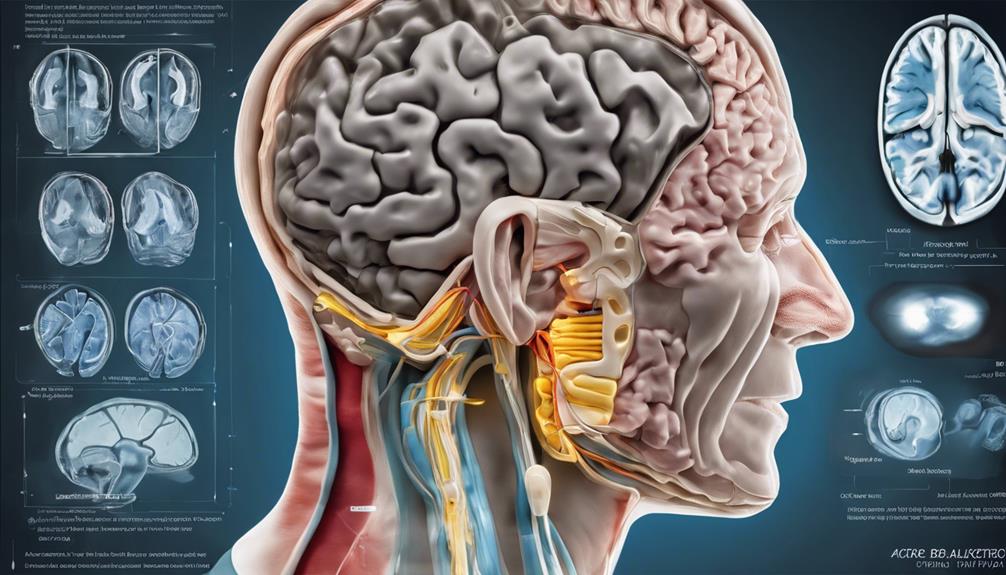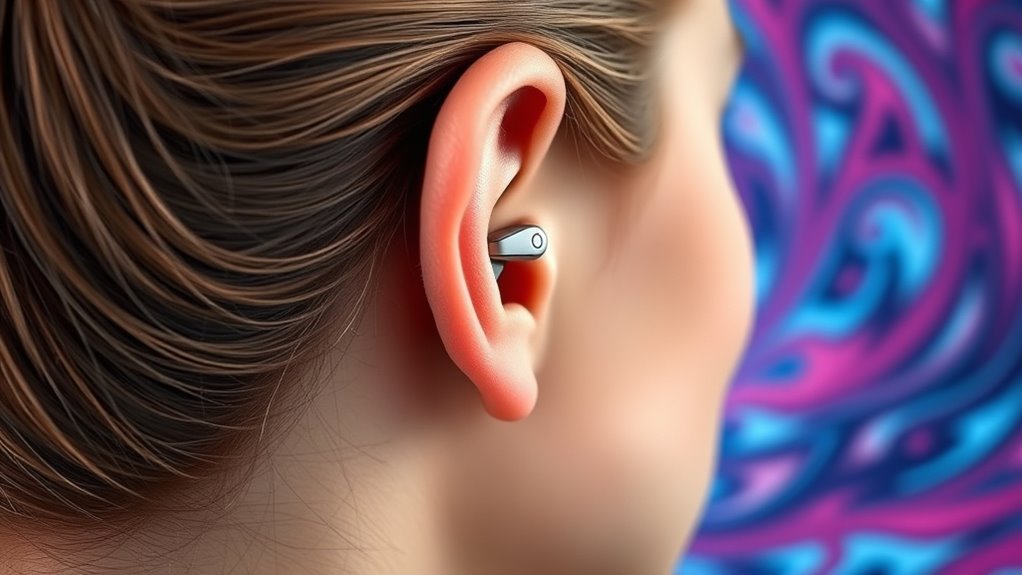

Tinnitus happens when your brain misinterprets signals from damaged inner ear hair cells, creating the ringing, buzzing, or hissing sounds you hear. When these tiny hair cells are hurt, they send irregular, chaotic signals instead of clear sound info. Your brain tries to make sense of this abnormal input, leading to the perception of phantom sounds. To understand how this complex process works and clear up common myths, keep exploring the details behind tinnitus.
Key Takeaways
- Tinnitus is caused by abnormal neural signals from damaged hair cells or disrupted neural pathways in the auditory system.
- It is a neurological perception phenomenon, not solely an ear issue, involving brain interpretation of phantom sounds.
- Damage or malfunction in inner ear hair cells leads to chaotic signals that the brain misinterprets as ringing or buzzing.
- Neural hyperactivity or misfiring in auditory pathways results in persistent phantom sounds perceived as tinnitus.
- Myths about tinnitus being only ear-related are false; it primarily involves complex brain and neural pathway dysfunctions.
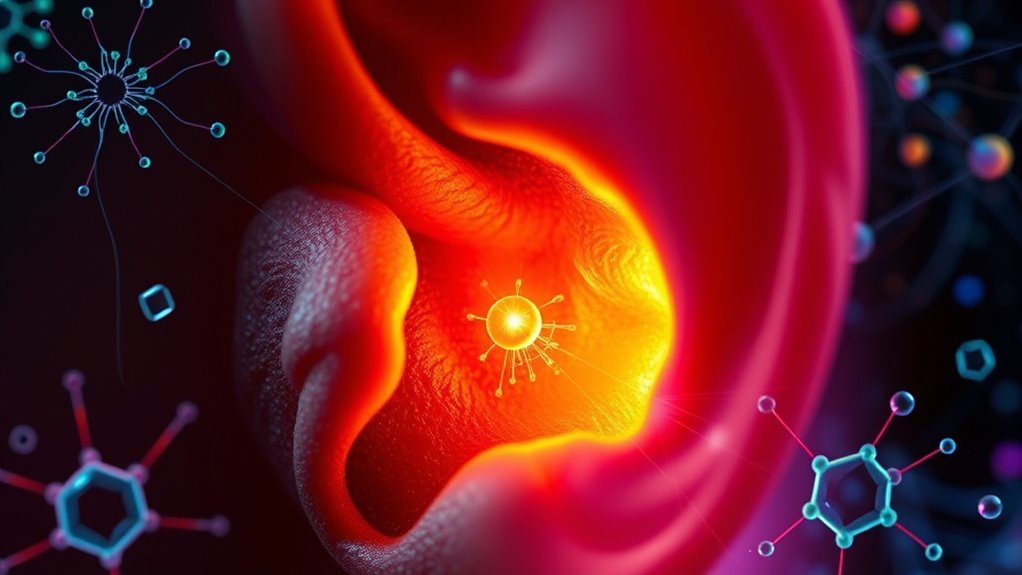
Tinnitus occurs when your brain perceives ringing, buzzing, or other sounds without any external source. This phenomenon isn’t just about the ears; it’s about how your brain interprets signals coming from your auditory system. At the core of this process is the inner ear, which contains tiny hair cells that convert sound waves into electrical signals. When these hair cells are damaged or malfunctioning, they send abnormal signals along your neural pathways—networks of nerve fibers that carry information from your inner ear to your brain. Instead of transmitting clear, organized sound information, these damaged pathways can send chaotic or heightened signals, which your brain interprets as ringing or buzzing.
Your inner ear plays a vital role in this process. It’s not just responsible for detecting sound but also maintaining your balance. When the inner ear sustains damage—due to noise exposure, aging, infections, or other factors—it can disrupt the normal flow of signals. This disruption causes your brain to receive inconsistent or excessive input, leading to the perception of phantom sounds. The neural pathways involved in hearing are highly sensitive, and even slight irregularities can cause significant changes in how sounds are processed. Fundamentally, your brain is trying to make sense of confusing signals, but instead of finding a source, it creates the perception of noise where none exists.
This miscommunication between your inner ear and brain is often why tinnitus persists long after the initial damage or trigger. The neural pathways become hyperactive or misfire, amplifying the signals that reach your auditory cortex—the part of your brain responsible for processing sound. As a result, you hear persistent ringing or buzzing despite the absence of external noise. It’s important to realize that tinnitus isn’t just a symptom of ear damage; it’s a complex neurological response involving how your brain’s neural pathways interpret signals. That’s why treatments targeting the neural pathways—like sound therapy or neural modulation—can sometimes help reduce the perception of tinnitus. Additionally, ongoing research into auditory processing aims to develop more effective interventions for managing this condition.
Understanding the role of the inner ear and neural pathways clarifies why tinnitus happens and dispels the myth that it’s solely caused by ear problems. Instead, it’s a neurological issue rooted in how your brain interprets signals from damaged or malfunctioning parts of your auditory system. When you experience tinnitus, it’s your brain’s way of trying to compensate for abnormal input from the inner ear, creating a perception of sound that isn’t there. Recognizing this helps you see why managing tinnitus often involves approaches that address the neural pathways and brain’s interpretation of auditory signals, not just ear health alone.

Sound Oasis® Bluetooth® Tinnitus Sound Therapy System® – Sleep Better, Manage and Mask Tinnitus, 25 Built-in Sounds for Tinnitus Relief, 12-Hour Sound Duration
Play 25 Built-in Sounds: Discover a variety of sounds designed specifically for all night tinnitus relief, recommended by…
As an affiliate, we earn on qualifying purchases.
As an affiliate, we earn on qualifying purchases.
Frequently Asked Questions
Can Tinnitus Be Cured Completely?
You can’t usually cure tinnitus completely, but effective tinnitus treatments can help manage it. These treatments may include sound therapy, counseling, or medications that reduce the psychological impacts, like anxiety or stress, associated with tinnitus. While a full cure isn’t guaranteed, many people find relief by combining these approaches, allowing them to better cope with the condition and improve their quality of life.
Is Tinnitus Hereditary?
You might find that tinnitus has a gentle way of running in families, hinting at a genetic predisposition. While it’s not solely hereditary, familial patterns suggest that if your relatives experience tinnitus, you may be more susceptible. Understanding these familial links can help you stay vigilant and seek early management. Remember, genetics can influence tinnitus, but lifestyle choices and health also play significant roles in how you experience it.
Does Tinnitus Lead to Hearing Loss?
Tinnitus itself doesn’t directly cause hearing loss, but it often signals underlying issues like inner ear damage. When your auditory nerve or inner ear sustains damage, it can lead to both tinnitus and hearing loss. If you notice persistent ringing, it is crucial to see a specialist, as addressing the root cause can help prevent further auditory damage and preserve your hearing. Taking action early improves your chances of managing both conditions.
Are Certain Foods Linked to Tinnitus?
Certain foods can be linked to tinnitus because diet connections and food triggers vary from person to person. You might notice that caffeine, alcohol, or salty foods worsen your symptoms. Keeping a food diary helps identify your specific triggers. While no universal diet cure exists, avoiding known food triggers can reduce tinnitus intensity for some people, making managing your symptoms easier. Stay attentive to how different foods affect you personally.
Can Stress Worsen Tinnitus Symptoms?
Stress can definitely worsen your tinnitus symptoms, like adding fuel to a fire. When you’re stressed, your body releases adrenaline, which can heighten your perception of ringing or buzzing sounds. Managing stress through relaxation techniques not only eases your emotional impact but also helps reduce the intensity of tinnitus. Prioritizing stress management can make a significant difference, allowing you to better cope with the condition and improve your overall well-being.

Magicteam White Noise Machine with 20 Non Looping Natural Soothing Sounds Memory Function 32 Levels of Volume Powered by AC or USB and Sleep Sound Timer Therapy for Baby Kids Adults Black
❤20 Non-Looping Sleep Sounds: White noise ,Brown noise, pink noise, blue noise, fan,brook, rain, ocean,bird and Bonfire,suitable for…
As an affiliate, we earn on qualifying purchases.
As an affiliate, we earn on qualifying purchases.
Conclusion
Understanding why tinnitus occurs helps you see it’s like a fire alarm going off in your ears—sometimes it’s triggered by real issues, other times it’s just a false alarm. By learning the mechanisms and debunking myths, you can better manage or even reduce your symptoms. Remember, tinnitus is complex but not unbeatable. With knowledge, patience, and proper care, you can silence the noise, like calming a restless storm in a peaceful sky.

ProCase Noise Reduction Ear Muffs, Sound Proof Ear Protection, NRR 28dB Noise Cancelling Headphones for Adults Kids Autism, Hearing Protection for Shooting Gun Range Mowing -Red
Constructed by solid ABS shell and thickened foam, the ear muffs achieve NRR 28 dB (SNR 34 dB)…
As an affiliate, we earn on qualifying purchases.
As an affiliate, we earn on qualifying purchases.

MASON NATURAL Advanced Ear Health, 33 Day Supply, Supports Normal Circulation in The Inner Ear & Ringing, 100 Caplets
DAILY EAR SUPPORT: An easy-to-swallow capsule that adults 18+ take 3 daily, preferably with food, as a dietary…
As an affiliate, we earn on qualifying purchases.
As an affiliate, we earn on qualifying purchases.