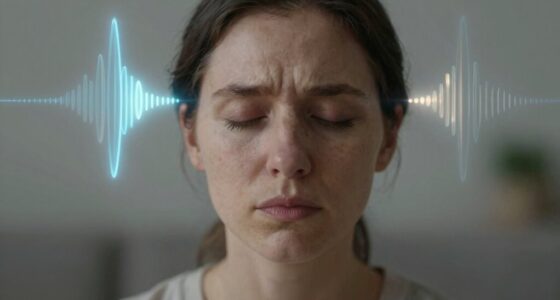

In quiet rooms, you notice your tinnitus more because there’s less background noise to mask it. Without external sounds, your brain focuses more on internal noises like ringing or buzzing, making them seem louder and more persistent. Silence heightens your awareness of these internal sounds, increasing their impact. If you want to understand how to better manage this, keep exploring ways to reduce the noise perception and regain comfort in quiet spaces.

Get everyday helpers delivered free with Prime
- Fast, free delivery on millions of items
- Prime Video, Amazon Music and more included
- Member-only deals all year
Key Takeaways
- Lack of external noise allows internal sounds to become more prominent.
- Silence heightens awareness of tinnitus by removing auditory distractions.
- Brain concentrates more on internal noises in quiet environments.
- Reduced ambient sounds increase the perception of tinnitus severity.
- Quiet rooms amplify internal sounds, making tinnitus more noticeable.
Have you ever noticed how tinnitus seems to become louder in quiet rooms? It’s a common experience, and it’s not just your imagination. When your environment is silent, the absence of background noise makes the ringing, buzzing, or hissing sounds of tinnitus stand out more. Without external sounds to distract you, your brain focuses more on the internal noises, making them seem more intense and persistent. Creating a balanced environment with some ambient sounds can help reduce this perception and make quiet spaces more comfortable.
One effective way to cope with this increased perception is sound masking. Sound masking involves using background noise—like white noise machines, soft music, or nature sounds—to create a gentle auditory environment that blends with your tinnitus. It doesn’t eliminate the sound but helps reduce its prominence by providing a competing sound that your brain perceives as more constant and less intrusive. When you introduce consistent, soothing sounds into your environment, you’re less likely to notice the tinnitus as much, which can lessen anxiety and improve your overall comfort. Incorporating ambient noise can be particularly beneficial in creating a more tolerable auditory environment. Additionally, using sound therapy devices designed specifically for tinnitus can enhance your experience by providing targeted sound masking options. Sound masking doesn’t work for everyone, but many find it to be a simple, non-invasive method to make quiet rooms more tolerable.
Using calming background sounds can help make quiet rooms more comfortable by masking tinnitus.
In addition to sound masking, cognitive therapy can play an essential role in managing tinnitus. Cognitive therapy helps you change the way you respond to the ringing or buzzing sounds. Instead of viewing tinnitus as a relentless problem, you learn to reinterpret the sounds and reduce the emotional distress they cause. Through this process, you develop coping strategies that diminish the anxiety and frustration linked to tinnitus awareness. Understanding the psychological impact of tinnitus can help you better manage your reaction to the sounds. Mindfulness and perception management techniques are often integrated into therapy to help you focus less on the internal noises and more on engaging with your surroundings or calming your mind. Over time, this mental shift can make quiet environments less oppressive and reduce the perception of tinnitus intensity.
Together, sound masking and cognitive therapy form a holistic approach to managing tinnitus in quiet rooms. While sound masking provides external relief by reducing the prominence of internal sounds, cognitive therapy addresses the psychological response, helping you build resilience against the discomfort. Both methods empower you to take control over your experience, rather than letting tinnitus dominate your quiet moments. If you find yourself overwhelmed by tinnitus in silent settings, exploring these options can make a significant difference in restoring comfort and peace to your quiet time.
white noise machine for tinnitus
As an affiliate, we earn on qualifying purchases.
As an affiliate, we earn on qualifying purchases.
Frequently Asked Questions
Can Tinnitus Fluctuate Throughout the Day?
Yes, tinnitus perception can fluctuate throughout the day. You might notice it more during quiet room triggers, especially when your environment lacks background noise. Factors like stress, fatigue, and caffeine can also influence how loud tinnitus feels. When you’re in a quiet room, the absence of external sounds makes the internal ringing or buzzing more noticeable, causing fluctuations in how you perceive tinnitus at different times.
Does Tinnitus Affect Sleep Quality?
Tinnitus can seriously disrupt your sleep, making rest feel like an impossible dream. You might experience sleep disturbances due to the persistent ringing, which heightens noise sensitivity and keeps your mind alert when it should be winding down. The constant sound can drown out calming noises, making it harder to fall asleep or stay asleep. Managing tinnitus with relaxation techniques or sound therapy can help improve your sleep quality and reduce daytime fatigue.
Are Certain Sounds More Effective in Masking Tinnitus?
Certain sounds are more effective in masking tinnitus because they distract your brain from focusing on the ringing. Masking sounds like white noise, nature sounds, or soft music often work best, especially if they’re consistent and at a comfortable volume. These are effective strategies to reduce tinnitus awareness, helping you relax and sleep better. Experiment with different sounds to find what’s most soothing and effective for your needs.
Can Stress Worsen Tinnitus in Quiet Environments?
Yes, stress triggers can worsen your tinnitus, especially in quiet environments. When you’re stressed, your body releases hormones that heighten your awareness of internal sounds, making tinnitus more noticeable. In a quiet ambiance, there’s less external noise to mask the ringing or buzzing, so stress amplifies your perception of tinnitus. Managing stress through relaxation techniques or mindfulness can help reduce its impact, making tinnitus less bothersome in quiet settings.
Is Tinnitus More Common With Age?
Like an old song that lingers, tinnitus becomes more common as you age. Age-related hearing decline and neurological changes act as silent conductors, amplifying the ringing. As your ears and brain age together, the sound becomes more noticeable, especially in quiet rooms where the silence highlights the noise. Embracing these changes and seeking support can help you find harmony amid the echoes of aging.
Conclusion
In quiet rooms, your tinnitus tends to shout louder because there’s less background noise to drown it out. You might find yourself more aware of that persistent ringing or buzzing, making it seem even more overwhelming. Remember, you’re not alone in this; sometimes, it’s just a matter of turning up the volume on other sounds or finding ways to mask the noise. Don’t let silence be your enemy—stay proactive and keep your head up.
Halloween Picks
halloween
As an affiliate, we earn on qualifying purchases.