
Combat noise is more unpredictable and intense than training noise, often exceeding 140 decibels with sudden sounds like explosions and gunfire. This makes it harder for you to anticipate and protect your hearing, increasing the risk of permanent damage. Training environments are controlled, so you can better prepare with protection. Understanding these differences can help you stay safer; if you explore further, you’ll learn how to better guard your hearing in all situations.

Get everyday helpers delivered free with Prime
- Fast, free delivery on millions of items
- Prime Video, Amazon Music and more included
- Member-only deals all year
Key Takeaways
- Combat noise is more intense and unpredictable, increasing the risk of sudden acoustic trauma.
- Training noise is controlled and predictable, allowing for precautionary hearing protection.
- Combat noise can cause rapid hearing fatigue and irreversible damage due to higher sound levels.
- Training environments typically enable awareness and immediate response to loud sounds.
- The unpredictability of combat noise makes proactive hearing protection essential to prevent permanent loss.
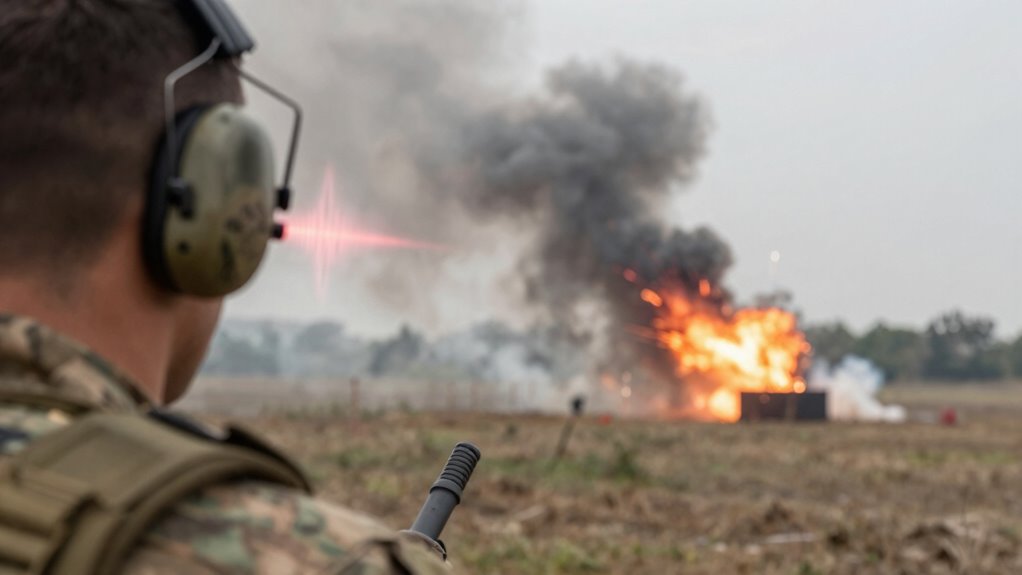
Have you ever wondered how the noise you encounter during combat differs from training sounds regarding their impact on your hearing? The reality is, combat noise often involves much higher intensity and unpredictability than training, which can lead to serious consequences like hearing fatigue and acoustic trauma. During combat, explosions, gunfire, and loud machinery produce sound levels that can quickly overwhelm your ears, especially when you’re exposed to them for extended periods without proper protection. This intense exposure doesn’t just cause temporary discomfort—it can result in lasting damage, impairing your ability to hear properly in the future.
Combat noise is far more intense and unpredictable than training, risking permanent hearing damage without proper protection.
Hearing fatigue sets in when your ears are repeatedly exposed to loud noises, causing a temporary decline in hearing sensitivity. In combat, the constant barrage of loud sounds can lead to this fatigue faster than during training. You might notice muffled sounds, ringing in your ears, or a sense of fullness after prolonged exposure. While hearing fatigue isn’t permanent, it signals that your ears have been overworked and need time to recover. Ignoring this warning can make you more vulnerable to more severe damage like acoustic trauma, which involves a sudden, irreversible loss of hearing caused by an extremely loud noise. Explosive blasts and gunfire can produce sound levels exceeding 140 decibels—far beyond what your ears can safely handle and enough to cause immediate damage if protective measures aren’t taken.
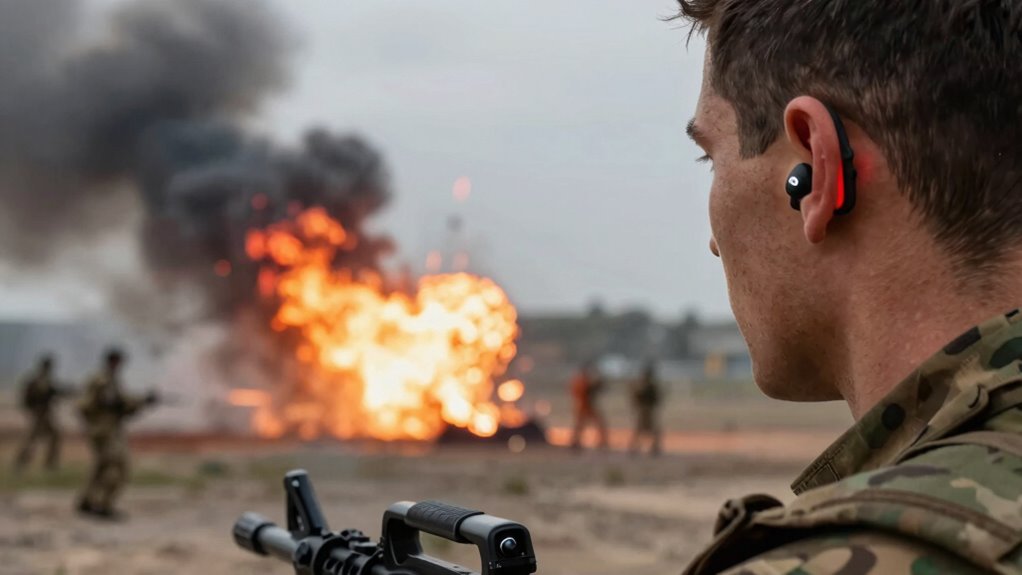
In training environments, you’re often aware of the sounds and take precautions, like wearing ear protection, to mitigate damage. Combat, however, is unpredictable; you can’t always anticipate the intensity or duration of the noise. This increases your risk of acoustic trauma, especially when exposed without adequate hearing protection. The difference in noise exposure isn’t just about intensity but also about the psychological impact. In combat, the stress and adrenaline may make you less aware of the danger signals your ears send, increasing the likelihood of cumulative damage. Recognizing the characteristics of loud sounds common in combat can help you better assess the level of risk and take appropriate protective measures. Additionally, noise exposure patterns in combat tend to be more sporadic and unpredictable, which complicates the ability to manage hearing safety effectively.
Moreover, environmental conditions such as wind, rain, and terrain can influence how sound travels and intensifies the overall impact on your hearing. Furthermore, the environmental factors in combat zones, such as the presence of dust, debris, and other hazards, can worsen hearing damage and complicate the use of protective gear. Ultimately, the key difference lies in exposure patterns and the environment’s unpredictability. Combat noise tends to be more intense and frequent, causing faster accumulation of hearing fatigue and a higher chance of acoustic trauma. Protecting your hearing in both scenarios is essential, but recognizing the heightened risks during combat can help you take necessary precautions, such as wearing proper hearing protection and limiting exposure whenever possible. Ignoring these risks can lead to permanent hearing loss, affecting your ability to communicate and function effectively in the field. Additionally, understanding the characteristics of loud sounds common in combat can help you better assess the level of risk and take appropriate protective measures. Being aware of these distinctions emphasizes the importance of consistent hearing protection, especially in unpredictable environments.
As an affiliate, we earn on qualifying purchases.
Frequently Asked Questions
Can Hearing Protection Fully Prevent Damage From Combat and Training Noise?
Hearing protection can’t fully prevent damage from combat and training noise, especially given battlefield acoustics’ unpredictability. If your earplug efficacy isn’t high, loud sounds can still harm your hearing. You might think you’re protected, but sudden, intense noises can bypass your gear’s defenses. Always wear well-fitting, high-quality ear protection and be mindful of your environment. Properly managing noise exposure is essential to safeguard your hearing long-term.
Are There Long-Term Health Effects Beyond Hearing Loss From Noise Exposure?
Yes, exposure to military noise can lead to long-term health effects beyond hearing loss. Continuous or intense noise exposure may cause tinnitus, increased stress levels, or even cardiovascular issues. Protecting your hearing health is essential, as noise-related damage isn’t always immediately noticeable. Using proper hearing protection and limiting exposure can help safeguard your overall health, ensuring you maintain both hearing and well-being during and after service.
How Quickly Can Noise-Induced Hearing Damage Become Permanent?
Noise-induced hearing damage can become permanent after just a single exposure to loud sounds, especially if you’re exposed to high decibel levels without protection. You might notice auditory fatigue or a temporary threshold shift right after exposure, but if the noise is intense and frequent, this damage can quickly become irreversible. Protecting your ears immediately is essential to prevent long-term hearing loss and avoid permanent damage.
Do Different Military Roles Experience Varying Levels of Hearing Risk?
Ironically, your military gear offers some protection, yet your role still influences your hearing risk. Combat roles face louder acoustic environments, increasing damage chances, while support roles may encounter less intense noise. Whether you’re on the front lines or behind the scenes, frequent exposure to high-decibel sounds heightens your risk of permanent hearing loss. So, your specific duties directly shape how vulnerable your hearing becomes in these demanding acoustic environments.
What Advancements Are Being Made in Hearing Protection Technology?
Advancements in hearing protection technology focus on hearing enhancement and acoustic engineering, helping you stay alert while safeguarding your ears. Modern devices now incorporate smart noise-canceling features, allowing you to hear critical sounds without risking damage. Acoustic engineering improves the design of earplugs and helmets, providing better fit and sound quality. These innovations guarantee you can effectively communicate and remain safe, even amid loud combat or training environments.
Conclusion
In the battle between combat noise and training noise, understanding their impacts on your hearing is vital. While both can cause damage, combat noise often hits harder, risking permanent hearing loss like a sonic explosion. Don’t underestimate the power of protective gear—it’s your shield against this relentless assault. Protect your hearing now, or risk losing the ability to enjoy life’s sweetest sounds—like your child’s laughter or a favorite song—forever. Stay vigilant; your ears deserve it!
Halloween Picks
halloween
As an affiliate, we earn on qualifying purchases.