To prepare for your hearing loss claim, gather recent audiograms and medical records that show your hearing issues. Collect detailed witness statements from friends or family about how your hearing loss affects daily life. Review your service history for noise exposure incidents and include supporting documents. Organize everything carefully and consider consulting a Veterans Service Officer for guidance. Following these steps will strengthen your case, and if you continue, you’ll learn even more about making a successful claim.
Key Takeaways
- Gather recent audiograms, medical records, and audiological evaluations linking hearing loss to service.
- Collect detailed witness statements from those who observed hearing difficulties or safety concerns.
- Document specific noise exposures during service, including assignments and incidents involving loud machinery or explosions.
- Organize all evidence systematically and consider consulting a Veterans Service Officer for review.
- Focus on strong medical evidence and detailed accounts to build a credible, persuasive claim.

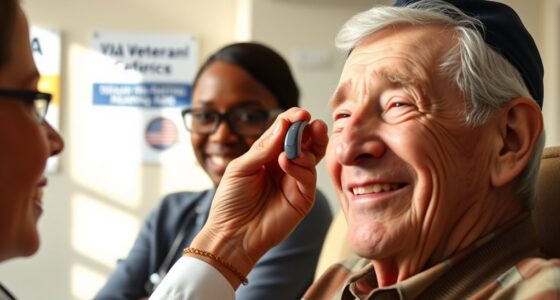
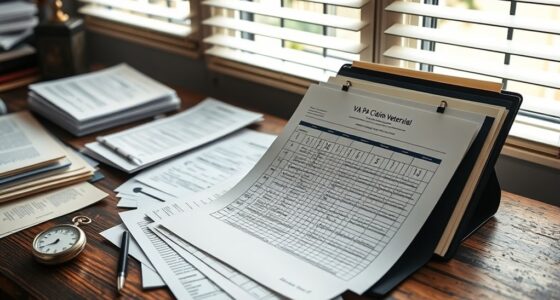
If you’re a veteran preparing to file a hearing loss claim, taking the right steps early can make the process smoother and increase your chances of a successful outcome. The first essential step is gathering solid medical documentation. This includes recent audiograms, hearing test results, and any relevant medical records that detail your hearing issues. The VA relies heavily on medical evidence to evaluate your claim, so having thorough, up-to-date documentation can substantially strengthen your case. Be sure to request copies of your audiological evaluations and verify they clearly indicate the extent of your hearing loss, especially if it’s linked to service-related activities. If you’ve seen other healthcare providers for related issues, gather those records as well. The more complete your medical history, the better the VA can understand your condition.
In addition to medical documentation, witness statements can play an essential role in supporting your claim. These statements are written accounts from friends, family members, or colleagues who have observed how your hearing loss affects your daily life. They can describe instances where your hearing difficulty caused misunderstandings, safety concerns, or social isolation. Witness statements help establish the real-world impact of your condition, especially when medical records alone don’t fully capture how your hearing loss impairs your quality of life. When collecting witness statements, ask the witnesses to include specific examples and to sign and date their statements. The more detailed and credible these accounts are, the more weight they carry in your claim.
Preparing for your claim also involves documenting your service history related to noise exposure or incidents that could have contributed to your hearing loss. Make a list of your assignments, deployments, or any specific events where you were exposed to loud noises, such as gunfire, explosions, or heavy machinery. If you have any service records that document these exposures, include copies with your claim. This helps establish a clear link between your service and your hearing condition, which is critical for approval. Additionally, understanding hearing loss evaluation standards used by the VA can help you better interpret your medical results and prepare your case effectively. Familiarizing yourself with the criteria used for disability ratings can also guide you in understanding what evidence to emphasize. Being aware of the importance of thorough documentation can help you ensure your claim is supported comprehensively.
Finally, be organized and thorough when submitting your claim. Keep copies of all documents, including medical records, witness statements, and service records. Consider working with a Veterans Service Officer (VSO) who can review your evidence and help verify everything is complete and correctly filed. Preparing in advance by collecting strong medical evidence, detailed witness accounts, and thorough service documentation will make your claim more persuasive and expedite the process, increasing your chances of receiving the benefits you deserve. Paying attention to VA claim procedures can further streamline your application and improve your overall experience. Being aware of the evidence submission process can also help you avoid common pitfalls and ensure your claim is properly supported from the start.
hearing test audiogram
As an affiliate, we earn on qualifying purchases.
As an affiliate, we earn on qualifying purchases.
Frequently Asked Questions
What Documents Do I Need to Support My Hearing Loss Claim?
You’ll need documentation requirements like medical evidence, including audiograms, doctor’s notes, and treatment records, to support your hearing loss claim. Gather any service records showing exposure to loud noises, and personal statements about how hearing issues affect you. These documents establish a clear link between your service and hearing loss, making your claim stronger. Without proper evidence, your application might face unnecessary delays or denials, so be thorough.
How Long Does the VA Typically Take to Process Hearing Loss Claims?
The VA typically takes about 3 to 8 months to process hearing loss claims, but this can vary. During this time, reviewing Veteran testimonials can offer insight into the process. While waiting, explore hearing aid options and consult with your healthcare provider to determine the best fit. Staying proactive and ensuring your documentation is complete can help speed up the process and improve your chances of a successful claim.
Can I File a Hearing Loss Claim if I Didn’T Get an Audiogram During Service?
You can file a hearing loss claim even if you didn’t get an audiogram during service. Coincidences happen, and sometimes your hearing issues develop later. To establish a successful service connection, gather medical records, statements from fellow service members, and documentation of your symptoms. These pieces help prove your disability benefits claim, showing your hearing loss is related to your military service, even without an initial audiogram.
Are There Specific Medical Providers the VA Prefers for Hearing Evaluations?
The VA prefers evaluations from providers experienced with veteran hearing issues, often utilizing advanced hearing test technology. Veteran testimonials highlight the importance of choosing audiologists familiar with VA requirements to guarantee accurate results. When scheduling your hearing test, ask if the provider uses VA-approved technology and understands the specific criteria for service-related hearing loss. This helps strengthen your claim and ensures your evaluation aligns with VA standards.
What Common Mistakes Should I Avoid When Filing a Hearing Loss Claim?
Don’t forget to double-check your medical documentation and gather solid evidence—skipping these steps is like trying to win a race with a broken leg. Avoid vague records or forgetting to include audiologist reports that prove your hearing issues. Never underestimate the power of detailed medical evidence; it’s your ticket to a smoother claim. So, stay organized, be thorough, and don’t leave your proof to chance—it’s your best shot.

OTC Hearing Aids – Phonix Vivid Noise Cancelling Hearing Aids with 4 Adaptive Programs – Lightweight, Comfortable, & Rechargeable RIC Amplifier for Adults & Veterans
Vivid Listening Made More Accessible: Get our over the counter hearing aids for seniors, offering the same quality…
As an affiliate, we earn on qualifying purchases.
As an affiliate, we earn on qualifying purchases.
Conclusion
By gathering your medical records, documenting your symptoms, and understanding your service history, you’re setting yourself up for a smoother claim process. Don’t forget to seek advice from a VA representative or veteran service organization—they’re like a trusty squire in your quest. With proper preparation, you’ll be well on your way to hearing the good news. Remember, as the Bard once said, “All’s well that ends well,” especially when it comes to your health and benefits.

Jayine Ear Plugs for Noise Cancelling Ear Protection EarPlugs for Sleep,Concerts,Work,Study,8 Size Eartips with Small Box,Perfect -30dB Silicone Earplugs for Noise Reduction
【Effective Noise Reduction】Our noise cancelling ear plugs, feature a unique design that reduces noise levels by up to…
As an affiliate, we earn on qualifying purchases.
As an affiliate, we earn on qualifying purchases.

SuperEar Model SE5000 (PSAP) for Seniors – Hearing Amplifiers for Seniors, Super Ear Personal Sound Amplifier, Sound Amplifier Listening Device and Audio Accessories in 50dB Ambient Sounds Increase
COMPATIBILITY: Response to sound amplification is completely dependent on an individual's unique ability to detect sounds. For this…
As an affiliate, we earn on qualifying purchases.
As an affiliate, we earn on qualifying purchases.