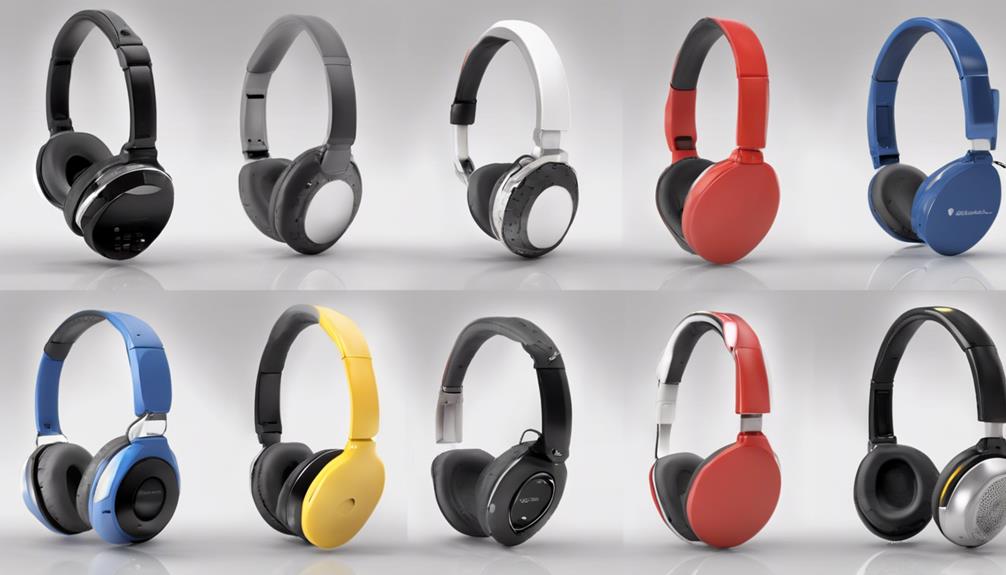

When a senior has trouble following conversation, the decision is not simply whether to buy a device that makes sound louder. The real choice is between personal sound amplifiers (PSAPs), which boost sounds for general listening, and prescription hearing aids, which are fitted to address diagnosed hearing loss. Both can make speech easier to hear in some situations, but they differ in how precisely they handle sound, what professional support comes with them, and what the purchase costs.

Get everyday helpers delivered free with Prime
- Fast, free delivery on millions of items
- Prime Video, Amazon Music and more included
- Member-only deals all year
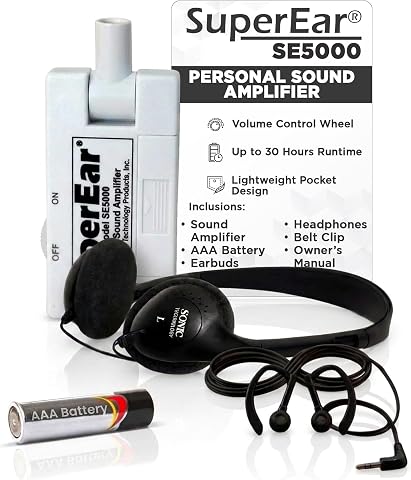
SuperEar SE5000 Hearing Amplifier for Seniors
- ✔ Amplification: Up to 50+ dB
- ✔ Battery: One AAA cell
- ✔ Stated battery life: Up to 30 hours
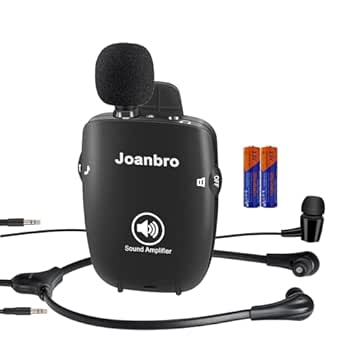
Joanbro Pocket Personal Sound Amplifier for Seniors
- ✔ Amplification: Up to 108 dB gain as listed
- ✔ Battery type: Two AAA alkaline batteries
- ✔ Stated battery life: Approximately 40 hours of moderate use

Williams Sound Pocketalker Ultra Personal Sound Amplifier
- ✔ Amplification: Up to 40 dB
- ✔ Controls: Separate volume and tone
- ✔ Power: Battery powered
PSAPs are usually the lower-cost, simpler way to amplify television, conversation, or outdoor sounds. That makes them appealing for occasional use or for someone who is still exploring whether amplification helps. Hearing aids usually cost more, but an evaluation and fitting can identify the type and degree of hearing loss, set amplification accordingly, and provide follow-up adjustments. Choose based on the senior’s hearing needs and daily listening demands, not age alone: a device that merely makes everything louder may frustrate someone who needs speech clarified in particular settings.
At a Glance
| Criteria | Personal Sound Amplifiers (PSAPs) | Prescription Hearing Aids | Winner |
|---|---|---|---|
| Purpose and personalization | General sound amplification; not tailored to a hearing-loss diagnosis | Fitted and adjusted to address diagnosed hearing loss | B |
| Professional assessment | No fitting assessment is inherently included | Typically selected and programmed following a hearing assessment | B |
| Performance in challenging settings | May raise background noise along with speech | Can be adjusted to a person’s hearing profile and listening needs | B |
| Cost and value | Typically lower purchase cost; limited personalization may reduce value for regular use | Usually more expensive; added fitting and support can justify the cost for ongoing use | A |
| Access and setup | Often sold over the counter and may be simpler to start using | Requires evaluation and fitting, though access and process vary | A |
| Follow-up and troubleshooting | Support varies by product and seller | Professional adjustment and follow-up may be available | B |
| Best use case | Occasional listening support or experimentation with amplification | Daily use and hearing difficulties across multiple settings | Depends |
SuperEar SE5000 Hearing Amplifier for Seniors
The SuperEar SE5000 is our most balanced pick for a senior who wants a portable amplifier without a long setup routine. Its tactile volume wheel is easier to locate and adjust by feel than a set of small menu controls, while the belt clip keeps the unit accessible during a conversation or while moving around the home. With headphones and discreet earbuds included, listeners can choose the style that feels more comfortable rather than having to commit to one fit.Its strongest practical advantage is the stated up to 30 hours of operation from one AAA cell, which reduces how often batteries need attention compared with Joanbro’s two-cell setup. It also lists amplification up to 50+ dB, but we would not use that number alone to predict clarity: microphone position, room noise, and individual hearing needs all matter. The swivel microphone gives some control over where sound is captured, though it still listens to the room. Unlike the Pocketalker’s included 12-foot microphone extension, the SuperEar does not provide a direct TV connection or a long extension as described here.That room-based approach is the key limitation. For watching television, the device picks up sound around the user rather than connecting to the television, so distance and competing room noise can affect the experience. Buyers who want more detailed tone adjustment should also compare it with Joanbro or the Pocketalker, both of which specify separate or selectable tone controls. Still, for straightforward controls and flexible listening accessories, this is the easiest recommendation in the group.
Pros:
- Tactile volume wheel supports simple, direct adjustments.
- Runs on one AAA cell, with stated battery life of up to 30 hours.
- Includes both stereo headphones and discreet earbuds.
- Pocket-size design with a belt clip and swivel microphone.
Cons:
- Captures ambient room sound rather than connecting directly to TV speakers.
- Offers less specified tone adjustment than the Joanbro and Pocketalker.
Best for: Seniors who want a pocket-size amplifier with a tactile volume control, a belt clip, multiple listening accessories, and infrequent battery changes.
Not ideal for: Listeners who need a direct TV connection, extensive tone adjustment, or a device selected to address severe hearing impairment.
Bottom line: We recommend the SuperEar SE5000 for seniors who value simple controls, accessory choice, and long stated battery life over advanced sound adjustments.
“We recommend the SuperEar SE5000 for seniors who value simple controls, accessory choice, and long stated battery life over advanced sound adjustments.”
Joanbro Pocket Personal Sound Amplifier for Seniors
Where the SuperEar prioritizes a simple wheel and long stated runtime, the Joanbro Pocket Personal Sound Amplifier gives listeners more ways to shape the setup. It has nine volume levels and bass, normal, and treble settings, which can help users make adjustments when voices sound too boomy or thin. Those controls may be valuable for someone willing to spend time finding a comfortable setting, but they are more to learn than the SuperEar’s single tactile wheel.The standout differentiator is the choice of three interchangeable microphones, including extension options listed at 2 metres and 6 metres. That makes Joanbro the most adaptable option here when microphone placement needs to change between a nearby conversation and a sound source farther away. Its active noise cancellation and automatic gain control are also listed features, although buyers should not assume these eliminate every distracting sound. It includes an anti-dropping headset and stereo earbuds, giving it a more configurable listening setup than a single-accessory product.Portability remains a strength: the unit is listed at 11 g and includes a belt clip. The battery arrangement needs a little more planning than the SuperEar’s single AAA cell: Joanbro uses two AAA alkaline batteries, with about 40 hours specified for moderate use. Because the supplied description also mentions AA batteries in its drawback while the specifications identify AAA cells, we recommend checking the device’s battery compartment and current product documentation before buying replacement batteries. Compared with the Pocketalker, Joanbro offers more microphone choices and explicit tone modes; the Pocketalker instead emphasizes its separate controls and included 12-foot extension cord.
Pros:
- Three microphone options allow more flexibility in microphone placement.
- Nine volume levels and bass/normal/treble settings provide meaningful adjustment choices.
- Lightweight pocket design with an included belt clip.
- Includes an anti-dropping headset and dual stereo earbuds.
Cons:
- More adjustment options can make setup less straightforward than the SuperEar.
- Requires two replaceable batteries; verify the specified AAA type before purchase.
- Room-based amplification is not the same as a direct TV audio connection.
Best for: Seniors or caregivers who want multiple microphone-placement options and are comfortable adjusting tone and volume to suit different listening situations.
Not ideal for: Buyers who prefer the fewest possible controls, want one clearly uncomplicated battery routine, or expect noise cancellation to make every environment quiet.
Bottom line: We would choose Joanbro over the simpler SuperEar when microphone flexibility and tone adjustment matter more than minimal controls.
“We would choose Joanbro over the simpler SuperEar when microphone flexibility and tone adjustment matter more than minimal controls.”
Williams Sound Pocketalker Ultra Personal Sound Amplifier
The Williams Sound Pocketalker Ultra is the most appealing choice here for a listener who wants volume and tone adjusted independently, or who needs to place a microphone nearer the person speaking or television. Its package includes a 12-foot microphone extension cord, longer than the extension lengths listed for Joanbro, so it can make positioning more practical in some rooms. That is a different advantage from the SuperEar’s pocket-first simplicity: Pocketalker puts more emphasis on control and microphone placement.The unit amplifies sound by up to 40 dB and includes deluxe headphones, a single earbud, a neck lanyard, and a microfiber cloth. The separate controls offer a more direct adjustment path than Joanbro’s bass/normal/treble choices, though the supplied specifications do not describe the number of settings or how they are marked. Its listed dimensions are compact, but the stated 16-ounce weight is heavier than Joanbro’s 11 g listing, so buyers who prioritize a very light carry should compare them carefully and confirm how weight is reported for the complete package versus the unit.Battery planning is another distinction. The Pocketalker package includes 20 AAA batteries, which gives buyers a ready supply but does not specify how long each set lasts. The SuperEar is clearer about its stated runtime, while Joanbro gives a moderate-use estimate. Pocketalker also explicitly says it is not a hearing aid and may not suit severe impairment. We see it as a considered option for focused conversations or TV listening where microphone positioning and independent adjustments are useful, not as the best all-purpose pick for every senior.
Pros:
- Separate volume and tone controls allow independent listening adjustments.
- Includes a 12-foot microphone extension cord for flexible placement.
- Package includes deluxe headphones, a single earbud, and a neck lanyard.
- Includes a bundle of 20 AAA batteries.
Cons:
- The supplied listing gives a 16-ounce weight, making portability worth checking against Joanbro.
- No battery runtime is specified, unlike the SuperEar and Joanbro descriptions.
- Explicitly not a hearing aid and may not suit severe hearing impairment.
Best for: Listeners who want separate volume and tone controls, a long microphone extension for positioning, and a package that includes headphones, an earbud, and batteries.
Not ideal for: People seeking a lightweight everyday carry, a direct wireless TV link, or a device intended to manage severe hearing impairment.
Bottom line: The Pocketalker Ultra makes the most sense when separate tone and volume controls and long microphone placement matter more than the lightest carry or clearest battery-runtime information.
“The Pocketalker Ultra makes the most sense when separate tone and volume controls and long microphone placement matter more than the lightest carry or clearest battery-runtime information.”
As an Amazon Associate we earn from qualifying purchases.
Key Differences
The biggest distinction is personalization. A PSAP amplifies sound, but it does not determine why someone is having trouble hearing or automatically tailor its settings to a diagnosed hearing profile. A hearing aid is selected and adjusted for hearing loss, often with professional input. That can matter when a senior hears some sounds well but struggles with particular pitches, speech, or noisy environments. Turning up all sound may not solve that problem and can make background noise more distracting.
Cost and convenience pull in the other direction. PSAPs are generally less expensive and easier to purchase without an appointment, which can make sense for occasional use or a limited budget. Hearing aids ask for more money and time, but fitting and follow-up support can make them a better long-term purchase for someone who needs help throughout the day. The practical decision is whether the need is occasional amplification or ongoing support for hearing loss. If hearing difficulty is persistent, a hearing evaluation is a better first step than relying on a consumer amplifier alone.
Detailed Comparison
Purpose and personalization (Prescription Hearing Aids wins — major)
PSAPs are designed to make environmental sound louder for a listener; they are not fitted to treat a specific hearing-loss pattern. Prescription hearing aids are selected and programmed around diagnosed hearing needs. Hearing aids win by a major margin for personalization. In daily use, this distinction matters if a senior needs speech made clearer rather than every sound increased together. A PSAP can still be useful when the goal is simply to hear more in a particular situation.
Professional assessment (Prescription Hearing Aids wins — major)
A PSAP purchase does not itself include a clinical evaluation, while prescription hearing aids generally follow an assessment and fitting process. Hearing aids win by a major margin for identifying and responding to hearing loss. An evaluation can help determine whether amplification is appropriate and what kind may help. If hearing changes are sudden, uneven between ears, or accompanied by other symptoms, a senior should seek medical advice rather than treating the problem as a shopping choice.
Performance in challenging listening settings (Prescription Hearing Aids wins — moderate)
A PSAP may increase speech, but it may also increase competing sounds. Hearing aids can be adjusted to the wearer’s hearing profile and may offer settings suited to different listening needs, though no device guarantees effortless conversation in every noisy place. Hearing aids win by a moderate margin for seniors who regularly struggle in groups, restaurants, or other demanding settings. For occasional quiet-room use, the difference may be less important.
Cost and value (Personal Sound Amplifiers (PSAPs) wins — moderate)
PSAPs generally cost less upfront, so they win on initial spending by a moderate margin. That is meaningful when the senior wants limited-use amplification or cannot justify a larger purchase before knowing whether a device helps. Hearing aids cost more, but fitting and follow-up support can make the added expense worthwhile for daily use. A low purchase price is not good value if the device does not address the problem; paying more makes sense when professional tailoring and sustained support will be used.
Access and setup (Personal Sound Amplifiers (PSAPs) wins — moderate)
PSAPs are often available over the counter, avoiding the appointment and fitting process associated with prescription hearing aids. They win by a moderate margin for speed and ease of access. That convenience suits someone who wants to try amplification for a specific activity. The tradeoff is less individualized setup. Hearing aids take more effort to obtain, but that process can help match the device to the listener rather than relying on a general setting.
Follow-up and troubleshooting (Prescription Hearing Aids wins — moderate)
Support for PSAPs depends on the brand and retailer, and the purchase does not inherently provide hearing-care follow-up. Prescription hearing aids may come with professional adjustments and ongoing guidance, so they win by a moderate margin for support. This is especially useful for a senior who needs help learning to wear, maintain, or adjust a device. Before buying either option, check the specific return policy and the support actually included; services vary.
Best use case (moderate difference)
PSAPs are a practical fit for occasional amplification, while hearing aids are generally better suited to persistent hearing difficulties and routine use. Neither wins for every listener, so the result depends on the need. If the senior struggles in many everyday settings, a hearing assessment and fitted hearing aids are the stronger route. If the need is limited to a particular activity and there is no known hearing-loss diagnosis, a PSAP may be a reasonable lower-cost trial.
Personal Sound Amplifiers (PSAPs): Pros and Cons
Pros:
- Usually lower upfront cost than prescription hearing aids
- Often available without a hearing-care appointment
- Can provide situational amplification for television or conversation
Cons:
- Not tailored to a diagnosed hearing-loss pattern
- May amplify background noise along with speech
- Professional fitting and follow-up are not inherently part of the purchase
Prescription Hearing Aids: Pros and Cons
Pros:
- Can be programmed to address an individual hearing profile
- Professional assessment and fitting can guide device selection
- Follow-up adjustments may support regular, long-term use
Cons:
- Usually costs more upfront
- Takes more time to obtain because of assessment and fitting
- Benefit and service depend on the device and support offered
Who Should Choose What
Choose Personal Sound Amplifiers (PSAPs) if:
- You want lower-cost amplification for occasional listening or a specific activity.
- You want to try a consumer device before committing to a more expensive fitted option, and your hearing difficulty is not persistent or unexplained.
- Convenient over-the-counter access matters more than individualized programming.
Choose Prescription Hearing Aids if:
- Hearing difficulty affects everyday conversation or multiple settings.
- You want an evaluation and device settings matched to diagnosed hearing loss.
- You expect to use amplification regularly and value professional adjustments and follow-up.
Skip both if: Skip shopping for either as the first response to sudden hearing loss, ear pain, drainage, dizziness, or a marked difference between ears; seek medical evaluation. If an amplifier makes listening uncomfortable or does not help, get hearing assessed rather than simply increasing volume.
Value for Money
PSAPs are the better value when the need is occasional and modest: the lower price and quick access may be enough for a senior who wants help hearing the television or a conversation in a quiet place. They are a less convincing value when the person expects reliable, all-day support but has no way to tailor the sound or get help with problems.
Paying more for prescription hearing aids is worthwhile for many seniors with persistent hearing loss, especially when professional assessment, programming, and follow-up are included in the purchase. The higher cost buys a more individualized process, not a guarantee that every listening challenge will disappear. Compare what the provider includes, such as fitting visits, adjustments, and service terms. If the senior is unsure whether hearing aids are needed, an evaluation is more useful than buying a PSAP solely to postpone finding out what is causing the difficulty.
Final Verdict
For a senior with ongoing difficulty hearing conversation, prescription hearing aids are the stronger recommendation: assessment, individualized fitting, and possible follow-up make them better suited to regular use. Choose PSAPs when the need is occasional, the goal is basic situational amplification, and keeping upfront spending low matters most. The deciding factor is whether the problem is limited amplification or persistent hearing loss. Do not treat a PSAP as a substitute for an evaluation when hearing problems are frequent, worsening, or unexplained.
Frequently Asked Questions
Are personal sound amplifiers the same as hearing aids?
No. PSAPs amplify environmental sound for general listening, while prescription hearing aids are fitted and adjusted to address diagnosed hearing loss. Their purpose and level of personalization differ.
Can a personal sound amplifier help an older adult hear conversations?
It may help in some situations by making sound louder, particularly in a quieter setting. It can also raise background noise, so it may not clarify speech when a senior struggles in groups or has a particular hearing-loss pattern.
Should a senior try a PSAP before getting a hearing test?
A PSAP may suit occasional listening support, but it does not explain the cause of hearing difficulty. For persistent, worsening, or unexplained problems, arrange a hearing assessment rather than using an amplifier as a replacement.
Are prescription hearing aids worth the higher cost?
They are more likely to be worth the added cost when hearing support is needed every day and fitting or follow-up services are included. For occasional use, a lower-cost PSAP may be sufficient. Compare the actual services and return terms rather than price alone.
Halloween Picks
halloween
As an affiliate, we earn on qualifying purchases.