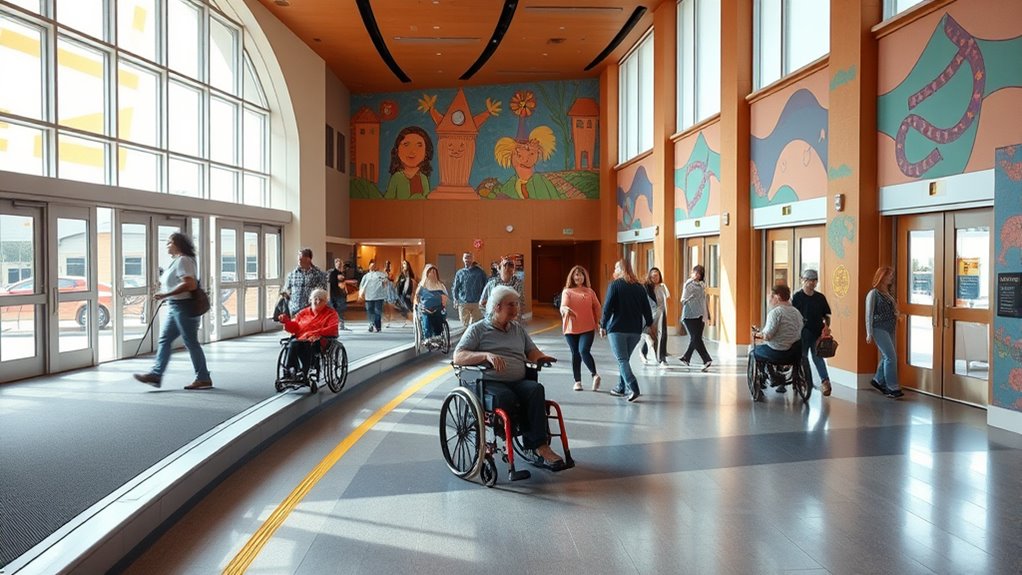

As a patron, you can expect public venues to meet ADA Title III requirements, meaning they should be accessible and welcoming for everyone. This includes accessible parking, ramps, elevators, and restrooms, along with clear signage and pathways. Staff should understand service animal policies and respect your rights. While many venues aim for full compliance, some may still improve. Keep going to learn more about what you’re entitled to and how venues are evolving to serve all visitors.

Get everyday helpers delivered free with Prime
- Fast, free delivery on millions of items
- Prime Video, Amazon Music and more included
- Member-only deals all year
Key Takeaways
- Accessible parking spaces are near entrances, clearly marked, and wide enough for mobility devices.
- Entrances include ramps or elevators if stairs are present, ensuring easy access for all patrons.
- Restrooms and pathways are unobstructed, easily navigable, and meet ADA standards.
- Venues permit service animals without unnecessary restrictions or fees, respecting patrons’ rights.
- Staff are trained to understand accessibility policies and assist patrons with diverse needs effectively.

Are public venues fully accessible to everyone? That’s a question many people ask, especially when considering how well these spaces accommodate individuals with disabilities. Under ADA Title III, public venues are required to remove barriers and provide equal access, but the reality can vary. When you visit a mall, theater, or stadium, you should expect certain features to be in place, like accessible parking and clear service animal policies. These elements are essential to guaranteeing that everyone can enjoy the space comfortably and independently.
Accessible parking is a vital aspect of ADA compliance. You should find designated spaces close to the venue’s entrance, clearly marked with signage and equipped with wider spaces for ease of access. These parking spots aren’t just a courtesy—they’re a legal requirement for many public venues. When planning your visit, it’s helpful to look for these designated areas, which are designed to accommodate wheelchairs, mobility devices, or anyone who needs closer access. Properly marked accessible parking helps reduce the physical barriers that might otherwise make reaching the venue difficult or unsafe.
Service animal policies are another key area where compliance matters. You have the right to bring your service animal into public venues, and these spaces are legally obligated to allow them. However, some places might have specific policies or restrictions, so it’s important to check ahead if possible. Typically, venues should permit service animals to accompany you, and staff should understand the distinction between service animals and pets. They shouldn’t ask for unnecessary documentation or impose additional fees, and they must guarantee that service animals are welcomed without discrimination. Clear signage or staff training can help make these policies transparent and respectful, guaranteeing your service animal can assist you without hassle.
Beyond parking and service animals, you can generally expect entrances to have ramps or elevators if there are stairs, accessible restrooms, and designated pathways that are free of obstructions. Venues should also provide seating options that accommodate various needs and ensure that information or signage is easy to read. While many venues aim to meet ADA standards, some may fall short, which is why awareness of your rights can help you advocate for better accommodations.
ADA compliant accessible parking lot signs
As an affiliate, we earn on qualifying purchases.
As an affiliate, we earn on qualifying purchases.
Frequently Asked Questions
How Often Are Public Venues Required to Update Their Accessibility Features?
You might wonder how often public venues need to update their accessibility features. Generally, they should conduct regular accessibility audits and follow maintenance schedules to guarantee ongoing compliance. While there isn’t a fixed timeline, many venues review accessibility every 1-3 years or after any major renovations. Staying proactive helps you enjoy accessible experiences, knowing that the venue is committed to meeting ADA standards and maintaining safe, inclusive environments for all patrons.
What Should I Do if a Venue Refuses ADA Accommodations?
If a venue refuses ADA accommodations, you should first calmly request to speak with management and explain your needs. Document the incident and note any disability discrimination. You can file a complaint with the Department of Justice or local accessibility enforcement agencies. Your actions help make sure venues comply with ADA laws, promoting accessibility enforcement and protecting your rights against discrimination based on disability.
Are There Specific Penalties for Non-Compliance With ADA Title III?
Think of ADA enforcement as a vigilant guardian, ensuring fairness. If a venue ignores the rules, legal penalties can strike like lightning, including fines, lawsuits, or orders to make immediate accessibility improvements. While specific penalties vary, non-compliance casts a long shadow, reminding businesses that upholding ADA standards isn’t optional. You can trust that the law actively protects your right to access, holding violators accountable when they fall short.
How Can Patrons Report ADA Violations at a Public Venue?
You can report ADA violations by following the venue’s complaint procedures, which often include submitting a formal complaint online or in writing. It’s helpful to request accessibility audits if you notice issues. Your feedback can prompt the venue to address barriers. Be sure to document your concerns clearly and keep copies of your communication. Your proactive reporting helps improve accessibility for everyone, ensuring compliance and a more inclusive environment.
What Rights Do Service Animals Have in Ada-Compliant Venues?
You might think service animals have unlimited access, but ADA pet policies clarify their rights. Under the ADA, service animals are legally permitted anywhere the public is, as they are trained to assist individuals with disabilities. Their rights include being present in restaurants, hotels, or theaters, and venues can’t restrict or charge extra for them. You have the right to be accompanied by your service animal, ensuring equal access and support.
Conclusion
Understanding your rights and what to expect from public venues under ADA Title III ensures you’re not left in the dark. When venues prioritize accessibility, everyone benefits—so don’t hesitate to speak up if something’s missing. After all, isn’t it worth advocating for spaces where everyone can fully participate? By staying informed and engaged, you help promote a more inclusive environment. Accessibility isn’t just a requirement; it’s a reflection of respect and equality for all patrons.
Halloween Picks
halloween
As an affiliate, we earn on qualifying purchases.