
Choosing between table microphones and ceiling arrays depends on your room size, layout, and audio needs. Table microphones work well for small to medium rooms, providing clear sound and easy adjustments, while ceiling arrays suit larger or dynamic spaces with broader coverage and better noise reduction. Consider installation complexity, cost, and user experience to find the best fit. Explore further to discover how each option can optimize your boardroom sound environment.
Key Takeaways
- Table microphones provide superior voice clarity for individual speakers, ideal for smaller, close-proximity boardroom settings.
- Ceiling arrays offer wider coverage and better noise reduction, suitable for large or dynamic conference rooms.
- Installation of ceiling arrays is more complex and costly, requiring professional setup, while table microphones are easier and cheaper to install.
- Ceiling arrays deliver a sleek, unobtrusive appearance with minimal clutter, enhancing room aesthetics.
- For flexible, user-friendly operation and easy adjustments, table microphones are generally more convenient than ceiling array systems.

TONOR Conference USB Microphone, Omnidirectional Condenser PC Mic for Video Conference, Recording, Skype, Online Class, Court Reporter, Plug & Play Compatible with Mac OS X Windows PC Compute, G11
Omnidirectional Microphone – It is not a Speaker or Speakerphone, it is a condenser microphone. The microphone has…
As an affiliate, we earn on qualifying purchases.
As an affiliate, we earn on qualifying purchases.
Design and Installation Considerations

When deciding between table microphones and ceiling arrays, understanding the design and installation considerations is vital. Wireless connectivity plays a significant role, as some systems require robust, reliable connections to support seamless communication. With table microphones, you need to plan for power sources and cabling, which can impact room layout and aesthetics. Ceiling arrays, on the other hand, are often favored for their sleek, unobtrusive appearance, blending seamlessly into the room’s design. Aesthetic integration is essential, especially in professional environments where visual appeal matters. Installation complexity varies; ceiling arrays typically require professional setup and precise positioning, while table microphones are more straightforward. Evaluating these factors helps guarantee your chosen system complements your space’s design and functionality. Additionally, understanding sound quality and mixing techniques can significantly enhance overall audio clarity in conference environments.
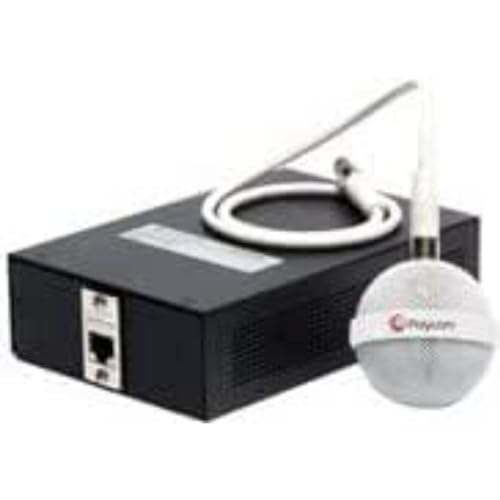
Polycom IP Ceiling Microphone Array-White: Contains Electronics Interface, Wall PLA Digital Cameras/Keyboards/INPU Microphones – Audio Input (10273900)
360-degree directional pickup
As an affiliate, we earn on qualifying purchases.
As an affiliate, we earn on qualifying purchases.
Audio Quality and Coverage

Choosing between table microphones and ceiling arrays substantially impacts audio quality and coverage. Table microphones typically deliver superior sound clarity for individual speakers, capturing voices directly and minimizing background noise. This makes conversations clearer and easier to understand. Ceiling arrays, on the other hand, provide broader coverage, allowing sound to be picked up from multiple directions, which is ideal for larger or more dynamic spaces. They also excel in noise reduction by filtering out ambient sounds, ensuring that voices stand out despite background activity. However, ceiling arrays may sometimes sacrifice some sound detail compared to table microphones. Your choice affects how well participants are heard and how effectively the system manages noise, ultimately shaping the overall audio experience in your boardroom. Additionally, understanding the types of microphones can help in selecting the most suitable option for your specific needs.

MELONARE 4-Channel Wireless Conference Microphone System, UHF Compact Cordless Mic Set w/ 4×10 Frequencies, 200ft Range, 4 Gooseneck Mics for Lecture, Church, Conference, Public Speaking (MWM-41-4G)
CLEAR PRISTINE AUDIO: This wireless conference microphone system features UHF digital transmission and a 24-bit/48kHz sampling rate, delivering…
As an affiliate, we earn on qualifying purchases.
As an affiliate, we earn on qualifying purchases.
Flexibility and User Experience
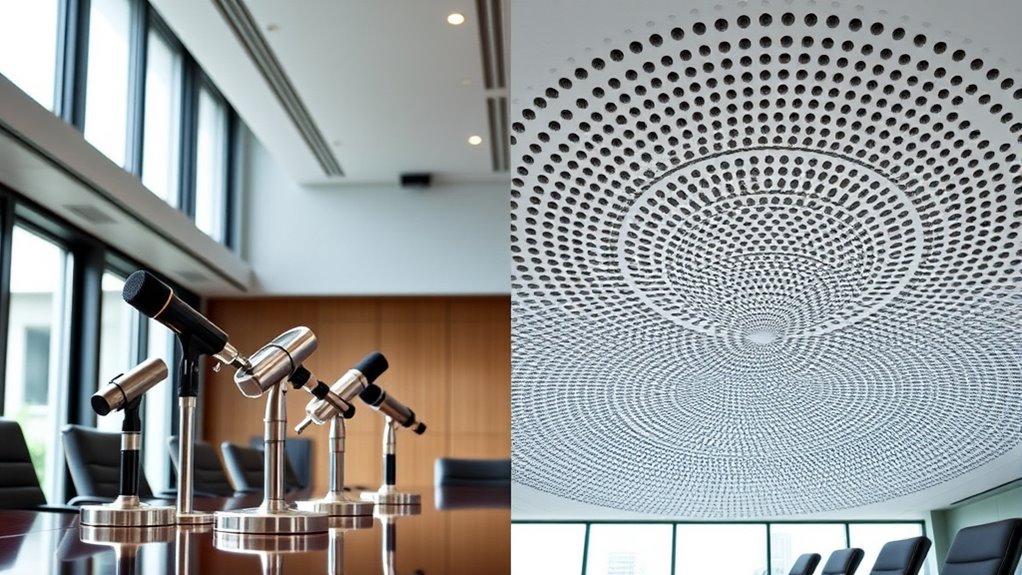
Flexibility and user experience are key factors to contemplate when selecting between table microphones and ceiling arrays. With table microphones, you gain better audio customization, allowing each participant’s voice to be captured clearly without interference. This setup enhances user convenience because adjusting individual microphones is straightforward during meetings. Ceiling arrays, on the other hand, offer a more seamless experience by eliminating clutter and providing consistent coverage across the room. They often feature smart beamforming, which adapts to the room’s layout, improving overall versatility. Both options influence how easily users can operate the system and how well they can customize audio settings for optimal clarity. Ultimately, your choice should prioritize how these features align with your meeting environment and user preferences. Additionally, understanding the benefits of clear audio can help you select a system that enhances communication efficiency.
Polycom IP Ceiling Microphone Array-White: Contains Electronics Interface, Wall PLA Digital Cameras/Keyboards/INPU Microphones – Audio Input (10273900)
360-degree directional pickup
As an affiliate, we earn on qualifying purchases.
As an affiliate, we earn on qualifying purchases.
Cost and Maintenance Factors

Cost and maintenance are important considerations that can considerably impact your overall investment in microphone systems. Pricing differences between table microphones and ceiling arrays can be significant, affecting your initial budget. Ceiling arrays often have higher upfront costs due to their advanced technology and installation complexity. Maintenance costs are also a key factor, as ceiling arrays may require specialized servicing and calibration over time. Conversely, table microphones tend to be more affordable upfront and easier to maintain. Keep in mind:
- Ceiling arrays usually have higher initial purchase prices
- Maintenance costs for ceiling arrays can be higher due to complexity
- Table microphones often involve lower ongoing costs
- The technology used in ceiling arrays can influence both upfront and ongoing expenses.
Choosing the right system depends on balancing your budget with long-term maintenance needs.
Ideal Room Environments for Each Option
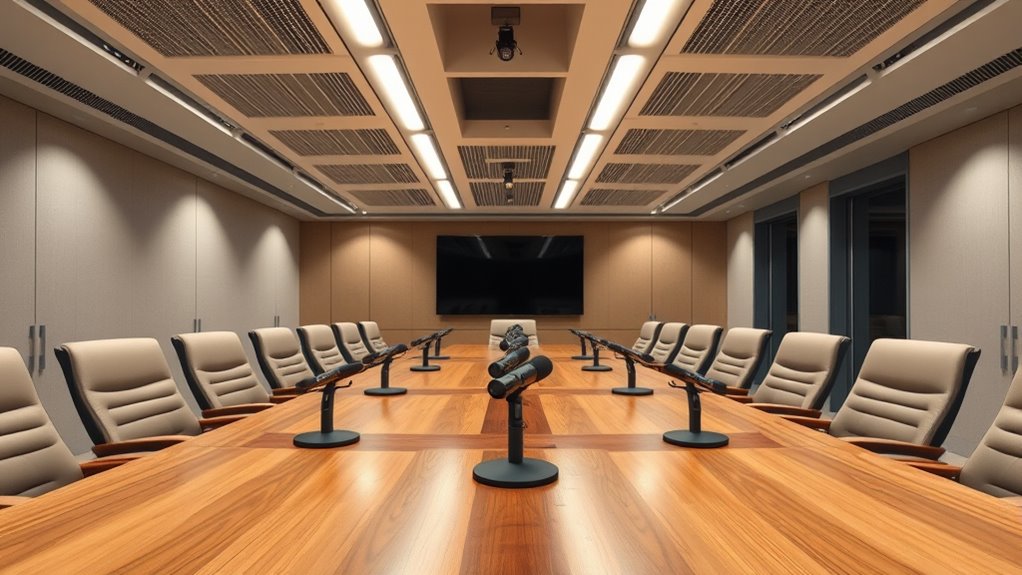
Table microphones are best suited for small to medium-sized rooms where audio sources are close to the microphone and sound clarity is a priority. These environments typically have a limited room size, making it easier to capture clear audio without significant background noise. Adequate acoustic treatment enhances sound quality by reducing echoes and reverberations, ensuring the microphone picks up voices accurately. In larger rooms, table microphones may struggle to pick up distant speakers clearly. Conversely, ceiling arrays excel in larger spaces with complex layouts, where sound needs to be captured evenly across the room. Proper acoustic treatment in these environments minimizes unwanted reflections, further improving overall audio quality. Additionally, understanding best microphone options for specific room environments ensures optimal sound capture and clarity. Tailoring your choice to the room size and acoustic conditions ensures ideal performance for each microphone type.
Frequently Asked Questions
How Do Microphone Types Impact Room Aesthetics?
You might notice that microphone types affect your room’s aesthetics through their visual impact and design integration. Table microphones are more conspicuous on the surface, possibly cluttering the look, while ceiling arrays blend seamlessly into the ceiling, maintaining a sleek appearance. Choosing the right type depends on your aesthetic priorities, as you want technology that enhances the room’s design without drawing unnecessary attention, creating a clean, professional environment.
Can Both Microphone Types Be Integrated With Existing AV Systems?
Wondering whether you can weave both microphone types into your existing AV system? Yes, you can! Wireless microphones require minimal wiring and need a reliable power supply, making integration straightforward. Ceiling arrays often connect seamlessly via standard audio inputs. You just need to guarantee compatibility with your current system’s hardware and software. With proper setup, both microphones can work together, enhancing sound clarity without disrupting your room’s aesthetic or functionality.
What Are the Troubleshooting Steps for Common Microphone Issues?
When troubleshooting microphone issues, start by checking hardware compatibility to guarantee all components work together. Then, perform feedback calibration to identify and reduce unwanted sound loops. If you’re experiencing poor audio quality or no sound, verify connections and power sources. Adjust positioning if necessary, and update firmware or drivers. Regular maintenance helps prevent issues, making your system more reliable and ensuring clear communication in your boardroom.
Are There Specific Brands Recommended for Each Microphone Type?
You might think choosing a brand is just about names, but it’s like picking a partner for a marathon—brand compatibility and microphone durability matter! For table microphones, brands like Shure and Sennheiser excel, offering rugged durability and seamless integration. Ceiling arrays from brands like Yamaha and Biamp are known for their reliability and advanced features. Trust these brands to deliver top-tier performance, ensuring your boardroom audio stays crystal clear and dependable.
How Do Microphones Handle Different Speech Volumes and Accents?
You’ll find that good microphones handle different speech volumes and accents by focusing on speech clarity and noise cancellation. They adapt to varying volumes, ensuring soft and loud voices are clear. Advanced noise cancellation filters out background sounds, making accents more understandable. This means your meetings stay crisp, even if participants speak softly or have diverse accents, creating a more inclusive and effective communication environment.
Conclusion
Choosing between table microphones and ceiling arrays depends on your room’s needs. While table mics offer intimacy and direct sound capture, ceiling arrays provide sleek coverage without clutter. It’s a trade-off between personal control and unobtrusive design. So, whether you prioritize user interaction or a clean aesthetic, understanding these differences helps you make the right call. Ultimately, your room’s layout and your tech preferences will guide you toward the perfect audio solution.