If you get a cochlear implant for single-sided deafness, you can expect better sound localization and clearer speech in noisy places. Your hearing may improve gradually over several months, with initial awareness coming within weeks. Success depends on factors like how early you get implanted and how much you practice. Though challenges exist, ongoing rehab and support can make a big difference. Keep exploring to learn more about what to anticipate on your hearing journey.

Get everyday helpers delivered free — and shop member deals
- Fast, free delivery on millions of items
- Access to Prime Big Deal Days deals on October 6–7
- Prime Video, Amazon Music and more included
Key Takeaways
- Cochlear implants can improve sound localization and spatial awareness in individuals with single-sided deafness.
- Users often experience enhanced speech recognition, especially in noisy environments, over time.
- Outcomes vary based on factors like age at implantation, nerve health, and commitment to auditory training.
- Full benefits typically develop over several months, with ongoing device maintenance supporting long-term performance.
- Emotional adaptation and realistic expectations are important for successful integration and improved quality of life.
cochlear implant for single-sided deafness
As an affiliate, we earn on qualifying purchases.
As an affiliate, we earn on qualifying purchases.
How Cochlear Implants Improve Sound Localization

Cochlear implants can substantially enhance sound localization for individuals with single-sided deafness by providing binaural cues that are otherwise missing. These devices help you pinpoint where sounds come from more accurately, improving your awareness of your environment. The improved sound quality delivered by modern implants allows you to distinguish between different sources more clearly, aiding in spatial awareness. Additionally, device durability ensures that your cochlear implant remains reliable over time, so you can focus on localizing sounds without worrying about frequent repairs or replacements. This combination of enhanced sound quality and sturdy design makes cochlear implants an effective solution for better sound localization, helping you regain a natural sense of space and safety in everyday situations. Incorporating personal development techniques such as mindfulness and goal setting can further support adapting to new hearing capabilities and improving overall quality of life.
Speech Recognition in Noisy Environments

When you’re in noisy environments, understanding speech can be challenging, but cochlear implants offer solutions. Noise reduction strategies help filter out background sounds, making speech clearer. Improving signal clarity is essential for better communication in these situations. Celebrating the role of fathers in supporting communication can also foster patience and understanding in challenging listening environments.
Noise Reduction Strategies
In noisy environments, understanding speech can be a considerable challenge for individuals with single-sided deafness, but advanced noise reduction strategies can make a difference. Modern cochlear implant processors use sound filtering to minimize background noise, helping you focus on conversations. These algorithms analyze incoming sounds and suppress unwanted noise while preserving speech signals, making it easier to follow speech amid background noise. Some devices automatically adjust their filtering based on the environment, providing a more natural listening experience. By reducing distractions from background noise, these strategies improve your overall communication ability. Additionally, sound processing technology plays a crucial role in enhancing speech clarity by dynamically adapting to changing acoustic environments. Remember, while noise reduction can markedly enhance clarity, combining it with good listening practices will give you the best results in challenging environments.
Signal Clarity Improvement
Improving speech recognition in noisy environments is essential for individuals with single-sided deafness, as background noise often hampers understanding. Enhancing sound quality and speech intelligibility helps you reconnect with conversations and your surroundings. To achieve this, modern cochlear implants focus on:
- Reducing background noise so speech sounds stand out clearly.
- Enhancing signal clarity to improve overall sound quality.
- Improving directional hearing to better focus on the speaker.
- Optimizing processing algorithms for more natural and accurate sound perception.
These improvements help you distinguish speech from noise, making social interactions more comfortable and less frustrating. With better sound quality and speech intelligibility, you regain confidence in noisy settings, improving your overall quality of life.
Factors Influencing Success With SSD CIS

Your success with a SSD cochlear implant often depends on how much hearing loss you have and when you get the implant. If your hearing loss is more severe or if you receive the implant early, your outcomes tend to improve. Understanding these factors can help set realistic expectations and guide your treatment plan. Additionally, incorporating sound design techniques, such as tailored auditory training and immersive listening environments, can further enhance adaptation and performance with the device.
Degree of Hearing Loss
The degree of hearing loss on the affected side substantially impacts how well a cochlear implant (CI) will work for someone with single-sided deafness (SSD). If the auditory nerve remains intact, your chances of success increase. However, severe cochlear damage can limit outcomes. Consider these factors:
- Mild hearing loss means the auditory nerve may still transmit some signals, improving your chances.
- Moderate loss might require more advanced mapping for better sound perception.
- Severe cochlear damage could diminish the CI’s effectiveness, especially if the nerve is compromised.
- Complete cochlear destruction may result in limited benefit, as the nerve may not respond to stimulation.
Your hearing prognosis depends heavily on the extent of cochlear damage and nerve integrity, guiding realistic expectations.
Timing of Implantation
Timing of implantation plays a critical role in determining the success of cochlear implants for individuals with single-sided deafness. Early intervention is key, as it can maximize the benefits of the device and help prevent auditory deprivation. The sooner you receive an implant after hearing loss occurs, the better your chances of improving sound localization and speech understanding in noisy environments. Delaying implantation may lead to reduced neural plasticity, making it harder to adapt to the device. If you’re considering a cochlear implant, discussing the *conducive* timing with your audiologist is essential. Prompt action can improve your overall outcomes and help you regain more natural hearing, making everyday listening easier and more effective.
Expected Timeline for Hearing Improvements
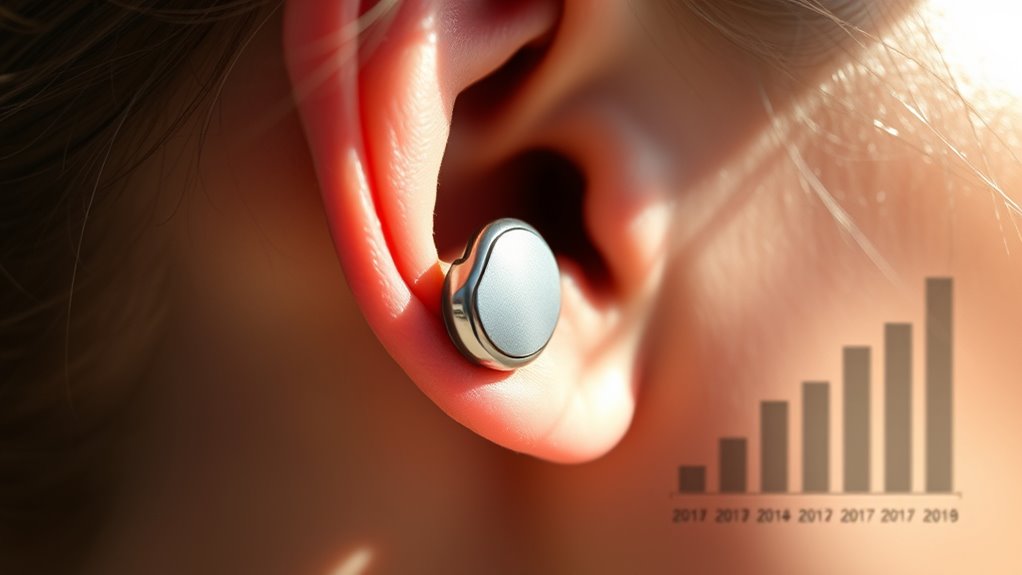
After receiving a cochlear implant, many individuals notice initial improvements within a few weeks, but it typically takes several months to experience the full benefits. During this period, you may notice:
- Better awareness of sounds, enhancing your daily environment.
- Gradual improvement in music enjoyment, allowing you to reconnect with favorite melodies.
- Reduced tinnitus, helping you manage ringing or buzzing more effectively.
- Increased confidence in localizing sounds, making conversations easier.
- Understanding the importance of neural adaptation in achieving optimal hearing outcomes, as the brain learns to interpret new auditory signals.
Patience is key, as neural adaptation takes time. Your brain needs this period to interpret new auditory signals, leading to richer sound quality and more natural hearing. Over months, you’ll likely find that your hearing becomes more consistent, making everyday experiences more fulfilling.
Common Challenges and Limitations
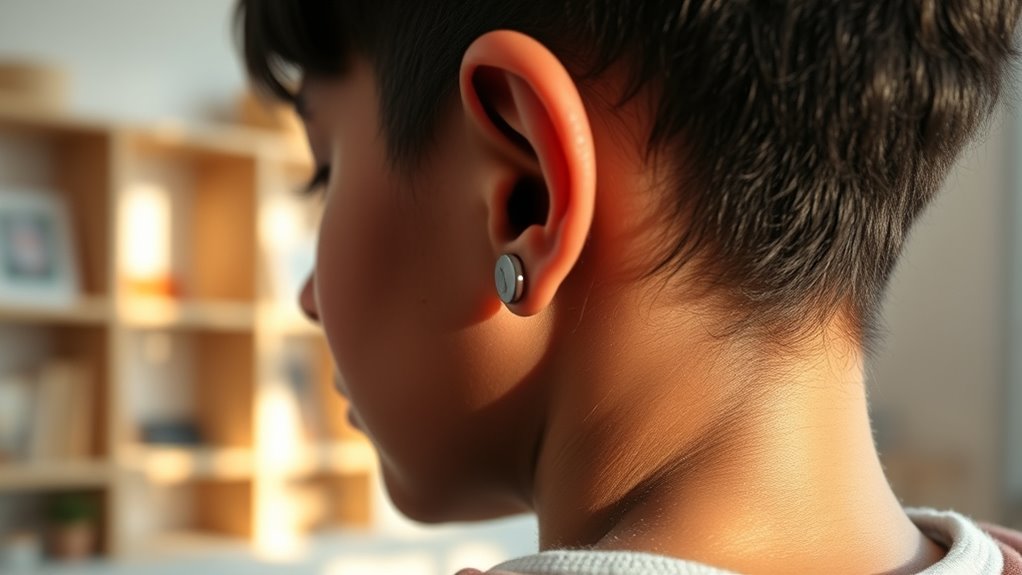
While cochlear implants can markedly improve hearing, they also come with certain challenges and limitations. One major concern is device durability; over time, the implant’s components may wear out or encounter technical issues, requiring repairs or replacements. Maintenance requirements can be ongoing, with regular cleaning and check-ups necessary to guarantee peak performance. You might experience occasional device malfunctions or difficulties with sound quality, especially in noisy environments. Additionally, some users find the external hardware cumbersome or noticeable, which can affect confidence and comfort. While technological advancements continue to improve implant reliability, these limitations mean you should be prepared for potential repairs or adjustments. Understanding these challenges helps set realistic expectations and encourages proactive management of your cochlear implant.
The Role of Rehabilitation and Training

How crucial is rehabilitation and training in maximizing the benefits of cochlear implants? It’s essential for your success. Through auditory training, you strengthen your ability to interpret sounds, making conversations clearer. Cognitive adaptation helps your brain adjust to new auditory input, improving focus and understanding. Here’s what you can expect:
- Rebuilding your sound awareness and recognition
- Developing skills for localizing sounds
- Enhancing speech comprehension in noisy environments
- Strengthening your brain’s ability to adapt to the implant
Consistent practice accelerates progress and deepens your connection to the hearing world. The combination of auditory training and cognitive adaptation transforms initial challenges into meaningful communication, empowering you to regain confidence and reconnect with your surroundings. Personalized care plays a significant role in tailoring these rehabilitation strategies to your individual needs.
Personal Variability in Outcomes

Everyone’s experience with cochlear implants varies, and outcomes depend on multiple factors. Your emotional adaptation plays a significant role in how quickly you adjust to the device and integrate it into daily life. Feeling comfortable with the device is essential; if it causes discomfort or irritation, it can hinder progress. Some people find that their hearing improves rapidly, while others need more time and support. Personal motivation, the duration of deafness before implantation, and the quality of post-implantation training also influence results. Remember, outcomes are unique to you. Focusing on emotional well-being and ensuring device comfort can help maximize your experience. Patience and perseverance are key, as your journey with a cochlear implant is highly individualized. Existential themes in understanding personal choices can also foster a deeper appreciation of your unique adaptation process.
Long-Term Benefits and Maintenance
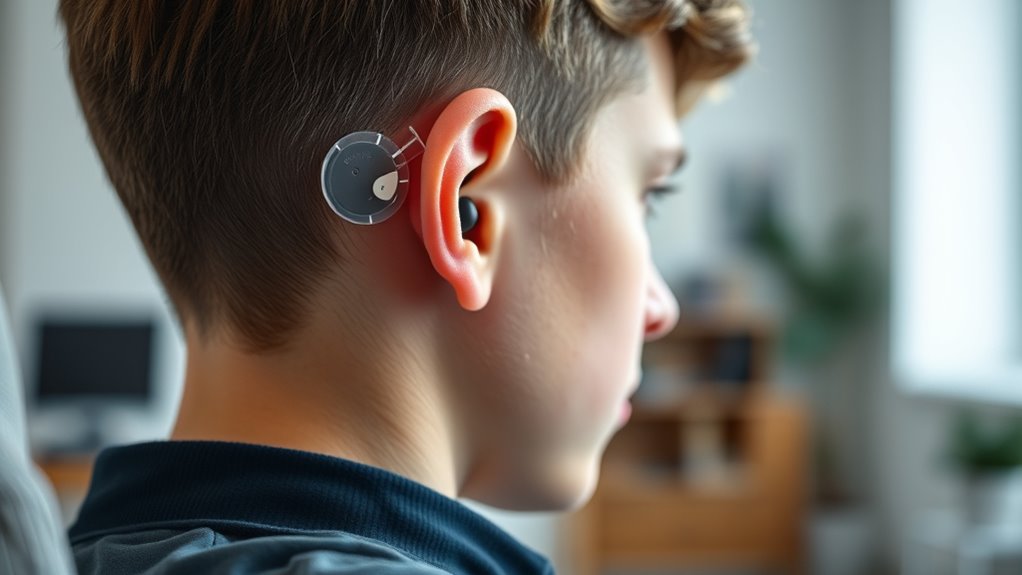
Maintaining your cochlear implant over the long term guarantees you continue to experience its benefits and address any issues promptly. Regular attention ensures device durability and peak performance. By sticking to maintenance routines, you can:
- Keep your device functioning smoothly and prevent unexpected failures.
- Extend the lifespan of your implant and its components.
- Reduce the risk of discomfort or malfunction from dirt or moisture buildup.
- Maximize your hearing benefits, maintaining clarity and sound quality.
- Incorporate headphone maintenance practices to ensure optimal operation and comfort.
Consistent care involves cleaning your device, checking for updates, and visiting your audiologist regularly. Staying proactive with these routines helps you enjoy reliable hearing, peace of mind, and a better quality of life. Long-term maintenance is the key to lasting benefits.
Setting Realistic Expectations for Patients
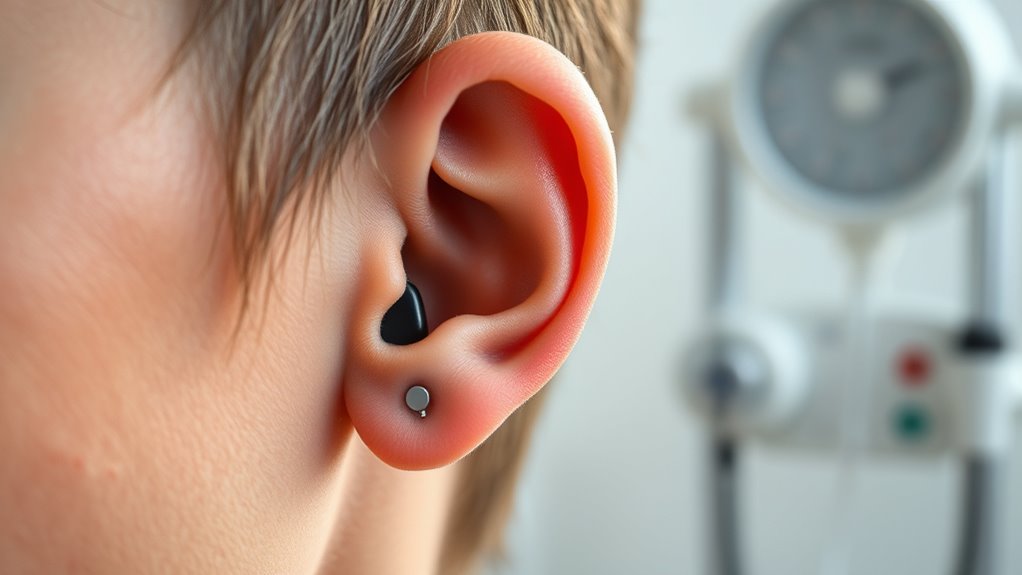
Setting realistic expectations is essential for ensuring a positive experience with cochlear implants. You should understand that emotional adaptation takes time, and initial sound perceptions may be unfamiliar. Social integration can improve gradually as you become more comfortable, but full clarity might not happen immediately. To help you visualize this process, consider the following:
| Stage | Focus | Outcome |
|---|---|---|
| Early Adjustment | Emotional adaptation | Building comfort with new sounds |
| Middle Phase | Social integration | Participating confidently in conversations |
| Long-term | Ongoing support and adaptation | Enhanced quality of life |
Understanding these stages helps set practical goals, manage expectations, and foster emotional resilience during your journey. Recognizing the importance of ongoing support and therapy can significantly influence your success with cochlear implants.
Frequently Asked Questions
Can Children With SSD Benefit Equally From Cochlear Implants?
You might wonder if children with SSD benefit equally from cochlear implants. While outcomes vary, many experience improved auditory development and better sound localization. Speech therapy plays a vital role in maximizing benefits. Factors like age at implantation and the child’s overall health influence success. With early intervention and proper support, children can develop stronger listening skills, making cochlear implants a valuable option for many, though individual results may differ.
Are There Risks or Side Effects Associated With SSD Cochlear Implantation?
You should know that cochlear implantation for SSD has some risks, like surgical risks and device failure. Surgical risks include infections or damage to surrounding tissues, though they’re rare. Device failure can happen, requiring additional surgeries or adjustments. It’s important to discuss these potential risks with your doctor to weigh the benefits against possible complications, ensuring you’re well-informed before proceeding with the implant.
How Does Age at Implantation Affect Hearing Outcomes?
You’ll find that age at implantation greatly influences hearing outcomes because of age-related neuroplasticity. Younger individuals benefit from early intervention, as their brains adapt more readily to new auditory input, leading to improved sound localization and speech understanding. Implanting early maximizes the brain’s ability to reorganize and develop effective hearing skills, so if you can, earlier is better for achieving best results with cochlear implants.
Will Cochlear Implants Completely Restore Normal Hearing?
Imagine a dawn breaking over a quiet landscape—cochlear implants can brighten your hearing, but they may not bring back the full symphony of natural sound. While they provide hearing amplification and improve sound localization, they often don’t restore normal hearing completely. You might notice clearer conversations and better awareness of your surroundings, yet some nuances of sound could remain elusive. Think of it as a gentle awakening, rather than a perfect return to the original melody.
What Are the Maintenance Requirements for Long-Term Device Functionality?
To keep your cochlear implant working well long-term, you need to regularly perform device cleaning to prevent buildup and guarantee clear sound quality. Additionally, manage your batteries by charging or replacing them as needed, so the device stays powered. Following your audiologist’s instructions on maintenance helps prolong device life, reduces technical issues, and keeps your hearing experience consistent and reliable over time.
Conclusion
Just as Icarus learned, aiming too high without understanding your wings can lead to setbacks. With proper expectations and dedication, cochlear implants can transform your experience, restoring a sense of balance and connection. Remember, progress is a journey—each step echoes the odyssey of those who’ve navigated similar waters. Trust in the process, stay patient, and embrace the potential for renewed clarity, knowing that, like the dawn after night, brighter days lie ahead.
Fall Picks
fall essentials
As an affiliate, we earn on qualifying purchases.