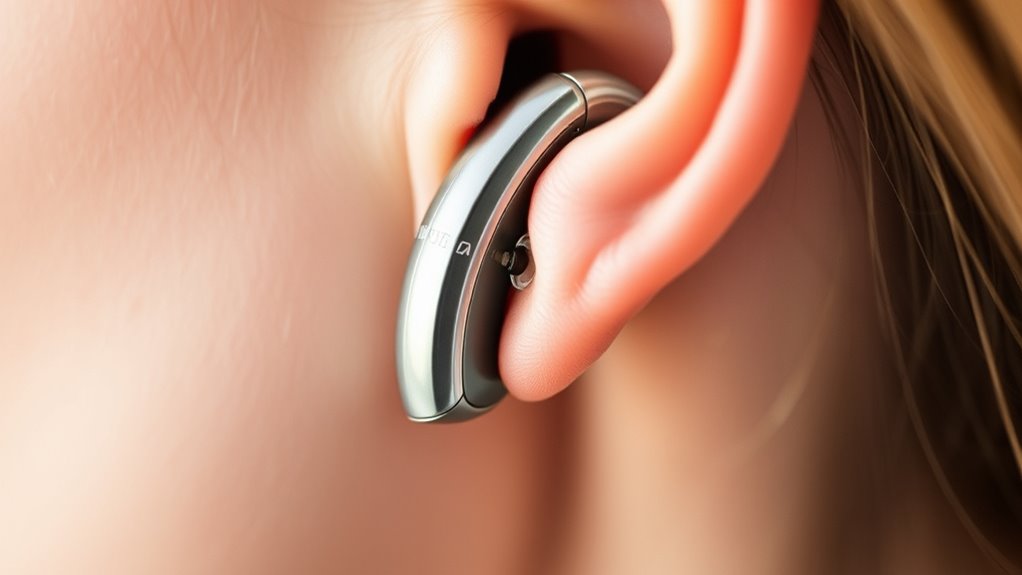

Your hearing aids don’t whistle because they have advanced feedback cancellation technology that actively detects and suppresses unwanted sounds before they become audible. These devices use adaptive algorithms to analyze incoming audio in real-time, distinguishing speech from feedback and preventing that squealing noise. Proper microphone placement also helps reduce chances of whistling. As a result, you experience clear, natural sound without irritating feedback. If you want to understand exactly how this technology works, keep exploring further.
Key Takeaways
- Modern hearing aids use adaptive algorithms to detect and suppress feedback before it becomes audible.
- Precise microphone placement near the ear canal minimizes sound looping, reducing whistling.
- Feedback cancellation technology analyzes incoming sounds in real-time to prevent squeals proactively.
- Advanced filtering systems monitor sound levels and frequencies to block potential feedback triggers.
- Continuous learning and environment adaptation enhance feedback control, ensuring quiet, natural listening.
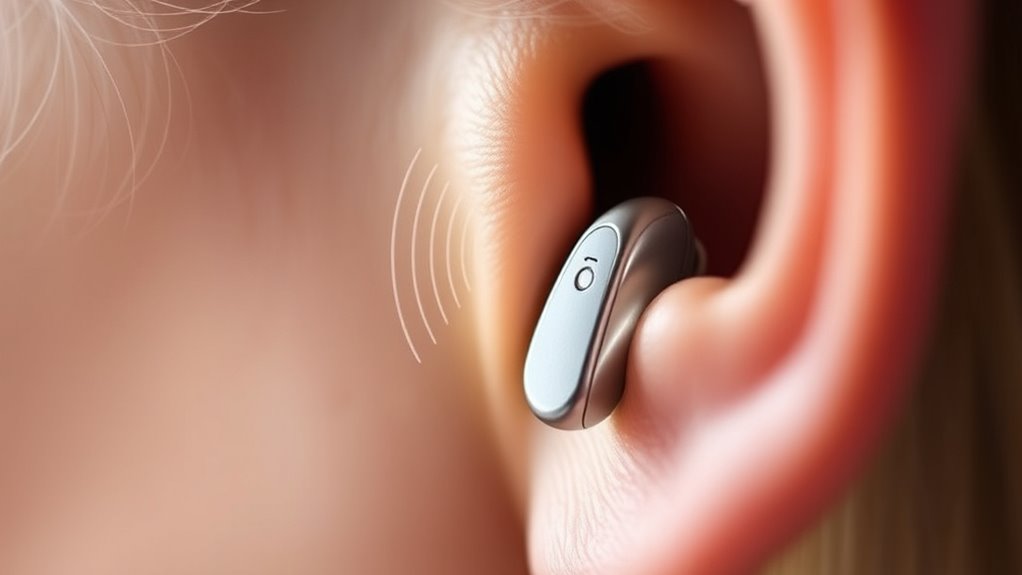
Have you ever experienced that sharp screech during a live performance or a conference call? That piercing whistling is usually feedback, which occurs when sound from your hearing aids or microphones loops back into the device’s microphone and gets amplified repeatedly. But here’s the good news: modern hearing aids often don’t whistle because of advanced feedback cancellation technology that employs adaptive algorithms. These algorithms are designed to analyze incoming sound in real-time, distinguishing between speech and potential feedback signals. As a result, they can predict and suppress feedback before it even happens, creating a smoother listening experience.
One of the key factors in preventing whistling is microphone placement. When microphones are positioned correctly—ideally, close to your ear canal and away from sources of loud sounds or obstructions—they’re less likely to pick up the sound that causes feedback. Proper placement minimizes the chances of sound looping back through the device, reducing the need for aggressive filtering. Many modern hearing aids are engineered with discreet microphones that are carefully placed to optimize sound capture while avoiding feedback. Combining strategic microphone placement with adaptive algorithms allows these devices to adapt dynamically to different environments, whether you’re in a quiet room or a noisy street.
The adaptive algorithms continuously monitor the acoustic environment, adjusting the device’s response in real-time. If the system detects a potential feedback loop, it automatically kicks in to suppress it without interrupting your hearing. This means you don’t have to manually tweak settings or deal with annoying whistling; the device does the work for you. These algorithms learn from the sounds around you, becoming more effective the longer you wear your hearing aids. They can differentiate between speech, background noise, and the subtle signals that lead to feedback, allowing your aids to focus on what you want to hear without the distraction of squeals or whistles. Additionally, some devices incorporate filtering technologies that actively prevent feedback from occurring in the first place.
In addition to intelligent algorithms and proper microphone placement, many hearing aids now incorporate feedback management systems that actively monitor sound levels and frequencies. These systems act as a safeguard, preventing feedback from occurring in the first place. Because of these technological advances, your hearing aids can stay silent even in challenging acoustic environments, giving you confidence and clarity during conversations or performances. So, when your aids don’t whistle, it’s a testament to how far technology has come—using smart algorithms and thoughtful design to keep your hearing experience smooth and natural.
Frequently Asked Questions
How Long Does Feedback Cancellation Technology Typically Last?
Feedback cancellation technology usually lasts for the lifespan of your hearing aid’s battery, often between 3 to 10 days depending on usage. As batteries deplete, the effectiveness may decrease, but regular technology updates from your audiologist can improve performance. Keep your aids maintained and replace batteries promptly to guarantee continuous feedback control. Upgrading your device periodically can also enhance feedback cancellation, ensuring your hearing aids work smoothly over time.
Can Feedback Cancellation Cause Sound Distortion?
Did you know that over 60% of users report minor sound distortions with feedback suppression? Yes, feedback cancellation can sometimes cause sound quality issues, especially if the technology misinterprets signals. While it’s designed to prevent whistling, it may slightly alter audio clarity. You might notice a softer or less natural sound, but adjusting your hearing aid’s settings or consulting with your audiologist can help optimize sound quality while maintaining effective feedback suppression.
Is Feedback Cancellation Effective for All Hearing Aid Models?
Feedback cancellation is generally effective, but its success depends on your hearing aid model. Advanced algorithms enhance the system’s ability to detect and reduce feedback, making it more reliable across devices. However, device compatibility varies, so some models may not feature the latest feedback cancellation technology. You should check with your audiologist or manufacturer to verify your hearing aid supports the most efficient feedback cancellation features for peak performance.
Does Feedback Cancellation Require Frequent Adjustments?
Feedback cancellation isn’t a set-it-and-forget-it feature; it often needs occasional tweaks. Like tuning a musical instrument, your hearing aids may require automatic adjustments or user settings updates to stay in harmony. As you go about your day, you might notice whistles creeping back, prompting a quick adjustment. Regular check-ups guarantee your aids function effectively, preventing feedback from turning your device into a squealing siren.
Are There Limitations to Feedback Cancellation in Noisy Environments?
Yes, feedback cancellation has limitations in noisy environments. Background noise can interfere with the device’s ability to detect and suppress feedback effectively. Additionally, if your hearing aids aren’t compatible with advanced feedback cancellation features, you might still experience whistling or discomfort. To improve performance, make sure your devices are compatible with the latest technology, and consider using accessories or adjustments designed to handle challenging, noisy settings.
Conclusion
Think of feedback cancellation like a skilled gardener pruning a tree—you trim just enough to prevent that shrill whistle, letting your hearing aids flourish silently. When you understand how it works, you’re less likely to panic over every squeal. I once had a friend whose hearing aids suddenly whistled during a meeting; after a quick adjustment, the noise stopped, and she felt confident again. With proper care, your aids can stay in tune, quietly supporting your world.