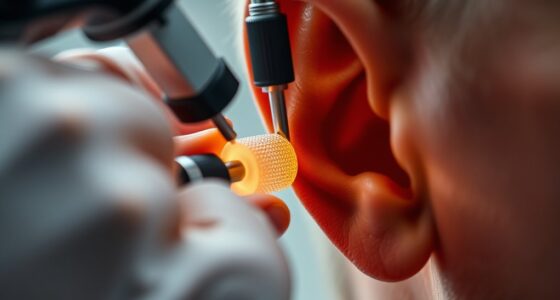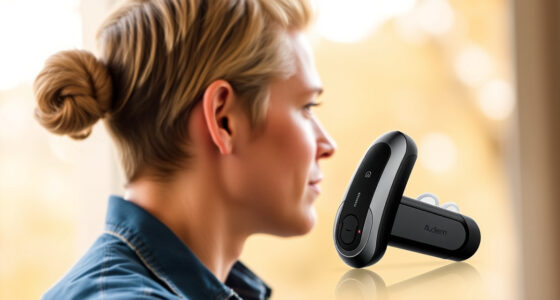
Remote microphones and TV streamers both send audio wirelessly to hearing aids, but they solve different problems. A remote microphone picks up speech near the person speaking and can help in conversation across a table, in a car, or during a lecture. A TV streamer sends a television’s sound to the wearer’s hearing aids, making programs easier to follow without turning up the room volume. The key decision is whether difficult conversations or shared TV watching are the bigger source of frustration. Choose a remote microphone for speech in changing settings; choose a TV streamer for a reliable, home-based improvement to television listening. Compatibility matters for both: accessories generally work only with specific hearing aid models or wireless systems, so check with the hearing care provider before buying.

Get everyday helpers delivered free with Prime
- Fast, free delivery on millions of items
- Prime Video, Amazon Music and more included
- Member-only deals all year

Phonak 5.0 2M Right Hearing Aid Receiver, Red
- ✔ Receiver: 5.0, 2M
- ✔ Side: Right
- ✔ Color: Red

Lillu SDS 5.0 Hearing Aid Receiver Wire for Phonak Audeo M/P/L, Right Ear, Size 2, Medium Power (2M)
- ✔ Receiver type: SDS 5.0
- ✔ Power class: Medium, 2M
- ✔ Ear side: Right, red marker

5.0 2M Medium Power Replacement Receiver Wire for Phonak and Unitron Hearing Aids
- ✔ Receiver technology: 5.0
- ✔ Power: Medium, 2M
- ✔ Quantity: 1 piece
At a Glance
| Criteria | Remote microphones | TV streamers | Winner |
|---|---|---|---|
| Primary use | Carries speech from a person wearing or speaking near the microphone | Sends TV audio straight to compatible hearing aids | Depends |
| Speech clarity | Can improve the target speaker’s voice against distance and surrounding noise | Provides direct program audio, but does not clarify nearby conversation by itself | A |
| Listening range and placement | Microphone should be placed near the speaker; performance depends on placement and wireless range | Works from the connected TV or audio source within the system’s wireless range | Depends |
| Setup and daily use | Requires the speaker or wearer to position, clip on, or pass the microphone | Usually stays connected at home; switching input or adjusting hearing aid settings may be needed | B |
| Compatibility | Often limited to compatible hearing aids and manufacturer wireless systems | Requires compatible hearing aids and a supported TV connection | Tie |
| Shared listening | Can be passed between speakers, though each handoff takes effort | Others may listen through the TV speakers or separate headphones, depending on setup | B |
| Cost and value | May cost more than basic TV transmitters; valuable when conversation access is the priority | Worth paying for when TV listening is frequent; less useful if conversation is the main problem | Depends |
Phonak 5.0 2M Right Hearing Aid Receiver, Red
For buyers who have already identified a compatible right-side receiver, the Phonak 5.0 2M Right is the clearest all-around pick in this group. Its listing calls out the side, red marker, and low-power 2M specification, and describes a lightweight, flexible design with tool-free installation. That combination makes the replacement process sound relatively direct once the device match is confirmed. Compared with the Lillu, this option gives less detail about specific Audeo model generations and connector type, so it is not the stronger choice when those distinctions are still unclear.The receiver is intended for select Phonak and Unitron hearing aids, including Marvel, Paradise, and Lumity models. That range makes it useful across several named families, but the broad compatibility statement should not be read as universal support. Buyers should match the receiver they are replacing, including its power code and ear side, rather than relying on the brand name alone. The package contains one right-side receiver, so it will not replace both sides of a pair.Against the third product, this listing has a meaningful advantage in identification: it consistently presents a right-side red receiver, whereas the other listing contradicts itself on both side and color. Its main tradeoff versus Lillu is shallower compatibility guidance. Choose this pick when your existing component confirms the 5.0 2M right configuration and you value a simple installation description. Skip it if you need a left-side receiver, cannot confirm your model, or need detailed connector and filter guidance before ordering.
Pros:
- Clearly identified as a right-side red receiver
- Tool-free installation is described
- Lightweight, flexible design
- Names select Phonak and Unitron families, including Marvel, Paradise, and Lumity
Cons:
- One right-side receiver only
- Exact compatibility should be confirmed for the hearing aid model
- Provides less connector and wax-filter detail than the Lillu listing
Best for: Owners of a compatible Phonak or Unitron hearing aid who need a clearly identified right-side, low-power 2M receiver.
Not ideal for: Buyers who need a left-side part, require detailed connector or wax-guard confirmation, or have not verified compatibility with their exact hearing aid.
Bottom line: We rank this first for its clear right-side identification and straightforward installation, provided the buyer verifies the hearing aid match.
“We rank this first for its clear right-side identification and straightforward installation, provided the buyer verifies the hearing aid match.”
Lillu SDS 5.0 Hearing Aid Receiver Wire for Phonak Audeo M/P/L, Right Ear, Size 2, Medium Power (2M)
When compatibility details are the deciding factor, Lillu SDS 5.0 gives buyers more to check than the top-ranked Phonak listing. It specifies Audeo M, P (Paradise), and L (Lumity) RIC hearing aids, a 3-pin connector, right ear, size 2, medium power, and replacement part number 054-1215. Those details can help an owner compare the listing with an existing receiver. The tradeoff is a narrower fit: it explicitly excludes older 2-pin Audeo models and the newer Infinio series.Its medium-power designation is a key matching constraint rather than an invitation to change the device setup. The listing says the original power code must be matched, so this is a targeted replacement for someone who already knows the receiver specification. That specificity is useful compared with the broader Phonak 5.0 listing, but it puts more responsibility on the buyer to verify the connector and model generation before ordering.Upkeep and completeness also affect the choice. Domes are not included, and this receiver requires SDS 5.0 wax guards that differ from previous versions. Compared with the third listing, Lillu is much clearer about side and product compatibility, though it still asks buyers to account for separate consumables. Choose it when the Audeo model, 3-pin connection, side, size, and 2M code all match. If you want a broadly described replacement or cannot identify your connector, the Phonak option is easier to assess; if your device is 2-pin or Infinio, skip this one.
Pros:
- Names Audeo M, Paradise, and Lumity compatibility
- Specifies the 3-pin connector and replacement part number 054-1215
- Red right-side marker and size information aid identification
- Clearly states its power class and size
Cons:
- Not compatible with older 2-pin Audeo models or Infinio series
- Requires specific SDS 5.0 wax guards
- Domes are sold separately
Best for: Audeo M, Paradise, or Lumity RIC owners who can confirm a 3-pin connector and an existing right-side size 2, 2M receiver.
Not ideal for: Owners of older 2-pin Audeo models, Infinio devices, or buyers seeking included domes or a receiver with less demanding fit checks.
Bottom line: We recommend Lillu for buyers who need detailed Audeo matching information and can verify every connector and power-code requirement.
“We recommend Lillu for buyers who need detailed Audeo matching information and can verify every connector and power-code requirement.”
5.0 2M Medium Power Replacement Receiver Wire for Phonak and Unitron Hearing Aids
This single-piece receiver wire could be relevant to owners of compatible Phonak or Unitron hearing aids, but it is the hardest option in this lineup to select confidently. The title identifies a right-side, red part, while the description calls it left-side and blue. Because side and color are basic identifiers for a receiver, the contradiction matters more than a broad compatibility statement. We place it third until those details can be reconciled.On paper, the product shares a 5.0, 2M medium-power format with the other options and is described as a replacement for compatible Phonak and Unitron devices. That makes it superficially similar to the Phonak pick, but the Phonak listing is clearer about which ear its receiver serves. Lillu goes further by naming specific Audeo generations and a connector type; this listing does not provide comparable model-specific fit detail in the supplied information.The stated filter limitations are another point to check. It is described as compatible with Phonak CeruStop, but not older stick-style CeruStop filters or CeruShield Disk filters. Buyers also need to establish whether the item is actually intended for the left or right ear before proceeding. This choice may suit someone who has confirmed the correct configuration directly and already uses the compatible filter type. Without that confirmation, we would choose the consistently identified Phonak receiver or the more detailed Lillu option when their respective fit requirements match.
Pros:
- Single-piece receiver wire can replace a compatible component
- Described as compatible with Phonak and Unitron hearing aids
- Specifies 5.0 technology and medium 2M power
- Names Phonak CeruStop compatibility and filter exclusions
Cons:
- Title and description conflict on ear side and color
- Does not provide the same model and connector detail as Lillu
- Does not fit older stick-style CeruStop or CeruShield Disk filters
Best for: A buyer with a compatible Phonak or Unitron device who has independently confirmed the receiver’s ear side, color, power, and filter fit.
Not ideal for: Anyone relying on the listing alone to identify the correct ear side or color, or anyone using excluded CeruStop or CeruShield filter types.
Bottom line: We would consider this receiver only after its seller confirms the intended side and color and the buyer verifies the filter and device fit.
“We would consider this receiver only after its seller confirms the intended side and color and the buyer verifies the filter and device fit.”
As an Amazon Associate we earn from qualifying purchases.
Key Differences
The main distinction is the sound source. A remote microphone helps when a particular person’s speech needs to stand out, especially when the speaker is some distance away or a noisy room makes conversation hard. Its benefit depends on using it correctly: someone may need to wear it, hold it, or place it near the person speaking. A TV streamer avoids that handoff and sends the program audio to the hearing aids, but it only addresses the television. It does not serve as a general speech microphone for dinner, meetings, or errands.
For frequent TV watching, the streamer is usually the more convenient, focused purchase. For someone who misses conversation in restaurants, family gatherings, classes, or the car, the remote microphone has broader potential, provided the user and conversation partners are comfortable managing it. Neither accessory is universally better. Hearing aid compatibility, wireless range, connection options, and the user’s listening habits decide whether the added cost produces a useful improvement.
Detailed Comparison
Primary use (major difference)
A is designed to carry a nearby speaker’s voice into the hearing aids. B carries sound from a television or supported audio source. This is a major difference: each accessory is effective for a distinct listening task, and neither substitutes for the other.
Speech clarity (Remote microphones wins — major)
A has the advantage when the goal is following one person, since the microphone can be placed close to that speaker and reduce the effect of distance. B can make dialogue easier to hear by delivering TV audio directly, but it does not isolate a person speaking in the room. A wins for conversation; B wins for TV dialogue. The gap is major when the matching situation is frequent.
Listening range and placement (moderate difference)
A can help when the speaker is across a table or otherwise away from the wearer, but the microphone must remain near the speaker and within the accessory’s wireless range. B is typically left connected near the TV and sends its signal to the wearer within the system’s range. B is simpler for a fixed room; A adapts better to conversations in different places, with more attention to placement. The practical gap is moderate and depends on where listening happens.
Setup and daily use (TV streamers wins — moderate)
B often involves a one-time connection to the TV, followed by selecting the appropriate hearing aid program or input. A needs more active cooperation: the microphone may need clipping on, positioning, charging, or passing between speakers. B wins on routine convenience at home by a moderate margin. A’s extra handling may be worthwhile when better access to speech is the priority.
Compatibility (minor difference)
Both accessories can be restricted to particular hearing aid models, wireless protocols, or manufacturer ecosystems. TV connections also vary by television outputs, while remote microphones vary in how they pair and operate. Neither category has a general compatibility advantage. Confirm the exact hearing aid and TV model before purchasing; the gap is minor as a category comparison but decisive for an individual buyer.
B lets the wearer receive direct TV audio while other household members can often keep using the TV speakers, though the available arrangement depends on the TV and streamer. A can be shared among speakers by moving the microphone, but that interrupts conversation and requires people to manage the device. B is generally better for routine group TV watching by a moderate margin.
Cost and value (moderate difference)
Prices vary by brand, model, and hearing aid system, so there is no reliable price winner across the categories. A can justify a higher cost if missed conversation is a recurring limitation; B earns its cost if the wearer regularly struggles with TV audio and the household wants a direct listening path. Paying extra for the wrong source of sound brings little benefit. Value depends on the problem the accessory solves.
Remote microphones: Pros and Cons
Pros:
- Can bring a conversation partner’s voice closer to compatible hearing aids
- Useful across multiple listening settings when the microphone can be placed well
- Targets speech rather than sending all room sound equally
Cons:
- Needs placement, wearing, or handoff by the speaker or user
- Does not directly solve TV listening unless the microphone is positioned by the TV speaker
- Compatibility and wireless range vary by hearing aid system
TV streamers: Pros and Cons
Pros:
- Sends TV audio directly to compatible hearing aids
- Usually stays connected in one place, reducing repeated setup
- Can let the wearer hear clearly while others use room speakers, depending on equipment
Cons:
- Does not improve face-to-face conversation away from the TV
- Requires a compatible TV connection and hearing aid system
- Benefits are limited if TV listening is infrequent
Who Should Choose What
Choose Remote microphones if:
- You often miss speech in restaurants, meetings, classes, or family conversations.
- A conversation partner can wear or position the microphone near their voice.
- Your hearing care provider confirms that the microphone supports your hearing aids.
Choose TV streamers if:
- TV dialogue is a frequent source of strain or requests to raise the volume.
- You mainly want a convenient listening improvement in one room at home.
- Your TV and hearing aids support the streamer’s connection method.
Skip both if: Neither listening situation is a regular problem, or your hearing aids do not support the accessory under consideration; ask your hearing care provider about compatible alternatives.
Value for Money
Paying more is worthwhile only when the accessory matches a recurring listening problem. A remote microphone can be better value for someone who regularly struggles to follow a speaker in noisy or spacious settings, because it addresses that voice directly. A TV streamer can be better value for a household where television dialogue is the main issue and the connection will be used often. If conversation is the concern, a TV streamer’s convenience does not make it a substitute; if TV is the concern, a microphone that sits beside the television may add handling without the same direct connection. Compare the complete cost with the hearing aid system’s compatibility and ask the provider to confirm expected use before purchasing.
Final Verdict
Choose a remote microphone if the hardest moments are conversations with people nearby or across a noisy room. It offers the more relevant tool for bringing one speaker’s voice into compatible hearing aids, at the cost of more active placement and cooperation. Choose a TV streamer if television dialogue is the recurring problem: it is generally simpler for daily use at home and sends the program audio directly to the wearer. The biggest deciding factor is the sound source you most need to hear. Before paying for either, verify compatibility with the exact hearing aids and, for a streamer, the TV connection.
Frequently Asked Questions
Can a TV streamer replace a remote microphone?
No. A TV streamer carries audio from a television or supported source. A remote microphone picks up a person’s voice for conversation. Choose based on the listening situation you want to improve.
Can a remote microphone help with TV sound?
It may pick up sound from a television if placed nearby, but that is different from a TV streamer’s direct audio connection. Ask the hearing care provider whether this setup is supported and likely to suit your needs.
Will either accessory work with any wireless hearing aid?
No. Wireless features and accessory pairing vary by model and manufacturer. Check the exact hearing aid model and accessory pairing requirements before buying.
Which accessory should I buy first?
Start with the situation that causes the most frequent difficulty. Pick a remote microphone for missed conversation, or a TV streamer for television listening. If both matter, ask your hearing care provider to compare compatible options and likely use in each setting.