Use this guide to dry hearing aids with a kit that matches your device and its manufacturer’s care instructions. It is for hearing aid wearers and caregivers who want to manage everyday moisture from sweat, humidity, or light exposure to rain. The process takes about 5–10 minutes to prepare; drying itself can take several hours or overnight, depending on the kit. The steps are beginner-friendly. A drying kit can help with routine care, but it cannot repair a hearing aid that has been soaked or damaged.

Get everyday helpers delivered free with Prime
- Fast, free delivery on millions of items
- Prime Video, Amazon Music and more included
- Member-only deals all year

PerfectDry LUX – Fastest Hearing Aid Dryer & Dehumidifier with 360° UV-C Light
- ✔ Drying cycle: 45 minutes, as stated by the product description
- ✔ Drying method: Pulsed hot air and 360° UV-C light
- ✔ Temperature limit: 113°F automatic regulation

Super Dri Aid Hearing Aid Dehumidifier – Single Dryer
- ✔ Type: Single hearing aid dehumidifier
- ✔ Drying method: Reusable loose pellets
- ✔ Pellet reactivation: Microwave heating

Wisesorb Hearing Aid Dryer, Hearing Aid Dehumidifier, Hearing Drying Jar and Dehumidifier Set (1 Jar+1 Dryer)
- ✔ Set contents: 1 jar and 1 dryer
- ✔ Absorber: Cobalt-free indicating silica gel
- ✔ Moisture capacity: 30 g
Difficulty: Beginner | Time: 5–10 minutes per drying session, plus the kit’s drying time
What You’ll Need
Tools & Materials:
- A drying kit approved for your hearing aid type: an electronic dryer, or a container with the specified desiccant
- Your hearing aid manufacturer’s cleaning and care instructions
- A clean, dry surface and a soft, lint-free cloth
Knowledge:
- Ability to identify your hearing aids and remove them from your ears
- Basic familiarity with opening the battery door or removing rechargeable hearing aids, if your model allows it
Check your hearing aid manual and the drying kit instructions before use. Models differ: some allow drying with the battery installed or in the charging case, while others require a different setup. Do not use a drying kit that relies on heat unless the hearing aid manufacturer approves it.
PerfectDry LUX – Fastest Hearing Aid Dryer & Dehumidifier with 360° UV-C Light
The PerfectDry LUX is the most straightforward choice for people who want a defined drying session rather than a jar or pellets that work over time. Its stated 45-minute cycle combines pulsed hot air with a 360° UV-C lamp, and automatic temperature regulation limits heat to 113°F. That combination makes it easier to fit device care into an evening or travel routine than the overnight-oriented Wisesorb jar. The temperature cap is a useful detail for owners of rechargeable aids, though buyers should still follow their hearing aid maker’s care guidance.Its compact 3-by-3.6-by-1.9-inch footprint and carrying-case design support home or travel use, but it needs an electrical outlet. That makes it less flexible than Super Dri Aid in places without power. The interior is also described as limited, so larger or unusually shaped devices may not fit. We rank it first because it provides the clearest timing and operating details; choose another option if avoiding powered equipment or maximizing interior room matters more.
Pros:
- Stated 45-minute drying cycle
- Pulsed hot air and 360° UV-C lamp
- Automatic temperature limit of 113°F
- Compact design doubles as a carrying case
Cons:
- Limited interior may not fit larger or unusually shaped devices
- Requires an electrical outlet
Best for: Hearing aid owners who want a timed, powered drying cycle and a compact unit for home or powered travel settings.
Not ideal for: People who need to dry oversized devices, avoid electrical equipment, or use a kit where outlets are unavailable.
Bottom line: We recommend the PerfectDry LUX for buyers who value a short, clearly timed powered routine and can accommodate its compact chamber and outlet requirement.
“We recommend the PerfectDry LUX for buyers who value a short, clearly timed powered routine and can accommodate its compact chamber and outlet requirement.”
Super Dri Aid Hearing Aid Dehumidifier – Single Dryer
Super Dri Aid takes the least complicated approach in this group: place the hearing aid in the compact dryer with its reusable pellets, then reactivate those pellets by heating them in a microwave when needed. It suits buyers who want moisture absorption without a powered fan or stated timed cycle. Compared with the PerfectDry LUX, it avoids an outlet during the drying routine, while the LUX offers a more defined process and a stated completion time.The tradeoff is that this simplicity comes with maintenance. You need microwave access to restore the pellets, and the product is a single dryer rather than a setup for several devices at once. Unlike Wisesorb, the supplied description does not mention a color-changing indicator to show pellet saturation, so upkeep relies on following the product’s reactivation guidance. It is the practical pick for a basic home, office, or travel routine if a microwave is available, but it is less suitable for people who want visible moisture monitoring or a powered cycle they can start and leave.
Pros:
- Reusable pellets can be reactivated
- Compact for home, office, or travel use
- Does not require an outlet for the described drying method
- Simple moisture-absorption approach
Cons:
- Pellets require microwave heating for reactivation
- Single dryer is not suited to multiple devices at once
- No saturation indicator is specified
Best for: Buyers seeking a compact, reusable pellet-based dehumidifier for a simple single-device routine with microwave access.
Not ideal for: People without reliable microwave access, those drying several devices together, or buyers who want a visible saturation indicator.
Bottom line: We favor Super Dri Aid for buyers who value a reusable, uncomplicated setup and accept microwave-based pellet upkeep.
“We favor Super Dri Aid for buyers who value a reusable, uncomplicated setup and accept microwave-based pellet upkeep.”
Wisesorb Hearing Aid Dryer, Hearing Aid Dehumidifier, Hearing Drying Jar and Dehumidifier Set (1 Jar+1 Dryer)
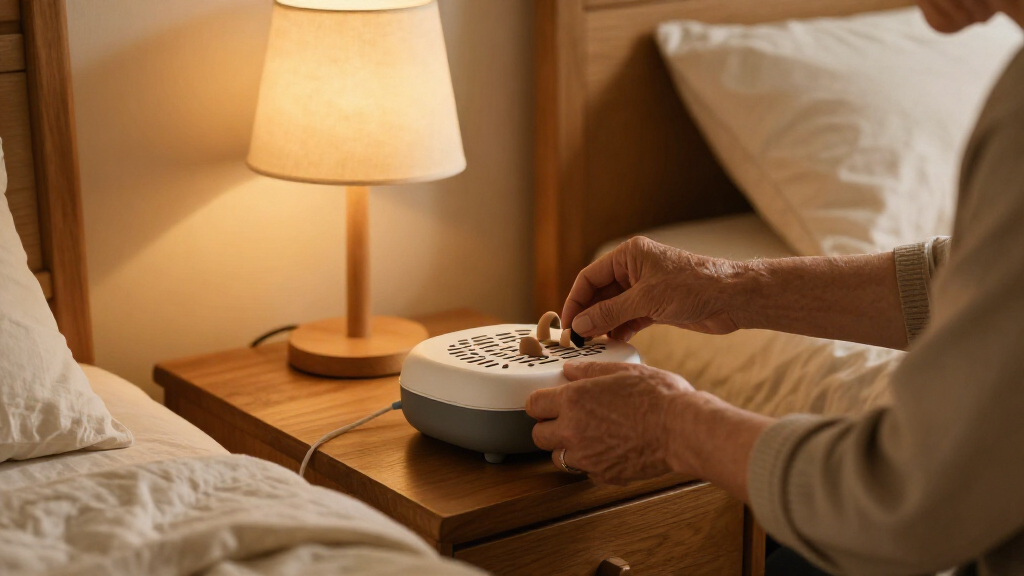
Wisesorb’s jar is designed around an overnight routine: place devices with indicating silica gel and let the moisture absorber work silently in sleep mode. The cobalt-free gel changes from orange to white as it absorbs moisture, giving owners a visual cue that the Super Dri Aid’s loose pellets do not describe. Its stated 30 g capacity and small 2.6-by-1.7-by-2.6-inch jar make it a compact bedside choice for someone who wants to check the absorber at a glance.That indicator is useful, but the product description says the color change is less visible in very dry environments, and the single jar may not fit multiple aids or accessories. It is also described as requiring an external power source, which tempers its travel appeal despite its light, compact build. Compared with the PerfectDry LUX, Wisesorb emphasizes silent overnight use rather than a short timed cycle; compared with Super Dri Aid, it offers clearer saturation feedback but adds a power constraint. Choose it for a quiet routine and monitoring, not for the fastest specified cycle.
Pros:
- Cobalt-free indicating silica gel changes color as it absorbs moisture
- Stated 30 g moisture capacity
- Compact, lightweight jar suits bedside placement
- Silent sleep mode supports overnight use
Cons:
- Single jar may be too small for multiple aids or accessories
- Indicator can be less visible in very dry environments
- External power source is required, limiting portability
Best for: Owners who want a compact bedside jar, quiet overnight operation, and a visible cue for silica gel saturation.
Not ideal for: People who need a stated fast cycle, have several devices to dry, or want a kit that works without an external power source.
Bottom line: We recommend the Wisesorb jar for buyers who prefer quiet overnight drying and a visible saturation cue over the faster stated cycle of the PerfectDry LUX.
“We recommend the Wisesorb jar for buyers who prefer quiet overnight drying and a visible saturation cue over the faster stated cycle of the PerfectDry LUX.”
As an Amazon Associate we earn from qualifying purchases.
Before You Start
Keep hearing aids away from hair dryers, ovens, microwaves, radiators, and direct sunlight. Excess heat can damage delicate components. If a device was submerged, exposed to heavy rain, or stopped working suddenly, contact your hearing care professional or the manufacturer for advice instead of relying on routine drying. Do not put a wet hearing aid into a charging case unless its instructions say to do so.
Set aside enough time for the kit’s full cycle. A short session may not remove enough moisture, and some desiccant kits work best when left closed overnight.
Step-by-Step Instructions
Step 1: Check the kit and hearing aid instructions
Read the care instructions for both the hearing aids and the drying kit. Confirm that the kit suits your hearing aid model, and check whether the device should be switched off, have its battery door open, or be placed in the kit with the battery removed. Follow the device maker’s directions if they differ from general kit advice.
Tip:Do not guess about rechargeable models or hearing aids with special coatings. Their care requirements can differ.
Check: You know which parts to remove, whether to open the battery compartment, and how long the kit’s cycle should run.
Step 2: Prepare a clean, dry workspace
Place the kit on a stable surface away from water, food, dust, pets, and direct heat. Wash and dry your hands. Gather the hearing aids and the cloth so you can handle the devices without setting them on a damp or dirty surface.
Tip:Keep small batteries and removable parts out of reach of children and pets.
Check: The kit is clean, dry, stable, and ready to be opened without risk of knocking it over.
Step 3: Remove and inspect the hearing aids
Take the hearing aids out of your ears and switch them off if the instructions call for it. Check each device, earmold, dome, and microphone opening for visible moisture, wax, or debris. Wipe the outer surface gently with a soft, lint-free cloth. Clean wax only with the tools and method recommended for your model.
Tip:Do not push a cloth, pin, or cleaning tool into microphone openings or sound ports. Scrubbing can force debris farther inside.
Check: The hearing aids are free of surface moisture and loose debris, with no foreign object pushed into an opening.
Step 4: Set up batteries or charging parts
Follow your model’s instructions for batteries and charging. For a disposable-battery device, remove the battery or open the battery door only if the manufacturer recommends it; keep removed batteries dry and store them safely. For a rechargeable device, remove it from the charger unless the hearing aid and dryer instructions specifically allow charging during drying.
Tip:Do not put loose batteries in an electronic dryer unless the kit maker explicitly says they are safe to dry there.
Check: The hearing aid is configured for drying according to its own instructions, and removed batteries or charging parts are kept in the correct place.
Step 5: Place the hearing aids in the kit
Open the drying container or electronic dryer and position each hearing aid as shown in the kit instructions. Keep devices separated so air or desiccant can reach their surfaces. Close the lid securely, or close the dryer door, before starting a cycle.
Tip:Do not let hearing aids rest directly on loose desiccant unless the kit is designed for that arrangement.
Check: Both devices are stable inside the kit, the lid or door closes fully, and no part is pinched.
Step 6: Run the full drying cycle
Start the electronic dryer’s recommended cycle or leave the closed desiccant container undisturbed for the time specified by its maker. Do not open the kit repeatedly to check progress, since this can let humid air in. Keep it in a dry room at the temperature range listed in the instructions.
Tip:Some electronic dryers also use UV light. Use that feature only as directed; UV does not replace cleaning and may not be appropriate for every device.
Check: The full cycle or wait time has finished, and the kit has stayed closed and within its operating instructions.
Step 7: Remove and check the hearing aids
Open the kit and remove each hearing aid by its body, not by pulling on a thin wire or tube. Check for visible moisture, residue, or signs of damage. If the device is clean and dry, reinstall batteries or return it to its charger as directed, then switch it on and check that it operates normally.
Tip:If moisture remains, repeat the approved drying cycle. If the device still behaves abnormally, stop using it and ask your hearing care professional for help.
Check: The hearing aids feel dry, have no visible residue, and power on and work as expected.
Step 8: Maintain the kit after use
Close and store the kit in a dry place. Check the desiccant condition indicator or replacement schedule, if supplied, and replace or recharge it as directed. Wipe the kit’s interior only using its cleaning instructions; keep electronic components dry.
Tip:Mark the date you opened a desiccant refill if its maker gives a service life after opening.
Check: The kit is clean, stored safely, and ready for the next session; desiccant is still within its stated service life.
Common Mistakes to Avoid
- Using heat from an unapproved source to speed up drying. — Use only the drying method and temperature approved for the hearing aid. Avoid hair dryers, heaters, ovens, and direct sun.
- Leaving the battery or charger in a setup that the instructions do not allow. — Check model-specific guidance before drying, especially for rechargeable devices. Keep loose batteries out of the dryer unless approved.
- Opening the drying container repeatedly or stopping an electronic cycle early. — Set a reminder for the recommended finish time and leave the kit closed until the cycle ends.
- Expecting a drying kit to fix a soaked or malfunctioning device. — Contact your hearing care professional after submersion, heavy water exposure, or persistent faults; routine drying is not a repair service.
Troubleshooting
Problem: The hearing aid still feels damp after the cycle.
Solution: Check that you used the correct setup and completed the full cycle. Repeat the approved drying session if the device has no signs of damage. If dampness persists, contact your hearing care professional.
Problem: The hearing aid does not turn on after drying.
Solution: Check the battery orientation, battery charge, or charging procedure using the manufacturer’s instructions. If it still does not work, do not open the casing; seek professional service.
Problem: A desiccant indicator shows that the material needs replacement or recharge.
Solution: Replace or recharge the desiccant exactly as its maker directs. Do not use an expired or saturated refill and assume it will absorb moisture effectively.
Problem: The dryer becomes unusually hot, shows an error, or stops mid-cycle.
Solution: Switch it off and unplug it if safe to do so. Let it cool, inspect the power connection, and consult the kit instructions. Do not put the hearing aids back in until the dryer is operating normally.
What Success Looks Like
The process is complete when the full recommended drying time has passed, both hearing aids are free of visible moisture and residue, and they power on and function normally. The kit should be closed or stored as directed, with desiccant within its service period. If a hearing aid remains damp or does not work normally, it needs professional advice.
Next Steps
Use the kit at the interval recommended by your hearing care professional or device maker, and after ordinary exposure to sweat or humid conditions when appropriate. Keep following the normal cleaning schedule; drying does not remove earwax or replace cleaning. Replace or recharge desiccant on schedule, and bring a device for service if it has been submerged, repeatedly malfunctions, or develops persistent moisture problems.
Frequently Asked Questions
How often should I use a hearing aid drying kit?
Follow your hearing aid maker’s guidance and your hearing care professional’s advice. Some people use a kit daily, while others use it after sweating or exposure to humid conditions. The right schedule depends on the device and environment.
Can I dry rechargeable hearing aids in their charging case?
Only if the hearing aid and drying kit instructions specifically allow it. Many dryers require the devices to be removed from their charger. Check your model’s directions before placing either the hearing aids or case in a dryer.
Can a desiccant kit dry a hearing aid that fell into water?
A routine kit is not a reliable fix for submersion. Remove the device from the water, follow the manufacturer’s emergency care instructions, and contact your hearing care professional or the manufacturer promptly. Do not apply heat or charge it while wet.
How do I know when desiccant needs replacing?
Use the kit’s indicator, instructions, and stated replacement schedule. If the material changes color or the maker says it is saturated, replace or recharge it as directed. Do not rely on appearance alone if the kit specifies a time limit.
Will a drying kit remove wax or disinfect my hearing aids?
No. A drying kit removes moisture according to its design; it does not replace wax removal or routine cleaning. Follow the hearing aid instructions for cleaning, and use only approved products and tools.