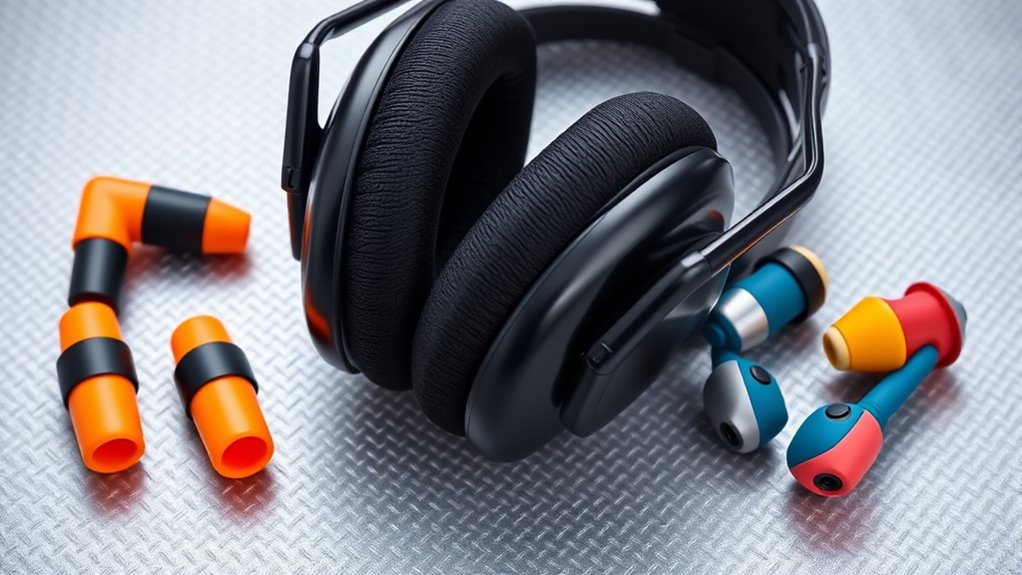

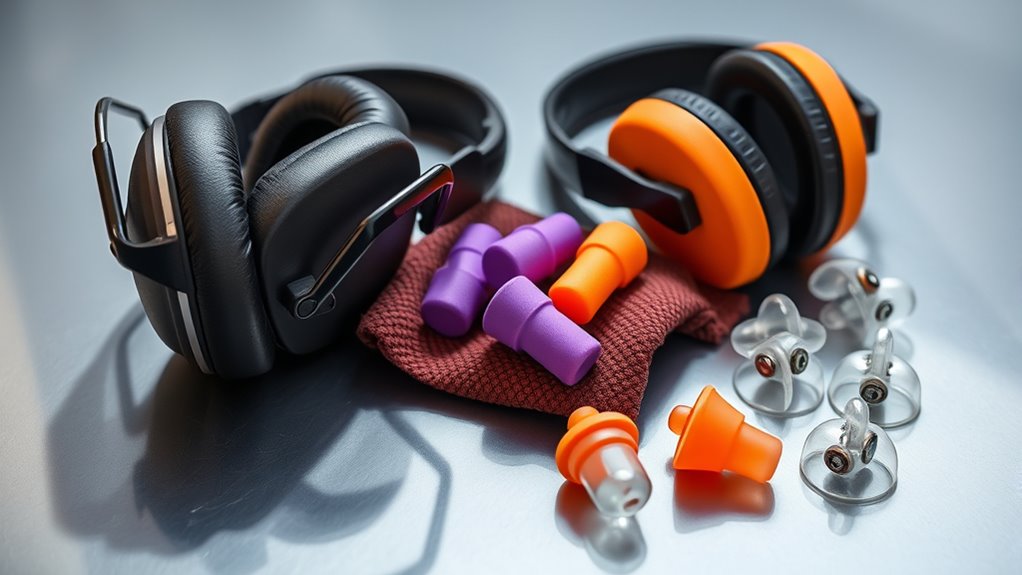
When choosing hearing protection, filters, muffs, and plugs each suit different needs. Filters reduce noise while allowing some sound to pass through, making them great for communication or monitoring. Muffs offer a physical barrier, ideal for loud, prolonged environments, and often include noise canceling features. Earplugs are portable and customizable, providing a snug fit for various activities. To find the best option for your environment, discover more about how each one works.
Key Takeaways
- Earplugs are compact and versatile, suitable for various environments and easily portable.
- Muffs provide a physical barrier with padded cups, offering quick and adjustable hearing protection.
- Filters in earplugs allow sound to pass through while reducing harmful noise levels, maintaining communication.
- Muffs are ideal for high-noise settings and can include active noise canceling technology.
- Choice depends on comfort, environment, and need for active noise reduction versus passive protection.
Have you ever considered how loud noises can damage your hearing over time? It’s easy to overlook the silent danger of high decibel levels, especially if you’re exposed regularly to loud environments like concerts, construction sites, or even noisy workplaces. Thankfully, modern hearing protection options have evolved to help you safeguard your hearing effectively. Among these, noise canceling technology has become a game-changer, especially in earplugs and headphones. These advanced devices actively reduce ambient noise, allowing you to enjoy quieter environments and better communication without turning up the volume excessively. When choosing hearing protection, you’ll find that custom fit options can markedly improve comfort and efficacy. Custom molded earplugs, for example, are tailored specifically to the shape of your ear canal, providing a snug fit that blocks out noise more efficiently than generic options. This personalized fit not only enhances comfort but also guarantees consistent protection, reducing the likelihood of gaps that allow harmful sound to seep in. Additionally, understanding city dynamics can be useful when selecting hearing protection for different environments, ensuring you choose the most appropriate option for each setting.
Custom molded earplugs provide superior comfort and noise reduction for effective hearing protection.
Muffs are another popular form of hearing protection, especially in industrial or shooting environments. They come with padded cups that fit over your ears, creating a physical barrier against loud sounds. Modern muffs often incorporate noise canceling technology, which complements their passive noise reduction by electronically diminishing sound levels. These muffs are adjustable and offer a comfortable seal, which is vital for prolonged use. Their design makes them easy to wear over long periods, and many models include features like adjustable headbands and low-profile cups for better compatibility with safety glasses or helmets. They’re especially useful if you prefer not to insert anything into your ears or if you need to switch between different hearing protection levels quickly.
Earplugs are compact, portable, and versatile, making them a popular choice for many people. They come in foam, silicone, or custom mold options, with the latter offering a perfect fit that remains comfortable during extended wear. Some earplugs also feature noise canceling technology, which actively reduces noise rather than just blocking it. These are ideal for musicians, concert-goers, or anyone wanting discreet yet effective hearing protection. Custom fit earplugs are especially advantageous because they’re molded precisely to your ear canal, offering superior comfort and sound reduction. Whether you opt for foam or custom-molded plugs, the key is making sure that they fit well and create a good seal. This prevents sound leakage and maximizes the protection against potentially damaging noise levels.
Ultimately, your choice depends on your environment and personal preferences. But whatever you select, prioritizing options with noise canceling technology and custom fit options can make a real difference in protecting your hearing while maintaining comfort and convenience.
Frequently Asked Questions
Which Hearing Protection Is Best for Prolonged Exposure?
For prolonged exposure, muffs are your best choice because they offer high Noise Reduction Ratings and are generally more comfortable for extended wear. They create a secure seal around your ears, reducing noise effectively. While plugs are portable and discreet, they may cause discomfort over time. Consider comfort and noise reduction ratings when choosing, so you stay protected without sacrificing ease of use during long periods.
Can I Wear Multiple Hearing Protection Devices Simultaneously?
Yes, you can wear multiple hearing protection devices simultaneously for layered protection, but comfort considerations are vital. Combining plugs and muffs can enhance noise reduction, especially in extremely loud environments. However, make sure they fit well together to avoid discomfort or compromised effectiveness. Test different combinations to find what works best for you, balancing maximum protection with comfort, so you’re more likely to wear them consistently and safely.
How Do I Properly Clean and Maintain Hearing Protection?
Did you know that improper cleaning can reduce hearing protection effectiveness by up to 50%? To keep your hearing devices in top shape, regularly clean them with mild soap and water or manufacturer-recommended cleaning techniques. Avoid harsh chemicals, and check for wear or damage during maintenance tips. Store your protection in a dry, cool place, and replace parts as needed to guarantee maximum safety and performance every time you use them.
Are There Specific Hearing Protectors for Children?
Yes, there are specific hearing protectors designed for children to guarantee child safety and ideal pediatric hearing protection. These ear muffs or plugs are smaller, softer, and often adjustable to fit comfortably on a child’s head. Always choose products labeled for children, and make sure they provide adequate noise reduction. Properly fitting pediatric hearing protection helps safeguard your child’s hearing in loud environments, making safety a top priority.
What Are the Latest Advancements in Hearing Protection Technology?
Imagine tiny, futuristic soldiers guarding your ears—today’s hearing protection uses innovative materials and smart technology to do just that. The latest advancements include noise-canceling earplugs and muffs with adaptive sound control, plus lightweight, durable filters. These innovations actively monitor noise levels, adjusting in real-time to keep your hearing safe without sacrificing awareness. You’ll love how cutting-edge tech makes protecting your ears easier, smarter, and more comfortable than ever before.
Conclusion
Choosing the right hearing protection is like finding the perfect pair of shoes—you need comfort, fit, and effectiveness. Whether you prefer filters, muffs, or plugs, each offers unique benefits to suit your needs. Think of them as your shield against noise, keeping your ears safe like a fortress guards its treasure. So, pick what feels right, wear it consistently, and enjoy your environment without risking your hearing. Your ears will thank you for it.