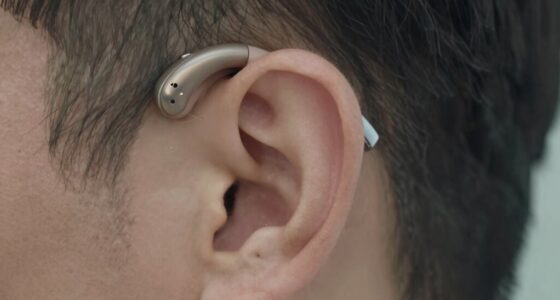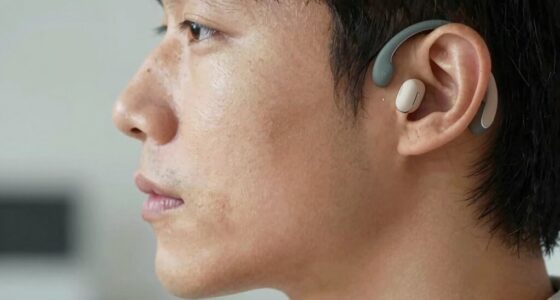
Home hearing loops improve your daily listening by transmitting sound directly to your hearing aids, making conversations, TV, and music clearer. They reduce background noise, so you don’t have to ask others to repeat themselves. With easy setup and wireless connectivity, you can move freely around your home without losing sound quality. This technology creates a more comfortable, engaging environment, helping you stay connected. Keep exploring to discover even more ways it can enhance your daily life.

Get everyday helpers delivered free with Prime
- Fast, free delivery on millions of items
- Prime Video, Amazon Music and more included
- Member-only deals all year
Key Takeaways
- Transmit sound directly to hearing aids, reducing background noise for clearer daily communication.
- Enable personalized audio adjustments for comfort and optimal sound quality in various environments.
- Offer easy setup and seamless switching between devices like TV and phones for everyday convenience.
- Allow free movement around the home without losing connection, ensuring consistent sound clarity.
- Enhance overall listening experience, reducing fatigue and making daily activities more engaging and enjoyable.

For many people with hearing aids, enjoying clear sound at home can be a challenge, especially in noisy or echo-filled environments. Home hearing loops have become a game-changer, offering a simple solution that significantly enhances your daily listening experience. These systems work by transmitting sound directly to your hearing aids through wireless connectivity, reducing background noise and improving clarity. With a home loop, you don’t have to strain or ask others to repeat themselves. Instead, you can focus on what matters—whether it’s a conversation with family, a favorite TV show, or listening to music.
One of the biggest advantages of home hearing loops is how they enable sound customization. You can tailor the audio quality to your specific needs, adjusting volume or tone settings directly through your hearing aids. This personalized approach means that even in challenging acoustic environments, your hearing aids deliver the best possible sound. Wireless connectivity ensures a seamless experience; once your hearing aids are paired with the loop system, you can switch between different listening modes effortlessly. This convenience allows you to move freely around your home without losing connection or clarity, whether you’re in the living room, kitchen, or bedroom.
Setting up a home hearing loop is straightforward, and once installed, it creates a consistent, high-quality listening environment. Unlike traditional audio systems, which require multiple devices or complicated wiring, a loop system transmits sound directly into your hearing aids via electromagnetic signals. This direct transmission minimizes distortion and eliminates the need for additional speakers or headsets. When watching TV, talking on the phone, or listening to music, the sound is transmitted directly into your hearing aids, making everything clearer and more natural. Plus, many hearing aids today are compatible with wireless loops, meaning you don’t have to worry about additional gadgets or complicated settings. Understanding the technology behind electromagnetic signals can help you appreciate how seamlessly these systems integrate into your daily routine, especially given the reliable wireless connectivity that is essential for uninterrupted listening.
The real benefit of a home hearing loop lies in its ability to improve your daily life effortlessly. It reduces listening fatigue, allowing you to engage more comfortably in conversations and activities. The wireless connectivity provides a reliable, hands-free experience, and the sound customization features ensure that your hearing aids suit your individual preferences. Whether you’re listening to a podcast, watching TV, or chatting with loved ones, a home hearing loop creates a more inclusive, enjoyable environment. Recognizing the importance of sound quality improvement can further enhance your overall listening experience at home. Additionally, advancements in wireless technology have made these systems more accessible and easier to operate, further integrating them into everyday use.
As an affiliate, we earn on qualifying purchases.
Frequently Asked Questions
How Do Hearing Loops Differ From Other Assistive Listening Devices?
Hearing loops differ from other assistive listening devices because they use wireless technology to transmit sound directly to your hearing aids or cochlear implants. This results in clearer sound quality and minimizes background noise, making conversations easier to understand. Unlike FM or infrared systems, loops are discreet and reliable, providing seamless listening in various settings. You’ll notice improved clarity and comfort, especially in places with challenging acoustics.
Are Home Hearing Loops Suitable for All Types of Hearing Loss?
Hearing loss types vary like colors on a palette, and home hearing loops can often adapt to these differences. They’re suitable for many, but not all, because loop customization is key. If your hearing loss is profound or specific, you might need additional devices. Talk to an audiologist to determine if a home hearing loop fits your needs, ensuring you get clear sound tailored to your hearing profile.
What Is the Typical Installation Process for a Home Hearing Loop?
The installation process for a home hearing loop involves a few key steps. First, you’ll need to plan the layout, identifying the main listening areas. Then, the technician will install the equipment setup, including the loop wire around the room’s perimeter or ceiling. Finally, they’ll connect the system to your sound source and test it to guarantee clear, consistent audio. This straightforward process enhances your daily listening experience.
Can Hearing Loops Be Used With All Hearing Aids and Cochlear Implants?
Sure, hearing loops are like the universal remote of hearing aid compatibility—almost. They work well with many hearing aid types and cochlear implants, but not all. Wireless compatibility varies, so check if your device’s tech is loop-friendly. Some newer models embrace the magic, while older ones might need an upgrade. So, before you get your hopes high, verify if your hearing aid or cochlear implant is actually loop-compatible!
How Cost-Effective Are Home Hearing Loops Compared to Other Solutions?
Home hearing loops are quite cost-effective compared to other solutions. They offer a strong cost comparison over time, especially since maintenance requirements are minimal and affordable. Once installed, you avoid ongoing expenses like replacement batteries or pricey devices. Plus, with a home loop, you enjoy seamless listening without constantly adjusting settings or purchasing new equipment, making it an economical choice for long-term daily listening improvements.
Conclusion
Imagine watching your favorite TV show without missing a single word, even when background noise is loud. That’s what a home hearing loop can do for you. For example, Sarah, who struggled to follow conversations, now easily hears her family’s chats thanks to her hearing loop. It makes daily listening effortless, so you can enjoy your time at home without frustration. Embrace a hearing loop and rediscover the joy of clear, effortless communication every day.
Halloween Picks
halloween
As an affiliate, we earn on qualifying purchases.