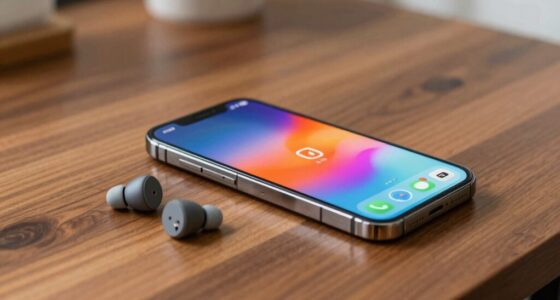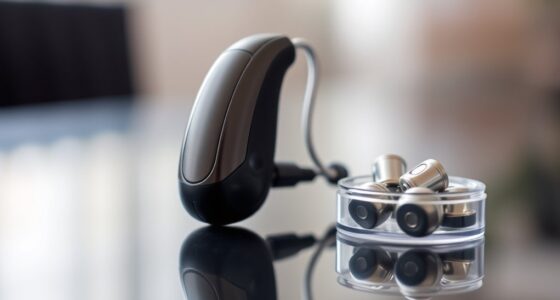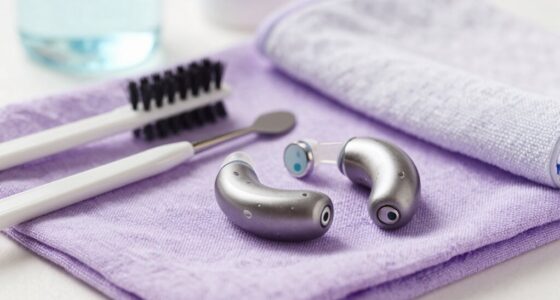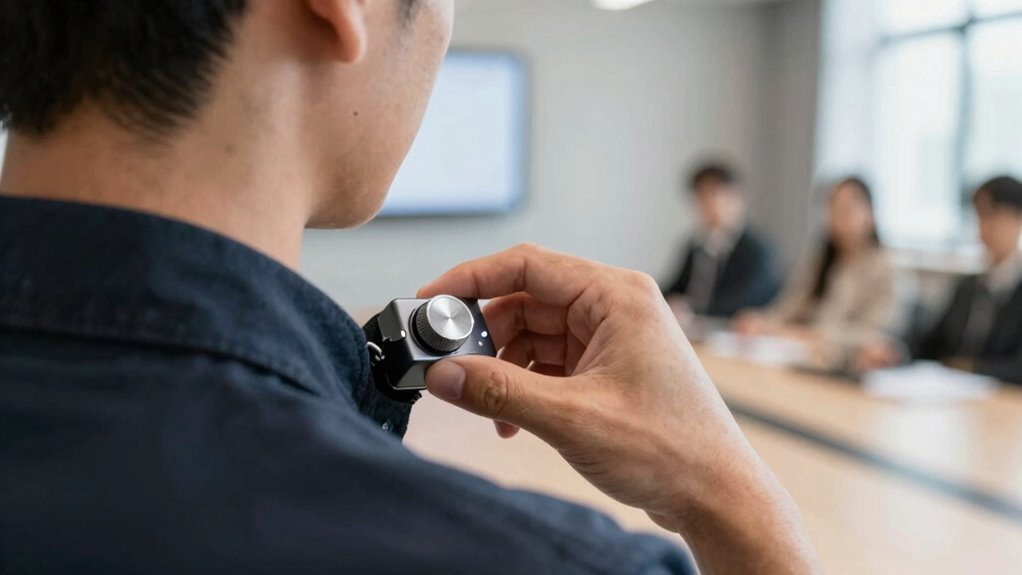
To use a personal amplifier without worsening your speech, choose a device that suits your needs and practice positioning the microphone about 1-2 inches from your mouth, directing it toward your audience. Adjust settings like gain and volume for different environments, and regularly test for clarity. Focus on enunciating clearly, speaking at a steady pace, and avoiding feedback issues. Keep experimenting with these tips, and you’ll improve your amplification skills smoothly.
Key Takeaways
- Position the microphone 1-2 inches from your mouth and avoid speaking directly into it.
- Regularly test and adjust gain and volume settings for clear, distortion-free sound.
- Maintain steady speech pace, enunciating clearly and pausing between sentences.
- Minimize background noise and direct the amplifier toward the audience for better clarity.
- Check battery levels and ensure proper device placement to prevent feedback and sound issues.
Amazon Product B0F74DH64V
As an affiliate, we earn on qualifying purchases.
How Do Personal Amplifiers Affect Your Speech?
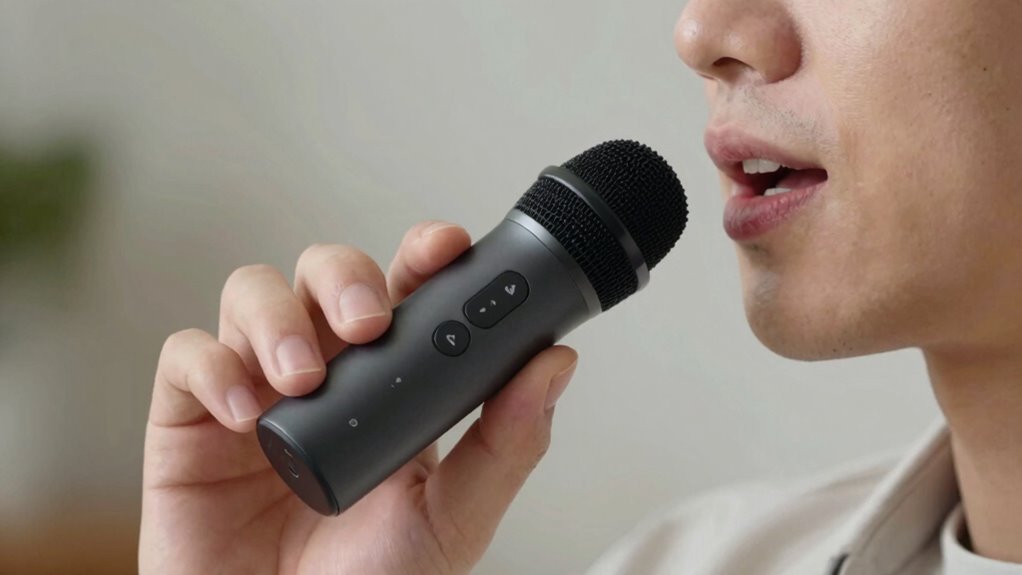
Have you ever noticed how using a personal amplifier can make your speech clearer? It can profoundly impact how you communicate by enhancing your voice’s clarity and projection. When you use one, you gain better control over your voice modulation, allowing you to emphasize key points and convey emotion more effectively. It also helps you maintain consistent speech pacing, preventing you from rushing or speaking too slowly. With amplified sound, your audience hears your words more distinctly, reducing misunderstandings. Additionally, proper use of a personal amplifier can help you manage speech volume, ensuring you don’t sound too loud or too soft in different settings. Being aware of vocal tone and rhythm is crucial to avoid sounding unnatural or overly loud. Properly using a personal amplifier can boost your confidence and improve your overall communication, making your speech more engaging and easier to follow. Paying attention to sound calibration and adaptive audio settings ensures the device complements your natural voice rather than overpowering it. Practicing proper positioning of the microphone can also significantly improve sound quality and comfort during use.
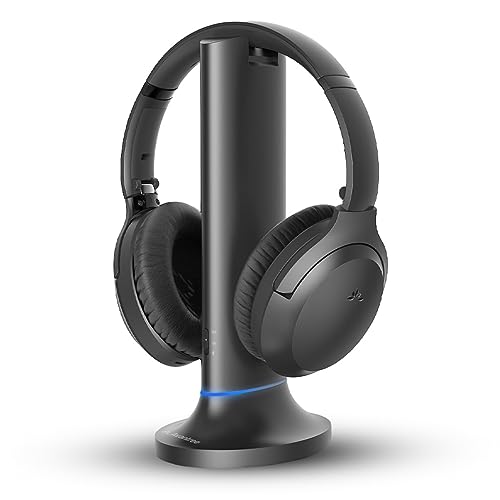
Avantree Opera Plus – Wireless Headphones for TV Watching, Clear Dialogue & Volume Boost for Seniors, Optical Soundbar Passthrough, Charging Transmitter Base
【Designed for Clear TV Dialogue】Designed for wireless TV watching, ideal for seniors or viewers who struggle to hear...
As an affiliate, we earn on qualifying purchases.
How to Choose the Best Personal Amplifier for Your Needs
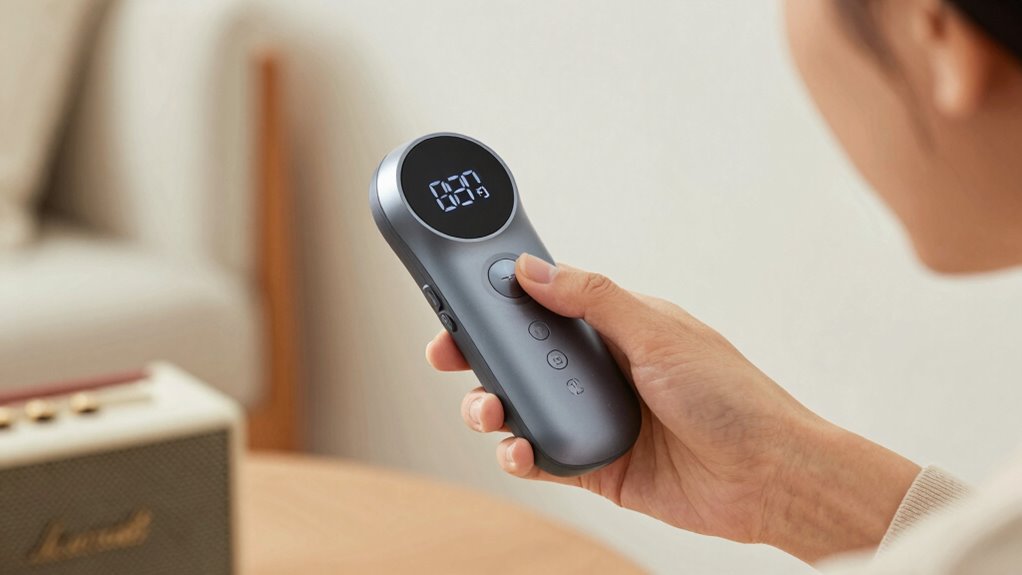
When selecting a personal amplifier, it’s important to take into account your specific needs and environment. First, consider the level of voice projection you require—do you need plenty of volume or just a slight boost? Second, evaluate your microphone selection; choose one that captures your voice clearly without picking up too much background noise. Third, think about features like battery life, size, and ease of use to guarantee it fits your lifestyle. A good amplifier will enhance your voice projection while maintaining natural sound quality. Focus on selecting a device with a microphone suited for your speaking style and environment. This way, you’ll find a personal amplifier that improves your speech without distortion or excessive feedback. Additionally, selecting energy-efficient equipment can help reduce environmental impact and ensure longer usage between charges. Considering the contrast ratio can also be beneficial if you’re using the amplifier in different lighting conditions, ensuring your voice remains clear and distinguishable. Moreover, understanding sound quality and how it interacts with your environment can make a significant difference in your overall experience. Incorporating amplifier features that are compatible with reliable power sources can also contribute to consistent performance during extended use.

HearSound Gold - Digital Wireless Headset System for TV with Earbuds - Ideal for Seniors or Hearing Impaired - All TVs Compatible, No line of sight required, 100 ft. range, Rechargeable 12hr battery
Fully Digitally ENHANCED TV LISTENING EXPERIENCE: Elevate your TV-watching with HearSound Gold Wireless Headset, perfect for seniors and...
As an affiliate, we earn on qualifying purchases.
Proper Placement and Positioning Techniques for Maximal Impact
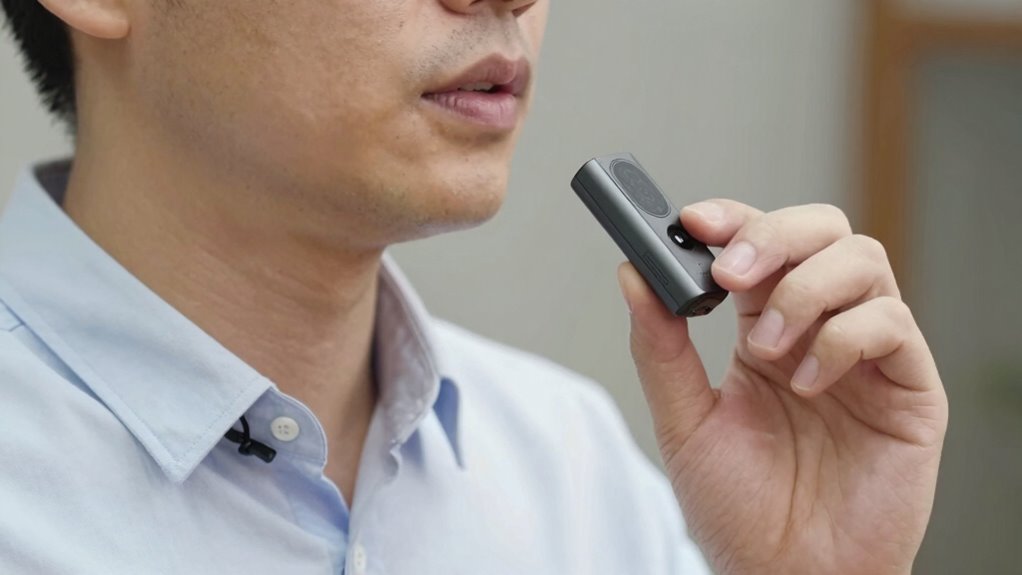
Proper placement and positioning of your personal amplifier are essential for guaranteeing your voice is projected clearly and effectively. Start by positioning the microphone close to your mouth, about 1 to 2 inches away, to optimize microphone placement and capture your voice accurately. Avoid speaking directly into the microphone to prevent distortion or popping sounds. When it comes to speaker positioning, ensure the amplifier is directed toward your audience, not away or at an angle that muffles sound. Keep the device at a consistent height, preferably at chest level, to maintain clear audio. Adjust your stance to avoid obstructions between you and the speaker. Proper placement and speaker positioning maximize sound clarity and help your voice reach your audience without strain or feedback. Additionally, regularly testing the equipment can help identify sound quality issues early and ensure optimal performance. Being aware of sound reinforcement techniques can also help you make adjustments for the best sound, such as understanding how speaker placement influences audio clarity and feedback suppression. Incorporating proper microphone technique ensures consistent sound quality throughout your speech. Remember that consistent equipment setup is key to maintaining reliable sound quality during your speech or presentation.

Avantree Audikast 4 - Auracast & Bluetooth TV Transmitter for Headphones & Selected Hearing Aids, aptX Adaptive & HD, Optical & AUX Output, Future-Ready & Upgradeable
【Check TV Compatibility Before Buying】Your TV must have Optical (TOSLINK) or 3.5 mm AUX output. TVs with HDMI...
As an affiliate, we earn on qualifying purchases.
How to Adjust Amplifier Settings for Different Environments and Voices

Adjusting your amplifier settings for different environments and voices guarantees your sound remains clear and effective. Environmental adaptation helps you tailor the device to varying noise levels and acoustics. To optimize performance, consider these steps:
- Adjust gain and volume based on ambient noise; higher in noisy settings, lower in quiet ones. You can also monitor device indicators to help make these adjustments.
- Use voice customization features to emphasize speech frequencies, making voices clearer.
- Modify equalization settings to suit the environment—boost treble in large halls or reduce bass in small rooms. Proper equalization can significantly improve clarity.
- Regularly test and fine-tune your settings to ensure consistent clarity across diverse environments, aligning with best practices for sound optimization. Additionally, staying aware of environmental factors can help you anticipate and adapt to changing conditions. Incorporating environmental awareness into your routine allows for more precise adjustments, enhancing overall listening experiences and reducing fatigue.
Practicing Speaking Clearly With Your Amplifier

To get the most out of your amplifier, you need to speak with clear articulation. Practice every day to build consistency and confidence in your voice. Regular effort helps you communicate effectively and guarantees your amplifier works at its best. Incorporating auditory feedback therapy techniques can further enhance your speech clarity and monitor progress effectively. Developing consistent speaking habits ensures your voice remains steady and intelligible over time. Additionally, focusing on free floating tension in your vocal cords can improve overall speech quality and reduce strain. Maintaining proper voice hygiene routines can also contribute to better overall health, ensuring your voice remains strong and clear.
Maintain Clear Articulation
Practicing speaking clearly with your amplifier is essential to guarantee your voice comes through without distortion or mumbling. To maintain clear articulation, focus on these key techniques:
- Adjust your voice projection so your voice is strong but natural, avoiding strain.
- Control your speech pace—speak neither too fast nor too slow—to ensure clarity.
- Enunciate each word distinctly, emphasizing consonants, to prevent mumbling.
These steps help your amplified voice stay clear and understandable. Keep practicing these habits regularly to improve your communication. Remember, maintaining good voice projection and a steady speech pace makes a significant difference in how well your message is received. Clear articulation isn’t just about volume; it’s about precision. With consistent effort, your speech will become more intelligible and confident.
Practice Regularly Daily
Consistent daily practice is essential to develop and maintain clear speaking habits with your amplifier. By practicing regularly, you strengthen your voice projection, making it easier to reach your audience without strain. Focus on speaking at a steady pace, enunciating each word clearly, and adjusting your volume as needed. Daily exercises help you become more comfortable with the amplifier, ensuring your voice remains natural and engaging. Incorporating proper amplification techniques into your routine can further enhance your effectiveness. Over time, this routine will boost your confidence and help you use your amplifier effectively, making your communication more impactful. Practicing with awareness of safe and correct usage helps prevent strain or misuse that could harm your voice over time. Additionally, understanding outdoor communication skills can improve your ability to project clearly in various environments.
Common Mistakes That Can Worsen Your Speech and How to Avoid Them
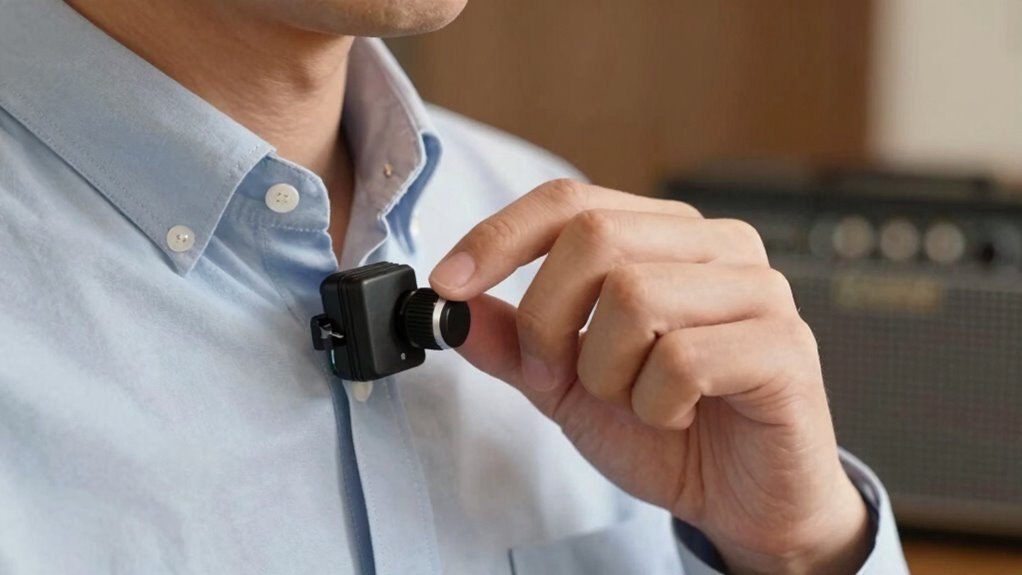
One common mistake that can worsen your speech is speaking too quickly, which makes it hard for your audience to understand you. Rushing can undermine your voice projection and reduce your speech confidence. To avoid this, focus on these key points:
- Control your pace—pause briefly between sentences to give listeners time to process your words.
- Maintain steady voice projection—speak with enough volume and clarity, not too loud or soft.
- Practice deliberate breathing—deep breaths help regulate speed and improve overall speech quality.
Using Feedback and Listening Tests to Fine-Tune Your Amplifier Performance
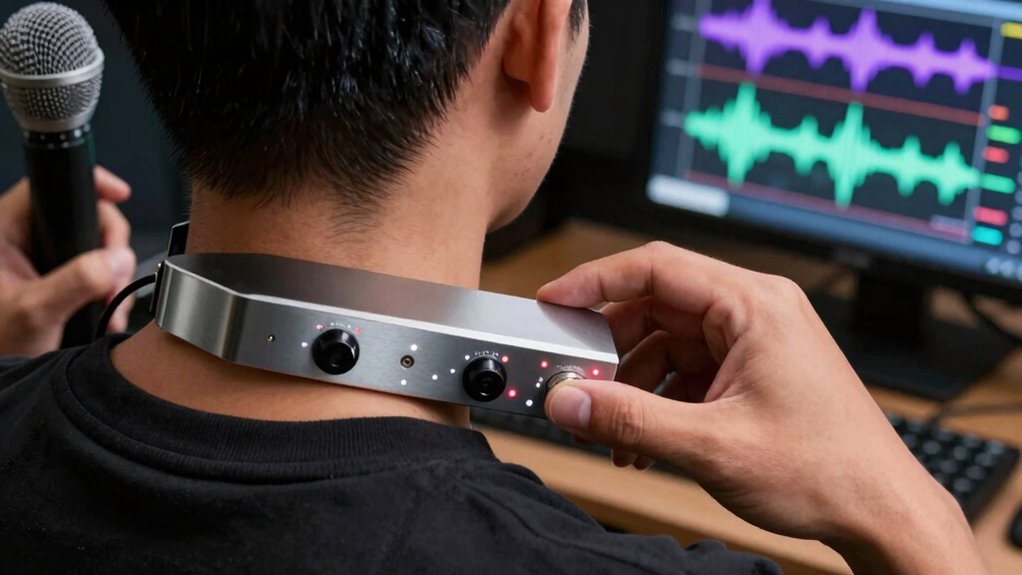
To guarantee your amplifier functions at its best, it’s essential to use feedback and listening tests regularly. Feedback optimization helps you identify and reduce any unwanted squeals or howls, ensuring clear sound without distortion. Start by adjusting the microphone placement and volume levels, then listen carefully to the output. During listening calibration, compare how your speech sounds through the amplifier versus natural hearing, making adjustments for clarity and comfort. Use a trusted voice or recording to evaluate the quality. Repeat these tests often, especially after changes to the setup. Fine-tuning through feedback and listening tests ensures your amplifier delivers peak sound quality, minimizes feedback issues, and enhances speech intelligibility, making your experience more comfortable and effective.
Additional Strategies to Improve Speech Clarity With a Personal Amplifier

Enhancing speech clarity with a personal amplifier involves more than just adjusting the device; it requires strategic positioning and environmental awareness. To maximize understanding, focus on these strategies:
Maximize speech clarity with strategic positioning and environmental awareness for better amplification results.
- Practice strong voice projection to guarantee your voice reaches the microphone clearly, reducing strain and distortion.
- Use expressive facial expressions to reinforce your message and convey emotions, making your speech more engaging and easier to interpret.
- Position yourself directly facing your audience, maintaining eye contact and minimizing background noise that can interfere with your amplifier’s effectiveness.
These techniques help you communicate more effectively, ensuring your amplified speech is clear and natural. By combining good voice projection, expressive facial cues, and mindful positioning, you notably improve speech clarity without making your speech worse.
Troubleshooting Amplifier Problems: Tips for Quick Fixes
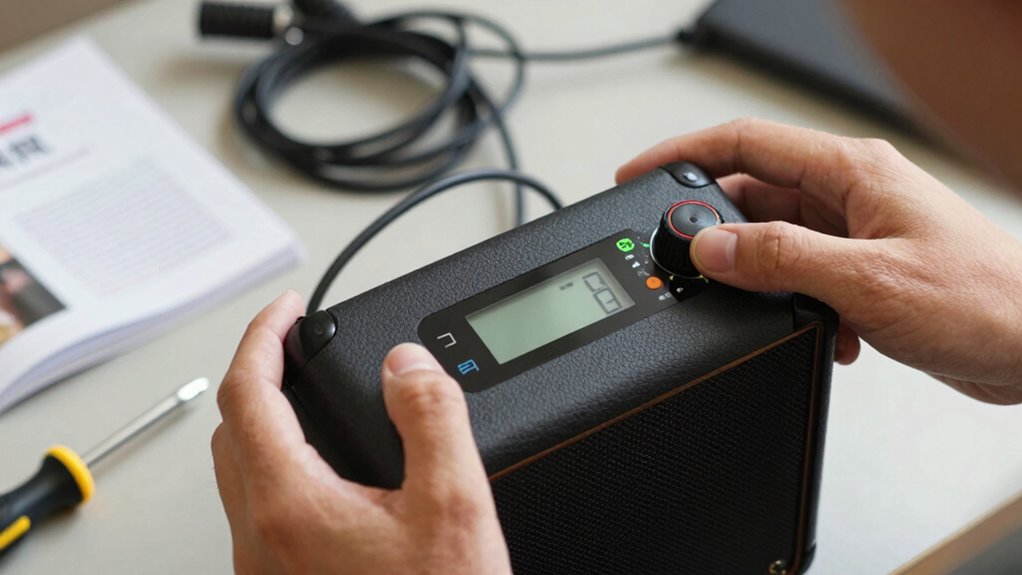
If your amplifier isn’t working properly, start by checking that the settings are correctly adjusted for your needs. Make sure the battery isn’t low, as a weak charge can cause performance issues. These quick checks can often resolve common problems and get your amplifier back in action.
Adjust Settings Properly
- Test different sound settings to find the clearest, most natural tone.
- Make certain the volume control isn’t set too high, which can cause distortion.
- Fine-tune the microphone sensitivity to prevent feedback or muffled speech.
Check Battery Levels
When your personal amplifier isn’t working properly, checking the battery levels should be your first step. Low or dead batteries can cause sound issues or complete failure. Regular battery maintenance helps guarantee reliable performance and prolongs device life. To visualize, imagine this simple table:
| Battery Status | Effect on Amplifier | Action Needed |
|---|---|---|
| Full | Peak performance | No action needed |
| Half-Empty | Slight power reduction | Recharge or replace soon |
| Critical | Risk of failure | Replace immediately |
| Dead | No power | Replace batteries |
| Recharging | Restoring power | Wait until full |
Keeping an eye on these levels promotes power conservation and prevents unexpected issues. Always carry spare batteries for quick fixes, and check them regularly for consistent, clear speech delivery.
Final Tips for Effective Amplification and When to Seek Professional Help

To guarantee you get the most out of your personal amplifier, pay attention to proper placement and volume adjustments, and regularly test its performance in different settings. Ensure your device has an ideal microphone position to capture sound clearly without distortion. Prioritize user comfort by choosing a lightweight, well-fitting device that doesn’t cause fatigue. When your amplification needs become complex or persistent issues arise, it’s time to seek professional help. Consider these tips:
Optimize your amplifier with proper placement, volume control, and professional guidance for best results.
- Adjust volume gradually to avoid feedback or sound distortion.
- Use hearing assessments to fine-tune settings.
- Consult an audiologist if difficulties persist or if you experience discomfort.
These steps will enhance your experience and ensure your amplification remains effective and comfortable.
Frequently Asked Questions
Can Using a Personal Amplifier Cause Vocal Strain?
Yes, using a personal amplifier can cause vocal strain if you over-rely on it or don’t practice proper voice projection. Excessive vocal fatigue may result from pushing your voice too hard or speaking loudly for extended periods. To prevent this, make sure you use the amplifier correctly, take breaks, and focus on healthy voice techniques. Proper use helps protect your voice and reduces the risk of strain and fatigue.
How Can I Prevent Feedback When Speaking With an Amplifier?
Feedback is like a sneaky ghost that appears if you aren’t careful. To prevent it, focus on feedback prevention techniques, especially amplifier placement. Keep the microphone slightly away from the speaker and avoid pointing it directly at the amplifier. Position your amplifier on a stable, elevated surface, and test your setup before speaking. These steps help you stay clear of unwanted screeches, ensuring your voice comes through smoothly.
Is It Necessary to Wear a Microphone With a Personal Amplifier?
Yes, you need a microphone with a personal amplifier. Proper microphone placement is essential; keep it close to your mouth but avoid blocking it. Adjust the amplifier volume carefully—too high causes feedback, too low makes you hard to hear. Using a quality microphone guarantees clear sound, and maintaining proper placement helps prevent feedback and distortion, making your speech clearer and more comfortable for your audience.
How Often Should I Clean or Maintain My Amplifier?
Imagine your personal amplifier sitting quietly on your desk, waiting for use. You should clean it every few months, especially the microphone and ear tips, to prevent buildup. Regularly check battery maintenance, ensuring batteries are charged or replaced as needed. By maintaining a cleaning frequency, you keep your device functioning smoothly, avoiding audio issues. This routine helps extend your amplifier’s lifespan and guarantees clear sound every time you use it.
Can a Personal Amplifier Improve Speech for Non-Hearing-Impaired Speakers?
Yes, a personal amplifier can improve speech for non-hearing-impaired speakers by enhancing hearing and boosting communication effectiveness. You can use it to better focus on conversations in noisy environments, ensuring you catch every word clearly. To get the best results, position the device correctly and adjust the settings as needed. This way, you’ll experience clearer speech and more confident interactions, even if you don’t have hearing impairments.
Conclusion
Remember, mastering your personal amplifier is like tending a garden; with patience and proper care, your speech will flourish. Keep experimenting with settings, placement, and practice, just as a wise alchemist refines their craft. Don’t be afraid to seek help if needed—sometimes, the simplest fix can turn your communication from a mere whisper into a mighty roar. Stay diligent, and soon you’ll be speaking with clarity and confidence, making your voice truly heard in any era.