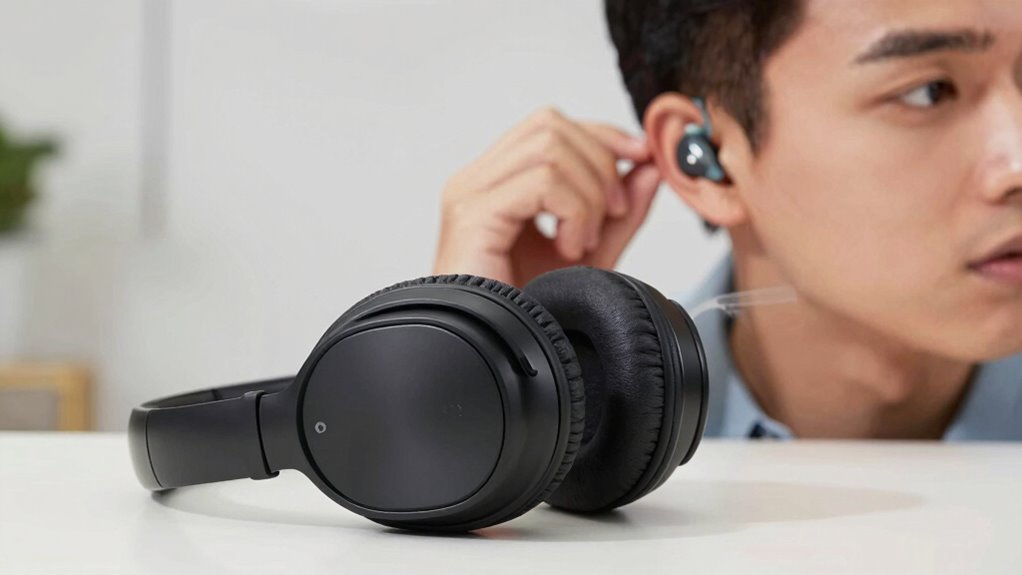
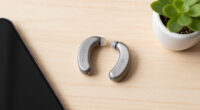
Noise cancelling headphones mainly block out background sounds to create a quieter listening environment for entertainment and relaxation. They use static algorithms to generate anti-noise signals, without adjusting to your specific hearing needs. In contrast, hearing assistance devices are designed to improve communication and environmental awareness by amplifying sounds tailored to your hearing profile. Knowing these differences helps you choose the right device—if you want to learn more, there’s much more to explore.

Get everyday helpers delivered free with Prime
- Fast, free delivery on millions of items
- Prime Video, Amazon Music and more included
- Member-only deals all year
Key Takeaways
- Noise cancelling headphones primarily block external sounds for better entertainment, not tailored to individual hearing needs.
- Hearing aids use adaptive, personalized algorithms to enhance speech and environmental sounds, unlike static noise canceling technology.
- Noise cancelling devices do not amplify or clarify speech; hearing aids focus on making sounds more accessible.
- Hearing aids are designed for individuals with hearing impairments, offering customized sound processing, unlike standard noise cancelling headphones.
- The core purpose differs: headphones aim for immersive listening, while hearing aids aim to improve hearing function and communication.
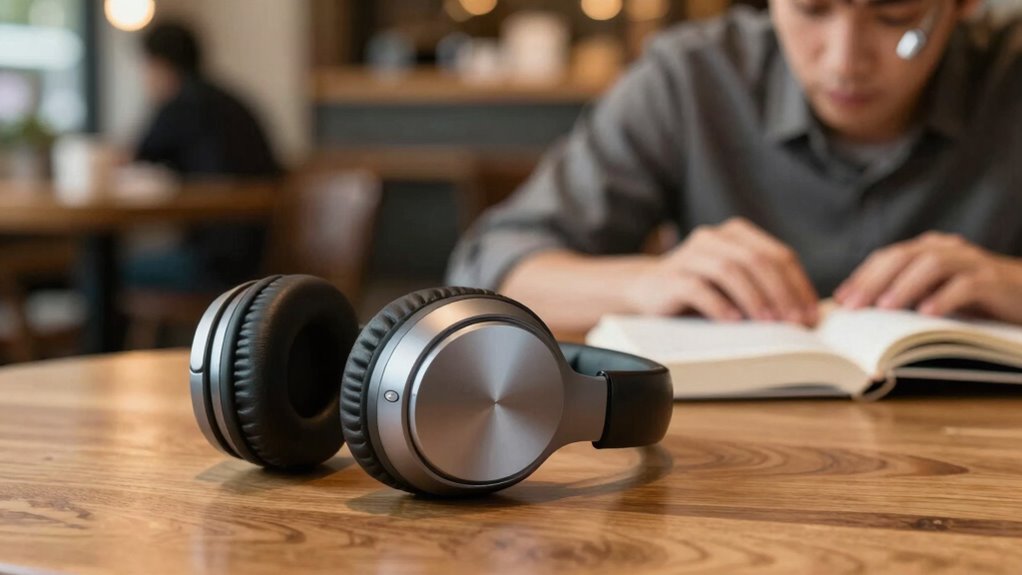
Have you ever wondered how noise cancelling audio devices compare to hearing assistance tools? While they might seem similar at first glance, they serve very different purposes and are built on distinct technological foundations. Understanding these differences can help you make better choices based on what you actually need. Noise cancelling headphones use microphones to pick up ambient sounds and generate opposite sound waves to cancel out noise. This process is primarily designed to improve your listening experience in noisy environments, making music, podcasts, or calls clearer and more enjoyable. The technological differences here are significant: noise cancelling devices focus on reducing external sounds to enhance audio quality for personal entertainment. User experiences tend to be centered around comfort, audio clarity, and immersion. You get a more isolated sound environment, which is great for traveling, working in noisy offices, or relaxing at home. But, these devices don’t have the capacity to amplify or clarify speech or environmental sounds beyond canceling noise.
Hearing assistance tools, on the other hand, are explicitly designed to help people with hearing impairments perceive sounds more effectively. These devices incorporate advanced amplification technology that enhances speech and environmental sounds based on individual hearing profiles. They often include features like directional microphones, background noise reduction tailored to hearing loss, and sound processing algorithms that distinguish speech from other noises. The user experiences here are deeply personalized; hearing aids are calibrated to your specific hearing needs, which means they don’t just block noise—they improve your ability to understand conversations and environmental cues. Additionally, sound processing algorithms are a crucial component that enable hearing aids to adapt dynamically to changing acoustic environments. Unlike noise cancelling headphones, hearing aids don’t aim to create a quieter environment but to make sounds more accessible and intelligible. They often connect to external devices like smartphones or microphones to further customize sound input. Additionally, hearing aids can be equipped with features such as artificial intelligence that adapt to diverse listening environments in real time. The technological differences are essential: hearing aids are complex, adaptive devices that process sound in real time based on your hearing loss, whereas noise cancelling headphones rely on static algorithms that block out external sounds without adjusting to individual hearing capabilities. hearing aid technology continues to evolve rapidly, incorporating features like artificial intelligence to better adapt to different listening environments.
In essence, while both devices manipulate sound, their core functions diverge. Noise cancelling audio devices aim to create a more pleasant listening environment by reducing noise, providing a richer listening experience for the general population. Hearing assistance tools focus on improving hearing for those with impairments, making sounds clearer and more meaningful. Your user experiences differ because one enhances entertainment and comfort, the other enhances communication and accessibility. Recognizing these fundamental differences guarantees you select the right device for your needs, whether you’re seeking better audio quality or improved hearing support. As technological innovation continues to advance, the line between entertainment and accessibility features is gradually blurring, leading to smarter and more integrated solutions. With ongoing advancements, adaptive sound processing is becoming increasingly sophisticated, further bridging the gap between entertainment and accessibility.
personal noise cancelling headphones
As an affiliate, we earn on qualifying purchases.
As an affiliate, we earn on qualifying purchases.
Frequently Asked Questions
Can Noise Cancelling Headphones Improve Speech Clarity for the Hearing Impaired?
Noise-cancelling headphones can improve speech clarity for the hearing impaired by providing better sound isolation, reducing background noise, and making speech more distinguishable. They also offer audio enhancement features that emphasize speech frequencies, helping you hear conversations more clearly. However, while these headphones boost overall listening, they aren’t designed specifically for hearing assistance, so they might not fully replace specialized hearing devices.
Are There Any Health Risks Associated With Long-Term Noise Cancelling Headphone Use?
You might not realize it, but long-term use of noise-canceling headphones can pose ear health risks, like ear fatigue and potential damage if used improperly. The coincidence is that while they block external sounds, they can also trap moisture or create pressure that affects your ears over time. To protect your ear health, take breaks regularly, keep volume levels moderate, and avoid extended use to prevent discomfort or harm.
How Do Hearing Aids Adapt to Different Environmental Sounds?
Hearing aids adapt to different environmental sounds through advanced sound processing technology. They automatically detect changes in noise levels and adjust amplification accordingly, providing clearer sound in noisy settings and softer sounds in quiet environments. This environmental adaptation helps you focus on conversations or sounds that matter most, enhancing your overall hearing experience. The device’s smart sound processing ensures you stay aware of your surroundings without feeling overwhelmed by background noise.
Can Noise Cancelling Technology Help in Noisy Public Settings for Hearing Aid Users?
Noise-canceling technology can help you in noisy public settings by reducing background sounds, but it may also cause cognitive distraction and limit your environmental awareness. While it filters out some noise, it doesn’t distinguish important sounds like conversations or alerts. So, you might find it easier to focus, but stay alert to your surroundings. It’s a useful tool, yet it shouldn’t replace traditional hearing aids designed for environmental awareness.
What Are the Costs Differences Between Quality Noise Cancelling Headphones and Hearing Aids?
Ever wondered how much you’d spend on quality noise cancelling headphones versus hearing aids? The price comparison shows headphones typically cost between $100 and $400, using advanced noise reduction tech. Hearing aids, however, can range from $1,000 to over $6,000 per ear, reflecting complex technology and personalized fitting. The main difference lies in technology: headphones focus on sound quality, while hearing aids are built for medical hearing enhancement.
Conclusion
Remember, not all that glitters is gold. Noise-canceling headphones and hearing aids serve different needs—one blocks out noise for a better listening experience, while the other amplifies sounds to help you hear clearly. Don’t mistake one for the other; understanding their differences guarantees you choose the right solution. When it comes to hearing, it’s better to be safe than sorry—because sometimes, what you need isn’t just silence, but the gift of true hearing.
Columbus Day / Indigenous Peoples' Day Picks
long weekend sales
As an affiliate, we earn on qualifying purchases.