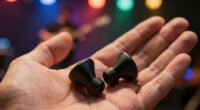
The Noise Reduction Rating (NRR) helps you understand how well hearing protectors reduce noise exposure, but it’s not a simple number. It’s based on lab tests and often overstates actual protection because real-world factors like fit, comfort, and environment matter. To stay safe, you need to contemplate derating and proper use. Stay tuned, as mastering these details will help you choose and use hearing protection effectively in all noisy situations.
Key Takeaways
- NRR indicates how much hearing protectors reduce noise but often overestimates real-world effectiveness due to fitting and environment factors.
- Derating NRR by 50-65% provides a more accurate estimate of actual noise reduction during use.
- Proper fit, correct usage, and consistent wear are essential for maximum protection, regardless of high NRR ratings.
- NRR testing is standardized but doesn’t account for user behavior, environmental noise, or device maintenance.
- Combining proper fitting, noise monitoring, and safety practices ensures effective hearing protection beyond just NRR numbers.

Mack's Ultra Soft Foam Earplugs, 50 Pair – 33dB Highest NRR, Comfortable Ear Plugs for Sleeping, Snoring, Travel, Concerts, Studying, Loud Noise, Work | Made in USA
ULTRA COMFORTABLE – Made with super low-pressure, slow release, Comfy Cush Comfort Foam. Their user preferred color is…
As an affiliate, we earn on qualifying purchases.
As an affiliate, we earn on qualifying purchases.
What Is the Noise Reduction Rating (NRR) and Why It Matters

The Noise Reduction Rating (NRR) is a standard measure that indicates how much a hearing protector can reduce noise exposure. When you work or spend time in loud environments, noise exposure can damage your hearing over time. An effective hearing protector with a high NRR helps block out harmful sounds, reducing your risk of hearing loss. It’s essential to choose the right protection to prevent long-term damage. Without proper hearing protection, continuous noise exposure can cause irreversible hearing loss, impacting your quality of life. The NRR provides a clear way to compare different earplugs or earmuffs and determine their effectiveness. Sound attenuation is a key factor in selecting appropriate hearing protection, and understanding this rating helps you make informed decisions, ensuring your ears stay safe in noisy settings. Additionally, understanding noise reduction techniques can enhance overall hearing safety in various environments. Knowing how NRR values are calculated and applied can further improve your ability to select the most suitable hearing protection, especially when considering real-world effectiveness versus laboratory tests.

Dr.meter Ear Muffs for Noise Reduction: 27.4SNR Noise Cancelling Headphones for Kids Adults, EM100 Adjustable Hearing Protection Earmuffs for Monster Jam, Autism Sensory, Concerts, Fireworks
【Extremely Comfortable to Wear】: Wrap your child's ears in cloud-like softness! Dr.meter noise cancelling headphone is made of…
As an affiliate, we earn on qualifying purchases.
As an affiliate, we earn on qualifying purchases.
How Is NRR Calculated? Understanding the Numbers
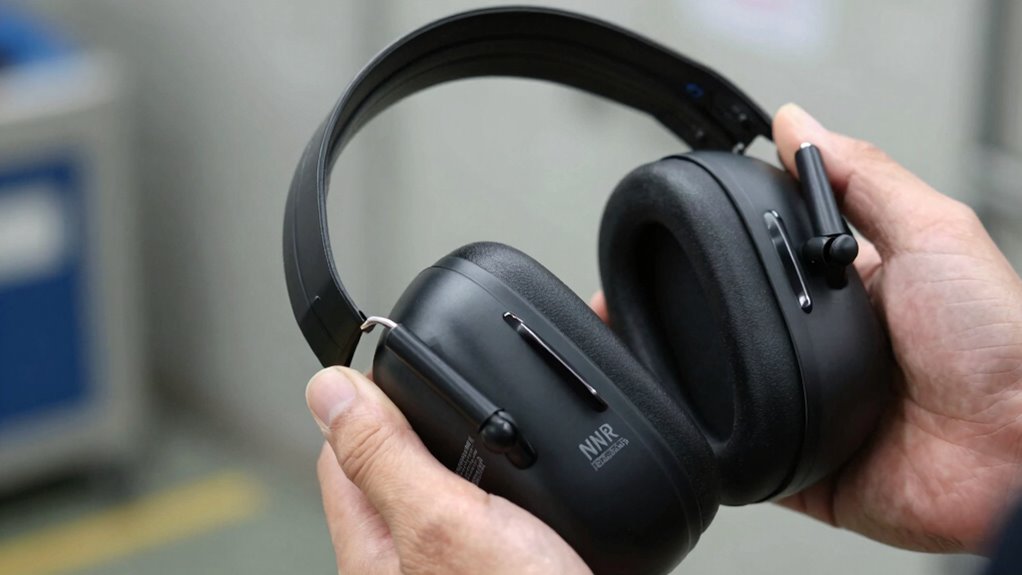
To understand how NRR is calculated, you need to be aware of derating and reduction factors that modify the tested noise reduction for real-world use. Standardized testing procedures ensure consistency, but these numbers often need modification to reflect actual conditions. Recognizing how these elements influence the final NRR helps you choose the most effective hearing protection. Proper piercing care and hygiene can prevent infections that might compromise hearing health over time. Additionally, understanding the noise environment where protection is used can help determine the appropriate NRR rating for your needs. Factors such as wearing fit and comfort can significantly impact the actual noise reduction achieved in practical scenarios. Awareness of real-world usage factors also plays a vital role in selecting suitable hearing protection.
Derating and Reduction Factors
Have you ever wondered how noise reduction ratings are determined for hearing protection devices? It’s not just about raw sound attenuation; factors like frequency weighting influence the final NRR. Manufacturers apply derating to account for real-world conditions, reducing the lab-tested NRR. This adjustment ensures your hearing protection performs effectively during actual use. The table below highlights common reduction factors:
| Condition | Reduction Factor |
|---|---|
| Workplace noise environments | 50% |
| Use with earmuffs and plugs | 70% |
| High-frequency noise | 60% |
| Continuous noise exposure | 55% |
| Intermittent noise | 65% |
These adjustments help you better understand how the NRR reflects true performance across different sound environments. Additionally, understanding noise attenuation can help you select the most effective hearing protection for your needs. Recognizing the performance of hearing protection devices is essential for ensuring adequate hearing safety in various noise conditions, especially since derating is crucial for translating lab results into real-world effectiveness. Furthermore, real-world conditions often differ significantly from laboratory testing, making these reduction factors vital for accurate safety assessments. Being aware of standardized testing procedures can also improve your confidence in selecting appropriate hearing protection.
Standardized Testing Procedures
Understanding how Noise Reduction Ratings (NRRs) are calculated starts with standardized testing procedures that guarantee consistency and reliability. These testing procedures follow strict measurement standards to make certain accurate results. Manufacturers subject hearing protectors to controlled noise environments, measuring how much sound attenuation they provide across various frequencies. This process involves specialized equipment that simulates real-world noise exposure, ensuring the data reflects typical use conditions. By adhering to uniform measurement standards, testing procedures produce comparable and dependable NRR values, allowing you to evaluate different hearing protection devices effectively. These standardized procedures help eliminate guesswork, giving you a clear understanding of how well a product can reduce noise and protect your hearing.

Floriogra 2 Pack 34dB Noise Canceling Headphones For Shooting, Hearing Protection Earmuffs, Ear Protection Headphones, Thickened Headband Ear Muff For Noise Reduction for Shooting, Construction,Mowing
Efficient Hearing Protection: These noise canceling headphones are equipped with a double-layer sound-dampening foam and a composite housing…
As an affiliate, we earn on qualifying purchases.
As an affiliate, we earn on qualifying purchases.
Limitations of NRR in Real-World Hearing Protection
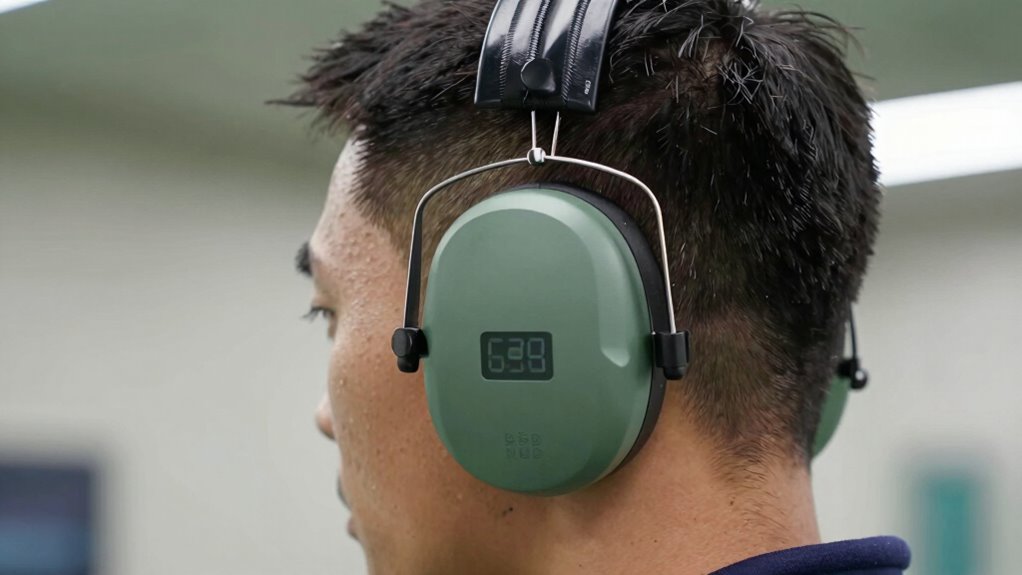
While the Noise Reduction Rating (NRR) provides a standardized measure of hearing protection, it often overestimates the noise level reduction you’ll experience in real-world situations. Factors like improper fit, user behavior, and environmental conditions can substantially lower the actual noise reduction. This discrepancy can lead to a false sense of security, as users might assume they are fully protected when they are not. The NRR doesn’t account for variations in how you wear or maintain your devices, which can diminish their effectiveness. As a result, relying solely on NRR can give a false sense of security. To truly protect your hearing, you need to take into account real-world conditions and supplement rated protection with safe practices and regular hearing checkups. Additionally, understanding the limitations of NRR can help you make more informed choices about hearing safety, especially considering the practical effectiveness of protective devices in diverse environments. Recognizing these factors influencing noise reduction can help users select the most suitable hearing protection for their needs. Being aware of user behavior and environmental factors can further enhance your hearing protection strategies. Incorporating proper fitting techniques can also significantly improve the actual noise reduction you achieve in practice.

ProCase Noise Reduction Ear Muffs, Sound Proof Ear Protection, NRR 28dB Noise Cancelling Headphones for Adults Kids Autism, Hearing Protection for Shooting Gun Range Mowing -Red
Constructed by solid ABS shell and thickened foam, the ear muffs achieve NRR 28 dB (SNR 34 dB)…
As an affiliate, we earn on qualifying purchases.
As an affiliate, we earn on qualifying purchases.
How to Interpret NRR for Different Noise Environments

Interpreting NRR ratings accurately requires considering the specific noise environment you’re in. Different noise levels demand different approaches to ensure proper hearing protection. Understanding noise exposure is essential for selecting the right hearing protection device for your needs. Additionally, being aware of noise reduction ratings helps you compare different products effectively and choose the most suitable option for your situation. Recognizing how sound intensity levels impact hearing safety can further refine your choice of protective gear, especially in high-decibel environments.
Does a Higher NRR Always Mean Better Hearing Protection?

A higher NRR might seem like the best choice, but it doesn’t always mean you’ll get better hearing protection. Comfort can vary, and real-world noise reduction often differs from lab ratings. You need to take into account how the protection fits and performs in your specific environment. Additionally, selecting the right noise reduction method depends on understanding its effects, just as choosing hearing protection requires considering factors beyond the NRR rating. Recognizing the lab testing conditions can help you make more informed decisions about actual performance.
Higher NRR Does Not Guarantee Better Comfort
Have you ever assumed that hearing protection with a higher NRR automatically offers better comfort? That’s not always the case. Higher NRR ratings focus on noise reduction, but comfort concerns depend on other factors. Material choices play a vital role in how comfortable your hearing protection feels. Consider these points:
- Thicker or denser materials may block more noise but can cause discomfort over time.
- Soft, lightweight materials usually enhance all-day wearability.
- Proper fit is essential—tight seals might protect well but can irritate your skin.
- Custom-molded options often balance high NRR with increased comfort.
Real-World Noise Reduction Varies
While a high NRR indicates strong noise reduction in controlled tests, it doesn’t always translate to real-world effectiveness. Your actual noise exposure varies due to fit, user behavior, and environmental factors. Poorly fitted earplugs or earmuffs may allow noise leaks, reducing protection. If you don’t wear your hearing protection correctly, you risk unnecessary noise exposure, increasing the chance of hearing loss. Even the highest-rated earplugs won’t fully protect you if they aren’t used properly. Remember, real-world noise reduction depends on consistency and proper fit, not just the NRR number on the label. To truly protect your hearing, focus on correct usage and fit, rather than relying solely on a high NRR. Otherwise, you might underestimate the noise levels you face daily.
Adjusting NRR Ratings for Better Effectiveness

Adjusting NRR (Noise Reduction Rating) ratings can substantially improve their effectiveness in real-world situations. To better protect yourself from noise exposure and prevent hearing loss, consider these steps:
- Follow manufacturer instructions carefully for proper fit.
- Ensure earplugs or earmuffs create a snug seal without discomfort.
- Replace damaged or worn protection immediately.
- Use double protection in extremely noisy environments for added reduction.
Comparing NRR Ratings Across Earplug and Earmuff Brands

When comparing NRR ratings across brands, you’ll notice some consistency issues and variability. Different manufacturers may interpret testing standards differently, affecting the ratings you see. Understanding these factors helps you choose the most effective hearing protection for your needs.
Consistency in Ratings
Comparing NRR ratings across different earplug and earmuff brands can be challenging because the ratings are not always directly comparable. Noise canceling technology and other features vary, affecting actual protection levels. To improve consistency:
- Recognize that NRR ratings often underestimate real-world noise reduction.
- Look for standardized testing methods to compare ratings more accurately.
- Understand that different brands may incorporate hearing protection myths, leading to inflated or misleading ratings.
- Remember that personal fit and proper usage considerably influence effectiveness, regardless of the rating.
While ratings provide a starting point, always consider product reviews and real-world performance. This approach helps you select the most effective hearing protection without relying solely on the NRR value.
Brand Variability Factors
Different earplug and earmuff brands can vary considerably in their NRR ratings due to differences in testing methods, design, and manufacturing quality. Material variability plays a significant role; some brands use softer, more durable materials that better conform to your ears, enhancing noise reduction. Conversely, others may rely on cheaper materials that compromise effectiveness. Brand reputation also influences ratings, as trusted brands tend to maintain stricter quality control, ensuring consistent performance. When comparing NRR ratings, recognize that high ratings from well-known brands often reflect reliable testing and manufacturing standards. Keep in mind that even with the same NRR number, actual protection can differ based on material quality and how well the product fits, making brand reputation a useful factor in your selection process.
Common Mistakes When Using NRR to Choose Hearing Protection
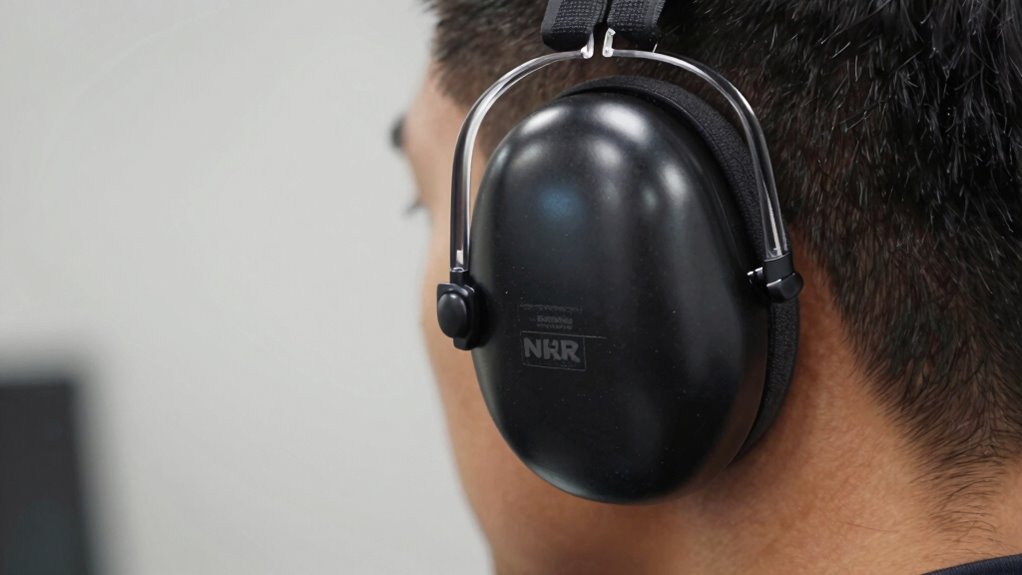
One common mistake is relying solely on the Noise Reduction Rating (NRR) number printed on hearing protection products without understanding how it applies to real-world noise environments. You might think a high NRR guarantees full protection, but that’s not always true.
Relying only on NRR can mislead you about actual hearing protection effectiveness.
- You overlook the fact that NRR is based on laboratory tests, not actual noise exposure—so the protection may be less effective outdoors or in loud settings.
- You assume noise canceling headphones or musician earplugs automatically provide adequate noise reduction without considering fit or proper usage.
- You ignore the importance of correctly inserting earplugs or adjusting headphones for maximum effectiveness.
- You forget that combining protection types might be necessary for high-decibel environments.
Understanding these mistakes helps you choose hearing protection that truly works.
Practical Tips to Maximize Hearing Safety With NRR

To maximize your hearing safety with NRR, it’s essential to guarantee you select and use your hearing protection correctly. First, prioritize earplug comfort, ensuring they fit snugly without causing discomfort, which encourages consistent use. Proper insertion is key—twist and insert the earplug fully to achieve a good seal. Use noise monitoring techniques to gauge your environment’s sound levels and verify protection effectiveness. Regularly check the fit, especially if conditions change or after extended use. If earplugs become uncomfortable or don’t fit well, try different styles or sizes. Remember, even the highest NRR rating won’t protect you if your ear protection isn’t worn properly or comfortably. Consistent, correct use is crucial for maximizing hearing safety.
Regulations and Standards for Hearing Conservation

Regulations and standards for hearing conservation set the mandatory guidelines that workplaces and manufacturers must follow to protect your hearing. These noise standards ensure safe exposure levels and promote regulation compliance across industries. To meet these standards:
- Employers must conduct noise assessments to identify risks.
- Hearing conservation programs are required if noise exceeds permissible limits.
- Proper training on hearing protection and noise management is mandated.
- Approved hearing protection devices must meet recognized standards and be correctly used.
These regulations help prevent hearing loss by establishing clear expectations. By adhering to noise standards, workplaces minimize risks and uphold regulation compliance. Manufacturers also follow these standards when designing hearing protection, ensuring devices are effective and reliable. Ultimately, these standards protect your hearing health in noisy environments.
Frequently Asked Questions
How Does NRR Differ Between Industrial and Recreational Hearing Protection?
You’ll notice that NRR differs between industrial and recreational hearing protection because they follow different safety standards. Industrial gear typically offers higher noise reduction, designed for loud environments like factories, ensuring safety from hazardous noise levels. Recreational protection, used for activities like shooting or concerts, provides moderate noise reduction. Always check the NRR to match your activity’s noise level, ensuring you get proper noise reduction and stay within safety standards.
Can NRR Be Used to Compare Different Types of Hearing Protection Devices?
You can’t rely solely on NRR to compare different hearing protection devices. While it provides a general idea of noise reduction, actual noise reduction varies based on fit, usage, and environment. For effective device comparison, consider real-world performance, comfort, and how well each device seals your ears. Always test and choose the device that offers the best noise reduction for your specific situation, rather than just comparing NRR numbers.
Are There Specific Scenarios Where NRR Is Less Reliable?
Imagine comparing sound levels with a ruler, but sometimes the measurements are distorted by industrial standards or noise measurement methods. NRR becomes less reliable in real-world scenarios involving high noise levels, fluctuating environments, or improper fit. When noise exceeds the device’s rated protection, or when measurements aren’t precise, the NRR can overestimate protection. Always consider actual conditions and proper fitting for accurate noise control.
How Frequently Should Hearing Protection Be Tested for Effectiveness?
You should test your hearing protection’s effectiveness at least annually to guarantee it maintains proper attenuation levels. Incorporate testing into your regular maintenance schedules, especially if you use the gear frequently or in harsh environments. Regular testing helps identify wear and tear, ensuring continued protection. If you notice any damage or discomfort, conduct immediate testing and replace or repair the equipment as needed to keep your hearing safe.
What Are the Best Practices for Educating Workers About NRR Usage?
You should incorporate NRR education into your training programs and safety protocols to guarantee workers understand its importance. Use clear visuals and hands-on demonstrations to show proper fitting and usage. Regularly reinforce this knowledge through refresher courses and ongoing communication. Encourage questions and feedback to address misunderstandings. By making NRR knowledge an integral part of safety routines, you help workers protect their hearing effectively and confidently.
Conclusion
Remember, the NRR is a helpful guide, but it’s not the whole story—think of it as a map, not the destination. Your best protection comes from understanding your environment, choosing the right gear, and using it correctly. Don’t let a high number fool you into complacency; even the best ear protection needs your active effort. Stay informed, stay safe, and keep your hearing as sharp as ever.