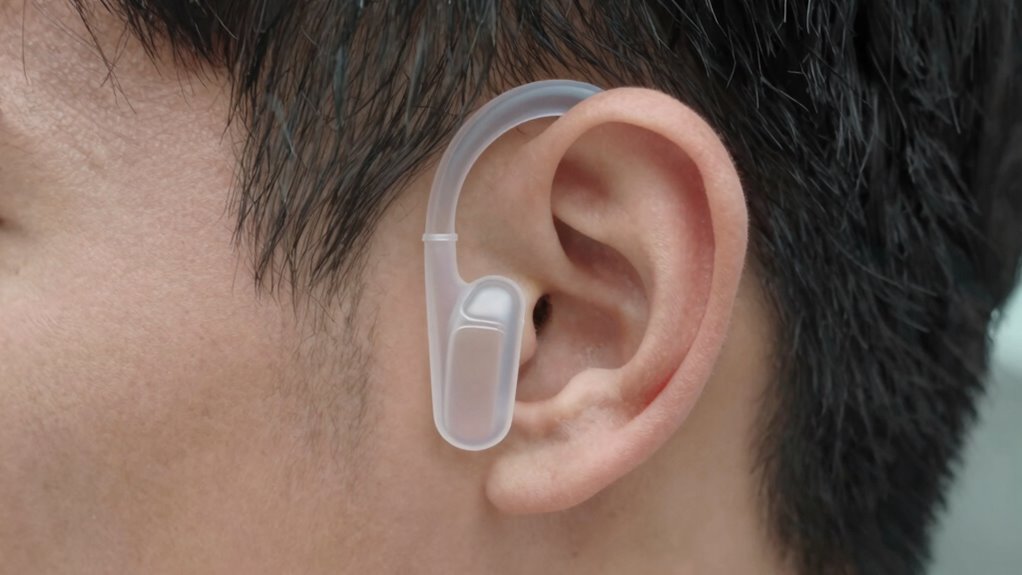

Open-ear audio devices are great for hearing aid wearers because they sit outside the ear canal, providing a discreet, comfortable fit that minimizes pressure and discomfort. They allow you to stay aware of your surroundings while enjoying clear sound quality and reduced background noise. With wireless connectivity and quick device switching, these devices make it easy to stream calls, music, and more. Keep exploring to discover how they can seamlessly fit into your daily routine and enhance your hearing experience.

Get everyday helpers delivered free with Prime
- Fast, free delivery on millions of items
- Prime Video, Amazon Music and more included
- Member-only deals all year
Key Takeaways
- Open-ear devices sit outside the ear canal, providing discreet, comfortable wear without the feeling of being plugged up.
- They enhance natural hearing and ambient awareness while reducing distortion and maintaining sound clarity.
- Wireless connectivity allows seamless streaming of calls, music, and voice commands directly to the device.
- Advanced noise reduction improves focus and speech understanding in noisy environments.
- Ergonomic designs, customizable fit, and extended battery life make them suitable for all-day use by diverse users.
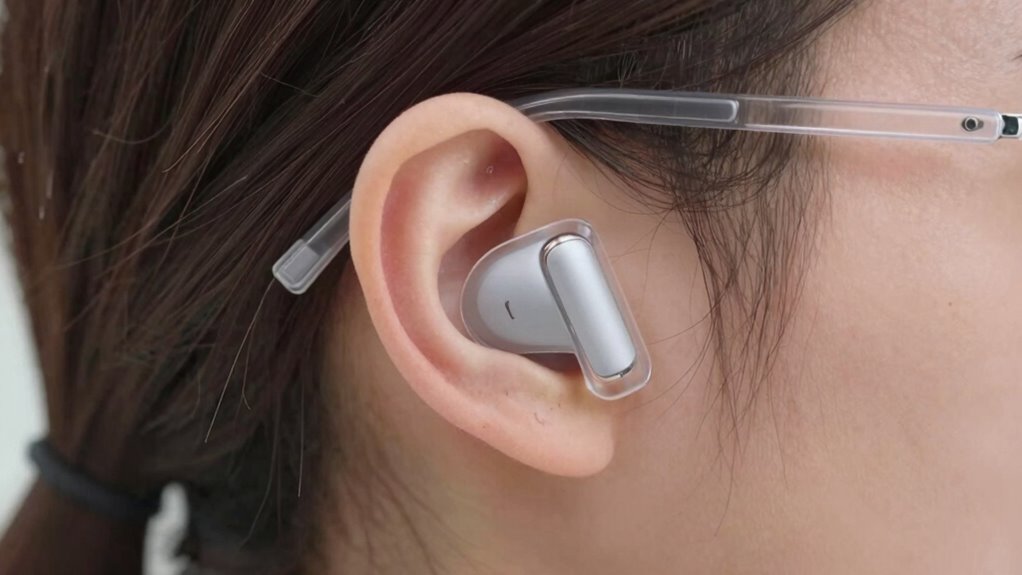
For hearing aid wearers seeking a discreet and comfortable listening experience, open-ear audio devices offer a promising alternative. These devices sit outside the ear canal, allowing you to hear your surroundings naturally while enjoying amplified sound. The design minimizes the feeling of being plugged up, which is a common concern with traditional hearing aids. With open-ear technology, you won’t have to sacrifice awareness of your environment for better hearing clarity. This setup is especially advantageous if you’re active or frequently move between different settings, as it provides a seamless blend of amplified sound and ambient noise.
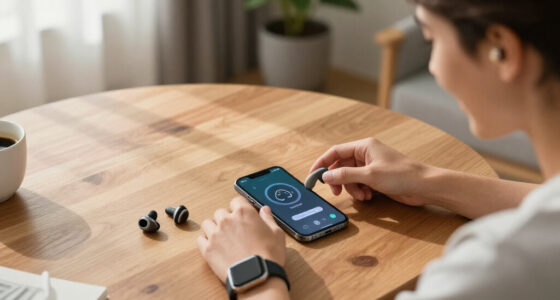
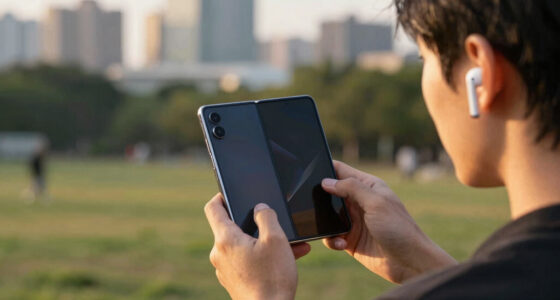
One of the key benefits of open-ear audio devices is their reliable wireless connectivity. Many models connect effortlessly to your smartphone, tablet, or other Bluetooth-enabled devices. This means you can stream music, take calls, or access voice assistants directly without cumbersome wires. The wireless aspect guarantees convenience and freedom of movement, allowing you to stay connected without hassle. Plus, the quick pairing process makes it easy to switch between devices, giving you control over your listening experience at all times.
Open-ear devices easily connect via Bluetooth, streaming music and calls with quick pairing for seamless, hassle-free listening.
Sound quality is another essential feature that open-ear devices excel at providing. Thanks to advanced audio processing technology, these devices deliver clear, crisp sound that rivals traditional hearing aids. They are designed to reduce background noise, so you can focus on conversations or audio content even in noisy environments. The open design naturally prevents the “plugged-up” feeling, which can distort sound or cause discomfort. Instead, you get a balanced blend of amplified sound and natural acoustics, making your listening experience more authentic and less fatiguing. Additionally, ongoing research and development continue to enhance these devices’ capabilities, ensuring they keep pace with user needs. As technology advances, manufacturers are increasingly designing these devices to be more accessible and customizable, catering to a wider range of users.
Moreover, open-ear audio devices are often lightweight and ergonomically shaped, ensuring all-day comfort. They won’t cause pressure or soreness, even after hours of use. This comfort, combined with their discreet appearance, means you can wear them confidently in social situations or during daily activities without feeling self-conscious. Many users appreciate how these devices integrate seamlessly into their routines, providing enhanced hearing without drawing attention. Furthermore, as technology advances, manufacturers are increasingly designing these devices to be more accessible and customizable, catering to a wider range of users. New developments in battery life also mean that these devices can support extended usage without frequent recharging, further improving their practicality.
In essence, open-ear audio devices offer hearing aid wearers a practical, user-friendly way to improve their auditory experience. With features like reliable wireless connectivity and high-quality sound, they help you stay engaged with your environment while enjoying the benefits of modern audio technology. As technology advances, these devices are becoming even more versatile and accessible, making them a compelling choice for anyone looking to upgrade their hearing aids or audio accessories.
open-ear Bluetooth headphones for hearing aids
As an affiliate, we earn on qualifying purchases.
As an affiliate, we earn on qualifying purchases.
Frequently Asked Questions
Are Open-Ear Devices Suitable for Severe Hearing Loss?
Open-ear devices aren’t typically suitable for severe hearing loss because they often lack the necessary amplification to address such profound hearing challenges. If you face severe hearing loss, you might need more powerful hearing aids or cochlear implants that provide adequate amplification. Open-ear devices work well for mild to moderate hearing issues, but for severe cases, specialized solutions are essential to overcome amplification challenges effectively.
How Long Does Battery Life Typically Last?
Think of your device’s battery life as a delicate dance—lasting as long as your rhythm keeps going. Typically, open-ear audio devices offer 8-12 hours of use per charge. Proper battery maintenance and smart power management guarantee you stay connected longer. To extend life, avoid extreme temperatures, turn off when not in use, and keep contacts clean. This way, your device remains a reliable companion throughout your day.
Can Open-Ear Devices Be Used During Physical Activity?
Yes, open-ear devices are great for physical activity because they stay securely in place and keep your ears free. As you follow fashion trends, you’ll appreciate their sleek, discreet design. Plus, using open-ear devices can reduce environmental impact by lasting longer and requiring less frequent replacements compared to traditional earbuds. They’re ideal for staying active while enjoying modern style and eco-conscious choices.
Are There Any Compatibility Issues With Smartphones?
Think of your smartphone as a symphony conductor, seamlessly harmonizing with your open-ear device. Usually, there are no compatibility issues, thanks to wireless connectivity that keeps everything in tune. You’ll enjoy crisp sound quality, as your device and phone communicate effortlessly. Just make certain your device supports Bluetooth, and you’re set to experience a smooth, wire-free connection, turning your everyday moments into a concert of clear, rich sound.
How Discreet Are Open-Ear Hearing Devices?
Open-ear hearing devices are quite discreet, making them a smart fashion statement. They sit comfortably and unobtrusively, so people might not even realize you’re wearing them. You’ll appreciate the user comfort, as they don’t block your ears or cause irritation. Their subtle design blends seamlessly with your style, providing a low-profile solution that keeps your hearing aid needs private while maintaining a modern, fashionable look.
Conclusion
So, if you’re tired of your hearing aids turning you into a walking, buzzing billboard, open-ear devices might just be your new best friend. They let you listen in style—without the awkwardness of hiding behind tiny tubes or bulky boxes. Who knew that hearing better could also mean looking cooler? Embrace the open-ear revolution, and finally enjoy your soundscape without feeling like a secret agent on a mission. Because, really, who wants to hide their hearing?
Fall Picks
fall essentials
As an affiliate, we earn on qualifying purchases.