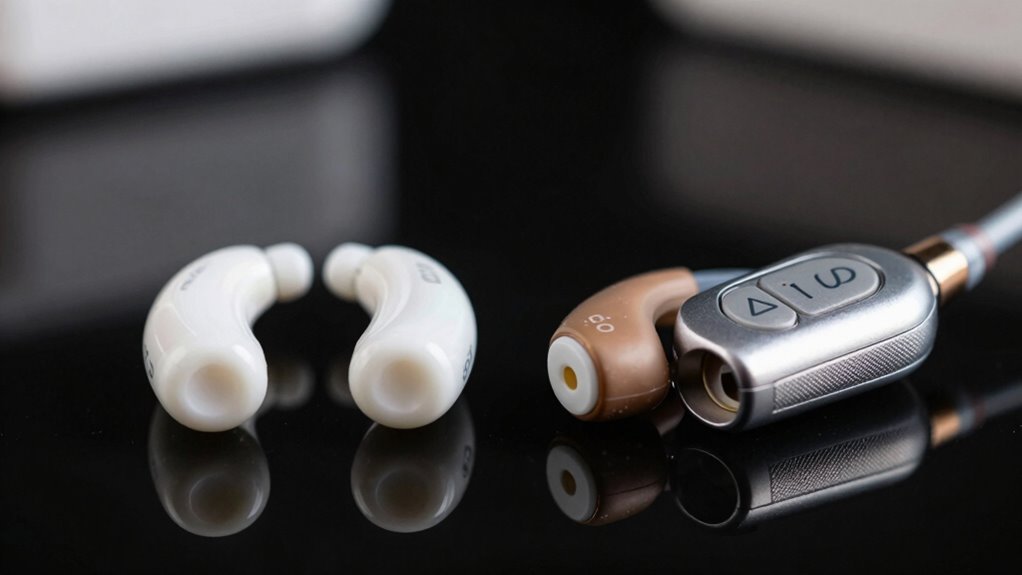

The main difference most people miss between OTC and prescription hearing aids is how customization affects their fit and sound quality. OTC models often have generic settings suitable for mild to moderate loss, but they lack the precise adjustments of prescription devices. Proper fit and personalized programming make a big difference in comfort and hearing effectiveness. If you want to discover how these factors impact your hearing, keep exploring the details.
Key Takeaways
- The main difference is that prescription hearing aids are professionally fitted and customized, while OTC aids have generic settings.
- Prescription devices are tailored to individual hearing loss profiles, offering better sound clarity and noise filtering.
- OTC hearing aids are pre-programmed with standard settings, making them less personalized.
- Proper fitting and customization in prescription aids improve comfort, sound quality, and device effectiveness.
- OTC aids are more accessible and affordable but may not address specific hearing needs as precisely.
What Are OTC Hearing Aids: And How Do They Work?
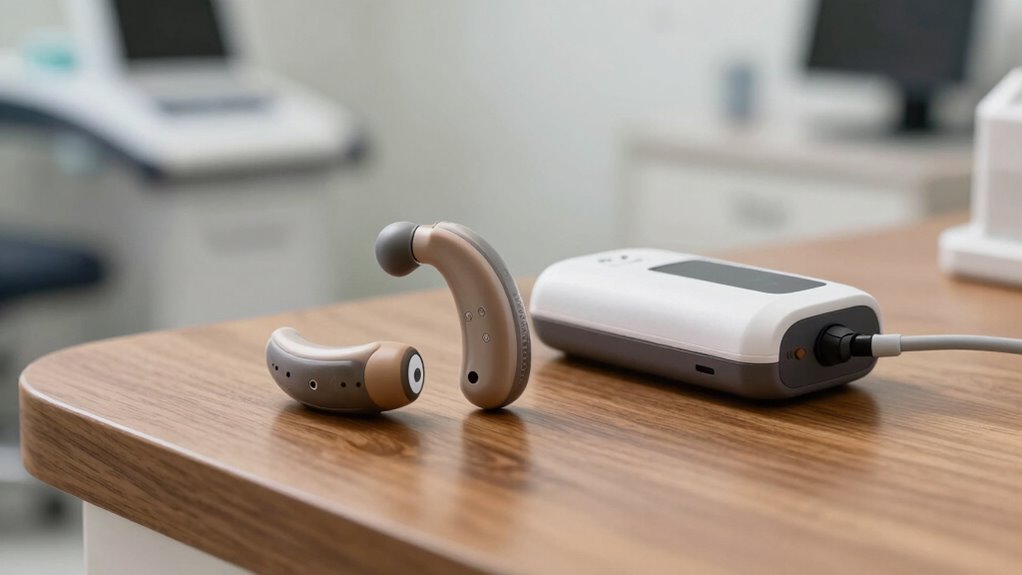
Have you ever wondered how OTC hearing aids work? These devices are designed to boost sound through sound amplification, making everyday conversations clearer. They’re typically easy to use, featuring simple user control options like volume adjustments or basic settings. Unlike prescription hearing aids, OTC models often come ready to wear right out of the box, allowing you to quickly improve your hearing without a trip to the audiologist. The user control functions enable you to tailor the device’s performance to your environment, whether you’re in a quiet room or a noisy place. While they don’t offer the personalized fitting of prescription models, OTC hearing aids provide an accessible, convenient solution for those with mild to moderate hearing loss. Additionally, market options for OTC hearing aids are expanding, giving consumers more choices at competitive prices. These devices leverage basic sound amplification technology, making them suitable for many users seeking an easy hearing enhancement. Understanding the regulatory differences between OTC and prescription models can help you make an informed decision and ensure proper usage. Many OTC hearing aids also incorporate features to improve the user experience, such as background noise reduction and feedback suppression, enhancing overall effectiveness. Moreover, advancements in digital processing continue to improve the quality and effectiveness of these affordable devices.
Why Customization Is Essential for Effective Hearing Aids
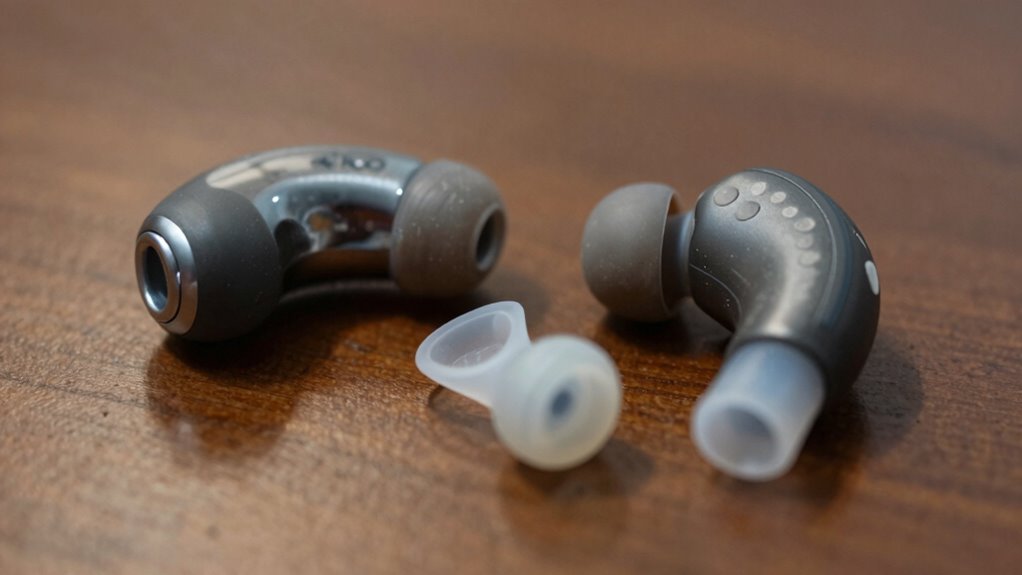
Because everyone’s hearing loss is unique, customization is essential for guaranteeing your hearing aids work effectively. Personalization importance lies in tailoring the device to your specific needs, providing better clarity and comfort. Fitting accuracy ensures the hearing aid matches your ear’s shape and hearing profile. Consider these key points:
Customization ensures your hearing aids fit perfectly, providing clearer sound and greater comfort tailored to your unique hearing needs.
- Precise adjustments improve sound quality and speech understanding.
- Customized fittings prevent discomfort and slippage.
- Personalization addresses specific frequency loss for better hearing.
- Accurate fitting reduces background noise and enhances clarity.
- Customization ensures your hearing aid is optimized for your individual hearing profile and lifestyle needs. Additionally, proper calibration plays a vital role in maximizing device performance. Achieving optimal results often requires ongoing professional tuning to adapt to changing hearing conditions.
Without customization, even OTC devices may fail to deliver ideal performance. Proper fitting ensures your hearing aid functions as intended, maximizing benefits and user satisfaction. When your hearing aid is tailored to your needs, you experience more natural sound and greater confidence in everyday conversations.
How Do OTC and Prescription Hearing Aids Differ in Sound Quality?
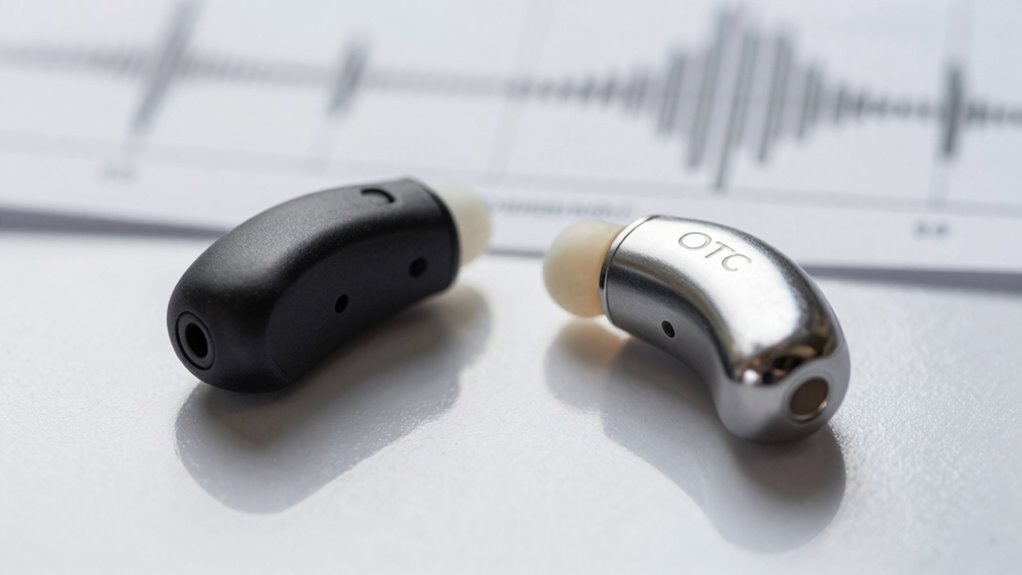
The sound quality of OTC and prescription hearing aids often differs markedly, mainly due to how they are fitted and personalized. Prescription devices are tailored to your specific hearing profile, which enhances sound clarity and helps you distinguish speech from background noise more effectively. In contrast, OTC hearing aids usually offer generic settings that may not optimize your hearing needs. As a result, OTC devices can struggle with background noise, making it harder to focus on conversations in noisy environments. Prescription aids are better at filtering out unwanted sounds while amplifying speech, providing a clearer and more natural listening experience. Ultimately, the level of personalization influences how well you perceive sounds and reduce background noise, impacting overall sound quality considerably. Additionally, sound processing technology in prescription devices often includes advanced features that further improve auditory clarity and comfort. Incorporating custom fitting can significantly enhance overall sound quality and user satisfaction by ensuring the device aligns precisely with your unique hearing profile. Moreover, regular maintenance and professional adjustments can help preserve optimal sound quality over time. Recognizing the importance of personalization can lead to better outcomes and increased satisfaction with your hearing aid. A deeper understanding of technological advancements can also help users choose devices that offer superior sound clarity and usability.
Do Fit and Comfort Make a Difference in Hearing Effectiveness?
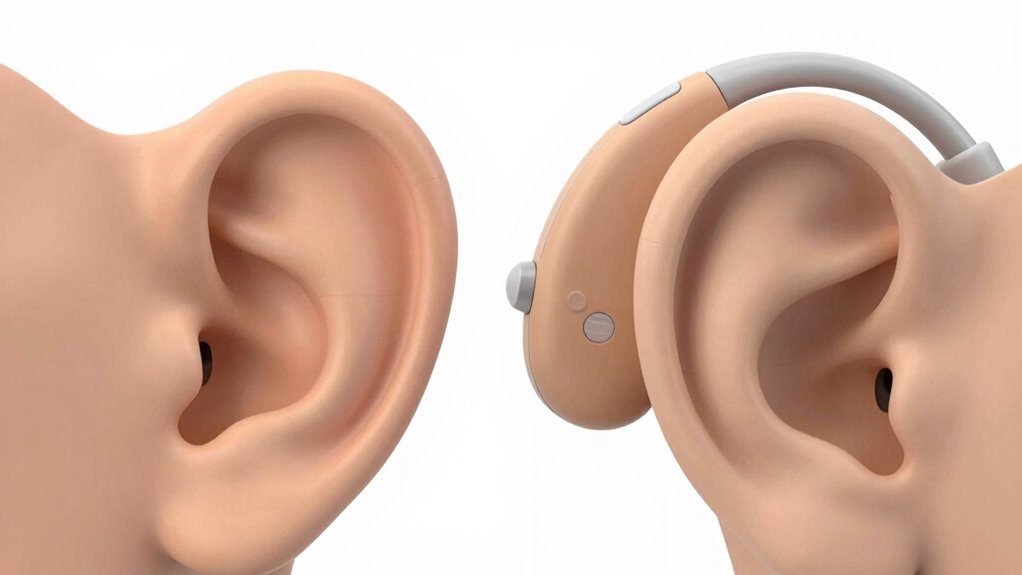
Proper fit and comfort play a significant role in how effectively hearing aids improve your hearing. When your device fits well, it’s less likely to cause irritation or fall out, ensuring consistent use. Here’s why fit and comfort matter:
- Enhanced user satisfaction – Comfortable hearing aids encourage regular use.
- Better sound clarity – Proper fit reduces feedback and unwanted noise.
- Increased hearing aid lifespan – Well-fitted devices experience less wear and tear.
- Improved adaptation – Comfortable devices help you adjust faster and more easily.
- Optimized performance – A proper fit ensures your device operates at its full potential and aligns with the importance of precise device placement for ideal hearing outcomes. Additionally, proper fit can prevent discomfort that might otherwise lead to device rejection or abandonment.
If your hearing aid isn’t comfortable, you’re less likely to wear it consistently, which diminishes its effectiveness. Overall, a good fit directly impacts user satisfaction and the success of your hearing improvement.
What Are the Costs and Regulations for Hearing Aids?
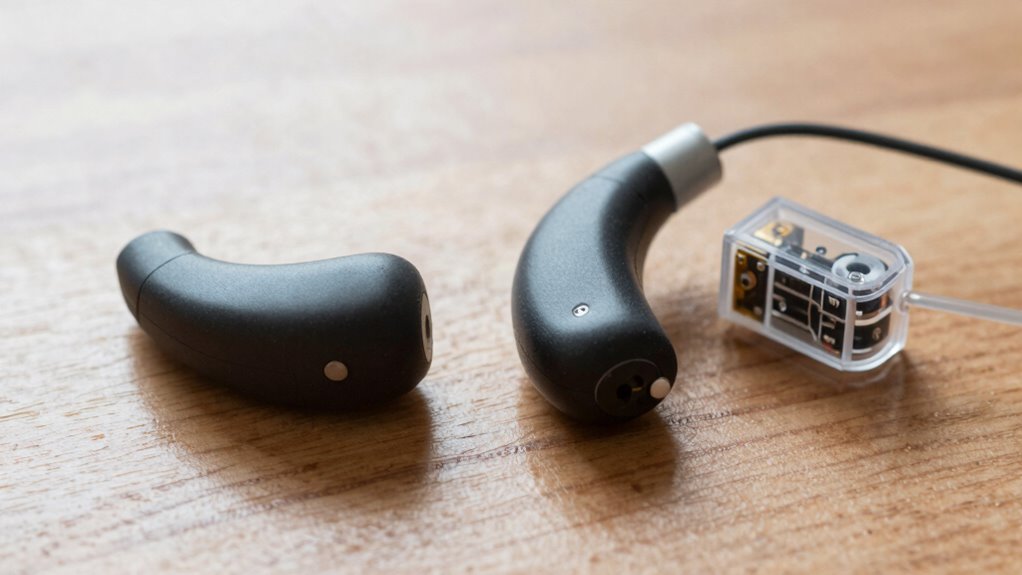
Are you curious about how much hearing aids cost and what regulations govern their use? The cost regulations for hearing aids vary depending on whether you choose OTC or prescription options. Prescription hearing aids typically come with higher upfront costs, but insurance coverage can help offset these expenses—some plans cover part of the price. OTC hearing aids are usually more affordable and have fewer restrictions, making them accessible without a prescription. However, regulations around their sale and use differ by state, affecting who can buy and how they’re regulated. The key is understanding that costs and regulations influence your options and affordability. Before purchasing, check your insurance coverage and local rules to ensure you’re making the best choice for your needs and budget. Additionally, regulatory frameworks can impact the performance and comfort of your hearing aids in different environments. Being aware of state-specific laws can help you navigate the purchasing process more effectively, especially considering the performance standards set for hearing aids in various regions. It’s also important to consider the accessibility options available in your area to ensure you find a suitable hearing solution.
Which Hearing Aid Is Right for Your Needs?
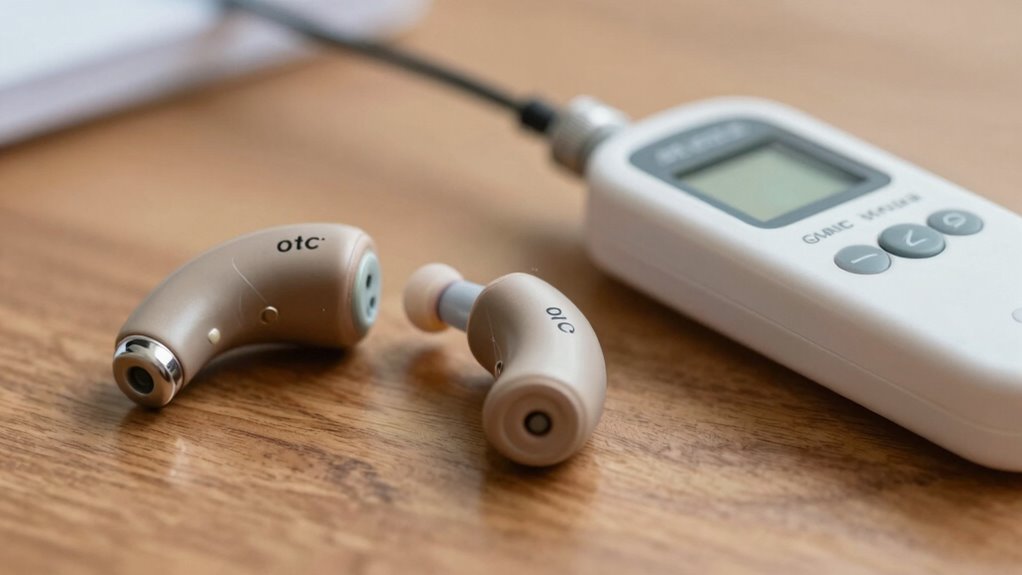
Choosing the right hearing aid depends on your level of hearing loss, how easy it is to use, and what fits your budget. You need to contemplate which features will improve your hearing without overcomplicating things or costing too much. By focusing on these points, you can find the best option for your needs. Additionally, understanding practical leadership tips can help you make more informed decisions when selecting equipment or managing your hearing health. Incorporating secure communication solutions can also ensure your personal data remains protected throughout the process. Being aware of AI technology applications in hearing devices can further enhance your choices by providing smarter and more adaptive options. Considering ergonomics and ease of use is essential to ensure comfort and functionality in daily wear. It’s also beneficial to research financial protection strategies to avoid scams and ensure your investment is secure.
Hearing Loss Severity
When your hearing loss ranges from mild to severe, selecting the right hearing aid depends on how much your hearing ability has declined. Your hearing test and audiogram results reveal the severity level. Consider these options:
- For mild loss, OTC hearing aids might suffice, especially with basic amplification.
- Moderate loss often requires prescription devices tailored to your audiogram.
- Severe loss typically needs high-power hearing aids prescribed by an audiologist.
- Profound loss might require specialized devices or cochlear implants instead.
Knowing your audiogram results helps determine the best fit. Mild impairments may benefit from simpler OTC options, while more significant loss demands customized, prescription solutions. Always consult your hearing professional to interpret your hearing test and choose the right device for your needs. Additionally, understanding hearing loss severity is crucial in selecting the appropriate device for your specific condition.
Ease of Use
Selecting the right hearing aid for ease of use depends on your comfort level with technology and your daily needs. OTC models often feature a self-fitting process, making them user friendly for those comfortable with basic tech. Prescription devices typically require professional programming but offer more customization. Consider your ability to handle adjustments and setup. To help decide, here’s a quick comparison:
| Feature | OTC Hearing Aids | Prescription Hearing Aids | Ideal For |
|---|---|---|---|
| Self fitting | Yes | No | Tech-savvy users |
| Ease of use | User friendly with simple controls | May require professional setup | Those preferring minimal hassle |
| Customization | Limited | Extensive | Needs precise fitting |
| Adjustments | DIY | Professional assistance | Open to self-management or expert help |
This table clarifies which option suits your comfort level with technology and self fitting.
Budget Considerations
Budget is a key factor when deciding which hearing aid best fits your needs. Conducting a cost comparison helps you understand initial prices and ongoing expenses. For example:
- OTC devices often cost less upfront but may lack extensive warranty coverage.
- Prescription hearing aids typically have higher initial costs, but include thorough warranty coverage.
- Consider maintenance costs—some models require frequent replacements or adjustments.
- Check if warranty coverage includes repairs, replacements, or follow-up services, which can save money long-term.
Choosing between OTC and prescription options depends on your budget and how much value you place on warranty coverage. Being aware of these factors ensures you select a device that fits both your needs and financial situation.
How to Choose Between OTC and Prescription Hearing Aids
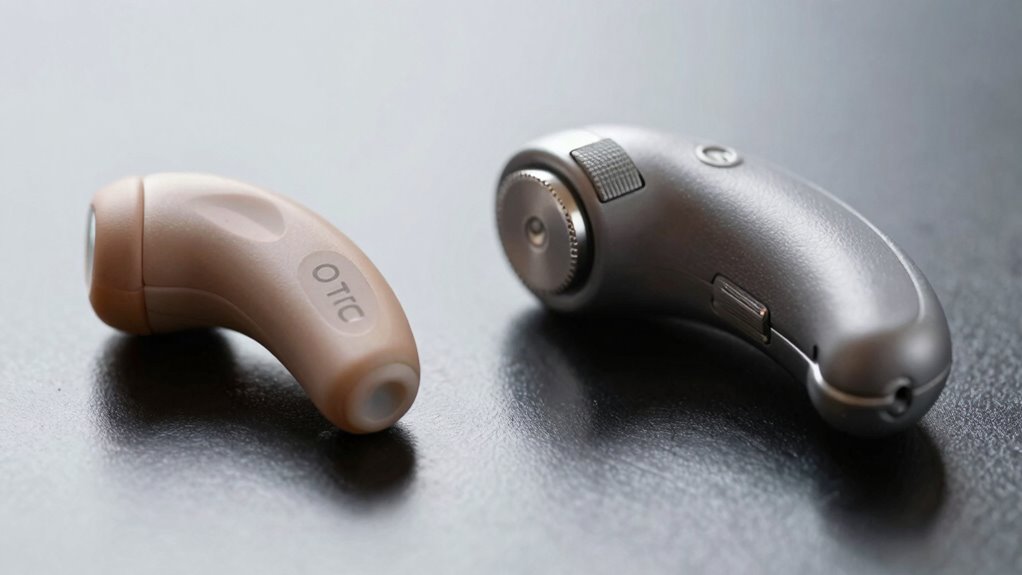
When choosing between OTC and prescription hearing aids, consider how severe your hearing loss is and whether you need tailored technology. Mild to moderate loss might do well with OTC options, but more complex needs often require personalized adjustments. Think about how much customization you want to guarantee the device fits your specific hearing profile.
Hearing Loss Severity
Understanding the severity of your hearing loss is essential when deciding between OTC and prescription hearing aids. If your hearing loss is mild to moderate, OTC devices might suffice. However, for more severe cases, prescription aids are often necessary. Consider these points:
- Mild to moderate loss typically requires less advanced technology, making OTC options more suitable.
- Severe hearing loss may demand customized fittings for better sound quality and effectiveness.
- The durability of hearing aids can influence your choice, especially if you have an active lifestyle.
- Your ear canal anatomy impacts comfort and fit—prescription devices often provide a more precise fit for complex ear structures, ensuring better hearing aid durability and performance.
Assess your hearing loss carefully to choose the right level of support.
Tech Customization Options
Choosing the right hearing aid often depends on how much you need it to be tailored to your specific hearing needs. When it comes to tech customization options, prescription devices typically offer more advanced features aligned with your user preferences. They allow audiologists to fine-tune settings precisely for your hearing profile, improving clarity and comfort. OTC hearing aids often have basic customization, which may suit mild hearing loss but lack detailed adjustments. Here’s a quick comparison:
| Feature | OTC Hearing Aids | Prescription Hearing Aids |
|---|---|---|
| Customization Options | Limited, preset settings | Extensive, tailored adjustments |
| User Preferences | Basic controls | Personalized sound profiles |
| Adjustment Flexibility | Less adaptable | Highly adaptable |
| Professional Support | None | Ongoing audiologist support |
Choose based on how much customization you value for your specific needs.
Frequently Asked Questions
Can OTC Hearing Aids Fully Replace Prescription Devices for Severe Hearing Loss?
Think OTC hearing aids can handle severe hearing loss? Think again. While they might impress in ads, OTC devices have serious limitations for severe hearing loss, lacking the power and customization prescription devices offer. You’ll miss out on crucial fine-tuning and professional support. For severe cases, only prescription hearing aids truly deliver the tailored, effective solution you need—so don’t gamble with OTC limitations when your hearing’s at stake.
Are There Age Restrictions for Purchasing OTC Hearing Aids?
Yes, there are age restrictions for purchasing OTC hearing aids. Generally, individuals must be at least 18 years old to buy these devices legally. These age restrictions help guarantee responsible use and proper guidance, especially for younger users. When purchasing OTC hearing aids, you should verify local regulations and store policies to confirm eligibility. Always consult a healthcare professional if you’re unsure about suitability, especially for minors.
How Often Should Hearing Aids Be Professionally Checked or Serviced?
Like tending a garden, your hearing aids need regular care. You should schedule professional checkups at least once a year to guarantee ideal hearing aid maintenance. If you notice any issues or changes in sound quality, don’t wait—seek a checkup sooner. These visits help catch problems early, prolong device life, and keep your hearing sharp. Consistent professional care is essential for maintaining the clarity and comfort you deserve.
Do OTC Hearing Aids Have Warranty or Return Policies?
You’ll find that OTC hearing aids often have limited warranty coverage and return policies compared to prescription options. Many brands offer a short trial period and a basic return policy, but warranty coverage might be restricted or vary by retailer. Check the specific brand’s policies before purchasing, so you’re aware of what’s covered for repairs or replacements. Always read the fine print to make certain you’re protected if issues arise.
What Are the Potential Risks of Using OTC Hearing Aids Without Consultation?
Using OTC hearing aids without consultation can pose risks like self-diagnosis errors and improper fitting. You might miss underlying health issues or choose a device not suited for your specific needs. Improper fitting can cause discomfort, worsen hearing problems, or lead to ear damage. Without professional guidance, you risk ineffective hearing improvement and overlooking serious conditions, so it’s best to consult an audiologist before using any hearing assistance device.
Conclusion
Choosing between OTC and prescription hearing aids can feel like steering a maze, but understanding the key differences puts you on the right path. Remember, the best choice depends on your unique needs and comfort. Don’t let the process be a wild goose chase—do your research, ask questions, and trust your instincts. With the right information, you’ll find a solution that truly rings your bell and restores your hearing confidence.