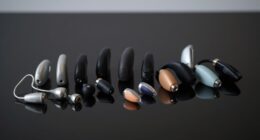
If you’re deciding between a pocket talker and a hearing aid, think about your daily needs and environment. Pocket talkers are simple, portable devices ideal for short-term use in quiet or noisy settings, while hearing aids offer ongoing, personalized sound enhancement for long-term hearing improvement. The right choice depends on your lifestyle, severity of hearing loss, and budget. Keep exploring to discover which option fits your unique needs best.
Key Takeaways
- Pocket talkers are ideal for short-term, occasional amplification needs in quiet or noisy environments, without the need for prescriptions.
- Hearing aids provide personalized, continuous sound processing tailored for long-term use and more severe or ongoing hearing loss.
- Pocket talkers amplify all sounds equally, while hearing aids feature advanced filtering and noise reduction for clearer speech.
- Hearing aids offer customization, durability, and long-term reliability, whereas pocket talkers are simpler, less durable, and suited for temporary use.
- Modern hearing aids include connectivity features and discreet designs for active lifestyles, unlike basic pocket talkers focused on basic amplification.
What Are the Main Differences Between Pocket Talkers and Hearing Aids?
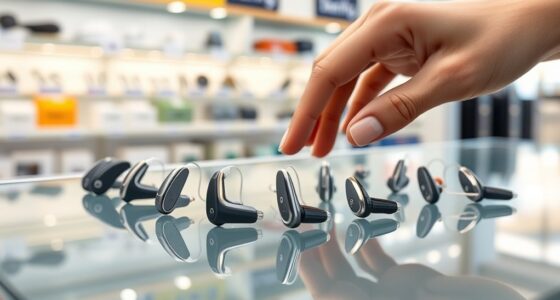
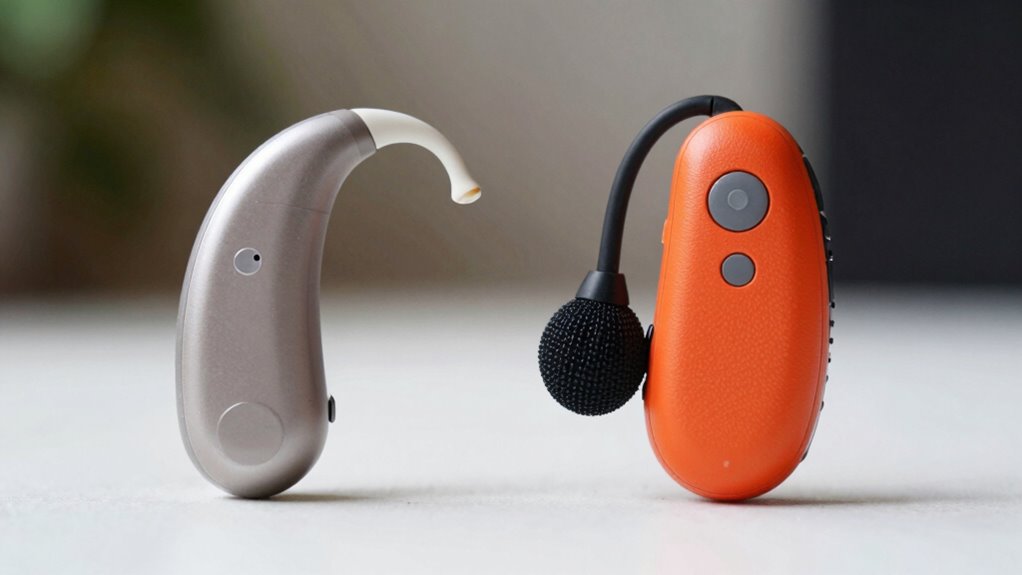
Pocket talkers and hearing aids serve different needs and have distinct features. A pocket talker is a portable device that uses digital amplification to boost sound directly into your ear, making it a type of assistive technology designed for specific situations. It’s simple to use, affordable, and doesn’t require a prescription. Hearing aids, on the other hand, are custom-fitted devices that provide continuous, personalized sound processing. They utilize advanced digital amplification and sophisticated algorithms to adapt to various environments, offering a more all-encompassing solution for hearing loss. While pocket talkers are great for occasional use or temporary support, hearing aids are intended for daily wear and long-term management of hearing impairment. The key difference lies in their purpose and level of technological complexity. Additionally, the effectiveness of these devices can be influenced by the contrast ratio, which impacts how well the device can render different sound levels in varying environments. Furthermore, digital signal processing in hearing aids often incorporates features that adjust to background noise, enhancing clarity in challenging listening situations. Incorporating feedback suppression technology can also improve user comfort by reducing whistling sounds during use.
How Do You Decide Which Hearing Device Is Right for You?
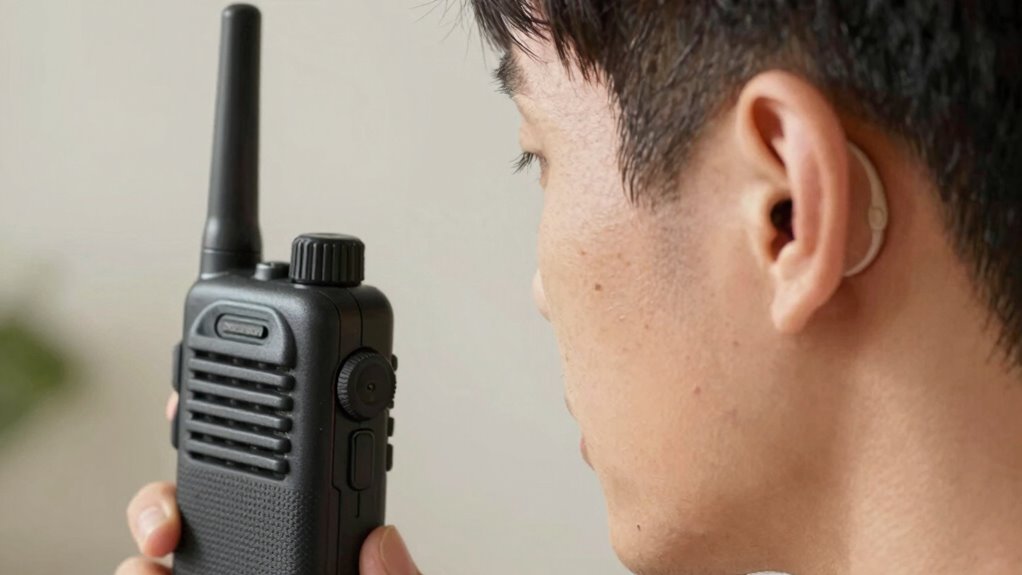
Choosing the right hearing device depends on your specific hearing needs, lifestyle, and preferences. Consider whether you need simple digital amplification or more advanced sound personalization features. Think about how often you’ll use the device and in what settings, like quiet rooms or noisy environments. Your daily activities and comfort level also matter.
Choosing the right hearing device depends on your unique hearing needs and daily lifestyle.
To help decide, ask yourself:
- Do I want a device with adjustable sound settings for personalized hearing?
- Will portability and ease of use influence my choice?
- Do I need a device primarily for conversations or overall environmental awareness?
When Are Pocket Talkers Best Suited?
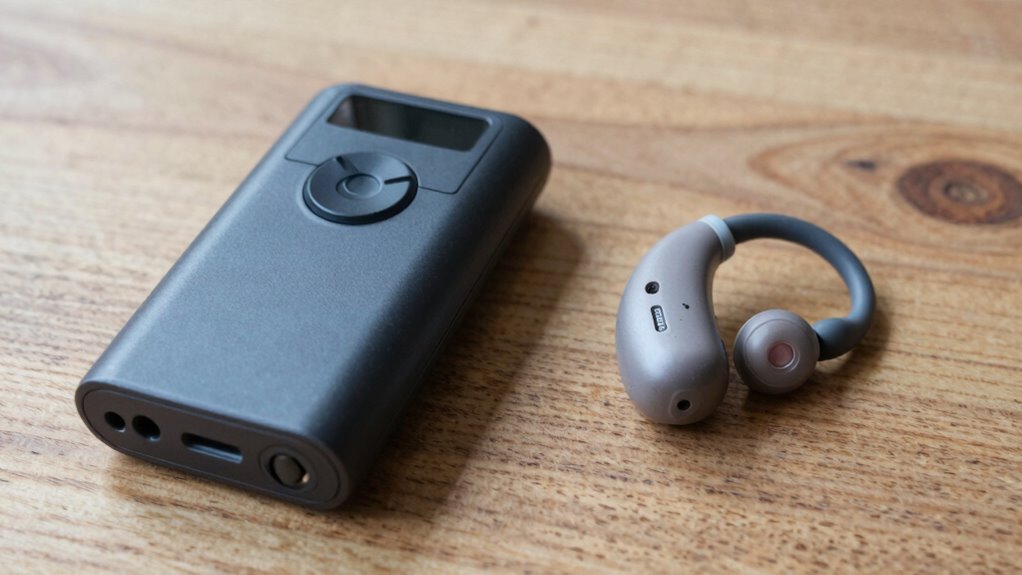
Pocket talkers are especially useful in specific situations where simple, targeted amplification can greatly improve communication. They’re ideal for one-on-one conversations, small group discussions, or noisy environments where clarity matters. Their personalized settings allow you to adjust volume and tone quickly, fitting your needs precisely. Plus, their long battery life guarantees reliable use during extended outings without frequent recharging. Use the table below to see when pocket talkers shine:
| Situation | Feature Focus | Benefit |
|---|---|---|
| One-on-one conversations | Personalized settings | Clear, customized sound |
| Small group settings | Battery life | All-day use without recharging |
| Noisy environments | Simple operation | Better understanding quickly |
| Indoor activities | Portability | Easy to carry and use anywhere |
| Quick, temporary needs | Affordability | Cost-effective for short-term use |
Additionally, understanding the differences between pocket talkers and hearing aids can help you choose the right device for your specific needs. Knowing how each device operates and their respective technology features can assist in making an informed decision. For example, pocket talkers are often more affordable and easier to operate, making them a practical choice for temporary or specific situations. Moreover, understanding the various use cases where each device excels can help users select the most suitable amplification device for their lifestyle.
Should You Consider a Hearing Aid Instead of a Pocket Talker?
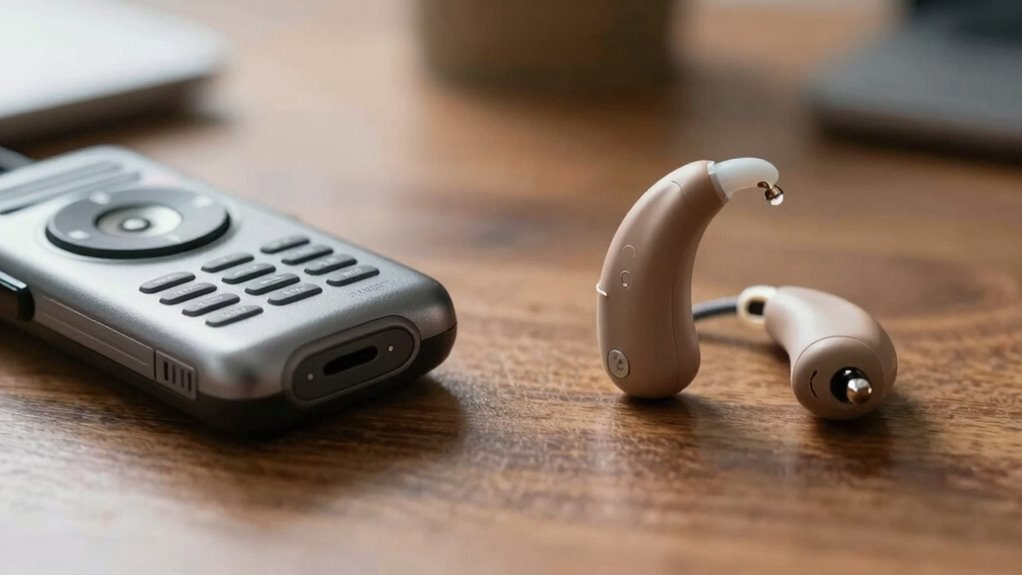
Deciding between a hearing aid and a pocket talker depends on your hearing loss severity, budget, and lifestyle needs. Hearing aids often offer more advanced features but come at a higher cost, while pocket talkers are simpler and more affordable. Consider which option fits your daily routines and financial situation to make the best choice. If you have a milder hearing impairment, a pocket talker may suffice, but for more significant loss, a hearing aid might be necessary, especially when considering hearing aid features. Additionally, understanding the different affiliate disclosure and privacy policies associated with these devices can help you make an informed decision. Being aware of water safety and maintenance requirements can also influence your choice, especially if you frequently encounter water-related environments. As AI continues to develop, staying informed about AI detection methods can help you better understand the technology integrated into modern hearing devices. Recognizing ear wax odor can sometimes signal the need for maintenance or medical attention, ensuring your device functions optimally.
Hearing Loss Severity
When your hearing loss becomes more severe, a hearing aid might be the better option. As your hearing declines, you could notice difficulties in enjoying music appreciation and staying socially engaged. Hearing aids provide clearer sound, helping you reconnect with loved ones and participate confidently in conversations. They are designed for more profound hearing loss, offering tailored amplification. You might experience:
- Better comprehension of speech in noisy environments
- Enhanced music quality for richer listening
- Improved social interactions and engagement
- Advancements in nanotechnology are also paving the way for more discreet and efficient hearing aid devices, further improving user experience.
If your hearing loss limits your ability to enjoy music or join conversations comfortably, a hearing aid can address these issues more effectively than a pocket talker. It’s about restoring your overall hearing experience and quality of life as your needs grow.
Cost and Budgeting
As your hearing loss progresses and you consider solutions like a pocket talker or a hearing aid, cost becomes an important factor. Hearing aids typically come with a range of pricing options, from basic models to advanced devices, which can substantially impact your budget. Pocket talkers are generally more affordable upfront, offering a cost-effective solution for temporary or mild hearing needs. When evaluating affordability considerations, think about long-term value and maintenance costs—hearing aids often require regular adjustments and batteries, adding to the overall expense. Budgeting wisely means weighing initial costs against potential benefits and ongoing expenses. Ultimately, choosing between a pocket talker and a hearing aid depends on your financial situation and how much you’re willing to invest in improving your hearing.
Lifestyle and Convenience
Are you seeking a solution that seamlessly fits into your daily routine? A hearing aid offers unmatched lifestyle convenience with a discreet design that minimizes visibility. You won’t have to worry about carrying extra devices or adjusting settings constantly, since modern hearing aids are designed for user comfort and ease of use. Imagine wearing a device that feels natural and unobtrusive throughout your day. With features like automatic adjustments, you can focus on conversations without fiddling with controls. Plus, many hearing aids are compatible with smartphones, allowing for quick, discreet adjustments. Whether you’re at work, social gatherings, or relaxing at home, a hearing aid can provide a more integrated, effortless experience. Investing in a hearing aid can also be a stepping stone towards broader hearing health awareness, encouraging proactive management of auditory well-being. Modern hearing aids also incorporate advanced technology that enhances sound clarity and reduces background noise, making daily interactions more comfortable and effective. It’s a long-term solution that prioritizes your comfort and convenience.
How Do Sound Quality and Performance Compare?
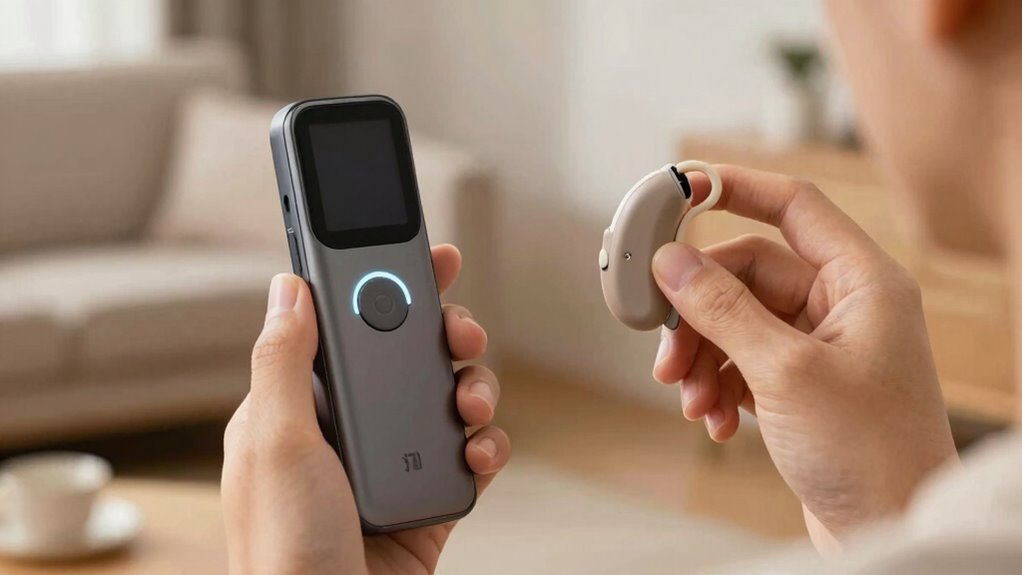
When comparing sound quality, you’ll notice differences in clarity and how well each device handles speech. Adjusting volume is usually easier with a pocket talker, but hearing aids often excel at filtering out background noise. Understanding these performance aspects helps you choose the right device for your needs. Additionally, modern hearing devices incorporate advanced sound processing technology that enhances audio quality and user experience. Some models also feature customizable settings to better adapt to different listening environments, further improving overall performance. Proper battery management can also influence sound quality, as maintaining battery health ensures optimal device operation. Furthermore, regular maintenance plays a crucial role in sustaining sound clarity over time.
Sound Clarity Differences
Sound clarity is a key factor when comparing pocket talkers and hearing aids, as it directly impacts how well you can understand speech and other sounds around you. Hearing aids generally offer superior sound quality through advanced clarity enhancement features, providing clearer, more natural audio. Pocket talkers tend to amplify sounds without as much focus on quality, which can sometimes result in distorted or muffled audio. Sound processing technology in hearing aids is designed to improve overall clarity and reduce listening fatigue. Additionally, the use of digital signal processing allows hearing aids to adapt dynamically to different listening environments, further enhancing sound quality. If clarity is your priority, hearing aids typically deliver a more refined listening experience.
Volume Adjustment Ease
Adjusting volume levels is a practical aspect of choosing between a pocket talker and a hearing aid, as it directly affects how easily you can control your listening experience. With a pocket talker, you typically get a simple volume control, often a dial or button, making adjustment straightforward. Its adjustment simplicity is ideal if you prefer quick, intuitive changes without complex settings. Hearing aids, however, often have more advanced volume control options, such as digital buttons or app-based adjustments, which can be more precise but sometimes less intuitive. If effortless, immediate control is your priority, a pocket talker might suit you better. Conversely, if you value fine-tuning and customized settings, a hearing aid’s volume adjustment features could be advantageous, despite potentially being slightly less straightforward. Additionally, sound quality can vary based on the device’s technology, influencing how well you perceive different volume levels and clarity. For some users, the ease of adjustment can significantly impact daily usability and satisfaction with the device.
Background Noise Handling
Background noise handling is a key factor in determining how well a pocket talker or hearing aid performs in real-world environments. Effective ambient sound filtering helps you focus on conversations without distraction. Hearing aids typically have advanced background noise handling features, utilizing multiple microphones and digital signal processing to minimize unwanted sounds. Pocket talkers generally lack sophisticated ambient sound filtering, relying on basic volume adjustments. This difference means hearing aids often provide clearer speech in noisy settings, while pocket talkers may amplify all sounds equally. Consider whether you need precise background noise management or a simple amplification device. The ability of each device to handle background noise directly impacts their effectiveness in lively or crowded environments.
Are Pocket Talkers Suitable for Long-Term Hearing Improvement?
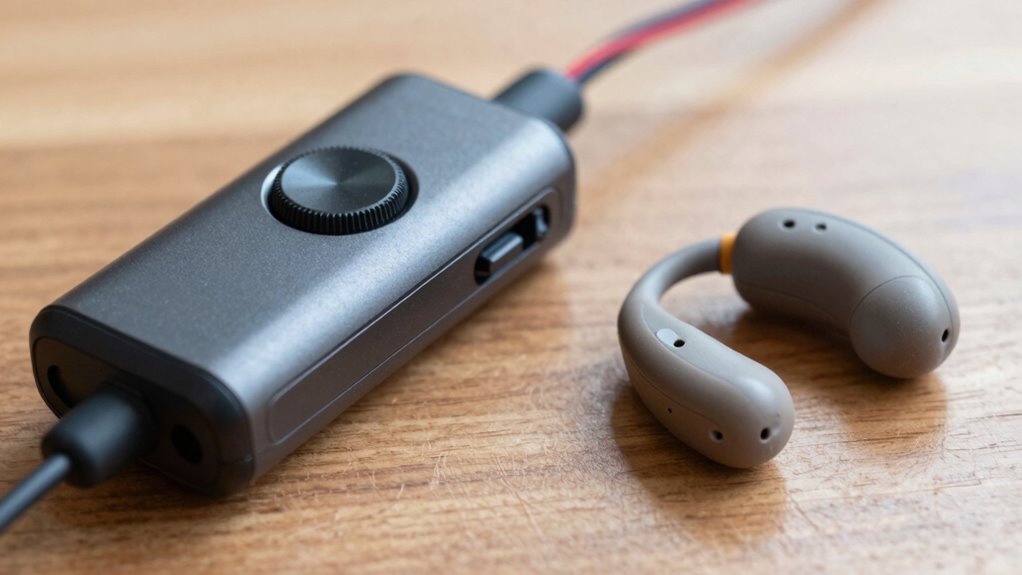
While pocket talkers can provide immediate assistance for those with hearing difficulties, they are generally not designed for long-term hearing improvement. These devices often lack the durability needed for daily, prolonged use, which can lead to frequent replacements or repairs. Since pocket talkers are typically not covered by extensive warranty plans, ongoing maintenance costs may add up over time. Unlike hearing aids, which are built to last several years with proper care, pocket talkers tend to be more fragile and less reliable for continuous use. If you’re seeking long-term hearing enhancement, investing in a hearing aid offers better device durability and warranty coverage, ensuring consistent performance and peace of mind for years to come.
What Are the Limitations and Drawbacks of Pocket Talkers?
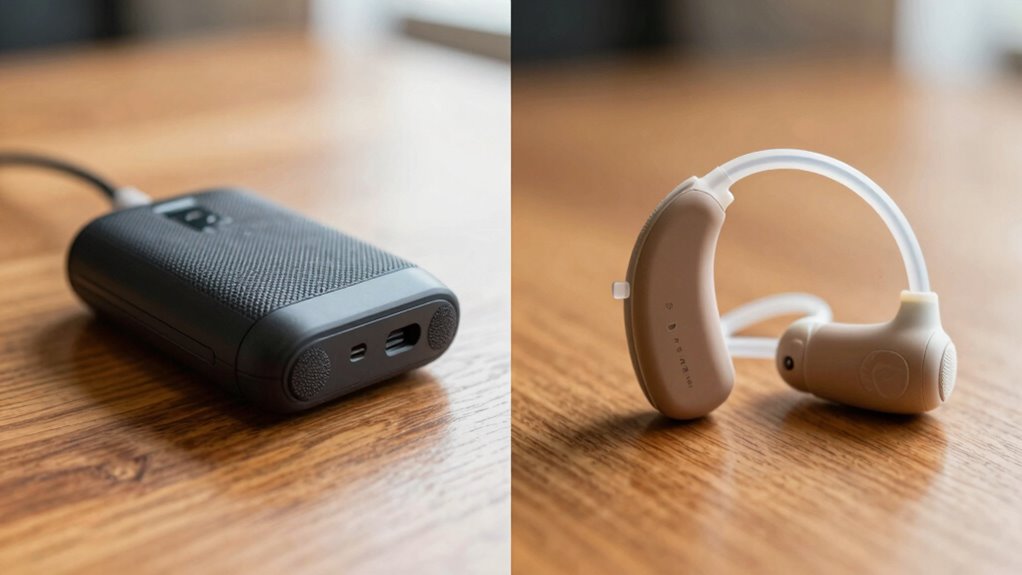
Pocket talkers have several limitations that can hinder their effectiveness as long-term hearing solutions. One major concern is their limited battery life, which means you’ll need frequent replacements or recharging, especially with constant use. Additionally, device durability can be an issue; pocket talkers are often less rugged than hearing aids and may not withstand daily wear and tear. You might find that their components become damaged or less effective over time. Another drawback is that pocket talkers typically lack advanced features like noise filtering or personalized settings, which can reduce clarity in noisy environments. These factors can make pocket talkers less reliable for consistent, long-term hearing support, especially when compared to more sophisticated hearing aids.
How Do Customization and Personalization Differ Between Devices?

Hearing devices differ markedly in how they can be tailored to meet individual needs. Customization options in hearing aids are extensive, allowing you to adjust sound settings, volume levels, and even filter certain frequencies to suit your hearing profile. These personalization features are often managed through sophisticated software, giving you a more tailored listening experience. Pocket talkers, on the other hand, offer limited customization; they primarily amplify sound without the ability to fine-tune specific frequencies or settings. While they may have basic volume controls, they lack the detailed personalization features found in hearing aids. Ultimately, hearing aids provide a higher level of customization, ensuring your device works more effectively for your unique hearing needs.
Which Hearing Solution Fits Your Lifestyle and Budget?

Choosing the right hearing solution depends on your daily routine, lifestyle preferences, and budget constraints. If you value convenience, a device with wireless connectivity allows seamless streaming from your phone or TV. For active lifestyles, a stylish design can boost confidence and comfort, making wearing your device feel less like a hassle. Budget-wise, pocket talkers are usually more affordable and simple to use, while hearing aids offer advanced features suited for long-term hearing health. Consider your environment—do you need a discreet device or one with robust amplification? Think about compatibility with other tech, ease of use, and overall look. Matching these factors ensures you select a hearing solution that fits your lifestyle, financial plan, and personal style effortlessly.
Frequently Asked Questions
Can Pocket Talkers Replace Hearing Aids for Severe Hearing Loss?
Pocket talkers can’t replace hearing aids for severe hearing loss because they’re a form of assistive technology mainly designed for mild to moderate hearing issues. They provide basic hearing enhancement but lack the sophisticated features of hearing aids, like customized amplification and noise reduction. If your hearing loss is severe, you’ll need specialized devices like hearing aids to effectively improve your hearing and communication capabilities.
Are Pocket Talkers Discreet Enough for Daily Use?
Yes, pocket talkers are discreet enough for daily use. Their discreet design allows you to easily conceal them, ensuring seamless daily concealment. Unlike bulkier hearing aids, pocket talkers are small, portable, and designed for unobtrusive use. You can carry them comfortably in your pocket or bag, making them ideal for everyday situations. Their discreet design helps you stay confident while staying connected to those around you.
How Long Do Battery Lives Typically Last in Pocket Talkers?
Battery lives in pocket talkers typically last around 20 to 40 hours, depending on the model and usage. You should consider battery longevity and power consumption when choosing a device, as higher power consumption can shorten the time between charges. To maximize battery life, turn off the pocket talker when not in use and opt for rechargeable batteries if available, ensuring consistent performance throughout your day.
Are Pocket Talkers Suitable for Children or Only Adults?
Pocket talkers can be suitable for children, especially as supplementary children’s accessories or youth hearing devices. They’re easy to use and portable, making them helpful in classroom settings or social situations. However, for long-term, consistent hearing support, you might prefer specialized youth hearing devices designed specifically for children’s comfort and growth. Always consult an audiologist to determine the best option for your child’s unique hearing needs.
What Maintenance Is Required for Optimal Pocket Talker Performance?
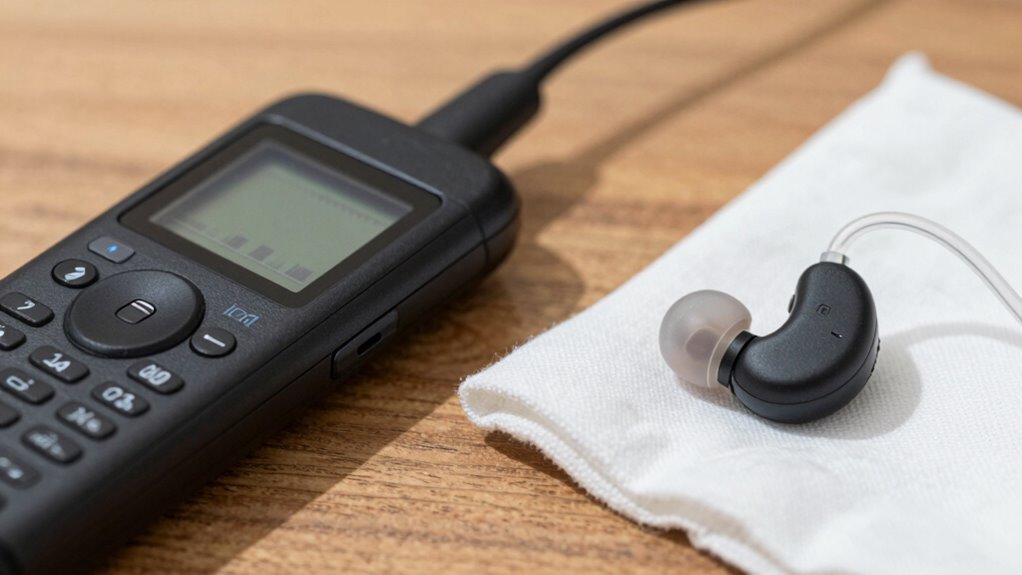
Think of your pocket talker as a musical instrument—it needs regular tuning to stay in harmony. You should replace the batteries when they run low and keep the device clean with a soft cloth to prevent dust from clogging the microphone. Establish a cleaning routine weekly, and check the battery compartment for corrosion. Proper maintenance guarantees your pocket talker delivers clear sound, just like a well-played instrument.
Conclusion
So, whether you’re swiping a pocket talker from your bedside table or investing in a sleek hearing aid, remember—sometimes the simplest device offers the clearest solution. Ironically, what’s easiest to use might not be the best long-term fix. Choose the device that fits your lifestyle, budget, and hearing needs, and avoid the mistake of thinking a tiny gadget can replace a lifelong investment in your hearing health. After all, clarity’s worth more than a pocket full of tricks.