
Frequency lowering helps you hear high-pitched sounds by shifting them to lower, more audible ranges. Your hearing aids analyze incoming sounds in real-time, then modify high-frequency speech consonants and signals to make them clearer and more natural. This technology is personalized based on your hearing profile and adjusts automatically to different environments, enhancing speech understanding and reducing listening effort. If you’re curious about how this technology can improve your hearing, there’s much more to explore.
Key Takeaways
- Frequency lowering shifts high-frequency sounds to lower, more audible ranges to improve speech clarity for hearing aid users.
- Techniques like frequency transposition or compression analyze sounds in real-time to enhance hearing without unnatural effects.
- Personalized adjustments based on audiograms ensure the processing fits each user’s hearing needs and listening environments.
- Dynamic adaptation allows hearing aids to automatically optimize sound quality in various settings, from quiet to noisy.
- Overall, frequency lowering helps users better understand speech, enjoy clearer sounds, and reduce listening effort in daily life.
Have you ever wondered how hearing aids help you understand sounds better, especially when certain frequencies are hard to hear? One of the key techniques used is frequency lowering, which involves adjusting hearing aid settings to make high-frequency sounds more accessible. When your hearing loss affects your ability to detect high-pitched sounds like speech consonants or warning signals, frequency lowering can be a game-changer. It works by using advanced acoustic signal processing to shift those high frequencies into a lower, more audible range, allowing you to perceive sounds that might otherwise be missed.
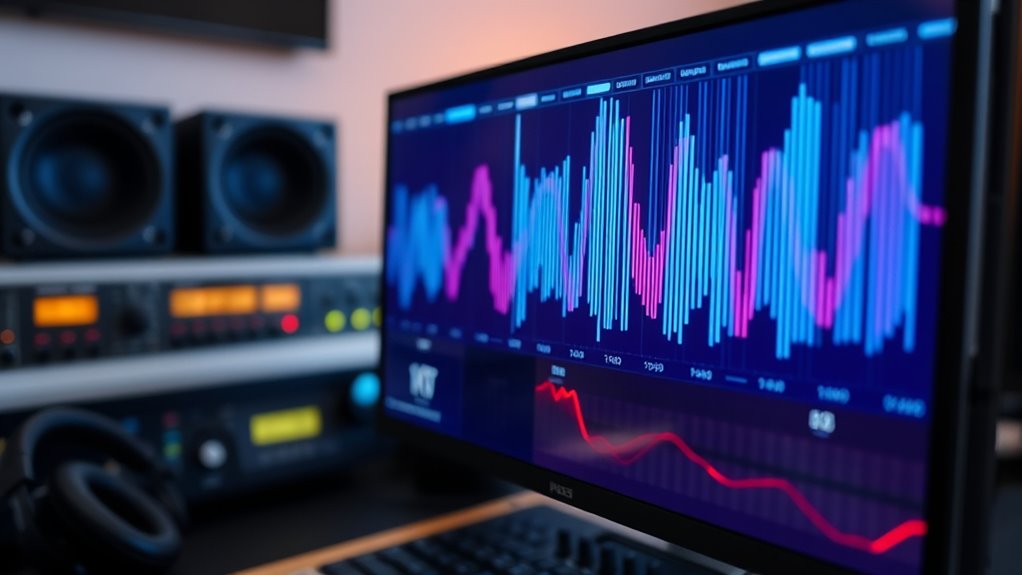
Hearing aid settings tailored for frequency lowering are carefully calibrated to suit your specific hearing profile. Your audiologist chooses the right method—such as frequency transposition or frequency compression—based on your audiogram and listening needs. These settings determine how the device processes incoming sounds, ensuring that important auditory information isn’t lost. Acoustic signal processing plays a crucial role here; it analyzes the incoming sound waves in real-time, identifying high-frequency components that need to be lowered. The processing then modifies these sounds by shifting their pitch to a range where your hearing is better preserved.
Once these settings are in place, the hearing aid continuously adapts to different listening environments. Whether you’re in a noisy restaurant or a quiet room, the device dynamically adjusts its processing algorithms to optimize sound clarity. This flexibility helps prevent the unnatural or robotic sound often associated with frequency lowering, making speech sound more natural and easier to understand. It’s important to note that not everyone benefits equally from frequency lowering, so your audiologist might fine-tune the settings after initial tests to find the most comfortable and effective configuration.
Hearing aids adapt to environments, optimizing clarity and natural sound with personalized frequency lowering adjustments.
The success of frequency lowering hinges on precise acoustic signal processing and personalized hearing aid settings. When properly configured, it enhances your ability to distinguish speech sounds and environmental cues, boosting your confidence in social situations. You might notice clearer conversations and less strain trying to decipher high-frequency sounds. While it may take some time to get used to, most users find that frequency lowering markedly improves their overall hearing experience. Remember, the goal of this technology isn’t just to amplify sounds but to make them more accessible and natural, helping you reconnect with the world around you. Indoor air quality can be significantly improved with the right hearing aid adjustments, especially in environments with pollutants or allergens.

Audien Atom X Hearing Aid For Seniors & Adults with Hearing Loss – Noise Cancelling, Rechargeable OTC Bluetooth Hearing Aids w/Charging Case, 48+ Hour Battery Life, Touchscreen Control, Nearly Invisible Design
WORLD’S FIRST TOUCHSCREEN CONTROL HEARING AIDS – The Atom X is more than just a hearing aid, it’s…
As an affiliate, we earn on qualifying purchases.
As an affiliate, we earn on qualifying purchases.
Frequently Asked Questions
How Does Frequency Lowering Differ From Other Hearing Aid Features?
Frequency lowering differs from other hearing aid features by actively transferring high-frequency sounds to lower, more audible ranges through frequency transfer. This helps you hear speech sounds more clearly. Unlike features that amplify all sounds equally, frequency lowering reduces sound distortion by selectively adjusting frequencies. It’s especially useful if you struggle with high-pitched sounds, making speech more intelligible without compromising overall sound quality.
Can Frequency Lowering Be Customized for Individual Hearing Loss?
Think of your hearing loss as a unique fingerprint, and frequency lowering as a tailored suit. Yes, it can be customized for you through personalization options, allowing you to fine-tune the settings. Technology adaptability guarantees the feature adjusts to your changing needs, making your hearing experience more natural. This personalized approach helps you better understand speech and enjoy sounds, just like a perfectly fitted garment that feels comfortable and right for you.
What Are Potential Drawbacks of Using Frequency Lowering Technology?
When using frequency lowering technology, you might notice some drawbacks. It can cause auditory distortion, making sounds less clear or more difficult to interpret. Sometimes, sounds may sound unnatural, which can be distracting or uncomfortable. Additionally, if not properly adjusted, the technology might reduce your ability to understand speech or distinguish specific sounds. These issues highlight the importance of fine-tuning settings for your individual needs.
How Does Frequency Lowering Impact Speech Comprehension?
Imagine you’re listening to a conversation where frequency lowering helps you hear muffled speech clearly. It improves speech clarity by making high-pitched sounds more audible, but it can sometimes reduce sound quality, making voices seem less natural. Overall, frequency lowering aids comprehension, especially for those with high-frequency hearing loss, but you might notice a slight compromise in sound richness that affects how natural the speech sounds.
Is Frequency Lowering Effective for All Types of Hearing Loss?
You might wonder if frequency lowering works for all types of hearing loss. It can be effective, especially for those with high-frequency hearing loss, but isn’t suitable for everyone. Factors like auditory processing abilities and cognitive effects influence its success. You should consult with an audiologist to determine if this technology benefits your specific hearing profile, as individual responses can vary considerably.

Karthus OTC Hearing Aids for Seniors & Adults, Rechargeable Hearing Aids with Noise Cancelling & Clear Sound, 16-Channel Digital DSP & 2 Environment Modes, 80+ Hour Battery Life, Comfort-Fit, Black
✨ HEAR LIFE CRYSTAL-CLEAR: True 117dB power meets 40dB gain—TV & conversations sound sharp, balanced & natural from…
As an affiliate, we earn on qualifying purchases.
As an affiliate, we earn on qualifying purchases.
Conclusion
Now that you understand how frequency lowering works, you can better appreciate its benefits for hearing loss. Did you know that over 60% of users report improved speech clarity with this technology? By adjusting high-frequency sounds into a more audible range, you’re taking a significant step toward better communication. Keep exploring these tools, and you’ll find they can make a real difference in your everyday hearing experience.
Audien Atom X Hearing Aid For Seniors & Adults with Hearing Loss – Noise Cancelling, Rechargeable OTC Bluetooth Hearing Aids w/Charging Case, 48+ Hour Battery Life, Touchscreen Control, Nearly Invisible Design
WORLD’S FIRST TOUCHSCREEN CONTROL HEARING AIDS – The Atom X is more than just a hearing aid, it’s…
As an affiliate, we earn on qualifying purchases.
As an affiliate, we earn on qualifying purchases.

Audien Atom One OTC Hearing Aids – Wireless, Rechargeable, and Comfortable | Clear Sound in a Small, Discreet Design for Seniors & Adults with Hearing Loss
Hear What Matters Most: Hearing isn’t one-size-fits-all. That’s why our adjustable frequency system lets you personalize your sound…
As an affiliate, we earn on qualifying purchases.
As an affiliate, we earn on qualifying purchases.