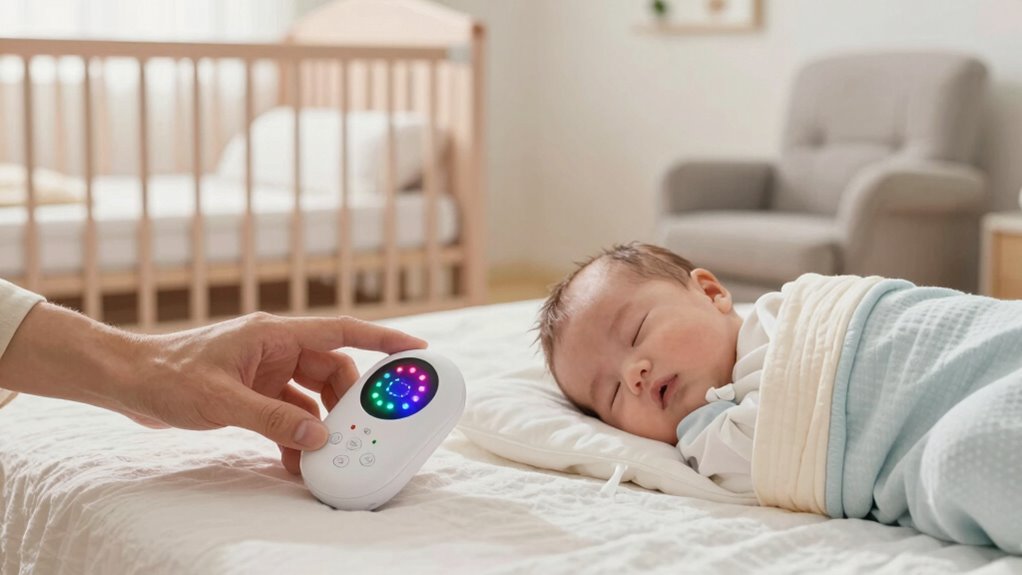

Baby cry alerts for deaf parents use sensors that detect cries through sound, vibration, or frequency patterns, sending immediate visual, tactile, or smart device notifications. You can customize alerts with flashing lights, vibrations, or smart home integrations, making sure you’re immediately aware of your baby’s needs. Adjustable sensitivity settings help reduce false alarms, especially in noisy environments. If you want to discover more about how these systems can give you peace of mind, keep exploring what’s available.

Get everyday helpers delivered free — and shop member deals
- Fast, free delivery on millions of items
- Access to Prime Big Deal Days deals on October 6–7
- Prime Video, Amazon Music and more included
Key Takeaways
- Baby cry alert systems can provide visual, tactile, or smart home notifications tailored for deaf parents.
- Adjustable sensitivity settings help reduce false alarms in noisy environments.
- Remote alerts via smartphones ensure parents are notified even when away from the nursery.
- Integration with smart devices allows for seamless, accessible notifications like flashing lights or vibrations.
- Customization options enable deaf parents to set alerts that best suit their needs and daily routines.
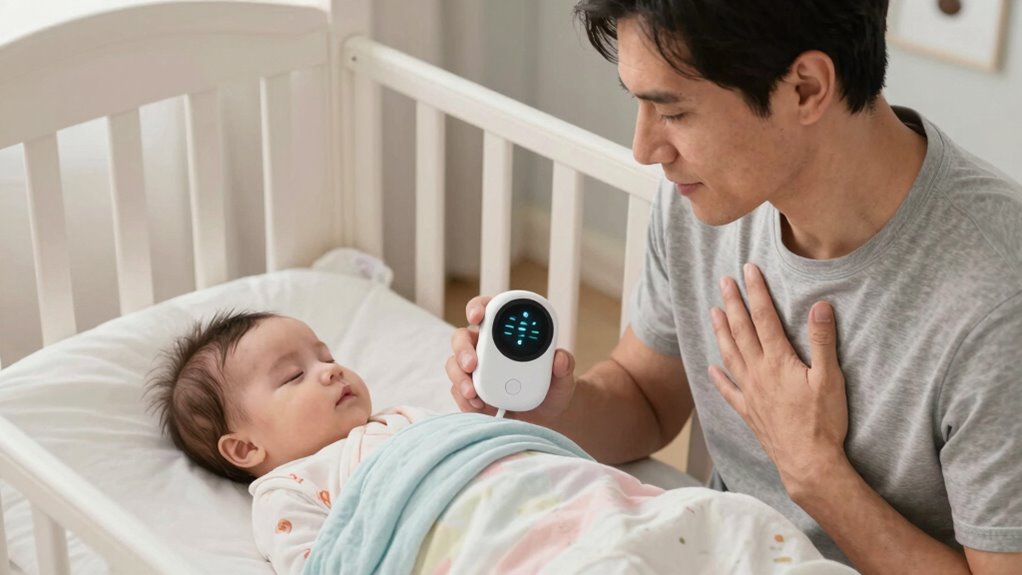
For deaf parents, hearing a baby’s cry can be a challenge, but recent advancements have made it easier to stay connected and responsive. One of the most significant innovations is sensor technology, which detects your baby’s cries through sound or vibration. These sensors are designed to pick up specific frequencies or patterns associated with distress, guaranteeing you’re alerted promptly without false alarms. When incorporated into nursery monitors or wearable devices, sensor technology provides peace of mind, knowing you’ll be notified if your baby needs attention, even if you can’t hear their cry. Incorporating sensor technology into your routine allows for a more reliable and immediate response, ensuring your baby’s needs are met without delay.
Alert customization is another essential feature that enhances these systems. You can tailor notifications to suit your preferences, whether that’s through flashing lights, vibrations, or even paired smart home devices. For example, you might set your monitor to flash a bright light in your bedroom when your baby wakes up or vibrate your wristband if they’re fussing. Customization allows you to create a system that fits seamlessly into your daily routine, minimizing stress and maximizing responsiveness. It’s empowering, giving you control over how and when you receive alerts, which helps you stay in sync with your baby’s needs without unnecessary disruptions.
Many alert systems also come with adjustable sensitivity settings, so you can fine-tune them to detect your baby’s cries accurately while ignoring background noise. This feature is especially beneficial in busy households or apartments where ambient sounds can trigger false alarms. By customizing alert parameters, you guarantee you’re only notified when your baby genuinely needs you, reducing frustration and alert fatigue. Adjusting sensitivity is a crucial aspect of sensor calibration, ensuring the system works effectively in different environments. Additionally, user-friendly controls make it easier to modify settings quickly as needed. Incorporating accessible technology further supports deaf parents by ensuring the system remains effective regardless of individual needs.
Additionally, some systems integrate with smartphones or tablets, allowing you to receive alerts remotely. This means you can stay connected even when you’re in another room or away from the nursery. The ability to customize notifications on your device guarantees you won’t miss important cues, whether it’s via a gentle vibration, a visual signal, or an app notification. This flexibility is essential for deaf parents who rely on visual or tactile cues rather than auditory ones. Moreover, the integration of smart home technology further enhances the accessibility options, making it easier to create a fully connected and responsive environment.
baby cry alert system for deaf parents
As an affiliate, we earn on qualifying purchases.
As an affiliate, we earn on qualifying purchases.
Frequently Asked Questions
Are Baby Cry Alerts Safe for All Ages of Infants?
Baby cry alerts are generally safe for all ages of infants, supporting their development and easing parental reassurance. These devices are designed to be non-intrusive, alerting you promptly when your baby needs attention, regardless of their age. As your infant develops, these alerts continue to provide peace of mind, guaranteeing you’re always aware of their needs. Just ensure you choose a reliable, gentle device that fits your baby’s specific stage and comfort.
How Do Baby Cry Alerts Compare in Cost to Traditional Baby Monitors?
Baby cry alerts typically tend to be pricier than traditional monitors because of advanced technology features, like real-time alerts and vibration signals. A price comparison shows that basic models can be comparable, but high-tech alerts with sophisticated sensors cost more. While traditional monitors focus on audio and video, cry alerts emphasize immediate, innovative notifications, making them a worthwhile investment for passionate parents seeking peace of mind through modern, meaningful, and more costly tech tools.
Can Baby Cry Alerts Be Used Alongside Other Hearing Aids?
Yes, baby cry alerts can often be used alongside hearing aids. Many devices are designed with hearing aid compatibility and allow seamless device integration, so you can receive alerts directly through your hearing aids or paired devices. Just ensure the alert system you choose is compatible with your specific hearing aids, and check the manufacturer’s guidelines for maximum integration. This setup helps you stay connected and responsive to your baby’s needs.
What Types of Alerts Are Most Effective in Noisy Environments?
In noisy environments, the most effective alerts cut through the chaos like a lighthouse guiding ships. You should prioritize alerts with strong noise cancellation features, which filter out background sounds and focus on the baby’s cry. Customizable alerts are also key—they let you tailor vibrations or visual cues to your preferences, ensuring you don’t miss a cry even when the noise level is high. This combination keeps you connected when it matters most.
Do Baby Cry Alerts Require Internet Connectivity to Function?
Baby cry alerts generally don’t require internet connectivity to work, especially those that use Bluetooth or direct device pairing. However, if you opt for app-based alerts that sync with your smartphone or smart home systems, internet access is necessary for device compatibility and real-time notifications. Keep in mind, battery life can vary depending on the alert system you choose; more features often mean quicker battery drain.
Conclusion
In the symphony of parenthood, baby cry alerts become your guiding star, shining bright in the night. They turn silence into a chorus you can hear, whispering in colors only you can see. With these tools, you’re not just waiting in the dark—you’re dancing to the rhythm of your little one’s needs. Embrace the melody, let technology be your harmony, and remember: every cry is a call, a love note written just for you.
Fall Picks
fall essentials
As an affiliate, we earn on qualifying purchases.