Your deafness, hard of hearing, or late-deafened identity connects you to a vibrant community with its own language and culture. Many see deafness as more than a disability—it’s a source of pride, shared experiences, and cultural richness. Embracing sign language and deaf traditions helps you feel connected and proud of your identity. To understand how this culture shapes lives and fosters resilience, keep exploring what makes deafness a unique and powerful part of who you are.
Key Takeaways
- Deaf, hard of hearing, and late-deafened individuals each have unique identities shaped by their experiences and cultural connections.
- Embracing sign language and Deaf culture fosters pride and a sense of belonging regardless of hearing status.
- The Deaf pride movement promotes viewing deafness as a cultural identity rather than a disability.
- Personal identification varies; some see deafness as central to their identity, others as one aspect of their life.
- Engagement in Deaf culture and advocacy empowers individuals, strengthening cultural pride and community ties.
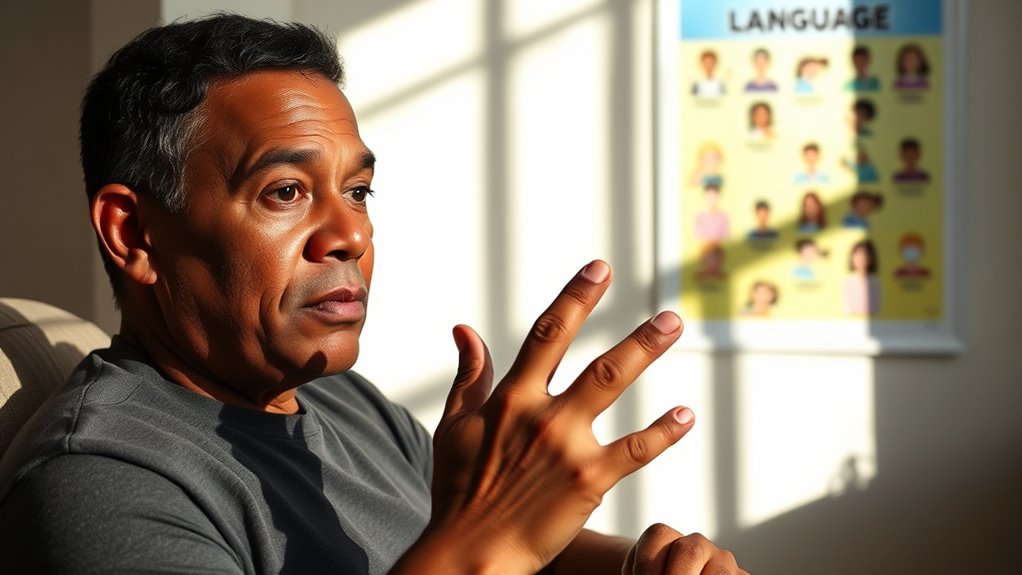
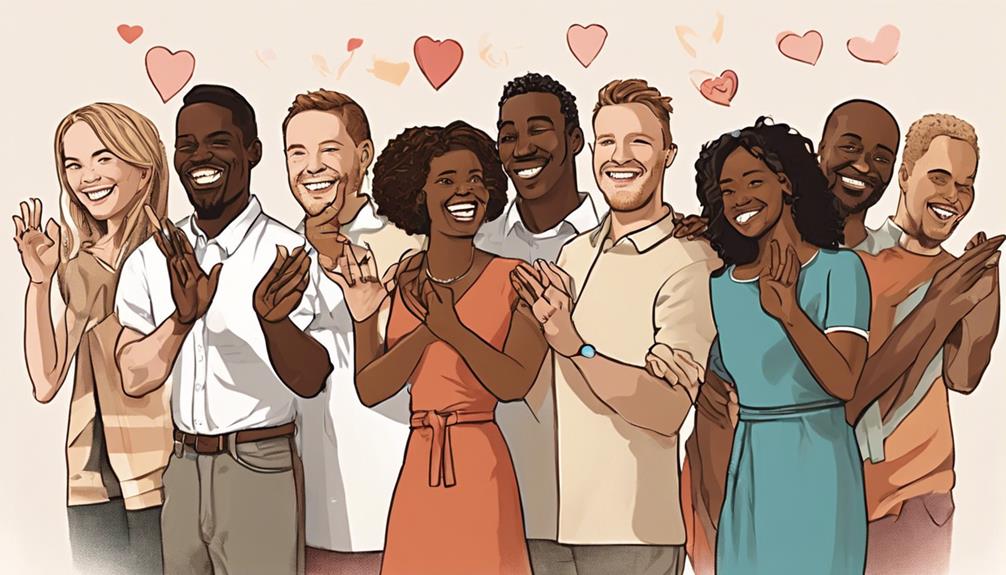
Have you ever wondered how people with deafness or hearing loss see themselves? For many, their identity isn’t just about a medical condition; it’s intertwined with culture, community, and pride. The sign language community plays a pivotal role here, offering a space where individuals who use sign language can connect, share experiences, and reinforce their sense of belonging. When you become part of this community, you recognize that deafness isn’t simply a disability but a unique way of experiencing the world. It’s a shared language, a set of cultural norms, and a collective identity that fosters solidarity and understanding. This sense of community often fuels the Deaf pride movement, which encourages individuals to embrace their deaf identity proudly and openly.
Joining the sign language community fosters pride, belonging, and a celebration of deaf culture and identity.
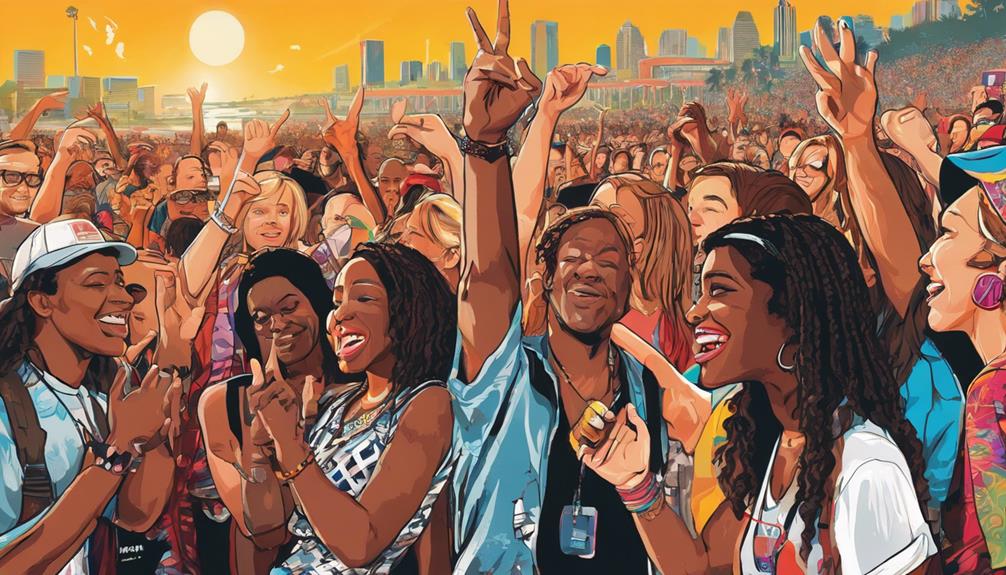
The Deaf pride movement is about more than just acceptance; it’s about celebrating what makes deaf culture distinct and valuable. It challenges negative stereotypes and misconceptions, emphasizing that deafness isn’t a flaw but a different way of being. When you align yourself with this movement, you start to see your deafness as a source of strength and cultural richness. You become part of a broader narrative that values sign language, deaf art, and shared traditions. The movement helps you reclaim your identity from societal views that might treat deafness as something to be fixed or cured, instead highlighting it as an integral part of who you are. Cultural identity plays a crucial role in fostering a positive self-image among deaf individuals.
Being part of the sign language community also means understanding that deaf identity isn’t monolithic. Some people identify strongly with deaf culture and see their deafness as a central part of their identity, while others may see it as one aspect of their life without it defining them entirely. The key is that, regardless of how you personally relate to your hearing loss, the community offers support and validation. There’s a collective effort to promote awareness, accessibility, and equal rights, which helps reinforce the idea that deaf individuals are a vibrant, capable, and proud community.
In embracing your identity, you may find yourself participating in cultural events, learning about deaf history, or advocating for broader acceptance. The sign language community and Deaf pride movement serve as powerful tools for asserting your identity, ensuring you’re not isolated or marginalized but connected to a rich cultural heritage. This connection fosters a sense of pride and resilience, empowering you to navigate the world confidently while celebrating your unique perspective. Ultimately, your identity as someone who is deaf or hard of hearing is more than a label—it’s a vibrant cultural identity worth honoring.

2-Wired video intercom system,Video Doorbell Camera with Monitor, 1080P 7-inch Touch Screen, video door phone,Night Vision, 130° Wide Angle, Tuya App Remote Unlock, Waterproof, No Monthly Fees
Smart Wired Security & Entry System: This complete home security solution is a smart, wired video doorbell and...
As an affiliate, we earn on qualifying purchases.
Frequently Asked Questions
How Do Individuals Choose Their Preferred Terminology Within the Deaf Community?
You choose your preferred terminology based on how you connect with cultural labeling and personal identity. You might explore community discussions, reflect on your experiences, or consider how others see you. Some prefer terms that emphasize shared culture, while others focus on audiological aspects. Ultimately, your choice reflects how you identify and want to be represented within the community, fostering a sense of belonging and respect.
What Role Does Family Background Play in Shaping Deaf Identity?
Your family background acts like a secret recipe, subtly shaping your identity. Through family dynamics and cultural heritage, you absorb values, language, and traditions that influence how you see yourself. Sometimes, it’s like inheriting a treasure chest of stories and norms, or maybe just a confusing mix of old customs. Either way, your roots play a vital role in defining your sense of self and connection to your community.
How Do Cultural Expressions Differ Among Deaf Communities Worldwide?
You’ll notice that cultural expressions differ widely among deaf communities worldwide, reflecting unique sign language diversity and traditions. In some places, vibrant cultural celebrations highlight shared history and achievements, while others emphasize community solidarity through storytelling and art. These expressions help you connect deeply with your community’s identity, showcasing how language and traditions shape collective pride and cultural resilience across different regions.
Can Someone Be Both Deaf and Culturally Deaf Simultaneously?
Yes, you can be both deaf and culturally deaf simultaneously. Imagine Sarah, who was born deaf and grew up embracing Deaf culture, celebrating sign language and community events. Her deaf identity intertwines with her cultural pride, reinforcing her sense of belonging. This duality enriches her experience, allowing her to navigate the world confidently while honoring her roots. Embracing both aspects fosters a strong, authentic connection to Deaf culture and identity.
How Does Age at Onset Influence Deaf Identity Development?
Your age at onset profoundly shapes your deaf identity development. If you experience early language acquisition, it fosters strong peer socialization and a cohesive cultural identity. Conversely, later onset might challenge your integration, making socialization and language learning more difficult. Early exposure helps you embrace cultural aspects and feel connected, while later onset may require more effort to develop a sense of belonging within the deaf community.

Ring Battery Doorbell (newest model), Home or business security with Head-to-Toe video, Live View with Two-Way Talk, and Motion Detection & Alerts, Venetian Bronze
See more at your home or business — Get 66% more vertical coverage with the latest version of...
As an affiliate, we earn on qualifying purchases.
Conclusion
So, when you embrace your deaf or hard of hearing identity, you’re not just joining a community—you’re becoming part of an unstoppable force that’s reshaping the world! Your culture’s vibrancy, resilience, and voice are so powerful, they could shake mountains and turn tides. Never doubt the strength of your identity; it’s more than just hearing—it’s a revolution that can change everything. Own it fiercely, because nothing can stand in your way!

WarmBot 1080p Smart Video Doorbell Camera with AI Motion Detection, Night Vision, Cloud Storage, 2 Way Audio, Battery Powered, 2.4GHz Wi-Fi Only
Private and Secure Cloud Recording – Video footage is stored securely with bank-level AES 128-bit encryption, accessible through...
As an affiliate, we earn on qualifying purchases.

BOTSLAB 5MP Wireless Video Doorbell Camera,180° Head-to-Toe View, AI Motion Detection, VR Mode, Battery or Wired Powered, Easy Installation, Weatherproof, No Monthly Fee, 2.4GHz WiFi
50% Increase in Field of View Breadth: Upgraded panoramic lens, 180° golden wide-angle panoramic view, from head to...
As an affiliate, we earn on qualifying purchases.