

When comparing early literacy interventions, you’ll find that approaches like phonics focus on decoding skills, while whole language emphasizes understanding context. Studies use assessments like standardized tests and observational checklists to measure progress. Technology tools can make learning more engaging and personalized. Factors like parental involvement and socioeconomic status also affect success. Keep exploring to discover which strategies and factors most effectively support young learners’ literacy growth.
Key Takeaways
- Different intervention approaches, such as phonics and whole language, target decoding skills versus comprehension, affecting literacy outcomes uniquely.
- Study methodologies, including assessment tools and research design, influence the reliability and comparability of intervention effectiveness.
- Metrics like standardized test scores and reading fluency rates are key indicators for evaluating and comparing intervention success.
- Technology-enhanced tools and interactive strategies can boost engagement and improve literacy development outcomes.
- Factors like parental involvement and socioeconomic status significantly impact the effectiveness and generalizability of early literacy interventions.
early literacy intervention books for children
As an affiliate, we earn on qualifying purchases.
As an affiliate, we earn on qualifying purchases.
Overview of Early Literacy Intervention Programs

What exactly are early literacy intervention programs, and how do they support young learners? These programs are targeted efforts designed to boost literacy development in children who may struggle with reading and writing. They often include specific intervention strategies tailored to each child’s needs, helping to address gaps in skills early on. By focusing on foundational skills like phonemic awareness, vocabulary, and decoding, these programs aim to prevent future literacy challenges. You might find these interventions delivered through one-on-one tutoring, small group sessions, or classroom-based activities. The goal is to provide timely, effective support that accelerates learning and builds a strong reading foundation. Additionally, research has shown that literacy development is most successful when interventions are implemented early and consistently. Overall, early literacy intervention programs play a vital role in ensuring all children develop the skills necessary for academic success.
phonics and reading comprehension learning kits
As an affiliate, we earn on qualifying purchases.
As an affiliate, we earn on qualifying purchases.
Methodologies Used in Recent Comparative Studies
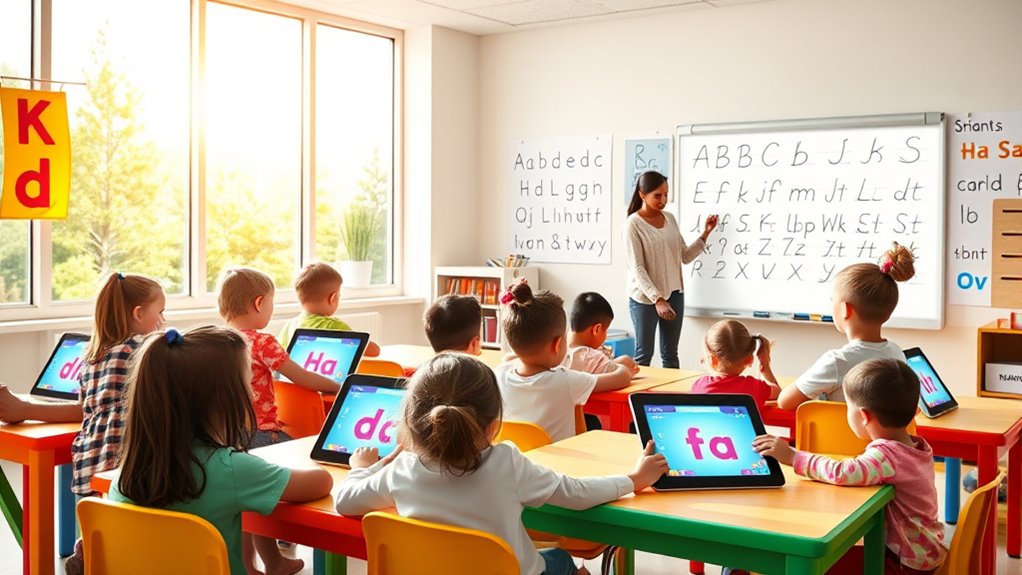
You’ll see that recent studies use a variety of evaluation techniques, from standardized tests to observational assessments, to measure program effectiveness. These studies also differ in their design, with some employing randomized controlled trials while others use quasi-experimental approaches. Understanding these methodologies helps you compare findings accurately and determine which interventions are most effective. Additionally, incorporating high-quality projectors in research settings can improve the accuracy of visual assessments and data presentation.
Evaluation Techniques Employed
How do researchers determine the effectiveness of early literacy interventions? They rely on assessment tools that measure children’s skills before and after the programs. These tools often include standardized tests, observational checklists, and formative assessments. Once data is collected, data analysis helps identify significant improvements and patterns, allowing researchers to compare different interventions effectively. Quantitative methods, like statistical comparisons, reveal whether gains are meaningful or due to chance. Some studies also incorporate qualitative data, such as teacher feedback or student interviews, to provide context. By combining assessment tools with rigorous data analysis, researchers can accurately evaluate which interventions produce the most substantial and lasting literacy outcomes, ensuring their findings are reliable and actionable. Additionally, understanding assessment validity is crucial for ensuring that the tools used accurately measure what they are intended to assess.
Study Design Variations
Researchers employ a variety of study design methodologies to compare early literacy interventions effectively. They often choose between randomized controlled trials, quasi-experimental designs, or longitudinal studies, depending on their goals. In classroom settings, researchers utilize diverse assessment tools to measure literacy outcomes, ensuring they capture progress accurately. Some studies focus on direct assessments like standardized tests, while others incorporate observational techniques or teacher reports. The choice of design influences the reliability and applicability of findings, especially when comparing different interventions. By varying methodologies, researchers can better understand which approaches work best in real-world classroom environments. This diversity helps build a holistic picture of early literacy strategies, accommodating different student populations and educational contexts. Additionally, employing diverse assessment tools enhances the robustness of outcomes, providing a more comprehensive understanding of intervention effectiveness.
interactive literacy assessment tools for kids
As an affiliate, we earn on qualifying purchases.
As an affiliate, we earn on qualifying purchases.
Key Metrics for Assessing Literacy Outcomes

To measure literacy success, you need to look at key metrics like standardized test scores, reading fluency rates, and phonemic awareness levels. These indicators provide a clear picture of how well interventions are working. Focusing on them helps you identify areas that need improvement and track progress over time. Additionally, understanding second trimester overview can offer insights into developmental stages relevant to early literacy development.
Standardized Test Scores
Have you ever wondered how educators measure the effectiveness of early literacy interventions? Standardized test scores are a common tool. They provide a quantifiable way to assess phonics retention and overall literacy skills. When interpreting these scores, it’s vital to consider test validity, ensuring the assessments accurately measure what they intend to. Valid tests reflect true literacy progress rather than test-taking ability or other factors. Consistent improvements in standardized scores can indicate successful interventions, but scores alone don’t tell the whole story. They offer a snapshot of student achievement at specific points in time. By analyzing these scores, educators can identify which programs support literacy growth and make informed decisions about instructional strategies.
Reading Fluency Rates
How quickly students read aloud can reveal a lot about their literacy development. Reading fluency rates measure how smoothly and accurately students read connected text, serving as a key indicator of progress. To improve these rates, motivational strategies are essential; they keep students engaged and enthusiastic to practice. Incorporating activities that boost confidence and enjoyment can lead to noticeable gains. Parental involvement also plays a critical role, as it encourages regular practice and reinforces skills learned in the classroom. When parents listen to their children read or discuss texts, they foster a supportive environment that promotes faster, more confident reading. Monitoring reading fluency rates helps you identify students who need targeted support and track the effectiveness of your interventions over time. Additionally, understanding reading fluency can help educators tailor instruction to meet individual student needs more effectively.
Phonemic Awareness Levels
What are the key indicators that reveal a student’s progress in phonemic awareness? You look for signs of improved speech perception and manipulation of sounds. These include:
- Recognizing rhymes and alliteration patterns effortlessly.
- Breaking words into individual phonemes accurately.
- Blending separate sounds into meaningful words smoothly.
- Substituting one phoneme for another to create new words.
Monitoring digital literacy skills can also be an important aspect of assessing overall literacy development in today’s tech-integrated environment. These milestones show your student is developing strong phonemic awareness, a vital element for reading success. As their speech perception sharpens, they become better at hearing and distinguishing sounds. Tracking these levels helps you identify where they excel or need targeted support, ensuring early literacy interventions are effective and tailored to their needs.
technology-based early reading programs
As an affiliate, we earn on qualifying purchases.
As an affiliate, we earn on qualifying purchases.
Effectiveness of Phonics-Based vs. Whole Language Approaches

When comparing phonics-based and whole language approaches, it’s clear that each method has distinct strengths and limitations in promoting early literacy. Phonics emphasizes decoding skills, often supported by motivational strategies that keep children engaged. Whole language focuses on comprehension and context, fostering a love for reading through meaningful texts. Parental involvement plays a vital role in both methods, reinforcing skills at home. Consider the following differences: collaboration tools can enhance the effectiveness of these approaches in educational settings.
| Aspect | Phonics-Based Approach | Whole Language Approach |
|---|---|---|
| Focus | Decoding and phonemic awareness | Comprehension and context |
| Motivational Strategies | Use of games and rewards to boost engagement | Storytelling and real-world connections |
| Parental Involvement | Home practice of sound-letter relationships | Reading aloud and shared experiences |
| Effectiveness | Builds strong decoding skills | Enhances reading comprehension |
Impact of Technology-Enhanced Interventions

Technology-enhanced interventions are transforming early literacy instruction by providing interactive and personalized learning experiences. You can see digital engagement increase as children tap on colorful screens, manipulate letters with a swipe, and solve puzzles through gamified activities. Imagine a student motivated by: 1. Bright, engaging visuals that capture attention 2. Immediate feedback that guides progress 3. Customizable content tailored to individual needs 4. Interactive stories that foster a love for reading These elements boost student motivation, making learning feel fun rather than work. As a result, children stay more engaged and develop stronger foundational skills. Technology creates a dynamic environment where literacy skills grow through active participation, keeping students motivated and invested in their progress. Additionally, incorporating Volkswagen Tuning concepts like performance upgrades can serve as a metaphor for optimizing learning strategies to enhance literacy development.
Factors Influencing Success Rates in Early Literacy Programs

The effectiveness of early literacy programs depends on several key factors that influence student outcomes. Parental involvement plays a crucial role; when parents actively engage in their child’s literacy activities, students tend to improve faster and develop stronger skills. Socioeconomic factors also significantly impact success rates. Children from higher socioeconomic backgrounds often have access to more resources, such as books and learning support, which enhances their learning experiences. Conversely, students facing economic challenges may struggle without additional support. Your awareness of these factors helps you understand that fostering strong parental engagement and addressing socioeconomic disparities can boost literacy success. Tailoring interventions to consider these influences ensures programs meet diverse student needs, ultimately improving overall literacy development. Recognizing the role of Resource Availability can further enhance the effectiveness of early literacy efforts by ensuring all children have access to essential learning tools.
Frequently Asked Questions
How Do Socioeconomic Factors Affect Literacy Intervention Success?
Socioeconomic factors substantially impact literacy intervention success. You might notice economic barriers, like limited access to resources or support, hindering progress. Cultural influences also shape how children engage with literacy activities and respond to interventions. When these factors aren’t addressed, interventions may not be as effective. To improve outcomes, you should tailor strategies to account for economic challenges and cultural backgrounds, ensuring every child has equitable opportunities to develop literacy skills.
What Role Do Parent Involvement and Home Environment Play?
Think of your home as the fertile ground where literacy seeds can grow. Parental engagement and a rich home literacy environment are essential, like sunlight nurturing early reading skills. When you actively participate, read together, and provide books, you create a foundation that boosts intervention success. Your involvement directly impacts a child’s confidence and ability to develop literacy skills, making your home the launchpad for lifelong learning.
Are There Age-Specific Differences in Intervention Effectiveness?
You should consider that age-specific differences impact intervention effectiveness, especially in developing phonemic awareness and print familiarity. Younger children benefit more from activities emphasizing letter-sound relationships, while older children respond better to phonemic manipulation exercises. Tailoring strategies to their developmental stage guarantees better engagement and outcomes. Recognizing these differences helps you adapt interventions, making them more effective for each child’s unique learning needs.
How Sustainable Are the Improvements After Program Completion?
You wonder about the sustainability of improvements after a program ends. To assess long-term retention and program durability, you should track students’ progress over time and compare their skills before and after completion. This helps determine if gains are maintained or fade. Consistent follow-up and reinforcement are key to ensuring lasting benefits, making it clear whether the initial intervention truly supports enduring literacy development.
What Training Do Educators Need for Different Literacy Approaches?
You need training in various literacy approaches to effectively support students. For phonics instruction, focus on systematic teaching methods that build decoding skills. For guided reading, learn how to facilitate differentiated instruction and assessment techniques. Your training should include practical strategies, ongoing coaching, and evidence-based practices to guarantee you can adapt approaches to meet diverse learners’ needs. This equips you to foster literacy development across different instructional frameworks.
Conclusion
While no approach is perfect, understanding the subtle differences can gently guide you toward more nurturing literacy experiences. By thoughtfully blending methods and embracing new tools, you can create a warm environment where young learners feel supported and inspired. Remember, every small step matters, and your dedication can quietly foster a lifelong love of reading. With patience and care, you’ll help children open their potential, turning early challenges into gentle milestones on their literacy journey.