Universal Design for Learning helps you create accessible, inclusive classrooms for deaf students by using flexible teaching methods and diverse content that meet individual needs. You can incorporate assistive technologies like captioning, visual alerts, and FM systems to improve access to auditory information. Designing an inclusive curriculum and offering flexible assessments guarantee all students stay engaged and motivated. If you continue exploring, you’ll discover practical strategies for fostering equitable learning environments tailored to deaf learners.
Key Takeaways
- UDL promotes flexible, accessible teaching methods and materials to meet diverse learning needs of deaf students.
- Incorporates assistive technologies like captioning and visual alert systems to enhance auditory access.
- Designs curriculum with visual supports and multisensory activities to increase engagement and inclusivity.
- Uses flexible assessments such as visual projects and written responses to respect individual strengths.
- Encourages collaboration with specialists and technology experts to adapt instruction effectively for deaf learners.
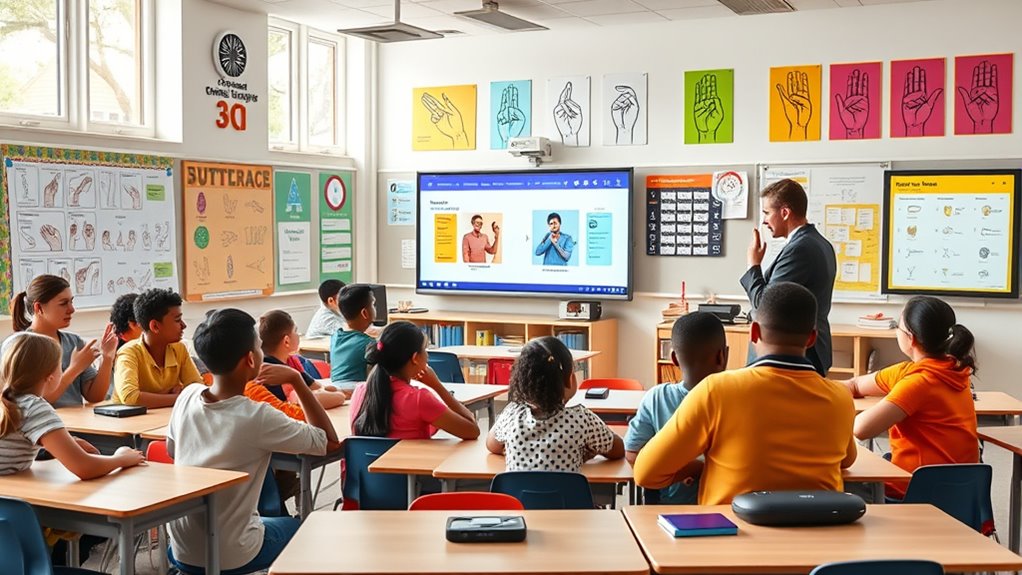
Universal Design for Learning (UDL) offers a promising approach to making deaf education more inclusive and effective. By focusing on flexible teaching methods and accessible content, UDL ensures that all students, regardless of hearing ability, can engage meaningfully with the curriculum. A key component of this approach involves the strategic use of assistive technology, which can considerably enhance learning experiences for deaf students. Devices such as FM systems, real-time captioning, and visual alert systems provide immediate access to auditory information, allowing students to follow lessons more easily. When integrated thoughtfully into the classroom, assistive technology bridges gaps that traditional teaching methods might leave, creating a more equitable environment.
Implementing an inclusive curriculum is equally essential. You need to design learning materials and activities that cater to different learning styles and needs. This means providing visual supports like sign language videos, captioned multimedia, and written transcripts alongside spoken instruction. An inclusive curriculum doesn’t just adapt content for deaf students; it enriches the learning experience for everyone. For example, incorporating visual storytelling or hands-on activities can make lessons more engaging and accessible. By doing so, you foster an environment where students feel valued and supported, which enhances motivation and participation.
Designing inclusive curricula with visual supports enriches learning for all students.
You should also consider flexible assessment methods. Traditional tests may not accurately reflect a deaf student’s understanding if they rely heavily on auditory cues. Instead, offering options such as visual projects, presentations, or written responses allows students to demonstrate their knowledge in ways that align with their strengths. This flexibility respects individual differences and promotes a growth-oriented mindset.
Furthermore, collaboration with specialists—such as speech-language pathologists, audiologists, and sign language interpreters—can help you tailor your instructional strategies effectively. These professionals can advise on the best assistive technology tools and curriculum modifications. Their insights ensure that your teaching methods remain responsive to each student’s evolving needs. Additionally, understanding the accessible technologies available can empower educators to create more effective and inclusive learning environments.
real-time captioning device for classroom
As an affiliate, we earn on qualifying purchases.
As an affiliate, we earn on qualifying purchases.
Frequently Asked Questions
How Is UDL Tailored for Deaf Students’ Specific Needs?
You tailor learning for deaf students’ needs by incorporating sign language, ensuring they access information in their preferred language. Visual scaffolding supports understanding complex concepts through images, videos, and visual cues. You also use visual aids to supplement oral instruction, making lessons more accessible. By blending sign language and visual scaffolding, you create an inclusive environment where deaf students can actively engage and learn effectively.
What Technology Tools Support UDL in Deaf Classrooms?
Imagine a digital toolbox where every tool paints a clearer picture. In deaf classrooms, technology like sign language apps and captioning tools act as bridges, connecting students to learning. These tools transform spoken words into visual language, making lessons accessible and engaging. They guarantee every learner navigates the educational landscape with confidence, turning barriers into pathways for understanding and inclusion.
How Do Teachers Assess UDL Effectiveness With Deaf Learners?
You assess UDL effectiveness with deaf learners by implementing varied assessment strategies that accommodate diverse needs. You gather student feedback regularly, asking about their engagement and understanding. Observing participation and performance also helps you identify what works best. By combining these methods, you can adjust your teaching approaches to guarantee all students access and succeed with the content, fostering a more inclusive learning environment.
Are There Cultural Considerations in Implementing UDL for Deaf Students?
When implementing UDL for deaf students, you need to contemplate cultural identity and language diversity. Recognize that students’ backgrounds influence how they access and engage with learning materials. You should adapt your strategies to respect their cultural experiences and linguistic preferences, ensuring inclusivity. By doing so, you create a supportive environment that values each student’s identity, fostering better engagement and learning outcomes for deaf learners.
How Can Families Support UDL Practices at Home for Deaf Children?
You might find that family involvement and home adaptations unexpectedly shape your child’s learning journey. By actively engaging in their education, you create a supportive environment that aligns with their needs. Use visual aids, sign language, or technology to make learning accessible at home. When you adapt your routines and stay involved, you reinforce inclusive practices that empower your deaf child to thrive, turning everyday moments into opportunities for growth and understanding.

Retekess TT119 Assistive Listening System, Church Translation System, Mute Function, 300m/980ft, Simultaneous Interpretation Devices for Church, Court (1 Transmitter 10 Receivers)
Transmission range; 300m/980ft long working distance allows for transmission over greater distances; this is useful in scenarios where…
As an affiliate, we earn on qualifying purchases.
As an affiliate, we earn on qualifying purchases.
Conclusion
By embracing Universal Design for Learning in deaf education, you open doors to truly inclusive environments. It’s not just a theory but a proven approach that adapts to diverse needs, fostering genuine understanding and participation. When you prioritize accessible, flexible teaching methods, you prove that barriers can be broken. This shift encourages you to see every student’s potential, reminding you that true learning happens when everyone’s unique way of understanding is valued and supported.

Learning Resources Time Tracker Visual Timer & Clock – 1 Piece, Classroom Tracker, Alarm Clock, Light Up Timer for Classroom, Visual Tracker
Keep kids on task with our improved timer that uses both light and sound cues
As an affiliate, we earn on qualifying purchases.
As an affiliate, we earn on qualifying purchases.

American Sign Language For Dummies with Online Videos (For Dummies (Lifestyle))
As an affiliate, we earn on qualifying purchases.
As an affiliate, we earn on qualifying purchases.