
Surprising studies show that pets, especially dogs and cats, can pick up on their deaf owners’ body language, gestures, and emotions. They respond instinctively to visual cues, nods, and touch, building strong bonds without sound. Pets can sense feelings through facial expressions and posture, often supporting their owners by alerting or comforting them. If you want to discover how these unique communication methods work, keep exploring these fascinating connections.
Key Takeaways
- Pets rely on visual cues like gestures and body language to communicate effectively with deaf owners.
- Dogs and cats instinctively interpret owners’ emotional states through body language and scent cues.
- Visual signals, such as hand signs and eye contact, enhance responsiveness and strengthen the pet-owner bond.
- Breed traits influence how quickly pets adapt to scent-based or visual communication methods.
- Pets often support deaf owners by alerting them to visitors, stress, or environmental changes through nudges or vocalizations.
visual communication training for dogs
As an affiliate, we earn on qualifying purchases.
As an affiliate, we earn on qualifying purchases.
Understanding the Unique Bond Between Pets and Deaf Owners

Because pets are highly attuned to their owners’ behaviors and emotions, their bond with deaf owners often goes beyond typical communication. When you choose pet adoption, you’re not only gaining a loyal companion but also forming a deep connection rooted in mutual understanding. Deaf owners tend to develop unique ways to communicate, such as gestures and touch, strengthening their relationship. Regular veterinary care becomes essential to ensure your pet’s health and well-being, especially if your pet helps you navigate daily life. This shared reliance fosters trust and emotional closeness, making your bond more profound. Your pet recognizes your cues and gestures, responding with sensitivity and loyalty that surpasses conventional pet-owner interactions. This special bond reflects love, trust, and mutual understanding. Additionally, understanding color accuracy and how pets interpret visual cues can enhance communication and deepen the connection between you and your pet.
How Dogs Detect Changes in Their Deaf Owners’ Emotions
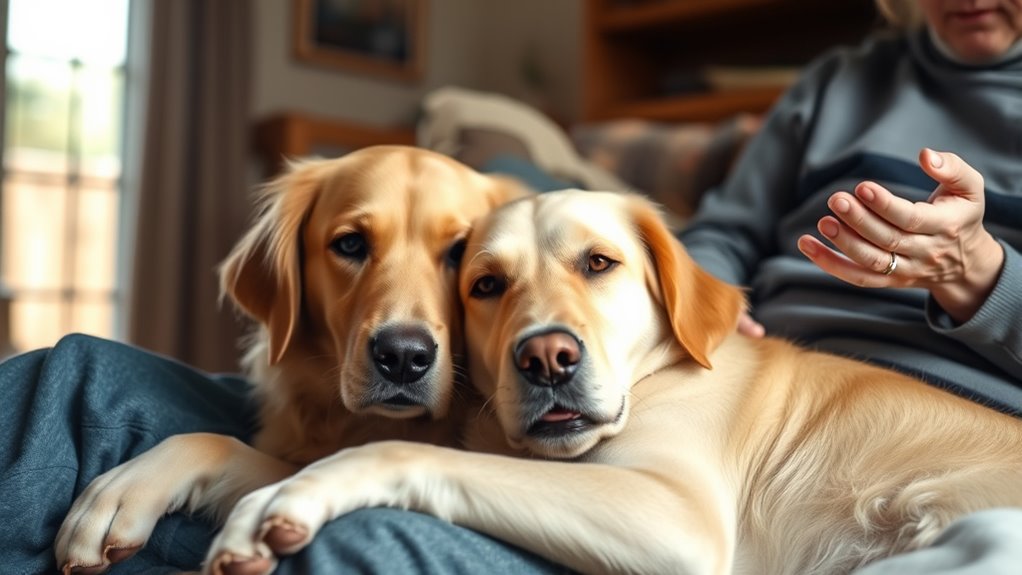
Dogs pick up on emotional cues through subtle changes in your body language and facial expressions. They are skilled at reading nonverbal signals, which helps them sense when you’re happy, anxious, or upset. By noticing these cues, they respond appropriately to support or comfort you. Some studies suggest that dogs can also recognize emotional state indicators, allowing them to better respond to their owners’ feelings even without hearing their voice.
Sensing Emotional Cues
Even without hearing, dogs are remarkably attuned to their owners’ emotional states through subtle cues. They pick up on body language, facial expressions, and even scent changes that signal your feelings. Veterinary training and pet therapy programs emphasize these skills, helping dogs become more sensitive to human emotions. When you’re anxious or upset, your dog often responds instinctively, providing comfort and reassurance. Their ability to sense emotional cues goes beyond hearing, making them exceptional companions for deaf owners. Some dogs are trained specifically to detect stress or distress, alerting their owners or caregivers. This heightened sensitivity fosters a deep bond, where your dog becomes not just a pet but a perceptive partner in understanding your emotional world. Training methods play a crucial role in enhancing these perceptive abilities, allowing dogs to better interpret subtle cues.
Nonverbal Communication Skills
Since deafness limits your ability to use auditory cues, your dog relies heavily on nonverbal signals to gauge your emotional state. They pick up on subtle cues like body language, facial expressions, and posture. You might notice your dog:
- Watching your face closely for changes in expression
- Sensing shifts in your body tension or movement
- Picking up on scent signals that reflect your emotional state
- Responding to your gestures or physical contact
Your dog is especially attuned to vocal cues like tone and pitch, even if they’re not hearing words, and scent signals that carry your emotional energy. These skills allow them to interpret your feelings accurately and respond with comforting behaviors, providing reassurance even without hearing your voice. Developing cultural intelligence about human emotions can enhance your understanding of your dog’s responses and strengthen your bond.
The Role of Visual Cues in Pet-Owner Communication
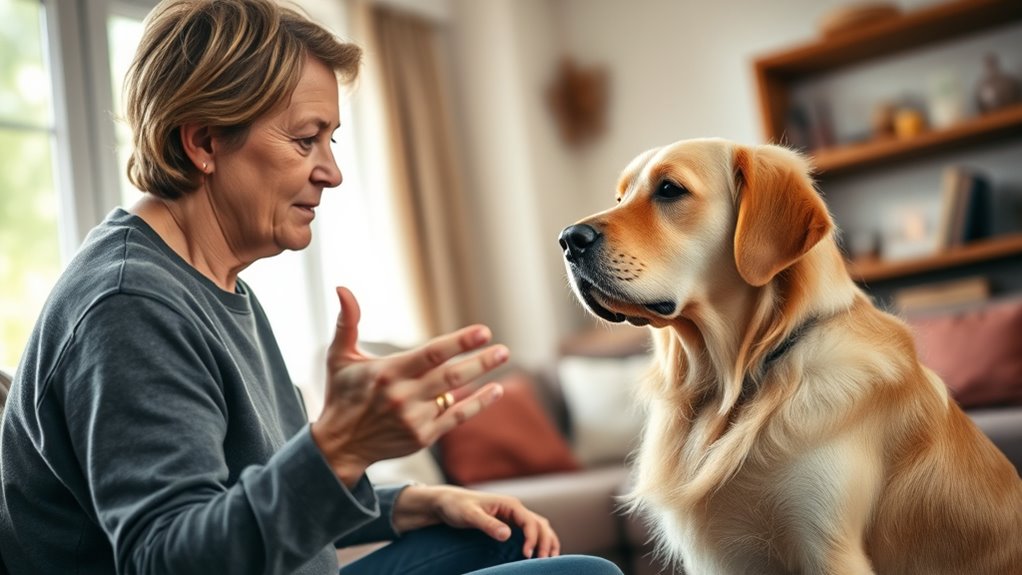
You can communicate with your pet through gestures and body language, which they often pick up quickly. Eye contact also plays a vital role in establishing understanding and connection. Recognizing and using visual signals helps strengthen your bond and guarantees your pet responds appropriately. Being aware of visual cues can significantly improve your pet’s responsiveness and trust.
Gestures and Body Language
Gestures and body language play a pivotal role in how deaf pet owners communicate with their animals. Your movements become essential signals, often more effective than sounds. In veterinary training or pet training, you learn to use consistent gestures to guide behavior. Visual cues like pointing, nodding, or raising your hand help your pet understand commands. Imagine your dog responding instantly to a simple hand signal instead of a verbal cue. You might:
- Use a raised palm to ask for a sit
- Point to direct attention
- Nod to encourage progress
- Wave to call your pet over
These non-verbal cues strengthen your bond and reduce confusion. Mastering body language allows your pet to interpret your intentions clearly, making communication seamless and effective, especially when speech isn’t an option. Incorporating visual communication techniques can significantly enhance understanding between you and your pet.
Eye Contact Significance
Eye contact serves as a powerful and immediate form of communication between deaf pet owners and their animals. It directs visual attention, helping your pet understand your intentions without sound. When you make eye contact, it signals focus and trust, strengthening your bond. Pets that maintain eye contact often show increased responsiveness and alertness, making your cues clearer.
| Visual Attention | Eye Contact |
|---|---|
| Focuses your pet’s gaze | Acts as a silent signal |
| Reinforces communication | Builds mutual understanding |
| Enhances responsiveness | Creates emotional connection |
| Helps interpret cues | Signifies attentiveness |
Visual Signal Recognition
Building on the importance of eye contact, visual signals play a vital role in how deaf pets and their owners communicate. Your pet’s perception of visual cues helps them understand commands and emotions without sound. Pet perception of your gestures can be highly intuitive when you use consistent signals. To enhance communication, you might:
- Use hand signals instead of verbal commands
- Incorporate body language to show mood or intent
- Maintain eye contact to reinforce cues
- Recognize your pet’s focus points to gauge understanding
These visual cues allow your pet to interpret your intentions accurately, strengthening your bond. Recognizing and responding to visual signals becomes key for effective pet-owner communication, especially when sound cues are absent or limited. Visual signal recognition transforms your interactions into a clear, mutual understanding. Understanding sound design principles can also help in creating visual cues that are more noticeable and effective for your pet.
Studies Showing Pets Respond to Deaf Owners’ Body Language

Research has shown that pets can pick up on their deaf owners’ body language to understand commands and emotions. Studies reveal that dogs and cats respond to subtle gestures, such as hand signals or posture changes, even without sound cues. This ability enhances their communication and strengthens your bond. Recognizing these signals can improve your pet’s training, making commands clearer and more effective. It also emphasizes the importance of proper veterinary care, ensuring your pet stays healthy and responsive. When you use consistent body language, your pet learns faster and reacts more intuitively. Additionally, understanding AI security technologies can help protect your data and ensure safe interactions with digital tools used for training and communication. These studies highlight that body language is a powerful tool in pet training, especially for deaf owners, enabling a deeper understanding and a more harmonious relationship.
The Impact of Sign Language on Pet Behavior

Using sign language to communicate with your pet can substantially influence their behavior, making commands more consistent and easier to understand. Pets often respond well to visual cues, which can reduce confusion and anxiety. When combined with techniques like scent training, your pet becomes more attuned to your signals. Additionally, music therapy can create a calming environment that reinforces positive responses. Imagine your pet:
- Following commands more accurately with clear hand signs
- Feeling more relaxed during training sessions
- Developing stronger bonds through visual communication
- Responding better to scent cues that complement sign language
- Incorporating anime movies recommended for fans can also serve as a relaxing activity to strengthen your bond during quiet times.
Differences in Pet Reactions Based on Species and Breed

Different species and breeds respond uniquely to deaf-friendly communication methods like sign language and scent cues. Pet species, such as dogs and cats, have different sensory strengths that influence their reactions. Dogs, especially certain breeds like retrievers or border collies, tend to adapt quickly to visual signals and scent cues because of their heightened olfactory senses and trainability. Breed differences also play a role; some breeds are more responsive to visual commands due to their history and temperament. For instance, working breeds often excel in understanding sign language, while others may rely more on scent cues. Recognizing these breed-specific traits helps you tailor your approach, ensuring your pet feels connected and responsive despite hearing limitations.
Real-Life Stories Highlighting Pets’ Sensitivity to Deaf Owners
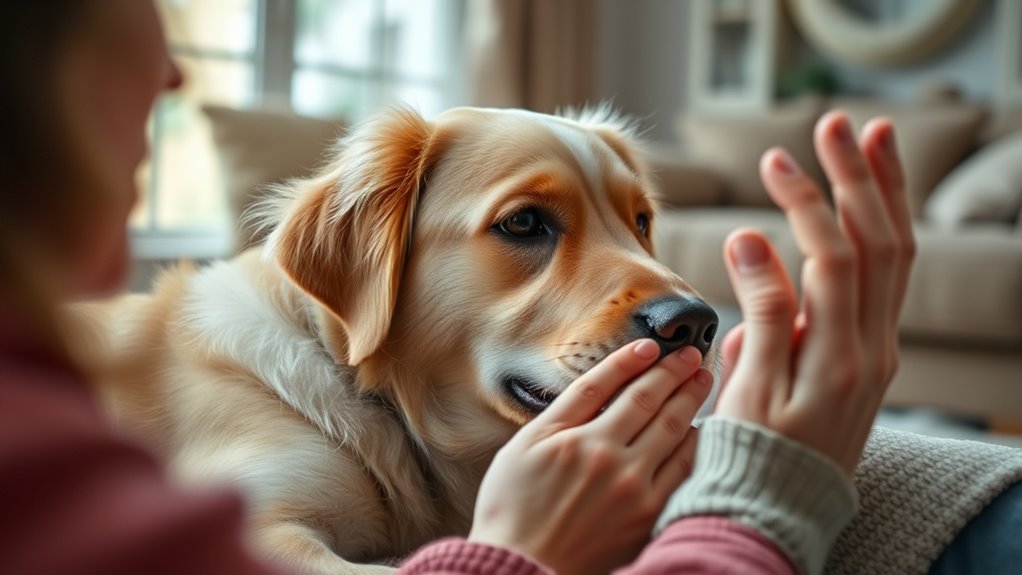
Many deaf pet owners have heartfelt stories that showcase their pets’ remarkable sensitivity and bond. These animals instinctively pick up on their owners’ cues, often responding to vibrations or body language. For example, a dog might alert a deaf owner to someone at the door by barking or nudging them, demonstrating acute awareness. Other stories highlight pets waiting patiently during mealtime, sensing when their owner needs a break or reassurance. Advances in veterinary innovations have helped improve pet nutrition, ensuring these animals stay healthy and attentive. You might hear about cats gently pawing at their owner’s lap during quiet moments or a dog recognizing subtle signs of stress. These stories reveal how, despite hearing limitations, pets excel in understanding and supporting their owners’ needs.
Implications for Building Stronger Human-Animal Connections

Building stronger human-animal connections relies on understanding and responding to your pet’s unique ways of communication. By recognizing their sensory adaptation, you can better interpret subtle cues and signals, fostering trust and responsiveness. Pets with heightened emotional intelligence pick up on your feelings, making it essential to be attuned to their emotional states as well. When you adapt your interactions to suit their sensory needs—such as using visual cues or gentle touch—you deepen your bond. This mutual understanding encourages your pet to be more receptive and responsive, strengthening your relationship. Developing awareness of these sensory and emotional cues helps you create a supportive environment, ensuring that your pet feels secure and connected. Ultimately, empathy and adaptation are key to building lasting trust.
Frequently Asked Questions
Do Pets Learn to Recognize Specific Sign Language Commands?
You can teach your pet to recognize specific sign language commands through consistent training methods that use visual cues. Pets, especially dogs, often learn to associate signs with actions when you repeat them patiently. By using clear gestures and positive reinforcement, you help your pet understand commands visually. Over time, they respond reliably, demonstrating that visual cues and effective training methods can make sign language a useful way to communicate with your pet.
How Do Pets Adapt to Hearing Impairment Over Time?
Imagine your deaf dog learning to read your visual cues and scent signals to understand your commands. Over time, pets adapt by becoming more attuned to these cues, relying less on sound. They recognize hand gestures, body language, and even scent communication, strengthening your bond. This adaptation showcases their remarkable ability to adjust to hearing impairments, making them responsive and connected despite the lack of auditory cues.
Are There Differences in Pet Reactions Based on Owner Age?
You might notice that your pet’s reactions vary with your age, influenced by age-related bonding and generational differences. Younger owners often have energetic, playful interactions, which pets respond to enthusiastically. Older owners may foster a calmer, more nurturing bond, leading pets to be more relaxed and attentive. These differences shape how pets perceive and respond to their owners, highlighting the importance of understanding generational influences in your pet’s behavior and bond formation.
Can Pets Sense Emotional Distress in Deaf Owners?
Imagine your pet is like a modern-day Sherlock, sensing your emotional distress even without hearing your words. Studies show that pets can pick up on subtle cues like body language and scent, allowing them to emotionally sense owner distress. They respond with comforting behaviors, proving their intuitive connection. So, yes, your furry friend can often perceive your emotional state, providing support when you need it most—no sound necessary.
What Training Techniques Enhance Pet Responsiveness to Deaf Owners?
To enhance your pet’s responsiveness to you, focus on training techniques like using clear visual cues and positive reinforcement. Consistently incorporate hand signals or gestures to communicate, and reward your pet when they respond correctly. This approach helps your pet understand your signals better and builds trust. With patience and consistency, your pet will become more attentive and responsive, strengthening your bond despite your deafness.
Conclusion
As you navigate the silent symphony of life with your pet, remember they’re more than just animals—they’re your soul’s silent partners, painting a masterpiece of understanding beyond words. Their keen senses and unwavering loyalty transform moments of silence into a language of love and trust. So, embrace these silent conversations, knowing that in their eyes, you’ve already spoken volumes. Together, you create a bond that’s truly a melody no words could ever capture.