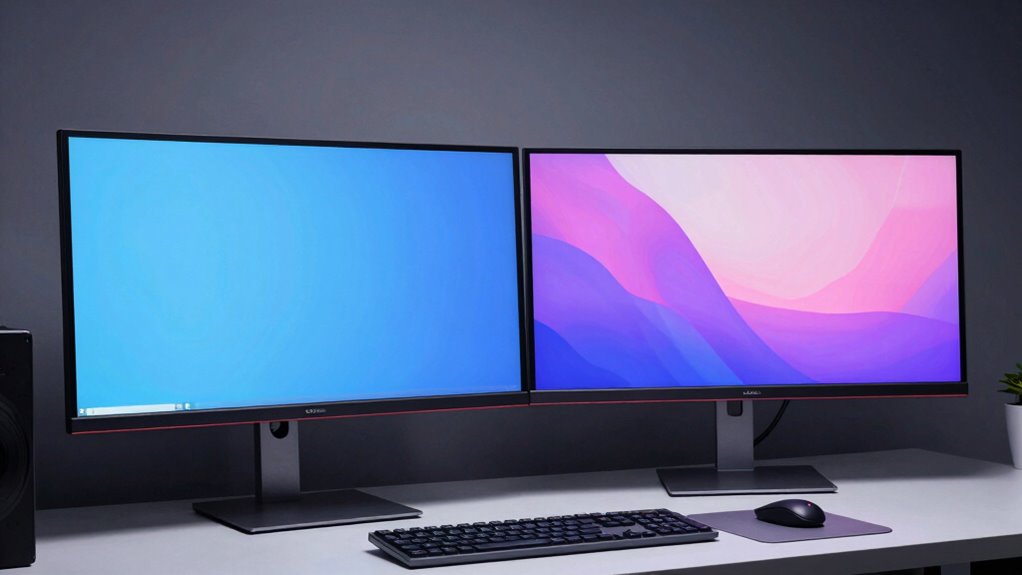

Using large monitors for captions without proper ergonomic setup can cause neck, eye, and shoulder strain that many overlook. Make sure your monitor is at eye level, positioned at about arm’s length, and avoid glare by adjusting lighting. Proper keyboard and mouse placement and regular posture checks are essential. Small adjustments can make a big difference. Keep this in mind, and you’ll learn simple ways to improve your workspace comfort.
Key Takeaways
- Proper monitor height and tilt prevent neck strain, ensuring large screens are at eye level for comfortable caption reading.
- Maintaining an appropriate viewing distance minimizes eye fatigue, especially with bigger monitors.
- Adequate lighting and glare reduction enhance caption clarity and reduce visual discomfort on large displays.
- Using ergonomic accessories like adjustable stands and monitor arms supports optimal placement and posture.
- Regular ergonomic assessments ensure monitor setup remains aligned with best practices for long-term comfort.
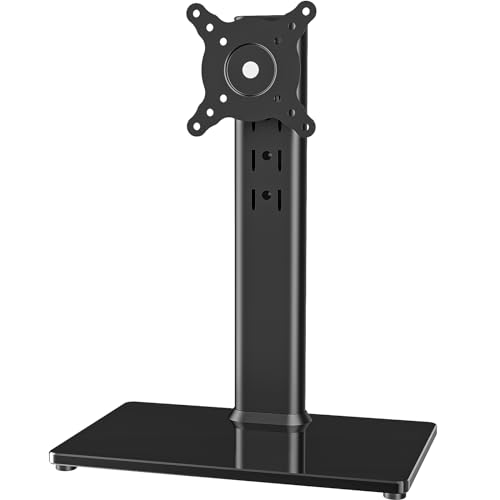
Single LCD Computer Monitor Free-Standing Desk Stand Mount Riser for 13 inch to 32 inch screen with Swivel, Height Adjustable, Rotation, Vesa Base Stand Holds One (1) Screen up to 77Lbs(HT05B-001))
COMPATIBILITY ☞ Single Computer monitor mount free standing Desk Stand Riser fitting screens for 13,15,17,19,21,23,27,30,32 inch LCD LED…
As an affiliate, we earn on qualifying purchases.
As an affiliate, we earn on qualifying purchases.
Why Proper Monitor Placement Is Key for Caption Reading
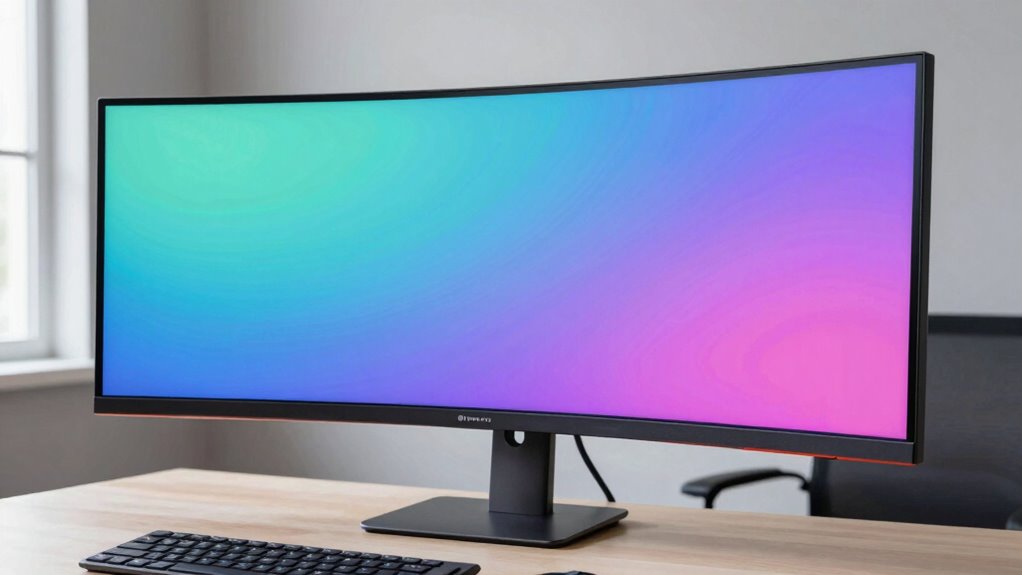
Proper monitor placement is essential because it directly affects how easily you can read captions without straining your eyes or neck. When your monitor is correctly positioned, you can perform monitor calibration effectively, ensuring the display’s brightness and contrast are comfortable. Proper placement also helps you view the caption font size clearly, avoiding the need to lean forward or squint. Keep the screen at eye level and about an arm’s length away to reduce eye fatigue. If your monitor is too low or too high, you may find yourself tilting your head or squinting, which can cause discomfort over time. Correct placement supports better posture and makes reading captions easier, especially on large monitors where screen size can be overwhelming if not positioned properly. Additionally, ergonomic setup can help prevent long-term strain and discomfort during extended viewing sessions. Ensuring your workspace includes adequate lighting conditions can further enhance visibility and reduce glare, making caption reading even more comfortable. Proper workspace ergonomics can also contribute to overall comfort and efficiency during prolonged usage. Incorporating adjustable monitor stands or mounts can further optimize your setup for personal comfort and reduce fatigue. Furthermore, understanding the contrast ratio of your monitor can help you adjust settings for optimal caption clarity in different lighting environments.
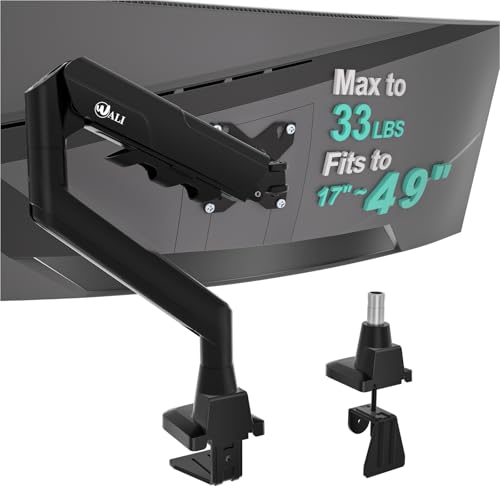
WALI Heavy Duty Single Monitor Arm for 17-49 Inch Flat Curved Ultrawide Screens, up to 33 Lbs, Adjustable Gas Spring Single Monitor Desk Mount for Home Office Gaming, VESA 75/100mm (GSM001XLN), Black
【THE ONE-STOP SOLUTION FOR YOUR DESK】Stop worrying about compatibility or complicated setups. This heavy duty single monitor arm…
As an affiliate, we earn on qualifying purchases.
As an affiliate, we earn on qualifying purchases.
How Screen Size and Distance Affect Eye Comfort
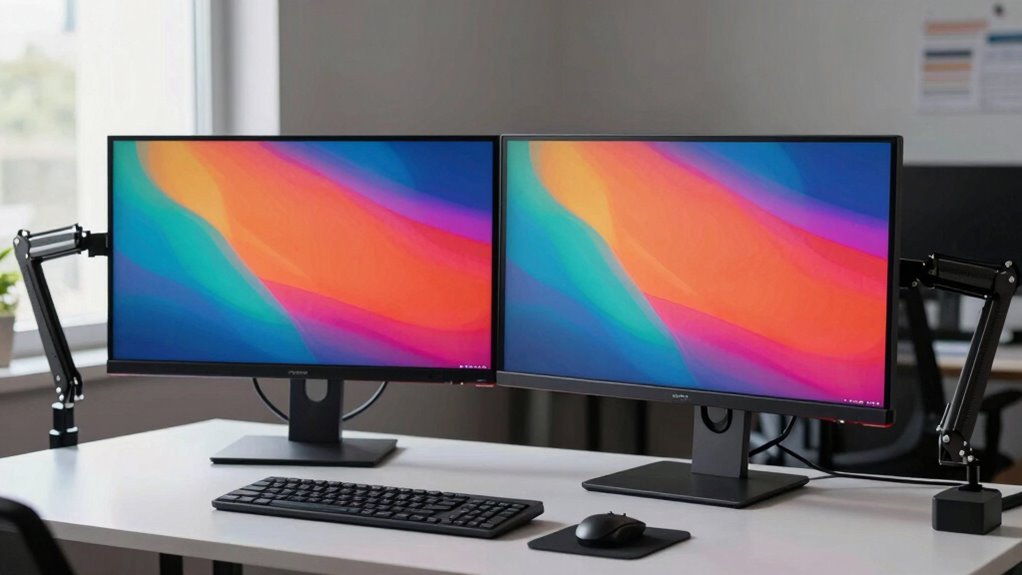
Your screen size and distance from your eyes directly influence comfort during caption viewing. Sitting too close or using a too-large monitor can cause eye strain, while the proper setup reduces fatigue. Understanding the ideal viewing distance and appropriate screen size helps keep your eyes comfortable during extended use. Additionally, ensuring your monitor has proper ergonomic design can further enhance comfort and reduce strain over time.
Optimal Viewing Distance
When choosing a large monitor, finding the ideal viewing distance is essential for eye comfort and reducing strain. Your monitor should be positioned so that you can see the entire screen comfortably without excessive eye or neck movement. Proper monitor calibration ensures that colors and brightness are optimized, which helps with caption readability and reduces eye fatigue. Typically, the ideal distance is about arm’s length, roughly 20-30 inches from your eyes, but this varies with screen size. Adjust your monitor’s position to prevent glare and reflections, which can cause additional eye strain. Remember, the goal is to have the content easily readable without squinting or leaning forward, ensuring long-term comfort during extended use. Additionally, considering ergonomic monitor placement can significantly improve your viewing experience and overall comfort. Understanding large number conversions can help you better interpret data displayed on large monitors, making your work more efficient. Proper ergonomic setup also involves adjusting the monitor height so that your eyes are level with the top of the screen, reducing neck strain.
Screen Size Impact
How does screen size influence your eye comfort and viewing experience? Larger screens offer better readability and reduce eye strain, especially when sitting at an ideal distance. However, if your monitor is too big for your space or viewing habits, it can cause discomfort and require excessive eye movement. A good contrast ratio enhances clarity, making text easier to read, while a high refresh rate minimizes flicker, reducing eye fatigue during extended use. Additionally, visual ergonomics principles guide optimal monitor placement to prevent strain and improve overall comfort. Proper monitor positioning can also help mitigate issues caused by inappropriate screen size or placement, ensuring a healthier viewing experience. Moreover, ergonomic design in monitor features can significantly impact user comfort and reduce fatigue during long caption sessions. Moreover, ethical fashion trends increasingly focus on political and social statements, which can influence consumer choices when selecting products and brands. Here’s a quick guide:
| Screen Size | Ideal Distance | Key Feature |
|---|---|---|
| 24-27″ | 1-2 feet | High contrast ratio |
| 32-43″ | 2-3 feet | Fast refresh rate |
| 50″+ | 3+ feet | Optimal ergonomics |
Choosing the right size ensures your eyes stay comfortable during long caption sessions.
![[2 Pack] 24 Inch Computer Privacy Screen Filter for Monitor 16:10 Aspect Ratio, Eye Protection Anti Blue Light Privacy Shield and Anti-Glare Protector, 24inch Removable Anti-Scratch 24in Protector Film](https://m.media-amazon.com/images/I/41pISb59OgL._SL500_.jpg "Large Monitors for Captions: The Ergonomics Most People Ignore 7")
[2 Pack] 24 Inch Computer Privacy Screen Filter for Monitor 16:10 Aspect Ratio, Eye Protection Anti Blue Light Privacy Shield and Anti-Glare Protector, 24inch Removable Anti-Scratch 24in Protector Film
【24 INCH PRIVACY FILTER DIMENSIONS】Computer privacy filter only for 24 inch – Width:20 7/16" (519 mm), Height: 12…
As an affiliate, we earn on qualifying purchases.
As an affiliate, we earn on qualifying purchases.
How to Adjust Your Monitor Height and Tilt for Better Ergonomics
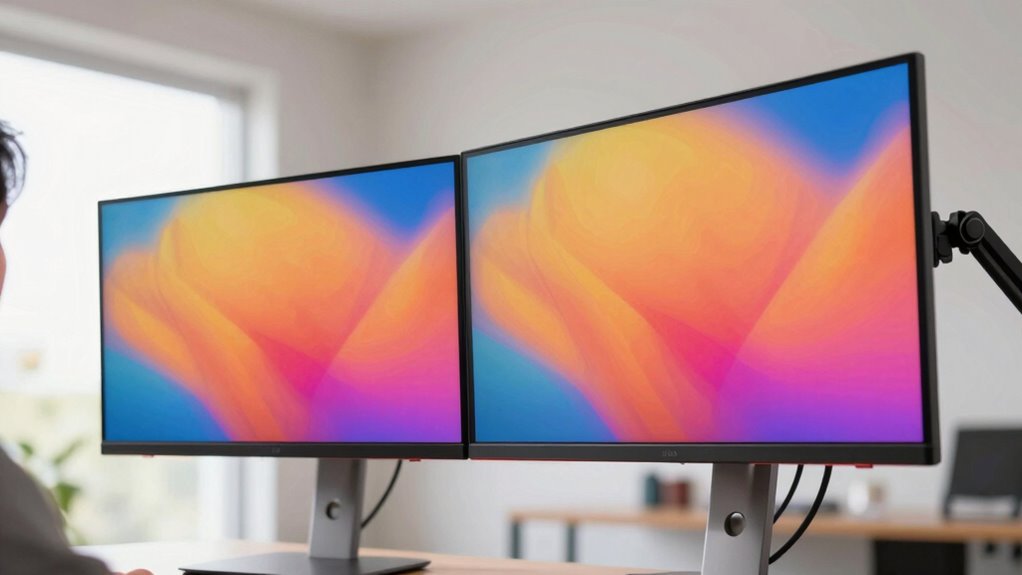
To enhance your viewing comfort, start by adjusting your monitor’s height so that the top of the screen is roughly eye level. Proper monitor calibration ensures your display is set for maximum clarity, reducing strain. Use ergonomic accessories like monitor stands or adjustable arms to fine-tune height and tilt. Tilt the screen slightly upward or downward to minimize neck strain and maintain a natural head position. Ensure the monitor is directly in front of you, about an arm’s length away. This positioning helps prevent eye fatigue and promotes better posture. Remember, small adjustments can make a big difference in comfort, so take the time to set your monitor correctly. Proper ergonomics not only improve your visual experience but also protect your health during long hours of caption viewing. Additionally, understanding ergonomic principles can help you create a more comfortable and health-conscious workspace. Paying attention to visual ergonomics can further enhance your comfort and reduce long-term strain. Incorporating personalized approaches to your workspace setup can further optimize your comfort and productivity. Regularly reviewing and adjusting your setup based on user feedback ensures sustained ergonomic benefits.

Wireless Keyboard and Mouse Combo, 2.4G Full Size Wave Keys Ergonomic Keyboard with Wrist Rest and 3-Level DPI Adjustable Wireless Ergonomic Mouse for Windows, Mac OS Desktop/Laptop/PC(Black)
【Wave Ergonomic Wireless Keyboard and Mouse Combo】The wireless keyboard features a wave key and wrist rest design that…
As an affiliate, we earn on qualifying purchases.
As an affiliate, we earn on qualifying purchases.
How Lighting Affects Using Large Monitors and Captions
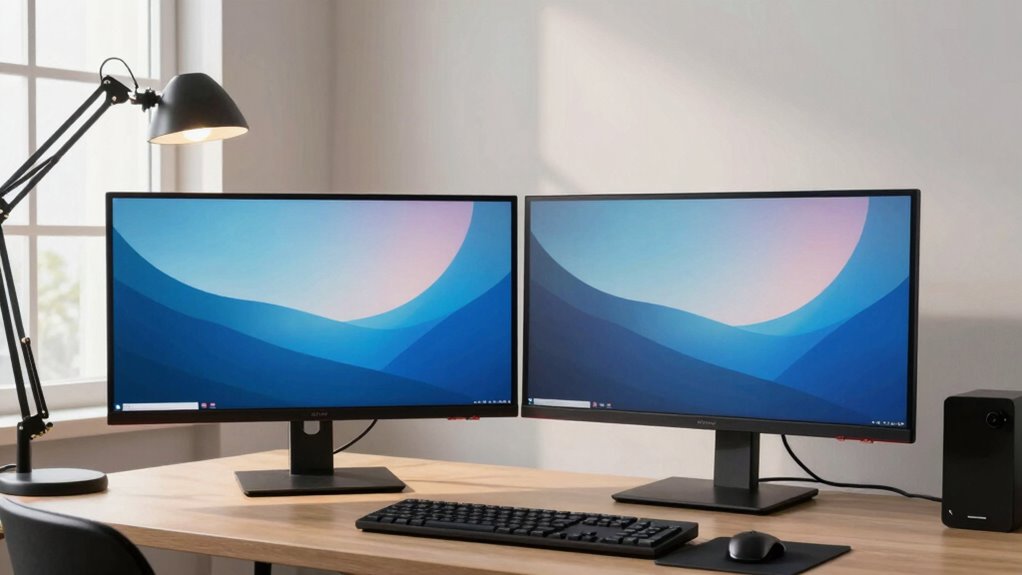
Lighting plays a vital role in how clearly you see captions on your large monitor. You need to find the right brightness balance, reduce screen glare, and control ambient light to prevent strain. Adjusting these factors helps you use your monitor comfortably and with better focus. Additionally, understanding ergonomic principles can help create a more comfortable viewing environment, reducing fatigue during extended use.
Light Brightness Balance
Balancing brightness levels on large monitors is essential for clear caption visibility and comfortable viewing. You want your screen brightness to match your room’s lighting, preventing your eyes from straining or captions from blending into the background. Adjust the contrast settings to enhance text clarity without causing glare or harsh shadows. Properly calibrated contrast makes captions stand out, reducing eye fatigue during long sessions. Avoid setting your monitor at maximum brightness, especially in dim environments, as it can cause discomfort. Instead, aim for a balanced brightness that complements your surrounding light. This helps you see captions clearly without forcing your eyes to work harder, ensuring a more comfortable and efficient viewing experience. Proper light brightness balance is key to ergonomic comfort and caption readability. Additionally, considering Free Floating techniques can help optimize your workspace for better visual comfort.
Screen Glare Reduction
Screen glare can considerably hinder your ability to see captions clearly on large monitors, especially in bright or uneven lighting conditions. Glare causes reflections that obscure text and can force you to strain your eyes, leading to discomfort and fatigue. Blue light emitted from screens also contributes to eye strain, making it harder to focus over time. To reduce glare, position your monitor away from direct light sources and consider using anti-reflective coatings or matte screen finishes. Adjusting your monitor’s tilt can also minimize reflections. Additionally, using proper lighting techniques, such as diffused ambient light, can significantly improve visibility and reduce eye strain. Incorporating lighting adjustments into your workspace setup can further enhance comfort and visibility. Controlling ambient lighting conditions helps in creating a more balanced environment for reading captions. Implementing ergonomic lighting practices can make a noticeable difference in overall visual comfort. By controlling glare, you improve caption visibility, decrease eye strain, and create a more comfortable viewing experience. Proper lighting adjustments are essential in maintaining eye health and ensuring you can enjoy captions without unnecessary visual distraction. Moreover, choosing appropriate light sources with lower blue light emission can help mitigate additional eye fatigue over extended periods.
Ambient Light Control
Ambient light plays a vital role in how well you can see captions on large monitors. Too much ambient lighting can wash out screen details, making captions harder to read. Conversely, dim environments can cause your eyes to strain as they adjust between bright screens and dark surroundings. Controlling ambient lighting helps maintain ideal screen brightness, ensuring captions are clear without glare or reflections. Use adjustable blinds or curtains to limit sunlight during the day, and position lamps to avoid direct reflections on your monitor. Proper ambient light creates a balanced viewing environment, reducing eye fatigue and improving caption visibility. Additionally, understanding monitor ergonomics can help you optimize your setup for better comfort and visibility. By managing ambient lighting effectively, you enhance your overall comfort and ensure that captions remain legible, regardless of external lighting conditions. Incorporating lighting control solutions such as dimmable lamps or smart lighting can further enhance your viewing experience and reduce glare.
How to Position Your Keyboard and Mouse for Ergonomic Captioning
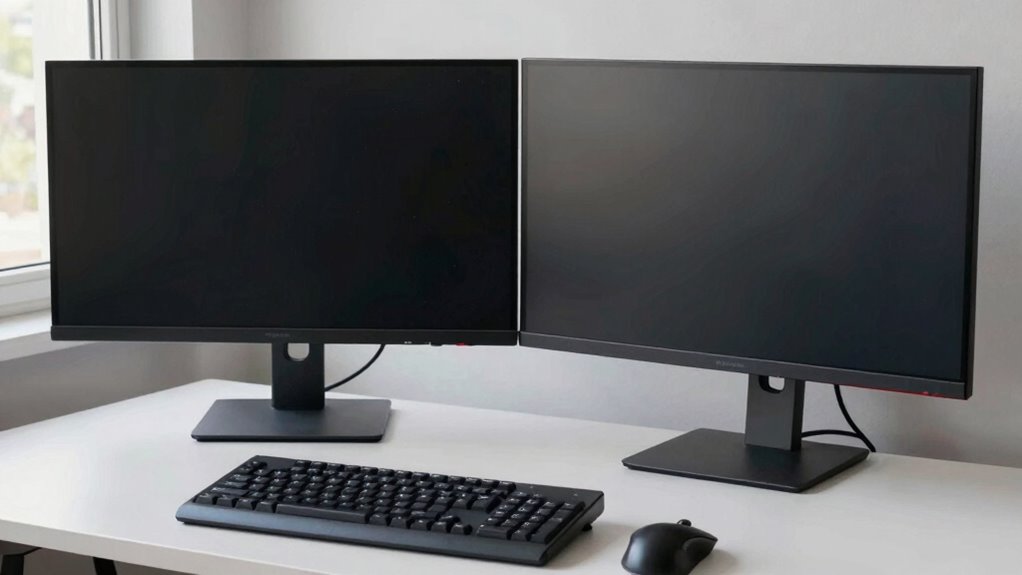
To guarantee comfortable and efficient captioning, you should position your keyboard and mouse so that your wrists remain straight and your elbows stay close to your sides. Proper keyboard placement involves placing it at a height where your forearms are parallel to the floor, reducing strain. Your mouse should be nearby, within easy reach, so you don’t overextend your arm. Keep your mouse at the same height as your keyboard to avoid unnecessary wrist bend. Adjust your desk or keyboard tray if needed to maintain a neutral wrist position. Avoid reaching or stretching to access your mouse or keyboard. Maintaining proper keyboard placement and mouse positioning helps prevent fatigue, reduces strain, and improves your overall comfort during long captioning sessions.
Common Posture Mistakes When Using Big Monitors: and How to Fix Them
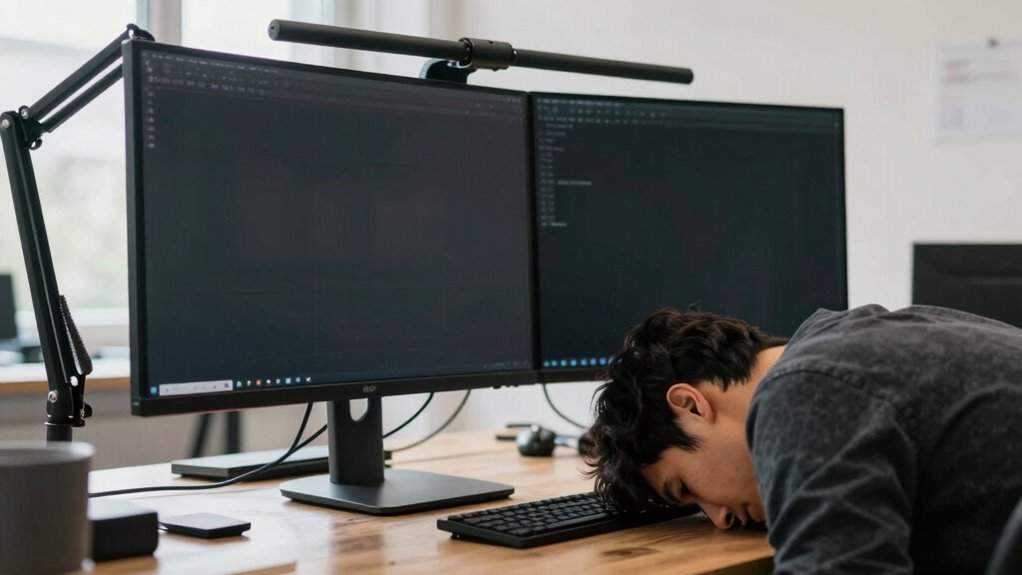
Using a large monitor without proper adjustments often leads to common posture mistakes that can cause discomfort and strain. One mistake is leaning forward or craning your neck to see the entire screen, which strains your neck and shoulders. To fix this, practice posture correction by keeping the monitor at eye level and at a comfortable distance. Avoid hunching or slouching, which can lead to back pain. Ergonomic accessories, like monitor risers or adjustable arms, help you position your screen correctly. Make certain your chair supports good posture, with feet flat on the ground and back well-supported. Regular breaks and mindful posture adjustments can prevent fatigue and long-term issues, making your workspace healthier and more comfortable.
Tips to Minimize Glare and Reflection on Large Screens
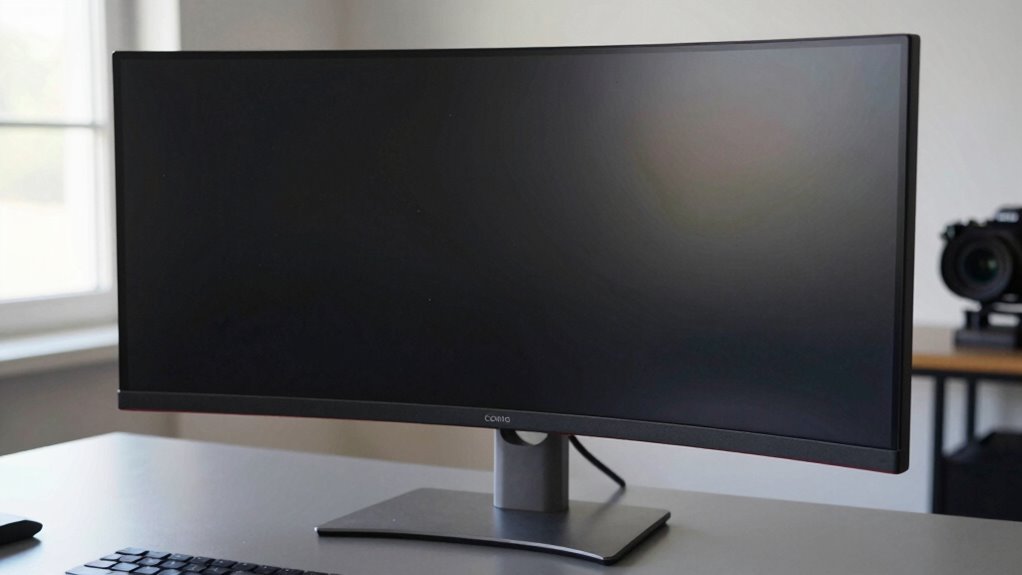
Large screens can create glare and reflections that make it difficult to see your work clearly, especially in bright environments. To improve visibility, focus on glare reduction and reflection control. Position your monitor perpendicular to windows and bright lights to minimize direct reflections. Use an anti-glare screen protector or matte finish monitor to diffuse light and reduce glare. Adjust your monitor’s brightness and contrast to match ambient lighting, preventing excessive glare. Consider using blinds or curtains to block sunlight during the day. Here’s a quick reference:
| Tip | Method | Benefits |
|---|---|---|
| Position monitor | Perpendicular to windows | Reduces direct reflections |
| Anti-glare filters | Attach to screen | Diffuses glare |
| Adjust brightness | Match room lighting | Less eye strain |
| Use curtains/blinds | Block sunlight | Eliminates glare |
| Control ambient light | Dim or diffuse lights | Better reflection control |
Essential Accessories to Support Long Caption Sessions
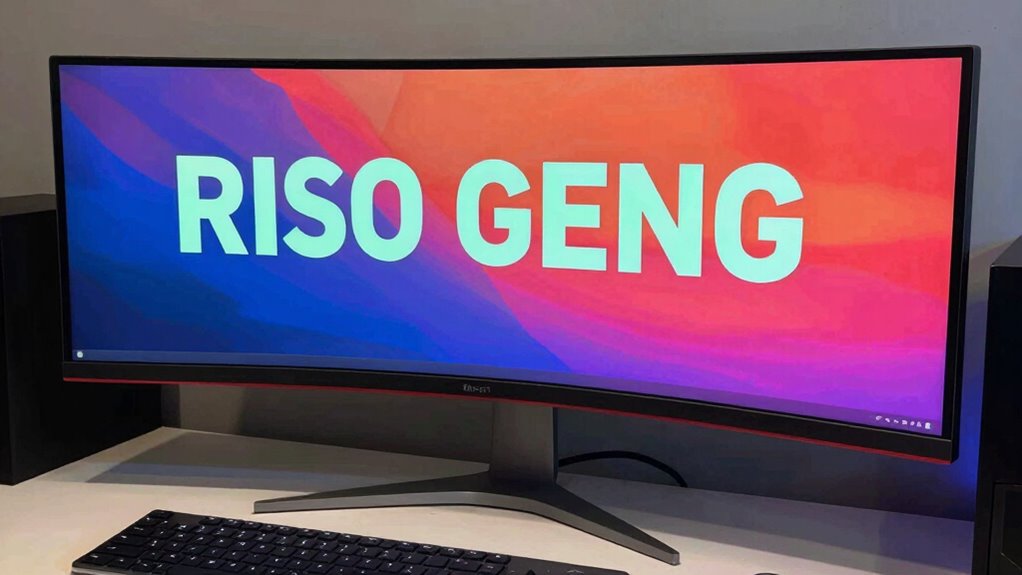
When you spend extended periods captioning, having the right accessories can make all the difference in comfort and productivity. Ergonomic furniture, like adjustable chairs and desks, helps maintain proper posture, reducing fatigue and strain. Captioning accessories such as wrist supports, monitor stands, and ergonomic keyboards also play a crucial role in preventing discomfort and repetitive stress injuries. A supportive chair with lumbar support keeps your spine aligned, while a height-adjustable desk ensures your monitor is at eye level. Using a document holder keeps reference materials within easy reach, minimizing unnecessary movement. Investing in these essential accessories creates an ergonomic workspace that promotes focus and endurance during long caption sessions, helping you work efficiently without sacrificing comfort.
How to Regularly Check and Improve Your Monitor Setup
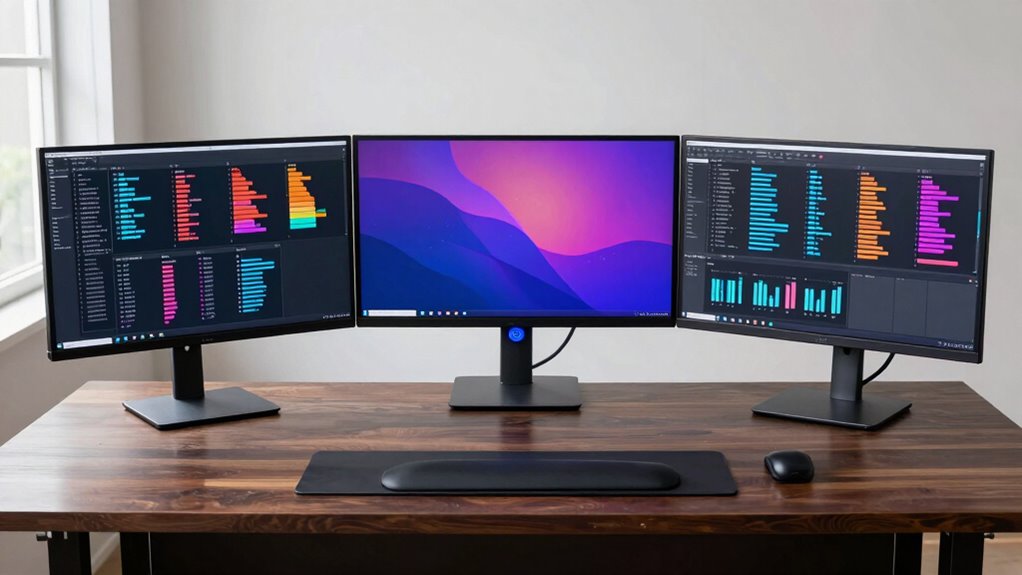
To guarantee your monitor configuration remains ergonomically sound, it’s important to regularly evaluate and adjust your workspace. Start by checking your monitor calibration to ensure colors and brightness are accurate, reducing eye strain. Adjust the height so your eyes are level with the top of the screen, preventing neck discomfort. Regularly reassess your distance from the monitor, aiming for about an arm’s length for optimal clarity and reduced eye fatigue. Consider these points:
Regularly check and adjust your monitor setup for comfort and reduced eye strain.
- Make certain your monitor’s placement promotes an ergonomic workspace, with minimal glare and proper lighting.
- Fine-tune the monitor’s calibration to maintain consistent image quality.
- Periodically review your posture and make adjustments as needed to stay comfortable during long caption sessions.
Consistent checks help keep your setup ergonomic and efficient.
Frequently Asked Questions
What Are the Best Ergonomic Practices for Multi-Monitor Setups?
You should position your monitors at eye level to prevent neck strain, adjusting the monitor height so your eyes are level with the top of the screen. Keep the monitors close enough to avoid excessive head turning, and arrange them in a slight curve for easy viewing. Proper monitor positioning reduces fatigue and promotes good posture, making your multi-monitor setup more ergonomic and comfortable for long hours of use.
How Often Should I Take Breaks When Using Large Monitors for Captions?
You should take a break every 20 minutes when using large monitors for captions. During each break, rest for at least 20 seconds to reduce eye strain and maintain your focus. Incorporate longer breaks—about 5 to 10 minutes—every hour to help your body recover from prolonged sitting and screen exposure. Consistent break frequency and adequate rest duration help prevent fatigue and promote better ergonomics during extended use.
Can Specific Monitor Features Reduce Eye Strain During Captioning?
Yes, specific monitor features can help reduce eye strain during captioning. Look for screens with anti-glare coating to minimize monitor glare, which causes eye fatigue. Additionally, adjustable contrast settings allow you to customize brightness and reduce strain from bright backgrounds. These features help your eyes stay comfortable during long captioning sessions, making it easier to focus without discomfort or fatigue.
What Are the Signs of Poor Ergonomic Setup Affecting Caption Accuracy?
You might notice caption fatigue, where your eyes tire quickly, and posture issues, like neck or back pain, when your ergonomic setup is subpar. These signs indicate that your screen height or chair position isn’t right, causing strain and reducing caption accuracy. To fix this, confirm your monitor is at eye level, sit with proper back support, and take regular breaks. Good ergonomics help you stay focused and improve caption precision.
How Does Ambient Noise Influence the Ergonomics of Caption Viewing?
Imagine trying to hear a whisper in a noisy marketplace. Ambient noise can distract you, making it harder to focus on caption clarity. When the environment is loud, your brain strains to process speech, which can lead to fatigue and reduce your ability to follow captions accurately. So, minimizing ambient noise helps you stay engaged, keeps your workspace ergonomic, and guarantees you clearly understand captions without extra effort.
Conclusion
Remember, your comfort depends on your setup. Proper placement, lighting, and posture aren’t just tips—they’re your shield against fatigue and strain. Think of your workspace as a symphony, each element playing in harmony to support your captioning efforts. By making small adjustments today, you’ll enjoy clearer vision and less discomfort tomorrow. Don’t let neglect turn your focus into frustration—take control and create a space that works with you, not against you.