
Smart doorbells support deaf households by providing visual alerts like flashing lights or on-screen notifications when someone is at the door, ensuring you never miss a visitor. They also offer vibration alerts through connected devices such as smartphones or smartwatches for discreet notifications. Additionally, live video and two-way audio let you see and communicate with visitors remotely, increasing security and convenience. Keep exploring, and you’ll find more ways these technologies make your home safer and more accessible.

Get everyday helpers delivered free with Prime
- Fast, free delivery on millions of items
- Prime Video, Amazon Music and more included
- Member-only deals all year
Key Takeaways
- Visual alert systems provide flashing lights or on-screen notifications to notify residents of visitors without sound.
- Vibration notifications alert deaf residents via smartphones or wearable devices when the doorbell is pressed.
- Live video and two-way audio enable remote visual monitoring and communication with visitors.
- Customizable visual cues ensure immediate awareness regardless of hearing ability.
- Integration with smart home systems enhances security and accessibility for deaf households.
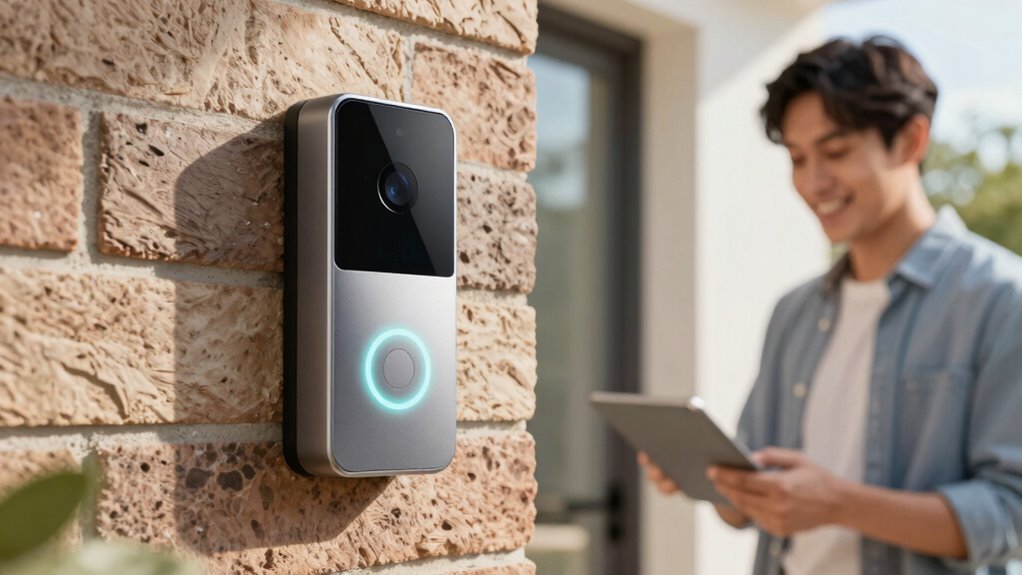
For deaf households, traditional doorbells often fall short in alerting residents to visitors. You rely on hearing that chime to know someone’s at the door, but if you’re deaf or hard of hearing, that sound isn’t enough. That’s where smart doorbells come into play, offering innovative solutions that keep you connected and aware. These devices are designed to bridge the communication gap, guaranteeing you never miss a visitor. With features like visual alert systems, you get a clear visual cue—such as flashing lights or on-screen notifications—that someone is at your door. These visual alerts are customizable, so you can set them to flash or change color when the doorbell is pressed, giving you an immediate visual signal regardless of your hearing ability.
Vibration notifications are another essential feature that smart doorbells provide. Instead of relying solely on sounds, these notifications deliver tactile alerts through your connected devices, such as smartphones, tablets, or specialized vibrating receivers. When someone rings the doorbell, your device vibrates, alerting you instantly. This method is particularly effective because it ensures you’re aware of visitors even when you’re not actively looking at a screen. It’s a discreet yet reliable way to stay informed, especially if you’re busy or not in the same room as your door. Some smart doorbells even integrate with wearable devices, such as smartwatches, allowing you to receive vibration alerts directly on your wrist. This integration makes it easier to stay connected without interrupting your daily routine.
Beyond visual alerts and vibration notifications, many smart doorbells also incorporate live video streaming and two-way audio. This means you can see who’s at your door in real time and communicate with them without needing to open the door. For deaf households, this adds an extra layer of security and convenience, enabling you to assess visitors and decide whether to engage further. The ability to monitor your doorstep remotely offers peace of mind, especially when you’re not expecting visitors or want to verify the identity of a delivery person. Additionally, these devices often utilize biodiversity principles by integrating energy-efficient technology, which supports sustainable living practices. Incorporating energy-efficient technology not only benefits the environment but can also reduce long-term costs, making smart doorbells a smart investment for sustainable living. Some models are designed with sustainable technology that minimizes power consumption, further aligning with eco-friendly principles. Furthermore, advancements in smart home integration allow these devices to seamlessly connect with other systems, enhancing overall home security and automation.
Products Worth Considering

Sonos Era 100 Wireless Smart Speaker, Black

Jackery Explorer 2000 v2 Portable Power Station with Two 200W Solar Panels

Bose TV Speaker (2nd Gen) Compact Soundbar with Bluetooth and HDMI Connectivity
As an affiliate, we earn on qualifying purchases.
Frequently Asked Questions
Are Smart Doorbells Compatible With All Types of Hearing Aids?
Smart doorbells aren’t compatible with all hearing aids, but many offer hearing aid compatibility and visual alert features. You should check the device specifications for MFi (Made for iPhone) or other compatibility standards. These features improve alert effectiveness, allowing you to see visual notifications or receive direct audio through compatible hearing aids. Always verify compatibility prior to purchasing to guarantee the smart doorbell meets your specific hearing needs.
What Is the Cost Difference Between Standard and Deaf-Friendly Doorbells?
The cost comparison between standard and deaf-friendly doorbells shows a noticeable price disparity, often ranging from $50 to $150 more for deaf-friendly options. Remarkably, about 20% of deaf households report that affordable, accessible technology greatly improves their daily lives. While standard doorbells typically cost $20 to $50, deaf-friendly models with visual alerts and haptic feedback can cost $100 to $200, reflecting their specialized features.
How Reliable Are Visual Alerts in Noisy or Busy Environments?
Visual alerts in noisy or busy environments can be quite reliable if the doorbell system has high visual alert accuracy. However, environmental interference like bright lights, motion, or reflections can sometimes affect their effectiveness. You should verify your smart doorbell is well-calibrated and tested in your specific environment. Regular updates and adjustments can improve visual alert performance, making sure you’re promptly notified regardless of background noise or visual distractions.
Can Smart Doorbells Be Integrated With Existing Home Security Systems?
Like a trusted sentinel, smart doorbells can integrate seamlessly with your existing home security system, giving you peace of mind. You gain remote access to monitor your home from anywhere, and with advanced motion detection, you’re alerted to any activity. This integration simplifies security management, making your home safer and more connected, much like a loyal guardian watching over your sanctuary around the clock.
What Privacy Concerns Are Associated With Smart Doorbell Video Recordings?
You should be aware that smart doorbells pose privacy concerns related to video storage and privacy settings. Unauthorized access to your video recordings can lead to privacy breaches, so it’s essential to choose devices with secure video storage options and customizable privacy settings. Regularly update passwords and review who has access to your recordings to protect your household’s privacy and prevent misuse of your video data.
Conclusion
In summary, smart doorbells truly revolutionize how deaf households stay connected and safe. They offer real-time alerts and visual notifications, ensuring you’re never left in the dark—literally or figuratively—like having your own modern-day, high-tech butler. As you embrace these innovations, you’ll find that your home becomes a more inclusive and secure haven, proving that even in a world of smartphones and smart homes, kindness and accessibility remain timeless, like a trusty old lantern guiding your way.