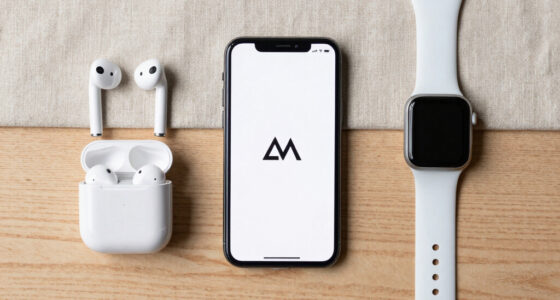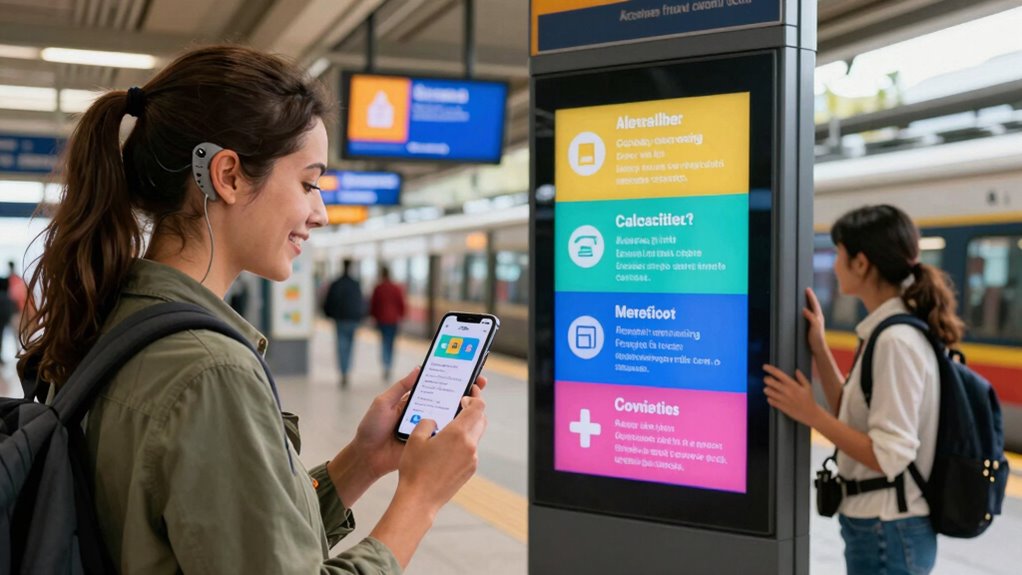

Travel tech for deaf and hard of hearing users includes visual alert systems, vibrating alerts, and smartphone apps that connect directly to emergency services. These tools guarantee you get timely notifications during emergencies, whether in airports, hotels, or public spaces. Familiarize yourself with destination-specific alert systems and keep assistive features activated on your devices. Being prepared and knowing how to use these tools boosts your confidence on the move—there’s even more to discover to enhance your travel safety and independence.

Get everyday helpers delivered free with Prime
- Fast, free delivery on millions of items
- Prime Video, Amazon Music and more included
- Member-only deals all year
Key Takeaways
- Visual alert systems like flashing lights and vibrations ensure safety for deaf and hard of hearing travelers in emergencies.
- Smartphone accessibility features, including live captioning and visual notifications, enhance communication during travel.
- Research destination-specific emergency alert tools to stay informed and respond quickly in urgent situations.
- Download and familiarize yourself with assistive apps for navigation, sign language, and real-time captioning before traveling.
- Carry portable chargers and be proactive in managing and activating safety and accessibility devices for continuous support.
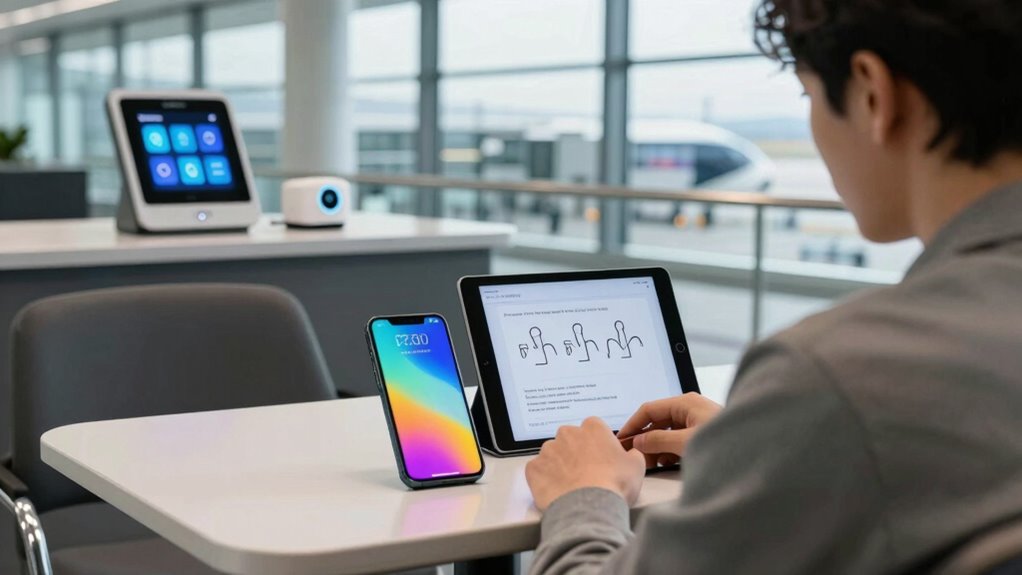
Emergency alerts are another critical area where technology is improving your travel experience. Traditional sirens or announcements might be ineffective if you’re deaf or hard of hearing, but innovative alert systems are stepping in. Many airports, transportation hubs, and hotels now incorporate visual alert systems that use flashing lights or vibrating alerts for emergencies. These systems instantly notify you of any urgent situation, whether it’s a fire alarm, security alert, or weather warning. Additionally, smartphone apps linked to emergency services can send you alerts directly, ensuring you’re aware of any sudden changes or threats during your journey. It’s wise to familiarize yourself with these tools before traveling, so you know how to activate or interpret alerts when needed.
Accessibility features on smartphones and other devices also play a significant role in making travel smoother. Features like live captioning, visual notifications, and speech-to-text functions allow you to communicate more effectively in unfamiliar settings. Many airlines and transportation services now offer apps with built-in assistive features, making booking and checking in easier. You can also download specialized apps designed for deaf and hard of hearing travelers, which provide maps, sign language dictionaries, and real-time captioning services. Furthermore, understanding biodiversity and sustainable practices can enhance your travel experience by promoting eco-friendly choices and responsible tourism, which benefits local communities and environments. Staying informed about assistive technology can help you make the most of these innovations and ensure a smoother journey.
Preparing for travel means understanding and utilizing these technological aids. Check whether your destination offers visual emergency alerts, and download relevant apps beforehand. Carry portable chargers to keep your devices functioning throughout your trip, ensuring continuous access to assistive communication tools. Being aware of emergency alert systems in your travel destinations can also help you respond quickly in urgent situations. By staying informed about the latest travel tech designed for deaf and hard of hearing users, you’ll find it easier to *steer* new environments confidently. These innovations are not only making travel more accessible but also empowering you to enjoy your journeys fully, with fewer barriers and more independence.
visual alert system for deaf travelers
As an affiliate, we earn on qualifying purchases.
As an affiliate, we earn on qualifying purchases.
Frequently Asked Questions
Are There Specific Travel Apps Designed for Deaf Travelers?
Yes, there are travel apps designed specifically for deaf travelers. These apps often include features like sign language services, allowing you to communicate easily with staff or locals. Tactile navigation tools help you find your way in unfamiliar places. Some apps also provide real-time captioning and visual alerts, making your travel experience more accessible and comfortable. Always look for apps tailored to your needs for seamless travel.
How Can I Ensure My Travel Devices Are Accessible Abroad?
To guarantee your travel devices are accessible abroad, start with travel accessory recommendations like portable chargers and vibration alerts. Update your device’s accessibility settings and download relevant apps beforehand. Practice cultural sensitivity tips by learning basic local signs and customs related to communication. This preparation helps you stay connected, safe, and respectful of local practices, making your trip smoother and more enjoyable.
What Emergency Communication Tools Are Best for Deaf Travelers?
You should carry devices with emergency alert systems that support visual notifications, like flashing lights or text alerts. Sign language interpretation apps can help you communicate with emergency personnel when needed. It’s also wise to have a portable sign language interpreter or translation app ready, ensuring clear communication during emergencies. Combining visual alert systems with sign language tools guarantees you’re prepared and can respond swiftly in any urgent situation.
Do Airlines Offer Specialized Services for Deaf and Hard of Hearing Passengers?
Many airlines do offer specialized services for deaf and hard of hearing passengers. You can request assistive listening devices and rely on visual notifications for important announcements. Airlines often provide captioned safety videos and visual alert systems for boarding and emergency notifications. It’s best to contact your airline beforehand to verify they accommodate your needs, making your travel experience safer and more comfortable.
How Can I Find Real-Time Captioning During Travel Activities?
Imagine a lighthouse guiding you through travel’s fog. To find real-time captioning during activities, use apps with captioning technology that syncs with your device. Look for services offering sign language interpretation or live captioning features, especially on platforms like smartphones or tablets. Many event organizers and venues now provide these tools, making your experience clearer. Stay connected, and let these tech be your beacon for accessible, confident travel.
Conclusion
Travel tech for deaf and hard of hearing users is truly a game-changer, making journeys smoother and more accessible than ever before. With innovative tools like real-time captioning and visual alerts, you can navigate your adventures with confidence and ease. Embrace these advancements, and you’ll find that traveling becomes as effortless as breathing—no more barriers, just endless possibilities waiting to be explored. Your next trip is about to be the most accessible one yet!
Halloween Picks
halloween
As an affiliate, we earn on qualifying purchases.