
Decibel levels measure how loud sounds are, and anything above 85 dB can start damaging your hearing. Normal conversation is around 60 dB, but exposure to loud noises like concerts or machinery can spike above 85 dB, risking harm if you’re exposed for too long. Understanding these ranges helps you protect your hearing. If you want to know exactly how different sounds compare and how to stay safe, keep exploring the details below.
Key Takeaways
- Noise levels above 85 dB are considered dangerous for prolonged exposure and can cause hearing damage.
- The decibel scale is logarithmic; small increases in decibels represent significant increases in loudness.
- Typical safe listening limits are 85 dB for up to 8 hours, with shorter durations recommended at higher volumes.
- Common sounds: whispering (~30 dB), normal conversation (~60 dB), loud music (~100 dB), and fireworks (~150 dB).
- Immediate hearing damage can occur at 120 dB or higher, such as from gunshots or fireworks.

Peltor Sport Tri-Flange Corded Reusable Earplugs, 3 Pair, Noise Reduction Rating (NRR) 26 dB, Comfortable Fit, Ideal For Range, Shooting & Hunting, Washable and Corded, Neon Yellow (97317-10C)
26 dB Noise Reduction Rating (NRR)
As an affiliate, we earn on qualifying purchases.
As an affiliate, we earn on qualifying purchases.
What Are Decibels and How Do They Measure Sound?
Decibels are units used to measure the intensity or loudness of sound. When you think about sound measurement, decibels help quantify how loud a noise is, making it easier to compare different sounds. Your hearing sensitivity varies, so what sounds loud to one person might seem softer to another. Decibels provide a standardized way to express this variation, allowing for accurate assessments of sound levels. For example, quiet whispers are around 30 decibels, while loud concerts can reach 120 decibels. By understanding decibels, you gain insight into how sound impacts your hearing health. This measurement system helps identify safe listening levels and warns against exposure to potentially damaging noise levels. Additionally, prolonged exposure to high decibel levels can harm your hearing and lead to long-term damage.

Decibel Meter, TopTes TS-501B Sound Level Meter with 2.25” Backlit LCD Screen, Portable SPL Tester with A/C Weighted, Range 30-130dB, MAX/MIN, Data Hold, Use for Home, Noisy Neighbor, Factory – Orange
2.25-inch LCD Screen with Backlight: This TS-501B sound level meter is measured noise levels are expressed in decibels…
As an affiliate, we earn on qualifying purchases.
As an affiliate, we earn on qualifying purchases.
The Decibel Scale: Understanding Loudness Levels

The decibel scale translates sound intensity into a manageable format, making it easier to understand how loud different noises are. It measures loudness levels, but keep in mind that sound frequency also influences how we perceive sound. A higher decibel doesn’t always mean a louder sound if the frequency varies. To better grasp this, consider:
- Decibel comparison helps you gauge noise levels across environments
- Louder sounds have higher decibel values, such as a rock concert
- Softer sounds, like whispering, fall into lower decibel ranges
- Sound frequency affects perceived loudness at the same decibel level
- Sudden increases in decibel levels can damage hearing over time
- Understanding the decibel scale allows you to better judge what’s safe and what’s too loud based on both loudness and sound frequency.

Soundcore by Anker Q20i Hybrid Active Noise Cancelling Headphones, Wireless Over-Ear Bluetooth, 40H Long ANC Playtime, Hi-Res Audio, Big Bass, Customize via an App, Transparency Mode
Hybrid Active Noise Cancelling: 2 internal and 2 external mics work in tandem to detect external noise and…
As an affiliate, we earn on qualifying purchases.
As an affiliate, we earn on qualifying purchases.
Common Sounds and Their Decibel Ranges

Many common sounds around you fall within specific decibel ranges, helping you recognize what’s safe or potentially harmful. For example, a quiet library measures around 30 dB, while normal conversation reaches about 60 dB. A lawnmower emits roughly 85 dB, and city traffic can hit 70-85 dB. Sound level comparison shows that prolonged exposure to sounds above 70 dB may risk hearing damage. Decibel measurement techniques, such as using sound level meters, allow you to accurately gauge these levels and understand their impact. Recognizing these ranges helps you make informed decisions about protecting your hearing, especially in noisy environments. Being aware of common sounds and their decibel ranges empowers you to stay within safe limits and avoid unnecessary harm. Additionally, understanding how sound levels affect hearing health can guide you in creating a safe auditory environment.

Validation of an Acoustic Head Simulator for the Evaluation of Personal Hearing Protection Devices
As an affiliate, we earn on qualifying purchases.
As an affiliate, we earn on qualifying purchases.
When Does Noise Become Dangerous?

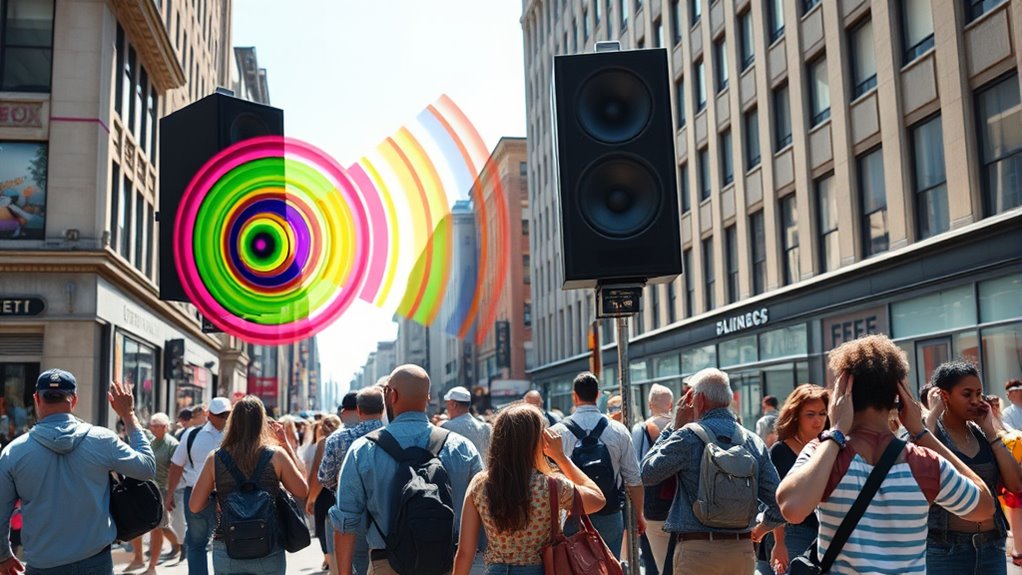
Ever wonder at what point noise becomes dangerous? Noise pollution from urban soundscapes can harm your hearing and overall well-being. Generally, noise levels above 85 decibels pose risks, especially with prolonged exposure. Sudden loud sounds, like fireworks or sirens, can cause immediate damage. You should be cautious if you experience:
- Persistent ringing in your ears
- Headaches after loud environments
- Difficulty concentrating
- Stress or anxiety from noise
- Hearing sensitivity or muffled sounds
If noise exceeds safe levels, it can lead to hearing loss or other health issues. Recognizing when noise crosses the danger threshold helps you protect yourself. Remember, in busy city environments, noise pollution often reaches unsafe levels without you noticing. Stay aware of your surroundings!
Effects of Prolonged Exposure to Loud Sounds

Prolonged exposure to loud sounds can cause lasting damage to your hearing health. Listening to high musical volume for extended periods can lead to noise-induced hearing loss and tinnitus. Even daily activities, like attending concerts or working in noisy environments, pose risks if you don’t protect your ears. Over time, this damage accumulates, making sound therapy less effective and increasing your vulnerability to hearing issues. To minimize harm, it’s essential to be mindful of the volume levels and duration of exposure. Regular breaks and lower volume settings can help preserve your hearing. Remember, your ears are delicate; prolonged loud sounds gradually degrade their ability to process sound accurately, impacting your overall auditory health and quality of life. Recognizing the importance of auditory health can motivate better listening habits and protective measures.
Protecting Your Hearing: Tips and Equipment
To protect your hearing effectively, it’s important to use the right tips and equipment when exposed to loud sounds. Good hearing safety involves practical noise reduction techniques and proper gear. Consider these tips:
- Wear earplugs or earmuffs in noisy environments
- Choose noise-canceling headphones during loud activities
- Take regular breaks from loud settings
- Keep volume levels at a safe maximum on electronic devices
- Maintain equipment to ensure ideal noise reduction
- Be aware of decibel scales to understand safe sound levels and prevent hearing damage
These strategies help minimize noise exposure and prevent hearing damage. Using appropriate hearing safety gear, like well-fitted ear protection, is essential for reducing sound levels and protecting your ears. Incorporating noise reduction techniques into your routine can make a significant difference in maintaining healthy hearing over time.
Limits and Regulations for Noise Exposure

You need to be aware of occupational noise standards and legal decibel limits to safeguard your hearing at work. Personal exposure guidelines help you understand safe listening levels for daily activities. Knowing these regulations ensures you stay within safe limits and prevent hearing damage. Incorporating protective styling techniques can also help reduce noise levels and protect your ears during extended exposure.
Occupational Noise Standards
Have you ever wondered how workplaces keep noise levels safe for employees? Occupational noise standards set limits to prevent noise-induced hearing loss. These regulations specify maximum exposure levels and duration to protect workers. If noise exceeds safe thresholds, hearing protection becomes mandatory. Employers must regularly monitor noise levels and implement controls. Additionally, compliance with these standards often involves tracking performance metrics to ensure ongoing safety. Consider these key points: – Limits are usually around 85 decibels averaged over an 8-hour shift. – Employers must provide hearing protection when limits are exceeded. – Noise assessments help identify high-risk areas. – Training ensures employees understand noise hazards. – Compliance reduces the risk of noise-induced hearing damage. These standards aim to minimize long-term hearing damage by enforcing safe exposure limits and promoting proper hearing protection.
Legal Decibel Limits
Legal decibel limits establish the maximum noise levels permitted in various settings to guarantee worker safety. These regulations aim to reduce noise pollution that can harm hearing and overall health. Different countries and industries set specific limits, often around 85 decibels for prolonged exposure. If noise surpasses these levels, employers must implement soundproofing techniques or provide protective equipment. Soundproofing helps minimize noise pollution in workplaces and public spaces, ensuring compliance with legal standards. These limits are designed to prevent hearing loss and other health issues caused by excessive noise. Staying within legal decibel limits not only protects individuals but also promotes healthier environments. By following these regulations, you contribute to reducing noise pollution and creating safer, quieter spaces for everyone. Understanding city dynamics can further aid in assessing noise levels in different environments and neighborhoods.
Personal Exposure Guidelines
Are you aware of the specific limits that protect you from harmful noise exposure? Personal exposure guidelines set safe decibel levels to prevent hearing damage. Recognizing noise sources and using hearing protection when needed are essential. These guidelines typically recommend:
- Limiting exposure to 85 decibels for 8 hours
- Using hearing protection in loud environments
- Taking breaks during prolonged noise exposure
- Avoiding noise sources that exceed safe limits
- Monitoring sound levels with a decibel meter
Understanding dog names can help you choose a fitting name for your pet.
How to Use a Decibel Meter Effectively

To measure sound levels accurately, you need to understand how to operate your decibel meter properly. Begin by ensuring the device is correctly calibrated for decibel measurement. Regular decibel calibration prevents inaccuracies that could lead to incorrect noise measurement. Always hold the meter steady at ear level and point it toward the sound source. Use the following table to interpret your readings:
| Noise Level (dB) | Common Source | Potential Effect |
|---|---|---|
| 30-40 | Quiet room | Minimal risk of hearing loss |
| 60-70 | Traffic noise | Possible annoyance |
| 80-90 | Heavy traffic, lawnmower | Potential hearing risk |
| 100-110 | Concert, chainsaw | Dangerous without protection |
| 120+ | Fireworks, gunshot | Immediate hearing damage |
Accurate noise measurement hinges on regular calibration and proper usage. Understanding decibel scales is essential for assessing whether sound levels are safe or potentially harmful.
Recognizing the Signs of Hearing Damage

You might notice a persistent ringing in your ears after loud events, which can be a sign of hearing damage. If you struggle to understand speech or find yourself asking others to repeat themselves, it could indicate your hearing is affected. Ear pain or discomfort is another warning sign that shouldn’t be ignored.
Persistent Ringing in Ears
Have you ever experienced a persistent ringing or buzzing sound in your ears? This ear ringing, known as tinnitus, can be a warning sign of hearing damage. Recognizing it early is key to managing it effectively. If you notice:
- A constant or intermittent noise in your ears
- Difficulty hearing soft sounds
- Sensitivity to loud noises
- A feeling of fullness or pressure
- Trouble concentrating due to noise
it’s time to think about tinnitus management options. Persistent ear ringing isn’t normal and shouldn’t be ignored. It often indicates that your ears have been exposed to loud sounds or damage. Seek professional advice to prevent further harm and explore treatments that can help reduce the ringing and improve your quality of life.
Difficulty Understanding Speech
When understanding speech becomes increasingly difficult, it often signals underlying hearing damage. You may notice that speech clarity diminishes, especially in noisy environments, making conversations hard to follow. Sometimes, you might find yourself asking others to repeat themselves or struggling to distinguish words clearly. This decline in hearing comprehension can be subtle at first but becomes more noticeable over time. If you experience trouble understanding speech, it’s a sign that your hearing health may be compromised. Ignoring these signs can lead to further deterioration, so paying attention is essential. Recognizing these early warning signs allows you to seek professional evaluation and take steps to protect your hearing before more serious damage occurs.
Ear Pain or Discomfort
Ever wonder why your ear might hurt or feel uncomfortable after exposure to loud noises? That’s a sign of hearing damage or ear pain caused by excessive noise levels. Hearing discomfort can happen suddenly or gradually, and it’s important to recognize early symptoms. You might notice:
- A sharp, throbbing sensation in your ear
- A feeling of fullness or pressure
- Ringing or buzzing sounds (tinnitus)
- Temporary muffling of sounds
- Increased sensitivity to noise
If you experience any of these, it could indicate your ears are strained or injured. Ignoring ear pain can lead to permanent hearing loss. Pay attention to these signs and avoid loud environments or wear hearing protection to prevent further damage. Recognizing the signs early helps protect your hearing health.
Frequently Asked Questions
Can Decibel Levels Vary Depending on the Environment?
Yes, decibel levels can vary depending on the environment. Environmental noise impacts measurement variability because different settings, like busy streets or quiet offices, produce different sound levels. Factors such as background noise, acoustics, and equipment calibration can cause fluctuations in readings. So, when measuring sound, you need to take into account the environment to get an accurate understanding of the actual noise level and avoid misleading results.
How Do Personal Hearing Sensitivities Affect Noise Perception?
Your hearing sensitivity shapes how you perceive noise, affecting your noise tolerance and comfort levels. When your ears are more sensitive, loud sounds may feel overwhelming, causing discomfort or even pain. Conversely, if your hearing sensitivity is lower, you might tolerate higher decibel levels without issue. Understanding your personal hearing sensitivities helps you gauge safe noise levels and protect your ears from potential damage.
Are There Differences in Decibel Measurement Methods Worldwide?
You might notice that decibel measurement methods differ worldwide due to varying measurement standards and calibration techniques. Some countries use specific standards, like IEC or ANSI, to guarantee consistency, while calibration techniques can influence the accuracy of sound level readings. These differences can affect how noise levels are assessed and regulated globally. Understanding these variations helps you interpret decibel data correctly, especially when comparing sound environments across different regions.
What Are the Long-Term Health Effects of Moderate Noise Exposure?
You might not notice it, but moderate noise exposure can still lead to long-term health effects like noise-induced hearing loss. Over time, repeated exposure damages your hearing, making hearing protection techniques essential. Use earplugs or earmuffs in noisy environments, and limit your exposure when possible. Protecting your ears now helps prevent gradual hearing loss later, ensuring your hearing stays sharp and healthy for years to come.
How Accurate Are Smartphone Decibel Apps Compared to Professional Meters?
Imagine holding a tiny, seemingly reliable tool against a roaring concert. Smartphone decibel apps can give you a quick estimate, but their calibration accuracy varies. Unlike professional meters, they often face app limitations and environmental interferences, making their readings less precise. While useful for general awareness, don’t rely solely on them for critical noise assessments; professional tools provide the accuracy you need for exact measurements.
Conclusion
Understanding decibel levels helps you protect your hearing. Did you know that exposure to noise above 85 decibels can cause hearing damage over time? Nearly 1 in 8 people worldwide suffer from noise-induced hearing loss, highlighting the importance of awareness and precautions. By staying informed and using proper protection, you can enjoy everyday sounds safely and preserve your hearing health for years to come.