
Your baby’s hearing development before birth depends on several factors. Genetics influence how their auditory system forms, while your overall health and nutrition provide essential nutrients for neural growth. Stress levels and medical care also play vital roles in supporting healthy development. Environmental exposures, like infections or toxins, can pose risks. By understanding these elements, you can better support your baby’s hearing potential—continue to explore how you can promote ideal prenatal development.
Key Takeaways
- Maternal infections like rubella and cytomegalovirus can impair fetal ear development and neural pathways.
- Maternal nutrition and overall health influence the proper formation of the auditory system.
- Prenatal stress and hormonal imbalances may hinder neural growth related to hearing.
- Exposure to environmental toxins and harmful substances during pregnancy increases the risk of hearing impairments.
- Regular prenatal care and management of chronic conditions support healthy fetal auditory development.

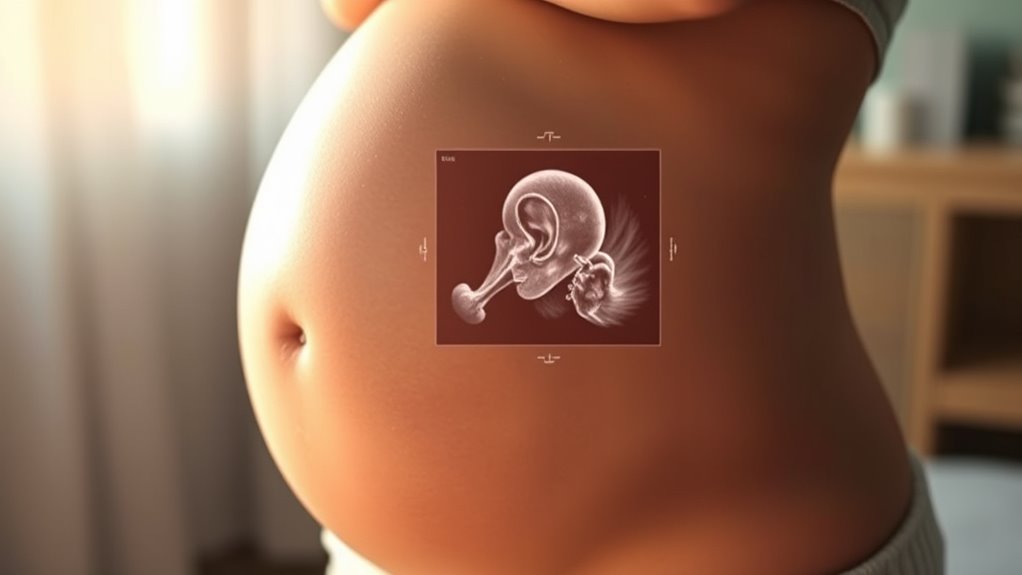
The development of fetal hearing is a complex process influenced by various prenatal factors. During this critical period, your baby’s ability to perceive sounds is shaped by genetics and the environment within your womb. Genetic influences play a significant role, as inherited traits can determine how the auditory system develops. Some women may have genetic predispositions that affect fetal hearing, such as a family history of hearing impairments, which could increase the likelihood of similar issues in the baby. Understanding your genetic background can help healthcare providers identify potential risks early on and plan appropriate monitoring or interventions if necessary.
Genetic factors influence fetal hearing development and potential risk of hearing impairments.
Maternal health is another essential factor in fetal hearing development. Your overall health, including nutrition, infection status, and exposure to toxins, directly impacts how well your baby’s auditory system forms. For example, if you experience infections like rubella or cytomegalovirus during pregnancy, these can interfere with the normal development of the fetal ear structures or auditory pathways. Similarly, poor maternal nutrition can deprive your baby of necessary nutrients needed for proper growth, including those critical for neural development. Maintaining a healthy diet rich in vitamins and minerals supports ideal fetal development, including the auditory system.
Stress and overall well-being also influence maternal health and, consequently, fetal hearing. Elevated stress levels can lead to hormonal changes that may affect placental function, potentially limiting the transfer of nutrients and oxygen necessary for healthy fetal growth. When your body is under stress, it might also alter the fetal environment, making it less conducive for neural development, including the auditory pathways. Ensuring adequate rest, managing stress, and seeking prenatal care can help create a healthier environment for your baby’s hearing development.
Maternal health isn’t just about avoiding illness; it’s also about proactive care. Regular prenatal visits, screenings, and adherence to medical advice can help identify and mitigate risks that could impair fetal hearing. For instance, managing chronic conditions like diabetes or hypertension is essential, as uncontrolled health issues can affect fetal development. Avoiding harmful substances, such as alcohol, tobacco, and certain medications, is equally crucial because they can cause structural damage or functional impairments in your baby’s auditory system. Additionally, understanding the importance of high-quality prenatal care can significantly improve the chances of healthy fetal development, including proper hearing development.

Garden of Life Organics Prenatal Vitamin: Folate for Energy & Healthy Fetal Development, Non-constipating Iron, Vitamin C, B6, B12, D3 – Organic, Non-GMO, Gluten-Free, Vegan, 30 Day Supply
TEND THE GARDEN: Our fresh grown prenatal multivitamin promotes healthy fetal development with 100 percent daily value of…
As an affiliate, we earn on qualifying purchases.
As an affiliate, we earn on qualifying purchases.
Frequently Asked Questions
Can Fetal Hearing Be Tested Before Birth?
You might wonder if fetal hearing can be tested before birth. Yes, fetal hearing tests, also called prenatal auditory screening, are possible. These tests usually involve measuring the baby’s brain responses to sounds using non-invasive methods like ultrasound or fetal heart rate monitoring. While not routine, they help assess fetal auditory development and identify potential hearing issues early. So, prenatal auditory screening provides valuable insights into your baby’s hearing health before birth.
How Does Maternal Stress Impact Fetal Hearing Development?
Maternal anxiety can negatively impact fetal hearing development by increasing stress hormones that cross the placental barrier, affecting the baby’s auditory system. When you’re stressed, these hormones may interfere with the development of the inner ear and neural pathways. To support your baby’s hearing, try to manage stress through relaxation techniques, exercise, or seeking support, as reducing maternal anxiety helps promote healthier fetal auditory development.
Are There Specific Nutrients That Support Fetal Auditory Development?
They say “you are what you eat,” and this holds true for fetal hearing development. A nutrient-rich diet filled with essential vitamins like folic acid, omega-3 fatty acids, and zinc supports your baby’s auditory system. By eating a variety of healthy foods, you provide the necessary nutrients to help develop their tiny ears and auditory pathways, giving your little one the best start in hearing and communication.
Does Exposure to Loud Noises Harm Fetal Hearing?
You might wonder if noise exposure harms fetal hearing. Loud noises during pregnancy can pose risks, as they may cause auditory damage to your developing baby. High levels of noise can lead to auditory damage, affecting the fetus’s hearing development. To protect your baby’s hearing, try to avoid environments with excessive noise, especially loud music or industrial sounds. Taking these precautions helps guarantee healthy auditory development during pregnancy.
Can Prenatal Infections Cause Long-Term Hearing Issues?
Think of your baby’s developing ears like a delicate instrument, sensitive to disruptions. Prenatal infections, such as rubella or cytomegalovirus, can interfere with this process, leading to potential long-term hearing effects. Research shows that these infections may damage the inner ear or auditory nerve, increasing the risk of hearing loss later in life. You can help protect your child’s future by preventing infections during pregnancy through proper health care.

Nature Made Prenatal Vitamins for Women with Folic Acid + DHA, Prenatal Vitamin and Mineral Supplement for Daily Nutritional Support, 90 Softgels, 90 Day Supply
Now with orange scent: Adults take one pre natal multivitamin for women daily with water and a meal…
As an affiliate, we earn on qualifying purchases.
As an affiliate, we earn on qualifying purchases.
Conclusion
Just as Pandora’s box once unleashed unforeseen wonders, your awareness of prenatal factors shapes your child’s future hearing. By understanding these influences, you hold the power to nurture their auditory development from the very start. Remember, the symphony of life begins in the womb, and your choices can help guarantee a harmonious future. Embrace this knowledge, and give your little one the best chance to hear the world around them in all its beauty.

UpNature Peppermint Essential Oil Roll On – Natural Nausea Morning Sickness Relief for Pregnant Women – Pregnancy Must Haves Rollerball Roller
Peppermint oil roller ball – 100% natural peppermint essential oil to experience the invigorating scent and powerful benefits….
As an affiliate, we earn on qualifying purchases.
As an affiliate, we earn on qualifying purchases.

Cubtale Smart Tracker for Supplements and Vitamins – One-Press Logging Device with App Sync, Reminders, and Caregiver Support for Prenatal Routines
Smart Pill & Supplement Tracker for Pregnancy: Track prenatal vitamins, iron supplements, and medications with one easy press—no…
As an affiliate, we earn on qualifying purchases.
As an affiliate, we earn on qualifying purchases.