
To stay productive, use apps that support sign language and visual communication, like sign language translation and captioning tools. Look for platforms with real-time transcription, video chat, digital whiteboards, and visual task management features. These apps help you communicate clearly, collaborate seamlessly, and stay organized without relying on audio cues. Exploring these options can boost your efficiency and inclusion at work—keep going to discover more ways to maximize your productivity.
Key Takeaways
- Sign language communication apps facilitate instant, inclusive conversations with colleagues and clients through real-time translation and video chat features.
- Captioning technology provides automated, real-time transcription of spoken content, ensuring accessibility during meetings and webinars.
- Visual-based productivity tools like digital whiteboards and kanban boards enhance task management without relying on audio cues.
- Video and presentation technologies with high-contrast visuals improve clarity and understanding during meetings and training sessions.
- Collaboration platforms with integrated captioning, video support, and real-time transcription promote efficient teamwork for deaf professionals.

Have you ever wondered how deaf professionals stay organized and efficient in a world designed primarily for hearing users? It’s a valid question, especially when communication barriers can slow down workflows. Luckily, technology offers tools that bridge these gaps, making productivity more accessible and streamlined. Sign language communication apps have become essential for those who prefer to use sign language, providing instant translation and real-time conversations. These apps enable you to connect seamlessly with colleagues and clients, fostering clear communication without the need for spoken words. They often include video chat features that support sign language, making meetings more inclusive. Captioning technology also plays a pivotal role in productivity. Automated captioning tools can transcribe spoken content into text instantly, allowing you to follow conversations, meetings, or lectures without missing details. This technology is especially useful during virtual meetings or webinars where audio quality might vary or when working with colleagues who speak different languages. Many platforms now integrate captioning directly into their services, reducing the need for third-party apps and ensuring that you stay on top of all communications. Additionally, high-quality projector technology with excellent contrast ratios can enhance visual presentations, making it easier to share information clearly during meetings or training sessions.
Beyond communication-specific tools, there are productivity apps tailored for note-taking, task management, and organization that cater to the needs of deaf professionals. Visual-based apps, such as digital whiteboards or kanban boards, allow you to organize projects visually, minimizing reliance on audio cues. These apps help you track deadlines, prioritize tasks, and collaborate with team members efficiently. When combined with captioning technology, these tools become even more powerful, providing real-time updates and transcriptions that keep everyone on the same page. For example, during team meetings, captioning apps can display live transcriptions, making it easier for you to participate fully without missing critical information. Similarly, collaboration platforms often include chat features with integrated captioning or video support, reducing misunderstandings caused by misheard instructions or background noise.
Ultimately, leveraging sign language communication tools and captioning technology transforms how deaf professionals navigate their work environment. These apps not only improve accessibility but also boost productivity, confidence, and independence. By integrating these technologies into your daily routine, you’ll find yourself more connected, organized, and efficient, even in a world that’s primarily designed for hearing users. The right combination of communication and organization tools can make a significant difference, ensuring that your skills and ideas are recognized and valued without barriers.

Real-Time AI Translation Earbuds, 198 Language Translator Earbuds, Audifonos Traductores Inglés Español, 3-in-1 Translating Earbuds for Travel, Meetings & Language Learning, with Charging Case
1️⃣ Instant Real-Time Translation in 198 Languages Break language barriers instantly. These AI translation earbuds support real-time, two-way…
As an affiliate, we earn on qualifying purchases.
As an affiliate, we earn on qualifying purchases.
Frequently Asked Questions
How Can Productivity Apps Improve Communication for Deaf Professionals?
Productivity apps can greatly enhance communication for deaf professionals by offering features like real-time transcription and video captioning. These tools convert spoken words into text instantly, making meetings, calls, and presentations more accessible. You can follow conversations seamlessly, reduce misunderstandings, and stay engaged without missing essential information. By integrating these features into your workflow, you boost your efficiency and guarantee clear, effective communication in any professional setting.
Are There Specific Apps Tailored for Deaf Users’ Needs?
Imagine a tool designed just for you—does such an app exist? Yes, some apps are tailored for deaf users, offering features like sign language integration and visual notifications. These apps help you stay organized and connected without missing vital updates. By combining tech with your needs, they transform your productivity experience, making communication seamless. Don’t settle for generic solutions—explore those crafted specifically for your unique ways of working.
How Do Accessibility Features Enhance App Usability for Deaf Individuals?
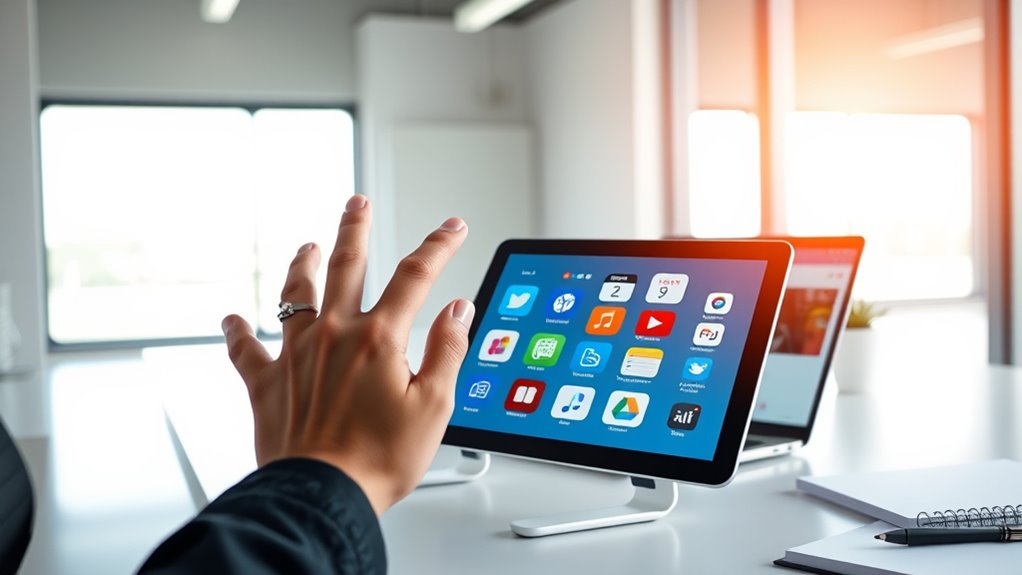
Accessibility features boost app usability for deaf individuals by providing visual accessibility options like captions, visual alerts, and enhanced contrast, making content easier to understand. Gesture controls enable you to navigate apps more intuitively without relying on sound, offering a seamless experience. These features guarantee you stay connected and productive, empowering you to use technology confidently and efficiently, regardless of hearing ability.
Can Productivity Apps Integrate With Sign Language Translation Tools?
You might think productivity apps already do enough, but surprisingly, many still lack seamless sign language integration. Luckily, some apps now offer real-time translation, making communication effortless. With sign language integration and real-time translation, you can stay connected and efficient, breaking down barriers. It’s impressive how technology advances, yet there’s still room for improvement in ensuring these tools work flawlessly together for deaf professionals.
What Privacy Considerations Are Important for Deaf Users in These Apps?
When considering privacy, you should prioritize apps that use strong data encryption to protect your sensitive information. It’s also important that these apps support user anonymity, so your identity remains secure during communications. Look for features that let you control your data sharing and revoke permissions easily. By choosing apps with these privacy measures, you guarantee your personal and professional information stays safe while you stay productive.

Burning Studio 26 – Burn, copy, save – the multimedia all-rounder – burning software – create covers, inlays, disk labels for Win 11, 10
Your powerful burning software for burning and copying CDs, DVDs and Blu-ray Discs
As an affiliate, we earn on qualifying purchases.
As an affiliate, we earn on qualifying purchases.
Conclusion
As you explore these apps, you might notice how seamlessly they fit into your daily routine, almost like they were made just for you. Sometimes, the right tools appear when you least expect it, helping you overcome barriers you once thought insurmountable. In embracing technology tailored to your needs, you’ll find productivity and connection grow hand in hand—proving that, often, the best solutions come when you’re open to a little coincidence.

JYXCN Smart Board Collaboration Hub, 55" Digital Interactive Whiteboard Display with 4K Touchscreen, Dual System, Electronic Smartboard for Classroom Office Home(Wall Mount Included)
【All-in-One Interactive Whiteboard with Dual System】JYXCN 55" smart board features a dual-system setup. Equipped with Android 11 system(4G…
As an affiliate, we earn on qualifying purchases.
As an affiliate, we earn on qualifying purchases.

AI Translation Earbuds Real Time – AI Meeting Assistant Supports Voice Recorder, Transcribe & Summarize with APP – Languages Translate for Call Video – 24H AI Voice Assistant for Business Learning
【Independent AI Chip – Instant Audio & Video Translation】 Skip App-switching. With an independent AI chip, these translate…
As an affiliate, we earn on qualifying purchases.
As an affiliate, we earn on qualifying purchases.