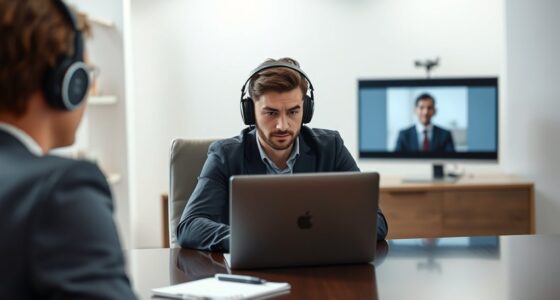

If you can’t hear interview questions clearly, don’t hesitate to ask for clarification or repeats politely. Prepare by informing your interviewer about your hearing needs beforehand, and consider using assistive listening devices to help focus. During the interview, maintain eye contact and use visual cues to stay engaged. Small adjustments, like requesting quieter surroundings or visuals, can make a big difference. Exploring these strategies further will help you navigate interviews confidently despite hearing difficulties.
Key Takeaways
- Inform the interviewer about your hearing needs and any assistive devices beforehand.
- Politely ask for repeats or rephrasing if a question isn’t clear.
- Use visual cues, such as nodding and maintaining eye contact, to enhance understanding.
- Request a quieter environment or move to a less noisy space if possible.
- Practice responses and strategies with a friend to build confidence in requesting clarifications.

Hearing questions clearly during a job interview is essential, but if you find yourself unable to catch every word, it can feel overwhelming. Fortunately, there are practical ways to navigate this situation confidently. One of the most effective strategies is to use assistive listening devices. These devices amplify sound, reduce background noise, and can make a substantial difference in how well you understand the interviewer. If you haven’t already, consider consulting an audiologist to explore options like hearing aids or personal amplifiers tailored to your needs. Bringing a small, discreet assistive listening device to the interview can help you stay engaged and respond accurately, demonstrating your focus and enthusiasm for the role.
Preparation is key when it comes to managing hearing challenges during interviews. You should research the company thoroughly, understand the job description, and anticipate common questions. Practice articulating your responses clearly and succinctly, which not only boosts your confidence but also minimizes misunderstandings. Additionally, inform the interviewer beforehand about your hearing situation. A simple, polite mention can set expectations and foster understanding. For example, you might say, “I sometimes use assistive listening devices, and I appreciate your patience during our conversation.” This transparency can lead to a more accommodating environment, making it easier for both of you to communicate effectively.
Research the company, understand the role, and inform the interviewer about your hearing needs for better communication.
During the interview, don’t hesitate to ask for clarification if you miss a question. It’s better to politely request a repeat or rephrasing than to guess and provide an unrelated answer. Most interviewers will appreciate your honesty and effort to communicate clearly. Maintain eye contact and use visual cues like nodding to show you’re actively listening. If the room is noisy or echoing, politely suggest moving to a quieter space if possible. These small adjustments can considerably improve sound quality and your overall understanding. Additionally, understanding the importance of contrast ratio in projectors can help you better interpret visual presentations during virtual or in-person interviews, especially if they include visual aids or slides.
Remember that your communication skills extend beyond just hearing. Your ability to adapt, ask clarifying questions, and use available tools shows resilience and professionalism. Prepare by practicing with a friend or mentor, simulating interview scenarios where you might need to request repeats or clarify questions. This rehearsal builds confidence and helps you develop strategies to handle real interview situations smoothly. With the right preparation, assistive listening devices, and a proactive attitude, you can navigate your job interview successfully, showcasing your talents and determination despite hearing challenges.

72GB Digital Voice Recorder – Xelarvex Voice Activated Recorder AI-Intelligent Noise Reduction, 4800 Hours Recording Device, Audio Recorder for Lectures/Interviews/Meetings
【4800 Hours Audio Storage】With 72GB storage, this voice recorder holds up to 4,800 hours of clear recordings (192Kbps)…
As an affiliate, we earn on qualifying purchases.
As an affiliate, we earn on qualifying purchases.
Frequently Asked Questions
How Can I Signal That I Can’T Hear the Interviewer?
If you can’t hear the interviewer, it’s important to signal this clearly. You can use visual cues like raising your hand or making eye contact to indicate difficulty. Mention that you use assistive technology if applicable, like hearing aids or a captioning device, to help them comprehend your situation. Being proactive and polite ensures the interviewer knows you’re engaged and willing to find a solution, making the conversation smoother.
What Are Effective Ways to Clarify Questions Politely?
When you need clarity communication during an interview, don’t hesitate to speak up; it’s better to ask politely than to guess. You can say, “I want to be sure I understand, could you please repeat or clarify that question?” Using respectful questioning shows your interest and professionalism. Remember, it’s okay to ask for clarification—after all, better to get it right than to stumble in silence.
Should I Request a Different Communication Method Beforehand?
You should consider requesting communication accommodations or assistive technology beforehand if you suspect hearing difficulties during the interview. By doing so, you guarantee the interviewer is aware of your needs and can provide the appropriate support. This proactive approach helps create a comfortable environment where you can effectively communicate, making it easier to demonstrate your skills and qualifications without unnecessary misunderstandings or stress.
How Can I Prepare for Non-Verbal Interview Formats?
To prepare for non-verbal interview formats, think about how assistive technology can help you communicate effectively. Practice using tools like speech-to-text apps or visual aids to showcase your skills. Also, consider requesting interview accommodations in advance, such as written questions or sign language interpreters. Being proactive guarantees you’re comfortable and confident, helping you make a strong impression despite the non-verbal setting.
What Strategies Help Maintain Confidence Despite Hearing Difficulties?
Research suggests that visual cues remarkably boost confidence, especially when hearing is challenging. You can maintain confidence by making eye contact, watching for interviewers’ facial expressions, and using body language to stay engaged. These confidence-boosting strategies help you feel more in control and connected, even if you’re struggling to hear. Stay focused on visual communication, remind yourself of your skills, and trust your preparation to keep your confidence high.

SuperEar Model SE5000 (PSAP) for Seniors – Hearing Amplifiers for Seniors, Super Ear Personal Sound Amplifier, Sound Amplifier Listening Device and Audio Accessories in 50dB Ambient Sounds Increase
COMPATIBILITY: Response to sound amplification is completely dependent on an individual's unique ability to detect sounds. For this…
As an affiliate, we earn on qualifying purchases.
As an affiliate, we earn on qualifying purchases.
Conclusion
So, next time you walk into an interview and can’t hear the questions clearly, remember that a little quick thinking and honesty can turn things around. Sometimes, a simple smile and a polite request for clarification can lead to a genuine connection. You might just find that your openness surprises the interviewer, making them see your resilience and adaptability. After all, life’s unexpected moments often reveal your true strength—sometimes, the best opportunities come from the most unlikely situations.

Audien Atom One OTC Hearing Aids – Wireless, Rechargeable, and Comfortable | Clear Sound in a Small, Discreet Design for Seniors & Adults with Hearing Loss
Hear What Matters Most: Hearing isn’t one-size-fits-all. That’s why our adjustable frequency system lets you personalize your sound…
As an affiliate, we earn on qualifying purchases.
As an affiliate, we earn on qualifying purchases.
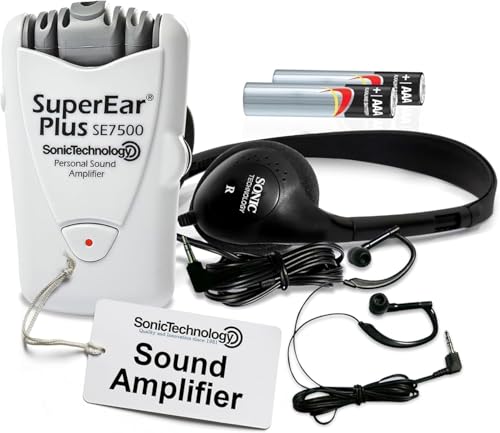
SuperEar Model SE7500 for Seniors – Hearing Amplifiers for Seniors & Elderly, Super Ear Personal Sound Amplifier, Sound Amplifier Listening Device and Audio Accessories in 50dB Ambient Sounds Increase
COMPATIBILITY: Response to sound amplification is completely dependent on an individual's unique ability to detect sounds. For this…
As an affiliate, we earn on qualifying purchases.
As an affiliate, we earn on qualifying purchases.