
When selecting an emergency weather radio with visual indicators, reliability and clarity are key. The FosPower NOAA Emergency Weather Radio A1 stands out as the overall best thanks to its robust power bank and clear alerts. For those prioritizing solar and manual charging, the Raynic Emergency Weather Radio offers versatile power options and NOAA alerts. If you need a device with comprehensive features like Bluetooth and S.A.M.E. technology, the Emgykit R11 delivers in spades, but it comes at a higher price. The main tradeoffs involve balancing durability, feature set, and ease of use. Continue reading for a detailed breakdown to find the best fit for your emergency preparedness.
Key Takeaways
- Top models combine NOAA alerts with strong visual indicators for quick recognition during crises.
- Solar and hand-crank charging are common features, but they vary in efficiency and ease of use.
- More advanced radios include Bluetooth, S.A.M.E. technology, and multiple alert options, increasing complexity and cost.
- Durability and battery capacity are pivotal for extended emergencies, but often add weight and size.
- Affordability ranges widely; premium models tend to offer more features but are not always necessary for casual users.
| FosPower NOAA Emergency Weather Radio A1 with 7400mWh Power Bank |  | Best Overall for Reliable Power and Emergency Features | Power Bank Capacity: 7400mWh (2000mAh) | Charging Methods: Hand crank, solar panel, AAA batteries | Light Sources: 4 LED reading light + 1W flashlight | VIEW LATEST PRICE | See Our Full Breakdown |
| Raynic Emergency Weather Radio with Solar Hand Crank and NOAA Alerts |  | Best for Versatile Charging and Digital Display Clarity | Battery Capacity: 18500mWh / 5000mAh | Charging Options: AC, USB, solar, hand-crank, AAA batteries | Radio Bands: AM/FM/SW/NOAA | VIEW LATEST PRICE | See Our Full Breakdown |
| Emergency Weather Radio with Solar Panel, Hand Crank & 12000mAh Battery – AM/FM/NOAA Bands, LED Flashlight & Phone Charger for Camping/Emergencies | 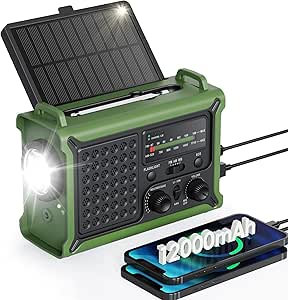 | Best for High Capacity and Outdoor Durability | Solar Panel Size: 8500mm² monocrystalline | Battery Capacity: 12000mAh | Charging Methods: Solar, Hand Crank, USB, AC | VIEW LATEST PRICE | See Our Full Breakdown |
| Emgykit R11 Emergency Crank Radio with NOAA/SW/AM/FM, Solar/Hand Crank Charging, Bluetooth & Flashlight – Green |  | Best for Tech-Savvy Users with Entertainment Features | Battery Capacity: 14800mWh / 4000mAh | Power Sources: Hand Crank, Solar, USB-C | Radio Bands: NOAA/AM/FM/SW | VIEW LATEST PRICE | See Our Full Breakdown |
| RunningSnail Emergency Hand Crank Radio with LED Flashlight, AM/FM NOAA Weather Band, 2000mAh Power Bank, Solar & USB Charging | 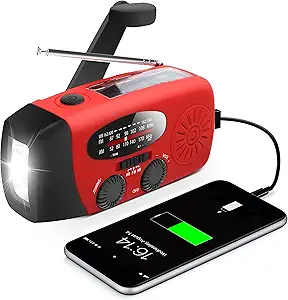 | Best Compact and Budget-Friendly Emergency Radio | Power Sources: Hand Crank, Solar, USB | Battery Capacity: 2000mAh | Radio Bands: AM/FM/Weather Band (108 MHz) | VIEW LATEST PRICE | See Our Full Breakdown |
| Midland ER310 Emergency Crank Weather AM/FM Radio with SOS Flashlight and NOAA Alerts (Red/Black) |  | Best Overall for Versatile Emergency Preparedness | Power Sources: Solar Panel, Hand Crank, Rechargeable 2600 mAh Battery, 6 AA Batteries (not included) | Flashlight Brightness: 130 Lumens CREE LED | NOAA Weather Channels: 7 WX Band Channels | VIEW LATEST PRICE | See Our Full Breakdown |
| RunningSnail NOAA Weather Alert Radio |  | Best for Localized Emergency Alerts and Simplicity | Power Source: 110V AC and 3×AA batteries (not included) | County Codes Supported: 23 | Alert Types: 80+ emergency alerts | VIEW LATEST PRICE | See Our Full Breakdown |
| Emgykit MD319 NOAA Weather Alert Radio with S.A.M.E. Technology |  | Best for Customizable Alert Modes and Reliable NOAA Alerts | Power Source: 110V AC + 4 AA batteries (72+ hours backup) | Alert Modes: Voice, Siren, Visual Display | County Codes Supported: 23 | VIEW LATEST PRICE | See Our Full Breakdown |
| Midland WR120B NOAA Emergency Weather Alert Radio with Localized Programming and 60+ Alerts |  | Best for Localized, Easy-to-Read Weather Alerts | Localized Programming: S.A.M.E. | Emergency Alerts: 60+ weather hazards | Programmable Counties: 25 | VIEW LATEST PRICE | See Our Full Breakdown |
| Solar-Powered Emergency Hand Crank Radio with 12000mAh Battery, NOAA/AM/FM Reception, LED Flashlight & Phone Charger |  | Best for Extended Durability and High Capacity | Power Source: Solar Panel, Hand Crank, 12000mAh Lithium Battery, Type-C Input, 3 AAA Batteries | Radio Bands: NOAA, FM, AM (162 MHz) | Battery Capacity: 12000mAh | VIEW LATEST PRICE | See Our Full Breakdown |
More Details on Our Top Picks
FosPower NOAA Emergency Weather Radio A1 with 7400mWh Power Bank
This model stands out for integrating a substantial 7400mWh power bank with multiple charging methods, making it a reliable choice during extended outages. Compared with the Raynic model, it offers a larger power capacity but at the expense of increased size, which may reduce portability. Its built-in NOAA alerts, AM/FM radio, and SOS alarm ensure readiness, while the LED lights enhance visibility in darkness. The tradeoff involves its larger footprint and solar charging dependency on sunlight conditions, which could limit usability indoors or in low-light scenarios.
Pros:- High-capacity 7400mWh power bank for extended device charging
- Multiple charging options including hand crank, solar, and AAA batteries
- Integrated NOAA weather alerts and SOS alarm for safety
- Built-in LED reading light and flashlight for visibility
Cons:- Larger size reduces portability and ease of carry
- Solar charging efficiency depends heavily on sunlight availability
Best for: Families seeking a durable, multi-charging emergency radio with a strong power bank for prolonged outages
Not ideal for: Hikers or minimalists who prefer a compact, lightweight device for quick setup and portability
- Power Bank Capacity:7400mWh (2000mAh)
- Charging Methods:Hand crank, solar panel, AAA batteries
- Light Sources:4 LED reading light + 1W flashlight
- Weather Alerts:NOAA & AM/FM radio
- Warranty:Limited lifetime warranty
Bottom line: This radio is best suited for users who prioritize power capacity and emergency features over compactness.
Raynic Emergency Weather Radio with Solar Hand Crank and NOAA Alerts
This option makes the most of its six charging methods, including AC, USB, solar, and hand crank, making it highly adaptable for diverse situations. Unlike the FosPower, it offers a large HD LCD display, which improves usability during emergencies with clear weather and battery status updates. Its automatic NOAA alerts and built-in flashlight and SOS siren enhance safety, although the weight of 1.2 lbs may be less appealing for ultra-lightweight users. The reliance on AAA batteries, not included, is a minor inconvenience for some, but overall, its versatility outweighs this drawback.
Pros:- Six versatile charging methods including AC, USB, solar, and hand crank
- Automatic NOAA weather alerts for real-time updates
- Large HD LCD display for clear information at a glance
- Built-in flashlight and SOS siren for safety
Cons:- Requires AAA batteries not included, adding to ongoing costs
- Heavier weight may hinder portability for some users
Best for: Outdoor enthusiasts and preppers who want a feature-rich radio with multiple charging options and an easy-to-read display
Not ideal for: Ultra-light travelers or minimalists who prioritize compact size and simplicity
- Battery Capacity:18500mWh / 5000mAh
- Charging Options:AC, USB, solar, hand-crank, AAA batteries
- Radio Bands:AM/FM/SW/NOAA
- Display Type:HD LCD
- Water Resistance:IPX3
- USB Port:Type-C
Bottom line: Ideal for users who need a highly adaptable, easy-to-read emergency radio with multiple power options.
Emergency Weather Radio with Solar Panel, Hand Crank & 12000mAh Battery – AM/FM/NOAA Bands, LED Flashlight & Phone Charger for Camping/Emergencies
This model’s standout feature is its massive 12000mAh battery combined with a large monocrystalline solar panel, making it well-suited for outdoor adventures and prolonged emergencies. Its waterproof IPX6 rating offers durability in harsh conditions, unlike the Raynic model, which lacks waterproofing. The dual LED lights, adjustable-beam flashlight, and phone charging make it a versatile choice for camping or disaster scenarios. However, its larger size and the effort needed to crank during emergencies could be drawbacks for those seeking a lightweight, quick-access device. It excels in situations demanding high power and ruggedness but may be overkill for casual users.
Pros:- Large 12000mAh battery for extensive device charging
- High-efficiency monocrystalline solar panel for rapid recharging
- Waterproof rating IPX6 for durability in wet environments
- Dual LED lights with adjustable brightness and phone charging capability
Cons:- Larger size and weight reduce portability
- Crank mechanism requires physical effort, which may be tiring during prolonged use
Best for: Campers and outdoor preppers who need a rugged, high-capacity device that can handle tough conditions
Not ideal for: Urban dwellers or those with limited storage space seeking a lightweight, pocket-sized radio
- Solar Panel Size:8500mm² monocrystalline
- Battery Capacity:12000mAh
- Charging Methods:Solar, Hand Crank, USB, AC
- Waterproof Rating:IPX6
- Light Types:5W adjustable-beam flashlight, 12-LED reading lamp
Bottom line: Best suited for outdoor adventurers and preppers needing a rugged, high-capacity power source in severe conditions.
Emgykit R11 Emergency Crank Radio with NOAA/SW/AM/FM, Solar/Hand Crank Charging, Bluetooth & Flashlight – Green
This portable radio appeals to users who want more than just emergency alerts. Its Bluetooth 5.0 connectivity and 5-watt speaker enable music streaming, making it ideal for camping or long power outages where entertainment matters. Compared to the FosPower, it offers a more modern interface and additional features like a compass. Its NOAA alerts, flashlight, and SOS button bolster safety, but its slightly bulkier design and signal reception variance in digital modes may be less suited for those seeking maximum portability or pure radio reliability. The device’s versatility makes it a good choice for tech-savvy users who want emergency preparedness combined with entertainment.
Pros:- Bluetooth 5.0 connectivity for streaming music
- High-quality 5W speaker for clear audio playback
- Multiple power options including USB-C, solar, and hand crank
- Includes flashlight, SOS alert, and compass for outdoor safety
Cons:- Slightly bulkier and heavier for ultra-portable use
- Digital signal reception may vary depending on location
Best for: Tech-savvy campers and outdoor lovers who value connectivity and audio features alongside emergency alerts
Not ideal for: Minimalist or traditional radio users who prefer simple, lightweight devices without extra features
- Battery Capacity:14800mWh / 4000mAh
- Power Sources:Hand Crank, Solar, USB-C
- Radio Bands:NOAA/AM/FM/SW
- Speaker Output:5 Watts
- Water Resistance:Water Repellent
Bottom line: Perfect for those who want a multi-function device combining entertainment with reliable emergency alerts.
RunningSnail Emergency Hand Crank Radio with LED Flashlight, AM/FM NOAA Weather Band, 2000mAh Power Bank, Solar & USB Charging
This compact device offers essential emergency features like NOAA weather alerts, AM/FM radio, and a 2000mAh power bank in a small, lightweight package. Compared with the larger Raynic and FosPower options, it prioritizes portability and affordability, making it a good choice for users who need a basic emergency radio without extra bulk. Its three power sources—hand crank, solar, and USB—cover common scenarios, but the smaller 2000mAh capacity limits device charging time and duration. The modest LED flashlight and water-repellent design suit outdoor use, although it’s not fully waterproof, which could be a concern in heavy rain or flooding.
Pros:- Small, lightweight, and easy to carry
- Three power sources including hand crank, solar, and USB
- Affordable price point for basic emergency preparedness
- Water-repellent exterior for outdoor durability
Cons:- Limited 2000mAh battery reduces device charging capacity
- Not fully waterproof, limiting use in heavy rain
- Small LED flashlight output may be insufficient in dark situations
Best for: Hikers, backpackers, and budget-conscious users seeking a lightweight, reliable emergency radio
Not ideal for: Users needing high-capacity power banks or extensive outdoor durability, as the battery is limited
- Power Sources:Hand Crank, Solar, USB
- Battery Capacity:2000mAh
- Radio Bands:AM/FM/Weather Band (108 MHz)
- Flashlight Type:1W LED
- Water Resistance:Water Repellent
Bottom line: A practical, budget-friendly choice for users who want a portable emergency radio for light outdoor use.
Midland ER310 Emergency Crank Weather AM/FM Radio with SOS Flashlight and NOAA Alerts (Red/Black)
The Midland ER310 stands out as the most adaptable emergency radio thanks to its multiple power sources, including solar, hand crank, rechargeable batteries, and even AA batteries—surpassing models like the RunningSnail NOAA Weather Radio, which relies solely on rechargeable batteries. Its SOS flashlight with Morse code signaling adds a critical safety feature, and the NOAA weather scan ensures timely alerts. Compared with the Solar-Powered Emergency Hand Crank Radio, the ER310 offers more flexible power options, but it isn’t water-resistant, making it less ideal for wet conditions. The USB charging port extends its usefulness beyond weather alerts, especially for charging phones. However, it requires AA batteries (not included), which could be an inconvenience during extended outages. This choice is perfect for those prioritizing multi-source power and emergency signaling in a versatile, non-waterproof package.
Pros:- Multiple power sources including solar, hand crank, rechargeable, and AA batteries
- SOS flashlight with Morse code signaling for added safety
- NOAA weather alerts for timely severe weather updates
- USB port for charging devices
Cons:- Not water-resistant, limiting outdoor use in rain or wet environments
- Requires separate AA batteries, which are not included
- Lacks Bluetooth connectivity for media streaming
Best for: Families or outdoor enthusiasts who want a reliable, multi-power emergency radio with signaling features.
Not ideal for: Hikers or boaters needing fully waterproof units, as the ER310 is not water-resistant.
- Power Sources:Solar Panel, Hand Crank, Rechargeable 2600 mAh Battery, 6 AA Batteries (not included)
- Flashlight Brightness:130 Lumens CREE LED
- NOAA Weather Channels:7 WX Band Channels
- Battery Life:Up to 32 hours of operation
- Dimensions:9.61″L x 2.95″W x 6.85″H
- Water Resistance:Not Water Resistant
Bottom line: This radio is best suited for users seeking a versatile, multi-source power device with safety signaling in a rugged, non-waterproof design.
RunningSnail NOAA Weather Alert Radio
The RunningSnail NOAA Weather Alert Radio excels at delivering hyper-local alerts via S.A.M.E. technology, making it a strong choice for residents of storm-prone regions. Its dual power options—AC and 3 AA batteries—offer reliability during power outages, although unlike the Midland ER310, it doesn’t feature USB charging for devices. The large LCD/LED display with time and date is user-friendly but less advanced than the digital screens on other models like the Emgykit MD319. The 110dB siren provides a loud warning, but setup complexity may be a hurdle for some users, especially when configuring multiple counties. While it lacks Bluetooth and advanced weather features, it remains a straightforward, dependable alert system for localized emergencies. This radio is ideal for users who prioritize specific geographic alerts over multimedia features.
Pros:- Hyper-local S.A.M.E. alerts to reduce false alarms
- Dual power sources ensure operation during outages
- Loud 110dB siren for effective warnings
- Simple interface with time and date display
Cons:- Batteries are not included, requiring additional purchase
- Setup can be complex for configuring multiple counties
- Limited to basic alert functions without multimedia features
Best for: Homeowners or small business owners in high-risk areas requiring precise, localized weather alerts.
Not ideal for: Tech-savvy users wanting Bluetooth or smartphone connectivity, as this model offers no such features.
- Power Source:110V AC and 3×AA batteries (not included)
- County Codes Supported:23
- Alert Types:80+ emergency alerts
- Siren Output:110dB
- Display Type:LCD/LED
- Battery Backup Duration:Over 54 hours
Bottom line: This device suits people needing dependable, precise local alerts without extra bells and whistles.
Emgykit MD319 NOAA Weather Alert Radio with S.A.M.E. Technology
The Emgykit MD319 offers a balanced approach with S.A.M.E. technology filtering alerts to your specific area, supporting 23 pre-programmed counties. Its three alert modes—voice, siren, and visual display—allow customization for different scenarios, a step up from the basic sound alerts of the RunningSnail. Powered by both AC and 4 AA batteries, it provides over 72 hours of backup, making it suitable for extended outages. Its focus on NOAA frequencies limits its versatility compared to models like the Midland ER310 that include broader AM/FM options. The LED backlight and clear display enhance usability, but it doesn’t include Bluetooth or smartphone integration. This model is perfect for users wanting tailored alert modes with reliable local weather information.
Pros:- S.A.M.E. technology filters alerts for specific locations
- Three alert modes—voice, siren, visual—for flexibility
- Dual power sources ensure reliability
- Over 72 hours of backup on batteries
Cons:- Batteries are not included, requiring extra purchase
- Limited to NOAA frequency range only
- No Bluetooth or advanced media features
Best for: Severe weather preparedness in areas with frequent power outages and a need for customizable alerts.
Not ideal for: Users seeking multimedia features or full-spectrum radio reception, as it is limited to NOAA signals.
- Power Source:110V AC + 4 AA batteries (72+ hours backup)
- Alert Modes:Voice, Siren, Visual Display
- County Codes Supported:23
- Emergency Alerts Covered:80+ types
- Frequency Range:162.400-162.550 MHz
- Display Type:LED with backlight
Bottom line: This radio is ideal for users who want tailored, multi-mode alerts with dependable power options in a NOAA-focused device.
Midland WR120B NOAA Emergency Weather Alert Radio with Localized Programming and 60+ Alerts
The Midland WR120B prioritizes localized weather alerts with S.A.M.E. encoding, supporting up to 25 counties, making it a straightforward choice compared to the more feature-rich Emgykit MD319. Its color-coded severity indicators offer quick threat assessment, and the continuous backlighting ensures visibility in low-light conditions. While it doesn’t have the advanced alert modes or multimedia capabilities of higher-end models, its simplicity appeals to users who need clear, localized information without extra complexity. The basic LCD display and alarm functions may feel limited for tech-savvy users, but for those wanting a reliable, easy-to-understand warning system, the WR120B delivers.
Pros:- Localized S.A.M.E. programming for precise alerts
- Color-coded severity indicators for quick threat assessment
- Supports up to 25 counties for customized alerts
- Continuous backlit LCD for visibility
Cons:- Basic features compared to modern, multi-function radios
- No smartphone connectivity or digital streaming
- Limited alert options beyond weather hazards
Best for: Homeowners or seniors who prefer simple, localized alerts with visual cues and minimal setup.
Not ideal for: Tech enthusiasts seeking multi-functional devices with digital upgrades or multimedia features.
- Localized Programming:S.A.M.E.
- Emergency Alerts:60+ weather hazards
- Programmable Counties:25
- Display Type:Trilingual LCD with backlight
- Alert Features:Color-coded severity indicators
Bottom line: This radio is best suited for users who value straightforward, localized weather alerts with clear visual cues.
Solar-Powered Emergency Hand Crank Radio with 12000mAh Battery, NOAA/AM/FM Reception, LED Flashlight & Phone Charger
The Solar-Powered Emergency Hand Crank Radio combines high-capacity power with robust features, including NOAA/AM/FM reception and a 12000mAh battery that supports extended use. Its solar panel and hand crank provide reliable charging options, with the solar panel being especially effective in low-light conditions thanks to its 8500mm² size. The dual-mode LED flashlight offers both a bright beam and a softer reading light, making it versatile for navigation and illumination. While its weight of 1.59 pounds makes it less portable than smaller models like the Midland ER310, it excels in prolonged emergency scenarios where sustained power is essential. Its water resistance is adequate for outdoor use, but it isn’t fully waterproof, so caution is advised in heavy rain.
Pros:- Reliable NOAA/AM/FM reception with noise reduction
- High-capacity 12000mAh battery for extended use
- Efficient solar panel for quick charging in low-light conditions
- Dual-mode LED flashlight with long-range beam and soft light
Cons:- Relatively heavy at 1.59 lbs, less portable for daily carry
- Only water-resistant, not fully waterproof, limiting outdoor durability in rain
- Bulkier design may be inconvenient for small bags
Best for: Campers and preppers needing a durable, high-capacity radio capable of powering multiple devices for long periods.
Not ideal for: Hikers or backpackers seeking ultra-lightweight gear, as this unit is relatively heavy and bulky.
- Power Source:Solar Panel, Hand Crank, 12000mAh Lithium Battery, Type-C Input, 3 AAA Batteries
- Radio Bands:NOAA, FM, AM (162 MHz)
- Battery Capacity:12000mAh
- Flashlight Range:Up to 260 feet (bright mode)
- Dimensions:6.8″ L x 4.7″ W x 2.9″ H
- Water Resistance:Water Resistant
Bottom line: This radio is best suited for users who need a rugged, high-capacity device for prolonged outdoor or emergency use.

How We Picked
I evaluated these radios based on performance, usability, build quality, and feature set. Priority was given to devices with reliable NOAA alerts, clear visual indicators, and versatile power options. Ease of use and durability were also key, especially for prolonged emergencies. Each product was ranked considering its value for money, feature completeness, and suitability for different user needs, from beginners to seasoned prepper enthusiasts.Factors to Consider When Choosing Best Emergency Weather Radios With Visual Indicators
Choosing the best emergency weather radio with visual indicators involves balancing multiple factors. It’s important to consider how the device communicates alerts visually, as clarity can be life-saving during stressful situations. Power options, durability, and additional features can enhance usability, but may also increase complexity or cost. Understanding your needs—whether for camping, home backup, or extreme scenarios—will help you focus on the most relevant features.Visual Alert Clarity and Indicators
Ensure the radio has bright, easily distinguishable visual indicators such as LED alerts, flashing lights, or color-coded signals. These indicators should be visible in different lighting conditions and quickly convey the severity of alerts. The effectiveness of visual indicators can make the difference between timely response and missed warnings during a power outage or noisy environment. Some models use multi-color LEDs or integrated flashing strobes for enhanced visibility, which is especially useful for hearing-impaired users.
Power Options and Battery Life
Look for radios with multiple power sources, such as solar panels, hand cranks, rechargeable batteries, and USB charging. Devices with larger battery capacities tend to last longer during extended outages, but may be bulkier. Solar-powered models reduce the need for frequent charging, yet their effectiveness depends on sunlight conditions. Hand cranks provide backup power when all else fails, but require manual effort. Consider your typical emergency scenarios to choose the right combination of power features.
Additional Features and Usability
Features like NOAA alerts, S.A.M.E. technology, and multiple band reception increase the radio’s versatility. Bluetooth connectivity and phone charging capabilities add convenience, but may complicate operation for some users. Ease of use is critical; intuitive controls, clear labels, and straightforward alert signals help ensure quick response times. Think about whether extra features are necessary or if they could overwhelm less tech-savvy users.
Build Quality and Durability
Emergency radios should withstand rough conditions, so look for models with rugged construction, water resistance, and shockproof features. Heavier, more durable radios tend to last longer in harsh environments but may be less portable. Consider the environmental conditions where you’ll use the device—outdoor camping, home backup, or vehicle use—to select an appropriately rugged model. A well-built radio minimizes maintenance and replacement costs over time.
Price and Value Considerations
While premium models offer advanced features and durability, they may not be necessary for casual preparedness. Budget options often cover core functionalities like NOAA alerts and basic visual indicators, making them suitable for most users. Weigh the cost against the features offered; sometimes investing in a slightly more expensive model provides better longevity and reliability. Avoid models with unnecessary extras that inflate price without practical benefits for your specific needs.
Frequently Asked Questions
How bright should the visual indicators be for emergency use?
The visual indicators should be bright enough to be seen clearly from a distance and in low-light conditions. Bright LEDs and flashing lights are preferable, especially if you need to alert others or see the warning from across a room or outdoor area. The goal is to ensure that alerts are immediately noticeable, reducing response time during emergencies. Some models feature multi-color LEDs to distinguish different alert levels, which can be particularly helpful.
Is a solar-powered emergency radio enough, or should I look for other power options?
While solar power is convenient and eco-friendly, relying solely on it can be risky in cloudy or indoor conditions. A good emergency radio should ideally combine solar, hand-crank, and rechargeable battery options. This multi-source approach ensures continuous operation regardless of weather or environmental factors. For prolonged emergencies, having multiple charging methods provides peace of mind and reduces the chance of complete power loss.
What is the most important feature for a beginner to look for in these radios?
For beginners, simplicity is key. Look for models with straightforward controls, clear visual alerts, and reliable NOAA emergency alerts. A device with easy-to-understand indicators and minimal setup reduces confusion during stressful situations. Additionally, lightweight and durable designs make handling easier. Prioritizing ease of use over extra features helps ensure the radio will be used effectively in emergencies.
Are Bluetooth and phone charging features necessary in an emergency radio?
These features are not essential but can add significant convenience, especially if you want to keep your devices charged during extended outages. Bluetooth connectivity can enable firmware updates or audio alerts, while phone charging ensures communication lines stay open. However, these functionalities often increase complexity and cost. If your primary concern is reliable weather alerts and visual indicators, simpler models without these extras may be more dependable and easier to operate.
How do I choose the right size and weight for my needs?
The size and weight of an emergency radio depend on where you plan to use it. Compact, lightweight models are ideal for camping, hiking, or carrying in a bug-out bag, but may have smaller batteries and fewer features. Larger, heavier radios often offer extended battery life, better durability, and more comprehensive alert systems, making them suitable for home use or vehicle emergencies. Consider your mobility and storage options to select a device that balances portability with functionality.
Conclusion
For most users, the FosPower NOAA Emergency Weather Radio A1 offers the best balance of features, durability, and value as the overall top choice. Budget-conscious buyers should consider entry-level models with reliable NOAA alerts and clear visual signals, while prepper enthusiasts may prefer devices with Bluetooth and S.A.M.E. technology. Beginners benefit from simple, easy-to-use options with bright visual indicators, and those facing prolonged emergencies should prioritize models with larger batteries and rugged builds. Ultimately, your choice depends on your specific needs and environment, but clarity and reliability should always guide your decision.