
For most buyers seeking flashing strobe alarms for deaf people, the Midland SBNDL Strobe Light and Pillow Shaker Bundle is the strongest all-around choice because it pairs a visual alert with a tactile backup for sleep. The Bellman & Symfon Visit Flash Receiver is a better fit for a broader alerting setup, while the First Alert BRK 7030BSL addresses smoke and carbon monoxide alerts rather than door notifications. The main tradeoff is between a focused device for one alert, such as a doorbell, and a connected system that can handle more situations. Power, wireless coverage, installation, and whether an alarm needs to wake someone all affect the right choice. Read on for the full breakdown of which option fits each need.

Get everyday helpers delivered free with Prime
- Fast, free delivery on millions of items
- Prime Video, Amazon Music and more included
- Member-only deals all year
Key Takeaways
- The Midland bundle stands out for sleep: its pillow shaker adds a tactile alert that a flashing light alone may not provide.
- Alert type matters more than a long feature list: doorbell kits, home alert systems, smoke alarms, and alarm clocks solve different problems and are not interchangeable.
- The Bellman & Symfon Visit receiver and Sonic Alert HomeAware II suit buyers looking beyond a single doorbell, but a broader system may involve more setup and component choices.
- Hardwired First Alert models fill a distinct safety role: the SLED177 is a strobe accessory, while the BRK 7030BSL combines smoke and carbon monoxide detection with a strobe.
- Wireless doorbell kits vary in what they prioritize: multi-receiver bundles spread alerts around a home, while the Jsieem model emphasizes range and customizable chimes alongside its light.
| Midland SBNDL Strobe Light and Pillow Shaker Bundle |  | Best for Weather Alerts and Bedside Tactile Alerts | Power source: Battery powered | Batteries included: 4 AA batteries | Included components: SHKR100 pillow shaker, STR180 strobe light, Y cable, pillow clip, batteries | VIEW LATEST PRICE | See Our Full Breakdown |
| Wireless Flashing Doorbell Kit with 2 Transmitters and 3 Receivers |  | Best Multi-Room Doorbell Kit | Manufacturer: HSYIJIA | Model: A201 | Transmitters: 2 | VIEW LATEST PRICE | See Our Full Breakdown |
| Bellman & Symfon Visit Flash Receiver for Visual Alerts |  | Best for Existing Visit System Owners | Brand: Bellman & Symfon | Power source: Battery powered | Battery type: Alkaline | VIEW LATEST PRICE | See Our Full Breakdown |
| Security2020 WC180 Wireless Door Chime with Flashing Strobe Light |  | Best for a Strobe-Only Doorbell Mode | Manufacturer: Safeguard Supply | Model: WC180 | Wireless range: Up to 600 feet | VIEW LATEST PRICE | See Our Full Breakdown |
| CallToU Wireless Doorbell for Hearing-Impaired Users with Flashing Light |  | Best for Flexible Volume and Range | Volume: 0–100 dB across 5 levels | Light modes: Strong light, dim light, or off | Wireless range: Up to 1000 ft in open areas; maximum range also listed as 500 ft | VIEW LATEST PRICE | See Our Full Breakdown |
| First Alert SLED177 Hardwired LED Strobe Light for Hearing Impaired, White |  | Best for Expanding a Compatible Alarm Network | Model: SLED177 | Light source: LED | Power: Hardwired, 120 V AC | VIEW LATEST PRICE | See Our Full Breakdown |
| First Alert BRK 7030BSL Hardwired Smoke and Carbon Monoxide Alarm with LED Strobe | 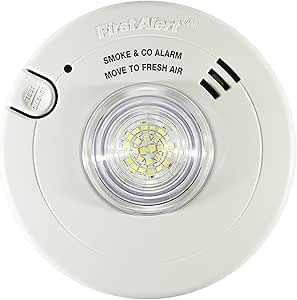 | Best Integrated Smoke and CO Alert | Model: 7030BSL | Alarm types: Smoke and carbon monoxide | Power: Corded electric | VIEW LATEST PRICE | See Our Full Breakdown |
| Jsieem Wireless Doorbell with Touch Button, 1200-Foot Range, 36 Melodies, 4 Volume Levels, and LED Light |  | Best Basic Visual Doorbell on a Budget | Wireless range: Up to 1200 feet in open areas | Melodies: 36 | Volume levels: 4, including mute | VIEW LATEST PRICE | See Our Full Breakdown |
| DEAFWORKS Futuristic 2 Silent Alarm Clock with Flashing LED Lights and Dual Alarms |  | Best Visual Wake-Up Clock | Display: Digital; 0.9-inch display | Alarms: 2 independent alarms | Visual alert: Built-in flashing LED; connections for external lamps | VIEW LATEST PRICE | See Our Full Breakdown |
| Sonic Alert HomeAware II Basic Starter Kit Alerting System |  | Best Multi-Signal Home Alert System | Model: HA360MBK | Power: Corded electric | Alarm sensing: Acoustic; listens for T3 or T4 patterns from existing alarms | VIEW LATEST PRICE | See Our Full Breakdown |
| flashing strobe alarms for deaf people | Power | Model |
|---|---|---|
| Midland SBNDL Strobe Light and | — | — |
| Wireless Flashing Doorbell Kit | 11 AA batteries total | A201 |
| Bellman & Symfon Visit Flash R | — | — |
| Security2020 WC180 Wireless Do | Plug-in receiver; US-style power plug | WC180 |
| CallToU Wireless Doorbell for | — | — |
| First Alert SLED177 Hardwired | Hardwired, 120 V AC | SLED177 |
| First Alert BRK 7030BSL Hardwi | Corded electric | 7030BSL |
| Jsieem Wireless Doorbell with | AC/DC receiver; one included CR2 battery for button | — |
| DEAFWORKS Futuristic 2 Silent | Corded electric with battery backup | — |
| Sonic Alert HomeAware II Basic | Corded electric | HA360MBK |
More Details on Our Top Picks
Midland SBNDL Strobe Light and Pillow Shaker Bundle
The Midland SBNDL is the strongest fit here for someone who needs more than a doorbell signal: it pairs a flashing strobe with a pillow shaker for compatible weather-radio alerts. That tactile backup can help when the user is asleep or not facing the light, a different use case from the CallToU and Security2020 doorbell chimes. The bundle includes its Y cable, clip, and four AA batteries, reducing the number of pieces needed to connect the alert accessories. The main limitation is that it is not a complete alert system by itself: a compatible Midland radio is sold separately. I would choose it for bedside weather notifications, but skip it if the priority is hearing when a visitor presses a doorbell.
Pros:- Combines a flashing strobe with a tactile pillow shaker.
- Includes a Y cable, pillow clip, and four AA batteries.
- Compatible with several listed Midland weather alert radios.
- Low-battery alert provides notice that the accessory needs attention.
Cons:- Requires a compatible weather alert radio, which is not included.
- Compatibility with non-Midland radios may vary.
Best for: Deaf or hard-of-hearing weather-radio users and heavy sleepers who want both a visual alert and a pillow vibration.
Not ideal for: Shoppers seeking a ready-to-use doorbell alert or anyone without a compatible Midland radio, since the radio is sold separately.
- Power source:Battery powered
- Batteries included:4 AA batteries
- Included components:SHKR100 pillow shaker, STR180 strobe light, Y cable, pillow clip, batteries
- Compatible radios:Midland WR11, WR100, WR120, WR300, and WR400
- Other compatibility:Radios with a 3.5 mm external jack may also work
- Color:Black
Our verdict“Choose the Midland bundle for bedside weather alerts with both light and vibration, provided you already have or plan to buy a compatible radio.”
Wireless Flashing Doorbell Kit with 2 Transmitters and 3 Receivers
For buyers who want doorbell coverage in several rooms, this two-transmitter, three-receiver kit offers a useful spread of alert points without relying on a dedicated alerting ecosystem. Its seven-color flashes give the visual signal more variety than the single strobe approach of the Security2020 WC180, while four volume levels allow sound to supplement the lights. Adhesive or screw mounting gives renters and homeowners different installation options. The tradeoff is power management: the system calls for 11 AA batteries total, and the stated three-to-five-month battery life and weather suitability are listing claims rather than guarantees. Unlike the Midland bundle, this is aimed at visitors at the door, not weather alerts or bedside tactile notification.
Pros:- Two transmitters and three receivers can distribute doorbell alerts around a home.
- Seven light colors provide visual notification options.
- Four volume levels let users pair the light with an audible chime.
- Can be installed with adhesive tape or screws.
Cons:- Requires 11 AA batteries, which are not stated as included.
- The stated battery life and weather resistance are listing claims.
- Does not provide a tactile alert for sleepers.
Best for: Households that want doorbell alerts visible in multiple rooms and value having two transmitters and three receivers.
Not ideal for: Buyers who want low-maintenance power, a pillow shaker, or a system with independently verified battery-life and outdoor-weather performance.
- Manufacturer:HSYIJIA
- Model:A201
- Transmitters:2
- Receivers:3
- Light colors:7
- Volume levels:4
- Wireless range:Up to 600 feet
- Power:11 AA batteries total
- Installation:Adhesive tape or screws
Our verdict“Pick this kit for multi-room visual doorbell coverage, but factor in its substantial battery requirement and unverified battery-life claim.”
Bellman & Symfon Visit Flash Receiver for Visual Alerts
The Bellman & Symfon Visit Flash Receiver is a focused visual receiver for people already using the Visit system. Its bright flashes and colored LED signals can make notifications easier to distinguish, while compatibility with new and older Visit transmitters can help existing owners add visual coverage without replacing their alert sources. Compared with the self-contained doorbell kits from CallToU and Security2020, this receiver can serve alerts from different compatible transmitters, including doorbells, baby cries, and fire alarms. That flexibility comes with a clear barrier: transmitters are sold separately, so the receiver alone will not detect those events. Battery backup is useful during power interruptions, but buyers should confirm what components they need for their particular setup before choosing this system.
Pros:- Bright flashing lights and colored LEDs provide visual alerts.
- Works with new and older Bellman Visit transmitters.
- Can receive alerts from compatible sources such as doorbells, baby cries, and fire alarms.
- Battery backup supports alerts during emergencies.
Cons:- Not a standalone product; compatible transmitters are required.
- A buyer starting from scratch must source the alert transmitters separately.
- Wall mounting may limit where the visual signal is most visible.
Best for: People who already own Bellman Visit transmitters and want a dedicated visual receiver for alerts from multiple sources.
Not ideal for: First-time buyers seeking a complete doorbell kit, since compatible transmitters are sold separately.
- Brand:Bellman & Symfon
- Power source:Battery powered
- Battery type:Alkaline
- Mounting type:Wall mount
- Compatible devices:Bellman Visit transmitters
- Wireless system:Encrypted radio frequencies; does not use Wi-Fi
- Unit weight:11.3 ounces
Our verdict“Choose this receiver to add visual notification to an existing Bellman Visit setup, not as a standalone doorbell solution.”
Security2020 WC180 Wireless Door Chime with Flashing Strobe Light
The Security2020 WC180 stands out for buyers who want a doorbell receiver that can operate in strobe-only mode, rather than requiring an audible chime alongside the visual signal. When sound is useful, it also offers adjustable volume and 58 selectable melodies; its listed 95 dB output may suit noisy settings, though the product information gives differing sound-level details. Compared with the CallToU, the WC180 has fewer stated light modes and a shorter listed maximum range, but it includes a plug-in receiver and can expand with extra buttons and receivers. That setup means the receiver needs an outlet, which may constrain placement and visibility. It is a practical doorbell alert, not a bedside system like the Midland bundle, which adds tactile notification.
Pros:- Strobe-only mode allows visual notification without an audible chime.
- Offers adjustable volume and 58 selectable melodies.
- Listed wireless range reaches up to 600 feet.
- Can be expanded with additional buttons and receivers.
Cons:- The receiver must be plugged into a US-style outlet.
- The listed sound-level information differs between product details.
- Provides no tactile alert for sleeping users.
Best for: Deaf or hard-of-hearing users who want a plug-in doorbell receiver with a dedicated strobe-only setting and optional sound.
Not ideal for: People who need a battery-powered receiver, tactile alerts, or a doorbell system with no outlet-placement constraints.
- Manufacturer:Safeguard Supply
- Model:WC180
- Wireless range:Up to 600 feet
- Sound level:95 dB listed
- Melodies:58 selectable
- Bulb type:LED
- Included components:Receiver, push button, battery, mounting hardware
- Power:Plug-in receiver; US-style power plug
- Certification:UL Listed
Our verdict“Choose the WC180 if strobe-only doorbell signaling and optional sound matter more than receiver placement flexibility or tactile notification.”
CallToU Wireless Doorbell for Hearing-Impaired Users with Flashing Light
The CallToU wireless doorbell is the most flexible doorbell pick in this group for households that want to switch between silent visual alerts and an audible chime. Its five volume levels, from silent to 100 dB, let users tailor the signal to different rooms or situations, while three light modes include strong, dim, and off. Setup is pre-paired, with no wiring or Wi-Fi required, making it simpler than building out the Bellman Visit system with separate transmitters. CallToU also lists a longer open-area range than the Security2020 WC180, but its own maximum-range figures conflict: 1000 feet in open areas versus 500 feet elsewhere. The flashing signal still depends on receiver placement and line of sight, and this doorbell does not add the Midland bundle’s pillow-shaker alert.
Pros:- Five volume settings include silent mode and a listed maximum of 100 dB.
- Three light modes offer strong, dim, or no visual alert.
- Pre-paired setup requires no wiring or Wi-Fi.
- Waterproof button can be mounted with adhesive or screws.
Cons:- The stated range conflicts between 1000 feet in open areas and a 500-foot maximum.
- Visual alerts work best when the receiver is within the user’s line of sight.
- Does not include a tactile alert for sleeping users.
Best for: Households seeking an easy-to-install doorbell with silent mode, adjustable sound, and a choice of light intensity.
Not ideal for: Buyers who need a tactile bedside alert, rely on a precise guaranteed wireless range, or cannot position the receiver where its light is visible.
- Volume:0–100 dB across 5 levels
- Light modes:Strong light, dim light, or off
- Wireless range:Up to 1000 ft in open areas; maximum range also listed as 500 ft
- Setup:Pre-paired; no wiring or Wi-Fi required
- Power source:AC
- Batteries:Two 12V alkaline batteries included
- Mounting type:Wall mount
- Sensor technology:Visual and auditory
- Color:Black
Our verdict“Choose CallToU for flexible sound and light settings with simple setup, while treating its range claims cautiously and planning receiver placement for visibility.”
First Alert SLED177 Hardwired LED Strobe Light for Hearing Impaired, White
The SLED177 makes the most sense when you already have compatible First Alert or BRK alarms and need a dedicated visual alert. Its 177-candela LED strobe can synchronize with other units, helping alerts stay coordinated across a home rather than coming from one isolated spot. It also uses distinct patterns to signal different alarm types, a useful distinction when a flashing warning needs to convey more than urgency. Compared with the First Alert BRK 7030BSL, this unit adds visual notification but not smoke or carbon monoxide detection of its own; you need compatible alarms in the system. Its hardwired 120 V AC connection also makes installation less flexible than a plug-in or wireless alert. I’d choose it for a planned, compatible alarm setup, not as a stand-alone solution.
Pros:- Bright 177-candela LED strobe provides a dedicated visual warning.
- Synchronizes flashes across compatible devices, supporting alerts in multiple locations.
- Smart strobe patterns distinguish smoke or heat alerts from carbon monoxide alerts.
- Ceiling or wall mounting allows flexible placement.
Cons:- Requires hardwired 120 V AC installation rather than a simple plug-in setup.
- Works only with select First Alert and BRK alarm models.
- Does not detect smoke or carbon monoxide by itself.
Best for: Homeowners with compatible First Alert or BRK alarms who need synchronized visual alerts in additional rooms.
Not ideal for: Renters or anyone seeking a self-contained alarm, since it requires hardwired power and compatible detection devices.
- Model:SLED177
- Light source:LED
- Power:Hardwired, 120 V AC
- Mounting:Ceiling or wall
- Strobe intensity:177 candela
- Interconnectivity:Compatible with select First Alert and BRK alarms; up to 18 devices
- Alert features:Synchronized flashing; distinct patterns for smoke or heat and carbon monoxide alerts
- Certifications:UL standards; meets Americans with Disabilities Act requirements
Our verdict“Choose the SLED177 to add synchronized visual alerts to a compatible hardwired First Alert or BRK system.”
First Alert BRK 7030BSL Hardwired Smoke and Carbon Monoxide Alarm with LED Strobe
Unlike the SLED177, which adds a strobe to a compatible alarm system, the 7030BSL combines smoke and carbon monoxide detection with visual alerts. That all-in-one approach suits buyers who need a new hardwired alarm and want a visible warning at the same location. Its photoelectric sensor and distinct flash patterns help identify the type of alert, while synchronized strobes can link multiple units. A 10-year battery backup provides another power source if mains power is interrupted, though the alarm still needs hardwired installation. I would check the listed strobe output before buying: the product data gives both 77 and 177 candela. Compared with the standalone SLED177, it reduces the need to pair a separate visual unit with a detector, but offers less flexibility if you only need to extend alerts elsewhere.
Pros:- Combines smoke and carbon monoxide detection with an integrated LED strobe.
- Distinct flash patterns indicate different alarm types.
- 10-year battery backup provides a secondary power source.
- Multiple compatible units can synchronize their strobes.
Cons:- Requires hardwired installation.
- Strobe intensity is listed inconsistently as 77 and 177 candela.
- An integrated alarm is less suited than a separate strobe for extending visual alerts to another location.
Best for: Homeowners installing a hardwired smoke and carbon monoxide alarm who want an integrated strobe and battery backup.
Not ideal for: Buyers who only need an add-on visual alert, or those who cannot verify which stated strobe intensity applies to their unit.
- Model:7030BSL
- Alarm types:Smoke and carbon monoxide
- Power:Corded electric
- Backup power:10-year battery backup
- Sensor:Photoelectric
- Strobe:Integrated LED; listed as 77 candela in item details and 177 candela in product description
- Dimensions:2.5 × 5.4 × 6.8 in
- Operating humidity:10–95% RH
Our verdict“Pick the 7030BSL if you need a hardwired smoke and CO detector with an integrated visual warning, and confirm its strobe specification with the seller.”
Jsieem Wireless Doorbell with Touch Button, 1200-Foot Range, 36 Melodies, 4 Volume Levels, and LED Light
For visitors at the front door, the Jsieem offers a simple wireless visual cue without the hardwired alarm installation required by the First Alert SLED177. The receiver’s LED indicator adds a visible signal, and the volume can be muted if an audible chime is not wanted. The stated range reaches 1200 feet in open areas, but walls, metal, and electronics can reduce coverage, so I would not treat that figure as a guaranteed indoor distance. This is a doorbell, not a smoke or CO alert, and its single included receiver limits coverage unless additional compatible units are available. Compared with the multi-signal Sonic Alert HomeAware II, it is much simpler: it does not offer bed shaking, scrolling text, or phone notifications. Choose it for a basic visitor alert, not whole-home emergency signaling.
Pros:- LED indicator provides a visual cue when the doorbell is pressed.
- Four volume settings include mute.
- Wireless setup avoids hardwiring the receiver.
- Touch button is described as waterproof and dustproof.
Cons:- Only one receiver and one transmitter are included, limiting room coverage.
- The stated 1200-foot range is for open areas and may fall with obstructions.
- Does not alert to smoke, carbon monoxide, or phone notifications.
Best for: People who want a straightforward wireless doorbell with a visual indicator and the option to mute its chime.
Not ideal for: Buyers seeking smoke or carbon monoxide warnings, multiple-room alerting, or a dedicated emergency alerting system.
- Wireless range:Up to 1200 feet in open areas
- Melodies:36
- Volume levels:4, including mute
- Indicator:LED light
- Power:AC/DC receiver; one included CR2 battery for button
- Voltage:110 volts
- Included components:1 wireless doorbell button and 1 wireless receiver
- Button protection:Described as waterproof and dustproof
Our verdict“Choose the Jsieem for a simple wireless visitor alert with an LED cue, not as a safety alarm for household hazards.”
DEAFWORKS Futuristic 2 Silent Alarm Clock with Flashing LED Lights and Dual Alarms
The DEAFWORKS Futuristic 2 is aimed at a different problem from the First Alert 7030BSL: waking someone, rather than signaling smoke or carbon monoxide. Its flashing LED offers a visual wake-up cue, and connections for external lamps can spread that cue beyond the clock itself. Two independent alarms are useful for different schedules, while adjustable display and flasher brightness allow some control over light in a bedroom. It also provides two USB-A charging ports, though that convenience does not make it a household alert system. Compared with the Sonic Alert HomeAware II, it is more focused on bedside waking and does not list bed-shaker alerts, scrolling text, or phone notifications. The clock needs corded power, and its 0.9-inch display may be difficult to read from across a room.
Pros:- Built-in flashing LED and external lamp connections provide visual wake-up options.
- Two independent alarms support different schedules.
- Adjustable display and flasher brightness offer control over bedroom lighting.
- Two USB-A ports can charge devices at the bedside.
Cons:- Requires corded electric power for operation.
- The 0.9-inch display may be small for users who read the time from a distance.
- Functions as a wake-up clock, not a smoke, CO, or general household alert system.
Best for: Deaf or hard-of-hearing sleepers who want a bedside visual alarm, two wake times, and the option to connect external lamps.
Not ideal for: People seeking smoke or CO alerts, phone notifications, or a large, easily read clock display.
- Display:Digital; 0.9-inch display
- Alarms:2 independent alarms
- Visual alert:Built-in flashing LED; connections for external lamps
- Brightness:Display and flasher brightness are adjustable
- USB ports:2 USB-A ports, 1A and 2A
- Power:Corded electric with battery backup
- Dimensions:6 × 4.25 in (W × H)
- Mounting and use:Tabletop; indoor use
Our verdict“Pick the DEAFWORKS clock for visual bedside waking and dual alarms, but choose a dedicated alerting system for household hazards.”
Sonic Alert HomeAware II Basic Starter Kit Alerting System
The HomeAware II is the broadest alerting option here for someone who needs more than a flashing light. It listens for T3 or T4 patterns from existing smoke and carbon monoxide alarms in the same room, then can provide a strobe, bed shaker, audio tones, and scrolling text. Phone notifications through the app and incoming landline calls add everyday alerts beyond fire safety. Unlike the First Alert BRK 7030BSL, though, it does not detect smoke or carbon monoxide itself; it depends on a separate alarm and must be positioned close enough to hear its pattern. That makes placement and regular testing part of using it. The rechargeable battery backup is useful, but this corded system is bulkier and more involved than a dedicated strobe such as the SLED177.
Pros:- Combines a flashing strobe, bed shaker, audio tones, and scrolling text.
- Can respond to T3 or T4 patterns from existing smoke and CO alarms in the same room.
- Can display cellphone calls and texts through the HomeAware app and landline calls when connected.
- Rechargeable battery backup offers an additional power source.
Cons:- Does not detect smoke or carbon monoxide directly.
- Must be placed in the same room as the existing alarm and tested regularly.
- Requires corded electric power and has more setup demands than a standalone strobe.
Best for: Deaf or hard-of-hearing households that want one system for visual, vibration, text, and phone alerts and already have compatible smoke or CO alarms.
Not ideal for: Anyone needing a self-contained smoke or carbon monoxide detector, or who cannot place and regularly test the unit near existing alarms.
- Model:HA360MBK
- Power:Corded electric
- Alarm sensing:Acoustic; listens for T3 or T4 patterns from existing alarms
- Alert methods:Flashing strobe, bed shaker, audio tones, and scrolling text
- Phone alerts:Cellphone calls and texts through the HomeAware app; landline calls when connected
- Battery backup:Rechargeable
- Dimensions:5 × 6 × 6.5 in (D × W × H)
- Weight:1.8 lb
Our verdict“Choose the HomeAware II for varied visual, tactile, and text alerts, provided you keep a separate smoke or CO alarm nearby.”
How We Picked
I ranked these products by how directly they address a real alerting need for a deaf or hard-of-hearing buyer: waking from sleep, noticing a visitor, receiving household signals, or responding to smoke and carbon monoxide. I gave more weight to a clear visual alert, useful secondary alert methods, and a product role that is easy to understand than to a long list of unrelated features. Installation demands, power and receiver setup, and the practical limits of a single-purpose device also shaped the order.
The ranking favors options that provide a strong fit for their stated use without requiring buyers to treat a doorbell as a life-safety alarm or a strobe accessory as a complete alerting system. Products with broader alert coverage earn a place for versatility, but they are not automatically best for someone who only needs one signal. Since wireless performance depends on walls, layout, and placement, I treat advertised range as a planning clue rather than a guarantee. I also distinguish hardwired safety products from portable or wireless notification devices, because they serve different needs and installation paths.
Factors to Consider When Choosing Flashing Strobe Alarms For Deaf People
Before choosing a device, identify the signal you most need to notice and where you need to notice it. A bright strobe can help in a room where you are present, but a bedroom, a large home, and a smoke emergency call for different alert plans.
Match the alarm to the signal
Start by listing the events the device must announce: a visitor, a phone call, a timer, or smoke and carbon monoxide. A doorbell receiver cannot replace a listed smoke alarm, and a strobe accessory may depend on a separate compatible alarm to trigger it. Buyers often choose one device for every alert, then find that it only responds to a single transmitter or signal type. Check which events a system can recognize and whether you need separate equipment for different risks. If missing a signal could affect safety, choose equipment intended for that safety purpose rather than relying on a general notification light.
Plan for sleep and rooms beyond your line of sight
A strobe that is easy to see in daylight may not wake a sleeping person, especially if it is across the room or outside the bedroom. Consider whether you need a pillow shaker, bed shaker, or another tactile alert, and confirm that the alert can be placed where it will be felt. Think about how doors, furniture, and light sensitivity affect visibility at night. A sound-based chime can be useful for household members who hear, but it should not be the only alert for the deaf user. Test the chosen alert in the actual sleeping position and room before relying on it.
Treat wireless range as a layout question
Advertised wireless range is usually measured under favorable conditions, not through every wall and floor in a lived-in home. Metal surfaces, dense construction, and interference can weaken the signal, so a longer stated range does not guarantee coverage at the far end of your house. For kits with several receivers, plan where each unit will sit and whether outlets are available in the rooms that matter. Avoid placing all receivers together just because setup is convenient. Test every transmitter-to-receiver pairing from its intended location, including closed-door and nighttime conditions.
Compare a single-purpose kit with a system
A dedicated doorbell kit can be simpler when visitors are the only concern, while a home alerting system may support more kinds of notifications. The broader option can reduce the number of separate devices, but it can also add pairing steps, compatible components, and maintenance tasks. List the signals you need now and the ones you may add later before paying for extra capability. Confirm that each added transmitter or accessory is compatible with the receiver rather than assuming products from different systems work together. Buyers new to visual alerting may prefer a focused kit they can set up and test easily.
Check power, installation, and backup behavior
Wireless receivers and transmitters can depend on batteries, plug-in power, or both, while hardwired devices require a suitable existing connection or professional installation. A battery-powered alert may be easier to place, but it adds a recurring task: checking battery condition and replacing cells when needed. A hardwired unit avoids some battery upkeep yet may limit placement and complicate installation. Ask what happens during a power outage, whether the device has a backup source, and how it signals a fault or low battery to someone who cannot hear it. Add those checks to a regular household safety routine rather than assuming a strobe will remain ready without maintenance.
Choose visibility that works in your room
Strobe effectiveness depends on placement, line of sight, and ambient light—not just the presence of an LED. A receiver hidden behind a television or pointed away from the occupied area may be easy to miss. Check whether the light can be mounted or positioned at eye level and whether its flash pattern is distinguishable from other lights in the home. People with light sensitivity may need to adjust placement or choose a different alert combination. A brief test in daylight and after dark can reveal practical issues that a feature list cannot.
Frequently Asked Questions
Can a flashing doorbell kit also alert me to smoke or carbon monoxide?
Usually, a doorbell kit responds to its paired button and does not detect smoke or carbon monoxide. A smoke or CO alarm needs to be designed and listed for that hazard, with a compatible visual alert if one is required. Some alerting systems can relay signals from compatible alarms, but compatibility must be confirmed for the exact models. Keep a dedicated, functioning smoke and CO alarm even if you already use a doorbell receiver. Treat these as separate alert paths unless the product documentation explicitly supports both.
Is a flashing light enough to wake someone who is deaf?
Not reliably for every person or bedroom setup. A sleeping person may not see a strobe, particularly if it is outside the room, blocked, or not directed toward the bed. A pillow or bed shaker provides a tactile signal and can be a more suitable sleep alert; some buyers may need a system designed specifically for waking. Test the complete setup while lying in the usual sleeping position, with the bedroom door in its normal position. Do not assume that a visible alert during the day will work during sleep.
How many receivers should I place around my home?
Choose receiver locations based on where you spend time and where missing the signal matters, rather than buying a set number by default. A kitchen, living area, and bedroom may need separate coverage if walls or floors block the flash from view. Walk the home and check line of sight, outlet access, and whether the sound or light could disturb other household members. Then test the system from each transmitter location with doors closed. Add receivers only where the test reveals a genuine coverage gap.
Should I choose a hardwired strobe or a wireless alert system?
A hardwired unit can suit a fixed location or an existing compatible alarm installation, but it may require wiring work and offers less freedom to move it. A wireless system is easier to place and expand, though radio range, battery checks, and component compatibility matter. First decide whether the alert is for a life-safety device or a routine household signal, since that affects the equipment and installation standards you need. Check the product instructions and local requirements before modifying or replacing a safety alarm. When wiring is uncertain, ask a qualified installer rather than improvising a connection.
Can I combine transmitters and receivers from different brands?
Do not assume they will pair just because both products use wireless signals or serve the same purpose. Alert systems often use brand- or model-specific protocols, and a transmitter may not activate another maker’s receiver. Look for an explicit compatibility list covering the exact model numbers and alert functions. If you are building a multi-signal setup, choosing compatible components from one system can simplify pairing and troubleshooting. Keep the manuals and test each signal after setup or any component change.
Conclusion
For the best overall balance of visual and tactile alerts, I would start with the Midland SBNDL bundle, particularly when waking from sleep is part of the problem. The best value for a straightforward doorbell need is a wireless kit with enough receivers for the rooms you use, such as the CallToU or multi-receiver kit, provided its coverage suits your layout. For a best premium, broader alerting approach, compare the Bellman & Symfon Visit Flash Receiver with the Sonic Alert HomeAware II and confirm which signals and components your household needs. The best choice for beginners is a focused doorbell kit with a simple transmitter-and-receiver setup; choose the Jsieem if its chime options and stated range match your home. For specific safety needs, look at the First Alert BRK 7030BSL for smoke and carbon monoxide detection or the SLED177 as a hardwired strobe option, and keep routine door alerts separate from life-safety coverage. My deciding rule is simple: buy for the signal you cannot afford to miss, then confirm placement, compatibility, and backup alerting before relying on it.
Columbus Day / Indigenous Peoples' Day Picks
long weekend sales
As an affiliate, we earn on qualifying purchases.