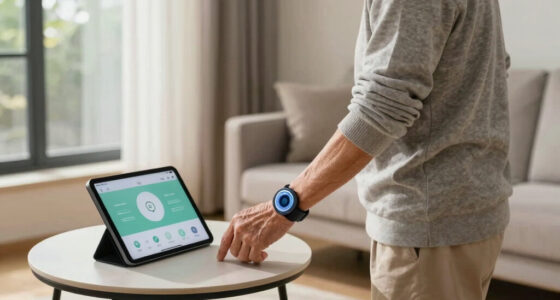
Assistive listening devices for students range from personal voice amplifiers to multi-receiver systems built for classes, lectures, and campus events. The Retekess T130S is my best overall pick because its longer range and multiple channels suit more school settings than a basic personal amplifier. The Retekess TT106S is the stronger choice for long teaching days, while the Williams Sound Pocketalker 2.0 offers a simpler starting point for one student listening nearby. The main tradeoffs are personal simplicity versus group coverage, direct headphone use versus hearing-device compatibility, and a low initial price versus easier fleet management. Continue reading for the full breakdown and recommendations by student, class size, and school setup.

Get everyday helpers delivered free with Prime
- Fast, free delivery on millions of items
- Prime Video, Amazon Music and more included
- Member-only deals all year
Key Takeaways
- The Retekess T130S ranks first because it balances range, channel flexibility, and classroom scalability better than the personal Pocketalker models or larger specialist systems.
- The Pocketalker 2.0 is the easiest beginner option, but it cannot match the teacher-to-student mobility of the T130S or TT106S transmitter-and-receiver systems.
- Receiver count changes the value calculation: the four-person system fits tutoring groups, the Retekess T130 package serves dual-presenter classes, and the 30-receiver TT119 suits large cohorts.
- The TT106S leads for battery life, while the 17-channel TT119 is the more focused choice when long range and channel separation matter more than compact operation.
- Auracast is a specialist advantage, not an automatic upgrade: the Venucast AuraPlex MX makes sense for compatible venues, while the Avantree Audiplex MX is my premium pick for managed multi-channel listening.
| Williams Sound Pocketalker 2.0 Hearing Amplifier |  | Best Overall for Individual Study | Amplification: Up to 40dB | Power source: 2 AAA batteries | Battery life: Up to 100 hours | VIEW LATEST PRICE | See Our Full Breakdown |
| 4-Person Assistive Listening System with 3-Year Warranty and Phone Support |  | Best for Small Student Groups | System type: Multi-user assistive listening system | Base listener capacity: Up to 4 users | Expandability: Supports additional receivers | VIEW LATEST PRICE | See Our Full Breakdown |
| Williams Sound Pocketalker Ultra Hearing Amplifier with Batteries and Accessories |  | Best Accessory Bundle | Amplification: Up to 40dB | Controls: Adjustable volume and tone | Design: Lightweight and ergonomic | VIEW LATEST PRICE | See Our Full Breakdown |
| Williams Sound Pocketalker 2.0 Hearing Amplifier |  | Best Battery-Stocked Personal Pick | Audio sensitivity: 40dB | Power source: Battery powered | Included batteries: 11 AAA alkaline batteries | VIEW LATEST PRICE | See Our Full Breakdown |
| Retekess T130S (2nd Gen T130) Assistive Listening System |  | Best for Large Campus Groups | Wireless technology: 2.4GHz | Working range: Up to 328 feet | Number of channels: 49 | VIEW LATEST PRICE | See Our Full Breakdown |
| Retekess TT106S Assistive Listening System |  | Best Battery Life | Battery Life: Up to 50 hours | Range: 200 meters / 656 feet | Battery Capacity: 450mAh | VIEW LATEST PRICE | See Our Full Breakdown |
| Retekess TT119 Assistive Listening System with 17 Channels |  | Best for Fixed Campus Venues | Connectivity: Wireless | Connector: 3.5 mm jack | Transmitter Type: Desktop FM transmitter | VIEW LATEST PRICE | See Our Full Breakdown |
| Venucast AuraPlex MX Auracast Assistive Listening System |  | Best for Auracast Hearing Aids | Transmitters: 1 | Included Receivers: 10 | Range: Up to 328 feet | VIEW LATEST PRICE | See Our Full Breakdown |
| Retekess T130 Tour Guide System with Over-Ear Headphones |  | Best Complete Kit for Noisy Classes | Minimum Stated Range: Approximately 164 feet | Maximum Stated Range: Approximately 197 feet | Transmitters: 2 | VIEW LATEST PRICE | See Our Full Breakdown |
| Retekess TT119 Assistive Listening and Translation System |  | Best for Large Multilingual Cohorts | Working Distance: Up to 300 meters / 980 feet | Channels: 17 | Audio Inputs: XLR, AUX, RCA, and USB | VIEW LATEST PRICE | See Our Full Breakdown |
| Avantree Audiplex MX Multi-Channel Assistive Listening System |  | Best for Two-Channel School Events | Wireless technology: 2.4GHz RF | Number of channels: 2 | Wireless range: Up to 100 meters | VIEW LATEST PRICE | See Our Full Breakdown |
More Details on Our Top Picks
Williams Sound Pocketalker 2.0 Hearing Amplifier
I rank the Williams Sound Pocketalker 2.0 highest for students who need a straightforward personal amplifier during tutoring, lectures, or study sessions. Its 40dB maximum amplification and separate volume and tone controls provide more useful personalization than a basic volume-only device, while the microphone extension cord can place sound pickup closer to an instructor. Compared with the Pocketalker Ultra bundle, this package includes fewer spare batteries but retains the same core amplification and a five-year warranty. It is also far easier to manage than the Retekess T130S when only one student needs support. The tradeoff is limited reach and no multi-user broadcasting, so it is poorly matched to campus tours or shared classroom systems. I also would not treat it as a replacement for professionally fitted hearing technology.
Pros:- Up to 40dB amplification supports clearer close-range listening
- Separate volume and tone controls allow student-specific adjustment
- Up to 100 hours of battery life reduces midweek battery changes
- Five-year warranty is longer than the three-year coverage on the 4-person system
Cons:- Cannot distribute one instructor’s audio to multiple students
- 40dB ceiling may be insufficient for some hearing profiles
- Disposable AAA operation creates recurring battery costs unless rechargeable cells are purchased
Best for: Students who need a simple personal amplifier for tutoring, front-row lectures, TV-based lessons, or one-to-one conversations
Not ideal for: Schools supporting several listeners at once, since this is a single-user amplifier without a classroom transmitter network
- Amplification:Up to 40dB
- Power source:2 AAA batteries
- Battery life:Up to 100 hours
- Controls:Adjustable volume and tone
- Warranty:5 years
- Listening accessories:Earbuds and headphones
- Other included items:Microphone, extension cord, batteries, and user manual
Our verdict“I recommend this as the strongest all-around choice for one student who values simple controls, portability, and long battery life.”
4-Person Assistive Listening System with 3-Year Warranty and Phone Support
I place this 4-person assistive listening system above personal amplifiers when a teacher needs to serve several students from one setup. The base package supports four listeners and can accept additional receivers, giving a small classroom or student-services office a clearer growth path than either Pocketalker model. Its three-year warranty and phone support also make it more approachable for staff who lack dedicated audiovisual help. Compared with the Retekess T130S, however, the listing provides no channel count, wireless range, or battery-life figures, making performance planning harder. Expansion also carries added cost, and the included ADA plaque is more useful for public-facing venues than ordinary classrooms. I see this as a practical small-scale institutional choice, but not the best-documented option for a large lecture hall.
Pros:- Base system supports four students simultaneously
- Additional receivers can expand capacity as needs grow
- Three-year warranty and phone support aid school staff
- Included ADA plaque suits public classrooms and event spaces
Cons:- Base package is limited to four listeners
- Expansion and optional accessories require additional purchases
- Missing range, channel, battery-life, and connectivity details complicate deployment planning
Best for: Small schools, tutoring centers, or student-support offices that need one expandable system for up to four listeners initially
Not ideal for: Technology teams that require published range, channel, connectivity, and battery specifications before approving classroom equipment
- System type:Multi-user assistive listening system
- Base listener capacity:Up to 4 users
- Expandability:Supports additional receivers
- Warranty:3 years
- Customer support:Phone support included
- Included signage:ADA plaque
Our verdict“I favor this system for a small institution that values support and expandability more than fully published technical details.”
Williams Sound Pocketalker Ultra Hearing Amplifier with Batteries and Accessories
The Williams Sound Pocketalker Ultra earns its place through a generous ready-to-go package: 20 AAA batteries, two listening options, a lanyard, and a microphone extension cord. For a student moving between tutoring, recorded lessons, and small-group work, those extras reduce the number of separate purchases. Its adjustable volume and tone offer the same 40dB amplification ceiling as the Pocketalker 2.0, so the bundle rather than stronger audio is the main reason to choose it. The newer Pocketalker 2.0 claims up to 100 hours from two batteries and is my better all-around personal pick, while this Ultra package favors buyers who want supplies included from day one. It remains a close-range, single-listener device, and students with severe hearing loss may need an audiologist-guided solution instead.
Pros:- Includes 20 AAA batteries for a substantial starter supply
- Volume and tone controls support personalized listening
- Headphones and a mini earbud provide two wearing choices
- Lightweight design, lanyard, and extension cord suit mobile student use
Cons:- Offers no higher amplification ceiling than the Pocketalker 2.0
- Single-user design does not scale to a class
- Personal amplification is not a substitute for a medically fitted hearing aid
Best for: Students or caregivers who want a portable personal amplifier packaged with spare batteries and multiple listening accessories
Not ideal for: Students with severe hearing loss or classrooms needing one teacher transmitter to reach several receivers
- Amplification:Up to 40dB
- Controls:Adjustable volume and tone
- Design:Lightweight and ergonomic
- Battery bundle:20 AAA batteries included
- Listening accessories:Headphones and mini earbud
- Microphone accessory:Extension cord included
- Carry accessory:Neck lanyard
- Warranty:5 years
Our verdict“I would choose this bundle for a single student who wants useful accessories and spare batteries included rather than stronger performance.”
Williams Sound Pocketalker 2.0 Hearing Amplifier
This version of the Williams Sound Pocketalker 2.0 makes the most sense when a school wants a personal amplifier supplied with 11 AAA batteries and both over-ear and in-ear listening options. Its simple button controls suit students who may find channel menus or transmitter pairing distracting, and the folding design is easier to store in a backpack than the full Retekess T130S kit. Compared with the other Pocketalker 2.0 listing, though, this product data states no formal noise-control feature and gives less clarity about per-set battery life. The 40dB sensitivity supports close conversations and media listening, but it cannot route an instructor’s voice across a room like a group system. I rank it below the main Pocketalker 2.0 pick because the battery bundle is useful, yet its documentation is less coherent.
Pros:- Simple button operation reduces setup demands
- Eleven included AAA batteries provide a useful starter supply
- Over-ear and in-ear options accommodate different preferences
- Folding construction makes classroom storage easier
Cons:- No dedicated noise-control feature is specified
- Battery requirements and runtime are less clearly documented than on the other Pocketalker 2.0 listing
- Basic single-user amplification cannot serve multiple students
Best for: Students who want uncomplicated close-range amplification with over-ear and in-ear options plus a large included battery supply
Not ideal for: Students who need active noise control, wireless teacher audio, or clearly documented runtime per battery set
- Audio sensitivity:40dB
- Power source:Battery powered
- Included batteries:11 AAA alkaline batteries
- Control type:Button control
- Headphone styles:Over-ear and in-ear
- Noise control:None specified
- Additional feature:Folding
- Color:Beige
- Compatible devices:Audio output devices
Our verdict“I see this as a convenient battery-stocked choice for simple personal listening, provided wireless range and noise control are unnecessary.”
Retekess T130S (2nd Gen T130) Assistive Listening System
I give the Retekess T130S the group-use slot because its 328-foot range, 49 channels, and group controls fit campus tours, large classes, and multi-language activities better than any Pocketalker. Multiple channels help nearby groups operate without sharing the same audio feed, while 20-hour continuous use covers a long school day without frequent charging. Compared with the 4-person assistive listening system, it offers far richer published performance data and more flexibility for busy venues. Portability has limits: the listed system weighs 4,718 grams, each receiver is described as 45 grams, and charging several units creates more staff work than maintaining one personal amplifier. The 328-foot range also trails the longer published ranges of the Retekess TT106S and TT119, so very large campuses may prefer those alternatives.
Pros:- Up to 328 feet of range supports large rooms and organized campus groups
- Forty-nine channels allow several groups to operate with less interference
- Twenty-hour continuous runtime can cover a full day of activities
- One-click mute and group control simplify instructor management
Cons:- Listed system weight of 4,718 grams reduces grab-and-go convenience
- Multi-unit charging and battery upkeep add work for school staff
- Published range is shorter than the Retekess TT106S and TT119 alternatives
Best for: Schools running campus tours, large-group instruction, interpretation sessions, or several nearby audio groups
Not ideal for: A single student seeking a pocket-sized personal amplifier, since the full system is heavier and requires charging management
- Wireless technology:2.4GHz
- Working range:Up to 328 feet
- Number of channels:49
- Continuous battery life:Up to 20 hours
- Power source:Battery powered
- Connector types:Aux and USB
- Compatible devices:Laptop, smartphone, and tablet
- System dimensions:19.69 x 5.51 x 12.28 inches
- Listed system weight:4,718 g
Our verdict“I recommend the T130S for schools that need flexible multi-channel group audio and can manage a larger rechargeable equipment kit.”
Retekess TT106S Assistive Listening System
I rank the Retekess TT106S as the battery-life pick because its 50-hour runtime can cover several school days between charges. Its 200-meter range suits campus tours, assemblies, and classes spread across large rooms, while 9,999 channels give schools ample flexibility when several groups operate nearby. Compared with the Retekess TT119, it offers less range but is better suited to mobile staff who cannot stay near a corded transmitter. The earhook receivers are also less isolating than the Retekess T130’s over-ear headphones, which may help students remain aware of classroom activity. I would not choose it for lessons with long silent periods: the 20-minute automatic shutdown may interrupt use. Managing such a large channel pool can also burden staff without a clear assignment system.
Pros:- Up to 50 hours of battery life reduces midweek charging
- 200-meter range supports large classrooms, auditoriums, and campus movement
- 9,999 channels allow many groups to operate separately
- Earhook receivers and one-touch controls support quick student distribution
Cons:- Automatic shutdown after 20 minutes without a signal can disrupt quiet lessons
- Channel assignments require staff coordination in multi-group settings
- Available data provides little detail about speech performance in noisy rooms
Best for: Schools needing a mobile listening system that can run across multiple class days, campus tours, or extended field trips
Not ideal for: Classes with frequent silent work periods, since the receiver may shut down after 20 minutes without a signal
- Battery Life:Up to 50 hours
- Range:200 meters / 656 feet
- Battery Capacity:450mAh
- Charging Time:3 hours
- Channels:9,999
- Receiver Volume Levels:0-9
- Auto Shutdown:After 20 minutes without a signal
- Audio Input:AUX
Our verdict“This is my pick for schools that value multi-day battery life and mobile coverage more than maximum range or noise-isolating headphones.”
Retekess TT119 Assistive Listening System with 17 Channels
The Retekess TT119 earns this role through its 300-meter range, desktop FM transmitter, and audio-mixer compatibility. I see it fitting a school auditorium, lecture hall, or mock courtroom where the transmitter can remain installed and receive sound from an existing system. It reaches farther than the Retekess TT106S and offers recording support, but its 3.86-kilogram package is much less convenient for teachers moving between rooms. The 17-channel design supports interpretation or separate listening groups without presenting the TT106S’s enormous channel pool. Compared with the AuraPlex MX, this model does not depend on Auracast-compatible student devices, though it lacks the same bring-your-own-device appeal. Its corded power favors dependable stationary operation, while the required AA battery and more involved setup make it a weaker match for spontaneous classroom use.
Pros:- Up to 300 meters of coverage suits large indoor school venues
- Desktop transmitter can connect to an audio mixer through a 3.5 mm jack
- Seventeen channels support separate listening or interpretation groups
- Recording capability can support lecture capture workflows
Cons:- 3.86-kilogram weight limits everyday classroom portability
- Setup may be demanding for staff unfamiliar with venue audio systems
- AA battery dependence creates an ongoing replacement requirement
Best for: Schools installing a listening or interpretation system in an auditorium, lecture hall, courtroom lab, or other fixed venue
Not ideal for: Teachers who need to carry one system between classrooms, since the package weighs 3.86 kilograms and uses a desktop transmitter
- Connectivity:Wireless
- Connector:3.5 mm jack
- Transmitter Type:Desktop FM transmitter
- Number of Channels:17
- Compatible Device:Audio mixer
- Microphone Form:Headset
- Power Source:Corded electric; 1 AA battery required
- Weight:3.86 kilograms
- Dimensions:17.91 x 12.2 x 10.63 inches
Our verdict“I would choose this TT119 for a permanent school venue where range and mixer integration matter more than portability.”
Venucast AuraPlex MX Auracast Assistive Listening System
I place the Venucast AuraPlex MX first for schools adopting Auracast and bring-your-own-device listening. Students with compatible hearing aids or personal devices can receive classroom audio without relying solely on school-issued receivers, while ten included receivers cover students who need dedicated hardware. That flexibility separates it from the Retekess T130, whose 20 listeners use supplied over-ear headphones. Its 328-foot Bluetooth LE Audio range is suitable for medium classrooms, chapels, and event spaces, but it falls well short of the Retekess TT119’s 300-meter reach. Compatibility is the deciding issue: students without supported devices gain less from its central advantage. I would also avoid it for outdoor lessons or buildings with heavy obstructions, where the signal may be less dependable. The roughly 300-seat ceiling keeps it focused on medium venues rather than campus-wide coverage.
Pros:- Works with select Auracast-enabled hearing aids and listening devices
- Bring-your-own-device support can reduce receiver distribution
- Ten included receivers serve students without compatible personal hardware
- 328-foot range fits many medium-sized educational venues
Cons:- Its main benefit depends on compatible Auracast hearing aids or devices
- Outdoor areas and heavily obstructed rooms can weaken coverage
- It is intended for venues of only about 300 seats or fewer
Best for: Schools with Auracast-enabled hearing aids or student devices that want a mix of personal-device access and ten supplied receivers
Not ideal for: Outdoor programs, heavily partitioned buildings, or schools whose students lack compatible Auracast devices
- Transmitters:1
- Included Receivers:10
- Range:Up to 328 feet
- Connectivity:Bluetooth LE Audio
- Device Compatibility:Select Auracast hearing aids and devices
- Supported Venues:Classrooms, churches, and event spaces
Our verdict“This is my preferred option for an Auracast-ready school, but conventional receiver kits make more sense where device compatibility is uncertain.”
Retekess T130 Tour Guide System with Over-Ear Headphones
The Retekess T130 is my choice for field trips, vocational labs, and noisy group instruction because its 20 over-ear receivers provide more acoustic isolation than the Retekess TT106S’s earhooks. Two transmitters can support a teacher and interpreter, or two leaders working with the same class, while the 32-device charging case keeps the full set together. Its 164-to-197-foot range is the shortest here, so it cannot match either TT119 model across a large campus venue. Over-ear headphones may also reduce awareness of alarms, classmates, or surrounding traffic, making supervision especially important outside the classroom. Setup is relatively direct, but manual channel adjustment adds work when receivers lose pairing. Staff must also remove the white foam before charging. Even with those limits, the ready-made 20-listener package is easier to deploy for a full class than smaller receiver bundles.
Pros:- Twenty over-ear headphones help students hear speech in noisy settings
- Two transmitters support a teacher-plus-interpreter or dual-leader setup
- Charging case holds up to 32 devices for organized transport
- Quick pairing supports class-wide distribution
Cons:- 164-to-197-foot range is limited beside the TT119 systems
- Over-ear isolation can reduce awareness of environmental sounds
- Manual channel adjustment and foam removal add setup and charging steps
Best for: Teachers leading groups of up to 20 students through noisy labs, museums, factories, or supervised field-trip locations
Not ideal for: Students who must remain highly aware of alarms, traffic, or surrounding conversation, since over-ear headphones provide greater isolation
- Minimum Stated Range:Approximately 164 feet
- Maximum Stated Range:Approximately 197 feet
- Transmitters:2
- Receivers:20
- Total Included Audio Units:22
- Headphone Type:Over ear
- Charging Case Capacity:32 devices
Our verdict“I favor this kit for supervised, noisy group instruction where a complete 20-student package matters more than long-distance coverage.”
Retekess TT119 Assistive Listening and Translation System
I rank this 30-receiver Retekess TT119 as the strongest choice for large multilingual classes, assemblies, and school conferences. It combines up to 300 meters of range with 17 channels, letting staff organize several language feeds while serving more students from one package than the 20-receiver Retekess T130. XLR, AUX, RCA, and USB inputs also make it easier to connect to a school’s existing microphones or sound system. The tradeoff is complexity: multiple feeds require disciplined channel assignments, and the mono default may need adjustment when stereo material matters. Its ten-hour battery life is adequate for a school day but far behind the Retekess TT106S’s 50 hours. Although recording is supported, an external recording device is still required. I see this as a managed venue system, not a casual aid for one student moving between classes.
Pros:- Thirty receivers support larger student cohorts from one package
- Up to 300 meters of range covers auditoriums and other large venues
- Seventeen channels can carry multiple language or listening feeds
- XLR, AUX, RCA, and USB inputs support varied school audio systems
Cons:- Ten-hour battery life is much shorter than the TT106S runtime
- Mono default may require adjustment for stereo program material
- Recording requires a separate external device
Best for: Schools serving up to 30 listeners across multilingual assemblies, conferences, lectures, or large-group instruction
Not ideal for: Individual students who need a small personal amplifier or staff seeking a simple grab-and-go classroom device
- Working Distance:Up to 300 meters / 980 feet
- Channels:17
- Audio Inputs:XLR, AUX, RCA, and USB
- Battery Life:Up to 10 hours
- Receiver Weight:90 grams
- Receiver Count:Up to 30
Our verdict“This is my pick for schools that need to distribute several language feeds to a large group and already have staff to manage the system.”
Avantree Audiplex MX Multi-Channel Assistive Listening System
I rank the Avantree Audiplex MX as the best fit for schools running two nearby classes, presentations, or interpretation feeds. Its two-channel design lets students select the intended audio stream, while 30ms latency keeps speech aligned with the presenter’s movements. The 100-meter range is ample for auditoriums and many campus events, though the Retekess TT119 reaches farther and offers 17 channels for more complex programs. Audiplex counters with a focused 10-receiver package that suits a single class better than the 20-receiver Retekess T130 bundle. Individual volume controls also give students more listening autonomy. The main compromises are ongoing battery management and limited expansion across simultaneous sessions. Only three wired earbuds are included, so a school serving ten listeners must budget for seven additional earpieces or compatible personal headphones.
Pros:- Two selectable channels help separate nearby lessons or language feeds
- 30ms latency keeps amplified speech closely synchronized with the presenter
- Up to 100 meters of coverage supports classrooms and many school auditoriums
- Individual receiver volume controls accommodate different listening preferences
Cons:- Battery-powered operation adds charging or replacement-battery management
- Two channels are restrictive beside the Retekess TT119 and other multi-channel systems
- Only three wired earbuds are supplied for ten receivers
Best for: Schools that need separate audio feeds for up to ten students across classrooms, assemblies, or bilingual presentations
Not ideal for: Campuses running more than two simultaneous audio programs or buyers seeking a complete ten-listener package with an earpiece for every receiver
- Wireless technology:2.4GHz RF
- Number of channels:2
- Wireless range:Up to 100 meters
- Audio latency:30ms
- Audio connections:Bluetooth, optical, and AUX
- Receiver quantity:10
- Included earpieces:3 wired earbuds
- Power source:Battery powered
- Item weight:1200 g
Our verdict“This is my pick for schools needing a manageable two-feed, ten-receiver system, provided they can supply extra earpieces and manage batteries.”
How We Picked
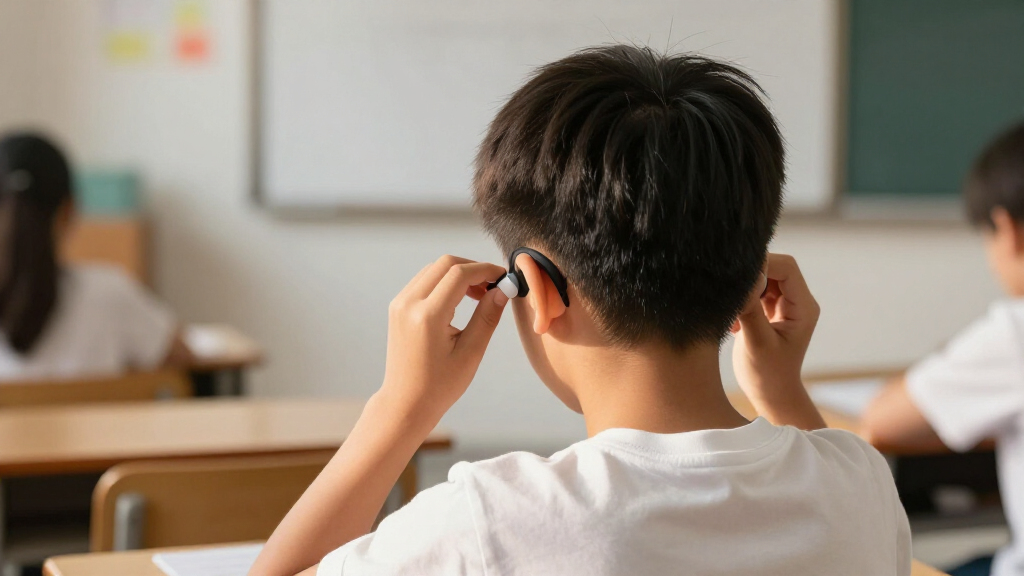
I ranked these devices by how well they address the actual listening gap between a student and an instructor. My primary criteria were speech-focused classroom performance, usable range, channel flexibility, receiver capacity, battery endurance, and the effort required to operate the system. I also weighed hearing-device compatibility, microphone placement, charging demands, portability, warranty support, and package completeness. A device moved higher when its features supported several realistic school settings without adding unnecessary setup work.
The ranking favors balanced classroom usefulness over the longest advertised range or largest receiver bundle alone. Personal amplifiers score well for simplicity and individual ownership, but they rank below remote-microphone systems when teacher mobility is part of the lesson. Large kits earn specialist roles because their value depends on using most of the included receivers. I separated products that look similar by their strongest buyer outcome: the TT106S for endurance, the TT119 variants for distance or cohort size, and the AuraPlex MX for Auracast-based venues. The two Pocketalker 2.0 listings represent the same core device, so I would choose between them by bundle contents, seller support, and final price rather than expect different listening performance.
Factors to Consider When Choosing Assistive Listening Devices For Students
I would start by identifying who carries the microphone, how many students need receivers, and what each student wears to hear the audio. Those choices separate a useful accommodation from equipment that remains in a cabinet. Range claims and receiver totals matter, but daily setup, charging, hygiene, and compatibility often shape the better purchase. Paying more makes sense when it removes a repeated classroom burden or supports several students and teaching formats.
Match the Device to the Teaching Format
The first question is whether the student needs nearby conversation amplified or the instructor’s voice sent directly across the room. A personal amplifier such as a Pocketalker is straightforward for tutoring, desk work, and face-to-face discussion, but microphone distance can limit it during mobile teaching. A remote transmitter system keeps the instructor’s voice closer in the audio mix even when the instructor walks around. Buying a large receiver kit for one learner adds charging and storage work without improving the core connection. For lectures, labs, and field instruction, I favor teacher-worn microphone systems because they preserve a consistent voice path. For short individual sessions, the lighter personal option may be the more practical tool.
Check Headphone and Hearing-Device Compatibility
Audio delivery deserves as much attention as the transmitter because a clear signal is only useful when the student can access it comfortably. Over-ear headphones are simple to issue, but they may conflict with some hearing aids, sensory preferences, hairstyles, or head coverings. Students using hearing aids or cochlear implants may need a telecoil neckloop, direct audio accessory, or compatible wireless route. Auracast can reduce dependence on dedicated receivers in a compatible setup, yet every student device must support the chosen broadcast method. Adapters also add failure points and can erase the savings of a low-cost base system. I would verify the complete path from instructor microphone to student output, including every cable and adapter, before selecting a package.
Choose Receiver Capacity Without Overbuying
Receiver count should reflect the largest routine group, plus a modest allowance for replacements and new students. A four-person system fits tutoring teams and small-group instruction, while 20- and 30-receiver kits are easier to justify for assemblies, language access, or rotating classes. Large bundles can lower the cost per listener, but unused receivers still require labeling, charging, cleaning, and inventory control. Channel count answers a different problem: multiple channels support simultaneous groups or separate language feeds rather than simply improving sound. Schools running one instructor in one room may gain little from 17 channels. I would pay for extra capacity tied to a real schedule, not a hypothetical maximum that adds administrative work.
Treat Range Ratings as Best-Case Figures
Published range is useful for comparing systems, but it rarely describes every classroom, corridor, or auditorium. Walls, other wireless equipment, body position, and transmitter placement can all reduce real-world signal stability. A 300-metre TT119 system has a clear advantage for campus events and large venues, yet that reach may offer little benefit in a standard classroom. A shorter-range system with simple controls and reliable microphone placement can be the better daily choice. Battery endurance also affects usable range indirectly because a depleted transmitter ends the connection regardless of its radio specification. I give more weight to coverage across the actual teaching area than to the largest number printed on the listing.
Plan for Ownership, Charging, and Support
The lowest purchase price can become poor value when staff spend time finding cables, pairing receivers, or replacing mixed batteries. Shared systems need a named storage location, charging routine, and cleaning process, especially when headphones pass between students. Individually assigned devices reduce handoffs but require clear responsibility for bringing and charging the unit. A three-year warranty and phone support may be worth more to a small school than extra channels it cannot manage internally. Premium pricing is easier to defend when it buys centralized multi-channel control, dependable support, or a cleaner compatibility path. I would budget for replacement earpieces, adapters, batteries, cases, and staff orientation when calculating the true cost per school year.
Frequently Asked Questions
Should I Choose a Personal Amplifier or a Teacher-Worn Microphone System?
I would choose a personal amplifier for nearby conversation, tutoring, and students who need a simple device they can control themselves. A teacher-worn transmitter is better when the instructor moves, turns toward a board, or teaches from across the room. The remote microphone maintains a more consistent voice-to-student connection, but it requires teacher participation and a charging routine. Pocketalker models suit simpler individual use, while the T130S and TT106S better match active classroom teaching. The right choice depends less on maximum volume than on where the microphone will be during instruction.
Will These Systems Work With Hearing Aids or Cochlear Implants?
Compatibility depends on the student’s hearing device and the output supplied with the listening system. Some students can use headphones over or near their hearing aids, while others need a telecoil neckloop or direct audio accessory. Cochlear implant users may have manufacturer-specific streaming or input options that require extra hardware. Auracast systems can offer a direct broadcast route when the receiving device supports the same standard, but Auracast branding alone does not confirm compatibility. I would have the school’s hearing specialist or the student’s audiology team verify the complete connection chain before ordering multiple units.
How Many Channels Does a School Actually Need?
One channel is often enough when a single teacher transmits to one student or group in a room. Multiple channels become useful when nearby classes run separate systems, interpreters provide different language feeds, or several presenters operate at once. A 17-channel system offers more room for coordination, but it also asks staff to track channel assignments. Extra channels do not automatically create clearer speech if microphone placement or headphone fit is poor. I would prioritize simple channel selection and enough separation for the school’s real timetable rather than buy the largest channel count. For most single-class setups, ease of daily operation carries more value.
Is It Better for the Student or the School to Own the Device?
Student ownership works well for a compact personal amplifier used across classes, tutoring, and activities. School ownership is usually better for multi-receiver systems because transmitters, charging, channel assignments, and spare parts need centralized management. An individually assigned receiver can bridge the two models: the school manages the system while the student keeps one labeled listening unit. Shared headphones require a clear hygiene and replacement policy, while personally fitted outputs reduce repeated adjustment. I would choose the ownership model that gives one person clear responsibility for charging, storage, and reporting faults.
Is Longer Range or Longer Battery Life More Useful for Students?
For most classrooms, battery life has more daily value once the system already covers the room reliably. A device rated for hundreds of metres is useful for auditoriums, outdoor instruction, tours, and campus events, but extra distance may sit unused during desk-based lessons. The TT106S is attractive for long operating time, while the TT119 models better serve buyers who need extended venue coverage. Advertised battery figures may vary with volume, battery age, and usage patterns, so charging access still matters. I would choose enough range for the largest regular space, then favor endurance that covers the full school day with a practical reserve.
Conclusion
For most classroom buyers, my best overall recommendation is the Retekess T130S because it offers a practical balance of range, channels, and room-to-room flexibility. The Williams Sound Pocketalker Ultra bundle is my value pick when its included accessories cost less than buying the pieces separately, while the Pocketalker 2.0 is the better beginner choice for one student and nearby speech. For a managed, multi-channel installation, I would choose the Avantree Audiplex MX as the premium option; buyers committed to compatible Auracast hardware should instead examine the Venucast AuraPlex MX.
Specific needs produce different winners: the TT106S suits long school days, the 17-channel TT119 fits long-range or interference-heavy venues, and the 30-receiver TT119 supports large student groups. The Retekess T130 package with two transmitters makes more sense for dual-presenter teaching, while the four-person system is sized for tutoring teams that value warranty and phone support. I would treat the duplicate Pocketalker 2.0 listings as one core product and choose the better seller package. The final choice should follow the student’s listening output, the instructor’s movement, and the number of receivers staff can realistically manage.
Halloween Picks
halloween
As an affiliate, we earn on qualifying purchases.