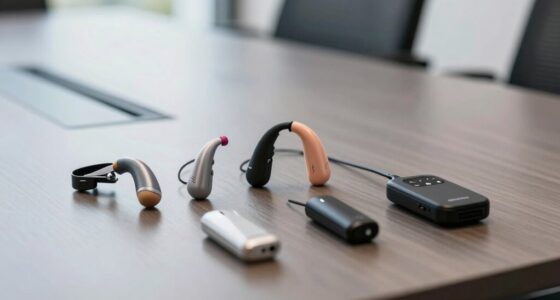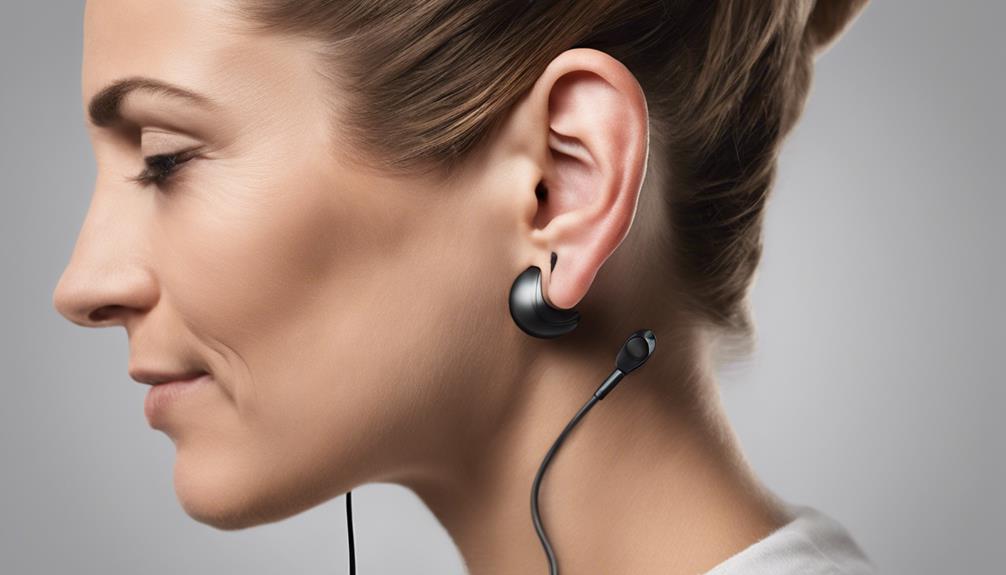

For most buyers comparing personal sound amplification devices, I would start with the Williams Sound Pocketalker Ultra because it balances strong voice pickup, simple controls, and dependable wired listening better than the rest of this lineup. The SuperEar Model SE7500 is the stronger value pick if you want a familiar pocket amplifier without paying for a more premium kit. The Audien Atom One stands apart for buyers who want a discreet OTC-style option instead of a handheld device, though it is less flexible for shared listening. The main tradeoffs are loudness versus clarity, pocket controls versus discreet wear, and rechargeable convenience versus battery confidence. Read on for the full breakdown of which device fits each listening need.

Get everyday helpers delivered free with Prime
- Fast, free delivery on millions of items
- Prime Video, Amazon Music and more included
- Member-only deals all year
Key Takeaways
- Dedicated pocket amplifiers led the ranking because they are easier to aim, adjust, share, and troubleshoot than most tiny in-ear or generic headset-style options.
- Williams Sound Pocketalker Ultra rose to the top because its focused conversation design feels more purpose-built than the many 50dB voice amplifiers in the group.
- SuperEar Model SE7500 gives the best value step up over the SE5000, while the SE9000HP makes more sense for buyers who want the fuller kit.
- Rechargeable models reduce battery hassle, but they are only better if the user will keep a charging routine; replaceable-battery units still win for occasional use.
- Discreet is not always better: Audien Atom One is easier to wear quietly, while pocket units are easier for seniors who want large controls and quick volume changes.
| Rechargeable Hearing Amplifier with Headphone and Directional Microphone for Seniors |  | Best Overall | Maximum Sound Gain: 65dB | Battery Life: Up to 120 hours | Charging Time: 1 hour | VIEW LATEST PRICE | See Our Full Breakdown |
| SuperEar Model SE5000 Personal Sound Amplifier for Seniors |  | Best Value Pick | Maximum Decibel Gain: 107 dB | Ambient Sound Amplification: Up to 50 dB | Battery Life: Up to 30 hours | VIEW LATEST PRICE | See Our Full Breakdown |
| Audien Atom One OTC Hearing Aids |  | Best Discreet In-Ear Option | Device Type: OTC hearing aids | Wear Style: Both ear, in-ear | Battery Type: 2 lithium-ion batteries included | VIEW LATEST PRICE | See Our Full Breakdown |
| Williams Sound Pocketalker Ultra Hearing Amplifier |  | Best for One-on-One Conversations | Amplification: Up to 40dB | Controls: Adjustable volume and tone | Batteries: 20 AAA batteries included | VIEW LATEST PRICE | See Our Full Breakdown |
| WallarGe Rechargeable Neckband Hearing Amplifier with Bluetooth |  | Best for TV and Bluetooth Listening | Battery Life: Up to 35 hours | Charging Time: 3.5 hours | Bluetooth Version: 5.3 | VIEW LATEST PRICE | See Our Full Breakdown |
| SuperEar Model SE7500 Personal Sound Amplifier for Seniors |  | Best Simple Battery-Powered Pick | Amplification: Up to 50 dB | Battery Life: Up to 80 hours | Battery Type: 2 AAA batteries | VIEW LATEST PRICE | See Our Full Breakdown |
| Hearing Amplifier for Seniors with Auto-Gain and Directional Microphone, Rechargeable Battery, Includes Headphones & Earbuds |  | Best Rechargeable Choice | Power Source: Battery powered | Battery Type: Rechargeable lithium ion | Battery Life: Up to 120 hours | VIEW LATEST PRICE | See Our Full Breakdown |
| Reizen Loud Ear 120dB Gain Personal Amplifier |  | Best for Maximum Gain | Gain: 120 dB | Range: Up to 100 feet | Microphone: Built-in | VIEW LATEST PRICE | See Our Full Breakdown |
| Personal Sound Amplifier for Seniors with Voice Enhancement, 50dB Gain, Headphones & Earbud, 3 Microphones, 3 Tone Settings, Volume Control | 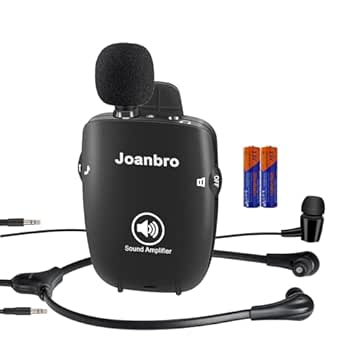 | Best for Sound Customization | Gain: 50 dB, up to 108 dB total amplification | Microphones: 3 removable microphone types | Tone Settings: 3 settings | VIEW LATEST PRICE | See Our Full Breakdown |
| Personal Sound Amplifier – Voice Enhancer Device with 50dB Gain and 100 Feet Range |  | Best Compact Long-Range Pick | Sound Gain: 50 dB | Range: Up to 100 feet | Power: 1 AAA battery | VIEW LATEST PRICE | See Our Full Breakdown |
| SuperEar Model SE9000HP Personal Sound Amplifier for Seniors |  | Best Rechargeable Frequency-Control Pick | Amplification: Up to 50dB | Frequency Settings: High, Medium, Low | Output Level: 107dB | VIEW LATEST PRICE | See Our Full Breakdown |
More Details on Our Top Picks
Rechargeable Hearing Amplifier with Headphone and Directional Microphone for Seniors
I place this iRoger amplifier first because it balances 65dB maximum gain, directional noise control, and a very simple control layout better than the rest of this group. Compared with the Williams Sound Pocketalker Ultra, it offers more stated gain and a rechargeable design, so it feels better suited to daily carry rather than a bedside or TV-side device. The one-knob setup also makes it less fiddly than the Audien Atom One, which asks more from the buyer during setup. The tradeoff is that this is still an amplifier with headphones, not a discreet in-ear hearing aid, and users with severe hearing loss may outgrow it. Its strongest fit is the buyer who wants clearer conversation without a complicated learning curve.
Pros:- 65dB maximum gain gives it more headroom than several simpler conversation amplifiers
- Directional noise-canceling microphone helps focus on speech in busier rooms
- Single volume knob keeps daily use easy for seniors with limited dexterity
- Fast 1-hour charging and up to 120 hours of battery life reduce charging anxiety
Cons:- Headphone-based design is less discreet than in-ear OTC hearing aids
- May not provide enough support for severe hearing loss
- Rechargeable battery means it needs power access instead of quick battery swaps
Best for: Seniors who want a simple rechargeable amplifier for conversations, errands, and TV listening without app-based setup.
Not ideal for: People with severe hearing loss or anyone who wants a nearly invisible in-ear device rather than a headphone-style amplifier.
- Maximum Sound Gain:65dB
- Battery Life:Up to 120 hours
- Charging Time:1 hour
- Microphone Type:Directional noise-canceling microphone
- Control:Single volume knob
- Warranty:2 years
- Additional Service:Lifetime repair service
Bottom line: This is my best overall pick for buyers who want strong amplification, simple controls, and long rechargeable runtime in one practical package.
SuperEar Model SE5000 Personal Sound Amplifier for Seniors
The SuperEar Model SE5000 earns its place as the value pick because it gives buyers the basics in a complete, low-friction kit: headphones, earbuds, battery, and belt clip. Compared with the rechargeable WallarGe Neckband Hearing Amplifier, it is less modern and skips Bluetooth, but it is also more direct for someone who just wants louder ambient sound without pairing or charging habits. Against the iRoger amplifier, it offers less stated ambient gain and shorter runtime, yet its tactile volume control and included accessories make it easy to hand to a parent or relative. The main compromise is consistency: amplification depends heavily on the user’s hearing profile, and it will not replace a fitted device for more complex needs. I like it most as a straightforward starter amplifier.
Pros:- Complete accessory kit includes headphones, earbuds, AAA battery, and belt clip
- Tactile volume control is easy to operate without menus or apps
- Up to 30 hours of battery life works well for occasional daily use
- Compact body can clip to clothing for hands-free listening
Cons:- No Bluetooth or wireless TV connection
- Performance can vary widely by individual hearing ability
- AAA battery operation is less convenient than rechargeable models for frequent users
Best for: Budget-focused caregivers buying a simple sound amplifier for occasional conversations, appointments, or TV use.
Not ideal for: Buyers who need wireless TV streaming, rechargeable convenience, or more tailored hearing support for uneven hearing loss.
- Maximum Decibel Gain:107 dB
- Ambient Sound Amplification:Up to 50 dB
- Battery Life:Up to 30 hours
- Power Source:AAA battery
- Includes:Headphones, earbuds, AAA battery, and belt clip
- Accessory Compatibility:Disposable earpad covers and headphone extension cable
- Wear Style:Clip-on amplifier with wired listening accessories
Bottom line: The SE5000 makes the most sense for buyers who want an affordable, ready-to-use amplifier and can live without modern wireless features.
Audien Atom One OTC Hearing Aids
The Audien Atom One fills a different slot from the headphone-style amplifiers here: it is the pick for buyers who want a more discreet, both-ear hearing setup. Compared with the SuperEar SE5000 or Williams Sound Pocketalker Ultra, it is less like a shared listening tool and more like a personal daily device, with adjustable sound settings and a small in-ear profile. That matters for buyers who do not want a body pack, neckband, or visible headphones. The tradeoff is setup. The expert-guided fitting and frequency adjustment can be helpful, but they also make this less plug-and-play than the iRoger one-knob amplifier. I would rank it below the top amplifier for pure simplicity, but above bulkier options for buyers who value discretion and personalized sound shaping.
Pros:- Discreet in-ear design is less visible than headphone or body-pack amplifiers
- Adjustable frequency system helps tailor sound to the user’s hearing needs
- Expert-guided setup can reduce guesswork during fitting
- Rechargeable lithium-ion batteries support all-day use
Cons:- Initial setup is more involved than simple personal amplifiers
- Limited beige color may not match every skin tone or preference
- May be less effective for severe hearing loss
Best for: Adults who want a discreet both-ear rechargeable option with adjustable sound rather than a visible handheld or neckband amplifier.
Not ideal for: Seniors who want one large knob and no fitting process, or people with severe hearing loss who need professional evaluation.
- Device Type:OTC hearing aids
- Wear Style:Both ear, in-ear
- Battery Type:2 lithium-ion batteries included
- Battery Weight:5 grams
- Compatible Devices:Smartphone, tablet, and television
- Control Type:Button control
- Noise Control:Passive noise cancellation and sound isolation
- Color:Beige
Bottom line: The Audien Atom One is the right fit when appearance and personalized adjustment matter more than instant out-of-box simplicity.
Williams Sound Pocketalker Ultra Hearing Amplifier
The Williams Sound Pocketalker Ultra is the most conversation-focused pick in this batch. Its 40dB amplification is lower than the iRoger model’s stated 65dB and below the SuperEar SE5000’s ambient boost, but the Pocketalker counters with volume and tone controls that help make speech more intelligible rather than merely louder. Compared with the WallarGe Neckband Hearing Amplifier, it is less suited to Bluetooth TV audio, yet it feels better aimed at face-to-face chats, small groups, and care settings where a caregiver may need to set up the device quickly. The year supply of AAA batteries is a real practical advantage, though ongoing battery use will bother buyers who prefer charging. I would skip it for severe hearing loss, but for mild to moderate conversation support, its focused design makes sense.
Pros:- Volume and tone controls help tune speech clarity for mild to moderate needs
- Includes headphones, single earbud, lanyard, microphone extension cord, and manual
- Year supply of AAA batteries reduces immediate accessory costs
- Compatible with neckloops and telecoil devices
Cons:- 40dB amplification is lower than several louder options in the roundup
- AAA batteries create ongoing replacement needs
- Not appropriate as a substitute for a licensed hearing aid for severe loss
Best for: Caregivers and seniors who need a dependable amplifier for one-on-one conversations, small groups, and TV listening without Bluetooth setup.
Not ideal for: Frequent travelers or heavy daily users who prefer a rechargeable device and higher gain for louder environments.
- Amplification:Up to 40dB
- Controls:Adjustable volume and tone
- Batteries:20 AAA batteries included
- Included Listening Accessories:Headphones and single earbud
- Included Carry Accessories:Lanyard and microfiber cloth
- Microphone Accessory:Microphone extension cord included
- Compatibility:Neckloops and telecoil devices
- Design:Lightweight, ergonomic, portable
Bottom line: The Pocketalker Ultra is my pick for buyers who care more about clear nearby speech than maximum gain or Bluetooth extras.
WallarGe Rechargeable Neckband Hearing Amplifier with Bluetooth
The WallarGe Rechargeable Neckband Hearing Amplifier is the most media-friendly option here because it combines sound amplification with Bluetooth 5.3 headphones. Compared with the Williams Sound Pocketalker Ultra, it is better for buyers who split time between conversations and TV audio, especially since low-latency Bluetooth can make dialogue easier to follow. It also offers separate left and right volume controls, a useful advantage over simpler single-control models like the SuperEar SE5000 when hearing differs between ears. The tradeoff is form factor: a neckband is more visible than the Audien Atom One and less pocketable than clip-on amplifiers. It also has fewer hearing-specific tuning features than dedicated OTC hearing aids. I see it as a hybrid pick for home listening, not the best medical-style hearing solution.
Pros:- Bluetooth 5.3 adds wireless use with phones, tablets, and TV transmitters
- Low-latency audio helps keep TV dialogue better matched to the screen
- Separate volume controls for each ear support uneven hearing needs
- 35-hour battery life is strong for a Bluetooth-capable neckband
Cons:- Neckband style is more visible than in-ear options
- 3.5-hour charging time is slower than the iRoger amplifier
- Limited hearing-specific features beyond amplification and individual volume
Best for: TV watchers and smartphone users who want one rechargeable neckband for amplified conversations and Bluetooth audio.
Not ideal for: Buyers who want a discreet in-ear hearing aid look or advanced sound tuning for complex hearing loss.
- Battery Life:Up to 35 hours
- Charging Time:3.5 hours
- Bluetooth Version:5.3
- Audio Mode:Hearing amplifier and Bluetooth headphones
- Volume Adjustment:Separate controls for each ear
- Microphone:Built-in microphone
- Control:Single switch button
Bottom line: The WallarGe neckband is the best fit for buyers who want amplified hearing help and Bluetooth listening in a single home-friendly device.
SuperEar Model SE7500 Personal Sound Amplifier for Seniors
I rank the SuperEar SE7500 as the straightforward choice for shoppers who want large amplification without many controls. Its up-to-50 dB boost and long 80-hour battery life make it better suited to TV listening, group chats, or meetings than the more control-heavy Personal Sound Amplifier with 3 Microphones. Compared with the Reizen Loud Ear, it offers less claimed gain, but the included earbuds and headphones make it more flexible for buyers who dislike single-ear listening.
The tradeoff is that this is still a basic PSAP, not a medical hearing aid. I would pick it for simplicity, portability, and runtime, but skip it if fine-tuned sound shaping or rechargeable convenience matters more than easy volume control.
Pros:- Up to 50 dB amplification helps raise voices and room sounds
- Up to 80 hours of battery life reduces frequent battery changes
- Includes both earbuds and headphones for fit flexibility
- Compact body with carry case and belt clip supports portable use
Cons:- AAA batteries must be replaced over time
- No advanced tone presets or directional microphone system
- May be too basic for users with more specific hearing needs
Best for: Seniors who want a simple pocket-style amplifier for TV, meetings, and everyday conversations without learning several sound modes.
Not ideal for: Buyers who want rechargeable power or advanced noise filtering, since this model depends on AAA batteries and basic volume adjustment.
- Amplification:Up to 50 dB
- Battery Life:Up to 80 hours
- Battery Type:2 AAA batteries
- Adjustable Volume:Yes
- Included Earpieces:Earbuds and headphones
- Included Storage:Carry case
- Design:Lightweight, portable body
- Documentation:Manual included
Bottom line: Choose the SuperEar SE7500 if you want a simple, long-running PSAP with enough included accessories to use it in several listening situations.
Hearing Amplifier for Seniors with Auto-Gain and Directional Microphone, Rechargeable Battery, Includes Headphones & Earbuds
I place this rechargeable hearing amplifier above the disposable-battery models for buyers who want fewer maintenance chores. The up-to-120-hour battery life is longer than the SuperEar SE7500 and far longer than the 40-hour Personal Sound Amplifier with 3 Microphones, so it fits people who forget battery changes or use a PSAP daily. Its directional microphone also gives it a clearer conversation focus than the basic built-in microphone on the Personal Sound Amplifier with 100 Feet Range.
It is not the most feature-rich pick. The one-dial control is friendly, but buyers who want multiple tone settings may prefer the 3-microphone model. I see this as the practical middle ground: easy operation, strong runtime, and less battery waste, with fewer sound-tuning options.
Pros:- Rechargeable lithium-ion battery cuts down on battery replacement
- Up to 120 hours of runtime suits frequent daily use
- Directional microphone helps focus on voices in front of the listener
- One-dial manual control is easier for many seniors
Cons:- Basic design compared with premium hearing aids
- Requires charging, so it can run out if not kept powered
- Noise reduction details are limited beyond the directional microphone
Best for: Daily users who want a rechargeable senior-friendly amplifier with simple controls and better conversation focus.
Not ideal for: Tinkerers who want several tone profiles and removable microphone setups, since this model favors one-dial simplicity.
- Power Source:Battery powered
- Battery Type:Rechargeable lithium ion
- Battery Life:Up to 120 hours
- Control Type:Manual one-dial control
- Microphone:Directional microphone
- Included Listening Options:Headphones and earbuds
- Dimensions:6 in L x 2.5 in W
- Weight:4.8 ounces
- Material:Plastic
Bottom line: This is the pick I would steer toward buyers who want rechargeable convenience and simple voice-focused listening over advanced adjustments.
Reizen Loud Ear 120dB Gain Personal Amplifier
The Reizen Loud Ear earns its role because its headline feature is raw amplification: 120 dB gain. That makes it the most forceful option in this batch on paper, and a better match for buyers who want help hearing sounds at a distance than the SuperEar SE7500 or the compact 50 dB Voice Enhancer. The claimed up-to-100-foot range also puts it near the long-range model, but with a louder gain claim.
That power brings compromises. It is less refined than the rechargeable auto-gain amplifier, and the single-ear setup may feel tiring during longer sessions. I would treat this as a focused listening tool rather than an all-day companion. It makes sense when volume and reach matter most, while comfort, rechargeability, and balanced sound matter less.
Pros:- 120 dB gain is the strongest amplification claim in this group
- Up to 100 feet of range helps with distant sound sources
- Built-in microphone keeps the setup simple
- Includes batteries, earphone, and headphones
Cons:- AAA batteries are replaceable rather than rechargeable
- Single-ear listening can be less comfortable for long sessions
- Less sound shaping than models with tone settings or auto-gain
Best for: Buyers who need very strong amplification for short listening sessions, distance listening, or occasional focused use.
Not ideal for: People who want discreet all-day wear, stereo-style listening, or rechargeable convenience, because this is a louder, more basic single-ear device.
- Gain:120 dB
- Range:Up to 100 feet
- Microphone:Built-in
- Battery Type:2 AAA batteries
- Included Earphone:1 mini earphone
- Included Headphones:1 free pair of headphones
- Use Style:Personal single-ear amplification
Bottom line: Pick the Reizen Loud Ear when the main goal is maximum volume and distance pickup rather than comfort or refined sound control.
Personal Sound Amplifier for Seniors with Voice Enhancement, 50dB Gain, Headphones & Earbud, 3 Microphones, 3 Tone Settings, Volume Control
This Personal Sound Amplifier with Voice Enhancement is the best fit when a buyer wants more ways to shape sound. Compared with the SuperEar SE7500, it adds three removable microphone options, three tone settings, volume control, and noise cancellation, which means it can adapt better between TV, conversation, and noisier rooms. It also gives more tuning flexibility than the rechargeable auto-gain model, which keeps things simpler.
The downside is the learning curve. More controls can help match hearing preferences, but they can also frustrate someone who only wants one dial. Battery life is about 40 hours, so it trails both the SE7500 and the rechargeable option. I would rank it highest for control, not ease. It is a strong choice for buyers who want adjustment power in a portable PSAP.
Pros:- Three microphone options help adapt to different rooms and conversations
- Tone and volume adjustments give more control over sound character
- Noise cancellation helps reduce competing background sound
- Includes headphones, earbuds, extension cables, and belt clip
Cons:- Controls may feel complex at first
- Approximate 40-hour battery life is shorter than several rivals
- Uses AAA batteries instead of a rechargeable pack
Best for: Seniors or caregivers who want adjustable tone, volume, and microphone choices for different listening environments.
Not ideal for: Users who get frustrated by multiple controls or want the longest runtime, since the settings require learning and battery life is shorter.
- Gain:50 dB, up to 108 dB total amplification
- Microphones:3 removable microphone types
- Tone Settings:3 settings
- Volume Control:Yes
- Noise Cancellation:Yes
- Battery Type:2 AAA batteries included
- Battery Life:Approximately 40 hours
- Included Accessories:Headphones, earbuds, extension cables, belt clip
- Color:Black
Bottom line: Choose this model if you want a more adjustable PSAP and are willing to trade some simplicity and runtime for sound control.
Personal Sound Amplifier – Voice Enhancer Device with 50dB Gain and 100 Feet Range
I give this Voice Enhancer Device the compact long-range slot because it pairs 50 dB sound gain with an up-to-100-foot range in a lightweight body. It is less powerful than the Reizen Loud Ear’s 120 dB claim, but it has more everyday appeal for shoppers who want adjustable volume and tone without buying a larger accessory-heavy kit. Compared with the SuperEar SE7500, it appears simpler and more portable, though it gives up that model’s longer listed runtime and broader included accessory set.
The limits are clear: one AAA battery means ongoing replacements, and the basic built-in microphone is not as conversation-focused as the rechargeable amplifier’s directional microphone. I would choose it for portable distance listening, not for noisy group settings or heavy daily use.
Pros:- Up to 100 feet of range helps with TV, lectures, or distant speakers
- 50 dB gain suits moderate amplification needs
- Adjustable volume and tone provide basic sound control
- Lightweight design is easy to carry
Cons:- Uses a replaceable AAA battery
- Less powerful than the Reizen Loud Ear
- Basic microphone setup may struggle in noisy spaces
Best for: Buyers who want a small amplifier for occasional indoor or outdoor distance listening without a large body or many accessories.
Not ideal for: People who need strong noise filtering for busy rooms, because the built-in microphone is simpler than directional or multi-mic systems.
- Sound Gain:50 dB
- Range:Up to 100 feet
- Power:1 AAA battery
- Microphone:Built-in
- Volume Control:Adjustable
- Tone Control:Adjustable
- Weight:Lightweight
- Use Case:Indoor and outdoor personal amplification
Bottom line: This compact voice enhancer makes the most sense for occasional long-range listening when portability matters more than advanced noise handling.
SuperEar Model SE9000HP Personal Sound Amplifier for Seniors
I would place the SuperEar Model SE9000HP above simpler SuperEar models when the buyer wants rechargeable power plus more control over tone. Compared with the SuperEar Model SE5000, its high, medium, and low frequency settings make it easier to shape voices, TV sound, or outdoor conversation instead of only turning everything louder. It is also more self-contained than the Williams Sound Pocketalker Ultra for shoppers who want included rechargeable AAA batteries and a charging cube. The tradeoff is that this is still a personal amplifier, not a fitted hearing aid, so results depend heavily on hearing profile and environment. At 13.4 ounces, it is portable, but not as discreet as tiny OTC hearing aids like the Audien Atom One.
Pros:- Up to 50dB amplification gives it enough lift for many everyday listening situations
- High, medium, and low frequency settings help match different voices and environments
- Rechargeable AAA batteries and charging cube reduce ongoing battery purchases
- Belt clip makes hands-free use easier around the home or outdoors
Cons:- Performance can vary a lot depending on the user’s hearing loss pattern
- Less discreet than in-ear OTC hearing aids or compact wearable amplifiers
- Still depends on batteries, so charging habits matter
Best for: Seniors who want a rechargeable handheld amplifier with simple tone control for TV, conversation, and occasional outdoor use.
Not ideal for: Buyers who need discreet all-day wear or medically tuned hearing support, since this is bulkier and less personalized than OTC hearing aids.
- Amplification:Up to 50dB
- Frequency Settings:High, Medium, Low
- Output Level:107dB
- Batteries:2 AAA rechargeable batteries included
- Weight:13.4 ounces
- Dimensions:8.19 x 6.57 x 1.73 inches
Bottom line: Choose the SE9000HP if you want a practical rechargeable amplifier with tone control, but skip it if you need a barely visible hearing-aid-style device.
How We Picked
I ranked these personal sound amplification devices by how well they solve common listening problems: hearing a single speaker across a table, following television at a lower room volume, catching voices in appointments, and using the device without help. I gave the most weight to speech clarity, usable gain, microphone direction, control simplicity, comfort, battery setup, and value. A device with more gain did not automatically move up; if the design makes feedback, cable fuss, or volume jumps more likely, it sits lower than a calmer model with less raw power. I also treated OTC hearing-aid-style products differently from pocket amplifiers because they suit different buyers, even when both promise personal sound amplification.
The ranking favors the Williams Sound Pocketalker Ultra as the best overall because it combines a proven pocket format, direct volume control, and better conversation focus than most generic 50dB units. The SuperEar Model SE7500 and SuperEar Model SE5000 rank well for value and simplicity, while the Audien Atom One earns its place for buyers who want a discreet ear-level option instead of a handheld amplifier. Rechargeable headset and neckband models move up when they add convenience without making setup harder; loud high-gain models move down when power is the main selling point and speech control feels less clear.
Factors to Consider When Choosing Personal Sound Amplification Devices
I treat personal sound amplification devices as task-specific listening tools, not interchangeable mini hearing aids. The right choice depends on where the user struggles most, how much help they want from other people, and whether they prefer a pocket unit, headset, neckband, or discreet ear-level design.
Start With the Listening Situation
A pocket amplifier with a directional mic often works best when the main goal is one-on-one conversation because the user can aim the microphone toward the speaker. A neckband or headset can feel easier for TV listening or longer wear, since the hands stay free and the controls stay near the body. Small in-ear styles are more discreet, but they usually give up the visible controls and easy sharing that make pocket units friendly for seniors. The common mistake is buying the loudest device for every setting, then fighting background noise at restaurants or family gatherings. I would match the device to the main room first, then treat any extra uses as a bonus. If the buyer needs help across many noisy public spaces, a PSAP may feel limited compared with a professionally fitted option.
Treat Gain as Control, Not Just Loudness
Gain numbers such as 50dB or 120dB look simple, but louder is not automatically clearer. High gain can help soft voices, lectures, or television, yet it can also amplify dishes, HVAC, paper rustle, and feedback. The better question is whether the device gives enough volume range and tone shaping to make speech stand apart from noise. Directional microphones and tone settings often matter more than maximum output because they shape what gets amplified. Buyers with sound sensitivity should favor smoother volume controls over raw power claims. I would reserve extreme-gain models for buyers who already know they need very strong amplification and can manage the extra noise risk.
Choose a Form Factor the User Will Actually Wear
Personal sound amplification devices fail when they are too fiddly for daily use. A pocket unit is larger, but it gives the user big controls and visible buttons, which can be a real advantage for seniors or caregivers. Earbud-style models are less visible, yet tiny charging contacts, small tips, and small volume adjustments may frustrate buyers with shaky hands. Neckband designs split the difference: they keep the device on the body and can add Bluetooth-friendly listening, but the band is always present around the neck. Headphone-based kits can sound direct and simple, though they are less discreet in public. I would choose the shape the user can handle on a tired day, not the one that looks neatest in a product photo.
Balance Rechargeable Convenience Against Battery Confidence
Rechargeable personal sound amplification devices reduce trips to buy small batteries and can be easier for buyers who dislike handling tiny cells. The tradeoff is routine: the device has to land on the charger, and the user has to remember whether it is ready before leaving home. Replaceable-battery pocket units can be better for people who want spare batteries in a drawer or travel bag. For caregivers, charging bases and battery indicators matter because they make troubleshooting faster. I would pay more for rechargeable power when the device is used every day and the user already charges a phone or tablet reliably. For occasional use, a replaceable battery may feel simpler and less annoying.
Know the Line Between PSAPs and Hearing Aids
Personal sound amplification devices are meant for situational listening, such as conversations, TV, meetings, or hearing a speaker from across a room. They are not the same as prescription hearing aids, and even OTC hearing aids like the Audien Atom One occupy a different lane from pocket amplifiers. If hearing loss affects safety, work, social life, or one ear more than the other, I would make room for a hearing check before relying on a PSAP. PSAPs usually amplify the whole environment, while hearing aids are built to match a hearing profile and manage sound in more granular ways. A buyer who mainly needs help with occasional soft voices may be happy with a PSAP; a buyer who struggles every day in mixed noise may outgrow one quickly. The right expectation prevents paying for the wrong kind of help.
Frequently Asked Questions
Are personal sound amplification devices the same as hearing aids?
No. Personal sound amplification devices are mainly for situational sound boosting, while hearing aids are designed for diagnosed hearing loss and more tailored sound processing. A PSAP can make voices, TV, or room sound louder, but it usually does not shape sound around a personal hearing profile. OTC hearing aids such as the Audien Atom One sit closer to the hearing-aid category than pocket amplifiers do. I would treat a PSAP as a practical listening helper, not a medical substitute.
Should I pick a pocket amplifier or a discreet earbud-style device?
A pocket amplifier is usually better for seniors who want large controls, easy volume changes, and the ability to point the microphone toward a speaker. A discreet earbud-style device is better when appearance and all-day wear matter more than shared listening or visible controls. The tradeoff is control: tiny devices can be harder to adjust, clean, charge, and troubleshoot. I would choose the Williams Sound Pocketalker Ultra or a SuperEar model for simplicity, and the Audien Atom One for buyers who strongly prefer a low-profile fit.
How much gain do I really need in a personal sound amplification device?
More gain helps only when the device keeps speech clear. A 50dB amplifier can be enough for TV, quiet conversations, and many appointments, while a high-output model such as the Reizen Loud Ear 120dB Gain Personal Amplifier fits buyers who already know they need much stronger sound. The risk is that extra gain can raise background noise and feedback along with voices. I would focus on directional microphones, tone settings, and smooth volume control before chasing the biggest number.
Are rechargeable PSAPs better than battery-powered models?
Rechargeable models are better for daily users who can keep a charging habit. They reduce the hassle of buying and handling small batteries, which can matter for people with limited dexterity. Battery-powered pocket amplifiers still have a place because spares are easy to carry and the device can be revived quickly. I would choose rechargeable convenience for routine use and replaceable batteries for travel, occasional use, or users who dislike charging another device.
Which device type is easiest for seniors who do not want tech complexity?
The easiest options are usually simple pocket amplifiers with a clear volume dial, wired headphones or earbuds, and minimal modes. The SuperEar Model SE5000 is a strong beginner-style pick because it keeps the format familiar and avoids a heavy feature set. The Williams Sound Pocketalker Ultra is also senior-friendly, but it feels more capable for buyers who want a higher-confidence main device. I would avoid tiny controls, app-style behavior, and complex charging cases for anyone who wants the least fuss.
Conclusion
My short answer is to choose best overall: Williams Sound Pocketalker Ultra if you want the most balanced personal sound amplification device for conversations, TV, and appointments. Choose best value: SuperEar Model SE7500 if you want a capable pocket amplifier without moving into the highest-priced kit, or choose best for beginners: SuperEar Model SE5000 if simple controls matter most. The best premium-style choice: SuperEar Model SE9000HP makes sense for buyers who want the fuller SuperEar setup, while the Audien Atom One is the better discreet OTC-style alternative. Pick the WallarGe rechargeable neckband if hands-free wear and Bluetooth matter, and pick the Reizen Loud Ear when maximum gain is the main need. Choose the rechargeable directional-mic kits when charging convenience and included headphones are more useful than brand familiarity. For distance listening or tone tweaking, the 100-foot voice enhancer and the 3-microphone voice enhancement amplifier are more specialized picks, but they should not be the default starting point for most buyers.
Columbus Day / Indigenous Peoples' Day Picks
long weekend sales
As an affiliate, we earn on qualifying purchases.