
Speech-to-text captioning devices range from wearable recorders to meeting-focused hubs and dedicated dictation tools. I would name the viaim NoteKit AI Meeting Voice Recorder the best overall for meeting-centered capture, with the YUEHISY AI Voice Hub standing out for real-time transcription and translation and the Philips SpeechExec USB Transcription Set 7177 for a more traditional transcription workflow. The main tradeoff is whether you need captions as speech happens, searchable notes after a recording, or hands-free dictation. Portability, compatibility, and reliance on companion software can matter as much as the recorder itself. Read on for the full breakdown and a guide to matching a device to your routine.

Get everyday helpers delivered free with Prime
- Fast, free delivery on millions of items
- Prime Video, Amazon Music and more included
- Member-only deals all year
Key Takeaways
- The roundup splits into distinct workflows: the viaim NoteKit and voice hubs center on meetings and live text, while the Philips set and PenPower VoiceWriter suit transcription or dictation tasks.
- Real-time text and post-recording transcripts are not interchangeable: buyers who need captions during a conversation should prioritize live transcription support, not just AI summaries.
- Wearable convenience comes with fit and placement tradeoffs: the Fieldy 3 and several Gem options favor discreet capture, but a wrist-worn form is not automatically the best choice for every conversation.
- Dedicated hardware does not remove software questions: check supported devices, transcription languages, account requirements, and any service limits before choosing an AI recorder or hub.
- The product names suggest different strengths rather than one universal winner: USB transcription tools, compact recorders, wearable devices, and translation hubs solve different parts of speech capture.
| Philips SpeechExec USB Transcription Set 7177 |  | Best for Desk-Based Transcription | Brand: Philips | Model: LFH7177/05 | Hardware interface: USB | VIEW LATEST PRICE | See Our Full Breakdown |
| Tovel AI Voice Recorder and Note Taker |  | Best for Phone Calls and In-Person Recording | Connectivity: Bluetooth | Microphones: Two built-in microphones; mono and stereo modes | Recording formats: MP3 and WAV | VIEW LATEST PRICE | See Our Full Breakdown |
| Fieldy 3 Wearable AI Note-Taking Device, Black |  | Best for Privacy-Conscious Wearable Notes | Model: FL3B | Connectivity: Bluetooth | Microphone: Built-in mono, noise-filtering | VIEW LATEST PRICE | See Our Full Breakdown |
| viaim NoteKit AI Meeting Voice Recorder |  | Best for Multilingual Meetings | Connectivity: Bluetooth 5.3 | Microphones: Built-in dual microphones | Audio format: WAV | VIEW LATEST PRICE | See Our Full Breakdown |
| Gem Wearable AI Voice Recorder with Apple Watch Co-Wear Strap |  | Best for Apple Watch Wearers | Compatible Apple Watch: Series 1–11, SE, and Ultra (38–49 mm) | Wrist fit: 5.5–8.7 in (140–220 mm) | Battery life: Up to 20 hours | VIEW LATEST PRICE | See Our Full Breakdown |
| HIUTY AI Voice Recorder with Transcription and Summary, 64GB |  | Best Pocket Recorder | Storage capacity: 64 GB | Connectivity: Bluetooth 5 | Microphone: Built-in | VIEW LATEST PRICE | See Our Full Breakdown |
| Gem Wearable AI Voice Recorder & Transcriber Wristband |  | Best Hands-Free Wearable | Weight: 0.4 oz (11 g) | Wrist size: 5.9–8.7 in (150–220 mm) | Battery life: 20 hours | VIEW LATEST PRICE | See Our Full Breakdown |
| Gem Wearable AI Voice Recorder for Apple Watch Bands |  | Best for Apple Watch Owners | Compatible Apple Watch: Series 1–11, SE, and Ultra; 38–49 mm | Wrist fit: 5.5–8.7 in (140–220 mm) | Recording time: Up to 20 hours | VIEW LATEST PRICE | See Our Full Breakdown |
| YUEHISY AI Voice Hub with Real-Time Transcription and Translation |  | Best USB Hub for Real-Time Translation | Hardware interface: USB 2.0 | Total USB ports: 3 | Compatible devices: PCs, Chromebooks, tablets, gaming consoles | VIEW LATEST PRICE | See Our Full Breakdown |
| Yunseity AI Voice Hub USB Adapter for Transcription and Translation |  | Best for Document-Centered Workflows | Item weight: 1.45 ounces | Package dimensions: 4.72 x 1.97 x 0.79 inches | Connectivity: USB | VIEW LATEST PRICE | See Our Full Breakdown |
| RECOLX AI Voice Recorder and Transcriber, Pearl Gray, 64 GB |  | Best for Multilingual Recording | Storage: 64 GB | Continuous recording: Up to 30 hours | Speech-to-text languages: Up to 112 languages and accents | VIEW LATEST PRICE | See Our Full Breakdown |
| PenPower AI VoiceWriter Dictation and Writing Assistant with USB Dongle |  | Best for Desktop Dictation and Editing | Supported desktop operating systems: Windows 10 or later; macOS 13 or later | Supported mobile operating systems: Android 9.0 or later; iOS 15 or later | Dictation languages: 33 | VIEW LATEST PRICE | See Our Full Breakdown |
| speech-to-text captioning device | Connectivity |
|---|---|
| Philips SpeechExec USB Transcr | — |
| Tovel AI Voice Recorder and No | Bluetooth |
| Fieldy 3 Wearable AI Note-Taki | Bluetooth |
| viaim NoteKit AI Meeting Voice | Bluetooth 5.3 |
| Gem Wearable AI Voice Recorder | — |
| HIUTY AI Voice Recorder with T | Bluetooth 5 |
| Gem Wearable AI Voice Recorder | Bluetooth 5 |
| Gem Wearable AI Voice Recorder | Bluetooth 5 |
| YUEHISY AI Voice Hub with Real | Plug and play; no drivers required |
| Yunseity AI Voice Hub USB Adap | USB |
| RECOLX AI Voice Recorder and T | Bluetooth; USB-C |
| PenPower AI VoiceWriter Dictat | — |
More Details on Our Top Picks
Philips SpeechExec USB Transcription Set 7177
I’d choose the Philips SpeechExec USB Transcription Set 7177 for someone whose captioning workflow involves replaying recorded speech while typing, rather than needing live captions on the move. Its hands-free foot control lets a transcriber pause and replay audio without taking their hands off the keyboard, while the under-the-chin headphones are designed for extended listening. That makes it a different kind of tool from the Tovel AI Voice Recorder, which records conversations and relies on its app to produce transcripts. The tradeoff is that this Philips set is an accessory-and-software workflow, not a standalone recorder or automatic captioning device: it requires compatible transcription software and is limited to PC computers and laptops. I’d rank it for focused desk work, not for people who want speech turned into text with minimal manual effort.
Pros:- Foot control supports hands-free pausing and replay while typing.
- Ergonomic pedal design is intended to reduce physical strain during long transcription sessions.
- Magnetically controlled switches and rugged pedals are built for repeated use.
- Lightweight under-the-chin headphones have soft ear cushions for extended listening.
Cons:- Requires compatible transcription software; the set does not itself provide automatic speech-to-text captions.
- Compatibility is limited to PC computers and laptops.
- The workflow depends on listening and manually typing rather than generating a transcript automatically.
Best for: PC-based transcriptionists, legal or medical office staff, and students who routinely type from recorded audio and want hands-free playback controls.
Not ideal for: People seeking automatic live captions, a portable conversation recorder, or compatibility with Mac and mobile devices.
- Brand:Philips
- Model:LFH7177/05
- Hardware interface:USB
- Headphone jack:3.5 mm
- Weight:0.71 kg
- Compatible devices:PC computers and laptops with compatible transcription software
- Included audio accessories:Foot control and under-the-chin stereo headphones
Our verdict“Choose the Philips set for hands-free, PC-based transcription from recordings, but skip it if you need automatic captions or a portable AI recorder.”
Tovel AI Voice Recorder and Note Taker
The Tovel AI Voice Recorder and Note Taker suits buyers who need one small device for both phone calls and in-person conversations. Its magnetic attachment and included ring support different phone setups, while the app can transcribe in 112 languages and turn recordings into summaries, tasks, calendar events, or draft follow-up emails. Compared with Fieldy 3, Tovel also stores audio and offers up to 64 GB of capacity, which may appeal to people who want recordings available alongside transcripts. The tradeoff is that the most accurate transcripts, speaker labels, and many integrations require a paid plan; free transcription is standard-accuracy and subject to fair use. Its non-removable battery also limits repair options. I’d pick it over the Philips set for app-driven capture, but not for users who want a fully free, high-accuracy service.
Pros:- Captures phone calls and in-person conversations, including when the phone is off.
- Free plan includes unlimited standard-accuracy transcription and summaries, subject to fair use.
- 64 GB storage and up to 45 hours of battery life support extended use between charges.
- App can draft notes, calendar events, tasks, and follow-up emails for user approval.
Cons:- Highest-accuracy transcripts, speaker labels, and many integrations require a paid plan.
- The built-in battery is non-removable.
- No headphone jack is listed for direct wired listening.
Best for: People who regularly need to capture both mobile phone calls and face-to-face meetings, then turn them into searchable notes or follow-up tasks.
Not ideal for: Buyers who need speaker labels and the highest transcription accuracy without a paid plan, or who want a replaceable battery.
- Connectivity:Bluetooth
- Microphones:Two built-in microphones; mono and stereo modes
- Recording formats:MP3 and WAV
- Storage:64 GB
- Battery life:Up to 45 hours
- Recording range:Up to 16 ft
- Transcription languages:112
- Weight:29 g (1.02 oz)
Our verdict“Pick Tovel if recording phone calls as well as in-person speech matters more than free access to its premium transcript features.”
Fieldy 3 Wearable AI Note-Taking Device, Black
Fieldy 3 is the most focused choice here for people who want a discreet wearable that turns conversations into searchable, speaker-labeled notes without keeping audio recordings. It supports in-person and online conversations, can connect action items to Google Tasks or Apple Reminders, and matches transcripts to Google or Outlook calendar events. Unlike the Tovel recorder, which stores audio and supports phone-call capture, Fieldy emphasizes text, encryption, and conversation deletion. That can suit users who prefer not to retain voice files, though it also means less flexibility if they later need to review the original recording. Its free plan allows 150 transcription minutes per month, so frequent captioning may require a paid subscription. At just 8 g, it is easier to wear than a desk-oriented kit like the Philips set, but its mono microphone is a more specialized capture setup.
Pros:- Creates searchable transcripts, speaker-labeled notes, summaries, and action items.
- Supports in-person and online conversations in over 100 languages.
- Syncs tasks and calendar events with supported services.
- Stores text instead of audio and supports encryption and conversation deletion.
Cons:- Free Basic plan is limited to 150 transcription minutes per month.
- Additional features are available through an optional paid subscription.
- Text-only storage leaves no original audio to replay or verify later.
Best for: Privacy-conscious professionals who want a lightweight wearable for searchable meeting transcripts, speaker labels, and connected task reminders.
Not ideal for: People who need to keep or replay original audio, record phone calls, or transcribe more than 150 minutes monthly without a paid plan.
- Model:FL3B
- Connectivity:Bluetooth
- Microphone:Built-in mono, noise-filtering
- Battery life:168 hours
- Digital recording time:6 hours at 16 kHz
- Weight:8 g
- Free plan transcription allowance:150 minutes per month
- Compatible services:Google Calendar, Microsoft Outlook, Fieldy app, and Fieldy web platform
Our verdict“Choose Fieldy 3 for lightweight, privacy-minded meeting notes, but choose Tovel if retaining audio or recording phone calls is a priority.”
viaim NoteKit AI Meeting Voice Recorder
For meetings where language coverage is the deciding factor, I’d put the viaim NoteKit ahead of Fieldy 3: its companion app supports 145 languages and can produce summaries, to-do lists, and mind maps. Dual microphones and a stated pickup range of up to 10 meters give it a meeting-room role, while one-press controls make starting or pausing a recording straightforward. It also lists AES-256/TLS encryption and user-controlled file management, unlike the Philips set, which is geared toward manual playback and typing. The catch is that transcription and cloud backup depend on the app and user authorization, so the recorder alone does not deliver captions. The product data also gives inconsistent dimensions, making its physical size harder to verify. I’d favor it for multilingual group capture, but not for buyers who want a clearly documented standalone workflow.
Pros:- Companion app supports transcription in 145 languages and creates summaries and to-do lists.
- Dual microphones have a stated pickup range of up to 10 meters.
- One-press controls make starting and pausing recordings simple.
- AES-256/TLS encryption and user-controlled file management are listed.
Cons:- AI transcription and cloud backup depend on the companion app and user authorization.
- Listed dimensions are inconsistent, so the product’s size is unclear.
- The listed digital recording time is 8 hours, which may not suit extended multi-day recording without battery changes.
Best for: Teams and individuals who record meetings with speakers across multiple languages and want app-generated summaries and task lists.
Not ideal for: Buyers who need transcription to work without a companion app or cloud authorization, or who require precise, consistent size information before purchase.
- Connectivity:Bluetooth 5.3
- Microphones:Built-in dual microphones
- Audio format:WAV
- Battery:AAA batteries required; included
- Digital recording time:8 hours
- Pickup range:Up to 10 meters (16.4 ft, as listed)
- Supported languages:145
- Compatibility:Windows 10 and later; macOS
Our verdict“Choose viaim NoteKit for multilingual meeting capture and app-made summaries, but skip it if you need an app-independent captioning device.”
Gem Wearable AI Voice Recorder with Apple Watch Co-Wear Strap
Gem Wearable AI Voice Recorder with Apple Watch Co-Wear Strap makes the most sense for someone who already wears a compatible Apple Watch and wants a recorder integrated into that routine. The included strap holds the recorder in place of a compatible band; the watch itself is not included. Gem combines up to 20 hours of battery life with storage for up to 300 hours of audio, plus transcripts and AI summaries across mobile, desktop, and web apps. Its 153 listed languages exceed Tovel’s 112, while Tovel is a better fit for dedicated phone-call capture. Gem’s IPX5 rating helps with sweat and rain, but it is not suitable for swimming or showers. The Starter Plan’s 300 monthly transcription minutes may also limit heavy users. I’d rank it for watch owners, not buyers who want a standalone wrist recorder.
Pros:- Stores up to 300 hours of audio and records for up to 20 hours per charge.
- Noise-reducing microphone has a stated range of up to 16.4 ft (5 m).
- Apps provide transcription, summaries, action items, and search across recordings.
- IPX5-rated for sweat and rain.
Cons:- Requires a compatible Apple Watch for co-wear; the watch is not included.
- IPX5 protection does not make it suitable for swimming or showers.
- Starter Plan is limited to 300 transcription minutes per month.
Best for: People with a compatible Apple Watch who want a wearable recorder for meetings, classes, or conversations and value broad app access.
Not ideal for: People without a compatible Apple Watch, those who need swimming or shower protection, or users who regularly exceed 300 transcription minutes per month on the Starter Plan.
- Compatible Apple Watch:Series 1–11, SE, and Ultra (38–49 mm)
- Wrist fit:5.5–8.7 in (140–220 mm)
- Battery life:Up to 20 hours
- On-device audio storage:Up to 300 hours
- Memory capacity:4 GB
- Recording range:Up to 16.4 ft (5 m)
- Water resistance:IPX5; not for swimming or showers
- Transcription languages:153 languages and regional variants
- Compatible platforms:iOS, Android, macOS, Windows, and web
Our verdict“Choose Gem if you already own a compatible Apple Watch and want a capable wearable recorder, but pick Tovel if phone-call capture is more important.”
HIUTY AI Voice Recorder with Transcription and Summary, 64GB
The HIUTY is the most conventional portable recorder in this group: capture audio on a compact device, then use its smartphone app for transcription, summaries, and speaker labels. Its 64 GB of storage gives it far more room for recordings than the Gem wristband’s 4 GB, making it a better fit for people who want to keep audio on the device between syncs. The app’s multilingual tools add flexibility, while first-year membership access lets buyers try its transcript features before deciding whether to continue paying. Unlike the Gem Wearable AI Voice Recorder & Transcriber Wristband, HIUTY is not designed for hands-free wear, so it is less discreet during active work. Its long-term appeal depends on accepting a subscription after year one, and the lack of a headphone jack limits direct playback options.
Pros:- Compact recorder is easy to carry in a pocket or bag
- 64 GB storage provides more recording space than the 4 GB Gem wearable models
- Companion app supports transcription, summaries, speaker labels, templates, and multilingual features
- First year of membership features is included
Cons:- Continued access to membership features requires a paid subscription after the first year
- No headphone jack for direct listening
- Smartphone app is required for the listed transcription and summary features
Best for: Students, interviewers, and meeting attendees who want a pocketable recorder with generous onboard storage and app-based transcripts
Not ideal for: People who need hands-free recording, direct headphone playback, or transcription features without an ongoing subscription
- Storage capacity:64 GB
- Connectivity:Bluetooth 5
- Microphone:Built-in
- Compatible devices:Smartphone
- File format:.csv
- Headphone jack:No
- Included items:Voice recorder, magnetic charger, user manual
- Warranty:1 year
Our verdict“Choose HIUTY if you want a pocket recorder with generous storage and app-based transcription, and are comfortable with a subscription after the included first year.”
Gem Wearable AI Voice Recorder & Transcriber Wristband
For buyers who want conversations captured without holding a device, the Gem wristband makes wearable, hands-free recording its defining advantage. Its 0.4-ounce weight and up-to-20-hour battery support long days, while offline recording means it can capture audio before syncing to a phone. The listed 153-language support and integrations with tools such as Google Calendar, Notion, and AI assistants position it for people who want transcripts to feed into an existing workflow. Compared with the pocket-sized HIUTY AI Voice Recorder, Gem is easier to keep ready during movement but has only 4 GB of storage, so its stated capacity is less generous. Buyers should also account for paid access to advanced features and higher transcription limits. IPX5 covers sweat and rain, not swimming or showers.
Pros:- Lightweight wristband design supports hands-free recording
- Up to 20 hours of battery life and offline recording
- Supports 153 languages and lists integrations with productivity tools and AI assistants
- Microphone range is specified up to 16.4 ft
Cons:- Advanced features and higher transcription limits require a paid subscription
- IPX5 protection does not cover swimming or showering
- The 4 GB onboard storage is less than the HIUTY recorder’s 64 GB
Best for: People who attend frequent meetings or conduct interviews while moving and want a wearable recorder that can sync with productivity tools
Not ideal for: Buyers who want a standalone pocket recorder, swimming-safe wear, or extensive transcription access without a paid subscription
- Weight:0.4 oz (11 g)
- Wrist size:5.9–8.7 in (150–220 mm)
- Battery life:20 hours
- Storage capacity:4 GB; up to 300 hours of audio
- Water resistance:IPX5; sweat and rain resistant
- Connectivity:Bluetooth 5
- Microphone range:Up to 16.4 ft (5 m)
- Languages supported:153
- Compatible devices:Smartphone, tablet, laptop, personal computer
Our verdict“Pick the Gem wristband if hands-free capture and workflow integrations matter more to you than larger onboard storage or subscription-free transcription.”
Gem Wearable AI Voice Recorder for Apple Watch Bands
This Gem is built around a specific setup: it attaches to a compatible Apple Watch using the included co-wear strap, with the watch itself sold separately. For existing Apple Watch owners, that arrangement can make recording part of a familiar wearable routine, while the Memoket app adds transcripts, summaries, action items, and searchable conversation context. It records for up to 20 hours and stores up to 300 hours of audio, matching the standalone Gem wristband’s stated recording and storage figures. The difference is fit, not capacity: this model depends on a compatible watch, while the Gem Wearable AI Voice Recorder & Transcriber Wristband is the more direct option for buyers who do not want Apple Watch co-wear. The Starter Plan’s 300 monthly transcription minutes may also constrain frequent users.
Pros:- Co-wear strap attaches the recorder to compatible Apple Watch models
- Records for up to 20 hours and stores up to 300 hours of audio
- Memoket app provides transcripts, summaries, action items, and searchable context
- Red LED and tactile feedback indicate recording
Cons:- Requires a compatible Apple Watch, which is not included
- Starter Plan limits transcription to 300 minutes per month
- IPX5 rating is not suitable for swimming or showers
Best for: Apple Watch owners who want a recorder that attaches to their watch setup and need searchable transcripts, summaries, and action items
Not ideal for: People without a compatible Apple Watch, users who need more than 300 free transcription minutes monthly, or anyone who needs swim-safe recording
- Compatible Apple Watch:Series 1–11, SE, and Ultra; 38–49 mm
- Wrist fit:5.5–8.7 in (140–220 mm)
- Recording time:Up to 20 hours
- On-device audio storage:Up to 300 hours
- Memory storage capacity:4 GB
- Recording range:Up to 16.4 ft (5 m)
- Transcription languages:153 languages and regional variants
- Connectivity:Bluetooth 5
- Water resistance:IPX5; sweat and rain resistant, not for swimming or showers
Our verdict“Choose this Gem if you already own a compatible Apple Watch and want wearable recording with a defined monthly transcription allowance.”
YUEHISY AI Voice Hub with Real-Time Transcription and Translation
The YUEHISY takes a different approach from the recorders in this roundup: it is a USB-connected hub for live transcription and voice translation, rather than a wearable or pocket device for storing conversations. Its plug-and-play setup and stated support for Windows, macOS, Android, and Chrome OS make it a flexible choice for people working across computers, tablets, Chromebooks, or gaming consoles. Three USB ports also let it serve as a small connectivity hub alongside its speech tools. Compared with the Yunseity AI Voice Hub USB Adapter, YUEHISY specifies its operating-system support and USB 2.0 interface, giving buyers more concrete compatibility details. The tradeoff is that the listing provides little information about transcription limits or supported languages, and its 90-day warranty is shorter than the HIUTY recorder’s one-year coverage.
Pros:- Provides real-time transcription and multilingual voice translation
- Three USB ports add connectivity beyond speech features
- Plug-and-play setup requires no drivers
- Lists compatibility with Windows, macOS, Android, and Chrome OS
Cons:- Warranty is limited to 90 days
- Description does not state supported languages or transcription limits
- USB-connected hub is less suited to mobile recording than the Gem wearables or HIUTY recorder
Best for: People who need live speech-to-text and translation at a desk or on compatible devices, with extra USB ports for peripherals
Not ideal for: Buyers who need offline audio storage, wearable recording, clearly stated language coverage, or a longer warranty
- Hardware interface:USB 2.0
- Total USB ports:3
- Compatible devices:PCs, Chromebooks, tablets, gaming consoles
- Operating systems:Android, Chrome OS, Windows, macOS
- Connectivity:Plug and play; no drivers required
- Transcription:Real-time
- Translation:Multilingual voice translation
- Warranty:90 days
Our verdict“Choose YUEHISY if you want live transcription and translation through a plug-and-play USB hub, not a device for saving recordings on the go.”
Yunseity AI Voice Hub USB Adapter for Transcription and Translation
Yunseity stands apart from the YUEHISY hub by adding document conversion tools alongside real-time transcription, translation, and voice control. That mix may suit students or remote workers who want speech tools and file handling in one compact USB adapter, rather than a separate recorder like the HIUTY AI Voice Recorder. Its plug-and-play setup is intended to avoid driver installation, and the 1.45-ounce listed weight supports carrying it between workspaces. The main drawback for captioning buyers is the lack of specifics: the product data does not name supported languages, transcription limits, or operating systems. YUEHISY provides a clearer operating-system list and three USB ports, so it is the more readily specified choice for compatibility, while Yunseity’s stated distinction is its document-conversion feature set.
Pros:- Combines real-time transcription with multilingual voice translation
- Plug-and-play setup does not require drivers
- Lightweight design is suited to travel, classes, and remote work
- Includes conversion tools for PDF, Word, PNG, and PPT files
Cons:- Supported languages and transcription limits are not specified
- Operating-system requirements are not listed clearly
- Compared with YUEHISY, the product data does not specify a USB port count
Best for: Students and remote workers who want USB-based live transcription and translation plus document conversion in a portable adapter
Not ideal for: Buyers who need clearly documented language support, transcription limits, or specific operating-system compatibility before purchase
- Item weight:1.45 ounces
- Package dimensions:4.72 x 1.97 x 0.79 inches
- Connectivity:USB
- Setup:Plug and play; no drivers required
- Features:Real-time transcription, multilingual translation, voice control, document conversion
- Compatibility:PCs, Chromebooks, Android tablets, gaming consoles
- Document conversion formats:PDF, Word, PNG, PPT
- Model number:Yunseityrfdn7kviq3
Our verdict“Choose Yunseity if document conversion is as useful to you as live speech tools and you can accept less specific compatibility information.”
RECOLX AI Voice Recorder and Transcriber, Pearl Gray, 64 GB
The RECOLX is the stronger fit here for people who need a dedicated device to capture longer conversations and transcribe them across languages. Its support for up to 112 languages and accents is much broader than the 33-language dictation offered by PenPower AI VoiceWriter, while up to 30 hours of continuous recording suits seminars, interviews, or workdays when charging is inconvenient. Noise reduction and a high-sensitivity built-in microphone are intended to help with clearer capture, though they do not make it a real-time caption display. The small recorder also offers summaries, templates, and AI modes, but those tools come with a three-month Pro trial, so ongoing access may depend on the service terms. Choose this over PenPower for portable recording and multilingual transcription; skip it if your priority is live desktop dictation into text fields.
Pros:- Transcription supports up to 112 languages and accents.
- Up to 30 hours of continuous recording supports extended sessions.
- High-sensitivity microphone and noise reduction support clearer audio capture.
- Compact body offers Bluetooth connectivity and USB-C file export.
Cons:- No headphone jack for wired monitoring or playback.
- AI tools are offered with a three-month Pro trial, so continued access may require a service plan.
- Unlike PenPower AI VoiceWriter, it is not described as dictation software for typing directly into desktop text fields.
Best for: Interviewers, students, and multilingual professionals who want a pocket recorder for long sessions and AI-assisted transcription.
Not ideal for: People who need live captions displayed as they speak or want a desktop dictation workflow; this is primarily a recording and transcription device.
- Storage:64 GB
- Continuous recording:Up to 30 hours
- Speech-to-text languages:Up to 112 languages and accents
- Microphone:Built-in, high-sensitivity
- Noise reduction:Yes
- Connectivity:Bluetooth; USB-C
- AI features:Transcription, summaries, 71 templates, 5 AI modes
- Security:End-to-end encryption
- Dimensions:3.35 × 2.13 × 0.13 in (D × W × H)
Our verdict“Choose the RECOLX if you need a compact recorder with long runtime and broad multilingual transcription, rather than direct desktop dictation.”
PenPower AI VoiceWriter Dictation and Writing Assistant with USB Dongle
PenPower AI VoiceWriter is the more focused choice for turning speech into editable text on a computer, rather than recording a long meeting for later transcription. It works across desktop text fields on Windows 10 or later and macOS 13 or later, and adds proofreading, rewriting, and formatting tools that can reduce cleanup after dictation. A mobile app can also use a phone’s microphone for voice input. Compared with the RECOLX recorder, PenPower supports fewer dictation languages—33 versus up to 112—and its listed digital recording time is under an hour, so it is a weaker fit for extended standalone capture. The USB dongle and app setup add friction, and this is not a live caption display for conversations. Its one-time purchase with lifetime software updates will appeal to users who prefer desktop writing tools over subscription-style AI services.
Pros:- Dictation works in text fields across desktop applications.
- Proofreading, rewriting, and formatting tools help refine dictated text.
- Mobile app can use a phone’s microphone for voice input.
- One-time purchase includes lifetime software updates.
Cons:- Requires USB dongle connection and mobile app setup.
- Listed digital recording time is less than one hour.
- Supports 33 dictation languages, fewer than the RECOLX recorder’s 112-language claim.
Best for: Writers, office workers, and students who want speech input in desktop applications plus built-in text editing tools.
Not ideal for: People who need a standalone recorder for long meetings, broad multilingual transcription, or captions displayed live to an audience.
- Supported desktop operating systems:Windows 10 or later; macOS 13 or later
- Supported mobile operating systems:Android 9.0 or later; iOS 15 or later
- Dictation languages:33
- AI feature languages:Chinese, English, Japanese, Korean, French, German, Spanish, Italian, Swedish
- Hardware interface:USB
- Microphone form factor:Lavalier
- Digital recording time:Less than 1 hour
- Item weight:75 g
- Warranty:1 year
Our verdict“Choose PenPower if desktop dictation and built-in text editing matter more than long-session recording or broad language coverage.”
How We Picked
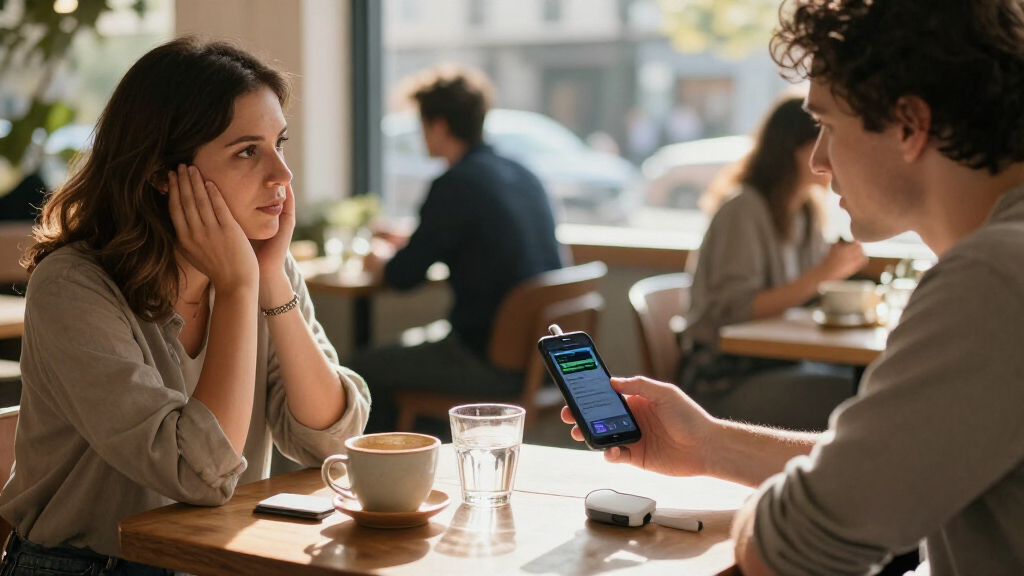
I ranked these speech-to-text tools by how well their stated form and workflow match real captioning needs, not by feature count alone. The main criteria were whether a device appears suited to live transcription or recorded audio, how easily it fits meetings, classes, interviews, or dictation, and how much setup its format may require. I also weighed portability, connection method, likely compatibility needs, and the practical difference between receiving readable text and receiving a recording or summary.
The order favors options with a clear, useful role for turning speech into text, then separates specialized tools by audience. A meeting recorder is not automatically a substitute for a live-captioning hub, and a dictation set is not the same as a wearable note taker. Because the product list does not establish performance across languages, accuracy in noisy rooms, service terms, or device compatibility, I treat those as points buyers should verify rather than promise. I give lower priority to products whose names overlap in purpose unless their form factor creates a distinct use case.
| speech-to-text captioning device | Connectivity |
|---|---|
| Philips SpeechExec USB Transcr | — |
| Tovel AI Voice Recorder and No | Bluetooth |
| Fieldy 3 Wearable AI Note-Taki | Bluetooth |
| viaim NoteKit AI Meeting Voice | Bluetooth 5.3 |
| Gem Wearable AI Voice Recorder | — |
| HIUTY AI Voice Recorder with T | Bluetooth 5 |
| Gem Wearable AI Voice Recorder | Bluetooth 5 |
| Gem Wearable AI Voice Recorder | Bluetooth 5 |
| YUEHISY AI Voice Hub with Real | Plug and play; no drivers required |
| Yunseity AI Voice Hub USB Adap | USB |
| RECOLX AI Voice Recorder and T | Bluetooth; USB-C |
| PenPower AI VoiceWriter Dictat | — |
Factors to Consider When Choosing Speech-to-text Captioning Devices
Before choosing, decide what you mean by “captioning.” A device may produce live text, transcribe a saved recording afterward, or turn dictation into editable writing; those are related but different jobs. I would start with the moment you need the words, then check the practical limits that can affect everyday use.
Do You Need Live Captions or a Transcript Later?
Live captions help when you need to follow a conversation as it happens, while post-recording transcription is often better for reviewing an interview or meeting afterward. Product language such as “AI recorder” or “note taker” does not by itself confirm that text appears in real time. Before buying, look for a clear description of when transcription occurs and whether it works without an internet connection. A saved transcript may be useful for notes but cannot replace live access during a fast discussion. If you need captions for accessibility, verify the live display, text size, latency, and ability to keep the transcript visible. Do not treat an AI summary as a substitute for a complete transcript.
Match the Device to the Place You Record
Microphone placement and room acoustics can affect speech capture more than a long feature list suggests. A wearable may stay close to its wearer, while a table device may be more convenient for a group, but neither guarantees clear speech from every participant. Consider how far speakers sit from the device, whether people talk over one another, and how much background noise is typical. For shared meetings, check whether the device can capture multiple voices and whether speakers need to take turns. For one-person dictation, a close microphone and simple start-and-stop controls may matter more than group features. Buyers often blame transcription software for errors caused by poor placement.
Check Software, Phone, and Computer Compatibility
A recorder can be easy to carry yet awkward to use if its companion app or export options do not fit your devices. Check operating-system support, connection requirements, file formats, and whether transcripts can be copied into the tools you already use. USB-based products may suit a desk workflow but offer less freedom than a wearable when you move between locations. AI features can also depend on an account, network access, or an ongoing service; read the current product terms rather than assuming every feature is included indefinitely. If you need to share notes with colleagues, test whether the output is easy to export and edit. Compatibility is a better buying checkpoint than a broad claim of “AI-powered” transcription.
Treat Language Support and Translation as Separate Needs
Transcription language support and translation are different capabilities, even when a product advertises both. A tool may transcribe speech in one language without translating it, or translate text without handling mixed-language conversation well. Confirm support for the languages and accents you expect to hear, including whether language changes can be handled within one recording. If your meetings include technical terms, names, or several speakers, check whether the transcript can be corrected afterward. Do not assume that translation features imply reliable captions in every language. For high-stakes conversations, plan a way to review and amend the generated text.
Choose Form Factor for Comfort, Not Novelty
Wearables, wristband-style recorders, pocket devices, hubs, and USB tools each change how naturally a person can capture speech. A wearable can reduce the need to place a recorder on a table, but comfort, clothing, watch compatibility, and microphone position may affect whether it gets used. A hub may suit a fixed meeting space yet be less convenient for walking interviews. A USB dictation tool can simplify a desk routine but may be a poor fit for mobile conversations. Think through where the device will live between uses and how often you will need to charge, connect, or reposition it. The best form factor is the one that supports your routine without adding friction.
Compare the Full Workflow, Not Just the Recording Feature
Speech capture is only the first step: you may also need to find, edit, export, and securely store the resulting text. Ask how recordings and transcripts are retained, whether deletion is available, and what privacy terms apply before capturing sensitive conversations. Check whether summaries are optional and whether the original audio remains available for correcting transcription mistakes. Long meetings can create large files, so storage capacity and transfer methods matter even when the device has substantial built-in storage. A tool that produces text but makes it hard to retrieve or share can slow down the work it was meant to simplify. Buyers should judge the entire path from recording to usable document.
Frequently Asked Questions
Can a speech-to-text recorder provide captions while someone is speaking?
Some devices support live transcription, while others record audio and generate text afterward. Check the product documentation for an explicit live-captioning or real-time transcription feature rather than relying on “AI note taker” wording. Also confirm where the captions appear, whether a phone or computer is required, and whether an internet connection is needed. If you need captions to follow speech in the moment, test those details before relying on the device for a meeting or class. A transcript delivered later may be valuable, but it does not serve the same purpose.
Will one device capture a group meeting as well as personal dictation?
Often, a device can record both situations, but the results may differ because microphone distance and room noise change how clearly voices are captured. Group meetings benefit from a device placed where it can hear participants evenly; personal dictation usually favors a microphone close to the speaker. Check whether the device identifies different speakers and whether recordings can be reviewed and corrected. If group discussions are your main use, prioritize room coverage and live or post-meeting workflow over a small wearable design. For dictation, simple controls and an easy way to edit the text may be more useful.
Do I need a subscription or internet connection for transcription?
Requirements vary by product and by feature, so I would verify them before purchase. Some devices may record locally but rely on an app, account, or online service to generate transcripts, summaries, or translations. Ask which functions work offline, what limits apply to transcription, and whether ongoing access depends on a service plan. Also check what happens to recordings if the service is unavailable or you stop using the app. This distinction can affect privacy, reliability, and the long-term usefulness of the device.
Is a wearable recorder a better choice than a meeting hub?
A wearable is usually more convenient when the speaker moves around or wants a personal capture device, while a hub may fit a regular meeting room with several participants. Neither shape guarantees better transcription: microphone placement, room acoustics, and distance from speakers remain key factors. Wearables also introduce comfort and compatibility questions, particularly when designed to pair with watch straps or bands. A hub can be less convenient to carry but easier to position centrally for a group. Choose by where conversations happen most often, not by which format seems more novel.
What should I verify before using generated transcripts for important work?
Check that the device supports the languages, accents, and audio conditions involved in your work, then review a sample transcript before depending on it. Names, technical vocabulary, overlapping speakers, and background noise can all lead to errors. Confirm that you can edit and export the transcript and retain the original audio when a correction is needed. For sensitive material, read the data storage and privacy terms before recording. Treat generated text as a draft unless you have confirmed its accuracy for your specific setting.
Conclusion
For a meeting-centered all-rounder, I would start with the viaim NoteKit AI Meeting Voice Recorder; it has the clearest fit for capturing and organizing meeting speech. The YUEHISY AI Voice Hub is the standout for buyers who specifically need real-time transcription and translation, while the Philips SpeechExec USB Transcription Set 7177 makes more sense for a traditional desk-based transcription routine. I would treat value as a workflow match rather than a price claim: choose the simplest device that supports the text timing, software, and form factor you need. Beginners should favor clear setup instructions and a straightforward capture-to-transcript path, while wearable-device shoppers should compare the Fieldy 3 and Gem options for comfort and compatibility before choosing a style. For dictation and writing assistance, look at the PenPower AI VoiceWriter; for portable recording, compare the compact recorder options and verify their transcription workflow. The best choice depends on whether you need live captions, a transcript after recording, or hands-free dictation.