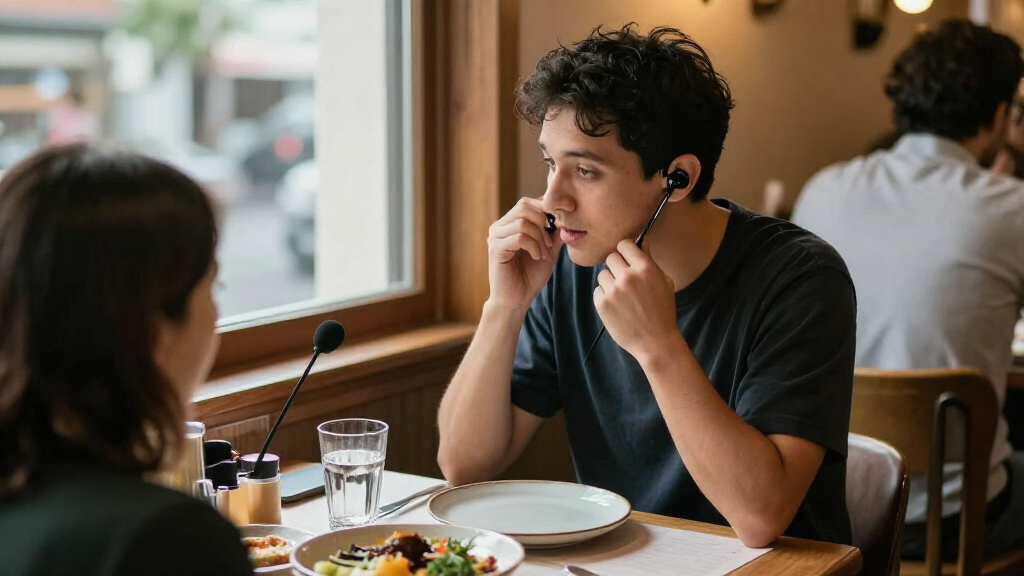

For most restaurants seeking a ready-to-share setup, I’d start with the Enersound 4-Person Assistive Listening System: its four receivers are a practical fit for small groups, while the Williams AV Pocketalker 2.0 suits diners who need an individual listening boost. For larger groups, the EXMAX ATG-100T offers many receivers, and the Avantree AuraPlex MX brings Auracast to venues planning around compatible devices. The main tradeoffs are personal simplicity versus serving multiple guests, plus the setup and compatibility demands of broadcast systems. Read on for how these 13 options compare and which restaurant situations each fits best.

Get everyday helpers delivered free with Prime
- Fast, free delivery on millions of items
- Prime Video, Amazon Music and more included
- Member-only deals all year
Complete the kit


Key Takeaways
- Small-group coverage favors the Enersound 4-Person System: it packages several receivers for a restaurant that needs shared access without a large tour-guide fleet.
- Personal amplification and venue-wide service solve different problems: the Pocketalker 2.0 and Pocketalker Ultra are individual aids, while EXMAX, Retekess, and Listen Technologies systems are built around transmitters and receivers.
- Receiver count changes the operating burden: the EXMAX ATG-100T and Retekess TT119 suit group distribution, but staff need a routine for charging, cleaning, and returning devices.
- Auracast is a forward-looking choice, not a universal shortcut: Avantree AuraPlex MX and Venucast AuraPlex M3 appeal to venues considering compatible listening devices, but compatibility and guest access need planning.
- Restaurant noise makes microphone placement matter: a remote microphone such as the one included with Trihear Liber can bring a speaker closer acoustically, while a simple personal amplifier may be easier for one diner to manage.
| Williams AV Pocketalker 2.0 Personal Hearing Amplifier with Headphones and Earbuds |  | Best for One-to-One Restaurant Conversations | Frequency range: 20 Hz–20 kHz | Audio sensitivity: 104 dB | Controls: Volume and tone knobs | VIEW LATEST PRICE | See Our Full Breakdown |
| EXMAX ATG-100T Wireless Tour Guide and Interpretation System, 2 Transmitters and 18 Receivers with Charging Case |  | Best for Large Hosted Groups | Frequency: 195 MHz UHF | Channels: 99 | Included units: 2 transmitters and 18 receivers | VIEW LATEST PRICE | See Our Full Breakdown |
| Enersound 4-Person Assistive Listening System with ADA Plaque |  | Best for Small Restaurant Installations | Capacity: 4 people | Expandable with: Enersound R-120 or R-100 FM receivers | Included accessory: ADA plaque | VIEW LATEST PRICE | See Our Full Breakdown |
| Avantree AuraPlex MX Auracast Assistive Listening System for Churches |  | Best for Compatible Auracast Hearing Aids | Wireless technology: Auracast, Bluetooth LE Audio | Included units: 1 transmitter and 10 receivers | Range: Up to 100 meters / 328 feet line of sight | VIEW LATEST PRICE | See Our Full Breakdown |
| Avantree Audiplex M3 Multi-Channel Assistive Listening System with 1 Transmitter and 3 Receivers |  | Best for Small Multi-Channel Groups | Wireless technology: 2.4 GHz RF | Selectable channels: Up to 4 | Latency: 30 ms | VIEW LATEST PRICE | See Our Full Breakdown |
| Listen Technologies LR-400 Portable Display RF Receiver, 72 MHz |  | Best for Venues Reusing a 72 MHz System | Model: LR-400-072 | Frequency: 72 MHz | Channels: Up to 17 wide-band or 40 narrow-band channels; 57 total wide- and narrow-band channels | VIEW LATEST PRICE | See Our Full Breakdown |
| Listen Technologies LP-4VP-072 Assistive Listening DSP Value Package (72 MHz) |  | Best Complete Starter Package | Model: LP-4VP-072-01 | Frequency: 72 MHz | Channels: 3 | VIEW LATEST PRICE | See Our Full Breakdown |
| Retekess T130 Assistive Listening System with Bone Conduction Headphones |  | Best for Multiple Listeners and Non-In-Ear Fit | Included components: One transmitter, 15 receivers, and four bone conduction headphones | Channels: Up to 99 | Volume adjustment: Six levels | VIEW LATEST PRICE | See Our Full Breakdown |
| Listen Technologies LR-3200-072 Intelligent DSP RF Receiver, 72 MHz |  | Best Rechargeable Receiver for Shared Listening | Model: LR-3200-072 | Wireless technology: RF | Frequency: 72 MHz | VIEW LATEST PRICE | See Our Full Breakdown |
| Trihear Liber Open-Ear Assistive Listening Device with Remote Microphone |  | Best Personal Conversation Aid | Design: Open-ear | Wireless microphone range: Up to 98 ft (30 m) | Bluetooth: Version 5.3 | VIEW LATEST PRICE | See Our Full Breakdown |
| Williams AV Pocketalker Ultra Personal Hearing Amplifier with Earbud and Headphones |  | Best for One-to-One Restaurant Conversations | Model: Pocketalker Ultra PKTD1-EH | Frequency range: 20 Hz–20 kHz | Power source: 2 AAA batteries | VIEW LATEST PRICE | See Our Full Breakdown |
| Venucast AuraPlex M3 Auracast Assistive Listening System |  | Best for Auracast-Ready Restaurant Installations | Model: AuraPlex M3 (BTTC-500K) | Included devices: 1 transmitter and 3 receivers | Wireless technology: Bluetooth LE Audio | VIEW LATEST PRICE | See Our Full Breakdown |
| Retekess TT119 Assistive Listening System, 1 Transmitter and 10 Receivers |  | Best for Large Groups and Guided Restaurant Events | Included devices: 1 transmitter and 10 receivers | Transmission range: Up to 300 m / 984 ft | Channels: 17 | VIEW LATEST PRICE | See Our Full Breakdown |
More Details on Our Top Picks
Williams AV Pocketalker 2.0 Personal Hearing Amplifier with Headphones and Earbuds
For a diner who needs help following a conversation at their own table, the Pocketalker 2.0 is a more personal solution than the group systems in this roundup. Its plug-in microphone can be placed near a conversation partner, while the volume and tone knobs offer direct adjustments without navigating menus. It includes both folding headphones and earbuds, so the listener can choose a fit that feels comfortable in a busy dining room. The built-in T-coil also gives it an advantage over the EXMAX ATG-100T for venues with a hearing loop. The tradeoff is its one-listener focus: it does not send a shared audio feed to a group, and its microphone and TV connection share one jack. Buyers should also plan for AAA batteries, even though rechargeable NiMH cells are supported.
Pros:- Large volume and tone knobs make quick adjustments straightforward.
- Includes headphones, earbuds, a plug-in microphone, and a long extension cord.
- Built-in T-coil supports compatible hearing loop systems.
- Can use rechargeable NiMH AAA batteries.
Cons:- Designed for individual listening rather than distributing audio to a group.
- The microphone and TV connection use the same 3.5 mm jack.
- Requires two AAA batteries, which are not built into the device.
Best for: An individual diner or companion who wants a portable amplifier, simple physical controls, and a microphone they can position near the person speaking.
Not ideal for: Restaurants serving groups that need the same audio feed, or diners who want a rechargeable system with no replaceable batteries.
- Frequency range:20 Hz–20 kHz
- Audio sensitivity:104 dB
- Controls:Volume and tone knobs
- Connectivity:3.5 mm audio jack
- Hearing loop support:Built-in T-coil
- Power:Two AAA batteries; supports rechargeable NiMH AAA batteries
- Battery life:Up to 105 hours
- Included accessories:Folding stereo headphones, earbuds, plug-in microphone, 12-foot extension cord, and lanyard
- Warranty:5 years on parts and labor
Our verdict“Choose the Pocketalker 2.0 for a single diner who needs a simple, self-contained aid rather than a shared restaurant listening system.”
EXMAX ATG-100T Wireless Tour Guide and Interpretation System, 2 Transmitters and 18 Receivers with Charging Case
When a restaurant needs to help a hosted group hear one speaker, the EXMAX ATG-100T brings the most receivers in this set: 18, alongside two transmitters. That makes it better suited to a large tour, private event, or guided tasting than the Enersound 4-Person Assistive Listening System, which starts with four-person capacity. Its 99 UHF channels can help coordinate separate groups, and the case charges the included transmitters and receivers together, reducing the handling burden between events. The key limitation is the listening format: receivers are one-way and listen-only, so diners cannot speak back through the system. Its stated 50–100 meter range also depends on line of sight and the venue, making it less predictable around walls, crowds, and restaurant partitions.
Pros:- Includes 18 receivers, more than the other included multi-listener kits.
- Two transmitters allow more than one speaker or audio source.
- The charging case charges transmitters and receivers simultaneously.
- 99 channels support coordination of multiple groups.
Cons:- Receivers are listen-only, so diners cannot respond through the system.
- The stated range depends on line of sight and environmental conditions.
- A large group kit is more equipment than a single diner or small table needs.
Best for: Restaurants, tour operators, and event hosts serving larger guided groups that need one or two speakers to broadcast to many listeners.
Not ideal for: Small parties seeking discreet personal amplification, or groups that need listeners to talk back through their receivers.
- Frequency:195 MHz UHF
- Channels:99
- Included units:2 transmitters and 18 receivers
- Audio direction:One-way, listen-only receivers
- Transmission range:50–100 meters (164–328 feet), line of sight depending on environment
- Transmitter battery:1200 mAh; up to 20 hours
- Receiver battery:900 mAh; up to 25 hours
- Charging case:Aluminum alloy; charges included transmitters and receivers simultaneously
- Additional connectivity:AUX jack
Our verdict“Pick the EXMAX for hosted restaurant groups that need one-way audio to many people and can manage a dedicated receiver kit.”
Enersound 4-Person Assistive Listening System with ADA Plaque
The Enersound system is the most straightforward fit here for a restaurant that wants to provide assistive listening at a fixed location for a small number of guests. Its four-person capacity is a practical starting point for a private dining room or a modest listening setup, without the 18-receiver scale of the EXMAX ATG-100T. The included ADA plaque can help identify that assistive listening is available, while the five-year warranty and US-based phone support offer useful backing for a venue that expects staff to maintain the equipment. This product data does not specify the wireless frequency, range, receiver type, or included listening accessories, so I would not choose it based on assumptions about performance in a noisy dining room. It can expand with additional Enersound R-120 or R-100 FM receivers, but serving more than four listeners requires buying those separately.
Pros:- Supports listening for up to four people in the included setup.
- Can expand with additional Enersound R-120 or R-100 FM receivers.
- Includes an ADA plaque for identifying the listening service.
- Includes a five-year warranty and US-based phone support.
Cons:- More than four listeners require separately purchased receivers.
- The supplied product data does not state range, frequency, or receiver details.
- Less immediately suited to large groups than the 18-receiver EXMAX system.
Best for: A restaurant or private dining venue setting up assistive listening for a small, predictable number of guests and valuing support and an ADA plaque.
Not ideal for: Restaurants needing a specified long wireless range, a large number of included receivers, or detailed compatibility information before purchase.
- Capacity:4 people
- Expandable with:Enersound R-120 or R-100 FM receivers
- Included accessory:ADA plaque
- Warranty:5 years
- Support:US-based phone support
- Item weight:4 pounds
Our verdict“Choose Enersound for a small fixed restaurant setup when its four-listener starting capacity and support matter more than detailed range or receiver specifications.”
Avantree AuraPlex MX Auracast Assistive Listening System for Churches
The AuraPlex MX stands apart from the receiver-only kits by letting guests with select Auracast hearing aids listen using their own compatible devices; it also includes 10 receivers for others. That can reduce the need to issue a dedicated receiver to every guest, a different approach from the Avantree Audiplex M3, which supplies three clip-on receivers and wired earbuds. Optical and AUX inputs make the AuraPlex MX a candidate for a restaurant with a mixer, TV, or other wired audio source, while the stated 328-foot line-of-sight range suits open layouts better than heavily obstructed ones. Compatibility is not universal: the supported hearing aids are limited to select models listed by the manufacturer. The maker also advises against stadiums, outdoor events, and heavily obstructed spaces, so this is a better match for a controlled indoor venue than a sprawling or partitioned restaurant.
Pros:- Includes 10 receivers and supports compatible bring-your-own Auracast hearing aids.
- Optical and AUX inputs connect to a range of wired audio sources.
- Stated line-of-sight range reaches up to 100 meters.
- Supports select hearing aids as well as other compatible Bluetooth devices.
Cons:- Hearing aid support is limited to select listed models, not all hearing aids.
- Coverage can fall in obstructed spaces, and the system is not recommended for those venues.
- The restaurant must have a compatible audio source and manage receiver availability.
Best for: Restaurants with a wired audio source and guests who use supported Auracast hearing aids, plus a need for included receivers for other listeners.
Not ideal for: Venues where many guests have unlisted hearing aids, or restaurants with outdoor, stadium-scale, or heavily obstructed layouts.
- Wireless technology:Auracast, Bluetooth LE Audio
- Included units:1 transmitter and 10 receivers
- Range:Up to 100 meters / 328 feet line of sight
- Audio inputs:3.5 mm AUX and optical
- Audio output:3.5 mm AUX, stereo
- Supported venue size:Up to approximately 300 people
- Supported devices:Bluetooth devices, TVs, mixers, laptops, microphones, and select Auracast hearing aids
- Receiver weight:7 g
- Included hearing aid examples:ReSound Nexia, Jabra Enhance Pro 20/30, Beltone Serene, Starkey Edge AI, Oticon Intent, and Philips HearLink 9050
Our verdict“Choose the AuraPlex MX when your restaurant has a suitable indoor audio setup and a meaningful number of guests can use its supported Auracast devices.”
Avantree Audiplex M3 Multi-Channel Assistive Listening System with 1 Transmitter and 3 Receivers
For a restaurant that needs a few listeners to hear separate audio sources, the Audiplex M3 offers up to four selectable channels in a compact one-transmitter, three-receiver package. That flexibility distinguishes it from the EXMAX ATG-100T, whose large receiver count suits bigger hosted groups but whose receivers are listen-only on a single transmitted feed. The M3’s 30 ms latency helps keep sound aligned with speech or video, and each receiver has its own volume control—a useful detail when guests have different listening needs. It also includes optical and AUX cables, a charging dock, and wired earbuds. The tradeoff is scale: three receivers may be too few for a larger party, and the advertised 100-meter range applies to open areas, not necessarily a busy restaurant with walls and people between transmitter and guests.
Pros:- Up to four selectable channels can serve different audio feeds.
- 30 ms latency helps keep sound synchronized with speech and video.
- Each receiver has individual volume control.
- Includes optical and AUX cables, a charging dock, and wired earbuds.
Cons:- The included package has only three receivers.
- The stated 100-meter range applies to open areas.
- Guests use the included wired earbuds rather than compatible hearing aids directly.
Best for: Restaurants hosting small groups that need a few listeners to hear one of several audio channels with individual volume adjustment.
Not ideal for: Venues serving large groups that need many receivers included, or spaces where walls and partitions make open-area range claims a poor fit.
- Wireless technology:2.4 GHz RF
- Selectable channels:Up to 4
- Latency:30 ms
- Wireless range:Up to 100 meters / 328 feet in open areas
- Included units:1 transmitter and 3 clip-on receivers
- Sound quality:48 kHz
- Audio connectors:3.5 mm AUX and optical
- Included accessories:3 wired on-ear earbuds, charging dock, optical cable, AUX cable, 2 USB-C cables, and power charger
- Battery:3 included lithium-ion batteries
Our verdict“Choose the Audiplex M3 for a small restaurant group that values channel choice and individual volume controls over a high included receiver count.”
Listen Technologies LR-400 Portable Display RF Receiver, 72 MHz
For a restaurant that already has a compatible 72 MHz transmitter, the LR-400 offers a straightforward way to provide individual receivers without replacing the venue’s existing system. Its LCD status display shows channel, battery level, and signal strength, while channel seek and lock can simplify setup when staff prepare units for guests. Unlike the bundled LP-4VP-072, this is a receiver only, so it makes sense for expanding an installed system, not outfitting a restaurant from scratch. It accepts alkaline or rechargeable NiMH AA batteries and supports charging with compatible Listen equipment. The tradeoff is that staff must manage two AA batteries per unit, and it will not work with systems using other frequencies. For a new installation, the LP-4VP-072 is the more complete starting point.
Pros:- LCD displays channel, battery level, and RF signal strength.
- Channel seek and lock help staff select and retain the correct channel.
- Works with mono or stereo headphones.
- Accepts alkaline or rechargeable NiMH AA batteries and supports compatible NiMH charging equipment.
Cons:- Requires two AA batteries, adding battery inventory and replacement tasks.
- Limited to compatible 72 MHz RF systems.
- Receiver only; a transmitter and headphones are not included.
Best for: Restaurants that already operate a compatible Listen Technologies 72 MHz system and need additional individual receivers.
Not ideal for: Restaurants choosing their first assistive listening system or using a transmitter on a different frequency; this receiver alone cannot provide the transmitting equipment.
- Model:LR-400-072
- Frequency:72 MHz
- Channels:Up to 17 wide-band or 40 narrow-band channels; 57 total wide- and narrow-band channels
- Signal-to-noise ratio:80 dB or greater
- Audio frequency response:50 Hz–15 kHz (±3 dB)
- Battery:Two AA alkaline or NiMH batteries
- Charging:Automatic NiMH charging; compatible Listen Technologies charging cases and plugs
- Audio connection:3.5 mm stereo earphone jack; supports mono and stereo headphones
Our verdict“Choose the LR-400 to add clearly monitored receivers to an existing compatible 72 MHz system, not to build a restaurant setup from scratch.”
Listen Technologies LP-4VP-072 Assistive Listening DSP Value Package (72 MHz)
The LP-4VP-072 is the most ready-to-deploy choice here for a restaurant starting a fixed 72 MHz listening setup: the package includes a transmitter, four receivers, earbuds, a charger, antenna, and signage. That makes it more practical as a first system than the standalone LR-400, which only adds a receiver to equipment a venue already owns. Its three-channel transmitter keeps the system simple for staff, while the included signage helps guests find the service. The main constraint is capacity: four receivers may not cover a busy dining room or several simultaneous requests, so the larger Retekess T130 bundle—with 15 receivers—has an advantage for venues that need more units. The LP-4VP-072 also depends on 72 MHz compatibility, so it is not a universal add-on for other systems.
Pros:- Includes a transmitter, four receivers, earbuds, antenna, charger, and signage kit.
- Three channels provide a straightforward setup for staff.
- Signage kit helps guests identify the available listening service.
- A complete package is more practical for a new installation than buying a receiver alone.
Cons:- Four receivers may be insufficient during busy periods or for larger dining rooms.
- The system is limited to compatible 72 MHz equipment.
- The 6.1-pound package and fixed transmitter setup are less suited to restaurants needing a portable, individual solution.
Best for: Small restaurants setting up their first fixed assistive listening system and expecting to serve a few listeners at a time.
Not ideal for: Busy restaurants that need more than four receivers or venues seeking a receiver that works across different RF frequencies.
- Model:LP-4VP-072-01
- Frequency:72 MHz
- Channels:3
- Signal-to-noise ratio:62 dB
- Included equipment:LT-803-072 transmitter, LA-123 antenna, four LR-3200-072 receivers, four LA-161 earbuds, LA-304 signage kit, and LA-423 USB charger
- Connectivity:USB
- Batteries:Four AA batteries required; included
- Dimensions:18.25 × 12.25 × 3.25 inches
Our verdict“Pick this package for a small restaurant that wants a complete fixed system and can serve most listening requests with four receivers.”
Retekess T130 Assistive Listening System with Bone Conduction Headphones
Restaurants that need several listening units and want an alternative to earbuds may prefer the T130’s 15 receivers and bone conduction headphones. The non-in-ear fit can suit guests who dislike putting earbuds in their ears, though the package includes only four bone conduction headphones, so the included accessories do not provide that fit for every receiver at once. With up to 99 selectable channels, six volume levels, and a stated range of up to 200 meters, it offers more channel and receiver capacity than the four-receiver LP-4VP-072 package. Those numbers are system features, not a guarantee of performance in a crowded restaurant; walls and other radio conditions can affect reception. Its transmitter-and-receiver arrangement is also less like the LR-3200, a single receiver for an existing Listen system. Check setup and headphone needs before choosing it for table-side service.
Pros:- Includes 15 receivers, offering more capacity than the four-receiver LP-4VP-072 package.
- Bone conduction headphones provide a non-in-ear listening option.
- Up to 99 channels and six volume levels allow listening adjustments.
- Stated battery life is up to eight hours per charge.
Cons:- Only four bone conduction headphones are included for 15 receivers.
- Passive noise control may not reduce busy dining-room noise enough for every listener.
- The 3.5 mm connection may not suit audio sources without that jack.
Best for: Restaurants that need a larger pool of receivers and want to offer some guests a non-in-ear listening option.
Not ideal for: Restaurants that need bone conduction headphones for every listener, or diners and venues that require strong isolation from surrounding restaurant noise.
- Included components:One transmitter, 15 receivers, and four bone conduction headphones
- Channels:Up to 99
- Volume adjustment:Six levels
- Battery life:Up to eight hours
- Operating range:Up to 200 meters, as stated
- Battery:16 included lithium-ion batteries
- Connector:3.5 mm jack
- Item weight:2.5 kg
Our verdict“Choose the T130 when a restaurant needs many receivers and values a non-in-ear option, but check whether four bone conduction headphones meet its actual needs.”
Listen Technologies LR-3200-072 Intelligent DSP RF Receiver, 72 MHz
The LR-3200-072 is a useful receiver upgrade for restaurants that already have a compatible 72 MHz Listen system and want to reduce battery swapping. Its rechargeable lithium-ion battery charges by micro-USB, and two headphone jacks let a guest share one receiver with a companion. A loop driver also supports guests with T-coil-equipped hearing aids, giving it a more hearing-aid-friendly feature set than the LR-400. That added convenience comes with a compatibility boundary: like the LR-400, it is a receiver, not a complete restaurant system, and it will not replace the transmitter included with the LP-4VP-072. Restaurants managing many units may also need an optional charging tray or case, adding equipment to the storage and charging routine. For a small fleet with shared listening needs, the rechargeable design is a clear differentiator.
Pros:- Rechargeable lithium-ion battery avoids routine AA replacement.
- Two 3.5 mm jacks allow two people to listen through one receiver.
- Loop driver supports T-coil-equipped hearing aids.
- Compact 3.36-ounce design is easy to hand to guests.
Cons:- Limited to compatible 72 MHz RF systems.
- A charging tray or case for charging multiple units is optional.
- Headphones or other compatible listening equipment are needed and are not listed as included.
Best for: Restaurants with a compatible Listen 72 MHz transmitter that want rechargeable receivers, shared listening, and T-coil support.
Not ideal for: Restaurants without a compatible RF system or venues that need a complete transmitter-and-receiver package rather than an additional receiver.
- Model:LR-3200-072
- Wireless technology:RF
- Frequency:72 MHz
- Battery:Rechargeable lithium-ion
- Charging:Micro-USB; optional charging tray or case for multiple units
- Headphone jacks:Two 3.5 mm
- Audio output:Stereo
- Weight:3.36 ounces
Our verdict“Choose the LR-3200-072 for a compatible 72 MHz setup where rechargeability, T-coil support, or two-person listening matters more than an all-in-one package.”
Trihear Liber Open-Ear Assistive Listening Device with Remote Microphone
Unlike the venue-wide transmitter-and-receiver packages in this roundup, the Trihear Liber is a personal open-ear device with a remote microphone. That makes it a different kind of restaurant aid: the wearer can keep their ear canal unobstructed and place the microphone near a conversation partner, rather than relying on a restaurant to broadcast audio through an installed system. Its stated microphone range of up to 98 feet may help when the microphone can be positioned usefully, but it is not equivalent to a multi-receiver setup such as the Retekess T130, which supplies equipment for many listeners. The Liber also connects to TV audio by an included 3.5 mm cable, a home-use feature less relevant to dining out. Bluetooth 5.3, nine volume levels, and up to 10 hours of use add flexibility, but this is not a replacement for venue-provided assistive listening infrastructure.
Pros:- Open-ear design leaves the ear canal unobstructed.
- Remote microphone offers a personal way to pick up nearby speech.
- Bluetooth 5.3 and nine volume levels provide multiple listening adjustments.
- USB-C charging takes about one hour, with up to 10 hours of stated use.
Cons:- A personal device, not a transmitter-and-receiver package for serving multiple restaurant guests.
- The microphone’s stated range is up to 98 feet, and placement still affects conversation pickup.
- TV audio connection requires the included 3.5 mm cable and a compatible output.
Best for: An individual who wants a personal open-ear listening aid and can place a remote microphone near the person they are trying to hear.
Not ideal for: Restaurants outfitting multiple guests with a shared broadcast system, or diners who want a receiver that connects to the venue’s existing RF transmitter.
- Design:Open-ear
- Wireless microphone range:Up to 98 ft (30 m)
- Bluetooth:Version 5.3
- Noise reduction:16 dB digital noise reduction
- Volume control:Nine levels
- Battery life:Up to 10 hours
- Charging:USB-C; about one hour
- TV connection:Included 3.5 mm audio cable
Our verdict“Choose the Liber for one person who wants an open-ear aid with a positionable microphone, not for a restaurant buying a shared assistive listening system.”
Williams AV Pocketalker Ultra Personal Hearing Amplifier with Earbud and Headphones
The Pocketalker Ultra is the most direct fit here for a diner who wants to hear a companion more clearly without asking the whole restaurant to use a shared system. Its plug-in microphone can be placed near the person speaking, while automatic gain control helps soften sudden loud sounds that can make a busy dining room tiring. Compared with the Venucast AuraPlex M3, this is a personal amplifier rather than a venue-wide Auracast setup, so it avoids requiring compatible hearing aids or several receivers. The large volume and tone knobs are also easier to adjust than a system built around venue equipment. The tradeoff is that it serves one listener at a time and depends on a wired microphone and headphones or earbud; it is not a solution for distributing restaurant audio to a group. Two AAA batteries are required, though the stated runtime is up to 200 hours.
Pros:- Plug-in microphone can be positioned near a companion to help focus on their voice.
- Automatic gain control helps limit sudden loud sound spikes.
- Large volume and tone controls are straightforward to adjust.
- Includes both headphones and an earbud, plus a lanyard and belt clip.
Cons:- Serves an individual listener rather than a group.
- Requires two AAA batteries instead of rechargeable power.
- The microphone and listening accessories are wired, which can feel cumbersome at a crowded table.
Best for: A diner with hearing difficulty who wants a simple, portable way to focus on a companion’s voice at a restaurant table.
Not ideal for: Restaurant operators or groups who need to send the same audio to several listeners; this is a personal amplifier, not a multi-receiver venue system.
- Model:Pocketalker Ultra PKTD1-EH
- Frequency range:20 Hz–20 kHz
- Power source:2 AAA batteries
- Battery life:Up to 200 hours
- Connectivity:3.5 mm jack
- Included listening accessories:Folding headphones and mini earbud
- Included microphone:Plug-in microphone
- Warranty:5 years on parts and labor; 90 days on accessories
Our verdict“Choose the Pocketalker Ultra for personal table conversation support, but choose a venue system such as the Venucast AuraPlex M3 when several guests need shared audio.”
Venucast AuraPlex M3 Auracast Assistive Listening System
The AuraPlex M3 suits a restaurant that wants to provide shared audio to a small group and has guests with compatible Auracast devices. Its one transmitter and three receivers offer a ready-made starting point, while Bluetooth LE Audio support lets select Auracast hearing aids and personal devices connect without relying solely on the included receivers. Compared with the Williams AV Pocketalker Ultra, this is aimed at venue audio distribution rather than amplifying one nearby speaker at a table. The listed 328-foot line-of-sight range may help cover a dining area, but walls, furnishings, and other obstructions can reduce coverage. Compatibility is a major constraint: guests without supported devices will need one of the supplied receivers, and the included set only serves three. I’d skip it for a venue seeking universal personal amplification or dependable coverage across obstructed spaces.
Pros:- Includes one transmitter and three receivers for a small shared-audio setup.
- Supports select Auracast-enabled hearing aids and compatible personal devices.
- Offers up to 328 feet of line-of-sight range.
- Includes optical and AUX connection accessories for different audio sources.
Cons:- Auracast compatibility is limited to select hearing aids and personal devices.
- Obstructions can reduce the stated wireless range.
- Only three receivers are included, limiting the supplied setup for larger groups.
Best for: Restaurant owners or event hosts who want shared assistive audio for a small group and can confirm guests’ devices support Auracast.
Not ideal for: Venues serving guests with a wide range of older hearing aids or devices, or dining spaces where walls and obstructions make line-of-sight coverage unreliable.
- Model:AuraPlex M3 (BTTC-500K)
- Included devices:1 transmitter and 3 receivers
- Wireless technology:Bluetooth LE Audio
- Maximum range:Up to 100 m / 328 ft line of sight
- Connections:Bluetooth, optical, and AUX
- Included charging accessory:3-slot charging base
- Item weight:706 g
- Warranty:2 years
Our verdict“Pick the AuraPlex M3 for a small restaurant listening zone with Auracast-compatible guests; choose the Pocketalker Ultra for individual, table-level voice amplification.”
Retekess TT119 Assistive Listening System, 1 Transmitter and 10 Receivers
The TT119 is the group-focused choice in this set: one transmitter feeds 10 receivers, making it better suited to a restaurant tour, private dining event, or hosted gathering than to a single guest at a table. Its stated 300 m range and 17 channels give organizers more room to manage a large venue or separate audio sources. Compared with the Venucast AuraPlex M3, it includes more receivers and accepts XLR, AUX, RCA, and USB inputs, but it uses FM rather than Auracast. That means guests use the supplied receivers instead of connecting compatible hearing aids directly. Interpreter monitoring, recording support, and one-click controls add flexibility for multilingual events, though they may be unnecessary for ordinary dinner conversation. Receivers run on AA batteries for up to 10 hours, so organizers must plan battery replacement or charging routines for repeated use.
Pros:- Includes 10 receivers, serving more listeners than the three-receiver Venucast AuraPlex M3 package.
- Offers a stated transmission range of up to 300 m.
- Accepts XLR, AUX, RCA, and USB inputs for flexible audio-source connections.
- Includes interpreter monitoring, recording support, and one-click audio controls.
Cons:- Receivers require two AA batteries and provide up to 10 hours of operation.
- Mono is the default audio mode; stereo must be selected in settings.
- The transmitter and receiver kit is a venue-oriented setup, not a compact personal listening aid.
Best for: Restaurant event coordinators running group tours, multilingual dinners, or private events where many guests need the same transmitted audio.
Not ideal for: A diner seeking discreet personal amplification at a regular table, or a venue that wants guests to connect directly through Auracast hearing aids.
- Included devices:1 transmitter and 10 receivers
- Transmission range:Up to 300 m / 984 ft
- Channels:17
- Audio mode:Mono by default; stereo selectable
- Transmitter inputs:XLR, AUX, RCA, and USB
- Receiver power:2 AA batteries
- Receiver operating time:Up to 10 hours
- Receiver weight:90 g
Our verdict“Choose the TT119 for organized restaurant events that need audio delivered to a larger group, but choose the Pocketalker Ultra for everyday one-to-one conversation help.”
How We Picked
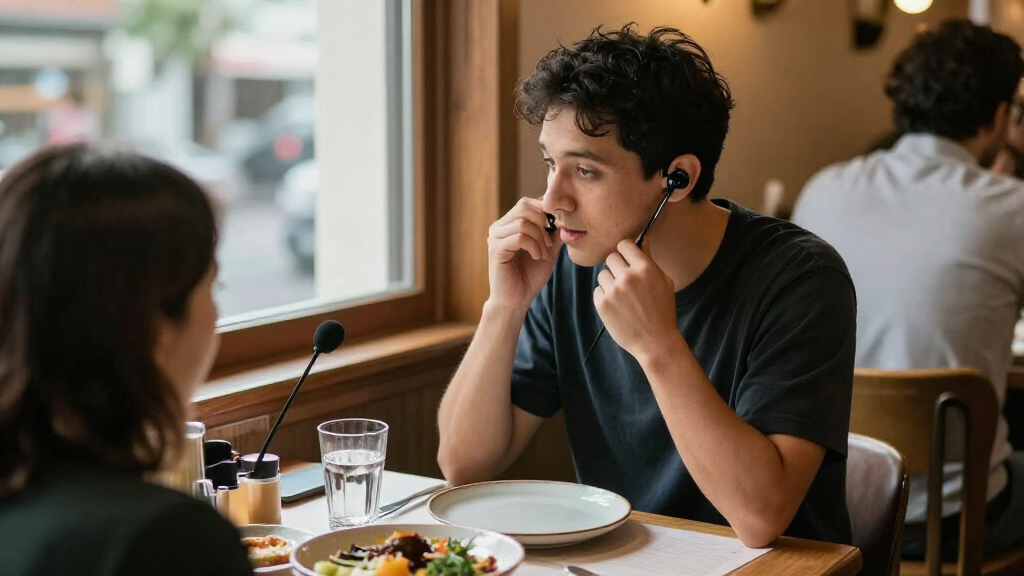
I ranked these options around the restaurant’s real listening task: helping a guest hear conversation in a noisy room without creating an unwieldy setup for staff. I weighed whether each product is a personal amplifier or a multi-user system, the number and type of receivers supplied, microphone and channel flexibility, portability, and the effort required to distribute and maintain equipment. I also considered whether the product’s design suits a single diner, a small party, or a venue serving many guests.
The order gives priority to practical restaurant fit and accessible day-to-day operation, not to feature count alone. That puts a straightforward small-group package and easy personal options ahead of systems that may need more infrastructure or guest compatibility planning. Specialized picks remain lower when their strengths depend on a particular use, such as guided group listening, an existing RF setup, or Auracast-compatible devices. Since fit, hearing needs, room layout, and product configuration vary, I’d confirm current specifications and compatibility with the manufacturer before buying.
Factors to Consider When Choosing Assistive Listening Devices For Restaurants
The right system depends less on a headline feature than on how guests will request, use, and return it. I’d plan around the room, staff workflow, and listening situation before choosing a product type.
Match the system to how guests listen
A personal amplifier is designed to help one diner hear nearby speech, while a transmitter-and-receiver system sends audio to several listeners. These are not interchangeable: a restaurant may want both an individual option at the host stand and a group system for events. Avoid buying a large receiver bundle just because it serves more people; unused units still need charging, storage, and cleaning. Ask whether guests need to hear a staff member, a dining companion, or a presenter, since those situations call for different microphone placement. For ordinary table conversation, a microphone close to the speaker can matter more than adding receivers. If guests will share devices, plan a discreet way to explain operation without making someone disclose personal details.
Treat restaurant noise as a microphone problem too
Amplifying sound does not automatically separate speech from clatter, music, or nearby conversations. A microphone placed near the person a diner wants to hear can improve the useful speech-to-noise balance, but it may be awkward when conversation shifts around a table. Before buying, map common seating and test where a microphone could sit without blocking service or being mistaken for a table accessory. A remote microphone can help when one speaker leads a conversation, while a receiver with a built-in microphone may feel less complicated for informal use. Avoid turning volume up to compensate for a microphone that is too far away; that can make the entire room louder rather than clearer. Ask the supplier about microphone options and intended operating distance for the exact configuration.
Plan guest access and staff handoff
A system only helps if guests can request it comfortably and staff know how to hand it over. Decide who stores the devices, how a guest receives a quick explanation, and where used equipment goes after dining. A sign can let visitors know listening support is available without requiring them to ask in front of a group. Staff should know basic steps such as pairing or channel selection, volume adjustment, and what to do if a unit has no charge. A common mistake is assuming that a multi-receiver package will be self-explanatory to every guest. Keep instructions short and available in an accessible format, and avoid making the guest troubleshoot while a meal is underway.
Check compatibility before choosing Auracast or RF
Wireless systems can serve guests in different ways, and a product’s transmission format affects who can use it. Auracast options may suit venues preparing for compatible personal devices, but guests need compatible receivers or listening equipment; do not assume every phone or hearing aid can join. RF receiver systems may be a better fit where the venue can supply and manage dedicated receivers, especially if a system is already installed. Confirm the required transmitter, receiver, frequency, and accessories as one working package rather than relying on a product name. Ask vendors about local frequency rules and interference risks before installing a permanent setup. The broader tradeoff is between a venue-managed device pool and a newer approach that may depend more on each guest’s own hardware.
Budget for cleaning, charging, and replacement
Restaurant equipment passes through many hands, so maintenance belongs in the purchase decision from the start. Check how batteries are charged, whether charging accessories are included, and how earpieces or headphones can be cleaned between guests. Keep replaceable hygiene parts available and set a routine for checking devices at opening or closing. A larger receiver count may reduce the chance of running out during a busy service, but it also increases storage and upkeep. A personal amplifier can have a lighter management burden, though it will not provide the same shared coverage. Pay more for added capacity or specialized connectivity only when the venue has a clear use for it and staff can maintain it.
Choose for the actual guest, not a single assumed user
Guests differ in dexterity, comfort with earbuds, hearing devices, and familiarity with wireless controls. Offer a choice of listening interfaces when possible, and let a guest select a comfortable option without pressure. Open-ear, bone-conduction, headphone, and earbud designs can feel very different, so a venue should check fit and handling before committing to a single style. Do not assume that one device type works for every hearing profile or that a higher volume setting is a safe fix. If a guest already uses hearing aids, ask the vendor whether the system can connect through a compatible accessory or whether a separate receiver is needed. A small, clearly labeled selection can be more useful than a large inventory that guests cannot easily operate.
Frequently Asked Questions
Should a restaurant buy personal amplifiers or a system with multiple receivers?
Choose based on whether support is mainly for individual diners or for several people listening to the same source. Personal amplifiers such as the Pocketalker models are simpler to hand to one guest and can suit spontaneous table use. A transmitter-and-receiver package makes more sense for groups, events, or a venue that expects several requests at once. Some restaurants may benefit from keeping one personal option alongside a shared system. Before deciding, estimate peak demand and confirm who will manage charging, cleaning, and returns.
Will an Auracast system work with every guest’s phone or hearing aids?
No; access depends on the guest’s device supporting the relevant Auracast features, and compatibility can vary by model and setup. A venue should not treat Auracast as a replacement for dedicated receivers unless it has confirmed that guests can connect reliably. Ask the manufacturer for a current compatibility list and the exact equipment needed to broadcast. Consider keeping venue-supplied listening devices available for guests who cannot or do not want to use personal hardware. Clear instructions at the host stand can prevent connection troubleshooting from delaying service.
Can an assistive listening device make table conversation clearer in a noisy dining room?
It can help, but results depend on where the microphone is and what sound it captures. A microphone near the person speaking can give their voice more prominence than distant room noise; a microphone left among clattering dishes may capture both. For conversations with several speakers, a single remote microphone may need to move as the discussion changes. Try the setup in the actual dining area during a representative service period, not only in a quiet office. If the room is exceptionally loud, reducing background music or choosing quieter seating may help alongside amplification.
How many receivers should I keep available?
Base the number on likely simultaneous use rather than the restaurant’s total seating capacity. A four-receiver setup can cover a small group, while larger bundles may suit venues hosting tours or events, but every extra unit adds charging and cleaning work. Track requests for a few weeks, including occasions when guests could not get a device, then adjust inventory. Keep at least one unit ready for walk-in requests even if most equipment is reserved for groups. Ask whether additional receivers can be added later so the initial setup does not need to cover an uncertain peak demand.
What should I check before ordering a wireless system for a restaurant?
Confirm that the package includes the transmitter and receiver types needed for your intended use, along with charging equipment and the listening accessories guests will wear. Check channel or frequency requirements, local operating rules, and the vendor’s guidance on interference in busy buildings. Ask how staff can identify a charged unit and what replacement parts are available. If you are comparing systems from different families, verify that their components are compatible rather than assuming they can be mixed. A short trial in the restaurant can reveal practical issues with range, microphone placement, and staff handoff before a larger purchase.
Conclusion
For a restaurant wanting one practical shared setup, my best overall pick is the Enersound 4-Person Assistive Listening System, while the best value for individual use is the Williams AV Pocketalker 2.0 for its focused, personal role. The EXMAX ATG-100T is the best choice for larger groups that need many receivers, and the Avantree AuraPlex MX is my premium, forward-looking pick for venues planning around Auracast compatibility. For beginners serving occasional one-person requests, start with a simple Pocketalker-style amplifier; for open-ear listening, consider the Trihear Liber, and for bone-conduction preference, the Retekess T130 fills a more specific need. I’d choose a dedicated RF receiver or package from Listen Technologies when an existing system or venue configuration calls for it, rather than buying one without confirming compatibility. Match the device to the guest and the room, then put a clear charging and handoff routine in place.