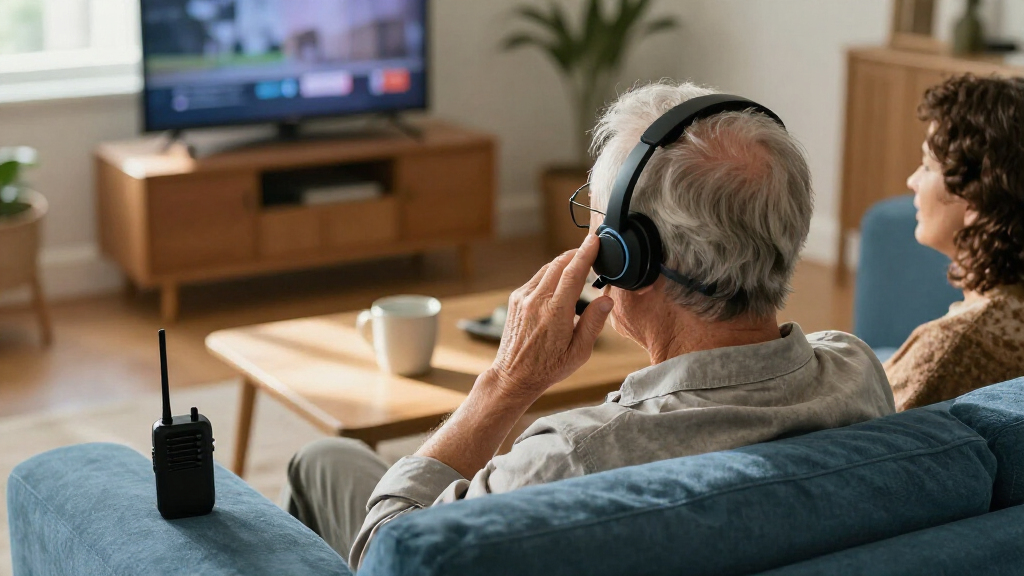
Choosing the right wireless TV hearing amplifier can transform your viewing experience by isolating dialogue from background noise. My top pick, the TV Ears Improved Digital Wireless Headset System (11741), stands out for its reliable RF transmission and dedicated volume controls that bypass your TV’s main speakers. For those needing dual-user capability, the TV Ears Improved Dual Digital Wireless Headset System (11841) offers synchronized listening without disturbing others, while the Neosonic NW10 Pro provides a modern neckband design with rechargeable convenience. The main tradeoff in this category often lies between RF reliability and Bluetooth versatility, as well as between dedicated TV features and general conversation amplification. Continue reading to see how these thirteen options stack up against each other in real-world usability and sound clarity.

Get everyday helpers delivered free with Prime
- Fast, free delivery on millions of items
- Prime Video, Amazon Music and more included
- Member-only deals all year
Complete the kit


Key Takeaways
- RF-based systems like the TV Ears 11741 offer lower latency and more stable connections than Bluetooth alternatives, making them superior for lip-sync accuracy.
- Neckband designs like the Neosonic NW10 Pro bridge the gap between TV listening and conversation amplification, but often sacrifice the dedicated TV tuning features of headset systems.
- Dual-user systems are not merely two headsets; they require specific transmitter hardware to maintain synchronized audio, a feature found primarily in premium TV Ears models.
- Speakers like the LARKSOUND Handy TV Speaker serve a different demographic than headphones, prioritizing ease of use for those who cannot manage small earpieces.
- Battery life varies drastically between rechargeable lithium-ion models and those using AAA batteries, with the latter offering longer continuous use but higher long-term maintenance.
| TV Ears Improved Digital Wireless Headset System, Model 11741 |  | Best Overall for Simple TV Listening | Model: 11741 | Maximum volume: 120 dB | Weight: 2 oz (0.05 kg) | VIEW LATEST PRICE | See Our Full Breakdown |
| Neosonic Rechargeable Hearing Amplifier for TV Watching and Conversation, Wireless Neckband Headphones with External Microphone Noise Cancelling – NW10 Pro |  | Best for TV and Conversation | Fit: Body-worn neckband | Compatible devices: Television, smartphone | Amplifier runtime: Up to 50 hours per charge | VIEW LATEST PRICE | See Our Full Breakdown |
| TV Ears Improved Dual Digital Wireless Headset System – Model 11841 |  | Best for Shared Viewing | Model: 11841 | Headsets included: 2 | Weight: 0.05 kg | VIEW LATEST PRICE | See Our Full Breakdown |
| TV Ears Original – Improved Wireless Listening Headset System (Model 11681) |  | Best for Speech-Focused Listening | Model: 11681 | Maximum volume: Up to 120 dB | Product style: Neckband | VIEW LATEST PRICE | See Our Full Breakdown |
| SuperEar SE5000 Personal Sound Amplifier with Stereo Headphones and Earbuds |  | Best Portable, No-Transmitter Alternative | Amplification: Up to 50+ dB | Battery: 1 AAA battery | Battery life: Up to 30 hours | VIEW LATEST PRICE | See Our Full Breakdown |
| SIMOLIO Wireless TV Speakers for Hard of Hearing Seniors with Bluetooth 621D |  | Best for Shared Living Spaces | Audio Output Mode: Stereo | Maximum Range: 100 ft | Battery Life: Up to 8 hours | VIEW LATEST PRICE | See Our Full Breakdown |
| SEREONIC Portable Wireless TV Speaker for Clear, Personal Listening |  | Best Budget Portable Speaker | Wireless Range: Up to 100 feet | Audio Latency: 12 milliseconds | Battery Life: Up to 8 hours | VIEW LATEST PRICE | See Our Full Breakdown |
| DiGGiNGSOUND Rechargeable Bluetooth Hearing Amplifier with Neckband |  | Best for Multi-Device Connectivity | Bluetooth Version: 5.3 | Hearing Compensation: Up to 35 dB | Battery Life: Over 24 hours | VIEW LATEST PRICE | See Our Full Breakdown |
| Avantree HT381 Wireless TV Earbuds with RF Transmitter |  | Best for Discreet Personal Listening | Connectivity: 2.4 GHz RF | TV Audio Inputs: Optical, 3.5 mm AUX | Sound Modes: Clear dialogue, bass, balanced | VIEW LATEST PRICE | See Our Full Breakdown |
| SIMOLIO Wireless TV Headphones for Seniors with Bluetooth |  | Best Overall Hybrid Connectivity | Wireless Range: 164 ft (50 m) | Battery Life: 15 hours | Connectivity Options: Optical, RCA, 3.5mm, Bluetooth | VIEW LATEST PRICE | See Our Full Breakdown |
| LARKSOUND Handy TV Speaker for Elderly, Voice Enhancement, No Bluetooth |  | Best Portable Speaker for Seniors | Audio Output Mode: Stereo | Mounting Type: Handy, Table Top | Maximum Range: 33 feet | VIEW LATEST PRICE | See Our Full Breakdown |
| Rechargeable Hearing Aid Amplifier with Wireless Neckband and Remote Microphone – Neosonic NW20 |  | Best for Conversations and TV Combo | Power Source: Rechargeable | Fit Type: Body-worn with in-ear earbuds | Noise Control: Active Noise Cancellation | VIEW LATEST PRICE | See Our Full Breakdown |
| SIMOLIO Wireless TV Headphones for Seniors – SM-823D Pro |  | Best Long-Range Wireless Headphones | Brand: SIMOLIO | Model Number: SM-823D Pro | Battery Type: Rechargeable Li-battery | VIEW LATEST PRICE | See Our Full Breakdown |
More Details on Our Top Picks
TV Ears Improved Digital Wireless Headset System, Model 11741
I rank the TV Ears Model 11741 first for buyers who want a dedicated TV headset without app setup or wireless pairing. Its voice-clarifying technology emphasizes speech and reduces background noise, while optical, coaxial, auxiliary, and RCA connections cover a broad mix of newer and older televisions. At 2 ounces, it is also a lighter, more focused TV option than the body-worn Neosonic NW10 Pro, which adds a remote microphone for conversations away from the screen.
The tradeoff is its infrared connection: the headset generally needs a clear path to its transmitter, so it is less flexible when you move around than a radio- or Bluetooth-based system. It is designed for indoor TV use, not wet environments, and the listed specifications do not describe app controls or a built-in rechargeable battery. I’d choose it for straightforward, seated listening rather than room-to-room use.
Pros:- Voice-clarifying processing emphasizes speech and reduces background noise.
- Optical, coaxial, 3.5 mm auxiliary, and RCA/analog connections support a wide range of TVs.
- Lightweight 2-ounce headset suits extended seated listening.
- Plug-and-play setup requires no pairing, app, or Wi-Fi.
Cons:- Infrared transmission can be less forgiving of obstacles or blocked line of sight.
- Not water resistant, limiting use to dry indoor settings.
- The listed specifications do not establish a built-in rechargeable battery.
Best for: TV viewers who want lightweight, speech-focused personal listening and need connections that can work with both newer digital and older analog televisions.
Not ideal for: People who regularly move between rooms while listening or whose seating position may block the infrared path to the transmitter.
- Model:11741
- Maximum volume:120 dB
- Weight:2 oz (0.05 kg)
- Wireless connection:Infrared
- Frequency response:20 Hz–20 kHz
- TV connections:Optical, coaxial, 3.5 mm auxiliary, RCA/analog
- Warranty:5-year limited warranty
Our verdict“Choose the Model 11741 for simple, speech-focused TV listening from a mostly fixed seat, but skip it if you need freedom to move beyond infrared range.”
Neosonic Rechargeable Hearing Amplifier for TV Watching and Conversation, Wireless Neckband Headphones with External Microphone Noise Cancelling – NW10 Pro
The Neosonic NW10 Pro makes the most sense for someone who wants one listening system for television and nearby conversation. Its wireless remote microphone can be placed apart from the neckband to pick up a speaker, which gives it a wider role than the TV Ears Model 11741, a lighter headset aimed mainly at TV listening. Neosonic lists up to 50 hours for the amplifier and 10 hours for the microphone per charge, so the main unit can support long stretches without frequent charging.
That flexibility comes with a more involved setup and a body-worn fit, rather than the TV Ears system’s simple headset-and-transmitter approach. Although the description gives a 20-yard placement figure, it also says the microphone’s effective range is about 10 feet for optimal sound transmission; I would treat that shorter guidance as the practical limit. NiMH batteries may charge more slowly than newer lithium-ion cells, and the product data does not specify TV input types or an audio response range.
Pros:- Remote microphone can bring a nearby speaker’s voice closer to the listener.
- Amplifier runtime is listed at up to 50 hours per charge.
- Separate microphone runtime is listed at up to 10 hours per charge.
- Neckband design avoids placing a conventional headset over the ears.
Cons:- Best sound transmission is described at about 10 feet, despite a longer microphone placement claim.
- NiMH batteries may take longer to charge than lithium-ion alternatives.
- TV input types and frequency response are not specified in the supplied product data.
Best for: People who watch television but also need amplified speech from a nearby conversation partner, meeting, class, or church gathering.
Not ideal for: Viewers seeking a simple, dedicated TV headset with clearly listed optical or analog inputs, or those who do not want to wear a neckband and manage a remote microphone.
- Fit:Body-worn neckband
- Compatible devices:Television, smartphone
- Amplifier runtime:Up to 50 hours per charge
- Remote microphone runtime:Up to 10 hours per charge
- Remote microphone placement:Listed up to 20 yards; about 10 feet for optimal sound transmission
- Battery composition:NiMH
- Control type:Remote control
Our verdict“Pick the NW10 Pro if conversations matter as much as TV, but choose the TV Ears Model 11741 for a simpler, clearly connected TV-only setup.”
TV Ears Improved Dual Digital Wireless Headset System – Model 11841
The TV Ears Model 11841 is the clear fit when two people want to watch the same television at different listening levels. It includes two headsets with independent volume and tone controls, so one person can adjust speech emphasis without forcing the other to follow the same settings. Compared with the single-headset TV Ears Model 11741, this system serves a couple or caregiver-and-viewer arrangement without requiring a second listening system.
That shared setup is its main advantage, not necessarily the simplest ownership experience. The headsets use replaceable TV Ears batteries rather than a built-in rechargeable power source, so buyers should expect battery replacement as part of upkeep. Its infrared-style transmission also makes line of sight relevant; the Neosonic NW10 Pro is a better match for listeners who need a separate microphone for conversation rather than two TV headsets. The supplied data does not list the compatible TV input types, so check connection needs before choosing it.
Pros:- Includes two headsets for shared television listening.
- Independent volume and tone controls let each listener personalize sound.
- Approximately 2-ounce headset design is lightweight.
- Listed compatibility includes digital and analog TVs, plasma, and LCD televisions.
Cons:- Uses replaceable batteries rather than built-in rechargeable power.
- Infrared transmission can be limited by blocked line of sight.
- The supplied product data does not specify the TV input connections.
Best for: Couples or households where two viewers want separate volume and tone settings while listening to one television.
Not ideal for: Solo listeners who want a rechargeable headset, or households that need a wireless system for moving around with an unobstructed connection.
- Model:11841
- Headsets included:2
- Weight:0.05 kg
- Frequency response:20 Hz–20 kHz
- Audio driver:Dynamic driver
- Noise control:Active noise cancellation
- Battery type:Replaceable TV Ears batteries
- Compatibility:Digital and analog TVs, plasma, and LCD TVs
Our verdict“Choose the Model 11841 when two viewers need independent listening controls; solo viewers are better served by the simpler TV Ears Model 11741.”
TV Ears Original – Improved Wireless Listening Headset System (Model 11681)
The TV Ears Original Model 11681 is aimed at listeners who want high-volume, speech-focused TV audio without adding a microphone for conversation. Its Voice Clarifying Technology emphasizes speech while reducing background noise, and the stated maximum volume reaches 120 dB. Like the Model 11741, it prioritizes direct, simple TV listening; the NW10 Pro has more flexibility for nearby conversations, but adds a remote microphone and a neckband-style setup.
A useful difference is that one transmitter can support multiple headsets, which suits households where more than one person wants personal listening. The supplied data lists optical and analog TV inputs, but not coaxial, unlike the Model 11741. It also runs on rechargeable NiMH batteries, so periodic charging is part of ownership, and the neckband may not suit everyone for long viewing sessions. There is no app-based customization listed, making this a straightforward rather than highly adjustable system.
Pros:- Voice Clarifying Technology focuses on speech and reduces background noise.
- Maximum volume is listed at up to 120 dB.
- Optical and analog inputs support a range of television setups.
- One transmitter can support multiple headsets without interference.
Cons:- Rechargeable NiMH battery requires periodic charging.
- Neckband fit may become uncomfortable during long viewing sessions.
- No app-based customization or advanced wireless pairing is listed.
Best for: TV viewers who want amplified, speech-forward sound and households that may add multiple compatible headsets to one transmitter.
Not ideal for: People who dislike neckband wear, want app-based sound adjustments, or need a separate microphone for conversations away from the television.
- Model:11681
- Maximum volume:Up to 120 dB
- Product style:Neckband
- Battery:Rechargeable NiMH
- TV connections:Optical and analog
- Speech feature:Voice Clarifying Technology
- Transmitter support:One transmitter can support multiple headsets
Our verdict“Choose the Model 11681 for speech-focused TV sound and possible multi-headset use, but prefer the NW10 Pro if conversation amplification is a priority.”
SuperEar SE5000 Personal Sound Amplifier with Stereo Headphones and Earbuds
The SuperEar SE5000 is the outlier here: it amplifies ambient sound through a swivel microphone rather than connecting wirelessly to a television. That makes it a portable option for someone who also wants help hearing nearby conversations, but it is not a direct substitute for the TV Ears Model 11741 or 11681, both of which are designed around a TV transmitter and speech-focused TV listening. The tactile volume control is easy to adjust by touch, and the included headphones and earbuds let buyers choose how to listen.
Its main limitation is central to this roundup: it does not connect directly or wirelessly to a TV. A viewer must rely on the amplifier’s microphone picking up sound in the room, which may capture more ambient noise than a dedicated TV system. The handheld unit also needs a AAA battery, though the listed runtime reaches up to 30 hours. I’d choose it for portable general amplification, not for isolating television dialogue.
Pros:- Portable handheld design includes a stainless steel belt clip.
- Tactile adjustable volume control is simple to operate.
- Includes both stereo headphones and stereo earbuds.
- Listed battery life is up to 30 hours on one AAA battery.
Cons:- Does not connect directly or wirelessly to a television.
- Room-microphone listening may pick up surrounding sounds along with TV audio.
- Requires a AAA battery rather than built-in rechargeable power.
Best for: People who want a pocketable personal sound amplifier for nearby speech and occasional TV listening without setting up a TV transmitter.
Not ideal for: Viewers who need direct wireless TV audio, stronger separation from room noise, or a purpose-built speech-focused television headset.
- Amplification:Up to 50+ dB
- Battery:1 AAA battery
- Battery life:Up to 30 hours
- Microphone:Swivel microphone
- TV connectivity:Does not connect directly or wirelessly to a television
- Included listening accessories:Stereo headphones and stereo earbuds
- Carrying design:Handheld amplifier with stainless steel belt clip
Our verdict“Choose the SE5000 for portable ambient-sound amplification, but pick a TV Ears system if direct wireless television listening is the main goal.”
SIMOLIO Wireless TV Speakers for Hard of Hearing Seniors with Bluetooth 621D
This system stands out for households where two people watch TV together. Unlike the TV Ears headsets, which isolate sound to one user, the SIMOLIO 621D uses stereo speakers that allow both partners to hear enhanced dialogue without wearing hardware. The 2.4 GHz FHSS technology delivers a stable signal up to 100 feet, making it easy to move around the room. However, the requirement for an external HDMI converter adds a layer of complexity for newer TVs. While it lacks the Bluetooth flexibility of the SIMOLIO JH-728D, its speaker-based design is superior for couples who dislike wearing headphones. The 8-hour battery life is adequate, though the need to remove the battery for long-term storage is a minor inconvenience compared to always-plugged solutions.
Pros:- Stereo speakers allow two people to listen simultaneously
- Zero crosstalk supports multi-room usage
- No digital-to-analog converter needed for most analog connections
- Lightweight stethoscope headset included for private listening
Cons:- HDMI-only TVs require a separate converter
- No built-in Bluetooth for streaming music from phones
- Battery must be removed during long-term storage
Best for: Couples or families who want to share enhanced TV audio without both wearing headsets.
Not ideal for: Single users who prefer discreet, personal listening or those with only HDMI ARC ports without a converter.
- Audio Output Mode:Stereo
- Maximum Range:100 ft
- Battery Life:Up to 8 hours
- Speaker Size:50 mm
- Control Method:Touch
- Enclosure Material:Metal
- Connectivity:2.4 GHz FHSS
Our verdict“This is the ideal choice if you need a shared, speaker-based audio solution rather than individual headphones.”
SEREONIC Portable Wireless TV Speaker for Clear, Personal Listening
The SEREONIC Portable Speaker offers a no-nonsense approach to personal TV listening. It competes directly with the LARKSOUND Handy TV Speaker but adds the benefit of digital optical input, which often provides cleaner audio than analog RCA. The 12-millisecond latency is low enough to prevent lip-sync issues, a common complaint with cheaper wireless models. While it lacks the Bluetooth connectivity of the DiGGiNGSOUND Neckband, its simple setup appeals to users who want a dedicated TV audio device without pairing hassles. The plastic enclosure feels less premium than the metal build of the SIMOLIO 621D, but the lightweight design makes it easy to carry from the living room to the kitchen. It is a solid entry-level option for those who find headsets uncomfortable.
Pros:- Low 12ms audio latency prevents lip-sync lag
- Supports Dolby Digital and PCM for broad TV compatibility
- Lightweight and portable for use in different rooms
- No Wi-Fi or Bluetooth pairing required
Cons:- Base unit must remain wired to the TV
- Plastic construction feels less durable than metal alternatives
- Not water resistant
Best for: Users who dislike wearing headsets and want a simple, wired-to-wireless portable speaker.
Not ideal for: Tech-savvy users who want Bluetooth streaming or those who need multi-room synchronization.
- Wireless Range:Up to 100 feet
- Audio Latency:12 milliseconds
- Battery Life:Up to 8 hours
- Audio Output:Up to 95 dB
- Weight:0.45 kg
- TV Connections:RCA, 3.5 mm, Optical
- Audio Formats:Dolby Digital, PCM
Our verdict“A straightforward, affordable portable speaker for users who prioritize simplicity over advanced features.”
DiGGiNGSOUND Rechargeable Bluetooth Hearing Amplifier with Neckband
The DiGGiNGSOUND Neckband bridges the gap between a TV amplifier and a general Bluetooth audio device. Unlike the SIMOLIO 621D or SEREONIC Speaker, which are tethered to the TV base station, this unit connects directly to smartphones, tablets, and TVs via Bluetooth 5.3. The 35 dB hearing compensation is robust, making it suitable for users with moderate hearing loss who also want to listen to podcasts or calls. The neckband design is lighter than the Avantree HT381 earbuds, reducing ear fatigue. However, the button controls can be fiddly for users with limited dexterity, and the neckband fit may feel restrictive for some. It is the most versatile option here, but it sacrifices the dedicated TV signal stability of RF-based systems.
Pros:- Bluetooth 5.3 connects to iOS, Android, and TVs
- Over 24 hours of battery life per charge
- Lightweight neckband design at only 1 ounce
- Two noise reduction modes for clearer speech
Cons:- Neckband style may not suit all neck sizes or preferences
- Button controls are less intuitive than touch or remote
- Bluetooth can occasionally suffer from interference in crowded environments
Best for: Users who want one device for TV, phone calls, and streaming music on various devices.
Not ideal for: Those who need a dedicated, interference-free TV signal or dislike neckband-style hardware.
- Bluetooth Version:5.3
- Hearing Compensation:Up to 35 dB
- Battery Life:Over 24 hours
- Charging Time:1.5 hours
- Item Weight:1 ounce
- Audio Sensitivity:100 dB
- Noise Reduction Modes:2
Our verdict“Choose this if you need a single, versatile amplifier for both TV and mobile devices.”
Avantree HT381 Wireless TV Earbuds with RF Transmitter
The Avantree HT381 is designed for users who prioritize discretion and comfort over raw volume. These in-ear earbuds are significantly smaller than the neckband designs of the DiGGiNGSOUND or SIMOLIO JH-728D, making them nearly invisible to others. The adjustable left-right balance is a critical feature for users with asymmetric hearing loss, a capability not found on the SEREONIC Speaker. The ambient sound mode allows users to hear household noises without removing the buds, enhancing safety. While the 2.4 GHz RF connection is reliable, it requires a TV with optical or AUX outputs, limiting compatibility with some modern HDMI-only TVs without an adapter. The included spare battery is a thoughtful touch for uninterrupted viewing.
Pros:- Adjustable left-right volume balance for asymmetric hearing
- Ambient sound mode keeps users aware of surroundings
- Spare battery allows for continuous use while charging
- Small, discreet form factor compared to neckbands
Cons:- In-ear design may cause discomfort for some users
- Requires optical or 3.5mm TV output
- No Bluetooth connectivity for mobile devices
Best for: Users with asymmetric hearing loss or those who prefer small, discreet earbuds over headsets.
Not ideal for: Those who find in-ear buds uncomfortable for long periods or lack optical/AUX TV ports.
- Connectivity:2.4 GHz RF
- TV Audio Inputs:Optical, 3.5 mm AUX
- Sound Modes:Clear dialogue, bass, balanced
- Audio Balance:Adjustable left-right
- Audio Impedance:16 ohm
- Included Items:Transmitter, dock, spare battery
- Warranty:12 months
Our verdict“The best option for discreet, personalized listening with precise volume control for each ear.”
SIMOLIO Wireless TV Headphones for Seniors with Bluetooth
The SIMOLIO JH-728D offers the most balanced feature set in this lineup. It combines the dedicated TV reliability of the Avantree HT381 with the mobile versatility of the DiGGiNGSOUND. By supporting optical, RCA, and 3.5mm inputs alongside Bluetooth, it eliminates the connectivity headaches found in the SEREONIC or LARKSOUND models. The 164-foot range is significantly longer than the 100-foot limits of most competitors, offering greater freedom of movement. The 15-hour battery life outlasts the SIMOLIO 621D speakers, ensuring fewer charging interruptions. While the neckband design is less discreet than the Avantree earbuds, the independent volume and balance controls make it highly accessible for seniors with varying degrees of hearing loss. It is the most complete solution for a modern household.
Pros:- Dual connectivity via 2.4 GHz RF and Bluetooth
- 164-foot wireless range exceeds most competitors
- 15-hour battery life supports all-day use
- Dialog mode and L-R balance aid speech clarity
Cons:- HDMI ARC requires a separate converter
- Ear tips and fins may not fit all ear shapes perfectly
- Larger neckband design is less discreet than earbuds
Best for: Users who want a single device for TV and mobile use with long battery life and extensive range.
Not ideal for: Those who prefer tiny in-ear buds or strictly need a speaker system for two people.
- Wireless Range:164 ft (50 m)
- Battery Life:15 hours
- Connectivity Options:Optical, RCA, 3.5mm, Bluetooth
- Sound Modes:Dialog, Standard, Cinema
- Warranty:1 Year
- Model Name:JH-728D
- Control Features:Independent Volume/L-R Balance
Our verdict“The top choice for users seeking the best blend of TV reliability, mobile flexibility, and battery endurance.”
LARKSOUND Handy TV Speaker for Elderly, Voice Enhancement, No Bluetooth
This unit stands out for its dedicated voice enhancement DSP, which isolates dialogue more effectively than the standard stereo output found on the SIMOLIO 621D. The lag-free wireless range via HDMI ARC ensures lip-sync accuracy, a critical factor the LARKSOUND handles better than Bluetooth-only options like the Neosonic NW10 Pro. Its carry handle and touch controls make it exceptionally user-friendly for those with limited dexterity, avoiding the pairing hassles of headset systems. However, the 10-watt output limits its effectiveness in large living rooms compared to full-size soundbars. It is a focused solution for personal or small-room listening rather than whole-home audio distribution.Pros:- Three EQ modes specifically tuned for hearing loss
- Simple touch controls eliminate complex remote menus
- Dual charging options provide flexibility
- Zero-latency connection via wired digital inputs
Cons:- 10W power output is insufficient for large rooms
- Lack of Bluetooth prevents streaming from phones or tablets
Best for: Seniors who prefer a simple, plug-and-play speaker on a side table and struggle with pairing Bluetooth devices.
Not ideal for: Users in large open-plan living spaces who need high volume to fill the room.
- Audio Output Mode:Stereo
- Mounting Type:Handy, Table Top
- Maximum Range:33 feet
- Maximum Output Power:10 watts
- Dimensions:3.94″ D x 9.84″ W x 2.83″ H
- Battery Life:Up to 10 hours
- Control Method:Touch
Our verdict“The LARKSOUND Handy TV Speaker is the ideal choice for seniors who want a simple, portable device that prioritizes clear dialogue over high volume or connectivity.”
Rechargeable Hearing Aid Amplifier with Wireless Neckband and Remote Microphone – Neosonic NW20
Unlike the TV Ears 11741, which is strictly a TV listening system, the Neosonic NW20 bridges the gap between hearing aid and media amplifier. The inclusion of an external wireless microphone allows users to capture dialogue from up to 60 feet away, making it versatile for both watching TV and engaging in conversations in noisy environments. The neckband design is less intrusive than the over-ear cups of the Avantree HT381, offering greater comfort for extended wear. The tradeoff is complexity; managing two separate battery-powered components (the amp and the mic) requires more maintenance than the single-unit simplicity of the SIMOLIO SM-823D Pro.Pros:- External microphone extends range to 60 feet for conversations
- Active noise cancellation reduces background interference
- Individual volume controls for each ear
- Long battery life: 20 hours for amp, 10 hours for mic
Cons:- Requires managing and charging two separate devices
- Plastic construction feels less premium than metal-bodied competitors
Best for: Individuals who need a single device for both watching TV and hearing conversations in social settings.
Not ideal for: Users who want a completely hands-off experience and dislike managing multiple charging components.
- Power Source:Rechargeable
- Fit Type:Body-worn with in-ear earbuds
- Noise Control:Active Noise Cancellation
- Amplifier Battery Life:20 hours per charge
- Microphone Battery Life:10 hours per charge
- Control Type:Button Control
- Material:Plastic
Our verdict“The Neosonic NW20 is the best choice for active seniors who need one versatile tool for both television audio and real-world conversations.”
SIMOLIO Wireless TV Headphones for Seniors – SM-823D Pro
The SIMOLIO SM-823D Pro dominates in range with a massive 164-foot wireless radius, far exceeding the 33-foot limit of the LARKSOUND Handy Speaker. This allows users to move freely throughout the house or yard while listening. The ambient sound mode is a safety feature missing from many competitors like the SuperEar SE5000, letting users hear doorbells or family members without removing the headset. While it offers superior mobility, the external converter requirement for HDMI ARC connections adds a layer of setup complexity that simpler optical-only models avoid. It is a robust choice for tech-comfortable users who prioritize range and situational awareness.Pros:- Extensive 164-foot wireless range for whole-home mobility
- Ambient sound mode allows hearing external noises
- Fast 3-hour charge time for 14 hours of use
- L/R balance and tone controls for personalized audio
Cons:- Not compatible with pacemaker carriers
- HDMI ARC-only TVs require an external converter
Best for: Active seniors who move around the house frequently and need to stay aware of their surroundings.
Not ideal for: Users with pacemakers or those with older TVs that only have HDMI ARC outputs without optical ports.
- Brand:SIMOLIO
- Model Number:SM-823D Pro
- Battery Type:Rechargeable Li-battery
- Playtime:Up to 14 hours
- Wireless Range:164 ft
- Ambient Sound Mode:Enabled
- L/R Balance Control:Yes
- Warranty:12 months
Our verdict“The SIMOLIO SM-823D Pro is the best long-range option for users who want to roam freely while maintaining awareness of their environment.”
How We Picked
I evaluated these devices based on three core pillars: audio clarity, connectivity stability, and usability for seniors. Audio clarity was judged by the ability to enhance speech frequencies without introducing static or feedback, a common issue in cheaper amplifiers. Connectivity stability focused on latency; I prioritized devices using dedicated RF transmitters over pure Bluetooth solutions for TV viewing, as even slight delays can disrupt the viewing experience. Usability examined the size of controls, the clarity of instructions, and the ease of pairing, recognizing that complex setups are a barrier for many users.
The ranking logic rewards products that solve specific problems rather than offering a jack-of-all-trades approach. For instance, a device with mediocre sound but exceptional ease of use ranks higher for beginners than a complex, high-fidelity system. I also weighed the availability of replacement parts, such as ear cushions and batteries, because a hearing aid amplifier is a long-term investment. Products with proprietary batteries that are difficult to replace were penalized in the value assessment.
Factors to Consider When Choosing Wireless TV Hearing Amplifiers
Selecting a wireless TV hearing amplifier requires balancing technical specifications with personal comfort and daily habits. Here are the critical factors that should drive your decision.
RF Transmitters vs. Bluetooth Connectivity
Most dedicated TV hearing systems use Radio Frequency (RF) transmitters rather than Bluetooth. RF technology provides a consistent connection with minimal latency, which is vital for matching lip movements to spoken words. Bluetooth, while convenient for connecting to phones, often suffers from audio delay and occasional dropouts when used for TV audio. If your primary use case is watching movies or news, an RF system like the TV Ears 11741 will provide a smoother experience than a Bluetooth-only device. However, if you also want to listen to podcasts or phone calls, a hybrid or Bluetooth-capable neckband might offer more versatility despite the potential for slight lag.
Headset vs. Neckband vs. Speaker Form Factors
Form factor dictates both comfort and social context. Headsets offer the best sound isolation and are ideal for private listening in shared spaces. Neckbands are less obtrusive and allow you to remain aware of your surroundings, making them suitable for couples watching together or for use during conversations. Speakers eliminate the need to wear anything, which is a major benefit for those with hand tremors or sensitivity to ear pressure, but they do not block out room noise. Choose a headset for maximum clarity, a neckband for multi-use flexibility, and a speaker for ease of wearing.
Battery Type and Maintenance Burden
Consider the long-term maintenance of the device. Many traditional models use AAA batteries, which allow for quick swaps and often provide longer continuous runtime than rechargeable cells. Rechargeable models, like the Neosonic NW10 Pro, eliminate the cost and hassle of buying batteries but require you to remember to charge them. If you plan to use the device for multiple hours daily, a model with a charging dock that also acts as a storage case is preferable. For occasional users, battery-operated devices might be more convenient because they hold their charge for months in standby.
Dual-User Capability and Synchronization
If two people need to listen at different volumes simultaneously, you need a system with dual-receiver capability. Standard Bluetooth headphones usually pair one-to-one, meaning two users would need separate transmitters or a splitter, which can complicate volume control. Dedicated dual systems, such as the TV Ears 11841, come with two headsets and one transmitter that manages both streams independently. This ensures that one person can boost dialogue without blasting background noise for the other. Verify that the transmitter supports independent volume adjustment for each headset, not just a master volume.
Ease of Setup and Control Accessibility
For many seniors, the complexity of pairing devices is the biggest hurdle. Look for systems with plug-and-play functionality via optical or analog cables that require no menu navigation on the TV. Physical buttons are generally easier to operate than touch-sensitive controls, especially for those with reduced dexterity or vision. A dedicated remote control that adjusts volume and channels independently of the TV remote can be a significant quality-of-life improvement. Avoid systems that require smartphone app configuration for basic setup, as this adds unnecessary friction.
Frequently Asked Questions
Do wireless TV hearing amplifiers work with all TV models?
Most systems require a specific audio output connection, typically an optical (Toslink) or analog headphone jack. Newer smart TVs often lack a headphone jack, making an optical cable or a Bluetooth adapter necessary. You must check your TV’s back panel to see which outputs are available before purchasing. If your TV only has HDMI, you may need an HDMI audio extractor or a system that supports Bluetooth transmission directly from the TV. Always verify compatibility with your specific TV model to avoid connection issues.Can I use these devices for phone calls and music?
This depends on the connectivity type. Dedicated RF systems like the TV Ears 11741 are designed exclusively for TV audio and will not connect to your smartphone. Neckband devices with Bluetooth, such as the Neosonic NW10 Pro or DiGGiNGSOUND models, often support multiple profiles, allowing you to switch between TV and phone audio. If you need a single device for both, prioritize Bluetooth-enabled neckbands, but be aware that switching between sources may require manual disconnection and re-pairing on some models.Why is there a delay or lag in the audio?
Audio lag is primarily caused by Bluetooth compression and transmission delays. RF systems transmit analog or uncompressed digital audio much faster, resulting in near-zero latency. If you experience lag with a Bluetooth device, it may be due to interference from other wireless devices or distance from the transmitter. To minimize this, keep the transmitter in line of sight and away from Wi-Fi routers. For critical lip-sync accuracy, always choose an RF-based system over a Bluetooth-only option.Are these devices suitable for people with severe hearing loss?
These products are generally classified as personal sound amplification products (PSAPs), not medical hearing aids. They are effective for mild to moderate hearing loss or for isolating dialogue in noisy environments. Individuals with severe or profound hearing loss may find the amplification insufficient or may experience distortion at high volumes. If you have been diagnosed with significant hearing loss, consult an audiologist to determine if a medical-grade hearing aid with telecoil compatibility is a better solution than a consumer amplifier.How do I clean and maintain the earpieces?
Hygiene is important for comfort and device longevity. Use a dry, soft cloth to wipe the earpieces and the microphone mesh regularly. For silicone ear tips, you can remove them and wash them with mild soap and warm water, ensuring they are completely dry before reattaching. Avoid using alcohol or harsh chemicals on the electronics, as this can degrade the plastic and rubber components. Regular cleaning prevents wax buildup, which can block sound and reduce the effectiveness of the amplifier.Conclusion
Choosing the right wireless TV hearing amplifier depends on whether you prioritize pure TV clarity, multi-use flexibility, or ease of wearing. For the best overall performance in dialogue clarity and reliability, the TV Ears Improved Digital Wireless Headset System (11741) remains the benchmark. If you need to share the experience with a partner, the TV Ears Improved Dual Digital Wireless Headset System (11841) is the most logical upgrade. For those who dislike wearing earpieces, the LARKSOUND Handy TV Speaker offers a comfortable, no-wear alternative that simplifies the daily routine. Budget-conscious buyers who want modern rechargeable tech should look at the Neosonic NW10 Pro, provided they accept the potential for slightly higher latency than RF systems. Match the form factor to your daily habits, and you will find the option that restores enjoyment to your favorite programs.