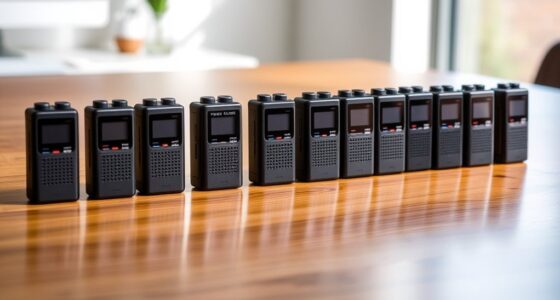

Bluetooth hearing aids for seniors range from app-adjustable OTC models to discreet aids with simple onboard controls. I name the Jabra Enhance Select M3 Aureon my best overall pick for shoppers who want an established, feature-focused option, while the ELEHEAR Beyond 2 Pro stands out for speech-focused processing and the touchscreen CIC model for people who prefer controls without a phone app. The main tradeoffs are discretion versus ease of handling, app flexibility versus simpler controls, and extra features versus setup demands. Bluetooth also does not mean every model streams every kind of audio, so device compatibility matters. Read on for the full comparison, selection criteria, and guidance on matching a model to your daily routine.

Get everyday helpers delivered free with Prime
- Fast, free delivery on millions of items
- Prime Video, Amazon Music and more included
- Member-only deals all year
Complete the kit


Key Takeaways
- The Jabra Enhance Select M3 Aureon is the roundup’s best overall choice, while the ELEHEAR Beyond models offer a stronger focus on speech processing and app-based adjustment.
- App control is not a universal advantage: the touchscreen CIC model skips the app, which may suit shoppers who want direct controls, but its small in-ear format may be harder to handle.
- Battery claims need context: the touchscreen model lists up to 80 hours, but case-based runtime and daily use are not the same as uninterrupted listening time.
- Discreet styles can involve handling compromises: CIC options such as the touchscreen model and Yeasound CIC60 may appeal to shoppers seeking a low-profile fit, while larger controls can be easier to manage.
- Several generic rechargeable Bluetooth listings offer limited detail in their names: I rank better-specified options higher because shoppers need clear information about fitting, controls, and support before choosing.
| Rechargeable Bluetooth Hearing Aids with App Control and Noise Cancellation | 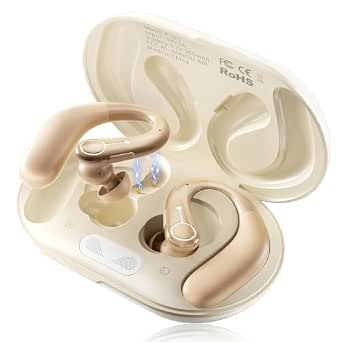 | Best for Left-and-Right App Tuning | Connectivity: Bluetooth | Controls: Companion app and onboard volume settings | App volume adjustment: 0–100 | VIEW LATEST PRICE | See Our Full Breakdown |
| Rechargeable Bluetooth Hearing Aids with Smart Noise Cancellation |  | Best for App-Free Touch Controls | Bluetooth: Calls and music streaming | Volume levels: 3 | Noise-cancellation levels: 3 | VIEW LATEST PRICE | See Our Full Breakdown |
| ELEHEAR Beyond OTC Hearing Aids for Seniors |  | Best for Long Battery Endurance | Amplification: 50dB | Noise reduction: 24dB background-noise cut | Battery life: 20 hours per charge; 100 hours total with case | VIEW LATEST PRICE | See Our Full Breakdown |
| OTC Hearing Aids with Bluetooth & Touchscreen, Rechargeable CIC Discreet Hearing Aids for Seniors, Up to 80H Battery Life, 2.05″ Color Display, 6 Volume Levels, 4 Listening Modes, No APP |  | Best for Phone-Free On-Case Adjustments | Style: Completely-in-Canal (CIC) | Connectivity: Bluetooth for calls, music, and videos | Controls: 2.05-inch color touchscreen; no app | VIEW LATEST PRICE | See Our Full Breakdown |
| Bluetooth Rechargeable OTC Hearing Aids for Seniors |  | Best for Lightweight Behind-the-Ear Wear | Fit type: Behind-the-ear | Weight: 3.5g | Battery life: 18 hours per charge; 72 hours total with case | VIEW LATEST PRICE | See Our Full Breakdown |
| ELEHEAR Beyond AI-Powered OTC Hearing Aids with Speech Enhancement |  | Best for Speech-Focused App Tuning | Design: Receiver-in-the-canal | Hearing loss range: Mild to moderate | Technology: VOCCLEAR AI | VIEW LATEST PRICE | See Our Full Breakdown |
| Hearing Aids for Seniors – Oricle Hearing Aids for Adults with Advanced Noise Cancellation – Easy Volume Control with Portable Charging Case |  | Best for Simple, Discreet Wear | Fit: Completely-in-canal, in-ear | Controls: Button control; five sound levels | Automatic operation: Auto on/off when removed from or placed into the case | VIEW LATEST PRICE | See Our Full Breakdown |
| Audien Atom One OTC Hearing Aids |  | Best for App-Free Controls | Fit: In-ear; universal left/right fit | Controls: Analog volume and frequency dials | Battery life: Up to 24 hours | VIEW LATEST PRICE | See Our Full Breakdown |
| Rechargeable Bluetooth Hearing Aids with App Control |  | Best for Independent Left-Right Tuning | Model: Saliryj F-Aid | Connectivity: Bluetooth | App control: Custom fitting and volume adjustment from 0 to 100 | VIEW LATEST PRICE | See Our Full Breakdown |
| Rechargeable Bluetooth Hearing Aids with App Control |  | Best for Battery Status at a Glance | Connectivity: Bluetooth | App: Royal Hearing | Volume controls: Five levels; separate controls for left and right ears | VIEW LATEST PRICE | See Our Full Breakdown |
| HearCare Bluetooth Hearing Aids with Noise Reduction and Rechargeable Charging Case |  | Best for Bluetooth Switching | Model: ZR-H718A | Bluetooth: Supported | Listening modes: Indoor, Outdoor, Noise Reduction | VIEW LATEST PRICE | See Our Full Breakdown |
| Oction Rechargeable Hearing Aid for Seniors with Hearing Loss, Clear Sound |  | Best for Simple, Long-Lasting Wear | Fit type: Behind-the-ear | DSP: 32-channel | Maximum gain: Up to 50 dB | VIEW LATEST PRICE | See Our Full Breakdown |
| ELEHEAR Beyond 2 Pro OTC Hearing Aids |  | Best for App-Based Tuning | Type: Receiver-in-Canal (RIC) | Bluetooth: Bluetooth 5.3; Auracast | Battery life: 20 hours per charge | VIEW LATEST PRICE | See Our Full Breakdown |
| Jabra Enhance Select M3 Aureon Rechargeable Hearing Aids, Sand |  | Best for Audiology Support | Style: Receiver-in-ear (RIE) | Weight: 2.12 g | Battery life: Over 24 hours per charge | VIEW LATEST PRICE | See Our Full Breakdown |
| Yeasound CIC60 Hearing Aids for Seniors with Bluetooth |  | Best for Discreet In-Ear Wear | Model: CIC60 | Fit type: In-ear, CIC | Weight: 0.05 oz (1 g) | VIEW LATEST PRICE | See Our Full Breakdown |
| Bluetooth hearing aids for senior | Battery life | Connectivity | Controls |
|---|---|---|---|
| Rechargeable Bluetooth Hearing | — | Bluetooth | Companion app and onboard volume settings |
| Rechargeable Bluetooth Hearing | — | — | Touch controls |
| ELEHEAR Beyond OTC Hearing Aid | 20 hours per charge; 100 hours total with case | Bluetooth | — |
| OTC Hearing Aids with Bluetoot | Over 20 hours per charge; up to 80 hours with case | Bluetooth for calls, music, and videos | 2.05-inch color touchscreen; no app |
| Bluetooth Rechargeable OTC Hea | 18 hours per charge; 72 hours total with case | Bluetooth | — |
| ELEHEAR Beyond AI-Powered OTC | Up to 20 hours per charge; up to 100 hours with charging case | — | — |
| Hearing Aids for Seniors | — | — | Button control; five sound levels |
| Audien Atom One OTC Hearing Ai | Up to 24 hours | — | Analog volume and frequency dials |
| Rechargeable Bluetooth Hearing | — | Bluetooth | — |
| Rechargeable Bluetooth Hearing | Up to 21 hours per full charge | Bluetooth | — |
| HearCare Bluetooth Hearing Aid | 12–15 hours per charge | — | — |
| Oction Rechargeable Hearing Ai | — | — | Two buttons with voice alerts; automatic on/off |
| ELEHEAR Beyond 2 Pro OTC Heari | 20 hours per charge | — | — |
| Jabra Enhance Select M3 Aureon | Over 24 hours per charge | Bluetooth, Bluetooth LE Audio, and Auracast | Companion app and double-tap call answering |
| Yeasound CIC60 Hearing Aids fo | — | Bluetooth | Tactile buttons and app |
More Details on Our Top Picks
Rechargeable Bluetooth Hearing Aids with App Control and Noise Cancellation
Separate left- and right-ear controls make this a better fit for seniors who want to adjust each side independently rather than rely on a single setting. The companion app also provides a wide 0–100 volume range, while onboard controls offer five preset levels for simpler adjustments. Compared with the Ceretone touchscreen CIC, this model depends more on a smartphone for detailed fitting, but avoids needing to manage a touchscreen case for those changes. Three listening modes, including two noise-reduction settings, offer a way to adapt between quieter spaces and noisier surroundings. The tradeoff is limited battery information: runtime and charging time are not specified, making it harder to plan around daily use. The app may also be a barrier for anyone who prefers phone-free controls.
Pros:- App supports personalized fitting and separate left- and right-ear settings.
- Bluetooth supports calls, music, and movie audio.
- Three listening modes include two levels of noise reduction.
- Five onboard volume presets allow basic adjustment without opening the app.
Cons:- Battery runtime and charging time are not specified.
- Detailed controls require app setup, which may be difficult for phone-averse users.
- The listed 8-ounce item weight is relatively substantial compared with the lightweight models in this roundup.
Best for: Seniors comfortable using a smartphone who want independent left- and right-ear adjustments and Bluetooth audio for calls, music, and movies.
Not ideal for: People who avoid smartphone apps or need confirmed battery runtime and charging details before choosing.
- Connectivity:Bluetooth
- Controls:Companion app and onboard volume settings
- App volume adjustment:0–100
- Onboard volume levels:5 (20%, 30%, 50%, 80%, 100%)
- Noise cancellation:16-channel digital chip
- Listening modes:General, Noise Reduction, Strong Noise Reduction
- Battery:Rechargeable lithium-ion
- Item weight:8 ounces
Our verdict“Choose this model if app-based, ear-by-ear tuning matters more than having clearly stated battery endurance or phone-free setup.”
Rechargeable Bluetooth Hearing Aids with Smart Noise Cancellation
Touch controls instead of a required companion app give this model a straightforward role for seniors who want to stream Bluetooth audio and make basic changes directly on the hearing aids. Three volume levels and three noise-cancellation levels keep adjustments simple, though they offer less fine control than the app-driven B0HMG7T2G8, which has separate left- and right-ear settings and a 0–100 app range. Multiple soft ear-tip sizes and a portable charging case support a more tailored fit and easier carrying. Bluetooth covers calls and music, but the product details do not state runtime per charge, so buyers cannot readily judge how it will fit a full day away from a charger. A manual is recommended before first use, which makes setup less self-explanatory than the Ceretone model’s on-case touchscreen.
Pros:- Touch controls work without requiring a smartphone app.
- Three volume and three noise-cancellation levels keep adjustments manageable.
- Bluetooth supports calls and music streaming.
- Multiple soft ear-tip sizes and a portable charging case are included.
Cons:- Only three volume levels provide less fine adjustment than app-based models.
- Battery life per charge is not specified.
- A user manual is recommended before first use.
Best for: Seniors who want Bluetooth calls and music, simple touch adjustments, and a choice of ear-tip sizes without depending on an app.
Not ideal for: Users who need highly precise volume tuning or want confirmed battery runtime before buying.
- Bluetooth:Calls and music streaming
- Volume levels:3
- Noise-cancellation levels:3
- Controls:Touch controls
- Charging:Rechargeable with portable charging case
- Battery:1 included lithium-ion battery
- Item weight:4.9 ounces
- Package dimensions:4.37 × 3.62 × 2.32 inches
Our verdict“Pick this option for app-free Bluetooth convenience if three-step adjustments are enough and unspecified battery runtime is acceptable.”
ELEHEAR Beyond OTC Hearing Aids for Seniors
Among these picks, the ELEHEAR Beyond stands out for documented endurance: it lists up to 20 hours per charge and 100 hours total with its case, plus a 15-minute quick charge for six hours of runtime. That makes it a stronger match for long days or travel than the Ceretone touchscreen CIC, whose listing gives a lower total-case figure. The Beyond also offers 50dB amplification, four scene modes, adjustable sound profiles, and nine dome sizes for fit choices. Its stated mild-to-moderate hearing-loss range helps define its intended audience, but it is still an OTC option rather than a substitute for a professional assessment. Full customization and mode changes depend on Bluetooth app connectivity, so it is less suitable than the Ceretone for seniors who want to make changes without a phone.
Pros:- Lists 20 hours per charge and up to 100 hours total with the charging case.
- A 15-minute quick charge is stated to provide six hours of runtime.
- Four scene modes and customizable sound profiles support tailored listening.
- Nine dome sizes offer a broad range of fit options.
Cons:- Full customization and mode switching require app connectivity.
- The product is specified for mild to moderate hearing loss, which may not suit every user’s needs.
- Protective covers must be removed manually before use.
Best for: Seniors with mild to moderate hearing loss who want long stated battery endurance, quick charging, and app-based sound customization.
Not ideal for: People who want phone-free mode changes, need a different hearing-loss solution, or prefer not to manage a range of dome sizes.
- Amplification:50dB
- Noise reduction:24dB background-noise cut
- Battery life:20 hours per charge; 100 hours total with case
- Quick charge:15 minutes for 6 hours of runtime
- Connectivity:Bluetooth
- Fit options:9 dome sizes
- Hearing-loss level:Mild to moderate
- Color:Champagne Gold
Our verdict“Choose the ELEHEAR Beyond if long stated runtime and app-based tuning matter more than phone-free operation.”
OTC Hearing Aids with Bluetooth & Touchscreen, Rechargeable CIC Discreet Hearing Aids for Seniors, Up to 80H Battery Life, 2.05″ Color Display, 6 Volume Levels, 4 Listening Modes, No APP
The Ceretone touchscreen charging case is the clearest choice here for seniors who want to change settings without navigating an app: its display controls six volume levels, four listening modes, Bluetooth, and brightness. The case also stores the previous settings, which can reduce repeated setup. Compared with the TTQ touch-control model, Ceretone offers more modes and volume steps, though its adjustments happen through a separate screen rather than directly on the hearing aids. Its CIC style is designed to sit in the canal, and the listing states over 20 hours per charge with up to 80 hours total using the case. The tradeoff is reliance on the touchscreen case for controls, and the detailed listing does not identify the listed DSP and A6 chip relationship clearly. Buyers should also check fit carefully, since discreet CIC placement may not suit every ear.
Pros:- On-case color touchscreen controls settings without a companion app.
- Six volume levels and four listening modes offer more adjustment steps than the three-level TTQ model.
- Listing states over 20 hours per charge and up to 80 hours total with the case.
- Auto-memory recalls previous settings, and six pairs of ear tips are included.
Cons:- Daily adjustments depend on carrying and using the touchscreen charging case.
- CIC fit may not be comfortable or secure for every ear shape.
- The supplied product information does not clearly reconcile its references to an A6 chip and Intricon DSP.
Best for: Seniors who want Bluetooth streaming and several adjustment choices without using a smartphone app, especially those who value a readable control screen.
Not ideal for: People who want hearing-aid controls directly on the devices, dislike touchscreen interfaces, or find CIC fittings uncomfortable.
- Style:Completely-in-Canal (CIC)
- Connectivity:Bluetooth for calls, music, and videos
- Controls:2.05-inch color touchscreen; no app
- Volume levels:6
- Listening modes:4
- Battery life:Over 20 hours per charge; up to 80 hours with case
- Screen brightness:3 levels
- Included ear tips:6 pairs in S, M, and L
Our verdict“Choose Ceretone if you want app-free Bluetooth hearing aids with more settings than basic touch-control alternatives and are comfortable using a touchscreen case.”
Bluetooth Rechargeable OTC Hearing Aids for Seniors
At a stated 3.5g, this behind-the-ear pair is the most clearly weight-focused option in the group, making it a practical pick for people who dislike a heavier fit. Its one-button operation and five volume levels also keep routine adjustments simpler than the app-led ELEHEAR Beyond, which offers more personalization but relies on a phone for full control. A 16-channel chip, active noise control, and whistling suppression aim to make everyday listening more manageable, while Bluetooth adds wireless audio streaming. The charging case lists up to 72 hours total and uses USB-C, with a stated two-hour charging time. The compromise is less customization than the ELEHEAR, and the product details do not explain the five volume steps or give a specific noise-reduction figure.
Pros:- Stated 3.5g weight supports a lightweight behind-the-ear fit.
- One-button operation and five volume levels keep basic adjustments simple.
- USB-C charging takes a stated two hours, with up to 72 hours total battery life using the case.
- Bluetooth supports wireless audio streaming, and the 16-channel chip includes whistling suppression.
Cons:- Offers less sound-profile customization than the app-controlled ELEHEAR Beyond.
- The listing does not provide a specific noise-reduction figure or describe distinct listening modes.
- Bluetooth streaming requires a compatible device.
Best for: Seniors who prioritize a lightweight behind-the-ear fit, simple one-button volume control, and USB-C charging.
Not ideal for: Buyers who want app-based sound profiles, detailed listening modes, or highly specified noise-reduction performance.
- Fit type:Behind-the-ear
- Weight:3.5g
- Battery life:18 hours per charge; 72 hours total with case
- Charging time:2 hours
- Charging interface:USB-C
- Channels:16
- Volume levels:5
- Connectivity:Bluetooth
- Warranty:2 years
Our verdict“Choose this model for lightweight behind-the-ear wear and simple controls rather than advanced app-based tuning.”
ELEHEAR Beyond AI-Powered OTC Hearing Aids with Speech Enhancement
Speech enhancement and adjustable app settings give the ELEHEAR Beyond a stronger case for conversation-focused listening than the simpler Audien Atom One, which has manual dials but no noise control. Its VOCCLEAR AI is designed to enhance speech, attenuate noise, and control feedback, while the companion app adds personalized settings and volume adjustment. For a senior comfortable using a smartphone, that flexibility can make it easier to tailor the sound than relying on fixed controls. The rechargeable case offers up to 100 hours of total use, reducing how often charging needs attention. The tradeoff is that this is still an OTC option for mild to moderate hearing loss, not severe loss, and app features depend on a compatible iOS or Android device. Buyers wanting a less app-dependent setup may prefer the Audien instead.
Pros:- VOCCLEAR AI is designed to enhance speech while attenuating noise and controlling feedback.
- The iOS and Android app offers adjustable volume and personalized hearing settings.
- Up to 20 hours of use per charge and up to 100 hours with the charging case.
- Receiver-in-the-canal fit includes multiple dome sizes and automatic power on/off.
Cons:- Designed for mild to moderate hearing loss and may not provide enough support for severe loss.
- App-based features require a compatible iOS or Android device.
- The feature-rich app may be more involved than the Audien Atom One’s direct analog controls.
Best for: Seniors with mild to moderate hearing loss who use a smartphone and want app-based speech and listening adjustments.
Not ideal for: People with severe hearing loss or anyone who does not want to rely on a compatible smartphone for personalized settings.
- Design:Receiver-in-the-canal
- Hearing loss range:Mild to moderate
- Technology:VOCCLEAR AI
- Maximum gain:Up to 50 dB
- Noise attenuation:24 dB
- Connectivity and app:Bluetooth; iOS and Android app compatibility
- Battery life:Up to 20 hours per charge; up to 100 hours with charging case
- Fit and operation:Multiple dome sizes; automatic power on/off
Our verdict“Choose the ELEHEAR Beyond if you want AI speech-focused adjustments and long case-supported use, and are comfortable managing settings in an app.”
Hearing Aids for Seniors – Oricle Hearing Aids for Adults with Advanced Noise Cancellation – Easy Volume Control with Portable Charging Case
A compact completely-in-canal fit and straightforward controls make the Oricle a better match for seniors who want hearing support without the app-led setup offered by the ELEHEAR Beyond. Its five sound levels give a limited but simple way to adjust listening, and smart memory is described as retaining preferred settings. Automatic on/off when removed from or placed in the case also cuts down on button handling. The soft silicone tips are intended for extended wear, though comfort and stability will still depend on the wearer. The listed battery runtime is up to 60 hours, but the product information does not clearly explain the charging arrangement behind that figure. Unlike the Bluetooth models in this roundup, the Oricle listing does not specify Bluetooth or phone-audio streaming, so I would not choose it for calls or music.
Pros:- Completely-in-canal design is compact and intended to stay stable during wear.
- Five sound levels offer simple adjustments without requiring app controls.
- Automatic on/off and smart memory can reduce repeated setup steps.
- Soft silicone ear tips are designed for extended wear.
Cons:- Bluetooth connectivity and phone-audio streaming are not specified in the product information.
- The stated 60-hour runtime is not accompanied by clear details about charging cycles or per-charge use.
- Five sound levels offer less fine adjustment than the app controls on the ELEHEAR Beyond.
Best for: Seniors who prioritize a small in-ear design, simple five-level adjustment, and automatic on/off over smartphone features.
Not ideal for: Buyers seeking confirmed Bluetooth streaming for calls or music, detailed app tuning, or clearly documented charging specifications.
- Fit:Completely-in-canal, in-ear
- Controls:Button control; five sound levels
- Automatic operation:Auto on/off when removed from or placed into the case
- Memory:Smart memory for preferred settings
- Stated battery life:Up to 60 hours on a single charge, as listed
- Charging case:Portable charging case
- Materials:Silicone ear tips
Our verdict“Pick the Oricle for a discreet, low-complexity in-ear aid, but skip it if Bluetooth streaming is a must-have.”
Audien Atom One OTC Hearing Aids
Direct analog volume and frequency dials are the Audien Atom One’s defining advantage: they let a wearer adjust sound without a smartphone, unlike the app-centered ELEHEAR Beyond. That can suit seniors who prefer physical controls and a familiar, self-directed setup. The rechargeable in-ear design provides up to 24 hours per charge, and the package includes three dome sizes plus cleaning and wax-guard tools, which help with fitting and routine care. The key compromise is the absence of noise control. In busy rooms, this may be less useful than the noise-reduction modes on the Bluetooth models in this batch. The product lists compatibility with phones, tablets, and televisions, but its controls are analog; I would not select it for Bluetooth call or music streaming. It is intended for mild to moderate hearing loss.
Pros:- Analog volume and frequency dials work without an app.
- Up to 24 hours of use per charge with a USB-C charging dock.
- Three silicone dome sizes support a more tailored in-ear fit.
- Includes cleaning tools, a wax guard kit, guided setup, and a one-year warranty.
Cons:- No noise-control feature is listed, limiting its appeal in busy environments.
- Designed for mild to moderate hearing loss rather than severe loss.
- Compatibility with phones, tablets, and televisions does not establish Bluetooth audio streaming.
Best for: Seniors with mild to moderate hearing loss who want physical sound adjustments and do not need app-based controls or noise reduction.
Not ideal for: People who often listen in noisy environments or want confirmed Bluetooth streaming for calls, music, or television audio.
- Fit:In-ear; universal left/right fit
- Controls:Analog volume and frequency dials
- Battery life:Up to 24 hours
- Charging:USB-C dock; about 3 hours to charge
- Ear domes:Small, medium, and large silicone sizes
- Noise control:None listed
- Warranty:1 year
- Included accessories:Charging dock and cable, power adapter, cleaning brush, adjustment tool, and wax guard kit
Our verdict“Choose the Audien Atom One for straightforward physical adjustment and simple charging, not for noisy-room processing or Bluetooth streaming.”
Rechargeable Bluetooth Hearing Aids with App Control
Independent left- and right-ear adjustment is the most useful distinction here: the Saliryj F-Aid lets users tailor each side separately, while the Audien Atom One relies on physical dials and does not list Bluetooth streaming. Bluetooth is specified for calls, music, and movies, and its app adds custom fitting plus volume control. A 16-channel digital chip and three listening modes are intended to support noise reduction across different settings, giving it more electronic adjustment options than the five-level Audien. There is a significant documentation caveat, though: the product information lists both a rechargeable lithium-ion battery and an included 9V battery, leaving the power setup unclear. Manual volume control is limited to five levels, so buyers who prefer precise adjustment without the app may find the controls restrictive.
Pros:- Bluetooth supports phone calls, music, and movies.
- App offers custom fitting and independent left- and right-ear adjustment.
- Three listening modes and a 16-channel digital chip support noise-reduction adjustments.
- App volume control is listed from 0 to 100.
Cons:- Battery information conflicts, listing both rechargeable lithium-ion and an included 9V battery.
- Manual volume control is limited to five levels.
- The listed product components are hearing amplifiers, with few included accessories specified.
Best for: Smartphone users who want Bluetooth audio and separate left/right adjustments for ears that need different settings.
Not ideal for: Buyers who want unambiguous battery instructions or fine-grained physical controls without using an app.
- Model:Saliryj F-Aid
- Connectivity:Bluetooth
- App control:Custom fitting and volume adjustment from 0 to 100
- Ear adjustment:Independent left- and right-ear controls
- Listening modes:General, Noise Reduction, and Strong Noise Reduction
- Digital chip:16-channel
- Battery information:Rechargeable lithium-ion listed; product information also lists one included 9V battery
- Included components:Hearing amplifiers
Our verdict“Consider the Saliryj F-Aid if separate app tuning and Bluetooth audio matter most, but verify the battery setup before choosing it.”
Rechargeable Bluetooth Hearing Aids with App Control
An LED battery display on the charging case gives this model a practical advantage for seniors who want to check charge status without guessing. Like the Saliryj F-Aid, it pairs app adjustment with Bluetooth audio, but this product also specifies feedback suppression and three noise-reduction modes. Separate left- and right-ear volume controls can help when one ear needs a different setting, while the stated runtime reaches up to 21 hours per full charge. The tradeoffs are less certain fit and durability details: the listing does not specify water resistance, and soft earbuds will not suit every ear. Five volume levels also provide fewer direct steps than the Saliryj app’s listed 0-to-100 adjustment, so this is a better match for people who value the case display and preset modes over highly granular tuning.
Pros:- Bluetooth supports calls, music, and other smartphone audio.
- App provides personalized adjustments alongside three noise-reduction modes.
- Feedback suppression and separate left/right volume controls add listening flexibility.
- Charging case includes an LED battery display and supports up to 21 hours of use per full charge.
Cons:- Water resistance is not specified.
- Five volume levels offer less granular adjustment than the Saliryj F-Aid app’s listed 0-to-100 control.
- Fit and comfort may vary despite the soft earbuds.
Best for: Seniors who want Bluetooth calls and media, separate ear controls, and an easy-to-read charging status display.
Not ideal for: People who need specified water resistance, highly precise volume steps, or a fit verified for their particular ear shape.
- Connectivity:Bluetooth
- App:Royal Hearing
- Volume controls:Five levels; separate controls for left and right ears
- Noise reduction:Three modes
- Additional sound feature:Feedback suppression
- Battery life:Up to 21 hours per full charge
- Charging case:800 mAh capacity with LED battery display
- Material and fit:Polypropylene; soft earbuds
Our verdict“Choose this model if Bluetooth, preset noise modes, and visible case battery status matter more than fine-step volume adjustment or documented water resistance.”
HearCare Bluetooth Hearing Aids with Noise Reduction and Rechargeable Charging Case
Automatic switching between hearing assistance and Bluetooth streaming gives the HearCare a practical advantage for seniors who move between conversation and phone or media audio. Its three listening modes cover indoor, outdoor, and noise-reduction settings, while eight volume levels allow finer adjustment than the simple two-button approach described for the Oction. Each aid weighs 4.5 g and comes with four ear-tip sizes, giving buyers some flexibility to find a steadier fit.
The tradeoff is power: 12–15 hours per charge is less than Oction’s stated 40 hours, although HearCare’s case adds about 45 hours in total. Bluetooth is supported, but the listed details do not specify phone compatibility or call controls. I’d also treat its battery information cautiously: the description lists Lithium Polymer, while another note mentions two 9V batteries. That inconsistency makes it a less reassuring choice than the more fully specified Jabra Enhance Select M3.
Pros:- Automatically switches between hearing assistance and Bluetooth streaming.
- Three modes target indoor, outdoor, and noise-reduction listening.
- Four ear-tip sizes and 4.5 g per aid allow fit adjustment without a bulky design.
- Charging case provides approximately 45 hours of total power and has a battery display.
Cons:- The 12–15-hour per-charge runtime is shorter than Oction’s stated 40 hours.
- Battery details conflict: Lithium Polymer is listed, but another battery note mentions two 9V batteries.
- The supplied specifications do not clarify phone compatibility or hands-free call support.
Best for: Seniors who want hearing assistance and Bluetooth streaming to switch automatically, with several listening modes and adjustable fit.
Not ideal for: People who need the longest time between charges, detailed phone compatibility information, or unambiguous battery specifications.
- Model:ZR-H718A
- Bluetooth:Supported
- Listening modes:Indoor, Outdoor, Noise Reduction
- Volume control:8 levels
- Weight:4.5 g per earbud
- Battery life:12–15 hours per charge
- Charging case capacity:3–4 additional charges; approximately 45 hours total
- Ear tips:Four sizes
Our verdict“Choose HearCare if automatic switching and listening modes matter more than long per-charge runtime or clearer battery documentation.”
Oction Rechargeable Hearing Aid for Seniors with Hearing Loss, Clear Sound
Long stated runtime and screen-free controls make Oction a sensible pick for seniors who prefer a straightforward routine over app-based fine-tuning. The maker lists up to 40 hours per charge and as much as 280 hours with the case, well beyond the HearCare’s 12–15 hours per charge. Two buttons, voice alerts, and automatic on/off are also less dependent on eyesight than app controls on the ELEHEAR Beyond 2 Pro. Four dome sizes and a 4.5 g behind-the-ear design give buyers some fit options.
Its 32-channel DSP, noise attenuation, and feedback control are aimed at mild to moderate hearing loss, but the supplied information does not describe Bluetooth streaming. That makes it a weaker match for buyers seeking phone calls or media through their hearing aids. The large runtime claims are useful on paper, though buyers should not confuse them with independently established battery performance. I’d choose Oction for uncomplicated amplification, not for connected listening.
Pros:- Two-button operation, voice alerts, and automatic on/off reduce reliance on a smartphone or screen.
- States up to 40 hours per charge and up to 280 hours with the charging case.
- 32-channel DSP, noise attenuation, and feedback control target clearer everyday listening.
- Four dome sizes and a 4.5 g behind-the-ear design allow fit adjustment.
Cons:- Bluetooth streaming is not specified, unlike the HearCare and ELEHEAR Beyond 2 Pro.
- The stated runtime is a manufacturer claim and may not reflect use with all settings.
- The supplied details do not list professional programming or remote audiology support.
Best for: First-time users with mild to moderate hearing loss who value button controls, voice prompts, and long stated battery runtime over Bluetooth features.
Not ideal for: Seniors who specifically want Bluetooth calls or media streaming, or who need app-based adjustments and clearly documented connectivity.
- Fit type:Behind-the-ear
- DSP:32-channel
- Maximum gain:Up to 50 dB
- Noise attenuation:24 dB
- Runtime per charge:Up to 40 hours
- Total runtime with case:Up to 280 hours; 5–6 additional recharges stated
- Controls:Two buttons with voice alerts; automatic on/off
- Weight:4.5 g per hearing aid
- Cleaning feature:UV cleaning while charging
Our verdict“Pick Oction for simple button-operated hearing support and a long claimed runtime, but skip it if Bluetooth streaming is a requirement.”
ELEHEAR Beyond 2 Pro OTC Hearing Aids
Remote tuning and a self-guided hearing test set the Beyond 2 Pro apart for seniors who want more personalization than a basic volume-and-mode control offers. VOCCLEAR 3.0 speech enhancement and feedback suppression target conversations in busy settings, while Bluetooth 5.3 adds streaming and hands-free calls. Compared with the Oction, this is the more connected choice; compared with the Jabra Enhance Select M3, it has a shorter stated runtime and relies more heavily on its app for adjustments.
The 20-hour battery life, 1.5-hour charging time, and IP67 water resistance suit regular daily wear. However, advanced live tuning is available only in 27 U.S. states, and the product does not use Apple MFi hearing-aid protocols; Bluetooth functions as a standard device connection instead. App reliance may frustrate someone who prefers buttons or needs to adjust settings without a smartphone. I’d favor it when app-based support matters more than broad, phone-independent control.
Pros:- VOCCLEAR 3.0 targets speech enhancement and feedback suppression in noisy settings.
- Bluetooth 5.3 supports audio streaming and hands-free calls.
- App includes a self-guided hearing test and professional remote tuning.
- IP67 water resistance and a stated 20-hour runtime suit regular daily wear.
Cons:- Most adjustments and controls require a smartphone app.
- Advanced live tuning is available only in 27 U.S. states.
- Does not support Apple MFi hearing-aid protocols, and its 20-hour runtime is shorter than Jabra’s stated 24-plus hours.
Best for: Seniors comfortable using an iOS or Android app who want remote tuning, a self-guided hearing test, and Bluetooth calls or streaming.
Not ideal for: People who avoid smartphone controls, need Apple MFi hearing-aid protocol support, or live outside the states where advanced live tuning is offered.
- Type:Receiver-in-Canal (RIC)
- Bluetooth:Bluetooth 5.3; Auracast
- Battery life:20 hours per charge
- Charging time:1.5 hours
- Water resistance:IP67
- Phone compatibility:iOS 15+ and Android 8.0+
- Color:Silver Gray
- Tuning:App-based self-guided test and professional remote tuning
Our verdict“Choose the Beyond 2 Pro if you want app-led customization and Bluetooth calls, and can accept regional limits on live tuning.”
Jabra Enhance Select M3 Aureon Rechargeable Hearing Aids, Sand
Licensed audiology support paired with adaptive listening gives the Jabra Enhance Select M3 a stronger support story than the app-centered ELEHEAR Beyond 2 Pro. Its self-fitting option can suit buyers who want to start independently, while remote programming and appointments provide another path for people who want professional help. Auto Focus adjusts speech clarity, noise reduction, and volume as the listening setting changes, reducing the need to repeatedly manage those settings by hand.
More than 24 hours per charge, IP68 water resistance, and Bluetooth streaming and hands-free calls make this the most fully supported daily-use option in this group. It also lists Bluetooth LE Audio and Auracast, though those features depend on compatible devices. This is not the choice for someone who wants to avoid an app or audiogram altogether: personalization requires in-app self-fitting or sharing an audiogram for professional programming. Compared with the discreet Yeasound CIC60, Jabra is less focused on an almost-invisible in-ear fit and more on support and adaptive controls.
Pros:- Licensed audiology services include appointments and adjustments seven days a week.
- Auto Focus adapts speech clarity, noise reduction, and volume to the environment.
- Over 24 hours of stated listening per charge, with IP68 water resistance.
- Supports Bluetooth streaming and hands-free calls, plus Bluetooth LE Audio and Auracast.
Cons:- Professional programming requires an audiogram; the alternative is in-app self-fitting.
- Auracast and some connectivity features require compatible devices.
- App-based controls may not suit buyers who prefer physical, screen-free adjustment.
Best for: Seniors who want Bluetooth calls, adaptive listening, and access to licensed audiology help for fitting and follow-up adjustments.
Not ideal for: Buyers who do not want app-based setup or audiogram sharing, or who prioritize a nearly invisible in-ear device over audiology support.
- Style:Receiver-in-ear (RIE)
- Weight:2.12 g
- Battery life:Over 24 hours per charge
- Water resistance:IP68
- Connectivity:Bluetooth, Bluetooth LE Audio, and Auracast
- Controls:Companion app and double-tap call answering
- Personalization:In-app self-fitting or professional programming from an audiogram
- Audiology support:Licensed services with appointments and adjustments seven days a week
- Warranty and protection:3-year warranty and 3-year loss and damage protection
Our verdict“Choose Jabra if professional follow-up and adaptive listening matter more than a discreet in-ear fit or app-free setup.”
Yeasound CIC60 Hearing Aids for Seniors with Bluetooth
Nearly invisible in-ear placement and a 1 g listed weight make the Yeasound CIC60 the clear choice here for buyers who put discretion ahead of easy handling. Its AI-powered noise reduction and speech enhancement are intended to adapt across listening settings, while Bluetooth supports calls and media. Compared with the behind-the-ear Oction, the CIC60 is far less visible; compared with the Jabra Enhance Select M3, it gives up professional audiology support and longer stated per-charge listening time for that compact fit.
The main compromise is endurance: runtime is listed as 13.5 hours, falling to 7 hours with Bluetooth, so frequent streamers may need to recharge during the day. Small in-ear aids can also be difficult to insert or manage, particularly for people with limited dexterity. Full customization and support access require the app, although tactile buttons offer some direct control. I’d choose this for a discreet profile, not for buyers who want long streaming sessions or the easiest device to handle.
Pros:- Compact CIC fit and 1 g listed weight prioritize discretion.
- Adaptive noise reduction and speech enhancement target changing listening conditions.
- Bluetooth supports calls and media streaming.
- Wireless charging case and tactile buttons provide charging and direct-control options.
Cons:- Runtime drops to 7 hours when Bluetooth is used, below Jabra’s stated 24-plus hours.
- Small devices may be difficult to insert, remove, or handle.
- Full customization and support access require a smartphone app.
Best for: Seniors who prioritize a discreet in-ear appearance and want Bluetooth streaming with app-based sound customization.
Not ideal for: Frequent Bluetooth streamers, people with limited dexterity who may struggle with small in-ear devices, or buyers seeking audiology support.
- Model:CIC60
- Fit type:In-ear, CIC
- Weight:0.05 oz (1 g)
- Battery:Rechargeable Lithium Ion
- Runtime:13.5 hours; 7 hours with Bluetooth
- Charging:Wireless charging case
- Connectivity:Bluetooth
- Controls:Tactile buttons and app
- Gain:Up to 51 dB
Our verdict“Pick the CIC60 if a discreet in-ear profile matters most, but choose Jabra or HearCare for longer or easier-to-manage daily use.”

How We Picked
I ranked these 15 options around the practical needs of older adults: clear speech in everyday settings, manageable controls, comfortable and secure fit, charging routine, and the usefulness of Bluetooth features. I also looked at whether each product name identifies meaningful differences, such as AI-assisted speech enhancement, app adjustment, touchscreen controls, or a portable charging case. A Bluetooth label alone does not tell a buyer whether a device streams calls or media, how it pairs, or which phones it supports, so I favor products with a more clearly stated role and feature set.
The ranking gives more weight to usable day-to-day functionality and clear product positioning than to a long feature list. That puts Jabra Enhance Select M3 Aureon first as the roundup’s broadest overall recommendation, with ELEHEAR Beyond 2 Pro and the other Beyond models appealing to shoppers prioritizing speech processing. Simpler or more discreet choices rank well for specific needs, but not as universal picks. Generic listings remain lower because their names provide less basis for judging fit, controls, and support; buyers should verify those details before purchase.
| Bluetooth hearing aids for senior | Connectivity |
|---|---|
| Rechargeable Bluetooth Hearing | Bluetooth |
| Rechargeable Bluetooth Hearing | — |
| ELEHEAR Beyond OTC Hearing Aid | Bluetooth |
| OTC Hearing Aids with Bluetoot | Bluetooth for calls, music, and videos |
| Bluetooth Rechargeable OTC Hea | Bluetooth |
| ELEHEAR Beyond AI-Powered OTC | — |
| Hearing Aids for Seniors | — |
| Audien Atom One OTC Hearing Ai | — |
| Rechargeable Bluetooth Hearing | Bluetooth |
| Rechargeable Bluetooth Hearing | Bluetooth |
| HearCare Bluetooth Hearing Aid | — |
| Oction Rechargeable Hearing Ai | — |
| ELEHEAR Beyond 2 Pro OTC Heari | — |
| Jabra Enhance Select M3 Aureon | Bluetooth, Bluetooth LE Audio, and Auracast |
| Yeasound CIC60 Hearing Aids fo | Bluetooth |
Factors to Consider When Choosing Bluetooth Hearing Aids For Seniors
Before choosing from these Bluetooth hearing aids for seniors, I would separate hearing needs from convenience features. The right match depends on how much control the wearer wants, where they have trouble hearing, and whether they can comfortably manage small devices and regular charging. These broader checks can prevent a feature-rich aid from becoming frustrating in daily use.
Match OTC Use to Your Hearing Needs
OTC hearing aids are intended for adults with perceived mild to moderate hearing loss, not every degree or cause of hearing difficulty. A gradual change in hearing may be appropriate for an OTC option, but sudden loss, pain, drainage, dizziness, or trouble in only one ear calls for a clinician’s advice. A common mistake is to treat louder sound as proof of a good fit; excess amplification can make listening uncomfortable without improving speech understanding. Consider where conversation is hardest—quiet rooms, restaurants, television, or phone calls—and look for fitting guidance that addresses those situations. If hearing remains poor after careful adjustment, a hearing evaluation can help identify needs these devices may not meet.
Check What Bluetooth Actually Connects
Bluetooth can mean different things across hearing aids: some use a phone app for settings, while others may also stream calls or audio directly. Before buying, confirm the exact functions supported by the model and whether they work with the wearer’s phone, operating system, and preferred devices. Do not assume an app-controlled aid streams media, or that a model labeled Bluetooth can replace a headset for calls. Pairing steps and app permissions can be difficult for someone who rarely uses a smartphone, so check whether settings remain available on the hearing aids themselves. If phone independence matters most, a model with direct physical controls may be a better fit than one that relies heavily on an app.
Choose Controls the Wearer Can Use
Small buttons, touch surfaces, and tiny charging contacts can be challenging for people with reduced dexterity or vision. A discreet CIC design may be appealing, but a larger behind-the-ear body or well-marked controls can be easier to insert, adjust, and clean. Think through the whole routine: opening the case, placing each aid, changing volume, and confirming that the devices are charging. If a family member will help with setup, check whether adjustments can be saved so the wearer does not need to repeat a complicated process. The best control scheme is the one the wearer can use reliably without turning daily listening into a task.
Compare Battery Routine, Not Just Runtime Claims
Rechargeable aids reduce the need to replace tiny batteries, but they still require a dependable charging habit. Check whether the case holds extra charges, whether it must be plugged in often, and whether the wearer can see that the aids are seated and charging. A stated total runtime may include power stored in the case rather than a single charge, so compare like with like. For someone who travels or forgets to charge devices overnight, case capacity and clear battery indicators may matter more than a headline number. Keep a charging cable and a consistent storage spot as part of the routine, especially for aids that are easy to misplace.
Prioritize Fit, Comfort, and Maintenance
A secure, comfortable fit affects both listening and how often the wearer will use the aids. Ear canals vary, and a tip that feels fine for a few minutes may become irritating over a full day, so check the available tip sizes and return or fitting terms before ordering. Wax and moisture can affect sound and device function, making accessible cleaning instructions and replacement parts useful buying criteria. Very small in-ear models may need more careful handling than larger styles, particularly for people with limited hand strength. A feature-rich aid is poor value if the wearer cannot insert it comfortably or maintain it consistently.
Decide When Extra Features Are Worth It
Speech enhancement, listening modes, and noise reduction can help tailor sound, but more settings also create more decisions. Someone who mainly listens in quiet rooms may gain less from multiple modes than a wearer who moves between conversations, television, and noisy public places. App adjustments are most useful when the wearer or helper is comfortable testing changes and keeping track of what works. For a first-time user, simple controls and clear setup support may matter more than advanced processing claims. Pay for added complexity only when it addresses a real listening situation and the wearer can use it with confidence.
Frequently Asked Questions
Will Bluetooth hearing aids stream phone calls and music?
Not automatically. Some products use Bluetooth mainly to connect an app for settings, while others also support direct streaming for calls or media. Check the exact model’s compatibility details for the wearer’s phone and confirm whether call audio goes to both hearing aids. If phone calls are the main reason for buying, verify that feature before purchase rather than relying on the Bluetooth label. Also consider whether the wearer can manage pairing and reconnecting without help.
Should I choose app controls or a model with physical controls?
Choose based on the wearer’s comfort with smartphones and small controls, not on the number of available settings. An app can make fine adjustments easier to see, especially when a family member helps, but it may add pairing and navigation steps. Physical controls can be more dependable when the wearer does not want to reach for a phone, though tiny buttons may be difficult to operate. The touchscreen CIC option in this roundup avoids an app, while several other picks emphasize app adjustment. If possible, check the size and feel of the controls before committing.
Are OTC Bluetooth hearing aids appropriate for severe hearing loss?
OTC hearing aids are intended for adults with perceived mild to moderate hearing loss, so they may not provide enough support for severe or complex needs. Difficulty understanding speech even in quiet settings, a major difference between ears, or a sudden change in hearing deserves professional assessment. A hearing professional can identify causes that amplification alone may not address and advise whether prescription devices are more suitable. Do not keep increasing volume if speech remains unclear or sound becomes uncomfortable. Treat a poor fit as a reason to seek guidance, not simply to try a louder setting.
Does a discreet CIC hearing aid make the best choice for an older adult?
Not for everyone. CIC models can be appealing when low visibility is a priority, but their small size may make insertion, removal, charging, and cleaning harder for someone with limited dexterity or vision. A larger style can be easier to handle and may offer more accessible controls, even if it is more noticeable. Comfort also depends on ear shape and tip fit, so discretion should not outweigh all-day wearability. Compare the wearer’s priorities with the practical routine they can manage independently.
What should I verify before ordering a rechargeable hearing aid online?
Check the return window, fitting instructions, warranty terms, support availability, and access to replacement tips or cleaning parts. Confirm whether the charging case needs a separate cable and how the device indicates a full charge. If Bluetooth is important, verify phone compatibility and whether the model supports app adjustment, call streaming, or both. Look for clear guidance on what level of hearing loss the product is designed for. These details can matter more to long-term satisfaction than a long list of advertised features.
Conclusion
For the broadest match, I recommend the Jabra Enhance Select M3 Aureon as best overall. The ELEHEAR Beyond 2 Pro is my best premium-style pick for shoppers drawn to speech-focused processing, while the touchscreen CIC model is the standout for people who want direct controls without an app and value a discreet fit. For beginners, I would start with the option whose setup and controls the wearer can manage comfortably, then compare the clearly described rechargeable and app-controlled models rather than choosing by feature count alone. The roundup does not establish a single best-value winner from the product names alone, so I would compare included support, fit options, and charging details before deciding. For a low-profile alternative, consider the Yeasound CIC60, but only if its small form factor suits the wearer’s handling needs. Match the choice to hearing needs and daily habits, and seek a professional evaluation when symptoms fall outside typical mild-to-moderate hearing difficulty.
Evergreen bestsellers Picks

LG 55-Inch QNED73B Mini LED 4K Smart TV (2026)

Vitamix Propel Series 510 Professional-Grade Blender, Black

Breville Barista Pro Espresso Machine with Built-In Grinder, Brushed Stainless Steel
As an affiliate, we earn on qualifying purchases.