
Wireless TV soundbars are for buyers who want cleaner TV audio without running speaker wire across the room, but the best choice depends on how much surround effect, bass, and setup simplicity you need. My best overall pick is the ULTIMEA Poseidon M60 because it gives this roundup the strongest mix of 5.1-channel sound, Dolby Atmos support, app control, and wireless bass for the price. The Bose TV Speaker stands out for small rooms and dialogue-first viewing, while the Roku Streambar SE makes the most sense for buyers who also need built-in streaming. The main tradeoffs are simple: compact bars are easier to place, subwoofer systems sound fuller, and rear-speaker packages create better surround effects but add more pieces to manage. Keep reading for the full breakdown of which wireless TV soundbar fits your TV room, budget, and patience for setup.

Get everyday helpers delivered free with Prime
- Fast, free delivery on millions of items
- Prime Video, Amazon Music and more included
- Member-only deals all year
Key Takeaways
- ULTIMEA Poseidon M60 earns the top spot because it offers the most complete wireless TV setup in this list: surround channels, wireless subwoofer, Dolby Atmos, app control, and enough power for movie nights.
- Compact bars from Bose, Sony, Samsung, Roku, and Amazon are easier to live with, but they cannot match the deeper bass and wider soundstage of models with separate wireless subwoofers.
- Wireless subwoofers matter more than Bluetooth for TV sound. Bluetooth helps with music, but HDMI ARC, optical input, and a wireless sub make a bigger difference for daily TV use.
- Streaming soundbars split the category: the Roku Streambar SE and Amazon Fire TV Soundbar models suit buyers who want fewer boxes, while LG and ULTIMEA options are better for people who already like their TV interface.
- Budget models can be useful, especially detachable 80W bars and Saiyin/RIOWOIS options, but the tradeoff is usually weaker surround realism, less refined dialogue control, and more basic tuning.
| dotn S-3012 80W Detachable Bluetooth 5.3 Soundbar |  | Best Flexible Placement Pick | Power Output: 80W | Channel Configuration: 2.0 | Wireless Connectivity: Bluetooth 5.3 | VIEW LATEST PRICE | See Our Full Breakdown |
| ULTIMEA Poseidon M30 Sound Bar with Wireless Subwoofer |  | Best Bass Value | Power Output: 240W peak | Channel Configuration: 2.1 | Subwoofer Type: Wireless subwoofer | VIEW LATEST PRICE | See Our Full Breakdown |
| Fire TV Soundbar Plus with Built-in Subwoofer |  | Best All-in-One Atmos Bar | Channel Configuration: 3.1 | Subwoofer Type: Built-in | Audio Formats: Dolby Atmos, DTS:X | VIEW LATEST PRICE | See Our Full Breakdown |
| 80W Detachable Sound Bar with Dual Woofers and Bluetooth 5.3 |  | Best Detachable Upgrade | Power Output: 80W | Drivers: Dual woofers and dual silk horn tweeters | Wireless Connectivity: Bluetooth 5.3 | VIEW LATEST PRICE | See Our Full Breakdown |
| RIOWOIS Sound Bar for Smart TV with Bass Reflector |  | Best Simple Dialogue Bar | Speaker Design: Soundbar with bass reflector | Height: A little over 2.5 inches | Sound Processing: DSP | VIEW LATEST PRICE | See Our Full Breakdown |
| Samsung B-Series Soundbar HW-B400F 2.0ch Soundbar with Built-in Subwoofer |  | Best for Samsung TV Owners | Channels: 2.0 | Maximum Output Power: 40W | Wireless Connectivity: Bluetooth | VIEW LATEST PRICE | See Our Full Breakdown |
| Detachable Soundbar with Bluetooth/ARC/Optical/AUX, Auto Volume Boost and 3 EQ Modes |  | Best Flexible Layout Pick | Channels: 2.0 stereo | Output Power: 80W | Connectivity: Bluetooth 5.0, ARC, optical, AUX | VIEW LATEST PRICE | See Our Full Breakdown |
| ULTIMEA Poseidon M60 5.1CH Surround Sound Bar with Subwoofer and Dolby Atmos |  | Best Home Theater Upgrade | Channels: 5.1 | Audio Format: Dolby Atmos | Peak Output Power: 300W | VIEW LATEST PRICE | See Our Full Breakdown |
| LG S40TR 4.1ch Home Theater Soundbar with Rear Surround Speakers and Wireless Subwoofer |  | Best with Rear Speakers | Channels: 4.1 | Audio Support: Dolby Audio, Dolby Digital, DTS Digital | Connectivity: Bluetooth, optical, wireless | VIEW LATEST PRICE | See Our Full Breakdown |
| Sony S100F 2.0ch Soundbar with Bass Reflex Speaker and Bluetooth |  | Best Compact Name-Brand Pick | Model Number: S100F | Channels: 2.0 | Speaker Design: Bass Reflex speaker | VIEW LATEST PRICE | See Our Full Breakdown |
| Bose TV Speaker |  | Best for Dialogue Clarity | Dimensions: 2.21 in H x 23.38 in W x 4.02 in D | Connectivity: Bluetooth, HDMI-ARC, optical, AUX | Wireless Audio: Bluetooth music streaming | VIEW LATEST PRICE | See Our Full Breakdown |
| Saiyin DS6301HA Sound Bar |  | Best Ultra-Compact Budget Pick | Dimensions: 3 in D x 17 in W x 2.5 in H | Weight: 1 kg | Audio Channels: 2.0 stereo | VIEW LATEST PRICE | See Our Full Breakdown |
| Hisense HS2100 2.1ch Soundbar |  | Best Wireless Subwoofer Value | Dimensions: 3.5 in D x 31.5 in W x 2.4 in H | Soundbar Weight: 4.9 lb | Audio Channels: 2.1 channel | VIEW LATEST PRICE | See Our Full Breakdown |
| Roku Streambar SE |  | Best 2-in-1 Streaming Soundbar | Dimensions: 9.6 in L x 3.5 in W x 2.4 in H | Weight: 2 lb | Streaming Resolution: 4K with HDR and HDR10+ | VIEW LATEST PRICE | See Our Full Breakdown |
| Amazon Fire TV Soundbar |  | Best for Fire TV Setups | Length: 24 in | Height: 2.5 in | Speaker Design: Dual-speaker soundbar | VIEW LATEST PRICE | See Our Full Breakdown |
More Details on Our Top Picks
dotn S-3012 80W Detachable Bluetooth 5.3 Soundbar
I rank the dotn S-3012 around flexibility rather than raw home-theater muscle. Its 2-in-1 detachable design lets it work as a slim bar under a TV or as two separated speakers beside the screen, which gives it a placement advantage over the Fire TV Soundbar Plus. Compared with the ULTIMEA Poseidon M30, though, it lacks a dedicated wireless subwoofer, so bass weight is more modest even with the 80W output. The ARC, optical, AUX, and Bluetooth 5.3 mix makes it practical for TVs, PCs, and projectors, but setup is less plug-and-play because TV audio settings may need manual adjustment. This is the pick I would steer toward small rooms where layout freedom matters more than cinematic low-end impact.
Pros:- Detachable 2-in-1 layout works as a single soundbar or separated speaker pair
- Bluetooth 5.3 plus ARC, optical, and AUX gives flexible source support
- 80W output is strong for bedrooms, offices, and smaller living rooms
- Three EQ modes let buyers tune sound for music, movies, or karaoke-style listening
Cons:- No dedicated wireless subwoofer, so bass will not match the ULTIMEA Poseidon M30
- ARC and wired setup may require TV menu changes before audio works correctly
- 2.0-channel design limits true surround separation
Best for: Apartment viewers or desktop TV users who want one speaker system that can split into left-right towers or combine into a compact bar.
Not ideal for: Buyers who want heavy movie bass without extra setup, since it has no separate subwoofer and may require manual TV audio changes.
- Power Output:80W
- Channel Configuration:2.0
- Wireless Connectivity:Bluetooth 5.3
- Wired Inputs:ARC, optical, AUX
- Design:2-in-1 detachable soundbar
- EQ Modes:K Song, Music, Movie
- Mounting Type:Tabletop or wall mount
- Included Accessories:Power adapter, ARC cable, optical cable, 3.5mm AUX cable, remote, two bases
Bottom line: Choose this if placement flexibility matters more than deep subwoofer bass.
ULTIMEA Poseidon M30 Sound Bar with Wireless Subwoofer
The ULTIMEA Poseidon M30 earns its place because it gives wireless TV soundbar shoppers the clearest bass upgrade in this batch without moving into a larger surround package. Its wireless subwoofer and 240W peak rating make it more convincing for action movies than the dotn S-3012 or the RIOWOIS bar, both of which lean more compact and simple. I also like the buyer outcome behind VoiceMX dialogue enhancement: it aims to keep voices from getting buried when the subwoofer is working. The tradeoff is control complexity. The app-based 10-band EQ gives more tuning range than the Fire TV Soundbar Plus, but buyers who dislike phone-based settings may find it less friendly. This is the value pick for fuller TV sound, not the simplest one.
Pros:- Wireless subwoofer gives stronger bass placement flexibility than all-in-one bars
- 240W peak output suits larger bedrooms and small to midsize living rooms
- VoiceMX helps keep dialogue clearer during bass-heavy scenes
- 10-band app EQ offers more tuning control than basic three-mode soundbars
Cons:- Full feature control depends on a smartphone or tablet
- More setup steps than a simple HDMI ARC all-in-one soundbar
- 2.1-channel layout adds bass but not rear surround speakers
Best for: Movie watchers who want a stronger low-end upgrade and have space to place a wireless subwoofer near the TV area.
Not ideal for: Buyers setting up audio for an older relative or a no-phone household, since full tuning depends on the app.
- Power Output:240W peak
- Channel Configuration:2.1
- Subwoofer Type:Wireless subwoofer
- Subwoofer Driver:18 mm driver
- Frequency Response:45 Hz-18 kHz
- Max SPL:95 dB
- Connectivity:HDMI, optical, Bluetooth 6.0
- Audio Features:VoiceMX, BassMX, 10-band app EQ
Bottom line: Pick this when bass impact is the main upgrade and app control is acceptable.
Fire TV Soundbar Plus with Built-in Subwoofer
I place the Fire TV Soundbar Plus highest for buyers who want a tidy wireless TV soundbar setup with more format support than budget bars. Its 3.1-channel layout gives dialogue a dedicated center path, which is a real advantage over the dotn S-3012 and the 80W Detachable Sound Bar when voices matter more than sheer loudness. It also brings Dolby Atmos and DTS:X, so it is better matched to modern streaming movies than the RIOWOIS bar. The compromise is bass scale. Because the subwoofer is built in, it keeps the room clean but cannot move air like the ULTIMEA Poseidon M30’s wireless subwoofer. I would choose this for a main TV where simplicity, dialogue, and immersive format support need to share one cabinet.
Pros:- Dolby Atmos and DTS:X support makes it better suited to modern movie streams
- Dedicated dialogue channel helps voices stand apart from effects
- Built-in subwoofer keeps the setup cleaner than systems with separate bass boxes
- HDMI eARC/ARC allows a simple one-cable TV connection
Cons:- Built-in subwoofer cannot match the placement freedom or punch of a wireless sub
- Limited fit for TVs without HDMI eARC/ARC
- Larger single-cabinet design may be less flexible than detachable bars
Best for: Streaming-focused TV owners who want Dolby Atmos, clearer dialogue, and a clean one-piece setup with Bluetooth music pairing.
Not ideal for: Bass-first buyers or people without HDMI eARC/ARC on the TV, since it depends on that connection and has no separate subwoofer.
- Channel Configuration:3.1
- Subwoofer Type:Built-in
- Audio Formats:Dolby Atmos, DTS:X
- TV Connection:HDMI eARC/ARC
- Wireless Connectivity:Bluetooth
- Dialogue Hardware:Dedicated dialogue channel
- Design:All-in-one soundbar
- Compatible Sources:Smart TVs and streaming media players
Bottom line: Buy this if one-box simplicity and Atmos support matter more than separate-subwoofer bass.
80W Detachable Sound Bar with Dual Woofers and Bluetooth 5.3
The 80W Detachable Sound Bar overlaps with the dotn S-3012, but I give it a separate role because its dual woofers and dual silk horn tweeters make it the more driver-focused detachable option. That matters for buyers who want clearer dialogue and stronger highs while still having the choice to split the bar into two tower-style speakers. Compared with the Fire TV Soundbar Plus, it skips Dolby Atmos and a center channel, so it is less convincing for premium movie formats. Compared with the RIOWOIS bar, though, it offers stronger connectivity through Bluetooth 5.3, ARC, AUX, and optical. The catch is setup fuss: PCM or stereo adjustments may be needed, and remote compatibility is narrow. This pick suits tweakers who want flexible placement and a bit more speaker hardware.
Pros:- Detachable body works as a single bar or separated tower-style speakers
- Dual woofers and dual silk horn tweeters give it a stronger driver mix than simpler 2.0 bars
- Bluetooth 5.3, ARC, AUX, and optical cover common TV and projector setups
- Movie, Music, and News EQ modes make quick tuning simple
Cons:- May require PCM or stereo audio setting changes to work cleanly
- Remote compatibility is limited outside select Roku TV setups
- No Dolby Atmos, DTS:X, or wireless subwoofer
Best for: TV and gaming users who want a split-speaker layout with stronger driver hardware than the most basic compact bars.
Not ideal for: Home theater buyers who want Dolby Atmos, easy universal remote control, or a separate wireless subwoofer.
- Power Output:80W
- Drivers:Dual woofers and dual silk horn tweeters
- Wireless Connectivity:Bluetooth 5.3
- Wired Inputs:ARC, AUX, optical
- EQ Modes:Movie, Music, News
- Design:2-in-1 soundbar or dual tower speakers
- Mounting Type:Tabletop mount
- Enclosure Material:ABS plastic
Bottom line: Choose this when the detachable layout appeals and you want more driver detail than the lowest-cost bars provide.
RIOWOIS Sound Bar for Smart TV with Bass Reflector
I would treat the RIOWOIS Sound Bar as the practical dialogue-first choice rather than the most wireless-forward pick. Its biggest appeal is everyday TV clarity: the bass reflector, DSP, and News mode point toward clearer speech without asking the buyer to manage an app like the ULTIMEA Poseidon M30. It is also easier to place than the Fire TV Soundbar Plus because its little-over-2.5-inch height is less likely to block a TV sensor. Still, this is not the bar for buyers chasing Dolby Atmos, a wireless subwoofer, or high-power specs. Compared with the 80W Detachable Sound Bar, it is less flexible and less feature-rich, but the Fire TV remote compatibility, wall mounting, and long support promise make it appealing for a simple living-room cleanup.
Pros:- Dialogue-focused tuning is well matched to TV shows, news, and casual streaming
- Low-profile height helps avoid blocking the TV screen edge or IR sensor
- DSP sound modes cover movies, music, and news without app control
- Five-year after-sale support and lifetime accessory replacements add ownership reassurance
Cons:- Wireless features are not clearly specified in the supplied product data
- Requires PCM and Dolby/DTS disabling for optical use to avoid sound issues
- No listed power output, channel count, or immersive audio format support
Best for: Viewers who mostly watch news, sitcoms, and dialogue-heavy streaming and want a low-profile bar that is easy to place under a TV.
Not ideal for: Buyers who want verified Bluetooth specs, Atmos effects, or a separate wireless subwoofer for action movies and games.
- Speaker Design:Soundbar with bass reflector
- Height:A little over 2.5 inches
- Sound Processing:DSP
- Sound Modes:Movie, Music, News
- Remote Compatibility:Fire TV remote compatible; Roku remotes available by request
- Mounting:Wall mountable or placed in front of TV
- Optical Audio Requirement:TV output set to optical and PCM; Dolby/DTS disabled
- Support:Five-year after-sale support with lifetime accessory replacements
Bottom line: Pick this for simple speech clarity and easy placement, not for a full wireless home-theater upgrade.
Samsung B-Series Soundbar HW-B400F 2.0ch Soundbar with Built-in Subwoofer
I’d place the Samsung HW-B400F above the most basic 2.0 bars because it keeps the setup tidy: Bluetooth TV pairing, a built-in woofer, and Samsung TV remote control all reduce living-room clutter. Compared with the Sony S100F, this pick leans more toward everyday TV convenience, with Voice Enhance and Night Mode helping dialogue-heavy shows feel easier to follow at lower volume. The tradeoff is scale. Its 40W output and 2.0-channel layout cannot match the LG S40TR’s rear speakers or the Ultimea Poseidon M60’s Atmos processing. I’d see it as a clean upgrade from TV speakers, not a home-theater centerpiece.
Pros:- Works with select Samsung TV remotes for simpler day-to-day control
- Built-in woofer adds bass without a separate subwoofer box
- Voice Enhance and Night Mode are useful for dialogue and late viewing
- Compact 25.23-inch width suits smaller TV stands
Cons:- 2.0-channel layout cannot create true surround sound
- Samsung remote and wireless TV features depend on compatible Samsung TVs
- 40W output is limited for larger rooms
Best for: Samsung TV owners who want a simple wireless TV audio upgrade with clearer dialogue and fewer remotes.
Not ideal for: Movie fans who want real surround effects, since the 2.0-channel design and 40W output are modest.
- Channels:2.0
- Maximum Output Power:40W
- Wireless Connectivity:Bluetooth
- TV Connection:Bluetooth, HDMI
- Subwoofer:Built-in woofer
- Dimensions:25.23 x 4.21 x 2.62 inches
- Weight:4.6 lb
- Control:Remote; select Samsung TV remote support
Bottom line: This is the Samsung-friendly pick I’d choose for tidy everyday TV sound, not for big-room cinematic punch.
Detachable Soundbar with Bluetooth/ARC/Optical/AUX, Auto Volume Boost and 3 EQ Modes
The Detachable Soundbar earns its place because it solves a different problem than the Samsung HW-B400F or Sony S100F: placement. Its split design can sit as one horizontal bar or separate into vertical speakers, which helps when a TV stand is crowded or a gaming desk needs left-right separation. The 80W output gives it more headroom than Samsung’s 40W bar, while ARC, optical, AUX, and Bluetooth make it easier to match older and newer TVs. I’d still rank it below the ULTIMEA Poseidon M60 for theater use because it remains a 2.0-channel system with no dedicated subwoofer or Atmos. Its best trick is flexibility, not deep surround immersion.
Pros:- Detachable design supports horizontal, vertical, tabletop, and wall-mounted layouts
- 80W output gives more punch than many entry 2.0 soundbars
- ARC, optical, AUX, and Bluetooth 5.0 cover a wide range of TVs and devices
- Movie, music, and news EQ modes make quick tuning easier
Cons:- No true surround channels or dedicated subwoofer
- Split-speaker setup may look less tidy than a single bar
- 17-inch speaker sections can still feel awkward in very small spaces
Best for: Renters, gamers, and mixed-use TV desk setups that need flexible placement and multiple connection options.
Not ideal for: Buyers who want a cleaner one-piece premium brand bar or true surround sound with a subwoofer.
- Channels:2.0 stereo
- Output Power:80W
- Connectivity:Bluetooth 5.0, ARC, optical, AUX
- EQ Modes:Movie, music, news
- Speaker Size:17 inches
- Mounting Options:Tabletop, wall mount, horizontal, vertical
- Power Source:AC
- Warranty:18 months limited
Bottom line: This is the pick I’d choose when room layout matters as much as sound quality.
ULTIMEA Poseidon M60 5.1CH Surround Sound Bar with Subwoofer and Dolby Atmos
I’d rank the ULTIMEA Poseidon M60 as the most theater-focused option in this group because it goes beyond wireless convenience into 5.1-channel Dolby Atmos, a wired wooden subwoofer, and app-based sound tuning. Compared with the LG S40TR, it skips separate rear speakers, so the room stays simpler, but it uses side-firing drivers and eARC to create a wider sound field from the front. Against the Samsung HW-B400F and Sony S100F, the gap is power and format support: 300W peak output and Atmos give movies and games more scale. The compromise is complexity. App controls, EQ presets, and a separate subwoofer are great for tweakers, less ideal for buyers who want one remote and done.
Pros:- 5.1-channel Dolby Atmos support gives it the most cinematic format support in this batch
- 300W peak output and dedicated subwoofer create stronger room-filling sound
- HDMI eARC supports higher-bandwidth TV audio than standard ARC
- App control adds 10-band EQ, presets, and surround level adjustments
Cons:- Wired subwoofer adds placement limits compared with fully wireless bass modules
- More settings may feel excessive for buyers who want simple TV audio
- No separate rear speakers, so surround effects depend on front and side projection
Best for: Movie and gaming buyers who want Dolby Atmos, strong bass, and app control without placing rear speakers.
Not ideal for: Minimalist TV setups where a single compact bar is preferred, since the subwoofer and app features add setup decisions.
- Channels:5.1
- Audio Format:Dolby Atmos
- Peak Output Power:300W
- Connectivity:HDMI eARC, optical, Bluetooth 5.4
- Subwoofer:Wired wooden subwoofer, 5.25-inch
- Frequency Response:45 Hz to 18 kHz
- Dimensions:31.5 x 3.54 x 2.76 inches
- Weight:12.57 lb
- Control:App and remote
Bottom line: This is the strongest pick here for buyers who want a wireless TV soundbar system that feels closer to home theater.
LG S40TR 4.1ch Home Theater Soundbar with Rear Surround Speakers and Wireless Subwoofer
The LG S40TR stands out because it includes the pieces most compact bars fake: rear surround speakers and a wireless subwoofer. Compared with the ULTIMEA Poseidon M60, it lacks Dolby Atmos and app-heavy tuning depth, but its physical rear channels can give seating areas a more convincing wraparound effect than front-only projection. It also makes the most sense for LG TV owners, since WOW Interface and WOW Orchestra can blend TV and soundbar controls on supported models. The drawback is room management. The rear speakers connect wirelessly to the bar, but they still need local wiring between the speakers and power, so this is less tidy than the Samsung HW-B400F or Sony S100F.
Pros:- Includes rear surround speakers for a more physical surround layout
- Wireless subwoofer adds deeper bass than bars with only built-in woofers
- WOW Interface and WOW Orchestra pair well with supported LG TVs
- Clear Voice Plus and AI Sound Pro help with mixed TV, movie, and sports audio
Cons:- No Dolby Atmos support listed, unlike the ULTIMEA Poseidon M60
- Rear speakers still require wiring and power placement
- Best control features are tied to compatible LG TVs
Best for: LG TV owners and living-room movie watchers who want real rear-speaker placement without buying a full receiver system.
Not ideal for: Small apartments or minimalist rooms where rear speaker cables and a separate subwoofer would add too much clutter.
- Channels:4.1
- Audio Support:Dolby Audio, Dolby Digital, DTS Digital
- Connectivity:Bluetooth, optical, wireless
- Subwoofer:Wireless subwoofer
- Rear Speakers:Included wireless rear surround speakers
- Soundbar Dimensions:28.4 x 3.4 x 2.5 inches
- Subwoofer Dimensions:6.7 x 9.9 x 12.6 inches
- Weight:12.9 lb
- Control:Remote, LG TV WOW Interface on supported models
Bottom line: This is the pick I’d choose for surround placement over Atmos branding, especially in an LG TV setup.
Sony S100F 2.0ch Soundbar with Bass Reflex Speaker and Bluetooth
The Sony S100F is the most restrained option here, and that is the point. I’d pick it over the detachable 80W soundbar when the priority is a simple one-piece bar from a familiar brand, especially for bedrooms, home offices, or smaller TVs. Its Bass Reflex speaker and voice enhancement aim to make TV dialogue and casual streaming fuller without adding a subwoofer. Compared with the Samsung HW-B400F, it offers similar small-room intent, but Samsung has the advantage for select Samsung TV owners who want one-remote control and a built-in woofer. The Sony also sits far below the LG S40TR and ULTIMEA Poseidon M60 for surround impact, so I’d treat it as a neat clarity upgrade rather than a theater system.
Pros:- Compact one-piece design suits bedrooms, offices, and small TV stands
- Bass Reflex speaker adds low-end support without a separate subwoofer
- Voice enhancement helps make dialogue easier to follow
- Bluetooth and HDMI ARC keep setup simple
Cons:- No dedicated subwoofer for deeper bass
- 2.0-channel audio lacks real surround effects
- Fewer tuning and expansion features than the LG or ULTIMEA options
Best for: Small-room viewers who want a compact Sony soundbar for clearer TV audio and Bluetooth music playback.
Not ideal for: Buyers with larger living rooms or surround-sound goals, since the 2.0-channel design is intentionally basic.
- Model Number:S100F
- Channels:2.0
- Speaker Design:Bass Reflex speaker
- Connectivity:Bluetooth, HDMI ARC
- Surround Processing:S-Force Pro Front Surround
- Dialogue Feature:Voice enhancement
- Included Components:Remote Commander, optical cable, AC cord, wall mount template
- Color:Black
Bottom line: This is the compact Sony pick I’d buy for cleaner small-room TV sound, not for room-shaking movies.
Bose TV Speaker
I rank the Bose TV Speaker highest for buyers who want a wireless TV soundbar that fixes hard-to-hear speech without taking over the room. Its dialogue enhancement and compact 23.38-inch width make it more focused than the Hisense HS2100, which aims for bigger bass with a separate wireless subwoofer. Compared with the Saiyin 17-inch bar, the Bose feels like the more refined pick for everyday TV audio, especially when voices matter more than volume. The tradeoff is scale: this is not the bar I would choose for a large living room or a cinematic low-end punch. Bluetooth is useful for music, but TV audio still works best through HDMI-ARC or optical, and the HDMI cable is a separate buy.
Pros:- Strong speech clarity for news, dramas, and dialogue-heavy shows
- Compact 23.38-inch body fits easily under smaller TVs
- Bluetooth adds wireless music playback from phones or tablets
- HDMI-ARC and optical inputs keep TV setup simple
Cons:- HDMI cable is not included
- No built-in subwoofer, so bass impact is limited
- Small cabinet can feel undersized with larger TVs
Best for: Apartment viewers and dialogue-focused TV watchers who want cleaner voices from a compact, low-fuss soundbar.
Not ideal for: Large-screen home theater setups that need room-filling bass without adding a separate subwoofer.
- Dimensions:2.21 in H x 23.38 in W x 4.02 in D
- Connectivity:Bluetooth, HDMI-ARC, optical, AUX
- Wireless Audio:Bluetooth music streaming
- TV Connection:HDMI-ARC or optical
- Included Remote:Yes
- Included Cable:Optical audio cable
- Sound Controls:Dialogue enhancement and bass boost
Bottom line: This is my pick for buyers who care more about clear voices and simple placement than big home-theater bass.
Saiyin DS6301HA Sound Bar
The Saiyin DS6301HA earns its spot as the small-space value choice because it gives buyers Bluetooth 5.3, TV-ARC, optical, AUX, and three EQ modes in a 17-inch body. I see it as a better fit for desks, bedrooms, projectors, and secondary TVs than the Bose TV Speaker, though the Bose has the stronger dialogue-first positioning. Against the Hisense HS2100, the Saiyin is easier to place and skips the separate subwoofer, but that also means less weight in action scenes and games. The biggest catch is setup sensitivity: ARC or optical users may need to switch the TV to PCM or stereo output to avoid no sound or crackling. It is practical, but it asks for more patience than the Roku Streambar SE.
Pros:- Very compact 17-inch design is easy to place or wall mount
- Bluetooth 5.3 supports stable wireless streaming
- TV-ARC, optical, AUX, and Bluetooth cover common setups
- Three EQ modes help match news, movies, and music
Cons:- ARC cable is not included
- Requires PCM or stereo output for digital connections
- No separate subwoofer or true surround speaker layout
Best for: Budget buyers outfitting a bedroom TV, gaming monitor, projector, or compact desk setup.
Not ideal for: Buyers who want plug-and-play surround formats or stronger bass without changing TV audio settings.
- Dimensions:3 in D x 17 in W x 2.5 in H
- Weight:1 kg
- Audio Channels:2.0 stereo
- Rated Output:40 W listed; 60 W maximum output listed
- Connectivity:Bluetooth, TV-ARC, optical, AUX
- Bluetooth Version:Bluetooth 5.3
- EQ Modes:News, movie, music
- Included Items:Power adapter, AUX cable, optical cable, remote, wall mount kit, quick start guide and manual
Bottom line: This is the sensible low-cost pick when space and basic wireless streaming matter more than theater-style bass.
Hisense HS2100 2.1ch Soundbar
The Hisense HS2100 is the most convincing bass-forward choice in this batch because it pairs a 31.5-inch bar with a wireless subwoofer and 240W max output. Compared with the Amazon Fire TV Soundbar and Bose TV Speaker, it has more physical low-end support, so explosions, sports crowds, and game effects should feel fuller. It also brings DTS Virtual:X, Dolby Audio, HDMI ARC, Bluetooth 5.3, and multiple EQ presets, giving it more room-tuning flexibility than the Saiyin. The compromise is clutter and fit: the bar is wider, the subwoofer still needs floor space and power, and virtual surround is not the same as rear speakers like the LG S40TR in the wider roundup. I would pick it for impact, not minimalism.
Pros:- Wireless subwoofer adds bass weight that compact bars cannot match
- 240W max output gives it more headroom than smaller 2.0 models
- DTS Virtual:X and Dolby Audio support more immersive playback
- HDMI cable is included for quicker ARC setup
Cons:- Subwoofer still needs placement space and power
- Virtual surround cannot replace real rear speakers
- 31.5-inch width may be too large for compact TVs
Best for: Movie and gaming viewers who want stronger bass from a wireless subwoofer without building a full surround system.
Not ideal for: Minimalist TV stands, dorm rooms, or setups where a separate subwoofer has nowhere practical to go.
- Dimensions:3.5 in D x 31.5 in W x 2.4 in H
- Soundbar Weight:4.9 lb
- Audio Channels:2.1 channel
- Maximum Output:240 W
- Subwoofer:Wireless, 5.25 in diameter
- Connectivity:Bluetooth 5.3, HDMI ARC, optical, AUX, USB
- Audio Technologies:Dolby Audio and DTS Virtual:X
- Included Items:HDMI cable, soundbar, wireless subwoofer, user manual and quick start guide
Bottom line: This is my value pick for buyers who want wireless-subwoofer punch before they care about the smallest footprint.
Roku Streambar SE
The Roku Streambar SE solves a different problem than the Bose TV Speaker or Hisense HS2100: it upgrades both sound and the TV interface in one small device. Built-in 4K HDR streaming, Wi-Fi, Bluetooth, enhanced speech clarity, and one remote make it especially useful for older TVs, guest rooms, and small spaces where a separate streaming stick plus soundbar feels messy. Compared with the Amazon Fire TV Soundbar, the Roku is more self-contained because streaming is built in, while the Fire TV model is more of a straight audio add-on for Fire TV households. The tradeoff is audio ambition. The two-speaker design and bass port can improve thin TV sound, but buyers wanting deeper bass should budget for Roku Wireless Bass, and it is not compatible with Roku Wireless Speakers.
Pros:- Built-in 4K HDR streaming reduces device clutter
- Enhanced speech clarity targets hard-to-hear dialogue
- Bluetooth supports headphone pairing and music playback
- Single remote controls TV power, volume, and streaming
Cons:- Sound upgrade is modest compared with subwoofer-based systems
- Not compatible with Roku Wireless Speakers
- Best value depends on wanting the Roku streaming platform
Best for: Owners of small or older TVs who want better dialogue, built-in Roku streaming, and fewer remotes.
Not ideal for: Buyers who already love their current streaming device and only want a stronger audio upgrade.
- Dimensions:9.6 in L x 3.5 in W x 2.4 in H
- Weight:2 lb
- Streaming Resolution:4K with HDR and HDR10+
- Connectivity:Bluetooth, HDMI, optical, Wi-Fi
- Speakers:Two speakers with dedicated bass port
- Memory:1 GB RAM and 4 GB storage
- Supported Services:Hulu, Netflix, Prime Video, YouTube
- Included Items:Roku Streambar SE, HDMI cable, optical cable, power adapter, remote, 2 AAA batteries
Bottom line: This is the right pick when the TV needs a streaming refresh as much as it needs clearer sound.
Amazon Fire TV Soundbar
The Amazon Fire TV Soundbar makes the most sense for buyers already using a Fire TV remote and wanting a tidy wireless TV soundbar rather than a larger speaker system. At 24 inches long and 2.5 inches tall, it sits between the ultra-small Saiyin and the wider Hisense HS2100, with HDMI eARC/ARC for TV audio and Bluetooth for music. Its DTS Virtual:X and Dolby Audio support give it a more home-theater-minded feature set than the Bose TV Speaker, though Bose is still the clearer dialogue specialist. The limitation is bass: without a built-in or wireless subwoofer, it cannot match the Hisense HS2100 for low-end weight. I would treat it as a clean Fire TV companion, not a full-room cinema upgrade.
Pros:- Works cleanly with a single Fire TV remote
- DTS Virtual:X and Dolby Audio add a more spacious sound profile
- HDMI eARC/ARC supports easy one-cable TV audio
- Bluetooth allows wireless music streaming
Cons:- No built-in or wireless subwoofer for stronger bass
- Best fit is Fire TV-centered setups
- Less compelling for buyers who need built-in streaming like the Roku Streambar SE
Best for: Fire TV users who want one-remote control, compact placement, and better TV sound without adding a subwoofer.
Not ideal for: Bass-heavy movie fans or owners of older non-smart TVs without a compatible streaming setup.
- Length:24 in
- Height:2.5 in
- Speaker Design:Dual-speaker soundbar
- Audio Technologies:DTS Virtual:X and Dolby Audio
- Connectivity:HDMI eARC/ARC and Bluetooth
- Wireless Audio:Bluetooth music streaming
- Remote Control:Single Fire TV remote control support
- Material Note:Device uses 18% recycled materials
Bottom line: This is my streamlined pick for Fire TV households that want better sound without adding much hardware.
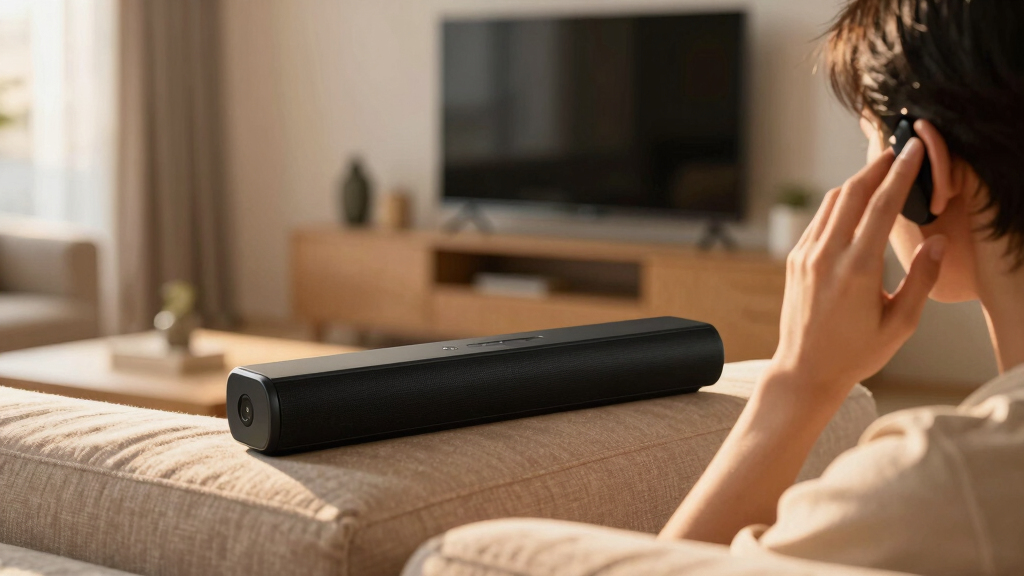
How We Picked
I ranked these wireless TV soundbars by the decisions real buyers have to make: how much better the sound should be than built-in TV speakers, how clean the setup is, how many devices the bar can connect to, and whether the feature set matches the price. I gave the most weight to TV-first connectivity such as HDMI ARC and optical input, then looked at speaker layout, wireless subwoofer support, dialogue features, app or remote control, size, and the likely fit for small, medium, and larger rooms. A soundbar moved up when its wireless features improved the TV experience rather than only adding Bluetooth for music.
The ordering favors models with a clear role. The ULTIMEA Poseidon M60 ranks highest because it offers the most complete home-theater package here, while the Hisense HS2100 and ULTIMEA Poseidon M30 land high for buyers who want real bass at friendlier prices. Compact bars from Bose, Sony, Samsung, Roku, and Amazon remain strong choices, but they rank differently because each solves a narrower problem: speech clarity, streaming convenience, simple brand pairing, or small-room placement.
Factors to Consider When Choosing Wireless TV Soundbars
Choosing among wireless TV soundbars is less about chasing the longest feature list and more about matching the bar to your room, TV, and viewing habits. I would start with the kind of improvement you actually want: clearer dialogue, stronger bass, simpler streaming, or a more cinematic surround effect.
Match The Channel Layout To Your Room
A 2.0-channel soundbar like the Sony S100F or Samsung B-Series is best when the goal is cleaner speech and fuller TV audio without extra pieces. A 2.1-channel bar with a wireless subwoofer, such as the Hisense HS2100 or ULTIMEA Poseidon M30, adds the low-end weight that action movies and sports broadcasts often lack. Systems with rear speakers, like the LG S40TR, create more wraparound sound but require more placement planning. The common mistake is buying a big surround package for a tight bedroom where the rear speakers have nowhere useful to sit. For small rooms, a compact bar can sound cleaner than an oversized system pushed against walls. For a main living room, the stronger picks are the models with a separate subwoofer and more channels.
Separate Bluetooth From TV Wireless
Many products advertise Bluetooth, but Bluetooth is not the same as a wireless TV connection. For daily TV use, I would put more value on HDMI ARC, optical input, and a wireless subwoofer because those features shape how the bar works with the television. Bluetooth is helpful for streaming music from a phone, but it can introduce lip-sync issues if used as the main TV audio link. HDMI ARC usually gives the smoothest control because the TV remote can often manage volume. Optical is a reliable backup for older TVs, though it may limit control convenience. If a soundbar only leans on Bluetooth, I would treat it as a lighter-duty choice rather than the center of a serious TV setup.
Decide How Much Bass You Can Live With
A built-in subwoofer, like the one in the Fire TV Soundbar Plus or Samsung B-Series, saves space and keeps the room tidy. A separate wireless subwoofer, like those included with the ULTIMEA, Hisense, and LG systems, usually gives movies and games more impact. The tradeoff is physical: a wireless sub still needs power and floor space, even if it does not need a cable running back to the soundbar. Apartment buyers may prefer a built-in-sub model because it is less likely to annoy neighbors through shared floors. Home-theater buyers should lean toward a separate sub because it handles low frequencies with less strain. Bass control matters too, since a boomy sub can make dialogue harder to follow.
Pick The Interface You Want To Live With
The best soundbar on paper can become annoying if the controls feel clumsy. App control on a model like the ULTIMEA Poseidon M60 gives more tuning flexibility, while simple remote-first bars like the Bose TV Speaker suit buyers who want fewer menus. Roku and Amazon streaming bars add another layer because they can reduce the number of devices under the TV. That is useful if you are replacing both weak TV speakers and an aging streaming stick. It is less useful if you already like your TV platform and do not want another content interface. I would pay extra for smarter control only when it removes friction from daily use.
Know When Premium Features Pay Off
Dolby Atmos, rear speakers, app EQ, and multiple sound modes can be worth paying for when the soundbar is the main audio system in a living room. Those same features may be wasted in a guest room or kitchen TV setup where speech clarity is the main goal. The ULTIMEA Poseidon M60 and LG S40TR make more sense for movie-focused buyers than for someone who watches mostly news and sitcoms. A Bose, Sony, Roku, or basic Amazon bar can be the smarter buy when the setup needs to be small and reliable. Price should track your usage pattern, not only the spec sheet. I would spend more when the upgrade changes the kind of content you enjoy, and spend less when it only adds modes you will rarely adjust.
Frequently Asked Questions
Do Wireless TV Soundbars Still Need Cables?
Yes, most wireless TV soundbars still need at least a power cable, and many should be connected to the TV with HDMI ARC or optical for the best daily performance. The wireless part usually refers to Bluetooth streaming, a wireless subwoofer, or rear speakers that do not need speaker wire back to the bar. A wired TV audio connection is often more stable than Bluetooth and usually reduces lip-sync problems. If you want the cleanest setup, choose a model with HDMI ARC and a wireless sub rather than relying only on Bluetooth. The result is still much tidier than a traditional receiver-and-speaker system.
Which Wireless TV Soundbar Is Best For Dialogue?
For dialogue-first buyers, I would look hardest at the Bose TV Speaker, Samsung HW B400F, and Roku Streambar SE. These models focus more on speech clarity and simple TV use than on big-room surround effects. The Bose is the most purpose-built compact pick, while Roku adds streaming for buyers who want one device doing two jobs. Samsung is a sensible match for buyers who already use a Samsung TV and want easy remote control. If dialogue is the priority, I would not overpay for rear speakers unless you also watch a lot of movies.
Is A Wireless Subwoofer Worth It For A TV Soundbar?
A wireless subwoofer is worth it if movies, games, and sports are a big part of your TV use. It gives explosions, music, crowd noise, and low voices more body than most compact bars can produce alone. The Hisense HS2100 and ULTIMEA Poseidon M30 are good examples of why a 2.1 system can feel like a bigger upgrade than a basic 2.0 bar. That said, a subwoofer is not always the right move for apartments, bedrooms, or late-night watching. In those cases, a compact bar with good voice enhancement may be easier to live with.
Should I Choose A Streaming Soundbar Or A Regular Soundbar?
A streaming soundbar such as the Roku Streambar SE makes sense if your TV interface feels slow or you want fewer boxes and remotes. It is especially useful for smaller TVs where adding both a streamer and a soundbar would clutter the space. A regular soundbar is the better choice when you already like your smart TV apps, use a game console, or want stronger audio hardware for the money. The Amazon Fire TV Soundbar models are closer to TV-audio upgrades, while Roku is the clearest all-in-one streaming pick. I would choose based on whether the streaming features solve a real problem in your setup.
What Is The Best Wireless TV Soundbar For A Small Room?
For a small room, I would favor the Bose TV Speaker, Sony S100F, Roku Streambar SE, or one of the compact Amazon Fire TV soundbars. These options are easier to place, less likely to overwhelm the room with bass, and better suited to close seating distances. The Bose is the strongest speech-first pick, while Roku is better if streaming is also part of the purchase. A detachable 80W bar can work if you want flexible placement, but it may not sound as refined as the more established compact models. In a small room, clean dialogue and simple control usually matter more than chasing the largest wattage number.
Conclusion
My best overall wireless TV soundbar pick is the ULTIMEA Poseidon M60 because it gives movie watchers the broadest mix of surround channels, wireless bass, Dolby Atmos support, and app control. For best value, I would choose the Hisense HS2100 if you want a real subwoofer system without moving into premium pricing. The Bose TV Speaker is the best compact and beginner-friendly choice for buyers who care most about clear dialogue and simple setup. For a fuller premium-feeling living-room package, the LG S40TR is the stronger pick for buyers who want rear speakers included. For specific needs, choose the Roku Streambar SE if streaming convenience matters most, the Fire TV Soundbar Plus if you want fuller Amazon-friendly TV audio, and the ULTIMEA Poseidon M30 if wireless bass is the main upgrade you want.
Halloween Picks
halloween
As an affiliate, we earn on qualifying purchases.