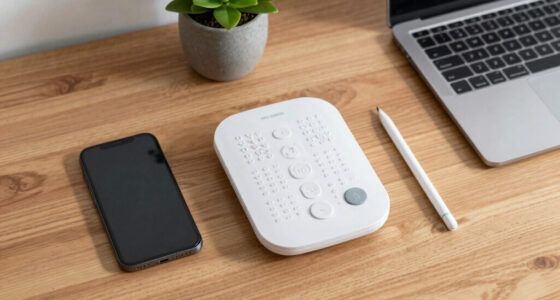
For people who need to read conversations as they happen, the Hamilton CapTel 840i is my clearest starting point: it provides real-time captions on a corded phone with large buttons. I’d choose the Hamilton CapTel 2400iSPNBT instead for its large touchscreen and caption controls, while the Clarity Professional XLC3.4+ is a stronger fit when amplified sound and cordless use matter more than on-screen captions. The key distinction is that only the two Hamilton models in this roundup provide call captions; the Clarity phones improve audibility and dialing but do not display a transcript of the conversation.

Get everyday helpers delivered free with Prime
- Fast, free delivery on millions of items
- Prime Video, Amazon Music and more included
- Member-only deals all year
That difference should drive the decision. Captioning phones require internet, electrical power, and registration for the relevant US captioning service, while amplified phones can suit buyers who mainly need louder, clearer audio or accessible controls. I’ve ranked these options by how directly they meet the captioned-phone need, then by ease of use, listening support, and the tradeoffs each design brings.
Key Takeaways
- The Hamilton CapTel 840i is my best overall pick because it captions incoming and outgoing calls and voicemail while retaining physical buttons.
- The Hamilton CapTel 2400iSPNBT offers the largest, most touch-focused interface here, but buyers need to be comfortable using a touchscreen.
- The Clarity Professional XLC3.4+ has the strongest listed incoming amplification at 50+ dB, but it does not provide captions.
- The Clarity XLC3.4+ bundle is the better fit when multiple rooms need handsets and talking Caller ID matters more than transcripts.
- The Clarity JV35 is a simple corded choice for accessible dialing, but its single-line design and lack of captioning make it a narrower match.
| Hamilton CapTel 840i Captioned Telephone with Large Buttons |  | Best Overall — captions with familiar physical controls | Phone type: Corded | Captioning: Automatic or live operator-assisted; incoming and outgoing calls | Voicemail: Digital answering system with captioned voicemail | VIEW LATEST PRICE | See Our Full Breakdown |
| Hamilton CapTel 2400iSPNBT Captioned Telephone with Large Touchscreen |  | Best Touchscreen — caption-focused controls on a large display | Phone type: Corded | Display and controls: Large touchscreen with customizable caption settings | Captioning: Automatic or live operator-assisted; incoming and outgoing calls | VIEW LATEST PRICE | See Our Full Breakdown |
| Clarity Professional XLC3.4+ Amplified Cordless Phone |  | Best Amplified Cordless Alternative — strong listening support, no captions | Phone type: Cordless | Incoming amplification: Up to 50+ dB | Outgoing amplification: Up to 15 dB | VIEW LATEST PRICE | See Our Full Breakdown |
| Clarity XLC3.4+ Cordless Phone for Severe Hearing Loss with Two XLC3.6+ Handsets |  | Best Multi-Room Bundle — extra handsets and talking Caller ID | Phone type: Cordless | Base and handsets: XLC3.4+ base with two XLC3.6+ handsets | Technology: DECT 6.0, 1.9 GHz | VIEW LATEST PRICE | See Our Full Breakdown |
| Clarity JV35 Amplified Corded Phone with Talk Back Numbers |  | Best Simple Corded Phone — accessible dialing without captioning | Phone type: Corded | Incoming amplification: Up to 37 dB | Ringer volume: 95+ dB | VIEW LATEST PRICE | See Our Full Breakdown |
| captioned phones for hearing impaired | Phone type | Hearing aid compatibility |
|---|---|---|
| Hamilton CapTel 840i Captioned | Corded | — |
| Hamilton CapTel 2400iSPNBT Cap | Corded | Yes |
| Clarity Professional XLC3.4+ A | Cordless | Yes |
| Clarity XLC3.4+ Cordless Phone | Cordless | Yes |
| Clarity JV35 Amplified Corded | Corded | Yes |
More Details on Our Top Picks
Hamilton CapTel 840i Captioned Telephone with Large Buttons
The Hamilton CapTel 840i is my first choice for someone who wants a phone that actually displays the spoken conversation, not merely a louder version of it. It captions incoming and outgoing calls and voicemail, and offers automatic captioning or live operator assistance. That direct match is why it ranks ahead of every Clarity model here: those phones can make speech easier to hear, but none of them is described as displaying call transcripts.
Its large physical buttons give it an advantage over the touchscreen-based CapTel 2400iSPNBT for buyers who prefer pressing distinct keys. The 840i also offers up to 40 dB of amplification, with adjustable caption size and tone, so the user can tune both the on-screen text and the audio. Captioning still depends on a supported setup: high-speed internet, telephone service, electrical power, and registration for the captioning service are required. The service is limited to registered US residents with hearing loss.
The tradeoff is infrastructure and eligibility, not a lack of caption features. It is corded, so it is less flexible around the home than the cordless Clarity phones, and it depends on more than a phone line alone. I’d pick it over the 2400iSPNBT when tactile dialing is a priority; I’d favor the 2400iSPNBT when a large touchscreen is easier to read and operate. For someone who specifically needs captions, the 840i is the most balanced choice in this group.
Pros:- Captions incoming and outgoing calls as well as voicemail.
- Offers automatic captioning or live operator assistance.
- Large buttons, adjustable caption size, and adjustable tone support individual access needs.
- Up to 40 dB of amplification adds audio support alongside the text.
Cons:- Requires high-speed internet, telephone service, and electrical power.
- Captioning service requires registration and is limited to eligible US residents with hearing loss.
- Corded format offers less room-to-room flexibility than the Clarity cordless options.
Best for: People who need real-time call captions and prefer large physical buttons over a touchscreen.
Not ideal for: Buyers who cannot meet the internet, power, phone-service, or US registration requirements, or who need a cordless handset.
- Phone type:Corded
- Captioning:Automatic or live operator-assisted; incoming and outgoing calls
- Voicemail:Digital answering system with captioned voicemail
- Amplification:Up to 40 dB
- Internet:High-speed internet via Ethernet or Wi-Fi
- Telephone service:Analog, digital cable, DSL, VoIP, or FIOS
- Captioning eligibility:Registered US residents with hearing loss
- Dimensions:7.5 × 9 × 6.5 inches
Our verdict“I’d choose the CapTel 840i for the best balance of live captions, physical-button access, and amplified sound.”
Hamilton CapTel 2400iSPNBT Captioned Telephone with Large Touchscreen
For a buyer who wants captions presented on a larger, touch-operated screen, the Hamilton CapTel 2400iSPNBT is the closest alternative to my top pick. It captions incoming and outgoing calls and voicemail, supports automatic captions or live operator assistance, and offers adjustable caption settings. Those are the features that matter most for this roundup, and they put it well ahead of the Clarity options for anyone who needs to read speech rather than rely on amplification alone.
Compared with the 840i, the 2400iSPNBT shifts the experience toward a large touchscreen rather than large physical dialing buttons. That may make displayed text and controls easier for some people to view, but it is not automatically the better interface for everyone. Someone with limited comfort using touch controls may prefer the 840i’s button-based approach. The model also adds hearing aid compatibility and three-way conference calling, giving it some versatility beyond basic one-to-one calls.
Its practical constraints are similar to the 840i: it needs high-speed internet and electrical power, and captioning service requires registration and eligibility in the United States. It is a single-line, corded phone, so it does not offer the mobility of the Clarity cordless bundle. I’d rank it second because its touchscreen is a meaningful interface advantage for the right user, but the 840i is the safer general recommendation when physical buttons matter.
Pros:- Displays captions for incoming and outgoing calls and voicemail.
- Supports automated captions and live operator assistance.
- Large touchscreen and customizable caption settings provide screen-centered access.
- Hearing aid compatible, with up to 40 dB amplification and three-way calling.
Cons:- Requires high-speed internet and electrical power.
- Captioning service is limited to eligible US residents who register.
- Single-line corded design is less flexible than a cordless multi-handset system.
Best for: People who need call captions and prefer a large touchscreen with customizable caption settings.
Not ideal for: People who want tactile physical dialing keys, a cordless phone, or a captioning option that avoids internet and registration requirements.
- Phone type:Corded
- Display and controls:Large touchscreen with customizable caption settings
- Captioning:Automatic or live operator-assisted; incoming and outgoing calls
- Voicemail:Digital answering system with captioned voicemail
- Amplification:Up to 40 dB
- Hearing aid compatibility:Yes
- Conference calling:Three-way
- Captioning service:US nationwide service; registration required
Our verdict“I’d choose the 2400iSPNBT over the 840i when a touchscreen interface matters more than physical buttons.”
Clarity Professional XLC3.4+ Amplified Cordless Phone
The Clarity Professional XLC3.4+ is the strongest choice here for someone who wants to hear more clearly while moving around the home. Its incoming amplification is listed at up to 50+ dB, higher than the 40 dB figures supplied for both Hamilton captioning phones, and it also boosts outgoing speech by up to 15 dB. Four tone settings let the user adjust the sound to suit their listening needs. That makes this a capable amplified phone, but it is not a captioned phone: it does not provide a transcript of the call.
Compared with the JV35, the XLC3.4+ adds cordless use, talking Caller ID, a talking keypad, and a high-contrast display. Those details can help a caller who has both hearing and vision access needs, while expandable handsets add flexibility. It also works with hearing aids and has a loud ringer listed up to 95 dB. For a person who can follow speech with amplification but wants more control over tone and mobility, it is a more feature-rich alternative than the simpler corded JV35.
The tradeoff is that none of these listening aids replaces captions. If understanding every spoken word is the primary need, I’d choose either Hamilton instead. The phone also relies on batteries for power and backup, and expansion tops out at three additional handsets. I rank it third because it is the most compelling non-captioning option in this lineup, not because its audio features meet the same need as live text.
Pros:- Incoming sound amplification up to 50+ dB and outgoing speech amplification up to 15 dB.
- Four tone settings let users tailor the listening profile.
- Talking keypad, talking Caller ID, and high-contrast display support accessible operation.
- Cordless DECT 6.0 design is hearing aid compatible and expandable.
Cons:- Does not provide real-time call captions or captioned voicemail.
- Requires batteries for power and backup.
- Supports up to three additional handsets.
Best for: People who can follow calls with amplified audio and want cordless use, adjustable tone, and accessible caller information.
Not ideal for: Anyone who specifically needs live captions or a written transcript to understand phone conversations.
- Phone type:Cordless
- Incoming amplification:Up to 50+ dB
- Outgoing amplification:Up to 15 dB
- Tone settings:Four
- Ringer volume:Up to 95 dB
- Caller information:Talking Caller ID
- Handset expansion:Up to three additional handsets
- Hearing aid compatibility:Yes
Our verdict“I’d pick the XLC3.4+ when amplified cordless audio is the goal, but not when captions are required.”
Clarity XLC3.4+ Cordless Phone for Severe Hearing Loss with Two XLC3.6+ Handsets
This Clarity XLC3.4+ bundle makes the most sense when one base phone is not enough. It includes the XLC3.4+ base and two XLC3.6+ handsets, giving a household more places to answer calls than the single-unit Professional XLC3.4+ listing. Talking Caller ID and hearing aid compatibility add access support, while dual power battery backup provides a power-resilience feature that is not specified for the JV35.
The main distinction from the Professional XLC3.4+ is the bundle’s emphasis on multiple handsets, not an advertised upgrade in captioning. It is a cordless amplified system for people with severe hearing loss, but the supplied description does not give a specific amplification figure or tone-setting count for this bundle. I would not assume it matches every detail of the Professional model. Both Clarity options remain audio-focused rather than caption-focused, so either Hamilton CapTel is a better fit when seeing spoken words is necessary.
This package is a practical pick for a larger home or a household that wants handsets in more than one room. It is less compelling for someone who only needs one phone, or for a buyer who is choosing primarily by measurable amplification: the Professional listing gives clearer figures, including 50+ dB incoming and 15 dB outgoing amplification. The bundle also requires nine AAA batteries, which adds a battery-management task. I place it fourth because its extra handsets solve a real household need, but it does not address the defining caption requirement.
Pros:- Includes the XLC3.4+ base and two XLC3.6+ handsets for multi-room access.
- Designed for severe hearing loss and compatible with hearing aids.
- Talking Caller ID makes caller information audible.
- Dual power battery backup adds backup support.
Cons:- Does not display live captions or caption voicemail.
- Requires nine AAA batteries.
- The supplied details do not specify amplification levels or tone controls.
Best for: Households that want a cordless amplified base phone with two additional handsets and talking Caller ID.
Not ideal for: People who require captions, need a single simple phone, or want clearly stated amplification and tone specifications before choosing.
- Phone type:Cordless
- Base and handsets:XLC3.4+ base with two XLC3.6+ handsets
- Technology:DECT 6.0, 1.9 GHz
- Hearing aid compatibility:Yes
- Caller ID:Talking Caller ID
- Power backup:Dual power battery backup
- Batteries:Nine AAA batteries required
- Answering system:Digital
Our verdict“I’d choose this bundle over the single XLC3.4+ when extra room coverage matters more than detailed amplification specifications.”
Clarity JV35 Amplified Corded Phone with Talk Back Numbers
The Clarity JV35 is the straightforward pick for someone whose biggest barriers are hearing the caller and dialing accurately. It amplifies incoming sound up to 37 dB, offers adjustable volume and tone, and repeats each dialed number aloud. Its jumbo Braille buttons make the keypad more accessible than a standard compact layout, while an extra-loud ringer and hearing aid compatibility support call awareness.
Compared with the Hamilton CapTel 840i, the JV35 is simpler in one respect: it does not require an internet connection or captioning registration to provide its stated amplification and dialing features. But that simplicity comes with a major limitation for this roundup: it does not show captions for live calls or voicemail. Compared with the cordless XLC3.4+ Professional, it also gives up mobility and the talking Caller ID display, though its voice number playback is useful for checking digits as they are entered.
I’d place it fifth because it is a useful amplified phone, but a weaker answer to a search for captioned phones. The corded, single-line design may suit a fixed location, yet it cannot cover multiple rooms like the Clarity handset bundle. It also requires four AA batteries, and buyers should account for that alongside its corded electric power specification. Choose it for accessible physical dialing and adjustable audio; skip it if a transcript is the reason you are shopping.
Pros:- Amplifies incoming sound up to 37 dB with adjustable volume and tone.
- Jumbo buttons with Braille support accessible dialing.
- Voice playback repeats dialed numbers for confirmation.
- Extra-loud ringer and hearing aid compatibility support call awareness.
Cons:- Does not provide captions for calls or voicemail.
- Single-line corded design limits mobility and household coverage.
- Requires four AA batteries.
Best for: People who want a fixed, corded phone with amplified audio, Braille keypad buttons, and spoken confirmation of dialed digits.
Not ideal for: People who need real-time captions, cordless handsets, multiple lines, or talking Caller ID.
- Phone type:Corded
- Incoming amplification:Up to 37 dB
- Ringer volume:95+ dB
- Dialing access:Jumbo Braille buttons; voice repeats each dialed number
- Volume controls:Adjustable incoming volume and tone
- Hearing aid compatibility:Yes
- Line operation:Single line
- Batteries:Four AA batteries required
Our verdict“I’d choose the JV35 for accessible dialing and amplified audio, not as a substitute for a captioning phone.”

How We Picked
I ranked these five phones around the specific need in the search: seeing the words spoken during a phone call. That makes the two Hamilton CapTel models the most direct matches. Both list real-time captions for calls and voicemail, along with automatic captioning and live operator assistance. I placed the 840i first because it pairs captions with large physical buttons, a familiar layout for buyers who prefer tactile controls. The 2400iSPNBT follows closely, with a large touchscreen and customizable caption settings that may suit readers who want a more screen-centered interface.
The Clarity models are included because some shoppers use “captioned phone” broadly when seeking help with hearing loss. Their benefits are different: they amplify sound, support hearing aids, or make dialing and caller information easier to access. I did not treat louder audio as equivalent to captions. The XLC3.4+ Professional ranks above the other Clarity phones because its listed incoming amplification reaches 50+ dB and it also amplifies outgoing speech. The two-handset XLC3.4+ bundle earns a place for household coverage and talking Caller ID, while the JV35 is a straightforward corded option with Braille and voice number playback.
I also compared practical requirements and limitations: internet and registration for captioning, power and batteries, handset format, dialing aids, caller information, and how much configuration the phone appears to ask of its owner. The information supplied does not establish that any model will work with every phone service or hearing aid setup, so buyers should confirm compatibility before choosing. I have not ranked these by price, ratings, or supposed hands-on performance; the order reflects their stated features and how closely they answer the captioning need.
| captioned phones for hearing impaired | Phone type |
|---|---|
| Hamilton CapTel 840i Captioned | Corded |
| Hamilton CapTel 2400iSPNBT Cap | Corded |
| Clarity Professional XLC3.4+ A | Cordless |
| Clarity XLC3.4+ Cordless Phone | Cordless |
| Clarity JV35 Amplified Corded | Corded |
Factors to Consider When Choosing Captioned Phones For Hearing Impaired
My first buying question is simple: do you need to read the conversation, or is louder, clearer audio enough? Only the two Hamilton CapTel phones in this comparison are described as captioning incoming and outgoing calls and voicemail. The Clarity models address hearing access through amplification, hearing aid compatibility, ringer volume, talking keypad features, or extra handsets. Those benefits can be meaningful, but they solve a different problem.
Decide whether captions are a requirement
If following spoken audio is difficult even when it is amplified, prioritize the Hamilton CapTel 840i or 2400iSPNBT. Both display real-time captions and support captioned voicemail, with automatic captioning or live operator assistance. The 840i uses large physical buttons; the 2400iSPNBT centers on a large touchscreen. If you can understand speech with a stronger audio signal and do not need text, the Clarity models may be more suitable. I would not buy an amplified Clarity phone expecting it to provide a transcript.
Check the service and connection requirements
The CapTel phones require high-speed internet and electrical power, along with telephone service. Their listed service compatibility includes several common connection types, but the exact setup can depend on the home phone service, so verify it before ordering. Captioning is available to registered eligible US residents with hearing loss. A buyer who cannot meet those conditions should weigh the Clarity phones’ audio and dialing features instead, while recognizing that they do not provide captions.
Choose the interface you can use comfortably
The 840i combines captions with large physical buttons, which may be a better match for people who prefer tactile dialing. The 2400iSPNBT offers a large touchscreen and customizable caption settings; that can suit someone who wants controls and text on a screen, but not everyone will prefer touch operation. Among Clarity phones, the JV35 adds jumbo Braille buttons and audible number confirmation, while the Professional XLC3.4+ combines a talking keypad with high-contrast Caller ID. Match controls to the person who will place and answer calls, not just to the feature list.
Compare amplification without confusing it with captions
Amplification can make audio easier to hear, though listed gain alone does not establish what will work best for a particular person. The Professional XLC3.4+ lists up to 50+ dB incoming amplification and up to 15 dB for outgoing speech. The CapTel phones list up to 40 dB, and the JV35 up to 37 dB. These figures describe audio support, not caption quality. The XLC3.4+ adds four tone settings, while the JV35 has adjustable volume and tone. A hearing aid user should also check the phone’s stated compatibility and confirm that the setup suits their own device.
Think about where calls will be answered
A corded phone keeps the handset at its base, which is why the CapTel models and JV35 are better for a fixed calling spot. The cordless Professional XLC3.4+ allows movement around the home, and the XLC3.4+ bundle includes two additional handsets for coverage in more rooms. That bundle is the clearest pick for a household that wants several answer points. It does not, however, add captions; if text access is needed, the Hamilton models remain the relevant choices in this lineup.
Account for power, batteries, and household needs
Power details differ across these options. The Hamilton phones need electrical power, and the Clarity JV35 requires four AA batteries; the cordless bundle lists nine AAA batteries and dual power battery backup. The Professional XLC3.4+ also specifies batteries for power and backup. Consider who will replace batteries and whether the phone must keep working through a power interruption. Also decide whether you need a single-line phone, multiple handsets, talking Caller ID, or conference calling. Those practical details can settle a close choice after you have decided whether captions are necessary.
Frequently Asked Questions
Which phones in this roundup display captions during calls?
The Hamilton CapTel 840i and Hamilton CapTel 2400iSPNBT are the two models listed with real-time captions for incoming and outgoing calls, plus captioned voicemail. They offer automatic captioning or live operator assistance. The three Clarity phones provide amplified audio or accessible dialing and caller information, but they are not described as captioning calls.
Do captioned phones need internet access?
Both Hamilton CapTel models listed here require high-speed internet, as well as electrical power and telephone service. The 840i supports Ethernet or Wi-Fi, and the supplied details for the 2400iSPNBT also state a high-speed internet requirement. Check your home connection and phone-service setup before choosing a CapTel model; the Clarity options do not list captioning, so they do not offer the same internet-dependent caption service.
Can an amplified phone replace a captioned phone?
Not if the caller needs written text to follow speech. Amplification raises incoming or outgoing audio, and features such as adjustable tone may help someone who can understand speech better with a tuned signal. Captions provide a visual text version of the conversation, which is a different access method. In this comparison, the Clarity phones are amplified options, while the two Hamilton phones are the captioning choices.
Which model is best for someone who does not want a touchscreen?
I’d start with the Hamilton CapTel 840i for someone who needs captions but prefers large physical buttons. If captions are not required, the Clarity JV35 offers jumbo Braille buttons and voice playback of dialed numbers, while the cordless Professional XLC3.4+ has a talking keypad. The JV35 and Clarity cordless options do not display call captions, so the 840i is the relevant pick when text access remains necessary.
Who can use the Hamilton captioning service?
The supplied product details describe the Hamilton captioning service as available to eligible US residents with hearing loss who register. Registration is required, and service availability is not presented as universal across countries. Before choosing either CapTel phone, confirm that the intended user meets the service requirements and that the home has the required internet, telephone service, and electrical power.
Conclusion
For most buyers who specifically need a captioned phone, I recommend the Hamilton CapTel 840i first: its live call and voicemail captions pair with large physical buttons and adjustable text and tone settings. Choose the Hamilton CapTel 2400iSPNBT if a large touchscreen is a better fit than tactile keys. If captions are not needed and the priority is stronger cordless audio, the Clarity Professional XLC3.4+ is my pick for its listed 50+ dB incoming amplification and adjustable tone. For a household that wants several cordless handsets, choose the Clarity XLC3.4+ bundle. The Clarity JV35 is best for a fixed location where Braille buttons and spoken dialing confirmation are useful. I would skip all three Clarity phones when a written transcript is essential, and I would skip either CapTel model if its internet, power, or registration requirements cannot be met.
Fall Picks
fall essentials
As an affiliate, we earn on qualifying purchases.