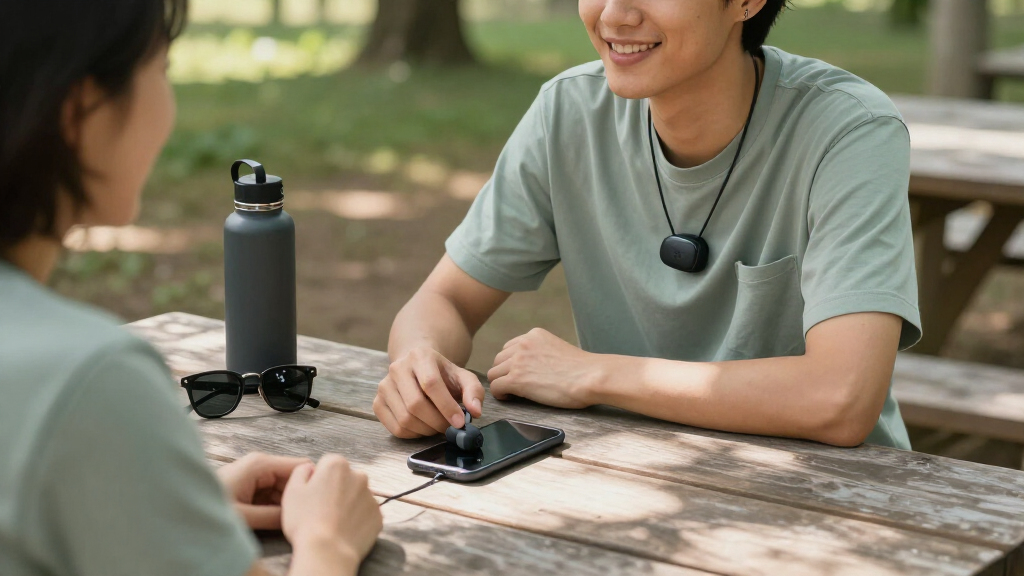

SMARTO Personal Hearing Amplifier is my best overall choice among wireless Bluetooth assistive listening devices because it covers personal listening, TV audio, and phone calls in one pocket-sized format. SIMOLIO Wireless TV Speakers is the better value for someone focused on clearer television sound, while Widex TV Play 2 is my premium pick for owners of compatible Widex hearing aids. The main choice is between a personal device, a hearing-aid accessory, and a multi-receiver venue system; those formats are not interchangeable even when their listings all mention wireless audio. Buyers also need to weigh direct-to-ear privacy against room-friendly sound, ecosystem compatibility against open receiver kits, and simple controls against multi-channel flexibility. Keep reading for my full breakdown of where each option fits and which tradeoffs are worth accepting.

Get everyday helpers delivered free with Prime
- Fast, free delivery on millions of items
- Prime Video, Amazon Music and more included
- Member-only deals all year
Key Takeaways
- SMARTO ranks first for versatility, combining personal amplification, TV listening, and phone-call support, though a dedicated system is better for larger audiences.
- SIMOLIO is the stronger value for TV-only use, while Widex TV Play 2 earns the premium position through direct integration with compatible Widex hearing aids.
- The venue systems separate into clear roles: Retekess prioritizes receiver quantity, Avantree focuses on multi-channel control, and Venucast brings Auracast broadcasting.
- Jabees HearLink is the beginner-friendly choice because its wireless microphone format suits close conversations without the infrastructure required by church systems.
- The generic Bluetooth rechargeable hearing aids offer the cleanest one-piece format, but fit, seller support, and return terms deserve closer scrutiny than they do with named accessory ecosystems.
| Widex TV Play 2 TV Streamer |  | Best for Widex Hearing Aids | Connectivity: Bluetooth LE Audio and 2.4GHz | Compatible hearing aids: Widex Allure, Moment, and Evoke | Connector: Micro USB | VIEW LATEST PRICE | See Our Full Breakdown |
| Retekess TT119 Assistive Listening System |  | Best for Large Multilingual Venues | System configuration: 1 transmitter and 10 receivers | Connectivity: FM wireless and auxiliary | Maximum range: 300 meters / 984 feet | VIEW LATEST PRICE | See Our Full Breakdown |
| SIMOLIO Wireless TV Speakers for Hard of Hearing |  | Best Shared TV Speaker | Wireless connectivity: RF wireless and Bluetooth | Wireless range: 164 feet | Battery life: Up to 8 hours | VIEW LATEST PRICE | See Our Full Breakdown |
| Venucast AuraPlex M3 Auracast Assistive Listening System |  | Best Future-Ready Venue System | System contents: 1 transmitter and 3 receivers | Wireless standard: Auracast via Bluetooth LE Audio | Maximum range: 100 meters / 328 feet | VIEW LATEST PRICE | See Our Full Breakdown |
| SMARTO Personal Hearing Amplifier |  | Best Portable Personal Amplifier | Maximum amplification: Up to 70 dB | Connectivity: Bluetooth | Compatible devices: Smartphone and television | VIEW LATEST PRICE | See Our Full Breakdown |
| Bluetooth Rechargeable Hearing Aids for Seniors with Noise Cancellation |  | Best Hearing-Aid-Style Option | Device type: Bluetooth hearing aids | Power system: Rechargeable | Noise management: Noise cancellation | VIEW LATEST PRICE | See Our Full Breakdown |
| Avantree Audiplex M3 Multi-Channel Assistive Listening System with Transmitter and Receivers |  | Best for Large Venues | System type: Multi-channel assistive listening system | Channels supported: 4 | Audio latency: 30ms | VIEW LATEST PRICE | See Our Full Breakdown |
| Jabees HearLink 3-in-1 Hearing Enhancement Device |  | Best Bluetooth Audio Bridge | Device type: 3-in-1 hearing enhancement device | Primary functions: Wireless microphone, audio transmitter, and two-way communication | Headphone compatibility: Bluetooth headphones | VIEW LATEST PRICE | See Our Full Breakdown |
More Details on Our Top Picks
Widex TV Play 2 TV Streamer
I rank the Widex TV Play 2 as the strongest choice for buyers already using compatible Widex hearing aids. Its direct Bluetooth LE Audio and 2.4GHz streaming sends stereo TV sound to the hearing aids, while app-based balance controls let each listener adjust the mix without raising the room volume. That creates a more discreet setup than the SIMOLIO Wireless TV Speakers, which places a separate speaker near the viewer. Setup is described as simple, and the compact box is easier to accommodate than a venue-oriented system such as the Retekess TT119. The limitation is firm: compatibility is restricted to selected Widex families, so this has little value outside that ecosystem. I also find the Micro USB connection less appealing than a newer USB-C port. It earns its place through focused integration rather than broad compatibility.
Pros:- Streams stereo TV audio directly to compatible Widex hearing aids
- App control supports personalized sound balance
- Bluetooth LE Audio and 2.4GHz connectivity provide a cable-free listening path
- Compact TV-box format takes up little space
Cons:- Useful only with listed Widex hearing-aid families
- Micro USB is less convenient than USB-C
- It does not provide an audible shared speaker for other viewers
Best for: Widex Allure, Moment, or Evoke hearing-aid users who want private stereo TV audio with app-based sound balancing
Not ideal for: Households using other hearing-aid brands or wanting a shared speaker that several people can hear
- Connectivity:Bluetooth LE Audio and 2.4GHz
- Compatible hearing aids:Widex Allure, Moment, and Evoke
- Connector:Micro USB
- Audio format:Stereo sound
- Controls:Widex app with personalized sound balance
- Form factor:TV box
- Color:Black
Our verdict“Choose this streamer for the cleanest Widex-specific TV setup, but skip it if cross-brand compatibility matters.”
Retekess TT119 Assistive Listening System
I place the Retekess TT119 highest for churches, conferences, and classrooms that need to distribute sound across a large space. Its claimed 300-meter range and 17 channels support larger audiences and simultaneous interpretation more readily than the three-receiver Venucast AuraPlex M3 package. Recording, one-click muting, and audio-mixer compatibility also suit staffed events where an operator manages several sources. Yet this is not really a Bluetooth-first product: it relies on FM wireless transmission and 3.5 mm connections, making it a weaker match for listeners expecting direct Bluetooth hearing-aid pairing. The 3.86 kg package is also far less portable than the SMARTO Personal Hearing Amplifier, and battery management adds work. I rank it for coverage and channel flexibility, not personal convenience. Buyers also need enough technical confidence to configure a multi-receiver venue system.
Pros:- Claimed transmission range reaches up to 300 meters
- Seventeen channels support multilingual or multi-room use
- Recording and one-click mute functions help event operators
- Accepts audio from mixers through a 3.5 mm connection
Cons:- Uses FM rather than direct Bluetooth audio streaming
- The 3.86 kg system is cumbersome to transport
- Setup and receiver management may overwhelm volunteer-led venues
Best for: Churches, schools, and conference organizers needing long-range audio or several interpretation channels for groups
Not ideal for: Individuals seeking direct Bluetooth hearing-aid streaming or a lightweight personal listening device
- System configuration:1 transmitter and 10 receivers
- Connectivity:FM wireless and auxiliary
- Maximum range:300 meters / 984 feet
- Number of channels:17
- Connector:3.5 mm jack
- Compatible source:Audio mixer
- Item weight:3.86 kg
- Dimensions:17.91 x 12.2 x 10.63 inches
Our verdict“Pick the TT119 when range and multiple channels outweigh the convenience of direct Bluetooth pairing.”
SIMOLIO Wireless TV Speakers for Hard of Hearing
The SIMOLIO Wireless TV Speakers make the most sense when a listener wants clearer dialogue without wearing hearing aids or earbuds. Voice enhancement, selectable EQ, and independent volume control bring speech closer to the seating position, while the 164-foot range allows more freedom than a short wired speaker. Compared with the Widex TV Play 2, this system is less discreet but far more useful for someone outside the Widex ecosystem. It also offers optical, RCA, and AUX inputs, giving older televisions more connection paths. Bluetooth is included, although the main TV link uses RF wireless, so buyers seeking direct hearing-aid streaming should choose a different model. The eight-hour battery covers several programs but may require frequent docking, and an occupied optical port can complicate installation. I favor it for accessible, room-based listening rather than private all-day wear.
Pros:- Voice enhancement and EQ settings help bring dialogue forward
- Independent volume control avoids raising the television for everyone
- Optical, RCA, and AUX support cover many television generations
- A 164-foot wireless range permits flexible placement
Cons:- The primary television connection is RF rather than direct Bluetooth hearing-aid streaming
- Eight-hour battery life requires regular charging
- Installation may be awkward when the TV optical output is already occupied
Best for: Seniors who want a nearby voice-enhancing TV speaker with personal volume control and no in-ear device
Not ideal for: Hearing-aid users seeking direct audio streaming or households whose TV lacks a free optical, RCA, or AUX output
- Wireless connectivity:RF wireless and Bluetooth
- Wireless range:164 feet
- Battery life:Up to 8 hours
- Optical input:Supported
- Analog inputs:RCA and AUX
- Charging options:Charging dock and AC adapters
- Sound controls:Voice enhancement, EQ switch, and independent volume
Our verdict“Choose SIMOLIO when clearer shared TV dialogue matters more than discreet hearing-aid integration.”
Venucast AuraPlex M3 Auracast Assistive Listening System
I rank the Venucast AuraPlex M3 as the forward-looking venue pick because it combines supplied receivers with support for Auracast-enabled hearing aids and personal devices. That flexibility lets a church or classroom serve visitors who have compatible equipment while retaining three receivers for those who do not. Its Bluetooth LE Audio connection and 100-meter coverage are better aligned with this roundup than the FM-based Retekess TT119. The tradeoff is scale: Retekess reaches farther and provides ten receivers, while the AuraPlex package targets venues of up to 300 people and includes only three receivers. Walls, outdoor spaces, and heavy obstructions may also reduce its stated coverage. I favor it for organizations preparing for broader Auracast adoption, but device compatibility must be checked before purchase. It is a modern medium-venue system, not the strongest choice for sprawling sites.
Pros:- Supports Auracast-enabled hearing aids and personal devices
- Includes three receivers for attendees without compatible equipment
- Bluetooth LE Audio provides synchronized wireless sound
- The 100-meter range suits many medium-sized indoor venues
Cons:- Only three receivers are included
- Coverage is less suitable for outdoor or obstructed spaces
- Direct personal-device use depends on Auracast compatibility
Best for: Churches, classrooms, and event spaces serving up to 300 people that want Auracast support plus a few loaner receivers
Not ideal for: Large outdoor sites, heavily partitioned buildings, or venues needing many supplied receivers immediately
- System contents:1 transmitter and 3 receivers
- Wireless standard:Auracast via Bluetooth LE Audio
- Maximum range:100 meters / 328 feet
- Venue capacity:Up to 300 people
- Hearing-aid compatibility:Auracast-enabled models
- Personal-device support:Compatible Auracast devices
- Recommended setting:Indoor churches, classrooms, and events
Our verdict“Choose the AuraPlex M3 for a medium venue moving toward Auracast, provided three included receivers are enough.”
SMARTO Personal Hearing Amplifier
The SMARTO Personal Hearing Amplifier is my pick for seniors who need one pocket-sized device across conversations, television viewing, and phone calls. Its claimed amplification up to 70 dB, voice-call noise cancellation, and programmable hearing compensation offer more personal adjustment than the SIMOLIO Wireless TV Speakers. Bluetooth phone and TV compatibility also makes it more versatile away from one room, while large physical buttons reduce dependence on the mobile app for routine control. Unlike the Widex TV Play 2, it is not tied to three named hearing-aid families. Still, this is an amplifier rather than a professionally fitted medical hearing aid, so buyers with diagnosed or complex hearing loss may need clinical guidance. The in-ear or over-ear fit may also prove uncomfortable for some users. I rank it for portable versatility and long battery life, with the unknown software-update policy remaining a real ownership concern.
Pros:- Provides amplification up to a claimed 70 dB
- Bluetooth support covers compatible smartphones and televisions
- Large buttons simplify everyday volume and media control
- Battery life reaches up to 40 hours
Cons:- It is not a substitute for a professionally fitted medical hearing aid
- The wearing style may be uncomfortable for some users
- Software-update support is unspecified
Best for: Seniors wanting a rechargeable personal amplifier for conversations, Bluetooth calls, and television audio
Not ideal for: People with complex hearing loss who need a clinician-fitted hearing aid or users who dislike in-ear and over-ear hardware
- Maximum amplification:Up to 70 dB
- Connectivity:Bluetooth
- Compatible devices:Smartphone and television
- Battery type:Rechargeable lithium-ion
- Battery life:Up to 40 hours
- Noise control:Voice-call noise cancellation
- Controls:Large media-control buttons and mobile app
- Hearing adjustment:Programmable hearing-loss compensation
Our verdict“Choose SMARTO for portable, high-powered amplification across daily listening tasks, but seek a fitted solution for complex hearing needs.”
Bluetooth Rechargeable Hearing Aids for Seniors with Noise Cancellation
I rank these Bluetooth rechargeable hearing aids as the strongest choice for buyers who want amplification and wireless streaming in one wearable device. Unlike the Jabees HearLink, which sends sound to separate Bluetooth headphones, this pair places the audio directly at the ears and supports phone calls without another headset. Touch controls, soft ear-tip choices, and a portable charging case make daily handling more approachable for seniors. The tradeoff is limited tuning: without an app or advanced sound profiles, buyers cannot shape amplification as precisely as they could with more sophisticated hearing technology. Its basic noise cancellation may also struggle in busy restaurants or group conversations. Compared with the pocket-style SMARTO amplifier, this model offers a more discreet setup, though learning the controls still calls for a careful read of the manual.
Pros:- Combines hearing amplification with Bluetooth audio streaming and phone calls
- Touch controls reduce reliance on small physical buttons
- Portable charging case supports use away from a wall outlet
- Multiple soft ear-tip sizes help buyers find a more secure fit
Cons:- No app-based equalizer or advanced personalization
- Basic noise cancellation may provide limited relief in crowded settings
- Controls and operating modes may be confusing without reading the manual
Best for: Seniors with hearing difficulty who want discreet amplification, Bluetooth calls, and streamed audio in one rechargeable ear-worn device
Not ideal for: Buyers who need audiologist-level programming or detailed app-based control for complex hearing loss
- Device type:Bluetooth hearing aids
- Power system:Rechargeable
- Noise management:Noise cancellation
- Wireless functions:Audio streaming and phone calls
- Controls:Touch controls
- Intended users:Seniors and people with hearing difficulties
- Fit accessories:Multiple sizes of soft ear tips
- Charging accessory:Portable charging case
Our verdict“I recommend this pair for seniors who value an all-in-one ear-worn design more than advanced sound customization.”
Avantree Audiplex M3 Multi-Channel Assistive Listening System with Transmitter and Receivers
I place the Avantree Audiplex M3 in the venue-focused slot because its four channels, three receivers, and 328-foot wireless range address a different problem from personal hearing aids. Compared with the Bluetooth hearing-aid-style model in this batch, the M3 lets a school, church, or event organizer send one source to several listeners while reducing conflicts between nearby groups. Its 30ms latency keeps speech closely aligned with a live presenter, and expansion support makes the system less restrictive as attendance grows. Yet this is not the easiest choice for someone who simply wants TV audio or phone calls through familiar Bluetooth headphones; the supplied receivers rely on wired earbuds. The package also serves only three listeners initially, far fewer than the ten-receiver Retekess TT119 bundle, so larger venues may face added receiver costs.
Pros:- Four channels help neighboring groups avoid audio interference
- 30ms latency keeps amplified speech closely synchronized with live presenters
- 100-meter range accommodates large rooms and many event layouts
- Expandable receiver system can grow beyond the included three listeners
Cons:- Each listener must carry a receiver and use wired earbuds
- Only three receivers are supplied, which may be insufficient for group events
- Less convenient for personal TV or phone listening than a direct Bluetooth device
Best for: Churches, classrooms, tour groups, and event organizers who need synchronized audio for several listeners across a large space
Not ideal for: Individuals seeking direct Bluetooth-headphone streaming without carrying a separate receiver and wired earbuds
- System type:Multi-channel assistive listening system
- Channels supported:4
- Audio latency:30ms
- Wireless range:100m / 328ft
- Included receivers:3 clip-on receivers
- Included listening accessories:Wired earbuds for each receiver
- Expansion support:Yes
- Included transmitter:1
Our verdict“I recommend the Audiplex M3 for organizations that prioritize range and multi-listener distribution over direct Bluetooth-headset convenience.”
Jabees HearLink 3-in-1 Hearing Enhancement Device
I rate the Jabees HearLink as the most flexible bridge for buyers who already own Bluetooth headphones or a bone-conduction headset. Its three roles—wireless microphone, audio transmitter, and two-way communication device—make it better suited to moving between classrooms, conferences, and home listening than the single-purpose Bluetooth hearing aids. aptX low-latency audio helps keep voices aligned with the speaker’s lips, while the clip-on body and eight-hour battery support a full day of intermittent listening. It is also more personal and portable than the Avantree Audiplex M3 venue system, with no bank of dedicated receivers to manage. That flexibility comes with dependencies: compatible Bluetooth listening gear is required, and the device is aimed at mild hearing challenges rather than severe loss. Buyers wanting amplification directly in the ear may prefer the hearing-aid-style option.
Pros:- Three operating functions support listening and two-way communication
- Works with Bluetooth headphones and bone-conduction headsets
- aptX low-latency technology reduces distracting audio delay
- Clip-on design and up to eight hours of battery life suit mobile use
Cons:- Requires separate compatible Bluetooth headphones or a bone-conduction headset
- Designed for mild hearing challenges rather than severe hearing loss
- Eight-hour battery may not cover extended events without recharging
Best for: Students, conference attendees, and home users with mild hearing difficulty who already own compatible Bluetooth headphones or bone-conduction headsets
Not ideal for: People with severe hearing loss or buyers who want a self-contained device without separate Bluetooth listening gear
- Device type:3-in-1 hearing enhancement device
- Primary functions:Wireless microphone, audio transmitter, and two-way communication
- Headphone compatibility:Bluetooth headphones
- Alternative headset compatibility:Bone-conduction headsets
- Battery life:Up to 8 hours
- Audio technology:aptX low latency
- Design:Portable clip-on
- Intended hearing support:Mild hearing challenges
Our verdict“I recommend the HearLink to buyers who want to reuse existing Bluetooth listening gear across several everyday settings.”
How We Picked
I ranked these products by clarity of purpose, connection flexibility, usability, receiver format, and how well each device addresses a defined listening problem. I gave extra weight to useful Bluetooth functions rather than treating any wireless connection as equivalent to phone, TV, or hearing-aid compatibility. I also examined stated battery design, portability, receiver capacity, controls, and the amount of equipment required for setup. A product moved down the list when its benefits depended heavily on proprietary hardware, vague compatibility, or a use case narrower than its price might suggest.
The ordering rewards versatility at the top and gives specialized systems their own buyer-focused roles. SMARTO leads because it spans more everyday situations than SIMOLIO or Jabees, while SIMOLIO ranks as the better-value TV solution and Widex becomes the premium choice only for compatible hearing-aid owners. Among group systems, Retekess wins on included audience capacity, Avantree suits multi-channel events, and Venucast appeals to buyers building around Auracast. I placed the generic rechargeable hearing aids lower because an all-in-one wearable is convenient, but product identity and after-sale support matter more when the device is worn throughout the day.
Factors to Consider When Choosing Wireless Bluetooth Assistive Listening Devices
I would choose a wireless assistive listening device by starting with the listening problem, not the longest feature list. A television viewer, a hearing-aid wearer, and a church coordinator need very different signal paths and controls. Compatibility and receiver style usually shape the choice more than maximum range claims. The sections below explain the broader tradeoffs that separate these product types.
Check What the Bluetooth Connection Actually Does
I start by separating Bluetooth streaming from other wireless links used between a transmitter and receiver. A TV speaker or venue kit may use its own radio connection even if Bluetooth appears elsewhere in the setup. That can be beneficial because a dedicated link may offer easier pairing or serve several receivers, but it may not send audio straight to ordinary Bluetooth earbuds. I would check the manual for the exact path from source to transmitter, transmitter to receiver, and receiver to ear. Auracast is a broadcast form of Bluetooth, yet both the sending and listening devices must support it. The common mistake is assuming every item with Bluetooth in its title will pair with every phone, television, hearing aid, or headphone.
Match the System to One Primary Listening Setting
I would identify whether the device will mainly serve television, face-to-face speech, phone audio, or a venue. TV products favor simple volume control and stable audio from a fixed source, while conversation devices benefit from a portable microphone placed near the speaker. Churches and tour groups need receiver management, charging routines, and enough units for the expected audience. A pocket amplifier can cover several personal situations, but it cannot replace a ten-receiver system for group distribution. Conversely, a venue transmitter adds needless setup for one person watching television. Choosing one primary setting makes it easier to decide which secondary functions are genuinely useful.
Choose the Right Receiver and Listening Format
The receiver determines whether sound is private, shared, or sent through existing hearing aids. Direct hearing-aid streaming offers a discreet experience but may lock the buyer into one brand or product family. A wearable receiver with earbuds can work across more settings, though some users may dislike cables, earpieces, or another battery to charge. A nearby TV speaker keeps the ears uncovered and makes controls accessible, but other people in the room can hear it. I would also check whether a venue receiver accepts alternative headphones, neckloops, or hygiene-friendly earpieces. Comfort over a full program or film matters more than a receiver that merely feels convenient during setup.
Account for Delay, Interference, and Channel Control
Lip-sync delay can make clear TV audio unpleasant when speech reaches the listener after the on-screen mouth movement. The full signal chain creates that delay, including the television output, transmitter, wireless link, and receiver. I would favor systems with adjustable TV audio delay or a dedicated low-latency link when video is the main use. In churches and meeting spaces, interference and overlapping programs create a different problem. Multiple selectable channels help interpreters or parallel sessions keep audio feeds separate, while a single-channel broadcast is easier for volunteers to manage. More channels add flexibility, but they also create more opportunities for listeners to select the wrong feed.
Calculate Ownership Work Beyond the Purchase Price
I would budget for replacement earpieces, charging equipment, adapters, and extra receivers, not only the transmitter shown in the listing. A low-cost personal device may be economical for one listener but expensive to scale across a congregation. Rechargeable batteries reduce disposable-cell purchases, although a failed internal battery can shorten the useful life of the whole receiver. Venue buyers also need a routine for labeling, collecting, cleaning, and charging shared units. Proprietary hearing-aid accessories can cost more upfront but may remove the daily friction of wearing a separate receiver. Return terms and seller support deserve extra weight when fit, television output compatibility, or pairing cannot be confirmed before purchase.
Frequently Asked Questions
Do I need a separate assistive listening device if my hearing aids already have Bluetooth?
Bluetooth hearing aids may stream from a phone yet still need a compatible television transmitter for reliable TV audio. The answer depends on the hearing-aid model, the television outputs, and whether the household wants sound from the TV speakers at the same time. Widex TV Play 2 makes sense only when the hearing aids belong to one of its listed compatible families. A general-purpose receiver may be more flexible if several people use different hearing devices. I would verify the exact hearing-aid model rather than relying on the Bluetooth logo alone.
Can one Bluetooth transmitter serve several listeners at once?
Ordinary Bluetooth pairing often supports fewer simultaneous listeners than a purpose-built assistive system. For a church, tour, or classroom, I would choose a transmitter designed for multiple receivers and verify its stated receiver limit. The Retekess package includes ten receivers, while Avantree is aimed at listeners who also need separate channel choices. Auracast can broadcast to compatible devices without traditional one-to-one pairing, but every listener still needs suitable receiving hardware. Receiver availability and charging capacity can be bigger constraints than the transmitter itself.
Is a wireless TV speaker better than streaming directly to hearing aids?
A wireless TV speaker is better when the listener wants simple controls and uncovered ears or shares the television with someone who also wants to hear the enhanced sound. Direct hearing-aid streaming provides greater privacy and keeps room noise from competing with dialogue. It may also require a brand-specific transmitter and compatible hearing aids, which raises the entry cost. A speaker such as SIMOLIO is less personal but easier to share, while Widex TV Play 2 is more discreet within its supported ecosystem. I would base the choice on privacy, ear comfort, and whether more than one person needs the audio.
Should I buy an Auracast system now or choose a traditional receiver kit?
Auracast is appealing for a venue that wants broadcast-style access and room to expand. Venucast AuraPlex M3 fits that forward-looking role, especially when the planned receiving devices already support Auracast. A traditional kit remains easier when the venue must hand every visitor a known, preconfigured receiver. Retekess provides a defined ten-receiver bundle, while Avantree adds multi-channel flexibility without asking guests to bring compatible devices. I would choose Auracast for a planned ecosystem and a receiver kit for immediate, controlled deployment.
Can a personal sound amplifier replace professionally fitted hearing aids?
A personal amplifier can make television or nearby speech louder, but it does not automatically provide the individualized adjustment associated with professionally fitted hearing aids. Devices such as SMARTO are attractive for situational listening because they are portable and serve several audio sources. A wearable product marketed as a hearing aid may be more convenient throughout the day, yet fit, programming, return terms, and support become more consequential. Persistent, uneven, or sudden hearing difficulty calls for guidance from a qualified hearing professional rather than greater volume alone. I would treat amplification and hearing care as different purchasing decisions.
Conclusion
For the broadest mix of personal listening, television, and phone use, my best overall pick is SMARTO. Buyers who mainly want clearer TV dialogue should save money with the best-value SIMOLIO Wireless TV Speakers. Owners of supported Widex hearing aids get the most integrated experience from my premium pick, Widex TV Play 2, but everyone else should skip its closed ecosystem.
For a first assistive device centered on conversations, I would choose the beginner-friendly Jabees HearLink. Retekess TT119 is my choice for churches needing ten ready-to-use receivers, while Avantree Audiplex M3 is better for multi-channel meetings or interpretation. Venucast AuraPlex M3 is the future-facing venue pick for organizations already planning around Auracast-compatible receivers.
The Bluetooth rechargeable hearing aids suit buyers who want an all-in-one wearable and are comfortable checking seller support, fit, and return conditions closely. My final choice would follow one rule: pick SMARTO for flexibility, then move to a specialized system only when TV integration, group capacity, channel control, or wearable convenience matters more than versatility.
Halloween Picks
halloween
As an affiliate, we earn on qualifying purchases.