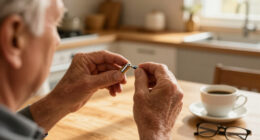
The best assistive listening devices for sports must keep speech understandable around crowd noise while matching how many people need audio. My best overall pick, the Avantree Audiplex MX, combines one transmitter with 10 receivers, making it the strongest fit for group viewing, sports clubs, and hosted events. The Retekess T130 with bone-conduction headphones stands out when open ears and awareness matter, while the Williams Sound PockeTalker Ultra DUO offers a simpler starting point for one listener. The main tradeoffs are group capacity versus portability, isolation versus environmental awareness, and a complete system versus hardware that requires compatible components. Keep reading for the full breakdown and the buyer types each option serves best.

Get everyday helpers delivered free — and shop member deals
- Fast, free delivery on millions of items
- Access to Prime Big Deal Days deals on October 6–7
- Prime Video, Amazon Music and more included
Key Takeaways
- The Avantree Audiplex MX leads this roundup because its 10 included receivers make it more practical for groups than the two- and four-person systems, without requiring each listener to source separate equipment.
- Open-ear listening is a specialized advantage: the Retekess T130 bone-conduction package preserves awareness better than over-the-head headphones, but loud crowd noise can make open designs harder to hear.
- A receiver is not always a complete system. The Listen Technologies LR-4200-072 offers OLED controls and T-coil compatibility, yet buyers need a suitable 72 MHz transmitter and venue setup.
- Auracast offers broader broadcast potential, giving the Avantree AuraPlex MX a forward-looking role, but its value depends on compatible receiving devices and user familiarity.
- Receiver count changes the value calculation. The two-person Retekess T130 package suits couples, four-person systems fit families or small crews, and the Audiplex MX becomes more compelling when many listeners share one source.
| Avantree Audiplex MX Multi-Channel Assistive Listening System with 1 Transmitter and 10 Receivers |  | Best Overall | Channels: 4 | Latency: 30ms | Wireless band: 2.4GHz | VIEW LATEST PRICE | See Our Full Breakdown |
| Retekess T130 Assistive Listening System with Bone Conduction Headphones |  | Best Open-Ear Group System | Model: T130 | Channels: 99 | Battery life: Up to 8 hours | VIEW LATEST PRICE | See Our Full Breakdown |
| Retekess TT106S Assistive Listening System with Microphone and Speaker |  | Best for Multi-Day Events | Battery life: Up to 50 hours | Range: 200 m / 656 ft | Channels: 9,999 | VIEW LATEST PRICE | See Our Full Breakdown |
| Retekess T130 Wireless Audio Tour Guide System with 2 Receivers |  | Best Starter Kit | Transmission range: 60 meters | Channels: 99 | Battery life: 12-18 hours | VIEW LATEST PRICE | See Our Full Breakdown |
| 4-Person Assistive Listening System with Over-The-Head Headphones |  | Best Full-Coverage Headphone Package | Number of users: 4 | Headphone style: Over-the-head foldable | Speaker type: HiFi | VIEW LATEST PRICE | See Our Full Breakdown |
| Listen Technologies LR-4200-072 Intelligent DSP RF Receiver |  | Best Individual Venue Receiver | Channels: 17 wide band and 40 narrow band (57 total) | Sensitivity: 0.6 µV typical; 1 µV maximum | Signal-to-Noise Ratio: 80 dB with SQ enabled; 60 dB with SQ disabled | VIEW LATEST PRICE | See Our Full Breakdown |
| 4-Person Assistive Listening System |  | Best Small-Venue Compliance Kit | Initial User Capacity: 4 people | Expandability: Supports additional receivers | Warranty Length: 3 years | VIEW LATEST PRICE | See Our Full Breakdown |
| Avantree AuraPlex MX Auracast Assistive Listening System |  | Best for Indoor Spectator Groups | Transmitter Count: 1 | Receiver Count: 10 | Wireless Standard: Auracast | VIEW LATEST PRICE | See Our Full Breakdown |
| Williams Sound PockeTalker Ultra DUO Sound Amplifier |  | Best for One-on-One Sports Listening | Power Source: Battery powered | Battery Requirement: 2 AAA alkaline batteries | Rechargeable Battery Included: No | VIEW LATEST PRICE | See Our Full Breakdown |
| assistive listening devices for sport | Channels |
|---|---|
| Avantree Audiplex MX Multi-Cha | 4 |
| Retekess T130 Assistive Listen | 99 |
| Retekess TT106S Assistive List | 9,999 |
| Retekess T130 Wireless Audio T | 99 |
| 4-Person Assistive Listening S | — |
| Listen Technologies LR-4200-07 | 17 wide band and 40 narrow band (57 total) |
| 4-Person Assistive Listening S | — |
| Avantree AuraPlex MX Auracast | — |
| Williams Sound PockeTalker Ult | — |
More Details on Our Top Picks
Avantree Audiplex MX Multi-Channel Assistive Listening System with 1 Transmitter and 10 Receivers
I rank the Avantree Audiplex MX first because its 30ms latency, ten included receivers, and four-channel design form the most balanced package for live sports instruction, stadium tours, and team presentations. The low delay helps listeners hear commentary or coaching cues close to the action they are watching. Compared with the Retekess T130 two-receiver system, it supports a much larger group immediately and extends the stated range from 60 to 100 meters. It is also less complicated than the Retekess TT106S and its 9,999-channel menu. The tradeoff is more equipment to pair and distribute, while only three wired earbuds are supplied for ten receivers. I would also verify coverage before buying because the listed metric and imperial range figures conflict.
Pros:- Low 30ms latency keeps spoken guidance closely aligned with live action
- Ten included receivers accommodate a larger group than the smaller starter systems
- Four channels help separate concurrent coaching or tour groups
- Expandable receiver count supports growing programs
Cons:- Pairing and managing multiple receivers adds setup work
- Only three wired earbuds are included for ten receivers
- The stated 100-meter and 1,028-foot range figures do not match
Best for: Sports organizations, stadium tour operators, and coaching programs that need synchronized audio for groups of up to ten listeners
Not ideal for: Solo spectators or buyers wanting a ready-to-wear headset for every receiver, since only three wired earbuds are included
- Channels:4
- Latency:30ms
- Wireless band:2.4GHz
- Stated range:100 m / 1,028 ft
- Included receivers:10
- Receiver expansion:Supported
- Package contents:1 transmitter, 10 clip-on receivers, and 3 wired earbuds
Our verdict“This is my leading pick for organizations needing low-delay sports audio for a medium-size group without moving to a highly complex channel system.”
Retekess T130 Assistive Listening System with Bone Conduction Headphones
The Retekess T130 bone-conduction package has the clearest niche for sports spectators who want to hear announcements while retaining awareness of nearby people and venue sounds. Its open-ear headphones may also feel less intrusive during an all-day tournament than conventional earbuds. Compared with the Avantree Audiplex MX, it provides a longer stated 200-meter range and five more receivers, but its eight-hour battery is less suited to multi-day operation than the Retekess TT106S. The package includes only four bone-conduction headphones for 15 receivers, so a fully equipped group needs more listening accessories. Bone conduction also supplies less isolation in a loud crowd than an in-ear or over-the-head design. I would choose it for awareness and wearing comfort, not maximum blocking of stadium noise.
Pros:- Open-ear bone-conduction design preserves awareness of surrounding activity
- Fifteen included receivers serve a larger group than the Avantree Audiplex MX
- Stated 200-meter range suits spread-out venues
- Three-year warranty and lifetime customer support add purchase protection
Cons:- Only four bone-conduction headphones are supplied for 15 receivers
- Open-ear playback provides limited isolation from loud crowd noise
- No stated waterproof or sweat-resistance rating
Best for: Tournament groups and venue guests who need open-ear listening while remaining aware of crowds, staff, and surrounding activity
Not ideal for: Spectators seeking strong noise isolation in loud stands or groups expecting headphones for all 15 receivers
- Model:T130
- Channels:99
- Battery life:Up to 8 hours
- Range:200 meters
- Headphone type:Bone conduction
- Connectivity:3.5mm jack
- Included equipment:1 transmitter, 15 receivers, and 4 headphones
- Warranty:3 years with lifetime customer support
Our verdict“I favor this system for sports groups that prioritize open-ear awareness and broad coverage over noise isolation and extended battery life.”
Retekess TT106S Assistive Listening System with Microphone and Speaker
I place the Retekess TT106S ahead of the other Retekess systems for long meets, training camps, and tournament weekends because its 50-hour battery sharply reduces charging interruptions. Its 200-meter range matches the bone-conduction T130, while 9,999 channels give multiple teams far more separation than the Avantree Audiplex MX offers. The included headset and lavalier microphones also make it more coaching-ready than packages centered on external audio feeds. That flexibility brings added management: 9,999 channels can complicate coordination, and six receivers serve a smaller group than the 10- and 15-receiver alternatives. Its bulkier presentation may also be distracting for spectators who want discreet equipment. For sports programs running repeated sessions, I think the battery advantage outweighs the extra complexity; casual users will find simpler systems easier.
Pros:- Up to 50 hours of battery life supports multi-day schedules
- Two included microphone styles suit mobile coaching and presentations
- A 200-meter stated range accommodates large facilities
- 9,999 channels allow many groups to operate separately
Cons:- Extensive channel selection requires disciplined group management
- Only six receivers are included
- Bulkier equipment is less discreet than compact clip-on alternatives
Best for: Coaches, training-camp leaders, and tournament staff running repeated sessions where charging opportunities are limited
Not ideal for: Casual spectators who want a discreet, simple receiver with minimal channel management
- Battery life:Up to 50 hours
- Range:200 m / 656 ft
- Channels:9,999
- Volume levels:0-9
- Auto-shutdown:Yes
- Included microphones:Headset and lavalier
- Included receivers:6
- Warranty:3 years
Our verdict“This is my pick for sports staff who value exceptional runtime and multi-team flexibility more than compactness or plug-and-play simplicity.”
Retekess T130 Wireless Audio Tour Guide System with 2 Receivers
The Retekess T130 two-receiver kit makes sense for a coach communicating with one athlete, a pair of spectators, or a small venue testing assisted audio before buying a larger fleet. Its 12-to-18-hour battery lasts longer than the eight-hour bone-conduction T130, and 99 channels can separate simultaneous groups. Compared with the Avantree Audiplex MX, however, its 60-meter range and two-person capacity are much more restrictive for stadium-wide use. Audio travels one way, so athletes cannot reply through the system, and external media sources require an AUX cable. I rank it as the entry option because buyers avoid paying for unused receivers, but expansion-minded programs may outgrow it quickly. The simple small-group format is its main advantage; broad coverage and interactive team communication are not.
Pros:- Two-receiver package avoids excess equipment for very small groups
- Battery provides 12 to 18 hours of operation
- Ninety-nine channels support separate groups or language feeds
- Rechargeable batteries reduce reliance on disposable cells
Cons:- The 60-meter range is shorter than the other wireless group systems
- One-way audio prevents athlete or listener responses
- External media playback requires a wired AUX connection
Best for: Individual coaches, two-person spectator groups, and small clubs trialing assisted audio at compact sports facilities
Not ideal for: Large stadium programs or teams needing two-way communication, since the kit has two receivers and one-way transmission
- Transmission range:60 meters
- Channels:99
- Battery life:12-18 hours
- Battery type:Rechargeable lithium
- Included receivers:2
- Audio direction:One-way transmission
- External media connection:AUX cable
Our verdict“I recommend this starter system for one-to-two-listener sports setups, provided short range and one-way communication are acceptable.”
4-Person Assistive Listening System with Over-The-Head Headphones
This four-person assistive listening system stands apart by supplying foldable over-the-head headphones rather than expecting listeners to share a small set of earbuds. The HiFi speakers and reinforced cables suit seated spectators who prefer fuller ear coverage, while the included ADA plaque helps facilities identify the service. Compared with the open-ear Retekess T130, these headphones trade surrounding awareness for a more enclosed listening format; compared with the two-receiver T130, the package accommodates twice as many people. I rank it below the Avantree Audiplex MX for larger sports groups because the base system stops at four users and provides no stated range, battery, latency, or channel figures. Expansion costs extra, and over-the-head headphones may feel warm or cumbersome during active use. Its US-based phone support is most valuable to small venue operators.
Pros:- Four over-the-head foldable headphones create a ready-to-distribute package
- HiFi speakers provide a fuller listening format than basic earbuds
- Reinforced cables are designed to reduce tangling and wear
- US-based phone support and a three-year warranty support venue operators
Cons:- Base package serves only four listeners
- Adding capacity requires separately purchased receivers
- No range, latency, battery-life, or channel specifications are provided
Best for: Small sports venues serving up to four seated listeners who prefer over-the-head headphones and want US-based support
Not ideal for: Mobile athletes, large groups, or technical buyers who need published range, latency, battery, and channel data before purchase
- Number of users:4
- Headphone style:Over-the-head foldable
- Speaker type:HiFi
- Cable design:Reinforced
- Receiver expansion:Supported with additional purchases
- Warranty:3 years
- Support:US-based phone support
- Included signage:ADA plaque
Our verdict“I would choose this package for a small spectator-assistance desk that values complete headphones and domestic support over detailed wireless specifications.”
Listen Technologies LR-4200-072 Intelligent DSP RF Receiver
I rank the Listen Technologies LR-4200-072 as the strongest individual receiver here for spectators using an established 72 MHz venue system. Its 80 dB signal-to-noise ratio with SQ enabled supports clearer commentary, while the OLED screen makes channel and battery checks easier during a long game. At 2.4 ounces, it is less burdensome to wear than a complete personal amplifier setup such as the Williams Sound PockeTalker Ultra DUO. It also offers T-coil compatibility, giving hearing-device users a more direct listening path. The tradeoff is infrastructure: this is a receiver, not a complete sports-listening system, and it handles one selected feed at a time. Its eight-hour battery may cover most events, but micro-USB charging feels dated, and larger venues may need broader channel capacity.
Pros:- SQ noise reduction provides an 80 dB signal-to-noise ratio
- OLED display shows channel, battery, and operating status
- Compact 2.4-ounce body is practical for event-length wear
- T-coil compatibility supports suitable hearing devices
Cons:- Requires a compatible 72 MHz transmitter and related venue infrastructure
- Receives one selected audio feed at a time despite its channel selection
- Eight-hour battery and micro-USB charging may frustrate heavy-use venues
Best for: Spectators with T-coil hearing devices who attend arenas, school gyms, or sports venues already equipped with a compatible 72 MHz transmitter
Not ideal for: Buyers building a system from scratch, since this receiver requires compatible venue transmission equipment
- Channels:17 wide band and 40 narrow band (57 total)
- Sensitivity:0.6 µV typical; 1 µV maximum
- Signal-to-Noise Ratio:80 dB with SQ enabled; 60 dB with SQ disabled
- Battery:3.7 V, 1200 mAh lithium-ion
- Battery Life:8 hours
- Charge Time:2.5 hours
- Audio Outputs:Two 3.5 mm connectors
- Dimensions:3.75 x 2.00 x 0.64 inches
- Weight:2.40 ounces
Our verdict“I recommend this receiver for hearing-device users who need a polished, wearable connection to an existing 72 MHz sports-venue system.”
4-Person Assistive Listening System
The 4-Person Assistive Listening System earns its place as a practical package for a community gym, clubhouse, or small sports facility serving several listeners. Unlike the Listen Technologies LR-4200-072, which is only an individual receiver, this option starts with support for four users and can grow through added receivers. The included ADA plaque and US-based phone support also make it more approachable for venue operators handling accessibility duties without an audio specialist. I place it below larger group systems such as the Avantree AuraPlex MX because the supplied data omits range, battery life, and core audio-performance figures. Multi-channel capability and accessories also cost extra. Its three-year warranty reduces ownership risk, but expansion could create a more complicated and expensive setup than the modest starting package suggests.
Pros:- Initial package supports four listeners
- Additional receivers allow the system to grow
- ADA plaque supports visible accessibility communication
- Three-year US-based warranty and phone support aid venue operators
Cons:- Published data does not state range, battery life, or audio performance
- Multi-channel operation and optional accessories require added purchases
- A larger expanded installation may be harder to configure and manage
Best for: Community sports facilities and small clubs that need a supported four-listener system with an accessibility sign
Not ideal for: Large or technically demanding venues that need verified range, battery endurance, and included multi-channel operation
- Initial User Capacity:4 people
- Expandability:Supports additional receivers
- Warranty Length:3 years
- Warranty Region:United States
- Customer Support:Phone support
- Included Accessibility Item:ADA plaque
- Optional Configuration:Multi-channel version available separately
Our verdict“I see this as a sensible supported starter kit for small sports venues, provided buyers verify its missing performance details before purchase.”
Avantree AuraPlex MX Auracast Assistive Listening System
I give the Avantree AuraPlex MX the group-listening role because its one transmitter and ten receivers can serve a team room, indoor court, or organized watch event without assembling receivers individually. Its 328-foot stated range offers far broader coverage than the close-range Williams Sound PockeTalker Ultra DUO, and Auracast support can connect compatible hearing aids and personal devices. Compared with the four-user system, it supplies more listening positions from the outset. That scale comes with boundaries: the manufacturer does not recommend it for outdoor or heavily obstructed locations, which excludes many fields and crowded stadium layouts. Venues above roughly 300 people should also look elsewhere. Auracast compatibility is forward-looking, but buyers with older hearing aids may still rely on the included receivers rather than receiving audio directly.
Pros:- Ten included receivers support a group without immediate expansion
- 328-foot stated range suits many medium-size indoor sports spaces
- Auracast works with compatible hearing aids and personal devices
- Synchronized audio helps listeners follow live commentary together
Cons:- Not recommended for outdoor or heavily obstructed environments
- Venue guidance is limited to spaces of roughly 300 people or fewer
- Direct hearing-aid reception depends on Auracast compatibility
Best for: Church leagues, indoor courts, classrooms hosting sports instruction, and event organizers serving up to ten listeners across a medium-size indoor space
Not ideal for: Outdoor fields, obstruction-heavy stadiums, and very large venues where the stated coverage limits may hinder reception
- Transmitter Count:1
- Receiver Count:10
- Wireless Standard:Auracast
- Range:328 feet
- Hearing-Aid Compatibility:Select Auracast-enabled hearing aids
- Personal-Device Compatibility:Auracast-enabled devices
- Supported Venues:Churches, classrooms, and events
- Suggested Venue Capacity:Approximately 300 people or fewer
Our verdict“I favor the AuraPlex MX for indoor sports groups needing broad coverage and ten listening positions, but not for fields or major arenas.”
Williams Sound PockeTalker Ultra DUO Sound Amplifier
The Williams Sound PockeTalker Ultra DUO is my choice for a spectator who needs nearby speech amplified rather than a feed from a venue sound system. Adjustable volume and tone can make a companion, coach, or TV commentator easier to follow, while the removable microphone and extension cord support flexible placement. It is simpler and more personal than the ten-receiver Avantree AuraPlex MX, and its up to 100-hour battery life suits repeated games or watch parties without frequent charging. That convenience does not make it a strong stadium solution. With no noise-control feature, crowd sound may be amplified alongside speech, and it cannot match the dedicated transmitted audio of the Listen Technologies LR-4200-072. Disposable AAA power adds ongoing cost, while the supplied in-ear options may not suit every listener.
Pros:- Independent volume and tone controls allow basic sound tailoring
- Battery life of up to 100 hours reduces maintenance between events
- Removable microphone and extension cord offer flexible positioning
- Compact body includes both a headphone and an earbud
Cons:- No noise reduction means surrounding crowd sound can compete with speech
- Requires two disposable AAA batteries and does not include rechargeable power
- Included in-ear listening option may be uncomfortable or unsuitable for some users
Best for: Individuals who want amplified conversation with a seatmate, coach, or television during quiet games and small sports gatherings
Not ideal for: Spectators in loud stadiums who need crowd-noise management or a direct connection to venue commentary
- Power Source:Battery powered
- Battery Requirement:2 AAA alkaline batteries
- Rechargeable Battery Included:No
- Maximum Battery Life:Up to 100 hours
- Audio Sensitivity:110 decibels
- Noise Control:None
- Controls:Button controls with adjustable volume and tone
- Included Listening Options:Headphone and earbud
- Carrying Options:Lanyard and clip
Our verdict“I recommend the PockeTalker for close-range sports conversation and TV viewing, not for extracting commentary from a noisy arena.”
How We Picked
I ranked these products around speech clarity in sports settings, where commentary, coaching instructions, and announcements must compete with crowd noise. I also compared receiver capacity, listening format, setup demands, and whether each listing represents a ready-to-use system or one part of a larger installation. Portability mattered more for spectators and sideline use, while channel management and distribution mattered more for clubs, watch parties, and event operators.
The Avantree Audiplex MX ranks first because it offers the broadest included group capacity and a clear use case for shared sports audio. Smaller Retekess packages follow where lower entry cost, open-ear listening, or speaker flexibility matters more than scale. I placed the Listen Technologies receiver and AuraPlex MX in specialist roles because their strengths depend more heavily on a matching venue ecosystem or compatible broadcast-audio hardware. The PockeTalker remains a strong beginner choice, but its local, one-person amplification model is less versatile than a transmitter distributing the same feed to several listeners.
Factors to Consider When Choosing Assistive Listening Devices For Sports
I would start by identifying where the sound originates and how many people need it. Those two decisions separate personal amplifiers from wireless group systems more clearly than price or feature count. The right sports setup may be a pocket amplifier near a television, an open-ear receiver on the sideline, or a multi-channel system connected to a venue feed.
Match the Device to the Audio Source
I separate these products into local amplification and transmitted audio. A local amplifier such as the PockeTalker captures nearby sound through a microphone, which can help beside a television or during a close conversation. At a stadium, that same microphone may raise crowd noise along with announcements. A transmitter-based system can send a cleaner commentary, microphone, or mixer feed directly to receivers, provided the source offers a compatible output. Buyers often focus on the receiver and overlook the cable, microphone, or transmitter connection that determines what they will actually hear. I would verify the complete signal path before choosing any sports listening system.
Balance Noise Isolation With Situational Awareness
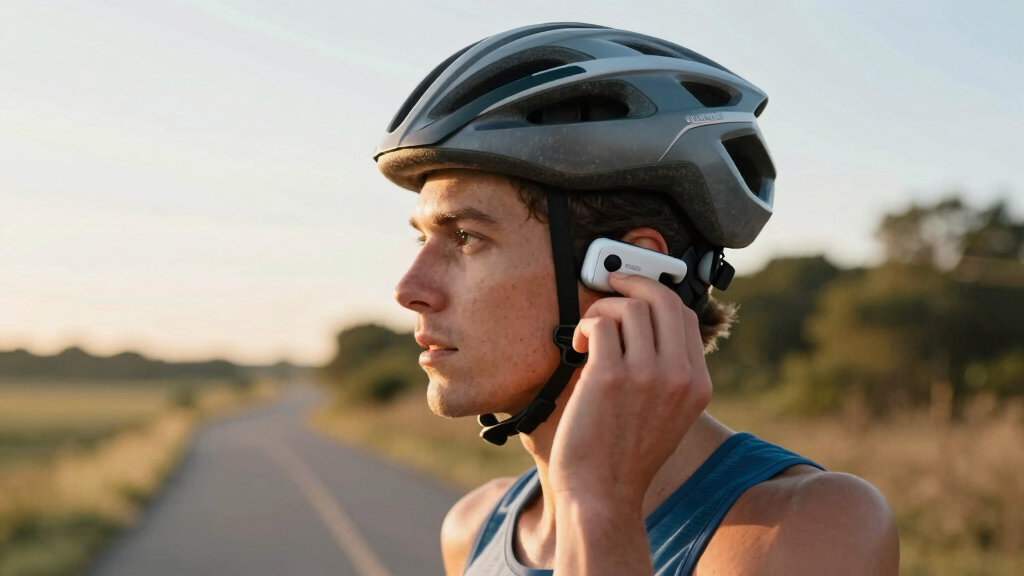
Closed or over-the-head headphones can make commentary easier to distinguish in a loud venue, but they may reduce awareness of nearby spectators and staff. Bone-conduction headphones leave the ears open, which makes more sense for coaches, participants, or anyone who needs to hear activity around them. That openness also lets crowd noise compete with the transmitted feed. Earbuds sit between these approaches, depending on their fit and how deeply they seal the ear. I would favor isolation for seated viewing and awareness for sideline or active use. No listening design should block safety instructions or nearby hazards during participation.
Check Hearing Aid and T-Coil Compatibility
A standard headphone socket does not automatically provide the best connection for every hearing aid user. T-coil compatibility, neck loops, direct audio accessories, and the hearing aid’s supported wireless formats can change which receiver makes sense. The Listen Technologies LR-4200-072 is more appealing for an established venue built around compatible 72 MHz equipment than for a buyer starting with no transmitter. Auracast presents another route, but both the broadcast source and the listener’s receiving hardware must support it. I would ask an audiologist which input method matches the listener’s hearing aids before paying for specialized hardware. This check can prevent buying a capable receiver that still needs an additional accessory.
Choose Receiver Capacity for the Real Group Size
The number of included receivers should match regular attendance, not the largest group that might appear once a year. Two receivers may be enough for a couple, while four-person kits suit families, small coaching groups, or a compact viewing area. A 10-receiver package reduces per-listener setup work for clubs and hosted events, yet it also creates more charging, labeling, cleaning, and storage duties. I would leave modest room for guests or a failed unit rather than buying exactly the minimum count. Expandability also matters because adding receivers later may cost more than choosing a larger bundle at the start. For group use, simple distribution and inventory control can matter as much as sound quality.
Know When Paying More Makes Sense
A higher price is easier to justify when the system supports frequent events, many listeners, or an existing venue installation. Premium receivers may add clearer controls, channel management, displays, and hearing-loop support, but those benefits can be wasted in a one-person television setup. Cheaper bundles may offer enough function for occasional family viewing, though replacement receivers, batteries, and accessories can change their long-term cost. I would also check how users charge the units, whether headphones can be replaced, and how easily staff can reset the system between events. Sports clubs should favor repeatable operation over settings that require technical help every session. Personal buyers can usually spend less by choosing a focused amplifier or two-receiver package.
Frequently Asked Questions
Should I Choose a Personal Amplifier or a Wireless Transmitter System for Sports?
I would choose a personal amplifier for one listener seated close to the sound source, especially near a television or another person. A wireless transmitter system makes more sense when audio must travel from a microphone, television, mixer, or commentary feed to one or more receivers. Transmitted audio can avoid amplifying as much surrounding crowd noise, though its quality depends on the source connection. Personal amplifiers are simpler to carry and operate but have less group flexibility. For stadium or club use, I favor a complete transmitter-and-receiver package.
Are Bone-Conduction Headphones Better for Watching or Participating in Sports?
Bone-conduction headphones are better suited to situations where environmental awareness matters, such as coaching, officiating, or listening near active play. They leave the ear canal open, allowing the user to hear nearby voices and activity. In a very loud crowd, that same openness may reduce perceived clarity compared with sealed earbuds or over-the-head headphones. For seated spectators focused on commentary, I would usually favor stronger isolation. For active users, I would prioritize awareness, a secure fit, and venue safety rules.
Can These Devices Work With Hearing Aids or Cochlear Implants?
Compatibility depends on the listener’s hearing hardware and the output offered by the assistive receiver. A model with T-coil support may connect through a neck loop or compatible induction accessory, while other users may rely on headphones, earbuds, or a manufacturer-specific streamer. Auracast can provide another connection route when both devices support the same broadcast-audio standard. I would not assume that Bluetooth branding alone means direct compatibility. An audiologist or hearing-device provider can identify the correct accessory and safe listening level for a specific setup.
Can I Use the Listen Technologies LR-4200-072 by Itself?
No, the LR-4200-072 is a receiver rather than a complete broadcast system. It needs a compatible 72 MHz transmitter sending the desired microphone, commentary, or venue audio. It may also require an appropriate earphone, neck loop, or other output accessory for the listener. This makes it a strong specialist option for venues already using compatible Listen Technologies equipment. Buyers starting from scratch will usually find a bundled transmitter-and-receiver system easier and less expensive to assemble.
How Many Receivers Should I Buy for a Sports Viewing Group?
I would count regular listeners, add one or two spare receivers, and check whether more units can join the same transmitter later. A two-receiver package works for a couple, while four receivers better fit a family or small staff group. Ten receivers make sense for clubs, group watch events, and accessibility programs with changing attendance. More units also mean more charging ports, headphones, cleaning, and storage, so extra capacity is not free of work. If attendance regularly exceeds four people, a larger package is usually easier to manage than several unrelated small systems.
Conclusion
For most group sports settings, my best overall choice is the Avantree Audiplex MX because its 10 receivers offer the clearest balance of scale and shared listening. The Retekess T130 with two receivers is the best value for couples or small viewing setups that do not need a larger fleet. I would choose the Listen Technologies LR-4200-072 as the premium specialist pick for a compatible 72 MHz venue, while the Avantree AuraPlex MX better suits buyers building around Auracast. The Williams Sound PockeTalker Ultra DUO is best for beginners who need straightforward personal amplification rather than distributed audio. For sideline awareness, the Retekess T130 bone-conduction system is the better fit; for families or small crews, one of the four-person packages offers a more practical middle ground. The final choice should follow the audio source, listener count, hearing-device connection, and need for either isolation or open-ear awareness.
Evergreen bestsellers Picks
bestsellers
As an affiliate, we earn on qualifying purchases.