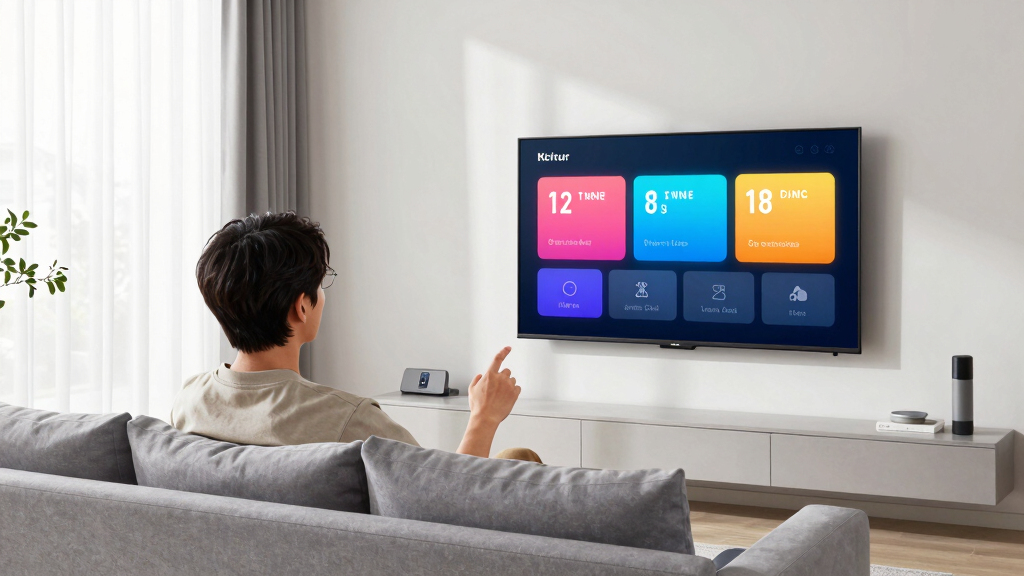

The Amazon Ember 43-inch 4-Series is my best overall choice among these captioned smart TVs because its 4K resolution, practical screen size, and Fire TV interface form the strongest all-around package. The Insignia 50-inch F50 Series offers the best value for viewers who want a larger 4K display, while the 65-inch F50 is my premium pick for spacious rooms. Buyers mainly need to balance caption size at their viewing distance, screen resolution, room fit, and how easily they can reach subtitle controls inside different apps. Smaller HD models cost less and feel approachable, but their lower resolution and compact panels can make caption-heavy viewing less comfortable from across a room. Continue reading for the full breakdown of all nine models and the buyer each one suits best.

Get everyday helpers delivered free with Prime
- Fast, free delivery on millions of items
- Prime Video, Amazon Music and more included
- Member-only deals all year
Key Takeaways
- I rank the Amazon Ember 43-inch 4-Series first because it combines 4K clarity with a size that fits more rooms than the 50-, 55-, and 65-inch alternatives.
- The Insignia 50-inch F50 Series is the value leader: it provides a meaningful size increase over the 43-inch Ember without moving into the room and budget demands of the 65-inch model.
- Among the 32-inch choices, I favor the Insignia FE Series Full HD model for caption-focused viewing because its higher pixel count can render fine text more cleanly than the HD F20 and Ember 2-Series.
- The 40-inch F40 and FE models fill a narrow middle ground, but neither offers the sharper 4K presentation of the 43-inch Ember; their appeal depends heavily on price and available space.
- Every model uses the Fire TV ecosystem, so the biggest differences are screen size and resolution rather than a radically different caption workflow; app-specific subtitle controls can still vary.

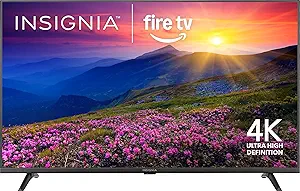
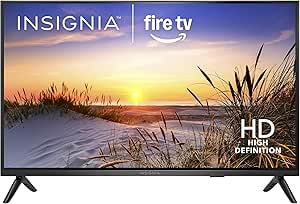


| captioned smart TV | Screen Size | Resolution | HDMI Ports |
|---|---|---|---|
| Amazon Ember 32" 2-Series with | 32 inches | HD 720p | — |
| Insignia 65-inch Class F50 Ser | 65 inches | 4K UHD (2160p) | 3 |
| Insignia 32" Class F20 Series | 32 inches | 720p | 2 |
| Insignia 40" Class F40 Series | 40 inches | 1080p Full HD | 2 |
| Insignia 50-Inch Class F50 Ser | 50 inches | 4K UHD (2160p) | 3 |
| Insignia 40" Class FE Series L | 40 inches | 1080p Full HD | — |
| Insignia 32-Inch Class FE Seri | 32 inches | 1080p Full HD | 2 |
| Amazon Ember 43" 4-Series 4K U | 43 inches | 4K Ultra HD | — |
| Insignia 55-inch Class F50 Ser | 55 inches | 4K UHD | — |
More Details on Our Top Picks
Amazon Ember 32″ 2-Series with Fire TV
I rank the Amazon Ember 32-inch 2-Series as the strongest compact choice for captioned viewing because its updated Fire TV interface, responsive quad-core processor, and enhanced Alexa remote make subtitle-enabled programs easier to find and control. Wi-Fi 6 also helps maintain stable streams, reducing interruptions that can make captions fall out of step. Compared with the Insignia 32-inch F20, the Ember offers newer wireless hardware and built-in sensors, making it the more polished small-room option. Its limits are clear: 720p resolution produces less refined caption lettering than the 1080p Insignia 40-inch F40, and two HDMI ports restrict connected devices. I recommend it for bedrooms and kitchens where compact dimensions and quick navigation matter more than maximum text sharpness.
Pros:- Wi-Fi 6 supports stable streaming and better caption synchronization
- Quad-core processor provides responsive Fire TV navigation
- Enhanced Alexa remote simplifies voice searches for captioned content
- Compact 32-inch screen fits bedrooms, kitchens, and small apartments
Cons:- 720p resolution renders text less sharply than Full HD and 4K models
- Only two HDMI ports limit larger device setups
- No stated HDR or 4K support
Best for: Bedroom or kitchen viewers who want a compact Fire TV with responsive voice navigation for finding captioned programs
Not ideal for: Viewers who sit close to the screen or need highly refined caption text, since the panel is limited to 720p
- Screen Size:32 inches
- Resolution:HD 720p
- Wi-Fi:Wi-Fi 6
- Processor:Quad-core
- Remote:Alexa Voice Remote Enhanced
- HDMI Inputs:2
- Smart Platform:Fire TV with 2026 update
- Special Features:Built-in sensors and Omnisense technology
Our verdict“I would choose this for a small room where responsive Fire TV controls outweigh the softer caption rendering of a 720p screen.”
Insignia 65-inch Class F50 Series LED 4K UHD Smart Fire TV
The Insignia 65-inch F50 Series earns its place by making captions physically larger and easier to follow from across a living room. Its 4K panel gives subtitle edges more definition than the 720p Amazon Ember 32-inch 2-Series, while HDR10 and a 65-inch display suit cinematic viewing. I place it behind smaller F50 models for buyers with modest spaces, though, because this screen needs more wall area and viewing distance. Three HDMI ports and broad legacy connectivity make it better equipped than the two-port Insignia 40-inch F40 for consoles, disc players, and sound systems. DTS Virtual-X adds spacious sound, but neither Dolby Vision nor Dolby Atmos is listed. I see this as the lineup’s distance-viewing specialist, not the most practical choice for apartments or desks.
Pros:- Large 65-inch screen makes captions easier to read from farther away
- 4K resolution produces crisp subtitle edges
- Three HDMI ports and extensive wired connections support complex setups
- HDR10 and DTS Virtual-X strengthen movie presentation
Cons:- Large footprint is poorly suited to compact rooms
- Dolby Vision and Dolby Atmos support are not listed
- DTS Virtual-X does not replace a dedicated sound system for dialogue clarity
Best for: Viewers in large living rooms who need caption text to remain comfortably visible from a distant sofa
Not ideal for: Apartment dwellers and close-range viewers who lack the wall space or viewing distance required by a 65-inch screen
- Screen Size:65 inches
- Resolution:4K UHD (2160p)
- HDR:HDR10
- Sound:DTS Virtual-X
- HDMI Ports:3
- Network Connections:Ethernet and Wi-Fi
- Other Connections:Composite, optical, USB, headphone, and coaxial
- Wall Mount Standard:VESA 400 × 300
Our verdict“I recommend this model when caption size at sofa distance matters more than compact placement or premium HDR formats.”
Insignia 32″ Class F20 Series LED HD Smart Fire TV
I chose the Insignia 32-inch F20 Series as the budget entry for viewers who want Fire TV caption access without paying for a larger, higher-resolution panel. Alexa voice search reduces remote typing, while the 32-inch wall-mountable design works well in a guest room or small bedroom. Compared with the Amazon Ember 32-inch 2-Series, this model adds stated HDR10 support but lacks the Ember’s specified Wi-Fi 6 and newer sensor features. Its 720p panel is also a major compromise: captions will not look as clean as they do on the 1080p Insignia 40-inch F40, especially at close range. With two HDMI ports and one USB port, expansion is modest. I rank it as an affordable secondary TV, rather than the best screen for frequent, long caption-reading sessions.
Pros:- Low-cost route to the Fire TV streaming interface
- Alexa voice remote reduces menu typing
- HDR10 support is stated despite the entry-level positioning
- Compact, wall-mountable body suits limited spaces
Cons:- 720p panel provides comparatively soft caption text
- Two HDMI ports offer limited room for external devices
- Standard Wi-Fi specification trails the Ember model’s Wi-Fi 6
Best for: Budget-conscious buyers seeking a wall-mountable secondary TV for captioned streaming in a guest room or small bedroom
Not ideal for: Frequent caption readers sitting near the screen, since 720p text lacks the crispness of Full HD or 4K alternatives
- Display Technology:LED
- Screen Size:32 inches
- Resolution:720p
- Refresh Rate:60 Hz
- HDR:HDR10
- HDMI Ports:2
- USB Ports:1
- Wall Mount Standard:VESA 100 × 100 mm
- Dimensions:6.71″ D × 28.31″ W × 18.62″ H
Our verdict“I would pick the F20 as an inexpensive secondary set, but regular caption readers should pay more for the F40’s sharper 1080p panel.”
Insignia 40″ Class F40 Series LED Full HD Smart Fire TV
The Insignia 40-inch F40 Series is my middle-ground pick: its 1080p panel renders captions more cleanly than either 32-inch 720p model without demanding the space or budget of the 50-inch F50. The larger screen also gives subtitle lines more breathing room, while DTS Virtual-X and Alexa control support dialogue-focused viewing and simpler content searches. Against the Insignia 50-inch F50, though, it loses 4K sharpness, HDR10, and a third HDMI input. The 60Hz refresh rate is suitable for television and films but less appealing for fast gaming, and one USB port limits accessory flexibility. I rank it highly for everyday caption use because Full HD at 40 inches offers a sensible blend of legibility, room-friendly scale, and cost.
Pros:- 1080p resolution provides cleaner caption text than 720p models
- 40-inch size balances readability with manageable placement
- DTS Virtual-X offers a broader sound presentation
- Alexa voice control simplifies program searches
Cons:- No 4K resolution or stated HDR support
- Two HDMI ports may constrain multi-device setups
- 60Hz panel is less suited to high-speed gaming
Best for: Everyday caption users who want sharper text than a 720p bedroom TV without moving to a large 4K set
Not ideal for: 4K movie fans and high-frame-rate gamers who want advanced HDR or faster motion performance
- Display Technology:LED
- Screen Size:40 inches
- Resolution:1080p Full HD
- Refresh Rate:60 Hz
- Sound:DTS Virtual-X
- HDMI Ports:2
- USB Ports:1
- Wall Mount Standard:VESA 200 × 200 mm
- Dimensions:8.3″ D × 35.2″ W × 21.7″ H
Our verdict“I favor the F40 for buyers seeking readable Full HD captions in a moderate-size room without paying for a 4K screen.”
Insignia 50-Inch Class F50 Series LED 4K UHD Smart Fire TV
I rank the Insignia 50-inch F50 Series first because it combines crisp 4K caption rendering, a readable screen size, and flexible connectivity without the room demands of the 65-inch F50. HDR10 and 2160p resolution give both video and subtitle edges greater definition than the 1080p Insignia 40-inch F40, while three HDMI ports better accommodate a soundbar, console, and another source. Ethernet is useful when stable streaming matters, since network hiccups can disrupt caption timing. The tradeoff is that DTS Studio Sound may still leave dialogue-heavy viewers wanting a dedicated audio system, and no Dolby Vision or Dolby Atmos support is specified. For most living rooms, I think its 50-inch scale and balanced feature set make it the easiest recommendation in this group.
Pros:- 4K panel delivers crisp, well-defined caption text
- 50-inch size works in more rooms than the 65-inch F50
- Three HDMI ports support several external devices
- Ethernet offers a stable alternative to wireless streaming
Cons:- Dolby Vision and Dolby Atmos support are not specified
- DTS Studio Sound may not provide enough dialogue clarity for every viewer
- Costs more and occupies more space than the Full HD F40
Best for: Regular caption users who want crisp 4K text, stable wired streaming, and a living-room screen that is large without being overwhelming
Not ideal for: Buyers seeking premium Dolby Vision and Dolby Atmos support or a screen sized for a very large room
- Screen Size:50 inches
- Resolution:4K UHD (2160p)
- HDR:HDR10
- Audio:DTS Studio Sound
- HDMI Ports:3
- Network Connections:Wi-Fi and Ethernet
- Other Connections:USB, composite, optical, and coaxial
- Smart Platform:Fire TV with Alexa Voice Remote
- Smart Features:Parental controls and smart home integration
Our verdict“I recommend the 50-inch F50 to most caption-focused buyers because it pairs sharp 4K text with a practical living-room size and useful connectivity.”
Insignia 40″ Class FE Series LED Full HD Smart Fire TV with Alexa Voice Remote
I rank the Insignia 40-inch FE Series as the value choice because its 1080p panel gives captions cleaner edges than the 720p Insignia 32-inch F20 Series, while keeping the screen manageable for a bedroom or modest living room. The 40-inch display also makes subtitle text easier to follow than on the 32-inch FE Series without requiring much more space. Fire TV gathers major streaming services within one interface, and the Alexa Voice Remote reduces the amount of button hunting needed to find content. Its limits become clear beside the Amazon Ember 43-inch 4-Series: there is no 4K or HDR upgrade, and the smaller panel has less impact from across a large room. Some streaming services also require separate paid subscriptions.
Pros:- 1080p resolution produces sharper caption text than entry-level 720p TVs
- 40-inch screen balances text visibility with space-saving dimensions
- Fire TV provides access to a broad range of streaming services
- Alexa Voice Remote simplifies content searches
Cons:- No 4K resolution or HDR support
- 40-inch screen can feel undersized in a large living room
- Many streaming services require separate subscriptions
Best for: Budget-conscious viewers who rely on captions and want a moderately sized 1080p screen for a bedroom, apartment, or small living room
Not ideal for: Buyers furnishing a large room or seeking 4K and HDR picture quality, since the 40-inch Full HD panel has limited scale and detail
- Screen Size:40 inches
- Resolution:1080p Full HD
- Display Type:LED-backlit LCD
- Smart Platform:Fire TV
- Remote:Alexa Voice Remote
- Voice Assistant:Alexa
- Streaming Library:More than 1.5 million movies and TV episodes
Our verdict“This is my value pick for caption users who want readable 1080p text on a sensibly sized screen without paying for 4K.”
Insignia 32-Inch Class FE Series LED Full HD Smart Fire TV with Voice Remote and Alexa
The Insignia 32-inch FE Series earns my compact role because it retains 1080p resolution at a size where many inexpensive TVs, including the Insignia 32-inch F20 Series, settle for 720p. That extra pixel density can make small caption lettering appear more defined when viewed from a desk, bed, or nearby chair. At only 4.9 pounds, it is also easier to place in a dorm, kitchen, or tight bedroom than the 40-inch FE Series. AirPlay, Wi-Fi, and two HDMI ports add useful flexibility beyond streaming apps. The compromise is viewing distance: 32 inches is restrictive for group viewing, and captions may still look small from across a room. Its 60Hz LED panel lacks 4K and HDR, while the basic audio may push dialogue-focused buyers toward external speakers.
Pros:- 1080p resolution is unusually useful for crisp text at this compact size
- Lightweight 4.9-pound design suits small rooms and flexible placement
- AirPlay support makes sharing content from Apple devices simple
- Two HDMI ports and Wi-Fi cover common compact-TV connections
Cons:- 32-inch panel is too small for distant or group viewing
- No 4K resolution or HDR support
- Basic built-in sound may leave dialogue lacking presence
Best for: Dorm residents, bedroom viewers, and desk users who need crisp captions from a short viewing distance
Not ideal for: Families watching together from across a living room, because the 32-inch screen limits caption size and shared visibility
- Screen Size:32 inches
- Resolution:1080p Full HD
- Display Technology:LED
- Refresh Rate:60 Hz
- Dimensions:3.1″ D x 28.1″ W x 16.6″ H
- Weight:4.9 pounds
- HDMI Ports:2
- USB Ports:1
- Wireless Features:Wi-Fi and AirPlay
Our verdict“I recommend this model for close-range caption viewing when space matters more than cinematic scale.”
Amazon Ember 43″ 4-Series 4K Ultra HD Smart TV with Fire TV and Alexa Remote
I place the Amazon Ember 43-inch 4-Series ahead of the two Full HD Insignia models for viewers who want sharper caption rendering alongside a stronger picture. Its 4K resolution and HDR10+ can preserve fine letter edges and provide better separation between bright scenes and overlaid text, while Wi-Fi 6 and a quad-core processor support quicker streaming navigation. Four HDMI inputs also give it more source flexibility than the 32-inch FE Series. Compared with the Insignia 55-inch F50, however, its 43-inch screen makes captions less prominent from a distant sofa. The enhanced Alexa remote may feel busy to viewers seeking basic controls, and gaming services or premium streaming apps can add recurring costs. This is the technical step-up pick, but not the largest-screen choice.
Pros:- 4K resolution gives captions and interface text finely defined edges
- HDR10+ improves contrast across compatible content
- Wi-Fi 6 and a quad-core processor support responsive streaming
- Four HDMI inputs accommodate more playback devices than the Insignia FE models
Cons:- 43-inch screen may not provide large enough captions for distant seating
- Enhanced remote can feel complicated for basic users
- Premium streaming and gaming services may require subscriptions
Best for: Caption users seated at a moderate distance who want 4K text clarity, responsive streaming, and several connected sources
Not ideal for: Viewers with a large room or anyone wanting the simplest possible remote, since the 43-inch panel and expanded controls may be limiting
- Screen Size:43 inches
- Resolution:4K Ultra HD
- HDR Format:HDR10+
- Processor:Quad-core
- Wireless Connectivity:Wi-Fi 6 and AirPlay
- HDMI Inputs:4
- Remote:Alexa Voice Remote Enhanced
- Additional Features:Ambient Experience and Instant On
- Gaming Services:Amazon Luna and Xbox Game Pass support
Our verdict“This is my pick for buyers who prioritize crisp 4K captions and faster smart-TV performance over maximum screen size.”
Insignia 55-inch Class F50 Series LED 4K UHD Smart Fire TV with Alexa Voice Remote
The Insignia 55-inch F50 Series is my choice for viewers who need captions to remain visible from farther away. Its larger panel gives subtitle lines more physical presence than the Amazon Ember 43-inch 4-Series or either FE model, while 4K resolution keeps text from appearing coarse at that scale. A 178-degree viewing angle also suits households with seats spread across the room, and three HDMI ports plus two USB ports provide practical connection options. Picture performance has boundaries: 300-nit brightness is modest for HDR, so HDR10 highlights will lack the force of a brighter premium TV. The 60Hz refresh rate and absence of advanced gaming features also make it less attractive for demanding players. Compared with the 65-inch F50, it offers easier room placement but less caption scale at long distances.
Pros:- 55-inch screen makes captions easier to read from typical living-room seating
- 4K resolution keeps enlarged text and menus sharp
- 178-degree viewing angle supports wider seating arrangements
- Three HDMI and two USB ports provide flexible connectivity
Cons:- 300-nit maximum brightness limits HDR impact in bright rooms
- 60Hz refresh rate is basic for fast-paced gaming
- Sound specifications are sparse, so dialogue performance is hard to gauge
Best for: Caption-dependent households with a medium or large living room and seating spread across several positions
Not ideal for: HDR enthusiasts and serious gamers who want high brightness, a refresh rate above 60Hz, or advanced gaming features
- Screen Size:55 inches
- Resolution:4K UHD
- Display Technology:LED
- Refresh Rate:60Hz
- Maximum Brightness:300 nits
- HDR Format:HDR10
- Viewing Angle:178 degrees
- Ports:3 HDMI and 2 USB
- Smart Platform:FireOS with Wi-Fi and Bluetooth
Our verdict“I favor this model for households that need bigger, sharper captions across a shared living room and can accept modest HDR brightness.”
How We Picked
I ranked these TVs through the specific lens of caption readability and control, not by screen size alone. My main criteria were resolution, viewing-distance suitability, interface simplicity, access to caption settings, voice-remote convenience, and the likely visibility of text against varied scenes. I also weighed room fit, everyday usability, and price-to-screen value, since a giant display is a poor recommendation when it overwhelms the space or budget.
The order rewards models that balance those factors with the fewest compromises. A 4K panel earned an advantage for cleaner text edges and broader usefulness, while Full HD models ranked ahead of basic HD sets when their sizes and roles overlapped. I gave each product a distinct purpose, from best overall and best value to compact, beginner-friendly, and large-room picks. Because caption availability and styling can change by app or source, I did not treat the Fire TV label alone as proof that every service offers identical controls.
Factors to Consider When Choosing Captioned Smart TVs
I would choose a captioned smart TV by matching text readability, viewing distance, and source behavior before comparing minor extras. The best choice is the model that keeps subtitles comfortable from the usual seat while making caption controls easy to reach. These factors explain when a larger or higher-resolution set is worth paying for and when a compact model is the smarter buy.
Match Screen Size to Viewing Distance
Larger captions are easier to follow from farther away, but screen size must still suit the room. A 32-inch TV works best at a desk, in a kitchen, or near a bed, while a 50- to 65-inch set better serves seating across a living room. I would not buy a small television with the plan to compensate through maximum caption size, since oversized text can cover faces and other visual details. Sitting too close to a large panel can also make viewers scan from dialogue to action rather than seeing both comfortably. Measure the normal seat-to-screen distance and check the television’s physical width before buying. For mixed viewing distances, a 43- or 50-inch model is often the most flexible compromise.
Choose the Right Resolution for Text
Resolution affects more than movies: it also shapes the edges and spacing of caption text. Basic HD can be adequate on a 32-inch screen viewed nearby, but Full HD provides a cleaner foundation for small lettering. On screens around 43 inches and above, I favor 4K for sharper text and longer useful life, especially when viewers sit close enough to see the difference. Resolution cannot repair poorly designed subtitles supplied by an app, yet it keeps the panel from adding another source of softness. A common buying mistake is paying for a larger HD screen while overlooking how coarse text may appear at short range. Budget buyers should favor a smaller Full HD set over a similarly priced larger HD model when reading comfort is the main goal.
Check Where Captions Are Controlled
A smart TV may provide system caption settings, but streaming services often use their own subtitle menus and styles. Broadcast television, built-in apps, and an HDMI device can each handle captions differently. I would check the apps used most often and find out whether they support font size, color, background opacity, and language selection. An external cable box, game console, or streaming player may require captions to be activated on that device rather than on the television. Voice control can shorten the path to settings, though spoken commands may not work consistently across every app. Buyers who depend on captions should review the accessibility menus of both the TV platform and their main content services before purchase.
Prioritize Contrast Over Maximum Brightness
Captions remain readable when there is clear separation between text and the scene. A solid or semi-transparent background can help more than raising the panel to its brightest setting, particularly during daylight viewing. White text without an outline may disappear against snow, clouds, or bright graphics, while vivid colors can create eye fatigue during long programs. I prefer platforms and apps that allow adjustments to font weight, outline, background, and opacity. Buyers with light sensitivity may benefit from moderate screen brightness paired with stronger caption contrast. Before settling on a style, test it against both dark films and bright news or sports footage.
Know When Paying More Makes Sense
A higher price is justified when it buys a larger readable image, 4K resolution, or a better room match. It is harder to justify when the upgrade merely adds inches that force the viewer to sit too close or rearrange the room. For a secondary space, a 32- or 40-inch Full HD model may deliver all the caption clarity needed. Main living rooms benefit more from 43- to 55-inch 4K sets, while a 65-inch model earns its cost only when the seating distance supports it. I would also reserve part of the budget for clear audio or private-listening equipment, since captions and sound support often work together. The smartest upgrade is the one that removes a real reading or placement problem rather than chasing the largest available screen.
Frequently Asked Questions
Is a 4K TV Better for Reading Captions Than a 1080p TV?
A 4K panel can produce cleaner text edges, particularly on larger screens or at closer viewing distances. The improvement is less dramatic on a compact 32-inch set viewed from across a room, where text size and contrast matter more. Full HD remains a sound choice for bedrooms, desks, and secondary spaces. I would choose 4K at 43 inches or larger when the budget allows, since it also suits more modern video sources. Caption design still depends on the app, so resolution alone cannot fix tiny or poorly contrasted subtitles.
Will Fire TV Caption Settings Work in Every Streaming App?
No, because many services use app-specific subtitle controls rather than applying every Fire TV preference. Font size, language choices, backgrounds, and text styles may change when moving between services. Some apps remember selections by profile, while others require captions to be activated for each program. I recommend checking the accessibility support pages for the services used most often. The shared Fire TV interface makes these nine models familiar to operate, but it does not create identical caption behavior across all content.
Which Screen Size Is Best for Someone Who Relies on Captions?
The right size depends on viewing distance and available space, not caption use alone. A 32-inch set is most comfortable nearby, while 43 to 55 inches usually works better for typical living-room seating. A 65-inch TV can help across a large room, but it may force excessive eye movement when placed too close. I see the 43-inch 4K format as the safest all-purpose choice in this group. Buyers with reduced vision should also confirm that their main apps permit larger text and stronger backgrounds.
Can Alexa Turn Captions On and Off?
Alexa may open settings or control supported playback functions, but caption commands can vary by app and content source. A service that manages subtitles inside its own player may still require remote-button input. Voice control is helpful for reducing menu hunting, yet I would not make it the only basis for choosing a model. Buyers with limited dexterity should examine the remote layout and the number of steps needed to reach accessibility settings. The best setup combines voice shortcuts with predictable manual controls.
Should I Choose a Full HD 32-Inch TV Over a Cheaper HD Model?
For frequent caption reading at close range, I would usually choose the Full HD 32-inch model. Its extra pixels can make small text and interface labels appear cleaner, which matters at a desk or bedside. A basic HD set remains appealing when price is the main constraint or the television will be viewed farther away. The difference may be subtle with low-resolution broadcasts, but it becomes easier to see in menus and higher-quality streams. In this lineup, the Insignia 32-inch FE Series is the stronger compact choice, while the F20 and Ember 2-Series target lower budgets and simpler needs.
Conclusion
For most buyers, I recommend the Amazon Ember 43-inch 4-Series as the best overall because its 4K panel and manageable footprint create the strongest balance for caption-focused viewing. The Insignia 50-inch F50 Series is my best-value pick for a living room, while the 65-inch F50 is the premium choice for viewers seated across a large space. Beginners who want a small, uncomplicated set should start with the Amazon Ember 32-inch 2-Series, accepting its HD resolution as the main compromise. For a compact room where sharper text matters, I would select the Insignia 32-inch FE Series as the best compact option; the 40-inch FE suits buyers who need a little more scale without moving to 4K. The 55-inch F50 is the better specific-needs choice for viewers who want a larger 4K screen but cannot comfortably place the 65-inch model.
Fall Picks
fall essentials
As an affiliate, we earn on qualifying purchases.