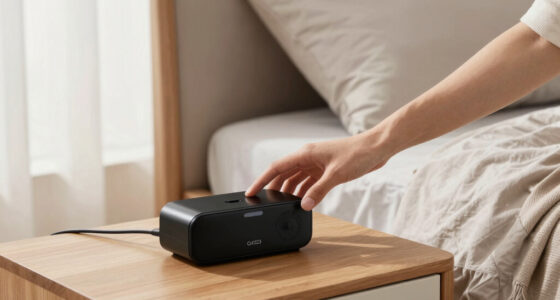

For deaf households, reliable weather alerts are essential for safety during severe conditions. The best devices in this category combine loud audio, visual signals, and dependable alerts to ensure no one misses critical warnings. The top pick, the RunningSnail NOAA Weather Alert Radio, excels for its comprehensive S.A.M.E. technology and alert customization. The Emergency Crank Weather Radio MD-090P offers portability with solar and hand-crank power, making it ideal for both home and outdoor use. However, tradeoffs include balancing alert loudness, ease of use, and connectivity. Continue reading for a detailed breakdown of each option and how to choose the best device for your needs.
Key Takeaways
- Top devices combine both loud audio and visual alerts to accommodate different deaf household needs.
- Battery backup and multiple power sources are key features for ensuring alerts during power outages.
- Customization through S.A.M.E. programming allows for localized alerts, reducing false alarms.
- Portability features like solar charging and hand cranks expand usability beyond just home use.
- Higher-priced options often include more advanced alert customization and longer battery life, but simpler models may suit basic needs well.
| RunningSnail NOAA Weather Alert Radio with S.A.M.E. Technology |  | Best Overall for Hyper-Local Emergency Alerts | Technology: S.A.M.E. (Specific Area Message Encoding) | County Codes Supported: 23 | Alert Types: 80+ (weather, security, system events) | VIEW LATEST PRICE | See Our Full Breakdown |
| Emergency Crank Weather Radio MD-090P with Solar Hand Crank, 14800mWh Battery, NOAA Alerts & Flashlight |  | Best for Outdoor and Multi-Device Power Reliability | Battery Capacity: 14800mWh (4000mAh) | Charging Modes: Solar, Hand Crank, Micro USB | Flashlight Power: 1W 3-Mode LED + Motion Sensor Lamp | VIEW LATEST PRICE | See Our Full Breakdown |
| NOAA Weather Alert Radio with S.A.M.E. Localized Alerts, Battery Backup & External Antenna |  | Best for Precise Localized Alerts with Visual and Audio Options | Bands Supported: FM 87-108MHz, WB 162.400-162.550 MHz | Power Source: USB-C, 3 AA Batteries | Display: Large LCD Digital Screen | VIEW LATEST PRICE | See Our Full Breakdown |
| NOAA Emergency Radio with Auto Weather Alerts, 12000mAh Solar Hand Crank, 6 Power Sources & SOS Alarm |  | Best for All-Around Power and Outdoor Emergency Readiness | Battery Capacity: 12000mAh | Power Sources: AC, USB, hand crank, solar, AAA batteries, internal | Display Type: Bright LCD with digital tuning | VIEW LATEST PRICE | See Our Full Breakdown |
| Emgykit MD319 NOAA Weather Alert Radio with S.A.M.E Programming, 23 County Codes & 80+ Alerts, Battery Backup, Alarm Clock, and Warning Light |  | Best for Local Area Alerts with Multiple Alert Modes | Product Type: Radio | Power Source: Corded Electric, 4 AA batteries (not included) | Frequency: 162.48 MHz | VIEW LATEST PRICE | See Our Full Breakdown |
| Midland WR120B NOAA Emergency Weather Alert Radio with Trilingual Display |  | Best Overall for Localized Emergency Alerts | Product Type: RADIO | Radio Bands Supported: 1-Band | Frequency: 108 MHz | VIEW LATEST PRICE | See Our Full Breakdown |
| FosPower NOAA Emergency Weather Radio with 7400mWh Power Bank, Solar/Hand Crank Charging, SOS Alarm & Flashlight – Orange |  | Best for Portable Power and Multi-Source Charging | Power Source: Solar, Hand Crank, AAA Batteries (4 required) | Battery Capacity: 7400mWh (2000mAh) | Dimensions: 6.2″L x 2.1″W x 2.9″H | VIEW LATEST PRICE | See Our Full Breakdown |
| Raynic Emergency Weather Radio with Solar Hand Crank, NOAA Alerts, and USB Charging |  | Best for Versatile Charging and Outdoor Use | Battery Capacity: 18500mWh / 5000mAh | Power Sources: Solar, Hand Crank, USB, AAA Batteries (not included) | Dimensions: 6.8″ x 3.7″ x 2.9″ | VIEW LATEST PRICE | See Our Full Breakdown |
| NOAA Weather Radio with S.A.M.E Programming, Battery Backup & External Warning Light |  | Best for County-Specific Alerts and Visible Warnings | Channels: 7 WX Band | Battery Type: 4 AA (included) | Power Source: AC Adapter + Battery Backup | VIEW LATEST PRICE | See Our Full Breakdown |
More Details on Our Top Picks
RunningSnail NOAA Weather Alert Radio with S.A.M.E. Technology
This radio stands out for its use of S.A.M.E. technology, which targets alerts to up to 23 specific counties, dramatically reducing false alarms compared to broader NOAA channels like those on the Midland WR120B. Its dual power options—AC and batteries—ensure operation during extended outages, making it reliable for deaf households that need continuous alerts. The 110dB siren and customizable notifications provide clear alerts without unnecessary noise, but the setup for S.A.M.E. programming can be complex and batteries are sold separately. Compared to the Emgykit MD319, which offers multiple alert modes but less precise localization, the RunningSnail’s focus on local alerts makes it more suitable for those prioritizing accuracy. However, its less intuitive setup might challenge less tech-savvy users.
Pros:- Hyper-local S.A.M.E. alerts minimize false alarms
- Dual power support ensures 54+ hours of backup
- Customizable alert types and notification methods
- External antenna improves reception
Cons:- Batteries not included, requiring extra purchase
- Complex setup for S.A.M.E. programming
- ON* function cannot be customized
Best for: Deaf households needing precise, localized weather alerts with reliable backup power
Not ideal for: Users seeking a simple plug-and-play device or who prefer minimal setup complexity
- Technology:S.A.M.E. (Specific Area Message Encoding)
- County Codes Supported:23
- Alert Types:80+ (weather, security, system events)
- Power Options:110V AC or 3×AA batteries (54+ hours backup)
- Siren Output:110dB
- NOAA Channels:7 (162.400-162.550 MHz)
Bottom line: This device is perfect for those who want precise, localized alerts with reliable backup, despite its more involved setup process.
Emergency Crank Weather Radio MD-090P with Solar Hand Crank, 14800mWh Battery, NOAA Alerts & Flashlight
This radio is distinguished by its massive 14800mWh battery capable of charging multiple devices, making it ideal for outdoor use or extended emergencies. Its multi-charging options—solar, hand crank, and USB—offer flexibility that the typical NOAA radio lacks, such as the Midland WR120B’s standard AC power. The built-in SOS alarm and motion sensor lamp add extra safety features for outdoor adventurers or those without stable power sources. However, at 13.9oz, it’s less portable for everyday carry and may be bulky for some users. The LCD display, while bright, can be hard to read in direct sunlight, limiting outdoor visibility. Compared to the more compact Emgykit MD319, it provides more power and outdoor utility but at the expense of size and weight.
Pros:- Large 14800mWh battery charges multiple devices
- Multiple charging modes (solar, hand crank, USB)
- Includes SOS alarm and motion sensor lamp
- Water-resistant design for outdoor use
Cons:- Relatively heavy and bulky
- LCD display less visible in bright sunlight
- No built-in NOAA alert tone customization
Best for: Outdoor enthusiasts and households needing a rugged, multi-power emergency radio with device-charging capability
Not ideal for: Users seeking a lightweight, compact device for indoor use or minimal setup
- Battery Capacity:14800mWh (4000mAh)
- Charging Modes:Solar, Hand Crank, Micro USB
- Flashlight Power:1W 3-Mode LED + Motion Sensor Lamp
- Radio Bands:AM/FM/NOAA Weather
- Water Resistance:Water Resistant
- Weight:395g (13.9oz)
Bottom line: Ideal for outdoor and emergency use where power versatility and device charging are priorities over compactness.
NOAA Weather Alert Radio with S.A.M.E. Localized Alerts, Battery Backup & External Antenna
This radio excels in delivering localized alerts thanks to S.A.M.E. technology, which targets notifications to 75+ hazards in your area, making it more specific than broader NOAA broadcasts like those on the Raynic. Its large LCD screen displays real-time weather data clearly, and the battery backup via 3xAA batteries ensures operation during outages, unlike models that rely solely on USB or AC power. The customizable alert tones and the headphone jack allow for personal monitoring, but it’s not waterproof, limiting use to indoor environments or dry outdoor settings. Setup involves manual configuration of county codes, which might be a hurdle for some users. Compared with the Emgykit MD319, it offers richer alert customization but requires more careful initial setup.
Pros:- S.A.M.E. technology filters alerts to your local area
- Battery backup with 3xAA batteries
- Large LCD display for real-time data
- Customizable alert tones and headphone jack
Cons:- Requires manual setup and programming
- Not waterproof or outdoor rated
- Batteries sold separately
Best for: Deaf households prioritizing precise, localized alerts with visual data and customizable tones
Not ideal for: Users seeking a waterproof device or minimal setup, as it’s designed for indoor use and requires manual configuration
- Bands Supported:FM 87-108MHz, WB 162.400-162.550 MHz
- Power Source:USB-C, 3 AA Batteries
- Display:Large LCD Digital Screen
- Dimensions:5.28″L x 1.5″W x 4.8″H
- Battery Backup:3 AA Batteries (included)
- Alert Types:75+ Emergency Alerts
Bottom line: Perfect for local alert precision and visual monitoring, provided users are willing to handle initial setup complexities.
NOAA Emergency Radio with Auto Weather Alerts, 12000mAh Solar Hand Crank, 6 Power Sources & SOS Alarm
This device offers the most extensive power options, with six sources—including solar, USB, hand crank, and internal batteries—making it highly reliable during extended outages. Its automatic NOAA alert system triggers loud sirens and flashing lights, similar to the Midland WR120B, but adds a bright LCD for real-time tuning and battery status. The 12000mAh capacity ensures multiple device charges, ideal for outdoor or camping scenarios where power sources may be scarce. Its SOS alarm and high-brightness flashlight add safety features for outdoor adventurers. However, its larger size reduces portability, and the device’s complexity might be overkill for users who need a simple indoor alert system. Compared to the Emgykit MD319, it provides more outdoor utility at the expense of size and weight.
Pros:- Six power sources for maximum reliability
- Automatic NOAA alerts with siren and flashing light
- Large 12000mAh capacity for device charging
- Bright LCD with real-time info, SOS alarm
Cons:- Bulkier size limits portability
- More complex setup and operation
- Higher cost due to extensive features
Best for: Outdoor enthusiasts and households seeking a robust, multi-source emergency radio for outdoor or extended survival situations
Not ideal for: Indoor-only users preferring compact, lightweight devices for quick setup and minimal bulk
- Battery Capacity:12000mAh
- Power Sources:AC, USB, hand crank, solar, AAA batteries, internal
- Display Type:Bright LCD with digital tuning
- Receiving Bands:AM/FM/SW
- Alert System:Automatic NOAA with siren and flashing red light
- Dimensions:6.69×2.36×3.74 inches
Bottom line: Best suited for outdoor and rugged environments where power versatility and multi-functionality outweigh portability concerns.
Emgykit MD319 NOAA Weather Alert Radio with S.A.M.E Programming, 23 County Codes & 80+ Alerts, Battery Backup, Alarm Clock, and Warning Light
The Emgykit MD319 offers detailed local alerting through S.A.M.E. technology, focusing on 23 counties and over 80 alert types, making it a solid choice for those who want tailored notifications. Its dual power source—AC and 4 AA batteries—ensures operation during outages, and the LCD display provides clear weather data. Unlike the more complex setup of the RunningSnail, its simple manual configuration is straightforward for most users, though it requires purchasing batteries separately. The alarm clock and warning light add extra utility, but the LED display might be less visible in bright environments. Compared to the NOAA radios with external antennas, the MD319’s focus on user-friendly local alerts makes it ideal for households that want precise, local information without complex programming.
Pros:- S.A.M.E. technology ensures localized alerts
- Battery backup for outages
- Large LCD screen for real-time data
- Alarm clock and warning light for added utility
Cons:- Requires purchase of batteries separately
- Manual setup required
- LED display may be less visible outdoors or in bright light
Best for: Deaf households wanting localized, customizable alerts with easy setup and added convenience features
Not ideal for: Users seeking waterproof or outdoor-rated devices, as it’s designed mainly for indoor use and needs manual setup
- Product Type:Radio
- Power Source:Corded Electric, 4 AA batteries (not included)
- Frequency:162.48 MHz
- Alert Modes:Voice, Siren, Display
- Battery Backup Duration:72 hours
- Display Type:LED
Bottom line: An excellent choice for those who prioritize local, customizable alerts with straightforward operation and extra features.
Midland WR120B NOAA Emergency Weather Alert Radio with Trilingual Display
This Midland WR120B stands out for delivering over 60 weather hazard alerts using S.A.M.E. localized programming, which makes it especially reliable for families needing precise, area-specific warnings. Its waterproof design adds durability during storms, and the trilingual display ensures accessibility for diverse households. When compared with the NOAA Weather Radio with S.A.M.E. Programming, this unit offers a broader alert scope and color-coded indicators that improve visibility. However, setup complexity with S.A.M.E. codes and the need for 6 AAA batteries for operation are notable hurdles. This radio is best suited for those who prioritize detailed, localized alerts in a durable, multi-language device, despite some initial setup challenge.
Pros:- Provides over 60 weather hazard alerts with localized S.A.M.E. programming
- Waterproof design enhances durability in severe weather
- Trilingual display (English, Spanish, French) broadens accessibility
- Programmable for up to 25 counties increases alert relevance
Cons:- Requires 6 AAA batteries, which adds ongoing maintenance
- Complex S.A.M.E. code setup may be confusing for first-time users
Best for: Deaf households in need of highly localized alerts with multi-language support
Not ideal for: Users seeking a simple plug-and-play device, as setup may be challenging for beginners
- Product Type:RADIO
- Radio Bands Supported:1-Band
- Frequency:108 MHz
- Power Source:Corded Electric, Battery (6 AAA required)
- Display Type:LCD with LED backlight
- Water Resistance Level:Waterproof
Bottom line: This device is ideal for households that need detailed, localized weather alerts with multilingual support and durability, accepting a moderate setup effort.
FosPower NOAA Emergency Weather Radio with 7400mWh Power Bank, Solar/Hand Crank Charging, SOS Alarm & Flashlight – Orange
This FosPower model makes a compelling choice for those who want a versatile emergency radio with a built-in power bank, capable of charging phones during power outages. Its multiple power sources, including solar, hand crank, and AAA batteries (not included), offer flexibility in various emergency scenarios. Compared to the Raynic radio, it focuses more on power backup and portability rather than advanced alert customization. The 4 LED reading light and 1W flashlight add practicality, but the reliance on separate batteries and manual effort for hand cranking can be inconvenient. This pick is best for users who prioritize reliable power backup and outdoor readiness over detailed weather alerts, although it lacks the advanced alert filtering of other models.
Pros:- Multiple power sources including solar, hand crank, and batteries
- Built-in flashlight and LED reading light enhance outdoor usability
- Large 7400mWh power bank supports charging devices during outages
- Water-resistant design withstands outdoor conditions
Cons:- Requires separate AAA batteries, adding ongoing cost
- Hand crank may require significant effort for frequent use
- Solar charging effectiveness depends on sunlight conditions
Best for: Deaf households needing an all-in-one emergency device with portable power features
Not ideal for: Users mainly seeking detailed, localized weather alerts with minimal setup
- Power Source:Solar, Hand Crank, AAA Batteries (4 required)
- Battery Capacity:7400mWh (2000mAh)
- Dimensions:6.2″L x 2.1″W x 2.9″H
- Weight:14.8 Ounces
- Radio Bands:AM, FM, WB
- Water Resistance:Water Resistant
Bottom line: This model suits those who want a durable, portable power and emergency radio solution, accepting some manual effort and extra batteries for full functionality.
Raynic Emergency Weather Radio with Solar Hand Crank, NOAA Alerts, and USB Charging
The Raynic radio offers a wide array of charging options, including solar, hand crank, USB, and AAA batteries, making it highly adaptable for outdoor and emergency use. Its large HD LCD display ensures clear readings, and the built-in flashlight with a reading lamp mode adds convenience during dark moments. Compared with FosPower, it emphasizes a broad charging versatility but lacks the same power bank capacity. Its automatic NOAA alerts and SOS siren enhance safety, yet its weight of 1.2 pounds can be cumbersome for ultra-light travel. For households seeking a multi-method charging device with reliable alerts, this offers a strong balance of features, though it requires separate batteries for full operation.
Pros:- Six charging methods including solar, hand crank, USB, and batteries
- Large HD LCD display for easy reading
- Built-in 3W flashlight and reading lamp mode
- Automatic NOAA weather alerts with night-time notifications
Cons:- Requires separate purchase of AAA batteries
- Heavier weight may be less suitable for ultra-light travelers
- Water resistance rated at IPX3, less protection against heavy rain
Best for: Deaf households needing a multi-charging emergency radio with outdoor versatility
Not ideal for: Those seeking a compact, lightweight device primarily for indoor use
- Battery Capacity:18500mWh / 5000mAh
- Power Sources:Solar, Hand Crank, USB, AAA Batteries (not included)
- Dimensions:6.8″ x 3.7″ x 2.9″
- Weight:1.2 lbs
- Water Resistance:IPX3
- Radio Bands:AM/FM/SW/NOAA
Bottom line: This unit is ideal for outdoor enthusiasts and emergency preparedness households needing versatile charging options and clear alerts, with some portability compromises.
NOAA Weather Radio with S.A.M.E Programming, Battery Backup & External Warning Light
This NOAA Weather Radio is tailored for households that need precise county-specific alerts, thanks to its S.A.M.E. technology supporting 23 counties. Its external warning light offers a visual cue that enhances awareness during severe weather, especially useful for deaf users. Unlike the Midland WR120B, which emphasizes multi-language support, this model focuses on filtering alerts by location and providing a robust warning system with battery backup. Its three warning modes—voice, siren, and display—cover diverse needs, but setup complexity and bulkier size can be drawbacks. This device makes the most sense for users who prioritize accuracy in alerts and visual warnings, even if it involves a slightly more involved setup process.
Pros:- S.A.M.E. technology filters alerts by specific counties
- Battery backup ensures operation during outages
- External warning light improves visibility in emergencies
- Multiple alert modes (voice, siren, display) for flexibility
Cons:- Requires purchase of AA batteries for backup
- Bulky design may be less suitable for small spaces
- Initial programming setup can be complex
Best for: Deaf households needing accurate, county-specific weather alerts with visual warning signals
Not ideal for: Households seeking a lightweight, minimal setup device without county-specific filtering
- Channels:7 WX Band
- Battery Type:4 AA (included)
- Power Source:AC Adapter + Battery Backup
- SAME Code Support:Yes (23 county programming)
- Warning Modes:Voice/Siren/Display
- Warranty:18 Months
Bottom line: This device offers precise, localized alerts with a visual warning system, suited for those who need detailed filtering and alert visibility despite some setup effort.

How We Picked
Products were evaluated based on alert effectiveness, ease of use, build quality, and versatility. Priority was given to devices that combine loud, clear audio with visual alerts, as well as those offering reliable power options like batteries, solar, or hand-crank systems. We also considered programming flexibility for localized alerts, durability, and user interface simplicity. The ranking reflects a balance between performance, value, and features that specifically benefit deaf households during severe weather events.Factors to Consider When Choosing Best Weather Alert Devices For Deaf Households
Choosing the best weather alert device for deaf households involves considering several key factors. Beyond just loudness, you need to think about visual alerts, power options, and customization capabilities. Each household has different needs based on mobility, location, and alert preferences. Making an informed choice ensures that everyone stays safe without unnecessary false alarms or missed warnings.Alert Types and Customization
Look for devices that offer a combination of audible alerts and visual signals such as flashing lights or vibrating alerts. Customization options like S.A.M.E. programming enable you to receive alerts only for relevant local hazards, reducing false alarms and alert fatigue. The ability to tailor alerts ensures the device remains useful rather than overwhelming or irrelevant.
Power Sources and Reliability
Power backup options are critical, especially during outages. Devices with rechargeable batteries, solar panels, or hand-crank features provide reassurance that alerts will continue even when the power goes out. Avoid models that depend solely on mains electricity if you live in areas prone to power disruptions.
Ease of Use and Setup
A user-friendly interface and straightforward setup process make it easier for everyone in the household to operate the device confidently. Look for clear instructions, simple programming, and accessible controls, especially if you have family members with limited technical skills or mobility challenges.
Durability and Portability
If you plan to use the device outdoors or during camping, portability and rugged build quality matter. Features like water resistance, compact size, and lightweight design ensure the device can handle varied environments while still providing reliable alerts.
Price and Value
Higher-priced options often include advanced features like extensive programming, longer battery life, and better build quality. However, affordable models with essential alert functions can suffice for basic needs. Balance your budget with the features that matter most for your safety and convenience.
Frequently Asked Questions
How loud should a weather alert device be for deaf households?
For deaf households, loudness is essential, but visual alerts are equally important. Devices should produce alerts exceeding 90 decibels, which is loud enough to be heard from different rooms or upstairs. Combining sound with flashing lights or vibrations ensures no warning is missed, regardless of hearing ability or household layout.
Can I customize alerts to only receive local weather warnings?
Yes, many devices support S.A.M.E. programming, allowing you to select specific counties or regions. This customization reduces false alarms and ensures alerts are relevant to your location. Proper setup of these settings is vital for maximizing alert accuracy and minimizing unnecessary disruptions.
What power options are best for ensuring alerts during outages?
Devices with rechargeable batteries, solar panels, or hand-crank features provide reliable backup power. Look for models with multi-source charging options, so you can keep the device operational without dependence on mains electricity. This becomes especially important in areas prone to storms that can cut power for extended periods.
Are portable weather radios suitable for outdoor use?
Portable radios with rugged designs, water resistance, and solar or hand-crank power are suitable for outdoor use. They enable alerts during camping, hiking, or outdoor activities, where traditional home-based devices might not be practical. Ensure portability features don’t compromise alert volume or clarity.
Is it necessary to pay more for a weather alert device?
Higher-priced models typically offer enhanced features like better alert customization, longer battery life, and more durable construction. For households in high-risk areas or with specific needs, investing in a premium device can provide peace of mind. However, basic models with loud alarms and visual signals often suffice for many users at a lower cost.
Conclusion
For those seeking a comprehensive, reliable alert system, the RunningSnail NOAA Weather Alert Radio stands out as the best overall choice, offering robust features and customization. Budget-conscious buyers or those new to weather radios may prefer the Emergency Crank Weather Radio MD-090P for its portability and solar power. For households prioritizing advanced programming and long battery life, the NOAA Emergency Radio with Auto Alerts provides excellent value. Ultimately, your choice depends on your specific needs—whether you want a simple, loud alert, extensive customization, or portable outdoor use. Each option here is designed to keep deaf households safer during severe weather events in 2026.