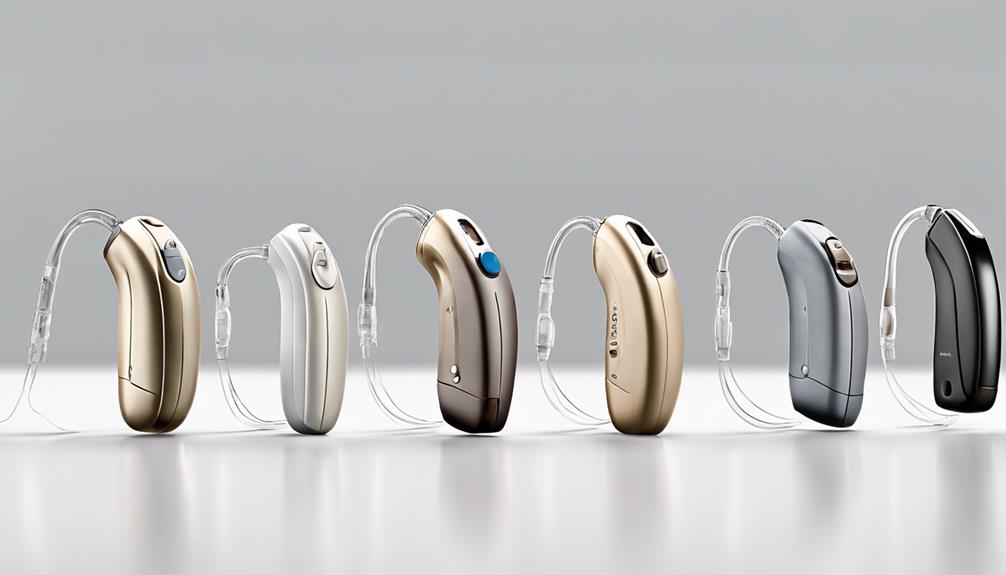

Digital hearing aids vary widely in fit, controls, battery design, and how much support they offer for different listening situations. My best overall pick is the Audien Atom One for shoppers who want a straightforward OTC option, while the Audien Atom X stands out for its touchscreen charging case and the Oction Rechargeable Touchscreen Hearing Aids for buyers seeking Bluetooth features. The main tradeoffs are discretion versus ease of handling, simple controls versus extra customization, and rechargeable convenience versus replaceable-battery designs. A product’s channel count or noise-reduction claim alone does not show whether it will suit your hearing needs. Read on for my comparison of all 14 options and guidance on choosing between them.

Get everyday helpers delivered free with Prime
- Fast, free delivery on millions of items
- Prime Video, Amazon Music and more included
- Member-only deals all year
Complete the kit

Key Takeaways
- Fit style drives the biggest practical difference: the lineup spans discreet in-ear and CIC designs, plus BTE models that may be easier to handle but are more visible.
- Rechargeable designs dominate this selection: several include charging cases, while the 500-hour-per-battery model is the outlier for buyers who prefer replaceable batteries.
- More controls do not automatically mean a better fit: the Atom X and Oction highlight touchscreen controls, while basic volume or environment settings may be easier for buyers who want less setup.
- Feature claims vary in usefulness: channel counts, noise cancellation, and long battery claims should be weighed against comfort, controls, and access to professional support.
- The lineup does not establish clinical suitability: OTC devices may suit some adults with perceived mild-to-moderate hearing loss, but an evaluation is a better first step when hearing changes are sudden, uneven, or accompanied by pain or dizziness.
| Rechargeable Hearing Aid for Seniors with 16-Channel Digital Chips, Noise Cancellation, Mini Invisible Design, Comfort Fit, 7-Day Standby |  | Best for a Discreet Fit | Digital channels: 16 | Noise cancellation: Yes | Battery life: Up to 16 hours per charge | VIEW ON AMAZON | See Our Full Breakdown |
| Oricle CIC Rechargeable Hearing Aids with Noise Cancellation and Charging Case |  | Best for Simple, Retained Settings | Model: Standard 3.0 (HA-JHA490-3.0) | Fit: In-ear, completely-in-canal | Sound levels: 5 | VIEW ON AMAZON | See Our Full Breakdown |
| OTC Hearing Aids for Seniors & Adults, Rechargeable, Noise Cancelling, 16-Channel Digital DSP, 2 Environment Modes, 80+ Hour Battery Life, White |  | Best for Switching Between Quiet and Noisy Settings | Digital channels: 16 | Battery life: 80+ hours | Charge time: 2 hours | VIEW ON AMAZON | See Our Full Breakdown |
| Manzelun GM-105 Rechargeable Behind-the-Ear Hearing Amplifiers |  | Best for Hands-On Adjustment | Model: GM-105 | Fit: Behind-the-ear | Controls: Slide switch and volume knob | VIEW ON AMAZON | See Our Full Breakdown |
| Rechargeable Digital Hearing Aids for Seniors, 2 Channel Ear Amplifier |  | Best for Straightforward Operation | Channels: 2 | Fit: In-ear | Battery life: Up to 40 hours | VIEW ON AMAZON | See Our Full Breakdown |
| Audien Atom One OTC Hearing Aids |  | Best for App-Free Adjustments | Fit: In-ear | Intended users: Seniors and adults with mild to moderate hearing loss | Controls: Analog volume and frequency dials | VIEW ON AMAZON | See Our Full Breakdown |
| Hearing Aids for Seniors, OTC Rechargeable Invisible In-Ear Hearing Devices with Noise Reduction |  | Best for Discreet Wear | Design: Ultra-discreet in-ear | Noise reduction: Yes | Rechargeable: Yes | VIEW ON AMAZON | See Our Full Breakdown |
| Nova Hearing Aids for Seniors and Adults |  | Best for Active Daily Wear | Design: Discreet in-canal | Intended hearing loss: Mild to moderate | Usage time: 20 hours | VIEW ON AMAZON | See Our Full Breakdown |
| Hearing Aids for Seniors with Bluetooth, Rechargeable, Noise Cancellation, 5-Level Volume Control, OTC Hearing Amplifier |  | Best for Long Battery Life | Fit: Behind-the-ear | Digital chip: 16-channel with noise reduction | Weight: 3.5 g | VIEW ON AMAZON | See Our Full Breakdown |
| Hearing Aid for Seniors, Noise Cancelling, 500 Hours Per Battery Life |  | Best for Replaceable-Battery Simplicity | Fit: Behind-the-ear with hook | Device type: Digital hearing amplifier | Intended hearing loss: Mild to moderate | VIEW ON AMAZON | See Our Full Breakdown |
| Audien Atom X OTC Hearing Aids with Touchscreen Charging Case |  | Best for App-Free Controls | Type: Over-the-counter hearing aids | Fit: In-ear | Listening modes: Conversation, Crowd, TV, Comfort | VIEW ON AMAZON | See Our Full Breakdown |
| Oction Rechargeable Touchscreen Hearing Aids with Bluetooth |  | Best for Streaming and Long Standard-Mode Runtime | Fit type: Behind-the-ear | Bluetooth: Bluetooth 5.4; compatible with Bluetooth-enabled iOS and Android smartphones | Hearing modes: 4 | VIEW ON AMAZON | See Our Full Breakdown |
| Rechargeable Digital Hearing Aids for Seniors, 2 Channel Ear Amplifier, Noise Cancellation, Invisible Sound Amplifier |  | Best for Discreet, Simple In-Ear Wear | Design: Nanoscale, in-ear, described as invisible | Channels: 2 | Dimensions: 0.63 x 0.92 x 0.45 inches | VIEW ON AMAZON | See Our Full Breakdown |
| Vivtone Rechargeable Hearing Aids for Seniors Adults, Digital BTE Hearing Assist with Charging Case |  | Best for Tinnitus-Masking Mode | Peak sound gain: 41 dB | Battery life: Up to 25 hours per charge | Charging time: 2 hours | VIEW ON AMAZON | See Our Full Breakdown |
| digital hearing aid | Battery life | Controls | Fit |
|---|---|---|---|
| Rechargeable Hearing Aid for S | Up to 16 hours per charge | — | — |
| Oricle CIC Rechargeable Hearin | — | Button; press and hold for 5 seconds to turn on or off | In-ear, completely-in-canal |
| OTC Hearing Aids for Seniors & | 80+ hours | — | — |
| Manzelun GM-105 Rechargeable B | — | Slide switch and volume knob | Behind-the-ear |
| Rechargeable Digital Hearing A | Up to 40 hours | Push button and volume control | In-ear |
| Audien Atom One OTC Hearing Ai | Up to 24 hours per charge | Analog volume and frequency dials | In-ear |
| Hearing Aids for Seniors | 48 hours | Automatic power, manual mode, and volume levels | — |
| Nova Hearing Aids for Seniors | — | — | — |
| Hearing Aids for Seniors with | Up to 80 hours per charge | — | Behind-the-ear |
| Hearing Aid for Seniors | Up to 500 hours per battery | Power switch and adjustable volume | Behind-the-ear with hook |
| Audien Atom X OTC Hearing Aids | Up to 16 hours per charge; up to 48 hours with charging case | Touchscreen charging case | In-ear |
| Oction Rechargeable Touchscree | Up to 30 hours of Bluetooth playback or 100 hours in standard hearing mode | — | — |
| Rechargeable Digital Hearing A | Up to 60 hours | Adjustable volume | — |
| Vivtone Rechargeable Hearing A | Up to 25 hours per charge | — | — |
More Details on Our Top Picks
Rechargeable Hearing Aid for Seniors with 16-Channel Digital Chips, Noise Cancellation, Mini Invisible Design, Comfort Fit, 7-Day Standby
This model is the lineup’s clearest choice for buyers who want an ultra-small in-ear design without giving up digital processing. Its 16-channel chip and noise cancellation are intended to make speech easier to follow across different environments, while the curved, medical-grade silicone body prioritizes a close, comfortable fit. Compared with the Manzelun GM-105, which sits behind the ear and offers a physical volume knob, this hearing aid is less visible but gives up that easy-to-reach control. It provides up to 16 hours per charge and a stated seven-day standby period, with a portable case for charging. The tradeoff is that automatic activation may take a moment, and the in-ear fit will not suit everyone. I’d skip it if I wanted external controls or a behind-the-ear style.
Pros:- 16-channel digital processing with noise cancellation
- Super-mini design with an ergonomic curve and medical-grade silicone
- Up to 16 hours of use per charge and seven-day standby
- Automatic on/off operation
Cons:- Automatic activation may take time
- In-ear fit may not suit every wearer
- Extended use depends on the charging case
Best for: Adults who prioritize a small, discreet in-ear hearing aid and are comfortable using a charging case.
Not ideal for: People who prefer behind-the-ear devices, need readily accessible physical controls, or find in-ear fits uncomfortable.
- Digital channels:16
- Noise cancellation:Yes
- Battery life:Up to 16 hours per charge
- Charging time:1–2 hours
- Standby time:Up to 7 days
- Material:Medical-grade silicone
- Design:Super-mini, ergonomic in-ear
Our verdict“Choose this model if discreet in-ear styling matters more than physical controls or a behind-the-ear fit.”
Oricle CIC Rechargeable Hearing Aids with Noise Cancellation and Charging Case
The Oricle CIC is a good match for wearers who want straightforward button controls and do not want to reset their preferred sound level every time they put the aids away. Its smart memory retains settings, and five sound levels allow basic adjustment without adding multiple environment modes. Compared with the 16-channel model in this roundup, the Oricle listing emphasizes controls and memory rather than specifying channel count or detailed signal processing. The completely-in-canal fit and soft silicone tips keep the devices compact, while automatic on/off operation makes the case part of the daily routine. Oricle states up to 60 hours of use on a single charge, but does not give a charging time or the conditions behind that figure. I’d choose the Manzelun instead if visible, tactile adjustment matters more than a low-profile fit.
Pros:- Five sound levels adjusted with button controls
- Smart memory retains preferred settings
- Soft silicone tips and completely-in-canal fit
- Automatic on/off when removed from or returned to the case
Cons:- Charging time is not specified
- The stated 60-hour battery duration lacks usage-condition details
- No channel count or environment modes are listed
Best for: Wearers who want a compact CIC aid with a few manual sound levels and memory for their preferred setting.
Not ideal for: Buyers who need clearly documented charging time, detailed digital-channel specifications, or easy-to-reach external controls.
- Model:Standard 3.0 (HA-JHA490-3.0)
- Fit:In-ear, completely-in-canal
- Sound levels:5
- Controls:Button; press and hold for 5 seconds to turn on or off
- Automatic on/off:Yes, when removed from or placed in charging case
- Memory:Smart memory for settings
- Stated battery duration:Up to 60 hours on a single charge
- Battery type:Lithium-ion
- Material:Silicone
Our verdict“Pick the Oricle if a small CIC fit and remembered button settings matter more to you than detailed processing specifications.”
OTC Hearing Aids for Seniors & Adults, Rechargeable, Noise Cancelling, 16-Channel Digital DSP, 2 Environment Modes, 80+ Hour Battery Life, White
Among these five options, this model gives the clearest account of how its sound settings are meant to work: two environment modes let wearers choose between quiet and noise-canceling conditions. That makes it a more setting-focused pick than the Oricle, which offers five sound levels and memory but lists no environment modes. Its 16-channel digital DSP, noise reduction, and feedback suppression are aimed at clearer listening, while the stated 80-plus-hour battery life and two-hour charge time may suit people who want fewer charging interruptions. The listing describes a discreet, comfortable fit but provides little detail about its exact form or controls, so buyers wanting a clearly specified CIC shape or physical adjustment method may prefer the Oricle. It is designated for adults aged 18 and older, not children.
Pros:- 16-channel digital DSP with noise reduction and feedback suppression
- Two modes for quiet and noise-canceling environments
- Stated battery life exceeds 80 hours
- Two-hour charge time
Cons:- Specified for adults aged 18 and older, not children
- The supplied details do not identify the exact fit style
- Requires regular charging
Best for: Adults who move between quiet rooms and noisier settings and want dedicated environment modes with a stated long battery duration.
Not ideal for: Children, or buyers who need detailed fit and control information before choosing a device.
- Digital channels:16
- Battery life:80+ hours
- Charge time:2 hours
- Environment modes:2: Quiet and Noise-Canceling
- Color:White
- Noise reduction:Yes
- Feedback suppression:Yes
- Intended age:Adults aged 18 and older
Our verdict“Choose this model if switching between quiet and noisy environments is a higher priority than a fully specified fit or control layout.”
Manzelun GM-105 Rechargeable Behind-the-Ear Hearing Amplifiers
The Manzelun GM-105 takes a different approach from the discreet CIC and miniature in-ear models: its behind-the-ear fit leaves a slide switch and volume knob accessible for direct adjustment. That is useful for people who would rather feel a control than rely on automatic operation or small in-ear buttons. It also arrives with five pairs of eartips and cleaning brushes, giving buyers more ways to adjust the fit and maintain the devices. The charging case can recharge both aids up to four times, and the stated continuous use is about 25 hours per charge. Compared with the 16-channel in-ear option, the Manzelun offers more visible, tactile handling but does not list digital channel processing. Its listing also notes possible operating noise, and the larger behind-ear profile will not appeal to buyers seeking discretion.
Pros:- Accessible slide switch and volume knob
- Flexible ear hooks and ergonomic earpieces
- Case holds up to four full charges for both aids
- Includes five pairs of eartips and two cleaning brushes
Cons:- Behind-the-ear design is more visible than CIC options
- May produce slight operating noise
- New wearers may need time to adjust to the fit
Best for: Wearers who want tactile volume adjustment, interchangeable eartips, and a case with several recharges.
Not ideal for: Buyers seeking an invisible in-ear device, specified multi-channel digital processing, or a completely silent operating experience.
- Model:GM-105
- Fit:Behind-the-ear
- Controls:Slide switch and volume knob
- Noise control:Active noise cancellation
- Continuous use:Approximately 25 hours
- Charging case capacity:Up to four full charges for both hearing aids
- Battery:Lithium-ion, 3.7 V
- Item weight:48 g
- Included eartips:Five pairs
Our verdict“Choose the Manzelun if accessible physical controls and flexible fit options matter more than discretion.”
Rechargeable Digital Hearing Aids for Seniors, 2 Channel Ear Amplifier
This two-channel model favors simple operation over the more elaborate processing and mode choices found elsewhere in the roundup. Push-button and volume controls give wearers a direct way to adjust the aid, while environmental noise cancellation and feedback minimization are intended to make everyday listening less distracting. Its stated battery life of up to 40 hours sits between the Manzelun’s approximately 25 hours of continuous use and the much longer durations claimed for the Oricle and 16-channel, 80-plus-hour model. That middle-ground figure may work for routine wear, though the listing says battery life can vary and points to a charging case for a full day’s use. The stated two-channel design also offers less processing detail than the 16-channel choices, so buyers wanting multiple environment modes should look to the white OTC model instead.
Pros:- Push-button and volume controls
- Environmental noise cancellation and feedback minimization
- Stated battery life of up to 40 hours
- Lightweight, in-ear design
Cons:- Two-channel design provides less processing detail than the 16-channel options
- Battery duration may vary with use
- Software update support is listed as unknown
Best for: Seniors who prefer basic push-button and volume adjustment and want a rechargeable in-ear aid without multiple modes.
Not ideal for: Buyers who want 16-channel processing, dedicated environment modes, or well-documented software support.
- Channels:2
- Fit:In-ear
- Battery life:Up to 40 hours
- Battery type:Lithium Polymer
- Battery voltage:3.7 V
- Noise control:Environmental noise cancellation
- Audio sensitivity:110 dB
- Controls:Push button and volume control
- Item dimensions:2.5 in L × 0.5 in W
Our verdict“Choose this model for uncomplicated controls and a basic rechargeable in-ear design, but look elsewhere for multiple listening modes or more channel detail.”
Audien Atom One OTC Hearing Aids
The Audien Atom One suits buyers who want to adjust sound without learning an app. Its analog volume and frequency dials give direct control, while the included guided setup and three dome sizes help with initial fit. Compared with the digital, one-button BTE model in this lineup, the Atom One puts more adjustment options on the devices themselves, but its in-ear format may be less convenient to handle for some users. A full charge takes about three hours and provides up to 24 hours of use, a shorter interval than several rechargeable alternatives here. It is aimed at mild to moderate hearing loss, not more significant loss. There is also no power switch: the aids turn on outside the dock and off when returned to it.
Pros:- Analog dials adjust volume and frequency without requiring an app.
- Rechargeable battery provides up to 24 hours of use per charge.
- Three dome sizes offer several fit options.
- Universal fit and pull-wires support either-ear use and removal.
Cons:- Designed for mild to moderate hearing loss, not severe loss.
- No manual on/off switch; docking controls power.
- Three-hour recharge and daily charging may be less convenient than longer-lasting options in this roundup.
Best for: Adults with mild to moderate hearing loss who prefer physical volume and frequency controls over app-based adjustments.
Not ideal for: People seeking a battery life beyond a day per charge, or anyone who needs an on-device power switch.
- Fit:In-ear
- Intended users:Seniors and adults with mild to moderate hearing loss
- Controls:Analog volume and frequency dials
- Battery:Rechargeable lithium-ion
- Battery life:Up to 24 hours per charge
- Recharge time:About 3 hours
- Charging:USB-C charging dock
- Included fit options:Small, medium, and large silicone ear domes
- Warranty:1 year
Our verdict“Choose the Atom One if direct, app-free sound adjustments matter more to you than a longer battery interval.”
Hearing Aids for Seniors, OTC Rechargeable Invisible In-Ear Hearing Devices with Noise Reduction
This model’s main appeal is its ultra-discreet in-ear design, a stronger fit for buyers who want hearing aids to draw little attention than the behind-the-ear Bluetooth model in this group. It combines noise reduction with automatic power and manual controls, giving wearers some say over operation without relying solely on hands-off settings. The supplied three ear-tip sizes and two styles also provide more fit combinations than the Audien Atom One’s three dome sizes. Its stated 48-hour battery life is a standout on paper, although the charging schedule still means regular charging every two days. Manual controls may take some practice, and the product information gives limited detail about how its noise reduction behaves across different environments. Buyers focused on physical visibility should also weigh the light-gray color and fit carefully.
Pros:- Ultra-discreet in-ear design keeps the devices less visible.
- Stated battery life of up to 48 hours reduces charging frequency compared with the Audien Atom One.
- Three ear-tip sizes in two styles offer fit choices.
- Automatic power and manual controls provide more than one way to operate the aids.
Cons:- Manual controls may require a learning period.
- Regular charging is needed about every two days.
- Limited color choice and sparse detail on noise-reduction performance may not suit every buyer.
Best for: Adults who prioritize a low-profile in-ear appearance and want multiple ear-tip styles to fine-tune fit.
Not ideal for: People who prefer simple, clearly documented controls or want a behind-the-ear design with easy-to-handle controls.
- Design:Ultra-discreet in-ear
- Noise reduction:Yes
- Rechargeable:Yes
- Battery life:48 hours
- Charging time:2 hours
- Controls:Automatic power, manual mode, and volume levels
- Ear tips:Three sizes and two styles
- Color:Light gray
Our verdict“Pick this model if a discreet in-ear profile and extended stated battery life outweigh a possible control learning curve.”
Nova Hearing Aids for Seniors and Adults
The Nova is a practical match for people who want a discreet in-canal aid for everyday activity, with sweat and splash resistance offering a useful distinction from models whose product details do not specify water resistance. Nine pairs of tips across three sizes and three shapes give it the broadest stated fit selection among these five picks, which may help buyers who have struggled to find a comfortable seal. Its charging case includes a built-in drying system, and a 1.5-hour charge is quicker than the Audien Atom One’s roughly three-hour recharge. The tradeoff is a shorter 20-hour usage time per charge; the stated 100-hour total battery life refers to the overall system, not a single charge. Nova is also intended for mild to moderate loss, not severe hearing loss.
Pros:- Sweat-proof and splash-proof construction suits everyday activity.
- Nine pairs of tips across three sizes and shapes provide extensive fit options.
- Fast 1.5-hour charging is quicker than the Audien Atom One’s stated recharge time.
- Charging case includes a built-in drying system.
Cons:- Provides up to 20 hours of use per charge, shorter than several other options here.
- Designed for mild to moderate hearing loss, not severe loss.
- The 100-hour total battery figure does not mean 100 hours of use from one charge.
Best for: Active adults with mild to moderate hearing loss who want an in-canal design, multiple tip shapes, and some protection from sweat and splashes.
Not ideal for: People who need more than 20 hours of use between charges or support for severe hearing loss.
- Design:Discreet in-canal
- Intended hearing loss:Mild to moderate
- Usage time:20 hours
- Total battery life:100 hours
- Fast charge:1.5 hours
- Weight:1.4 g
- Ear tips:Nine pairs; three sizes and three shapes
- Water resistance:Sweat-proof and splash-proof
- Charging case:Includes built-in drying system
Our verdict“Choose Nova for active daily wear and flexible in-ear fit options if charging about every 20 hours works for you.”
Hearing Aids for Seniors with Bluetooth, Rechargeable, Noise Cancellation, 5-Level Volume Control, OTC Hearing Amplifier
Among these five picks, this behind-the-ear model stands out for its stated up to 80 hours of battery life per charge, which could mean fewer charging interruptions than the Audien Atom One’s 24-hour cycle. Its one-button, five-level volume control favors straightforward adjustments over the Atom One’s separate volume and frequency dials. A 16-channel digital chip, noise reduction, and whistling suppression are intended to help refine listening, while Bluetooth is listed as a connectivity feature. The product details do not explain the Bluetooth functions, so buyers should not assume a particular streaming or call experience. USB-C charging takes two hours, but there is little information about water or sweat resistance, and the listing cautions that performance may be weaker in very noisy settings.
Pros:- Stated battery life of up to 80 hours per charge is longer than the Audien Atom One’s.
- One-button operation and five volume levels keep basic adjustment simple.
- 16-channel digital chip includes noise reduction and whistling suppression.
- USB-C fast charging takes two hours.
Cons:- Bluetooth is listed, but the product information does not describe its functions.
- Water and sweat resistance are not specified.
- May be less effective in extremely noisy environments.
Best for: Adults who prefer a behind-the-ear aid with simple volume steps and want to charge less often.
Not ideal for: Buyers who need clearly specified Bluetooth features, documented water resistance, or strong support in very noisy environments.
- Fit:Behind-the-ear
- Digital chip:16-channel with noise reduction
- Weight:3.5 g
- Battery life:Up to 80 hours per charge
- Charging:USB-C fast charging
- Charging time:2 hours
- Volume control:Five levels with one-button operation
- Connectivity:Bluetooth
Our verdict“This is a strong fit for buyers who value long stated battery life and simple volume control over detailed connectivity and durability information.”
Hearing Aid for Seniors, Noise Cancelling, 500 Hours Per Battery Life
This behind-the-ear hearing amplifier is the only option in this group built around a replaceable zinc-air battery rather than rechargeable power. Its stated 500-hour battery life may appeal to buyers who would rather swap a battery than manage a charging dock, though actual runtime can vary with use. Four frequency programs—high, low, mid, and wide—offer a way to tailor amplification by listening environment, while the hook helps hold the unit in place. Compared with the rechargeable Bluetooth BTE model, this one has more explicit frequency-program options but lacks listed Bluetooth and a rechargeable battery. Its 36 dB gain and stated suitability for mild to moderate hearing loss limit its audience; people with severe loss should seek professional guidance rather than rely on this amplifier.
Pros:- Replaceable zinc-air battery avoids dependence on a charging dock.
- Stated battery life is up to 500 hours per battery.
- Four frequency programs let users select among high, low, mid, and wide settings.
- Behind-the-ear hook helps keep the amplifier in place.
Cons:- Uses a replaceable battery rather than rechargeable power.
- Designed for mild to moderate hearing loss; the listing advises medical guidance for severe loss.
- No Bluetooth connectivity is specified, unlike the rechargeable BTE model in this roundup.
Best for: Adults with mild to moderate hearing loss who prefer replaceable batteries and want selectable frequency programs in a behind-the-ear design.
Not ideal for: People who want rechargeable convenience, documented Bluetooth connectivity, or a device intended for severe hearing loss.
- Fit:Behind-the-ear with hook
- Device type:Digital hearing amplifier
- Intended hearing loss:Mild to moderate
- Gain:36 dB
- Frequency programs:Four: high, low, mid, and wide
- Battery:P675 zinc-air, 620 mAh
- Battery life:Up to 500 hours per battery
- Included batteries:Two
- Controls:Power switch and adjustable volume
Our verdict“Choose this amplifier if replaceable-battery operation and four frequency programs matter more to you than recharging or Bluetooth.”
Audien Atom X OTC Hearing Aids with Touchscreen Charging Case
The Audien Atom X is a good fit for buyers who want to adjust their aids without handling tiny buttons or opening a phone app. Its touchscreen case controls volume and four listening modes, including Crowd and TV, so it offers more environment-specific choices than the two-channel Rechargeable Digital Hearing Aids for Seniors. The tradeoff is that those adjustments are available through the case, not directly on the hearing aids; the case needs to be nearby when you want to change settings. Up to 16 hours per charge is suited to a day of wear, while the case adds up to 48 hours of use between charging sessions. Multiple ear domes and cleaning supplies help with setup, though the in-ear fit may take some trial and adjustment.
Pros:- Touchscreen case provides volume and mode controls without a phone app or tiny aid buttons.
- Four listening modes cover conversation, crowds, TV, and comfort.
- Rechargeable design offers up to 16 hours per charge and up to 48 hours with the case.
- Includes multiple ear dome sizes, wax guards, and cleaning supplies.
Cons:- Settings are adjusted on the charging case, so it must be within reach for changes.
- In-ear fit may require trying multiple dome sizes.
- The stated 16-hour per-charge runtime is shorter than the 60-hour claim for the similarly named two-channel Rechargeable Digital Hearing Aids for Seniors.
Best for: People who want rechargeable in-ear aids with physical touchscreen controls and several listening modes, but prefer not to rely on a smartphone app.
Not ideal for: Wearers who want to adjust settings on the aids themselves, or who do not want to experiment with different in-ear dome sizes.
- Type:Over-the-counter hearing aids
- Fit:In-ear
- Listening modes:Conversation, Crowd, TV, Comfort
- Controls:Touchscreen charging case
- Battery:Rechargeable lithium-ion
- Battery life:Up to 16 hours per charge; up to 48 hours with charging case
- Material and color:Silicone; beige
- Included:Pair of hearing aids, touchscreen charging case, USB cable, wall adapter, extra ear domes, replacement wax guards, cleaning brush, expert setup
Our verdict“Choose the Atom X if you want multiple listening modes and app-free touchscreen adjustments and are comfortable carrying its case for control changes.”
Oction Rechargeable Touchscreen Hearing Aids with Bluetooth
For buyers who want hearing assistance plus phone audio, the Oction stands apart from the in-ear Audien Atom X with its Bluetooth 5.4 streaming for calls, music, and video. Its behind-the-ear fit may also suit people who find in-ear domes uncomfortable, and the case touchscreen can adjust each ear independently, show battery level, and select among four modes. The strongest practical distinction is its claimed runtime: up to 100 hours in standard hearing mode, although Bluetooth playback is limited to up to 30 hours. That gap matters if streaming is a regular part of the day. The case provides up to five full recharges, but it takes two hours to charge, compared with one hour for the aids. Buyers who want simple hearing-only controls may find the streaming features and settings more than they need.
Pros:- Bluetooth 5.4 supports calls and music or video streaming from compatible iOS and Android phones.
- Touchscreen case adjusts each ear’s volume, selects modes, and displays battery level.
- Claimed battery life reaches up to 100 hours in standard mode, with up to five full case recharges.
- Lightweight behind-the-ear fit uses hypoallergenic materials and is described as suitable for glasses wearers.
Cons:- Bluetooth playback is rated for up to 30 hours, well below the standard-mode runtime.
- The aids and charging case have different charging times: one hour and two hours, respectively.
- Bluetooth compatibility and multiple controls may be unnecessary complexity for buyers seeking basic amplification.
Best for: Adults who want behind-the-ear rechargeable aids with phone-call and media streaming, per-ear volume adjustment, and a long claimed runtime in standard mode.
Not ideal for: People who want a simple hearing-only device, or buyers expecting the 100-hour standard-mode runtime to apply while streaming over Bluetooth.
- Fit type:Behind-the-ear
- Bluetooth:Bluetooth 5.4; compatible with Bluetooth-enabled iOS and Android smartphones
- Hearing modes:4
- Volume levels:10
- Digital chip:16-channel
- Weight:Hearing aid: 3.5 g; battery: 1.4 g
- Charging time:Hearing aids: 1 hour; charging case: 2 hours
- Battery life:Up to 30 hours of Bluetooth playback or 100 hours in standard hearing mode
- Charging case:Provides up to 5 full recharges
Our verdict“Pick the Oction if streaming and per-ear touchscreen controls matter more to you than keeping your hearing aids simple.”
Rechargeable Digital Hearing Aids for Seniors, 2 Channel Ear Amplifier, Noise Cancellation, Invisible Sound Amplifier
This two-channel in-ear model puts discretion ahead of extensive controls: its nanoscale design measures 0.63 x 0.92 x 0.45 inches, and the product data describes adjustable volume and noise cancellation without listing multiple listening modes or app features. That makes it a simpler alternative to the Audien Atom X, whose touchscreen case offers four named environments but also puts controls on the case. The standout claim here is up to 60 hours on a single charge, which could reduce charging interruptions if it holds up in a buyer’s use; the supplied data does not give conditions for that figure. The compact fit may appeal to people who want a less visible aid, but ear shape and comfort remain personal, and no water- or sweat-resistance rating is provided. Buyers wanting streaming or a choice of defined sound modes should look elsewhere.
Pros:- Compact in-ear design is described as nanoscale and invisible.
- Claimed battery life of up to 60 hours may reduce how often charging interrupts use.
- Noise cancellation and adjustable volume provide basic sound adjustments.
- Magnetic charging case is described as supporting fast charging.
Cons:- The in-ear fit may not suit every ear shape and may need adjustment.
- Two channels offer less listed sound-processing detail than the Oction’s 16-channel chip.
- No waterproof or sweat-resistance information is provided.
Best for: Adults who prioritize a compact, less visible in-ear design, basic volume adjustment, and a long stated interval between charges.
Not ideal for: People who need a behind-the-ear fit, Bluetooth streaming, defined environment modes, or stated water and sweat resistance.
- Design:Nanoscale, in-ear, described as invisible
- Channels:2
- Dimensions:0.63 x 0.92 x 0.45 inches
- Battery life:Up to 60 hours
- Charging:Magnetic charging case with fast charging
- Controls:Adjustable volume
- Sound features:Noise cancellation and sound optimization
Our verdict“Choose this model if a discreet in-ear shape and basic controls matter more than streaming, multiple modes, or detailed fit options.”
Vivtone Rechargeable Hearing Aids for Seniors Adults, Digital BTE Hearing Assist with Charging Case
The Vivtone earns its place for buyers who want a tinnitus-masking option alongside everyday listening modes. Its Quiet, Noisy, and Tinnitus masking settings give it a more specific use case than the Audien Atom X, whose four modes focus on common environments such as conversation, crowds, and TV. The stated 41 dB peak sound gain and noise reduction add useful context, while auto-on/off aims to reduce the steps involved in daily wear. Battery life is more modest at 25 hours per charge, but the case is listed as providing 125 hours of backup power. That backup figure is not the same as a single-charge runtime, so frequent users should distinguish between the two. The data also does not specify fit style, which makes it harder to compare comfort directly with the Oction’s explicit behind-the-ear design.
Pros:- Dedicated tinnitus-masking mode distinguishes it from the lineup’s environment-focused options.
- Noise reduction and a stated peak sound gain of 41 dB offer more specific sound-performance details.
- Up to 25 hours per charge and 125 hours of stated backup power from the case.
- Auto-on/off and a two-hour charging time can simplify routine use.
Cons:- The 125-hour figure is backup power from the case, not the runtime of a single charge.
- The product data warns that controls may be complex for first-time users.
- Fit style is not specified, making comfort and placement harder to judge against models such as the Oction.
Best for: Adults seeking a rechargeable digital hearing aid with a dedicated tinnitus-masking mode, noise reduction, and automatic power behavior.
Not ideal for: First-time users who want a clearly described fit and simple setup, or anyone expecting 125 hours of use from one charge.
- Peak sound gain:41 dB
- Battery life:Up to 25 hours per charge
- Charging time:2 hours
- Backup power:Up to 125 hours with included case
- Modes:Quiet, Noisy, Tinnitus masking
- Sound features:Noise reduction and tinnitus masking
- Design:Discreet and lightweight; fit style not specified
- Materials:Medical-grade materials
Our verdict“Consider the Vivtone if tinnitus masking is a priority and you are comfortable learning its controls and distinguishing case backup from per-charge runtime.”

How We Picked
I ranked these digital hearing aids by how clearly each product’s stated design and features serve a particular buyer. I compared wearing style, rechargeable or replaceable power, charging-case design, control options, and stated listening features such as noise reduction, environment modes, and Bluetooth. I treated claims such as channel counts and standby time as product specifications, not proof of better speech understanding or medical effectiveness.
The ranking favors options with a clear use case and a practical balance of fit, controls, and day-to-day handling. Products with a distinct convenience feature or recognizable form factor rise for buyers who need that feature, while models with sparse or overlapping descriptions rank lower because it is harder to distinguish what they offer. I also account for tradeoffs: compact in-ear designs can be harder to insert and clean, BTE styles are less discreet, and more controls can add setup work. The list is not a substitute for a hearing evaluation or a verified comparison of real-world performance.
| digital hearing aid | Fit |
|---|---|
| Rechargeable Hearing Aid for S | — |
| Oricle CIC Rechargeable Hearin | In-ear, completely-in-canal |
| OTC Hearing Aids for Seniors & | — |
| Manzelun GM-105 Rechargeable B | Behind-the-ear |
| Rechargeable Digital Hearing A | In-ear |
| Audien Atom One OTC Hearing Ai | In-ear |
| Hearing Aids for Seniors | — |
| Nova Hearing Aids for Seniors | — |
| Hearing Aids for Seniors with | Behind-the-ear |
| Hearing Aid for Seniors | Behind-the-ear with hook |
| Audien Atom X OTC Hearing Aids | In-ear |
| Oction Rechargeable Touchscree | — |
| Rechargeable Digital Hearing A | — |
| Vivtone Rechargeable Hearing A | — |
Factors to Consider When Choosing Digital Hearing Aids
Before choosing a device, start with the problem you want it to solve and the situations where you notice difficulty. The labels and feature counts in product listings can be hard to compare, so I would use the following questions to separate meaningful differences from marketing claims.
Match the Device to Your Hearing Needs
OTC hearing aids are intended for adults who perceive mild-to-moderate hearing loss, but they are not a fit for every hearing concern. A hearing assessment can help distinguish hearing loss from causes that need medical attention and can clarify whether one or both ears need support. Sudden changes, a marked difference between ears, ear pain, drainage, or dizziness call for professional advice rather than a trial-and-error purchase. Do not choose a device solely because its listing mentions digital processing or noise reduction; those phrases do not establish that it matches your hearing profile. If you already have an audiogram or professional guidance, use it to guide the choice and follow-up plan.
Choose a Fit You Can Insert and Maintain
An in-ear or CIC device can be less visible, but small shells and tips may be difficult to insert, remove, or clean. A behind-the-ear style is easier for some people to grasp and may keep the main housing outside the ear canal, though it is more noticeable and needs a secure fit around the ear. Think through dexterity, vision, ear shape, glasses, and comfort over several hours—not just how discreet a device looks in a product image. A snug fit matters because poor placement can affect comfort and sound, but excessive pressure is not a sign of a good fit. Check what tip sizes and cleaning tools are included and how replacement parts can be obtained.
Compare Battery Convenience With Daily Handling
Rechargeable hearing aids reduce the need to buy and handle small batteries, and a charging case can make storage and transport simpler. Their usefulness depends on charging habits, access to power, and whether the case itself holds enough charge for your routine. Replaceable batteries can suit someone who wants a quick swap while away from a charger, but changing them may be awkward for buyers with limited dexterity. Treat advertised standby or battery-life figures as claims made under particular conditions, not a guarantee of listening time. Before choosing, check how the device signals low power and whether it can still be used while charging.
Prioritize Controls You Will Actually Use
Volume steps, environment modes, app settings, and touch controls can help adapt a device, but extra controls also create more chances for accidental changes or confusing setup. A simple physical control may suit a first-time wearer better than a touchscreen or multi-mode system. On the other hand, someone who wants to adjust settings without handling a tiny device may prefer a case or app-based interface. Look for clear instructions on how to change volume, switch programs, and restore a preferred setting. Do not assume a higher channel count means easier speech understanding; it describes processing architecture, not a guaranteed listening result.
Read Noise and Connectivity Claims Carefully
Noise reduction may make some listening environments more comfortable, but it does not remove all background sound or guarantee that speech will be clearer in a crowded room. Bluetooth can be useful for phone audio, yet listings may differ on supported devices, call handling, and whether streaming works in both ears. Confirm compatibility and the exact functions offered before treating Bluetooth as a deciding feature. A model with fewer extras may be a better choice if your priority is basic amplification and uncomplicated operation. Where possible, check return terms and support options before buying, since a comfortable fit and usable sound may take adjustment.
Plan for Follow-Up, Returns, and Red Flags
Hearing devices often require a period of adjustment, so clear setup instructions and accessible customer support can matter as much as a feature list. Read the return window, conditions for trying the device, warranty coverage, and process for replacing tips or charging accessories before opening the package. Avoid relying on broad promises about invisible fit, noise cancellation, or long battery life without checking what the seller specifies for your exact model. Keep expectations realistic: hearing aids can help with some listening difficulties but do not restore normal hearing. If a device causes persistent discomfort, feedback, or worsening listening, stop using it and seek qualified advice.
Frequently Asked Questions
Can I choose an OTC digital hearing aid without getting a hearing test?
Some adults with perceived mild-to-moderate hearing loss may choose an OTC hearing aid without a prescription, but a hearing assessment can still help you make a better-informed choice. It can show whether hearing differs between ears and help identify problems that a consumer device may not address. Sudden hearing change, pain, drainage, dizziness, or a large difference between ears should prompt professional evaluation. If you proceed with an OTC device, check its setup support, adjustment options, and return terms. A test is especially useful if you are unsure what is causing the difficulty.
Is a higher channel count a reliable way to choose between these hearing aids?
No. Channel count describes how a device processes sound across frequency ranges; it does not by itself predict comfort or speech understanding. Fit, appropriate amplification, adjustment options, and the listening environments that matter to you all affect the result. A listing that advertises 16 channels may sound more advanced on paper than a simpler model, but that number alone cannot confirm that it suits your hearing. Compare usable controls and support alongside technical claims. If you have an audiogram, use professional guidance rather than channel count as your main selection tool.
Should I choose in-ear or behind-the-ear digital hearing aids?
Choose based on handling and comfort as much as appearance. In-ear and CIC styles in this roundup prioritize a less visible fit, but their small size can make insertion, cleaning, and removal harder. BTE models are more visible, yet some buyers find the external housing easier to grasp and manage. The right choice can also depend on your ear shape, glasses, dexterity, and how securely the device stays in place. If possible, check fit guidance and return conditions before deciding based on discretion alone.
Are rechargeable hearing aids better than models with replaceable batteries?
Neither power type is best for everyone. Rechargeable models can simplify daily use by avoiding small battery changes, especially when a charging case fits your routine. Replaceable batteries can be convenient when you want a quick power swap away from a charger, though handling them may be difficult for some users. Compare listening time rather than relying only on standby claims, and check how the device indicates low power. Your access to charging, dexterity, and travel habits should guide the decision.
What should I do if an OTC hearing aid is uncomfortable or does not help?
First, follow the manufacturer’s fit and setup instructions and check whether a different tip size or adjustment is available. Do not keep wearing a device that causes pain, persistent irritation, or worsening symptoms. Review the seller’s return period and ask what support is available before making further changes. If sound remains unclear after careful setup, or if you notice sudden changes, dizziness, drainage, or pain, contact a hearing professional or clinician. OTC devices are not a substitute for diagnosing the cause of hearing difficulty.
Conclusion
For a balanced starting point, I recommend the Audien Atom One as best overall for buyers who want a straightforward OTC option. The best value choice is the Rechargeable Digital Hearing Aids for Seniors, 2 Channel Ear Amplifier when basic controls and a simple feature set matter more than extra technology; compare it with the similar 13th listing before choosing. For a best premium-style feature set, the Audien Atom X is the pick for buyers drawn to a touchscreen charging case, while the best for beginners is the Atom One for its simpler positioning in this lineup. If you specifically want Bluetooth, consider the Oction Rechargeable Touchscreen Hearing Aids; if handling a small in-ear device is difficult, look at the Manzelun GM-105 BTE or Vivtone BTE instead. I would choose only after confirming fit, support, and return terms, and I would seek professional guidance for symptoms that fall outside routine mild-to-moderate hearing difficulty.