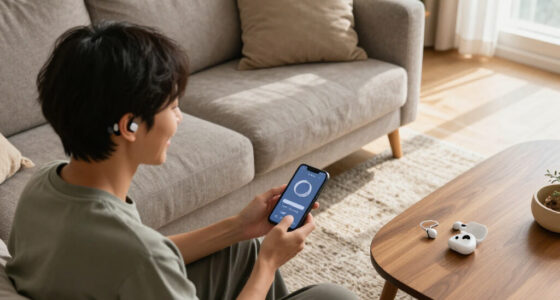
A hearing aid app lets you adjust supported hearing aids from a phone, but the best choice depends on how much control, connectivity, and fitting support you need. Vivtone Xpure 2.0 is my best overall pick for its combination of app-based fitting and phone call and music streaming. AuraLink stands out for newer Bluetooth connectivity, while FLYSOUND OpenFit suits people who prefer an open-fit style. The main tradeoffs are app simplicity versus adjustment options, discreet fit versus all-day comfort, and streaming features versus straightforward hearing support. Read on for how the 14 options compare and which buyer each one may suit.

Get everyday helpers delivered free with Prime
- Fast, free delivery on millions of items
- Prime Video, Amazon Music and more included
- Member-only deals all year
Complete the kit


Key Takeaways
- Vivtone Xpure 2.0 earns the overall lead because its app-based fitting and call and music streaming address several everyday needs in one device.
- AuraLink is the connectivity-focused option, listing Bluetooth 5.4 and iOS and Android compatibility; buyers should still confirm support for their specific phone.
- FLYSOUND OpenFit gives open-fit wearers a distinct alternative to the lineup’s more conventional in-ear designs.
- Several listings share generic names such as “Rechargeable Bluetooth Hearing Aids with App Control,” so buyers should compare exact model details and app names before ordering.
- The products advertise features such as AI noise reduction, multiple channels, and rechargeability, but app control alone does not establish fitting quality, clinical suitability, or support.
| FacePro OTC Hearing Aids with Bluetooth for Seniors and Adults |  | Best for Long Daily Wear | Fit type: Behind-the-ear | Control: App control | Connectivity: Compatible with smartphones and tablets | VIEW ON AMAZON | See Our Full Breakdown |
| Rechargeable Bluetooth Hearing Aids with App Control |  | Best for Calls and Streaming | Fit type: In-ear | Bluetooth: Compatible with smartphones | App controls: Fitting and volume | VIEW ON AMAZON | See Our Full Breakdown |
| Saliryj Bluetooth Hearing Aids with App Control and Noise Cancellation |  | Best for Adjustable Noise Control | Connectivity: Bluetooth | Control: Smartphone app | Noise control: Active noise cancellation with five adjustable levels | VIEW ON AMAZON | See Our Full Breakdown |
| Earrck Bluetooth Hearing Aids with App Control, Silver |  | Best for Guided App Fitting | Connectivity: Bluetooth | App compatibility: Android 8.0+ or iOS 12.0+ | App fitting: Hearing test or audiogram | VIEW ON AMAZON | See Our Full Breakdown |
| FLYSOUND OpenFit OTC Rechargeable Open-Fit Hearing Aids |  | Best Open-Fit App Option | Fit type: Open-fit | Connectivity: Bluetooth; compatible with smartphones | App controls: Volume, tone, and listening presets | VIEW ON AMAZON | See Our Full Breakdown |
| F1-S Bluetooth OTC Hearing Aids for Seniors Adults with Hearing Loss, Rechargeable, App Control, AI Noise Cancellation, Invisible Design, 30H Battery |  | Best for Discreet All-Day Wear | Hearing loss support: Up to 65 dB | Battery life: 30 hours including charging case | Weight: 0.42 oz | VIEW ON AMAZON | See Our Full Breakdown |
| Hearing Aids for Seniors with Noise Cancelling, Rechargeable Hearing Amplifier with with Smart APP Control for People with Hearing Loss(Silver) |  | Best for App-Based Hearing Tests | Listening modes: 4: normal, indoor noise cancelling, outdoor noise cancelling, TV/music | Frequency range: 250 Hz to 8,000 Hz | Battery runtime: More than 10 hours without Bluetooth connection | VIEW ON AMAZON | See Our Full Breakdown |
| Vivtone Bluetooth Hearing Aids with APP Control for Precise Fitting, Phone Call & Music Streaming, Rechargeable OTC Hearing Aids for Seniors Adults Men Women, Xpure 2.0 | 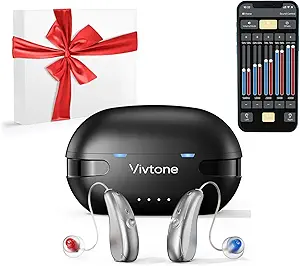 | Best for Calls and Music Streaming | Design: Receiver-in-canal (RIC) | Phone compatibility: iOS 12 or newer; Android 11.0 or newer | Hearing aid runtime: Up to 24 hours | VIEW ON AMAZON | See Our Full Breakdown |
| AuraLink Bluetooth Hearing Aids for Seniors Adults, App-Controlled, AI Noise Reduction, Bluetooth 5.4, Compatible with iOS & Android |  | Best for Active, Weather-Exposed Use | Stated hearing loss range: 25–85 dB HL | Positioning: Mainly for mild to moderate hearing loss | Connectivity: Bluetooth 5.4 | VIEW ON AMAZON | See Our Full Breakdown |
| BlaidsX Neuro Rechargeable Bluetooth Hearing Aids for Adults |  | Best for Detailed Audiogram Adjustments | Intended users: Adults 18 or older with perceived mild to moderate hearing loss | Audiogram adjustment range: 250 Hz to 8 kHz | DSP channels: 48 | VIEW ON AMAZON | See Our Full Breakdown |
| Cearvol Nano 2 OTC Hearing Aids for Adults |  | Best for Compact, App-Personalized Fit | Hearing loss range: Mild to moderately severe | Listening modes: Everywhere, Indoor, Outdoor, Restaurant, TV | Maximum gain: Up to 40 dB | VIEW ON AMAZON | See Our Full Breakdown |
| Rechargeable Bluetooth Hearing Aids with App Control | 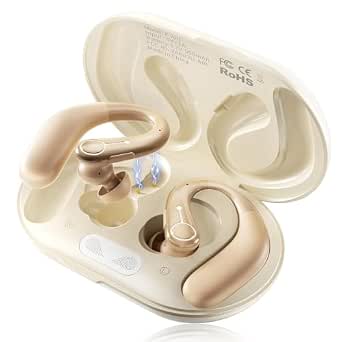 | Best for Bluetooth Media Use | Fit: In-ear | Connectivity: Bluetooth; compatible with smartphones | App control: Personalized volume adjustment with separate left and right settings | VIEW ON AMAZON | See Our Full Breakdown |
| Saliryj Rechargeable Bluetooth Hearing Aids with App Control |  | Best for Two-Ear App Adjustment | Style: Both ears | Color: Black | Bluetooth: Yes | VIEW ON AMAZON | See Our Full Breakdown |
| Hearing Aids for Seniors with App Control, 16 Channel, Rechargeable |  | Best for App-Based Everyday Listening | Intended hearing loss range: Mild to moderate | Channels: 16 | Noise reduction levels: 3 | VIEW ON AMAZON | See Our Full Breakdown |
| hearing aid app | Connectivity | Listening modes |
|---|---|---|
| FacePro OTC Hearing Aids with | Compatible with smartphones and tablets | — |
| Rechargeable Bluetooth Hearing | — | General Purpose, Noise Reduction, Strong Noise Reduction |
| Saliryj Bluetooth Hearing Aids | Bluetooth | — |
| Earrck Bluetooth Hearing Aids | Bluetooth | Four |
| FLYSOUND OpenFit OTC Rechargea | Bluetooth; compatible with smartphones | — |
| F1-S Bluetooth OTC Hearing Aid | Bluetooth | — |
| Hearing Aids for Seniors with | — | 4: normal, indoor noise cancelling, outdoor noise cancelling, TV/music |
| Vivtone Bluetooth Hearing Aids | — | Quiet conversations, noisy restaurants, and outdoor settings |
| AuraLink Bluetooth Hearing Aid | Bluetooth 5.4 | — |
| BlaidsX Neuro Rechargeable Blu | — | — |
| Cearvol Nano 2 OTC Hearing Aid | No music streaming or phone calls | Everywhere, Indoor, Outdoor, Restaurant, TV |
| Rechargeable Bluetooth Hearing | Bluetooth; compatible with smartphones | General, Noise Reduction, Strong Noise Reduction |
| Saliryj Rechargeable Bluetooth | — | General purpose, noise reduction, strong noise reduction |
| Hearing Aids for Seniors with | — | — |
More Details on Our Top Picks
FacePro OTC Hearing Aids with Bluetooth for Seniors and Adults
For shoppers focused on app control, the FacePro pairs smartphone adjustments with a behind-the-ear fit and a claimed battery life of up to 25 hours. That longer stated runtime gives it an advantage over the Saliryj Bluetooth Hearing Aids with App Control and Noise Cancellation, which list up to 21 hours per charge. Noise reduction and adjustable listening profiles may help tailor everyday sound, while the behind-the-ear design gives buyers a different fit from the in-ear Rechargeable Bluetooth Hearing Aids with App Control. The tradeoff is that app-based adjustments do not remove the fitting work: the product notes a possible adjustment period, and poorly seated ear domes can cause feedback or discomfort. I’d choose it for extended wear and app-based personalization, provided the wearer is willing to refine the fit.
Pros:- App control supports sound-profile personalization and mode changes
- Claimed runtime of up to 25 hours per charge
- Behind-the-ear fit offers an alternative to the in-ear Saliryj model
- Noise reduction is intended to help in busier listening settings
Cons:- May take two to three weeks to adjust to the sound
- Ear-dome fit may need trial and error
- Poorly fitted domes can cause feedback or unwanted sounds
Best for: Adults with mild to moderate hearing difficulty who want app adjustments and a behind-the-ear fit for long daily wear
Not ideal for: Buyers who want a quick, low-adjustment fit or who are prone to feedback from ear domes
- Fit type:Behind-the-ear
- Control:App control
- Connectivity:Compatible with smartphones and tablets
- Noise control:Active noise cancellation
- Battery:Rechargeable lithium-ion
- Stated battery life:Up to 25 hours
- Style:Both ears
- Color:Metallic black
Our verdict“Choose FacePro if you want a behind-the-ear app-controlled aid with a long stated runtime and can spend time refining the fit.”
Rechargeable Bluetooth Hearing Aids with App Control
Among these app-controlled options, this Saliryj model makes Bluetooth audio and calls a central part of the pitch. Its in-ear design, app fitting, and separate left and right volume adjustment suit someone who wants to tune both hearing support and phone use from one device. The five preset volume levels and three listening modes give it a more structured control set than the Saliryj Bluetooth Hearing Aids with App Control and Noise Cancellation, which instead specifies five adjustable noise-cancellation levels. That distinction matters: this pick emphasizes everyday phone and media use, while the other Saliryj listing spells out finer noise-control adjustment. The tradeoff is app dependence for some customization, and the product data does not state a battery runtime. I’d favor it for a buyer who values calls and streaming over a clearly documented all-day battery figure.
Pros:- Bluetooth supports calls, music, and movies
- App offers fitting and volume adjustments
- Independent left and right volume control
- Three listening modes include general, noise reduction, and strong noise reduction
Cons:- Some customization features depend on the app
- Battery runtime is not specified in the supplied product data
- In-ear fit may not suit buyers who prefer a ventilated open-fit design
Best for: Smartphone users who want in-ear hearing aids with Bluetooth calling, media audio, and separate left-right volume control
Not ideal for: Buyers who need a stated battery runtime or want full customization without using an app
- Fit type:In-ear
- Bluetooth:Compatible with smartphones
- App controls:Fitting and volume
- Volume levels:Five preset levels; independent left and right adjustment
- Listening modes:General Purpose, Noise Reduction, Strong Noise Reduction
- Noise control:Active noise cancellation
- Battery:One included lithium-ion battery
- Color:Black
Our verdict“Pick this model if app tuning and Bluetooth calls or media matter more to you than a published battery-life figure.”
Saliryj Bluetooth Hearing Aids with App Control and Noise Cancellation
The clearest app-focused distinction here is the Saliryj’s five adjustable noise-cancellation levels, alongside app controls for volume and listening modes. That gives users more stated control over noise filtering than the Rechargeable Bluetooth Hearing Aids with App Control, whose listed controls center on five volume presets and three modes. Its charging case also has an LED status display, so battery and charging checks are visible without guessing. The stated runtime reaches up to 21 hours per charge, shorter than FacePro’s claimed 25 hours but useful for planning a day away from the charger. The tradeoff is a lack of listed software update support, and the supplied data identifies it as a hearing amplifier. I’d shortlist it for buyers who want explicit noise-level adjustment in the app.
Pros:- App adjusts volume, listening modes, and noise cancellation
- Five noise-cancellation levels provide stated adjustment range
- LED charging-case display shows battery and charging status
- Up to 21 hours of use per charge
Cons:- Software update support is listed as unknown
- Stated runtime is shorter than FacePro’s up to 25 hours
- Supplied product data identifies the included component as a hearing amplifier
Best for: App users who want to tune noise cancellation across several levels and check charging status on the case
Not ideal for: Buyers seeking documented software support or a product clearly specified as a hearing aid rather than an amplifier
- Connectivity:Bluetooth
- Control:Smartphone app
- Noise control:Active noise cancellation with five adjustable levels
- Battery life:Up to 21 hours per charge
- Battery:Lithium-ion; one nonstandard battery required
- Charging case:LED battery and charging-status display
- Included component:Hearing amplifier
- Part number:F-Aid4
Our verdict“Choose this Saliryj if granular app-based noise adjustment and a battery-status display matter more than the longest stated runtime.”
Earrck Bluetooth Hearing Aids with App Control, Silver
Earrck stands out for the fitting process it describes: the app can use a hearing test or an audiogram to personalize settings. That may suit buyers who want a more guided starting point than the general app volume and mode controls listed for the FacePro OTC Hearing Aids. Four listening modes, noise reduction, and feedback suppression add practical ways to adapt sound, while the charging case is described as providing about 80 hours of backup power. The runtime claim needs context, though: more than 10 hours per charge is specified without Bluetooth connection, so streaming use may change the result. Compared with the FLYSOUND OpenFit OTC Rechargeable Open-Fit Hearing Aids, Earrck provides app fitting details but does not specify an open fit. Check phone compatibility before choosing it.
Pros:- App supports personalized fitting from a hearing test or audiogram
- Four listening modes for different environments
- Noise reduction and feedback suppression are listed
- Charging case states about 80 hours of backup power
Cons:- Full app functionality requires Android 8.0+ or iOS 12.0+
- More than 10 hours of runtime is specified only without Bluetooth
- Fit type is not provided in the supplied product data
Best for: Android or iOS users who want app fitting based on a hearing test or audiogram and several listening modes
Not ideal for: People with older unsupported phones or buyers who need a battery-life figure while Bluetooth is connected
- Connectivity:Bluetooth
- App compatibility:Android 8.0+ or iOS 12.0+
- App fitting:Hearing test or audiogram
- Listening modes:Four
- Frequency range:250 Hz–8000 Hz
- Battery life:More than 10 hours per charge without Bluetooth connection
- Charging time:2 hours
- Case backup power:About 80 hours, or approximately four hearing aid charges
- Color:Silver
Our verdict“Earrck suits phone-compatible buyers who want app-guided fitting and can accept a runtime claim limited to non-Bluetooth use.”
FLYSOUND OpenFit OTC Rechargeable Open-Fit Hearing Aids
For buyers who dislike a plugged-ear sensation, FLYSOUND’s ventilated open-fit design is its defining advantage in this group. Its app offers volume, tone, and listening-preset adjustments, giving wearers useful personalization while the open fit addresses a comfort preference that the in-ear Rechargeable Bluetooth Hearing Aids with App Control does not target. The charging case extends stated total use to as much as 60 hours, although each charge is listed at up to 12 hours; the case total is not the same as continuous wear between charges. A 15-minute quick charge is said to provide about two hours of use, helpful for a short top-up. The tradeoff is its stated suitability for perceived mild to moderate difficulty and the shorter per-charge runtime than FacePro’s claim.
Pros:- Open-fit design may reduce the plugged-ear feeling
- App adjusts volume, tone, and listening presets
- Charging case provides up to 60 hours of stated total battery life
- A 15-minute charge is stated to provide about two hours of use
Cons:- Per-charge runtime is up to 12 hours
- Designed for perceived mild to moderate hearing difficulty
- Total case runtime requires recharging between use periods
Best for: Adults with perceived mild to moderate hearing difficulty who prefer a ventilated fit and want app adjustments for tone and volume
Not ideal for: People who need more than 12 hours between charging opportunities or who require support beyond the stated mild to moderate range
- Fit type:Open-fit
- Connectivity:Bluetooth; compatible with smartphones
- App controls:Volume, tone, and listening presets
- Battery life:Up to 12 hours per charge; up to 60 hours with charging case
- Quick charge:15 minutes provides approximately 2 hours of use
- Battery:Included lithium-ion
- Color:Snow White
- Part number:B02
Our verdict“Choose FLYSOUND if an open fit and app-based tone controls matter more than a longer stretch between charges.”
F1-S Bluetooth OTC Hearing Aids for Seniors Adults with Hearing Loss, Rechargeable, App Control, AI Noise Cancellation, Invisible Design, 30H Battery
The F1-S is the most discreet pick here: its invisible in-ear design suits buyers who want app adjustments without a visible behind-the-ear receiver. The stated 30 hours with the charging case also gives it an endurance advantage over the Vivtone Xpure 2.0, whose listing specifies up to 24 hours of hearing aid use and less time when streaming. AI noise cancellation and iOS and Android app control add ways to tune listening, though the listing gives little detail on fitting tools or listening modes. Its stated support extends to hearing loss up to 65 dB, so I would not choose it for more severe needs. The compact style and smartphone reliance are linked tradeoffs: buyers who want more visible controls or detailed fitting options may prefer another model.
Pros:- Invisible in-ear design keeps the devices discreet.
- Up to 30 hours of battery life including the charging case.
- App control works with iOS and Android.
- AI noise cancellation is intended to help speech stand out in noisy settings.
Cons:- The stated hearing loss support is limited to 65 dB.
- Full customization requires a smartphone app.
Best for: Adults with hearing loss up to 65 dB who prioritize a discreet in-ear fit, rechargeable use, and app-based sound adjustments.
Not ideal for: People with more severe hearing loss or buyers who want full controls without using a smartphone app.
- Hearing loss support:Up to 65 dB
- Battery life:30 hours including charging case
- Weight:0.42 oz
- Connectivity:Bluetooth
- App compatibility:iOS and Android
- Design:Invisible in-ear
- Noise control:AI noise cancellation
Our verdict“Choose the F1-S if discreet wear and case-supported battery life matter more than extensive fitting details or severe-loss support.”
Hearing Aids for Seniors with Noise Cancelling, Rechargeable Hearing Amplifier with with Smart APP Control for People with Hearing Loss(Silver)
Earrck’s strongest distinction is its hearing test and audiogram fitting in the app, which gives buyers a guided way to tailor settings instead of relying only on general presets. It also offers four listening modes, including indoor and outdoor noise reduction and TV or music, while the Vivtone Xpure 2.0 is more clearly positioned for Bluetooth calls and audio streaming. Earrck’s listing describes Bluetooth connection to the app and sound adjustments, but does not say it streams phone calls or music, so buyers should not assume it works like earbuds. The aids run for more than 10 hours without Bluetooth connection, with backup power in the case. That battery figure is less generous than the F1-S’s stated 30 hours including its case, and its own guidance excludes extreme severe to profound loss over 80 dB.
Pros:- App offers a hearing test and audiogram fitting.
- Four modes cover everyday, indoor noise, outdoor noise, and TV or music use.
- On-device buttons and app both support adjustments.
- Case provides about 80 hours of backup power and charges the aids about four times.
Cons:- Battery life is more than 10 hours without Bluetooth connection, with no longer device runtime specified.
- The listing does not confirm phone-call or music streaming.
- Not suitable for extreme severe to profound hearing loss over 80 dB.
Best for: Adults who want to enter an audiogram or take an in-app hearing test, then switch among preset environments.
Not ideal for: Buyers seeking confirmed phone-call or music streaming, or those with extreme severe to profound hearing loss over 80 dB.
- Listening modes:4: normal, indoor noise cancelling, outdoor noise cancelling, TV/music
- Frequency range:250 Hz to 8,000 Hz
- Battery runtime:More than 10 hours without Bluetooth connection
- Charging case backup:About 80 hours; charges aids about 4 times
- Charging time:About 2 hours
- App features:Hearing test, audiogram fitting, sound settings, and battery monitoring
- Hearing loss guidance:Not suitable for extreme severe to profound loss over 80 dB
Our verdict“Pick Earrck if app-guided fitting and environment presets matter more than documented streaming or longer stated runtime.”
Vivtone Bluetooth Hearing Aids with APP Control for Precise Fitting, Phone Call & Music Streaming, Rechargeable OTC Hearing Aids for Seniors Adults Men Women, Xpure 2.0
The Vivtone Xpure 2.0 stands out for combining hearing adjustments with phone calls and music streaming, making it the clearest choice here for someone who wants one device for amplification and phone audio. Its RIC design is described as reducing distortion and feedback, and users can tune volume and frequency through the app or onboard buttons. Those physical controls give it an advantage over the F1-S if a buyer wants adjustments without depending entirely on a phone. The tradeoff is streaming endurance: the listing specifies up to 24 hours of hearing aid use but only three hours of Bluetooth streaming, so frequent audio use may require more charging. Compatibility is also limited to iOS 12 and Android 11 or newer. Buyers focused on a hearing test or audiogram-based fitting may find Earrck’s app more directly suited to that task.
Pros:- Supports phone calls and music or other audio streaming.
- App and onboard buttons both adjust volume and frequency.
- Preset modes cover quiet conversations, noisy restaurants, and outdoor settings.
- RIC design is intended to reduce distortion and feedback.
Cons:- Bluetooth streaming is limited to up to 3 hours.
- Compatibility requires iOS 12 or Android 11 or newer.
- The listing does not give a hearing loss range.
Best for: Smartphone users on iOS 12 or newer or Android 11 or newer who want hearing adjustments plus calls and music through their hearing aids.
Not ideal for: People with older phones or frequent streamers who need longer than three hours of stated Bluetooth audio time.
- Design:Receiver-in-canal (RIC)
- Phone compatibility:iOS 12 or newer; Android 11.0 or newer
- Hearing aid runtime:Up to 24 hours
- Bluetooth streaming runtime:Up to 3 hours
- Charging time:About 2.5 hours for devices and case
- Controls:Companion app and onboard buttons
- Listening modes:Quiet conversations, noisy restaurants, and outdoor settings
Our verdict“Choose the Xpure 2.0 if calls and music streaming are central to your hearing aid app needs and your phone meets its compatibility requirements.”
AuraLink Bluetooth Hearing Aids for Seniors Adults, App-Controlled, AI Noise Reduction, Bluetooth 5.4, Compatible with iOS & Android
AuraLink is the durability-focused choice in this group: its IP68 rating and UV-sanitizing charging case are useful differentiators for active users who want protection against water and dust. Its RIC fit also differs from the discreet in-ear F1-S, while Bluetooth 5.4 supports the connected app and listed calls and music. The app includes personalized fitting and tinnitus masking, giving it broader stated adjustment options than the Vivtone Xpure 2.0, whose listing emphasizes volume and frequency tuning. AuraLink’s stated hearing range is 25–85 dB HL, but the product description still frames it mainly for mild to moderate loss, so I would not treat the upper figure as a substitute for clinical guidance. Buyers should also be comfortable using a smartphone for full customization; no battery runtime is provided in the listing.
Pros:- IP68 rating offers water and dust resistance.
- App personalization includes tinnitus masking.
- Bluetooth 5.4 supports calls and music connectivity.
- UV-sanitizing charging case adds a hygiene feature.
Cons:- Full customization requires a smartphone app.
- The description positions it mainly for mild to moderate loss despite a stated 25–85 dB HL range.
- Battery runtime is not specified in the provided product data.
Best for: Active adults with mild to moderate hearing loss who want a water- and dust-resistant RIC device with app fitting and tinnitus masking.
Not ideal for: People who need clearly documented battery runtime, avoid smartphone-based controls, or have hearing needs beyond the product’s mild-to-moderate positioning.
- Stated hearing loss range:25–85 dB HL
- Positioning:Mainly for mild to moderate hearing loss
- Connectivity:Bluetooth 5.4
- Water and dust resistance:IP68
- Design:RIC, behind the ear
- App compatibility:iOS and Android
- Charging case:UV-sanitizing
Our verdict“Choose AuraLink for its rugged rating and app-based fitting if you accept its smartphone dependence and unclear battery runtime.”
BlaidsX Neuro Rechargeable Bluetooth Hearing Aids for Adults
BlaidsX Neuro is the adjustment-focused pick: its 48 DSP channels and audiogram options from 250 Hz to 8 kHz offer more explicit tuning detail than the F1-S, whose listing gives app control but no channel count or fitting range. Audiologist-designed settings and noise management aim to give adults with perceived mild to moderate loss a structured starting point. Bluetooth streaming adds phone audio, though compatibility is narrower than the Vivtone Xpure 2.0: BlaidsX lists compatible iPhones and ASHA-enabled Android phones. Its 18–24 hour runtime is shorter at the low end than the F1-S’s stated 30 hours including its case, and streaming can run up to 12 hours per charge. IP67 sweat resistance and a two-year factory warranty round out the package, but this model is intended for adults 18 and older.
Pros:- 48 DSP channels and audiogram options from 250 Hz to 8 kHz.
- Audiologist-designed settings and app-based adjustments.
- IP67 sweat-proof design.
- Two-year factory warranty with free repair and a 99 USD loss replacement option.
Cons:- Streaming compatibility is limited to compatible iPhones and ASHA-enabled Android phones.
- Designed for perceived mild to moderate hearing loss.
- Battery life is 18–24 hours per charge, below the F1-S’s stated 30 hours including case.
Best for: Adults 18 or older with perceived mild to moderate hearing loss who want audiogram-based adjustment detail and use a compatible iPhone or ASHA-enabled Android phone.
Not ideal for: People using other Android phones, buyers seeking all-day battery beyond 18–24 hours, or anyone needing support for severe hearing loss.
- Intended users:Adults 18 or older with perceived mild to moderate hearing loss
- Audiogram adjustment range:250 Hz to 8 kHz
- DSP channels:48
- Bluetooth streaming:Up to 12 hours per charge with compatible iPhones and ASHA-enabled Android phones
- Battery life:18–24 hours per charge
- Height:27 mm
- Receiver thickness:0.5 mm
- Durability:IP67, sweat-proof
- Warranty:2-year factory warranty
Our verdict“Pick BlaidsX Neuro if fine audiogram adjustments and a stated warranty matter more than broad Android compatibility or the longest listed battery life.”
Cearvol Nano 2 OTC Hearing Aids for Adults
The Cearvol Nano 2 is the clearest fit here for buyers who want compact in-canal aids and app-based personalization without using them as a Bluetooth headset. Its five listening modes cover settings from restaurants to TV, while the charging case provides physical mode controls for times when reaching for a phone is inconvenient. Compared with Saliryj’s rechargeable Bluetooth models, the Nano 2 gives up calls and music streaming but specifies a more complete set of hearing-focused details, including gain, noise reduction, and battery estimates. The UV cleaning case and tinnitus masking sounds add useful functions, though masking sounds do not treat tinnitus. Its main tradeoff is limited connectivity: buyers who want calls through their hearing aids should choose a Bluetooth option instead.
Pros:- App-based personalization supports an individual hearing profile
- Five modes cover common listening environments, with controls on the charging case
- Up to 16 hours per charge and up to 50 hours with the case
- Speech enhancement, noise reduction, and anti-whistling features are specified
Cons:- No phone calls or music streaming
- Tinnitus masking sounds are not a tinnitus treatment
Best for: Adults seeking a compact, app-personalized hearing aid for everyday listening who do not need phone calls or music streaming through the devices
Not ideal for: Buyers who want their hearing aids to double as Bluetooth earbuds for calls, music, or movies
- Hearing loss range:Mild to moderately severe
- Listening modes:Everywhere, Indoor, Outdoor, Restaurant, TV
- Maximum gain:Up to 40 dB
- Noise reduction:Up to 20 dB
- Weight per hearing aid:About 2.4 g
- Battery life:Up to 16 hours per charge; up to 50 hours with case
- Quick charge:15 minutes provides about 3 hours of use
- Water resistance:IPX5
- Connectivity:No music streaming or phone calls
Our verdict“Choose the Cearvol Nano 2 if compact fit, hearing-focused app settings, and a mode-controlling case matter more than Bluetooth calls or streaming.”
Rechargeable Bluetooth Hearing Aids with App Control
This Saliryj model suits buyers who want one in-ear device for amplification and Bluetooth media: it supports phone calls, music, and movies, while the app offers separate left and right volume adjustment. That makes it more flexible as a connected listening device than the Cearvol Nano 2, which does not stream or handle calls. The three modes, including strong noise reduction, offer a straightforward way to adapt settings without a long list of controls. The buying risk is how much remains unspecified: the listing gives no battery runtime or charging time, and it does not explain what adjustments are available without the app. I would favor it for smartphone users comfortable relying on app controls, but buyers who need predictable wear time should compare it with models that state battery figures.
Pros:- Bluetooth supports calls, music, and movies
- App allows personalized volume adjustment for each ear
- Three listening modes include two levels of noise reduction
- Rechargeable design
Cons:- Battery runtime and charging time are not specified
- The available non-app controls are not explained
Best for: Smartphone users who want rechargeable in-ear hearing amplifiers for calls, music, and movies with separate left and right app adjustments
Not ideal for: Buyers who need a stated battery runtime or charging time, or who want clearly documented controls without a smartphone
- Fit:In-ear
- Connectivity:Bluetooth; compatible with smartphones
- App control:Personalized volume adjustment with separate left and right settings
- Manual volume:5 levels
- Listening modes:General, Noise Reduction, Strong Noise Reduction
- Noise control:Active noise cancellation
- Digital chip:16-channel
- Battery:2 lithium-ion batteries required
- Color:Brown
Our verdict“Pick this Saliryj model if Bluetooth calls and media matter more than having clearly stated battery performance and standalone controls.”
Saliryj Rechargeable Bluetooth Hearing Aids with App Control
The black, both-ears Saliryj option is aimed at buyers who want app control across a pair of Bluetooth hearing aids, including independent left and right volume settings. Like the other Saliryj model in this batch, it supports calls, music, and movies and offers three listening modes with automatic noise cancellation. Its defined role is a simple two-ear smartphone setup; compared with the Cearvol Nano 2, it prioritizes streaming and calls over compact, hearing-specific details such as stated gain, water resistance, and longer case-based runtime. The listing identifies a 16-channel chip but does not provide battery-life or charging-time figures, so planning a full day’s use is harder. Smartphone access is also central to its app features, making it a weaker fit for buyers who prefer device controls.
Pros:- Bluetooth supports calls, music, and movies
- App provides independent left and right volume control
- Three modes include general and two noise-reduction settings
- Rechargeable design with a 16-channel digital chip
Cons:- Battery runtime and charging time are not stated
- App and Bluetooth functions may require a smartphone
Best for: Smartphone users seeking a two-ear Bluetooth setup with independent app volume control for calls and media
Not ideal for: Buyers who need published battery endurance, detailed hearing-loss specifications, or app-free adjustment
- Style:Both ears
- Color:Black
- Bluetooth:Yes
- App control:Supported, with independent left and right controls
- Listening modes:General purpose, noise reduction, strong noise reduction
- Digital channels:16
- Battery:1 lithium-ion battery required
- Battery weight:1.7 g
- Compatible devices:Smartphones
Our verdict“Choose this Saliryj pair if smartphone-based two-ear adjustment and media streaming are priorities and you can accept missing battery details.”
Hearing Aids for Seniors with App Control, 16 Channel, Rechargeable
For seniors seeking app-based sound adjustment and a discreet rechargeable design, this model offers a clear everyday-use proposition: three noise reduction levels, a 16-channel setup, and three earbud sizes to help find a more secure fit. The stated six hours per charge is shorter than the Cearvol Nano 2’s up-to-16-hour estimate, though the case extends this model’s listed total to 24 hours. Its 1.5-hour charging time gives buyers a concrete charging estimate, while the Cearvol also specifies a quick-charge option. This listing does not describe Bluetooth calls or media streaming, so I would treat it as an app-controlled hearing aid rather than an all-purpose headset. It also lacks physical buttons, and new users may need two to three weeks to acclimatize.
Pros:- App-based personalized sound settings
- Three noise reduction levels and a 16-channel design
- Three earbud sizes support a more tailored fit
- Charging time and case-supported runtime are specified
Cons:- No physical buttons, which may make adjustment less intuitive
- Six hours per charge may not cover a long day without the case
- A two-to-three-week acclimatization period is suggested, and poor fit may cause feedback
Best for: Seniors with mild to moderate hearing loss who want app customization, several earbud sizes, and a rechargeable device for daily listening
Not ideal for: People who prefer physical controls, need more than six hours between charges, or want confirmed Bluetooth calling and media streaming
- Intended hearing loss range:Mild to moderate
- Channels:16
- Noise reduction levels:3
- Maximum gain:37 dB
- Charging time:1.5 hours
- Battery life per charge:6 hours
- Battery life with case:24 hours
- Earbud sizes:Three
Our verdict“This model fits seniors who value app tuning and multiple earbud sizes, provided they are comfortable with app-only controls and shorter per-charge runtime.”

How We Picked
I ranked these products by how clearly their listed features support the core promise of a hearing aid app: useful adjustments from a phone, practical connectivity, and a fit that makes sense for daily wear. I gave more weight to listings with identifiable model names and specific capabilities, such as Vivtone Xpure 2.0’s streaming, AuraLink’s stated Bluetooth version, and FLYSOUND’s open-fit design. I also considered rechargeability, stated noise-control features, and whether the product description gives buyers a clear reason to choose it over similar options.
The ranking reflects the available product descriptions, not hands-on testing or independent clinical comparisons. Generic and repeated listings rank lower because their titles reveal fewer differences and leave key questions about the app, fitting process, compatibility, and support unanswered. App control is useful only when the app is compatible, understandable, and offers adjustments that match the wearer’s needs, so I treat detailed specifications as helpful signals rather than proof of performance.
| hearing aid app | Connectivity |
|---|---|
| FacePro OTC Hearing Aids with | Compatible with smartphones and tablets |
| Rechargeable Bluetooth Hearing | — |
| Saliryj Bluetooth Hearing Aids | Bluetooth |
| Earrck Bluetooth Hearing Aids | Bluetooth |
| FLYSOUND OpenFit OTC Rechargea | Bluetooth; compatible with smartphones |
| F1-S Bluetooth OTC Hearing Aid | Bluetooth |
| Hearing Aids for Seniors with | — |
| Vivtone Bluetooth Hearing Aids | — |
| AuraLink Bluetooth Hearing Aid | Bluetooth 5.4 |
| BlaidsX Neuro Rechargeable Blu | — |
| Cearvol Nano 2 OTC Hearing Aid | No music streaming or phone calls |
| Rechargeable Bluetooth Hearing | Bluetooth; compatible with smartphones |
| Saliryj Rechargeable Bluetooth | — |
| Hearing Aids for Seniors with | — |
Factors to Consider When Choosing Hearing Aid App
Choosing a hearing aid app means choosing both the device and the phone-based process for adjusting it. Before deciding, I would check the details that listings often leave vague: which app is required, what it can change, and how well the device fits your listening needs.
Check What the App Actually Controls
An app-controlled label can mean anything from changing volume to adjusting separate listening programs or sound profiles. I would look for a clear list of controls and confirm whether changes are saved on the hearing aids or require the phone to stay nearby. More sliders do not automatically make fitting better; too many choices can make small problems harder to diagnose. A beginner may prefer a few understandable controls, while a confident user may value more adjustment options. Before purchase, search for the app’s name and check that it is available for your phone’s operating system. If a listing does not name the app, treat that as an open question rather than assuming it will work with a familiar hearing aid app.
Confirm Phone Compatibility and Streaming Needs
Phone compatibility covers more than whether an app installs: Bluetooth pairing, call audio, and music streaming can each behave differently. If you want hands-free calls or audio, check that the specific hearing aid model supports that function with your phone, since general Bluetooth claims can be broad. AuraLink lists iOS and Android compatibility and Bluetooth 5.4, while Vivtone explicitly lists call and music streaming; those descriptions answer different buyer questions. A newer Bluetooth version does not guarantee better sound or effortless pairing. If you only want app adjustments, streaming support may add complexity without much benefit. For anyone who depends on calls, confirm how the microphone picks up speech and whether call audio routes to both aids before committing.
Choose a Fit for Your Ears and Daily Routine
Fit affects comfort, retention, and how your own voice sounds, so the smallest or least visible option is not automatically the best. Open-fit designs such as FLYSOUND’s may appeal to people who dislike a blocked-ear sensation, while other styles may provide a different balance of stability and sound control. Consider how long you will wear the aids, whether glasses or masks interfere, and whether you can handle small controls and charging contacts. A listing’s “invisible” wording does not tell you how the aid feels after several hours. Check return terms and included tip sizes before buying, especially if you are unsure which ear shape or fit will suit you. When fit problems persist, an app adjustment may not solve a physical comfort issue.
Treat Noise Reduction and Channels as Clues, Not Guarantees
Noise cancellation, AI noise reduction, and channel counts sound precise, but sellers may use these labels differently. A higher channel count does not by itself tell you whether speech will be clearer in a restaurant or whether the app can make useful adjustments. I would prioritize descriptions that explain how the feature works and what situations it targets. If your main difficulty is following conversation in groups, seek details about directional microphones, listening programs, and remote support rather than relying on an “AI” label. Compare the situations you face most often with the product’s stated features. If those details are missing, ask the seller or a hearing care professional before treating the claim as a reason to choose one model.
Look Beyond Rechargeability to Maintenance and Support
Rechargeable aids reduce the need to replace disposable batteries, but they still require a dependable charging routine and clean charging contacts. Check the stated battery life under realistic use, since streaming and higher amplification can change how long a charge lasts. Also find out whether the package includes a charging case, replacement parts, cleaning tools, or access to help with setup. App updates and phone operating system changes can affect the long-term experience, so clear support channels matter. A low-detail listing may leave buyers uncertain about warranty coverage or replacement options. I would give greater weight to a seller that answers these practical questions than to an extra feature with no explanation.
Know When App-Based OTC Hearing Support Is Not Enough
App control can make everyday adjustments convenient, but it does not replace a hearing evaluation or professional fitting. If hearing loss is sudden, affects one ear much more than the other, or comes with pain, dizziness, or drainage, seek medical advice before buying an OTC device. People with complex hearing needs may benefit from professional guidance even when they prefer self-adjustment. Ask whether the maker offers remote fitting help and what happens if the app’s suggested settings do not feel comfortable. Do not keep increasing amplification to overcome muffled speech without checking fit and settings. Matching the level of support to your hearing needs can prevent frustration and help you choose an appropriate route.
Frequently Asked Questions
Will any of these hearing aids work with the app I already use?
Do not assume that app-controlled hearing aids share a common app. Each maker may use its own software, and the listing may not name it clearly. Check the exact model’s app name, phone operating system requirements, and any account or setup requirements before buying. If you already own hearing aids, confirm whether the new model can be managed in the same app; brand familiarity alone does not establish compatibility. When the listing is vague, ask the seller for the app store listing or written compatibility details.
Can I use an app-controlled OTC hearing aid without a smartphone?
Some devices may have physical controls, but the product descriptions here do not establish that every model can be set up or adjusted without a phone. Ask whether initial fitting, pairing, program selection, and volume changes all require the app. A family member may be able to help with setup, but that does not solve the need for ongoing phone access if core controls are app-only. If independent operation matters, choose a model with clearly documented on-device controls and test them during the return period. Confirm this before purchase rather than relying on the word “rechargeable” or “Bluetooth.”
Do app-controlled hearing aids automatically improve speech in noisy places?
No. App controls can let you change settings, but the product label alone does not show how well a device separates speech from background noise. Features described as AI noise reduction or noise cancellation vary, and the listings do not provide a consistent independent comparison. Think about the actual setting where you struggle, such as a busy restaurant or a group conversation, and look for specific support for that situation. If that need is central, ask about trial options and professional guidance before relying on a feature name.
Should I choose streaming support or a simpler hearing-focused model?
Choose streaming if you regularly want calls or music routed through your hearing aids and the model confirms compatibility with your phone. Vivtone Xpure 2.0 specifically lists call and music streaming, which makes its description more relevant to that use than a listing that only says Bluetooth. If your main aim is to hear conversations and adjust settings, streaming may not justify added setup or battery demands. Ask how streaming affects runtime and whether call audio can be adjusted separately from environmental sound. A simpler feature set can be easier to manage if you rarely listen to phone audio through the aids.
What should I do if the app’s settings make hearing sound worse?
Return to a comfortable setting rather than continuing to raise volume or change several controls at once. If the app offers saved profiles, keep a note of the last setting that felt usable so you can restore it. Check the fit, ear tips, and pairing status, since discomfort or poor sound may not come from the app settings alone. Use the maker’s support or fitting help if the problem continues, and consult a hearing care professional when speech remains unclear or the aid causes discomfort. Confirm the return window before purchase so you have time to judge the setup.
Conclusion
For the best overall balance, I would start with Vivtone Xpure 2.0, especially if app-based fitting and phone audio both matter. For a connectivity-focused choice, consider AuraLink, while remembering to verify your phone’s compatibility. For an open-fit preference, FLYSOUND OpenFit has the clearest distinct role in this lineup. Buyers seeking the best value or a beginner-friendly pick should compare the exact app, controls, support, and return terms among the generic rechargeable options; the available descriptions do not establish a clear winner in either category. For a premium choice, I would prioritize documented fitting help, warranty, and streaming details over feature labels alone. If your hearing needs are complex or symptoms are sudden, start with professional advice before choosing an OTC app-controlled aid.
Fall Picks
fall essentials
As an affiliate, we earn on qualifying purchases.