
The HEARO OTC Hearing Aids stand out as the best overall choice for those seeking a balance of invisible design and reliable digital processing. If you prefer a more traditional behind-the-ear fit with robust controls, the Audien Atom One offers superior comfort and brand recognition at a competitive price point. For budget-conscious buyers who need raw amplification power without smart features, the Manzelun Rechargeable Behind-Ear model delivers high gain and long battery life. The main tradeoff in this category is between discreet, automated technology and manual control with higher volume output. Continue reading to see which of these fourteen models best matches your hearing loss severity and lifestyle preferences.

Get everyday helpers delivered free with Prime
- Fast, free delivery on millions of items
- Prime Video, Amazon Music and more included
- Member-only deals all year
Complete the kit

Key Takeaways
- Rechargeable models dominate this segment, eliminating the recurring cost and dexterity challenges of tiny button-cell batteries.
- Digital Signal Processing (DSP) with multi-channel noise reduction significantly improves clarity in noisy environments compared to basic analog amplifiers.
- Invisible Completely-in-Canal (CIC) designs offer aesthetic privacy but often lack the physical volume buttons that some seniors prefer for ease of use.
- Most low-cost OTC devices require a self-fitting period of several days to weeks for the brain to adjust to amplified background noise.
- Physical adjustment buttons on behind-the-ear models provide more intuitive control than app-based settings for users less comfortable with smartphones.
| HEARO OTC Hearing Aids for Seniors, Rechargeable CIC Invisible Pair |  | Best for Discreet, App-Free Use | Design: Completely-In-Canal (CIC) | Battery Life: Up to 12 hours per charge | Charging Interface: USB-C | VIEW ON AMAZON | See Our Full Breakdown |
| Rechargeable Hearing Amplifier for Seniors – Up to 45dB Gain, Lightweight Behind‑Ear Design |  | Best for Maximum Volume Boost | Fit Type: Behind-the-Ear | Sound Gain: Up to 45 dB | Battery Life: Up to 40 hours | VIEW ON AMAZON | See Our Full Breakdown |
| Rechargeable Hearing Aids for Seniors, 16-Channel DSP Noise Reduction, Invisible In-Ear Design |  | Best for Noise Reduction Technology | Channels: 16 | Battery Life: 35 hours | Charging Time: 2 hours | VIEW ON AMAZON | See Our Full Breakdown |
| Rechargeable Digital Hearing Aids for Seniors, 2 Channel Ear Amplifier, Noise Cancellation |  | Best for Battery Longevity | Battery Life: Up to 60 hours | Charging: Magnetic charging case | Dimensions: 0.63 x 0.92 x 0.45 inches | VIEW ON AMAZON | See Our Full Breakdown |
| Hearing Aids for Seniors, Rechargeable, Noise Reduction, One-Button Operation | 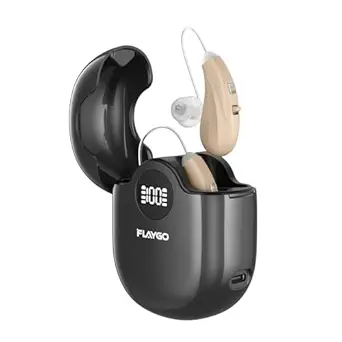 | Best Overall Balance | Battery Life: 80 hours per charge | Weight: 3.5g | Operation: One-button, 4 volume levels | VIEW ON AMAZON | See Our Full Breakdown |
| Audien Atom One OTC Hearing Aids |  | Best for Simplicity and Analog Control | Control Type: Analog Dials | Battery Life: 24 hours | Charging Method: USB-C Dock | VIEW ON AMAZON | See Our Full Breakdown |
| Rechargeable Hearing Aids for Seniors, Invisible Behind-The-Ear Design with DSP Noise Reduction |  | Best for Ease of Use and Visibility | Design: Behind-the-Ear (BTE) | Battery Life: 20 hours | Noise Reduction: 15-20dB | VIEW ON AMAZON | See Our Full Breakdown |
| JMTO Rechargeable Digital Hearing Aids for Seniors, 2-Channel In-Ear Amplifier |  | Best for Battery Life and Value | Battery Life: Up to 40 hours | Weight: 2.3g per device | Noise Control: Environmental Noise Cancellation | VIEW ON AMAZON | See Our Full Breakdown |
| Manzelun Rechargeable Behind‑the‑Ear Hearing Aids for Seniors |  | Best for Comfort and Ergonomics | Control Type: Slide Switch and Knob | Device Weight: 5.5g each | Battery Life: Up to 25 hours | VIEW ON AMAZON | See Our Full Breakdown |
| Portable Behind‑Ear Hearing Aid Headphones – Amplifier for Seniors |  | Best for High Gain and Amplification | Maximum Gain: 40 dB | Battery Life: Up to 50 hours | Noise Reduction: 16-channel DSP | VIEW ON AMAZON | See Our Full Breakdown |
| Oricle Standard 2.0 Hearing Aids |  | Best for Battery Anxiety | Brand: Oricle | Model: Standard 2.0 (HA-JHA490-2.0) | Fit Type: Completely-in-Canal (CIC) | VIEW ON AMAZON | See Our Full Breakdown |
| 16-Channel Digital Chip Hearing Aid |  | Best for Sound Precision | Channels: 16 | Noise Cancellation: Yes | Battery Life: Up to 16 hours per charge | VIEW ON AMAZON | See Our Full Breakdown |
| NOLGESK OTC Rechargeable Hearing Aids |  | Best for Ease of Use | Brand: NOLGESK | Battery Life: 80-100 hours | Control Type: Button | VIEW ON AMAZON | See Our Full Breakdown |
| Rechargeable Noise Cancelling Hearing Amplifier |  | Best Balanced Value | Weight: 0.01 lb | Battery Life: 50 hours | Charging Time: 2 hours | VIEW ON AMAZON | See Our Full Breakdown |
| low cost hearing aid | Battery Life | Control Type |
|---|---|---|
| HEARO OTC Hearing Aids for Sen | Up to 12 hours per charge | — |
| Rechargeable Hearing Amplifier | Up to 40 hours | Button Control |
| Rechargeable Hearing Aids for | 35 hours | — |
| Rechargeable Digital Hearing A | Up to 60 hours | — |
| Hearing Aids for Seniors | 80 hours per charge | — |
| Audien Atom One OTC Hearing Ai | 24 hours | Analog Dials |
| Rechargeable Hearing Aids for | 20 hours | — |
| JMTO Rechargeable Digital Hear | Up to 40 hours | Push Button |
| Manzelun Rechargeable Behind‑t | Up to 25 hours | Slide Switch and Knob |
| Portable Behind‑Ear Hearing Ai | Up to 50 hours | — |
| Oricle Standard 2.0 Hearing Ai | Up to 60 hours | Button Control |
| 16-Channel Digital Chip Hearin | Up to 16 hours per charge | — |
| NOLGESK OTC Rechargeable Heari | 80-100 hours | Button |
| Rechargeable Noise Cancelling | 50 hours | Volume Control |
More Details on Our Top Picks
HEARO OTC Hearing Aids for Seniors, Rechargeable CIC Invisible Pair
This model stands out for its completely-in-canal (CIC) design, offering a level of invisibility that behind-the-ear options like the Rechargeable Hearing Amplifier for Seniors (B0H2HBXLSV) cannot match. I appreciate the decision to remove smartphone apps, making it far more accessible for users who find technology intimidating. The two listening programs are limited compared to devices with multiple modes, but they cover the essential needs of quiet and noisy environments. The USB-C charging case is a modern convenience, though the lack of app-based fine-tuning means you cannot customize the sound profile beyond the preset modes. This is a solid choice for those prioritizing aesthetics and simplicity over advanced audio control.
Pros:- Nearly invisible completely-in-canal design
- No smartphone app required for setup or control
- Convenient USB-C charging case included
- Simple two-program interface reduces confusion
Cons:- Limited to mild to moderate hearing loss
- Only two listening programs available
- No user-adjustable equalization or fine-tuning
Best for: Users who prioritize invisibility and dislike using smartphone apps for hearing aid controls.
Not ideal for: Individuals with severe hearing loss or those who need granular control over frequency bands.
- Design:Completely-In-Canal (CIC)
- Battery Life:Up to 12 hours per charge
- Charging Interface:USB-C
- Control Method:Single Button
- Listening Programs:2
- Included Accessories:Charging case, cleaning tool, 3 dome sizes
Our verdict“Choose this if you want the most discreet look without the hassle of managing a mobile app.”
Rechargeable Hearing Amplifier for Seniors – Up to 45dB Gain, Lightweight Behind‑Ear Design
Unlike the compact in-ear models such as the HEARO OTC Hearing Aids (B0GJYW1YM7), this behind-the-ear unit delivers up to 45dB of gain, making it suitable for users who need significant amplification for TV or loud conversations. The 40-hour battery life is impressive, reducing the frequency of charging cycles compared to smaller devices. However, it is technically a hearing amplifier rather than a medical-grade aid, so it lacks the sophisticated noise processing found in the Rechargeable Hearing Aids for Seniors (B0GYLKV7FR). The one-touch volume control is intuitive, but the physical buttons might be challenging for seniors with arthritis or limited dexterity. This option is best when raw volume is the primary concern over subtle sound nuance.
Pros:- High sound amplification up to 45 dB
- Extended 40-hour battery life
- Lightweight behind-the-ear design
- Simple one-touch volume control
Cons:- Not a medical-grade hearing aid
- Small buttons may be hard to press for some users
- Behind-the-ear design is less discreet
Best for: Users who need high volume amplification for TV watching and phone calls.
Not ideal for: Those seeking a discreet, invisible device or advanced noise cancellation features.
- Fit Type:Behind-the-Ear
- Sound Gain:Up to 45 dB
- Battery Life:Up to 40 hours
- Control Type:Button Control
- Recommended Uses:TV, phone, outdoor, family gatherings
- Brand:vimaydo
Our verdict“Ideal for those who need a powerful volume boost and don’t mind a visible device.”
Rechargeable Hearing Aids for Seniors, 16-Channel DSP Noise Reduction, Invisible In-Ear Design
This device differentiates itself with 16-channel Digital Signal Processing (DSP), offering more refined sound separation than the 2-channel systems found in the Rechargeable Digital Hearing Aids (B0H8L5HLFC). The three listening modes (Normal, Noise Reduction, Enhanced Clarity) provide flexibility that simpler models lack. While the 35-hour battery life is solid, it falls short of the 80 hours offered by the Hearing Aids for Seniors (B0DM7R318C). The in-ear design is discreet, but it may not fit all ear shapes comfortably without trial. This option is strong for users who struggle with background noise in restaurants or social settings, as the DSP helps isolate speech from ambient sounds.
Pros:- 16-channel DSP for advanced noise reduction
- Three distinct listening modes
- Quick 2-hour charging via USB-C
- Discreet, nearly invisible in-ear fit
Cons:- In-ear design may not suit all ear anatomies
- No waterproofing mentioned
- Battery life is average compared to top-tier competitors
Best for: Individuals who frequently attend noisy social gatherings and need advanced background noise filtering.
Not ideal for: Users who prefer behind-the-ear designs or need extremely long battery life between charges.
- Channels:16
- Battery Life:35 hours
- Charging Time:2 hours
- Modes:Normal, Noise Reduction, Enhanced Clarity
- Design:In-ear, lightweight
- Battery Type:Rechargeable, USB Type-C
Our verdict“This is the go-to choice if managing background noise is your biggest hearing challenge.”
Rechargeable Digital Hearing Aids for Seniors, 2 Channel Ear Amplifier, Noise Cancellation
The standout feature here is the up to 60-hour battery life, which significantly outperforms the HEARO OTC Hearing Aids (B0GJYW1YM7) and reduces the need for daily charging. The magnetic charging case ensures a secure connection, avoiding the loose-fit issues common with standard contact points. However, it relies on a 2-channel system for noise cancellation, which is less sophisticated than the 16-channel DSP in the Rechargeable Hearing Aids for Seniors (B0GYLKV7FR). This means background noise might not be filtered as precisely in complex environments. The compact, invisible design is comfortable, but the limited channel count suggests it is better suited for quieter settings or users who prioritize battery endurance over audio fidelity.
Pros:- Exceptional 60-hour battery life per charge
- Secure magnetic charging case
- Compact and invisible design
- Effective basic noise cancellation
Cons:- Limited to 2-channel processing
- Not suitable for severe hearing loss
- May require time to adjust volume settings
Best for: Users who travel often or forget to charge devices and need extended usage time.
Not ideal for: Those who require precise frequency band adjustments for complex hearing loss patterns.
- Battery Life:Up to 60 hours
- Charging:Magnetic charging case
- Dimensions:0.63 x 0.92 x 0.45 inches
- Technology:Digital chip with noise cancellation
- Design:Invisible in-ear
- Control:Easy volume control
Our verdict“Pick this if you want the longest battery life in a discreet, low-maintenance package.”
Hearing Aids for Seniors, Rechargeable, Noise Reduction, One-Button Operation
This model strikes the best balance between features and usability in this lineup. With 80 hours of battery life, it far exceeds the Rechargeable Hearing Amplifier (B0H2HBXLSV), while its 16-channel chip offers superior sound clarity compared to the 2-channel Rechargeable Digital Hearing Aids (B0H8L5HLFC). The one-button operation with four volume levels simplifies the user experience, avoiding the complexity of multi-mode switches. At just 3.5 grams, it is exceptionally lightweight, reducing ear fatigue during long wear. The only minor drawback is the reliance on a QR code for support, which might frustrate users who prefer printed manuals. Overall, it delivers premium processing power with a senior-friendly interface.
Pros:- Massive 80-hour battery life
- 16-channel noise reduction and sound restoration
- Ultra-lightweight at 3.5g
- Simple one-button, four-level volume control
Cons:- Support relies on digital QR codes
- Only four volume levels may lack granularity
- In-ear fit may require adjustment for comfort
Best for: Seniors who want a simple, long-lasting device with high-quality sound processing.
Not ideal for: Users who require extensive digital support resources or printed documentation.
- Battery Life:80 hours per charge
- Weight:3.5g
- Operation:One-button, 4 volume levels
- Sound Quality:High-definition with noise reduction
- Charging:USB-C fast charging (2 hours)
- Design:In-ear, ergonomic, invisible
Our verdict“This is the most well-rounded option, combining top-tier battery life with advanced noise reduction and ease of use.”
Audien Atom One OTC Hearing Aids
This model stands out for its analog dial controls, which appeal to users who struggle with small digital buttons or smartphone apps. Unlike the JMTO Rechargeable Digital Hearing Aids, which rely on push-button interfaces that can be fiddly for arthritic fingers, the Audien Atom One uses physical dials for volume and frequency. This tactile feedback makes fine-tuning sound intuitive and reliable. The USB-C rechargeable battery offers a solid 24-hour runtime, eliminating the hassle of buying disposable batteries. However, the tradeoff is a lack of advanced digital features; there is no Bluetooth streaming or app-based customization. It is a pure audio device focused on getting the basics right without the complexity of modern digital signal processing.
Pros:- Analog dials provide easy, tactile control without needing an app.
- FDA-registered OTC status ensures regulated quality and safety.
- USB-C charging dock is convenient and widely compatible.
- Nano in-ear design remains discreet under hair or scarves.
Cons:- No Bluetooth connectivity for phone calls or media streaming.
- Limited to mild-to-moderate hearing loss; insufficient for severe cases.
Best for: Seniors or tech-averse users who prefer physical knobs over digital buttons and want a simple, no-nonsense hearing aid.
Not ideal for: Users who want to stream phone calls or music directly to their hearing aids, as it lacks Bluetooth connectivity.
- Control Type:Analog Dials
- Battery Life:24 hours
- Charging Method:USB-C Dock
- Style:Nano In-Ear
- FDA Status:OTC Registered
- Included Accessories:Ear domes (S/M/L), cleaning kit
Our verdict“Choose this if you value simple, physical controls over digital features and have mild hearing loss.”
Rechargeable Hearing Aids for Seniors, Invisible Behind-The-Ear Design with DSP Noise Reduction
This option is engineered for seniors unfamiliar with electronics, featuring an LED display that shows battery levels clearly. Compared to the Audien Atom One, which hides its status inside a small case, this model’s visible indicators reduce anxiety about whether the device is on or charged. The behind-the-ear (BTE) design is easier to handle for those with limited dexterity, as the larger casing is simpler to grip than tiny in-ear buds. While it offers effective 15-20dB noise reduction, it lacks the high-gain amplification found in the Portable Behind-Ear Hearing Aid Headphones. It is a balanced choice for those who prioritize comfort and clear visual feedback over maximum volume boost or discreetness.
Pros:- LED smart display provides clear battery status at a glance.
- Lightweight BTE design is easier to insert and remove.
- Effective noise reduction improves speech clarity in noisy rooms.
- Includes multiple earbud options for a customized fit.
Cons:- Not fully invisible; the behind-the-ear hook can be seen.
- No mention of water or sweat resistance for active users.
Best for: Users with poor vision or dexterity issues who need large, easy-to-read indicators and a manageable BTE form factor.
Not ideal for: Professionals or socialites who require a completely invisible solution, as the BTE hook is still somewhat visible.
- Design:Behind-the-Ear (BTE)
- Battery Life:20 hours
- Noise Reduction:15-20dB
- Display:LED Battery Indicator
- Earbud Options:6 pairs adjustable
- Suitability:Mild to Moderate Loss
Our verdict“This is the ideal pick for seniors who need visual reassurance and easy handling over complete invisibility.”
JMTO Rechargeable Digital Hearing Aids for Seniors, 2-Channel In-Ear Amplifier
This model excels in endurance, offering up to 40 hours of usage on a single charge, which is significantly longer than the Audien Atom One’s 24-hour limit. The 2-channel digital chip provides basic noise cancellation and feedback suppression, making it suitable for varied environments like restaurants or family gatherings. Its ultra-lightweight 2.3g design ensures comfort during extended wear, outperforming bulkier options like the Manzelun Behind-the-Ear model in terms of weight. However, the push-button controls can be challenging for users with severe arthritis, and the lack of app connectivity means adjustments are limited to physical buttons. It represents a strong value proposition for those who want digital processing without the premium price tag.
Pros:- Up to 40 hours of battery life reduces charging frequency.
- Extremely lightweight (2.3g) for all-day comfort.
- Digital noise reduction helps clarify speech in background noise.
- Includes a 1-year replacement warranty for peace of mind.
Cons:- Push-button controls may be difficult for users with arthritis.
- No smartphone app for advanced sound customization.
Best for: Active users who need long battery life and reliable digital noise reduction for daily conversations.
Not ideal for: Individuals with very poor fine motor skills who find small push-buttons difficult to operate.
- Battery Life:Up to 40 hours
- Weight:2.3g per device
- Noise Control:Environmental Noise Cancellation
- Control Type:Push Button
- Charging Time:1.5 hours
- Warranty:1 year free replacement
Our verdict“Buy this if you prioritize long battery life and lightweight comfort over advanced digital controls.”
Manzelun Rechargeable Behind‑the‑Ear Hearing Aids for Seniors
The Manzelun prioritizes physical comfort with a button-free slide switch, which is a distinct advantage over the JMTO’s small push-buttons for users with limited finger strength. The 5.5g weight is competitive, though slightly heavier than in-ear models, the flexible ear hooks distribute pressure evenly for all-day wear. While it offers double active noise cancellation, some users report a slight operating noise, a tradeoff for the aggressive noise reduction. Compared to the Portable Behind-Ear Headphones, it offers a more traditional hearing aid experience rather than a headphone-like amplifier. It is best suited for those who find standard buttons frustrating and prefer a sliding mechanism for volume adjustment.
Pros:- Slide switch operation is easier than push-buttons for many seniors.
- Double active noise cancellation effectively reduces background sounds.
- Ergonomic ear hooks provide a secure and comfortable fit.
- Charging case extends total usage time significantly.
Cons:- Slight electronic noise may be audible to sensitive users.
- Requires an adaptation period to get used to the amplified sound.
Best for: Users who find small buttons difficult to press and prefer a sliding volume control for ease of use.
Not ideal for: Those who are sensitive to electronic humming or white noise, as some users report slight operating noise.
- Control Type:Slide Switch and Knob
- Device Weight:5.5g each
- Battery Life:Up to 25 hours
- Noise Cancellation:Active Double
- Charging:Case or Cable
- Fit Type:Behind-the-Ear
Our verdict“Select this model if you struggle with push-buttons and want a comfortable, slide-adjustable hearing aid.”
Portable Behind‑Ear Hearing Aid Headphones – Amplifier for Seniors
This device functions more like a hearing amplifier than a traditional medical hearing aid, offering up to 40dB of gain. This makes it far more powerful than the Audien Atom One or the Manzelun models, which are limited to mild-to-moderate loss. The 16-channel DSP noise reduction is robust, helping to isolate speech in very noisy environments. With 50 hours of battery life via the charging case, it outlasts most competitors in this list. However, the Receiver-In-Canal (RIC) design uses a single ear tip size, which may not fit all ear canals comfortably. It is the best choice for those who need significant volume boost and don’t mind a slightly bulkier, headphone-like aesthetic.
Pros:- High gain up to 40dB suits those needing stronger amplification.
- 50-hour total battery life with the charging case is exceptional.
- 16-channel noise reduction provides clear speech in loud settings.
- Quick 2-hour recharge minimizes downtime.
Cons:- Only one ear tip size included, limiting fit options.
- No Bluetooth or app connectivity for modern features.
Best for: Users with moderate hearing loss who need high amplification and long battery life for all-day use.
Not ideal for: Users who need a custom fit, as only one ear tip size is included, which may cause discomfort.
- Maximum Gain:40 dB
- Battery Life:Up to 50 hours
- Noise Reduction:16-channel DSP
- Volume Levels:4 settings
- Charging Time:2 hours
- Fit Type:Receiver-In-Canal (RIC)
Our verdict“This is the top choice for those needing maximum volume and long battery life without advanced digital features.”
Oricle Standard 2.0 Hearing Aids
This model stands out for its exceptional 60-hour battery life, a feature that significantly reduces the daily hassle of charging. While many competitors, like the 16-Channel Digital Chip model, offer only about 16 hours per charge, the Oricle allows for multi-day use without needing the case. The completely-in-canal design ensures invisibility, which is critical for users who dislike visible devices. However, the tradeoff is a lack of advanced digital processing; with only 5 sound levels, it may struggle in complex acoustic environments compared to higher-channel options. The silicone fit is comfortable, but the unknown software support status raises questions about long-term reliability. For those prioritizing convenience over nuanced sound tuning, this is a solid pick.
Pros:- Up to 60 hours of battery life per charge
- Discreet completely-in-canal design
- Portable charging case with auto on/off
- Effective noise cancellation for speech clarity
Cons:- Limited to 5 sound levels
- Unknown status of software update support
- May lack precision in complex environments
Best for: Users who travel frequently or forget to charge devices daily
Not ideal for: Audiophiles who require fine-tuned digital sound processing
- Brand:Oricle
- Model:Standard 2.0 (HA-JHA490-2.0)
- Fit Type:Completely-in-Canal (CIC)
- Battery Life:Up to 60 hours
- Sound Levels:5
- Control Type:Button Control
- Material:Silicone
Our verdict“Choose this if you value multi-day battery life and simplicity over advanced digital tuning.”
16-Channel Digital Chip Hearing Aid
Compared with the Oricle Standard 2.0, this device offers a significant upgrade in audio fidelity thanks to its 16-channel digital processing. This allows for more nuanced sound separation, making it easier to distinguish speech from background noise in crowded rooms. The ultra-miniature design is virtually invisible, appealing to users who prioritize aesthetics. However, the 16-hour battery life is a clear disadvantage, requiring nightly charging unlike the longer-lasting alternatives. The automatic on/off feature has a 15-second delay, which can be frustrating for quick interactions. It is the superior choice for those who need clear, natural sound in dynamic environments, provided they can manage the shorter battery cycle.
Pros:- 16-channel digital processing for clear sound
- Ultra-miniature, invisible design
- Medical-grade silicone for comfort
- Quick 1-2 hour charging time
Cons:- Shorter battery life (up to 16 hours)
- 15-second activation delay
- Limited to in-ear use only
Best for: Seniors who attend social gatherings and need clear speech separation
Not ideal for: Users who cannot remember to charge devices every night
- Channels:16
- Noise Cancellation:Yes
- Battery Life:Up to 16 hours per charge
- Charging Time:1-2 hours
- Standby Time:7 days
- Material:Medical-grade silicone
- Design:Ultra-miniature, invisible
Our verdict“This is the go-to option for users who prioritize audio clarity and discretion over battery endurance.”
NOLGESK OTC Rechargeable Hearing Aids
This option makes the most sense for beginners who find complex controls intimidating. With one-touch power and only four volume levels, it eliminates the learning curve associated with multi-mode devices like the Rechargeable Noise Cancelling Amplifier. The 80-100 hour battery life is impressive, outperforming most competitors in this list and reducing maintenance to near zero. The tradeoff is the lack of Bluetooth or app connectivity, meaning you cannot customize sound profiles digitally. It relies on physical buttons, which some users may find fiddly compared to touch controls. However, for straightforward amplification without technical fuss, this is a reliable and durable choice.
Pros:- Extremely long battery life (80-100 hours)
- Simple one-touch on/off and volume control
- Multiple silicone tip sizes for fit
- Adaptive noise reduction for clarity
Cons:- No Bluetooth or app connectivity
- Physical buttons may be hard for some to press
- Limited volume customization options
Best for: Tech-averse seniors who want simple, hands-off operation
Not ideal for: Users who want to customize settings via a smartphone app
- Brand:NOLGESK
- Battery Life:80-100 hours
- Control Type:Button
- Fit Type:In-Ear
- Volume Levels:4
- Weight:1.6 ounces
- Battery Type:Lithium-Ion
Our verdict“Ideal for those who want a simple, long-lasting device without any digital complexity.”
Rechargeable Noise Cancelling Hearing Amplifier
This model occupies a middle ground, offering three distinct modes (Normal, Noise Reduction, Enhanced Clarity) that provide more flexibility than the NOLGESK’s four simple volume levels. The 50-hour battery life is respectable, though it falls short of the NOLGESK’s 100-hour capacity. Its Type-C charging interface is a modern convenience, allowing users to charge with standard phone cables. The device is lightweight and discreet, but the lack of mentioned waterproofing is a drawback for active users. It serves as a solid all-rounder for those who want some environmental customization without the high price tag of premium digital aids, making it a sensible step up from basic amplifiers.
Pros:- Three customizable sound modes
- 50-hour battery life
- Universal Type-C charging interface
- Lightweight and ergonomic design
Cons:- No waterproof or sweat resistance rating
- Requires familiarization with controls
- Basic mode adjustments only
Best for: Users who want specific sound modes for different environments
Not ideal for: Active individuals who need sweat or water resistance
- Weight:0.01 lb
- Battery Life:50 hours
- Charging Time:2 hours
- Charging Interface:Type-C
- Modes:Normal, Noise Reduction, Enhanced Clarity
- Control Type:Volume Control
- Noise Cancellation:Yes
Our verdict“A balanced choice for users who need specific listening modes and modern charging convenience.”

How We Picked
I evaluated these fourteen devices based on their ability to provide clear speech enhancement while managing background noise, a common pain point for budget-friendly hearing aids. The ranking prioritizes models that offer genuine digital signal processing over simple analog amplifiers, as this technology dramatically affects the quality of conversation in crowded rooms. I also weighed the importance of battery life and charging convenience, favoring units with at least 30 hours of continuous use per charge to reduce daily maintenance hassles.
Build quality and fit security were critical differentiators, especially for active seniors or those with smaller ear canals. Devices that relied solely on proprietary apps for basic volume control were penalized unless they offered robust fallback options. Finally, I considered the long-term value proposition, including the availability of replacement parts like domes and wax guards, which are often overlooked in cheaper models.
| low cost hearing aid | Control Type |
|---|---|
| HEARO OTC Hearing Aids for Sen | — |
| Rechargeable Hearing Amplifier | Button Control |
| Rechargeable Hearing Aids for | — |
| Rechargeable Digital Hearing A | — |
| Hearing Aids for Seniors | — |
| Audien Atom One OTC Hearing Ai | Analog Dials |
| Rechargeable Hearing Aids for | — |
| JMTO Rechargeable Digital Hear | Push Button |
| Manzelun Rechargeable Behind‑t | Slide Switch and Knob |
| Portable Behind‑Ear Hearing Ai | — |
| Oricle Standard 2.0 Hearing Ai | Button Control |
| 16-Channel Digital Chip Hearin | — |
| NOLGESK OTC Rechargeable Heari | Button |
| Rechargeable Noise Cancelling | Volume Control |
Factors to Consider When Choosing Low Cost Hearing Aids
Choosing a low-cost hearing aid is not just about the initial purchase price; it is about finding a device that you will actually wear consistently. The market is flooded with devices that look similar but perform very differently under real-world conditions. Here are the key factors that should drive your decision.
Digital Processing vs. Analog Amplification
The most significant difference between a $50 hearing aid and a $200 one is often the chip inside. Digital Signal Processing (DSP) allows the device to separate speech from background noise, whereas analog amplifiers simply make everything louder, including the wind and the clatter of dishes. If you struggle to follow conversations in restaurants or busy stores, a basic analog amplifier will likely lead to frustration and abandonment of the device. Look for terms like ‘multi-channel’ or ‘noise reduction’ in the specifications, as these indicate a smarter processing engine. While digital models cost slightly more, they provide a much more natural listening experience that reduces cognitive load during conversations.
Battery Type and Charging Convenience
Rechargeable lithium-ion batteries have become the standard for good reason, but you must check the actual usage hours rather than just the charging case capacity. Some budget models advertise a 30-hour case but only offer 12 hours of hearing aid runtime, which is insufficient for a full day of wear. Fast-charging capabilities are a valuable feature for seniors who might forget to charge their devices overnight. If you have limited dexterity, avoid models that still use tiny disposable batteries, as changing them requires fine motor skills and good lighting. Always verify that the charging case is compact enough to fit in a pocket or purse without adding bulk.
Form Factor: Invisible vs. Behind-the-Ear
Your choice between Completely-in-Canal (CIC) and Behind-the-Ear (BTE) designs depends largely on your vision and manual dexterity. CIC models are nearly invisible but often lack physical volume controls, requiring you to use a smartphone app or a separate remote control. BTE models are more visible but typically feature larger buttons that are easier to manipulate with arthritic fingers. Additionally, BTE devices are easier to clean and less prone to getting lost down the bathroom sink. If you wear glasses, ensure the BTE hook does not conflict with your temple arms, which can cause discomfort and feedback whistling.
Self-Fitting and Calibration Requirements
Unlike prescription hearing aids tuned by an audiologist, Over-the-Counter (OTC) and low-cost devices rely on self-fitting algorithms or simple presets. This means you may need to spend several days to weeks adjusting the settings to match your specific hearing loss curve. Some devices come with pre-set modes for ‘quiet,’ ‘noisy,’ and ‘music’ environments, which simplifies this process. However, if you have asymmetric hearing loss (different severity in each ear), you must ensure the device allows individual volume adjustment for each ear. Skipping the calibration phase is a common mistake that leads users to believe the device isn’t working, when in fact it just needs personalization.
Maintenance and Hygiene Challenges
Earwax is the primary enemy of hearing aids, especially for in-the-ear models. Wax guards and filters are essential accessories that prevent debris from clogging the microphone and receiver. Check if the replacement filters are easy to find and affordable, as some proprietary designs require specific parts that are difficult to source. Regular cleaning is mandatory to maintain sound quality, so choose a model with a simple, accessible design. Devices with too many tiny crevices are harder to wipe down, increasing the risk of infection and device failure. Investing in a basic cleaning kit is as important as buying the hearing aid itself.
Regulatory Status and Medical Advice
It is critical to distinguish between OTC hearing aids and hearing amplifiers. True hearing aids are regulated as medical devices and are tested for safety and efficacy, whereas amplifiers are often unregulated electronics that can potentially damage hearing if misused. If you have sudden hearing loss, pain, drainage, or asymmetrical loss, you must see a doctor before purchasing any device. Low-cost options are best suited for mild-to-moderate hearing loss. If your hearing loss is severe or complex, these budget devices may not provide enough power or clarity, and delaying professional care could worsen your condition. Always prioritize medical evaluation over convenience when symptoms are unusual.
Frequently Asked Questions
Can low-cost hearing aids damage my hearing?
There is a risk if the device is an unregulated ‘hearing amplifier’ rather than a certified OTC hearing aid. Amplifiers often lack output limiters, meaning they can produce sounds louder than 85 decibels, which can cause permanent damage over time. Certified OTC devices are required to have built-in safety limits to prevent this. Always check for FDA clearance or equivalent regulatory approval in your region. If you experience ringing in the ears or pain after using a device, stop immediately and consult an audiologist.
Do I need an audiologist to fit an OTC hearing aid?
No, OTC hearing aids are designed for self-fitting by consumers with perceived mild-to-moderate hearing loss. You can purchase them online or at retail stores without a prescription or professional consultation. The devices typically come with a self-assessment tool via an app or a paper test to help you configure the initial settings. However, an audiologist can still provide valuable advice on proper usage and troubleshooting if you struggle to get the device to work well for your specific needs.
How long do low-cost hearing aids last?
Most budget-friendly digital hearing aids have a lifespan of two to three years, similar to expensive prescription models. The battery life of rechargeable units may degrade after 18-24 months of daily charging, requiring a replacement. Physical wear and tear, such as broken domes or clogged receivers, are the most common reasons for earlier failure. Proper maintenance, including daily cleaning and safe storage, can help you reach the upper end of this lifespan. If the sound quality drops noticeably despite cleaning, it may be time for a new pair.
Are expensive hearing aids really better than these low-cost options?
Expensive prescription aids offer advanced features like binaural synchronization, directional microphones, and custom molds that budget devices usually lack. They are also tuned precisely to your audiogram by a professional, which is critical for complex hearing loss profiles. However, for mild-to-moderate cases, modern low-cost digital models have closed the gap significantly in terms of basic speech clarity. If you don’t need advanced connectivity with phones or TVs, a quality low-cost OTC device often provides 80-90% of the performance for a fraction of the price.
Why do background noises sound so loud with my new hearing aid?
This is a normal part of the auditory adaptation process, which can take several weeks. Your brain has been ignoring background noise for years because your hearing loss filtered it out; now that the device amplifies everything, your brain must learn to filter it again. Start by wearing the device in quiet environments for short periods and gradually increase the duration and complexity of the sounds. Using the noise reduction settings on your device can help, but patience is key. If the issue persists after a month, the device may need a different frequency tuning or may not be suitable for your specific hearing profile.
Conclusion
Choosing the right low-cost hearing aid depends on balancing discretion, ease of use, and processing power. For the best overall performance and invisible profile, the HEARO OTC Hearing Aids are my top recommendation due to their reliable digital processing and comfortable fit. If you prefer a more visible but user-friendly design with strong brand support, the Audien Atom One is the best choice for beginners who want a straightforward setup. For those who prioritize maximum volume and physical control over aesthetics, the Manzelun Rechargeable Behind-Ear model offers the best value with its high gain and durable build. Ultimately, the best device is one that you will wear consistently, so consider your dexterity, lifestyle, and hearing severity before making your final selection.