

Choosing the right online hearing aid requires balancing sound fidelity with ease of use, especially when you cannot visit a clinic for professional tuning. My top overall pick is the Karthus Samba R11 because it offers a rare combination of digital noise reduction and a comfortable behind-the-ear fit that suits most seniors. For those prioritizing discretion, the EarCentric EasyCharge stands out with its invisible in-ear design and extended battery life, while the Audien Atom One appeals to users wanting a sleek, modern aesthetic with reliable connectivity. The main tradeoff in this category is between customizable sound profiles found in premium models and the plug-and-play simplicity of budget amplifiers. Continue reading to see how these fourteen devices stack up against each other in terms of performance, comfort, and value.

Get everyday helpers delivered free with Prime
- Fast, free delivery on millions of items
- Prime Video, Amazon Music and more included
- Member-only deals all year
Complete the kit


Key Takeaways
- Devices with multi-channel digital signal processing (like the ELEHEAR Beyond) significantly outperform single-channel amplifiers in noisy environments.
- Most OTC hearing aids now include charging cases, but battery life varies widely from 10 hours to 100 hours depending on usage intensity.
- One-button operation models reduce confusion for seniors but often sacrifice fine-tuning capabilities for specific frequency losses.
- Discreet in-ear designs tend to have lower maximum volume output compared to larger behind-the-ear models due to physical size constraints.
- App connectivity is no longer a luxury; models without smartphone integration offer less flexibility for adjusting settings as hearing changes over time.
| Karthus Samba R11 Rechargeable OTC Hearing Aids for Seniors |  | Best for Tech-Averse Seniors | Fit Type: Behind-the-Ear (RIC) | Battery Life: 30 hours per charge; 100 hours with case | Processing: 16-channel DSP | VIEW ON AMAZON | See Our Full Breakdown |
| Vivtone Rechargeable Hearing Aids for Seniors Adults, Digital BTE Hearing Assist with Charging Case |  | Best for Moderate to Significant Loss | Peak Sound Gain: 41dB | Battery Life: 25 hours per charge | Backup Power: 125 hours | VIEW ON AMAZON | See Our Full Breakdown |
| EarCentric EasyCharge OTC Hearing Aids for Seniors (Pair) |  | Best for Battery Longevity | Battery Life: Up to 12 days | Charging Options: Desktop dock and portable case | Audio Sensitivity: 118 dB | VIEW ON AMAZON | See Our Full Breakdown |
| ELEHEAR Beyond OTC Hearing Aids for Seniors, AI Powered Speech Enhancement |  | Best for Smart Customization | Maximum Gain: 50 dB | Noise Attenuation: 24 dB | Battery Life: 20 hours per charge; 100 hours total | VIEW ON AMAZON | See Our Full Breakdown |
| OTC Rechargeable Hearing Aids for Seniors & Adults with Noise Cancelling | 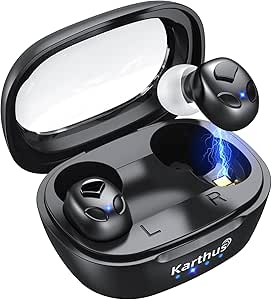 | Best Budget-Friendly Balance | Battery Life: 80+ hours total | Channels: 16-Channel Digital DSP | Modes: Quiet Mode, Noise-Canceling Mode | VIEW ON AMAZON | See Our Full Breakdown |
| Nova Hearing Aids for Seniors and Adults |  | Best Battery Efficiency | Battery Life: 100 hours | Charging Time: 1.5 hours | Noise Reduction: 80% | VIEW ON AMAZON | See Our Full Breakdown |
| Hearing Aids for Seniors, Rechargeable, Noise Reduction, One-Button Operation, Comfortable Fit | 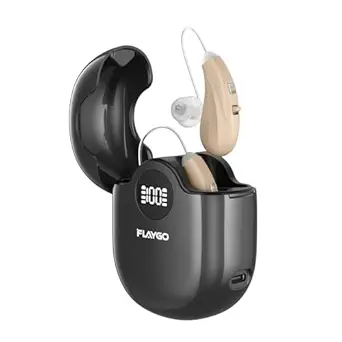 | Best for Simplicity | Digital Chip: 16-channel with noise reduction | Battery Life: 80 hours | Charging Time: 2 hours | VIEW ON AMAZON | See Our Full Breakdown |
| Audien Atom One OTC Hearing Aids |  | Best FDA-Registered Compact Option | Fit Type: In-Ear | Battery Life: 24 hours per charge | Charging Method: USB-C charging dock | VIEW ON AMAZON | See Our Full Breakdown |
| OTC Hearing Aids for Seniors with Hearing Loss |  | Best for Connectivity | Bluetooth Version: 5.3 | Battery Life per Charge: 12–15 hours | Total Battery Life: Approximately 45 hours | VIEW ON AMAZON | See Our Full Breakdown |
| Rechargeable Hearing Aids for Seniors, 16-Channel DSP Noise Reduction, Invisible In-Ear Design |  | Best Lightweight Budget Option | Channels: 16 | Battery Life: 35 hours | Charging Time: 2 hours | VIEW ON AMAZON | See Our Full Breakdown |
| LAMYOO Rechargeable Invisible Hearing Aids |  | Best for Simplicity | Brand: LAMYOO | Model: 955 | Style: In-Ear | VIEW ON AMAZON | See Our Full Breakdown |
| Rechargeable Hearing Aid with 16-Channel Digital Chips |  | Best for Noise Environments | Processor: 16-Channel Digital Chip | Style: In-Ear | Battery Life: 16 Hours | VIEW ON AMAZON | See Our Full Breakdown |
| Oricle Standard 2.0 Hearing Aids |  | Best for Comfort | Brand: Oricle | Model: Standard 2.0 | Style: Completely-in-Canal | VIEW ON AMAZON | See Our Full Breakdown |
| Rechargeable Behind-the-Ear Hearing Amplifier |  | Best for Ease of Handling | Style: Behind-the-Ear | Battery Life: 50 Hours | Charging Time: 2 Hours | VIEW ON AMAZON | See Our Full Breakdown |
| online hearing aid | Battery Life | Charging Time |
|---|---|---|
| Karthus Samba R11 Rechargeable | 30 hours per charge; 100 hours with case | — |
| Vivtone Rechargeable Hearing A | 25 hours per charge | 2 hours |
| EarCentric EasyCharge OTC Hear | Up to 12 days | — |
| ELEHEAR Beyond OTC Hearing Aid | 20 hours per charge; 100 hours total | — |
| OTC Rechargeable Hearing Aids | 80+ hours total | 2 hours |
| Nova Hearing Aids for Seniors | 100 hours | 1.5 hours |
| Hearing Aids for Seniors | 80 hours | 2 hours |
| Audien Atom One OTC Hearing Ai | 24 hours per charge | — |
| OTC Hearing Aids for Seniors w | — | — |
| Rechargeable Hearing Aids for | 35 hours | 2 hours |
| LAMYOO Rechargeable Invisible | 100 Hours | 100 Minutes |
| Rechargeable Hearing Aid with | 16 Hours | 1-2 Hours |
| Oricle Standard 2.0 Hearing Ai | 60 Hours | — |
| Rechargeable Behind-the-Ear He | 50 Hours | 2 Hours |
More Details on Our Top Picks
Karthus Samba R11 Rechargeable OTC Hearing Aids for Seniors
This model stands out for its zero-app dependency, making it ideal for users who find smartphone pairing frustrating. Unlike the ELEHEAR Beyond, which relies on a Bluetooth app for customization, the Karthus Samba R11 uses simple one-button physical controls for volume and mode switching. I appreciate the 16-channel DSP processing, which provides better speech clarity than basic amplifiers. However, the tradeoff is a lack of fine-tuning options; you cannot adjust frequency responses remotely. The 100-hour case capacity is a significant advantage for travel, though the fixed 7 volume levels may feel too coarse for users with fluctuating hearing needs.
Pros:- No smartphone app or Bluetooth pairing required for setup
- Long battery life with a 100-hour charging case
- Simple one-button controls for easy daily operation
- Lightweight design that works well with glasses
Cons:- Limited to only 7 volume levels, lacking fine-grained adjustment
- No remote customization options via an app
Best for: Seniors who struggle with smartphone apps or Bluetooth pairing and prefer physical buttons.
Not ideal for: Tech-savvy users who want precise, app-based control over their hearing profile.
- Fit Type:Behind-the-Ear (RIC)
- Battery Life:30 hours per charge; 100 hours with case
- Processing:16-channel DSP
- Volume Levels:7
- Modes:Quiet Mode, Noise Mode
- Weight:0.1 oz per device
Our verdict“This is the best choice for seniors who prioritize simplicity and battery life over advanced digital customization.”
Vivtone Rechargeable Hearing Aids for Seniors Adults, Digital BTE Hearing Assist with Charging Case
I recommend this option for those needing more power than the Karthus Samba R11 can provide. With a 41dB peak gain, it handles moderate to significant hearing loss better than many entry-level OTC devices. The inclusion of a Tinnitus masking mode is a distinct advantage over competitors that lack specific noise-mitigation features for ringing ears. However, the 25-hour battery life is shorter than the 30+ hours offered by the EarCentric EasyCharge, requiring more frequent charging. The auto-on/off feature is convenient, but the BTE design may feel bulkier than the discreet RIC styles found in premium models.
Pros:- High 41dB peak gain suitable for stronger hearing needs
- Dedicated Tinnitus masking mode for relief from ringing
- Auto-on/off functionality for seamless daily use
- Effective noise reduction for various environments
Cons:- Shorter 25-hour battery life per charge compared to rivals
- Bulkier BTE design may be less discreet than RIC options
Best for: Users with moderate to significant hearing loss who also suffer from tinnitus.
Not ideal for: Those with very mild hearing loss who prefer the most discreet, invisible fit possible.
- Peak Sound Gain:41dB
- Battery Life:25 hours per charge
- Backup Power:125 hours
- Modes:Quiet, Noisy, Tinnitus masking
- Charging Time:2 hours
- Style:Digital BTE
Our verdict“Choose this if you need higher amplification power and tinnitus relief rather than just basic sound boosting.”
EarCentric EasyCharge OTC Hearing Aids for Seniors (Pair)
My top pick for battery endurance is the EarCentric EasyCharge, offering up to 12 days of use on a single charge. This significantly outlasts the Vivtone and Karthus models, reducing the hassle of daily charging. The dual charging system—a desktop dock for home and a portable case for travel—adds substantial flexibility. While the environmental noise cancellation is effective, it lacks the AI-driven precision of the ELEHEAR Beyond. The complete accessory package, including multiple domes and tubes, ensures a better fit out of the box, but the absence of Bluetooth means you cannot stream phone calls directly to the device.
Pros:- Exceptional 12-day battery life per charge
- Dual charging options: desktop dock and portable case
- Comprehensive kit with multiple ear domes and cleaning tools
- US-based customer support for troubleshooting
Cons:- No Bluetooth connectivity for streaming audio
- Lacks advanced AI noise processing found in premium models
Best for: Users who want to charge their devices less frequently and value a comprehensive accessory kit.
Not ideal for: People who want to stream phone calls or music directly to their hearing aids.
- Battery Life:Up to 12 days
- Charging Options:Desktop dock and portable case
- Audio Sensitivity:118 dB
- Control Type:Button Control
- Noise Reduction:Environmental Noise Cancellation
- Included Accessories:Ear domes, tubes, cleaning kit, USB-C cable
Our verdict“This is the most reliable choice for users who prioritize long battery life and ease of charging.”
ELEHEAR Beyond OTC Hearing Aids for Seniors, AI Powered Speech Enhancement
The ELEHEAR Beyond is the most technologically advanced option here, featuring VocClear AI for superior speech enhancement. Compared to the Karthus Samba R11, this model allows deep customization via a smartphone app, including translation features and precise volume tuning. The 50dB maximum gain and 24dB noise attenuation are impressive for an OTC device, though the 20-hour runtime is lower than the EarCentric model. The reliance on a Bluetooth app is a double-edged sword: it offers power but excludes users who are not comfortable with smartphone technology. The auto-on/off feature in the case is a nice convenience touch.
Pros:- AI-driven VocClear technology for clear speech
- High 50dB gain with 24dB noise attenuation
- Customizable via iOS and Android app
- Auto power on/off when placed in charging case
Cons:- Requires smartphone app for full functionality
- Shorter 20-hour battery life per charge
Best for: Tech-savvy users who want app-based control, translation features, and AI noise reduction.
Not ideal for: Seniors who find smartphone apps difficult to use or prefer simple physical controls.
- Maximum Gain:50 dB
- Noise Attenuation:24 dB
- Battery Life:20 hours per charge; 100 hours total
- Connectivity:Bluetooth with iOS/Android app
- Design:Receiver-in-the-canal (RIC)
- Charging Case Cycles:4 cycles
Our verdict“This is the best premium option for users who want to fine-tune their hearing experience via an app.”
OTC Rechargeable Hearing Aids for Seniors & Adults with Noise Cancelling
This option offers a solid middle ground, providing 16-channel DSP without the app complexity of the ELEHEAR Beyond or the bulk of the Vivtone. The 80+ hours of total battery life is competitive, though slightly less than the Karthus or EarCentric models. I found the two-environment mode (Quiet and Noise-Canceling) sufficient for most daily scenarios, though it lacks the granular control of AI-powered devices. The small size is discreet, but it can be difficult to handle for those with limited dexterity compared to the larger, easier-to-grip cases of other models. It is a reliable, no-frills choice for straightforward hearing assistance.
Pros:- 16-channel DSP for balanced sound quality
- Simple two-mode operation for easy daily use
- 80+ hours of total battery life with case
- Discreet and comfortable for all-day wear
Cons:- Small size may be hard to handle for some users
- Limited to two listening modes, lacking versatility
Best for: Adults seeking a balance of decent noise cancellation and simple operation without apps.
Not ideal for: Users with limited finger dexterity who struggle with very small devices.
- Battery Life:80+ hours total
- Channels:16-Channel Digital DSP
- Modes:Quiet Mode, Noise-Canceling Mode
- Charging Time:2 hours
- Color:Ebon Black
- Target Audience:Ages 18+
Our verdict“A dependable, straightforward option for those who want basic noise cancellation without app complications.”
Nova Hearing Aids for Seniors and Adults
My primary reason for ranking the Nova Hearing Aids high is the 100-hour battery life paired with a rapid 1.5-hour charge. This combination is superior to the Audien Atom One, which offers only 24 hours per charge and requires a longer 3-hour recharge. For users who forget to charge devices daily, Nova provides a significant safety net. The 80% noise reduction and feedback cancellation help isolate voices in busy rooms, though the in-canal fit may feel intrusive for those accustomed to behind-the-ear models. While the 9 pairs of soft tips improve comfort, the lack of detailed waterproofing information is a drawback for active seniors. This model prioritizes uptime over advanced connectivity, making it ideal for users who want reliable amplification without managing app settings or Bluetooth pairings.
Pros:- Extremely long 100-hour battery life reduces charging frequency
- Fast 1.5-hour charging minimizes downtime
- Effective noise reduction and feedback cancellation for clearer speech
- Includes multiple soft tips for customizable comfort
Cons:- No Bluetooth connectivity for phone calls or media streaming
- Limited information provided on water or sweat resistance
- In-canal design may cause discomfort for new users
Best for: Users who prioritize long battery life and infrequent charging over smart features
Not ideal for: Tech-savvy users who want app-based tuning or Bluetooth streaming capabilities
- Battery Life:100 hours
- Charging Time:1.5 hours
- Noise Reduction:80%
- Feedback Cancellation:Yes
- Charging Case:Yes
- Design:In-canal
- Ear Tips:9 pairs of soft tips
Our verdict“The Nova Hearing Aids are the best choice for those who value extended usage time and quick recharging over modern connectivity features.”
Hearing Aids for Seniors, Rechargeable, Noise Reduction, One-Button Operation, Comfortable Fit
The One-Button Operation of these hearing aids makes them stand out for users who find complex controls frustrating. Unlike the Audien Atom One, which relies on tiny analog dials that can be difficult to manipulate with arthritic fingers, this model offers four distinct volume levels accessible via a single press. The 16-channel digital chip provides nuanced sound processing, resulting in higher definition audio compared to simpler amplifiers. At just 3.5 grams, they are lightweight and comfortable for all-day wear. However, the limitation to a single beige color might not suit everyone’s aesthetic preferences, and the lack of Bluetooth means you cannot stream phone calls directly. This device is best suited for seniors who want a straightforward, low-maintenance solution without the learning curve of app-based adjustments.
Pros:- Intuitive one-button control with four volume levels
- Lightweight 3.5g design ensures all-day comfort
- 16-channel processing delivers high-definition sound quality
Cons:- Only available in beige, limiting style options
- No Bluetooth connectivity for streaming audio
- Initial setup requires careful reading of instructions
Best for: Seniors with limited dexterity who prefer simple physical controls over apps or dials
Not ideal for: Users who require Bluetooth streaming for TV or phone calls
- Digital Chip:16-channel with noise reduction
- Battery Life:80 hours
- Charging Time:2 hours
- Weight:3.5g
- Operation:One-button with four volume levels
- Color:Beige
Our verdict“This model is the top pick for users who want effortless volume adjustment and reliable sound without technological complexity.”
Audien Atom One OTC Hearing Aids
As an FDA-registered OTC device, the Audien Atom One offers a level of regulatory assurance that many generic amplifiers lack. Its nano in-ear design is exceptionally discreet, far smaller than the bulkier in-ear models like the Nova Hearing Aids. The inclusion of an expert setup session is a significant value-add, helping users optimize settings without guesswork. However, the 24-hour battery life is a notable weakness compared to the 80-100 hour ranges found in competitors like the Nova or the One-Button Operation model. The analog dials for volume and frequency are simple but lack the precision of digital app controls. This product is ideal for those with mild hearing loss who prioritize invisibility and regulatory compliance over long battery endurance or advanced connectivity.
Pros:- FDA-registered OTC status ensures safety and efficacy standards
- Ultra-small nano design is nearly invisible in the ear
- Includes a professional expert setup session for optimal tuning
Cons:- Short 24-hour battery life requires daily charging
- No Bluetooth or app integration for advanced customization
Best for: Adults with mild hearing loss who want a discreet, FDA-registered device with professional setup support
Not ideal for: Users with moderate-to-severe hearing loss or those needing all-day battery life
- Fit Type:In-Ear
- Battery Life:24 hours per charge
- Charging Method:USB-C charging dock
- Control Type:Analog dials
- Style Color:Beige
- Included Items:Pair of aids, dock, cable, adapter, brush, tool, domes, wax kit, setup session
Our verdict“The Audien Atom One is the best choice for users who prioritize medical-grade reliability and a nearly invisible fit over battery longevity.”
OTC Hearing Aids for Seniors with Hearing Loss
Unlike the disconnected models in this lineup, the Auiioes ZR-H718A features Bluetooth 5.3, allowing seamless switching between hearing assistance and streaming phone calls or TV audio. This connectivity sets it apart from the Audien Atom One and Nova Hearing Aids, which cannot stream media. The smart DSP chip with three scene modes adapts to noisy environments automatically, though changing modes requires a double-tap that may be tricky for some users. While the 45-hour total battery life (including the case) is decent, the per-charge duration of 12-15 hours is lower than the 80-100 hours offered by the Nova. The shiny black finish is stylish but less discreet than the beige options. This device is best for tech-comfortable users who want to integrate their hearing aids into their daily digital ecosystem.
Pros:- Bluetooth 5.3 enables streaming from smartphones and TVs
- Smart DSP with three scene modes adapts to different environments
- Charging case extends total usage time to approximately 45 hours
Cons:- Double-tap mode switching can be inconvenient or accidental
- Shorter 12-15 hour battery life per charge compared to competitors
Best for: Users who want to stream phone calls and media directly to their hearing aids
Not ideal for: Seniors who struggle with touch-sensitive controls or prefer longer per-charge battery life
- Bluetooth Version:5.3
- Battery Life per Charge:12–15 hours
- Total Battery Life:Approximately 45 hours
- Noise Reduction:Smart DSP chip with 3 scene modes
- Compatible Devices:Smartphone, Tablet, Television
- Style Color:Shiny Black
- Fit Type:In-Ear
Our verdict“Choose the Auiioes ZR-H718A if you value Bluetooth streaming and smart noise adaptation over extended battery life.”
Rechargeable Hearing Aids for Seniors, 16-Channel DSP Noise Reduction, Invisible In-Ear Design
These hearing aids offer a compelling balance of 16-channel DSP noise reduction and a remarkably light 0.01 lb (approx. 4.5g) weight. They are a solid middle-ground option for those who find the Nova Hearing Aids too feature-heavy or the Audien Atom One too expensive. The 35-hour battery life is respectable, though it falls short of the Nova’s 100-hour endurance. The Type-C charging case adds convenience, but the basic mode adjustments lack the nuance of the Auiioes’s scene modes. The in-ear design is discreet, but the fit may not accommodate all ear shapes comfortably. This model is best for budget-conscious users who want digital processing and decent battery life without paying for Bluetooth or premium brand names.
Pros:- Ultra-lightweight 0.01 lb design reduces ear fatigue
- 16-channel DSP provides effective noise reduction
- Convenient Type-C charging case for on-the-go power
Cons:- Limited to basic mode adjustments without advanced customization
- May not fit all ear sizes comfortably due to fixed in-ear design
Best for: Budget-conscious users seeking digital noise reduction and lightweight comfort
Not ideal for: Users with irregular ear shapes or those needing Bluetooth connectivity
- Channels:16
- Battery Life:35 hours
- Charging Time:2 hours
- Battery Type:Rechargeable
- Connectivity:Type-C charging case
- Weight:0.01 lb
Our verdict“This model is a practical choice for users who want reliable digital amplification and portability without unnecessary extras.”
LAMYOO Rechargeable Invisible Hearing Aids
This model stands out for its one-button interface, making it far less intimidating than app-dependent alternatives like the ELEHEAR Beyond. The ultra-invisible design prioritizes discretion, which is ideal for users who feel self-conscious about visible devices. However, the limited volume settings mean fine-tuning is restricted, a tradeoff for the extreme simplicity. Compared to the Oricle Standard 2.0, it offers longer battery life but fewer sound adjustment options. This pick makes the most sense for seniors who want a set-and-forget experience without navigating complex menus or downloading software.
Pros:- Extremely simple one-button operation reduces learning curve
- 100-hour battery life minimizes charging frequency
- Invisible design avoids social stigma
- Includes portable charging case for travel convenience
Cons:- Only four volume levels limit customization
- Not suitable for severe hearing loss
- Digital noise reduction may struggle in complex acoustic environments
Best for: Seniors who struggle with technology and prefer a single-button control scheme.
Not ideal for: Users with fluctuating hearing needs who require granular volume or tone adjustments.
- Brand:LAMYOO
- Model:955
- Style:In-Ear
- Battery Life:100 Hours
- Charging Time:100 Minutes
- Control Type:Single Button
- Warranty:2 Years
Our verdict“This is the ideal choice for tech-averse seniors who prioritize ease of use over advanced audio customization.”
Rechargeable Hearing Aid with 16-Channel Digital Chips
With 16-channel digital processing, this device offers superior sound separation compared to the LAMYOO, which relies on simpler noise reduction. This complexity allows for clearer speech in noisy restaurants or crowds. However, the automatic on/off feature can be frustrating if the device wakes up unexpectedly in a pocket. Unlike the Oricle Standard 2.0, which focuses on comfort, this model prioritizes audio fidelity. It is a strong contender for those who need advanced noise cancellation but may find the small form factor difficult to handle manually.
Pros:- 16-channel processing enhances speech clarity in noise
- Nearly invisible design for discreet wear
- Fast charging with 7-day case capacity
- Effective active noise cancellation
Cons:- Automatic on/off can cause accidental activation
- Small size makes handling difficult for some seniors
- Shorter battery life per charge than competitors
Best for: Active users who frequent loud environments and need advanced sound processing.
Not ideal for: Users with poor dexterity who may struggle with the automatic power function and small size.
- Processor:16-Channel Digital Chip
- Style:In-Ear
- Battery Life:16 Hours
- Case Capacity:7 Days
- Charging Time:1-2 Hours
- Material:Plastic
- Power Source:Lithium-Ion
Our verdict“This option is best suited for those who need robust noise cancellation in challenging acoustic settings.”
Oricle Standard 2.0 Hearing Aids
The soft silicone ear tips set this model apart from the hard plastic fit of the LAMYOO, reducing ear fatigue during long wear. The auto on/off via the charging case is a convenient touch that saves battery life. While it lacks the 16-channel processing of the 16-Channel Digital Chip model, its five adjustable sound levels provide a good middle ground for customization. This pick makes the most sense for users who prioritize physical comfort and a secure fit over maximum audio complexity.
Pros:- Soft silicone tips enhance comfort for extended use
- Auto on/off feature preserves battery life
- Five sound levels offer decent customization
- Lightweight and secure fit
Cons:- Software update support is uncertain
- Fewer processing channels than premium competitors
- Limited to mild to moderate hearing loss
Best for: Users with sensitive ears who require a soft, comfortable fit for all-day wear.
Not ideal for: Those seeking advanced digital processing or multi-channel sound separation.
- Brand:Oricle
- Model:Standard 2.0
- Style:Completely-in-Canal
- Battery Life:60 Hours
- Material:Silicone
- Weight:43 g
- Noise Control:Environmental Noise Cancellation
Our verdict“This model is the best choice for comfort-focused buyers who want a balance of ease and customization.”
Rechargeable Behind-the-Ear Hearing Amplifier
Unlike the invisible in-ear models like the LAMYOO or Oricle, this Behind-the-Ear (BTE) design is significantly easier to insert and remove, making it ideal for those with limited dexterity. The Type-C charging is a modern convenience that eliminates proprietary cables. However, the three-mode limitation is restrictive compared to the multi-level adjustments found in the Oricle Standard 2.0. This option stands out for its user-friendly form factor, though it lacks the discretion of deeper-fit alternatives.
Pros:- BTE design is easy to handle and insert
- Universal Type-C charging port
- Lightweight and comfortable for daily wear
- Clear sound amplification with noise cancellation
Cons:- Only three adjustable modes limit flexibility
- Not waterproof or sweat-resistant
- More visible than in-ear alternatives
Best for: Seniors with arthritis or dexterity issues who struggle with tiny in-ear devices.
Not ideal for: Users who prioritize invisibility or need more than three sound modes.
- Style:Behind-the-Ear
- Battery Life:50 Hours
- Charging Time:2 Hours
- Charging Interface:Type-C
- Modes:Normal, Noise Reduction, Enhanced Clarity
- Weight:0.01 lb
- Control Type:Volume Control
Our verdict“This is the best option for users who value physical ease of use over discreet aesthetics.”

How We Picked
I evaluated these fourteen devices based on their ability to deliver clear speech intelligibility without overwhelming background noise. My primary criteria were sound processing quality, specifically looking for multi-channel digital amplification versus basic analog boosting, which often results in a muddy audio experience. I also prioritized ergonomic comfort and battery reliability, as these factors directly impact daily usage rates. Devices were ranked higher if they offered a balance between advanced features like AI speech enhancement and user-friendly interfaces suitable for older adults who may not be tech-savvy.
Value was assessed not just by cost, but by the longevity of the hardware and the availability of replacement parts. I excluded products with poor build quality or those that functioned more as simple amplifiers than true hearing aids. The final ranking reflects a hierarchy of utility: first, clarity in complex listening situations; second, ease of charging and maintenance; and third, aesthetic discretion for social settings.
Factors to Consider When Choosing Online Hearing Aid
Selecting an online hearing aid involves more than just picking the highest volume. You need to match the device’s technical capabilities with your specific hearing profile and lifestyle needs. Here are the critical factors to weigh before making a purchase.
Understanding Channel Count vs. Basic Amplification
Many entry-level devices advertise ‘noise reduction’ but use simple analog circuits that boost all sounds equally, including background chatter. Look for models with multi-channel digital signal processing (DSP), which separates speech from noise into different frequency bands. This technology allows the device to amplify voices clearly while suppressing low-frequency hums or high-frequency static. If you frequently dine out or attend meetings, investing in higher channel counts is worth the extra cost because it preserves speech clarity. Basic amplifiers are acceptable only for quiet, one-on-one conversations in controlled environments.
Battery Life and Charging Infrastructure
Battery anxiety is a common complaint among new users. While many devices claim long life, this figure often assumes low-volume usage. Check if the product includes a portable charging case that provides additional charges on the go, or just a desktop dock. A desktop-only charger limits your mobility if you travel frequently. Also, consider the charging speed; some devices require hours to reach full capacity, while others offer quick-charge features for short breaks. For seniors who may forget to charge daily, models with longer standby times or solar-assisted cases can offer peace of mind.
Fit Types: Behind-the-Ear vs. In-Ear
Behind-the-ear (BTE) models generally offer higher power output and are easier to handle for those with dexterity issues. They sit securely behind the ear and are less likely to fall out during vigorous activity. In contrast, invisible in-the-ear (IIC) or completely-in-canal (CIC) devices offer superior discretion but often have lower maximum volume and smaller batteries. If you wear glasses, a BTE model might interfere with temple arms, making an in-ear option more comfortable. Conversely, if you have severe hearing loss, the physical size limitations of in-ear devices may restrict their effectiveness, making BTE the necessary choice.
The Importance of Self-Fitting Apps
Unlike prescription hearing aids adjusted by audiologists, online OTC devices rely on self-fitting. This means the app must guide you through a hearing test using your smartphone microphone. Devices with robust apps allow you to adjust bass, treble, and volume levels for different environments (e.g., restaurant, home, outdoors). Without this flexibility, you are stuck with a generic sound profile that may not match your specific hearing loss pattern. A good app interface should be simple enough for seniors to navigate but powerful enough to fine-tune frequencies.
Durability and Water Resistance
Hearing aids are worn daily, often in varying weather conditions. Check the IP rating for water and dust resistance. An IP68 rating indicates the device can withstand sweat, rain, and minor submersion, which is critical for active users. Lower-rated devices may fail prematurely if exposed to humidity or moisture from cleaning. Additionally, look for devices with replaceable wax guards or filters, as earwax buildup is the leading cause of hearing aid failure. Models with easy-to-replace parts will last longer and maintain clearer sound over time.
Frequently Asked Questions
What is the difference between a hearing aid and a hearing amplifier?
A hearing aid is a medical device regulated by the FDA, designed to amplify specific frequencies based on your hearing loss profile. A hearing amplifier, often called a personal sound amplification product (PSAP), boosts all sounds uniformly and is not intended for medical hearing loss. Many ‘online hearing aids’ are actually amplifiers that lack sophisticated frequency shaping. If you have diagnosed hearing loss, choose a device with digital signal processing and multi-channel adjustments to avoid distorting speech sounds.
Can I use online hearing aids with my smartphone directly?
Most modern OTC hearing aids do not stream audio directly from your phone like Bluetooth headphones; they are primarily for amplifying environmental sound. However, many models connect to your smartphone via Bluetooth Low Energy to adjust settings through an app. Some premium models offer direct streaming for phone calls or music, but this drains the battery faster. Check the product specifications carefully if direct audio streaming is a priority, as it is a distinct feature from app connectivity.
How do I clean and maintain these devices?
Regular maintenance is required to prevent sound blockage from earwax and debris. Use the provided tool to gently remove wax from the microphone ports and speaker domes. For in-ear models, replace wax guards every few weeks. Avoid using water to clean the electronics; instead, use a dry cloth or a specialized cleaning brush. Store the devices in their charging case when not in use to protect them from dust and physical damage.
Are these devices suitable for profound hearing loss?
Online OTC hearing aids are generally designed for mild to moderate hearing loss. If you have profound or severe hearing loss, these devices may not provide sufficient gain or clarity. They often lack the high-power receivers needed to deliver adequate volume without feedback. For severe cases, consulting an audiologist for a custom-fit prescription device is recommended, as OTC options may not meet your auditory needs effectively.
How long does it take to adjust to a new hearing aid?
Adapting to amplified sound takes time, as your brain needs to relearn how to process background noises that were previously absent. Start by wearing the device for one to two hours a day in quiet environments, then gradually increase duration and complexity. Expect an adjustment period of two to four weeks. During this time, you may find everyday sounds like footsteps or dishes clattering overwhelming. Consistency is key; regular wear helps your brain filter out irrelevant noise more effectively.
Conclusion
Choosing the right online hearing aid depends on your specific hearing needs, dexterity, and lifestyle. For the best overall balance of performance and comfort, the Karthus Samba R11 remains the top choice due to its reliable noise reduction and user-friendly design. If you prioritize discretion and have mild hearing loss, the EarCentric EasyCharge offers an excellent invisible option with strong battery life. For tech-savvy users who want advanced customization, the ELEHEAR Beyond provides superior AI-driven speech enhancement. Beginners or those with limited dexterity should look toward the Oricle Standard 2.0 for its straightforward setup and clear instructions. Finally, for those on a tighter budget who still need decent amplification, the Vivtone Rechargeable model serves as a solid entry-level amplifier, though it lacks the nuance of the premium picks.
Evergreen bestsellers Picks

Dyson Car+Boat Cordless Handheld Vacuum

Dyson Ball Animal 2 Plus Corded Vacuum

De'Longhi Linea Classic Espresso Machine with Adjustable Milk Frother
As an affiliate, we earn on qualifying purchases.